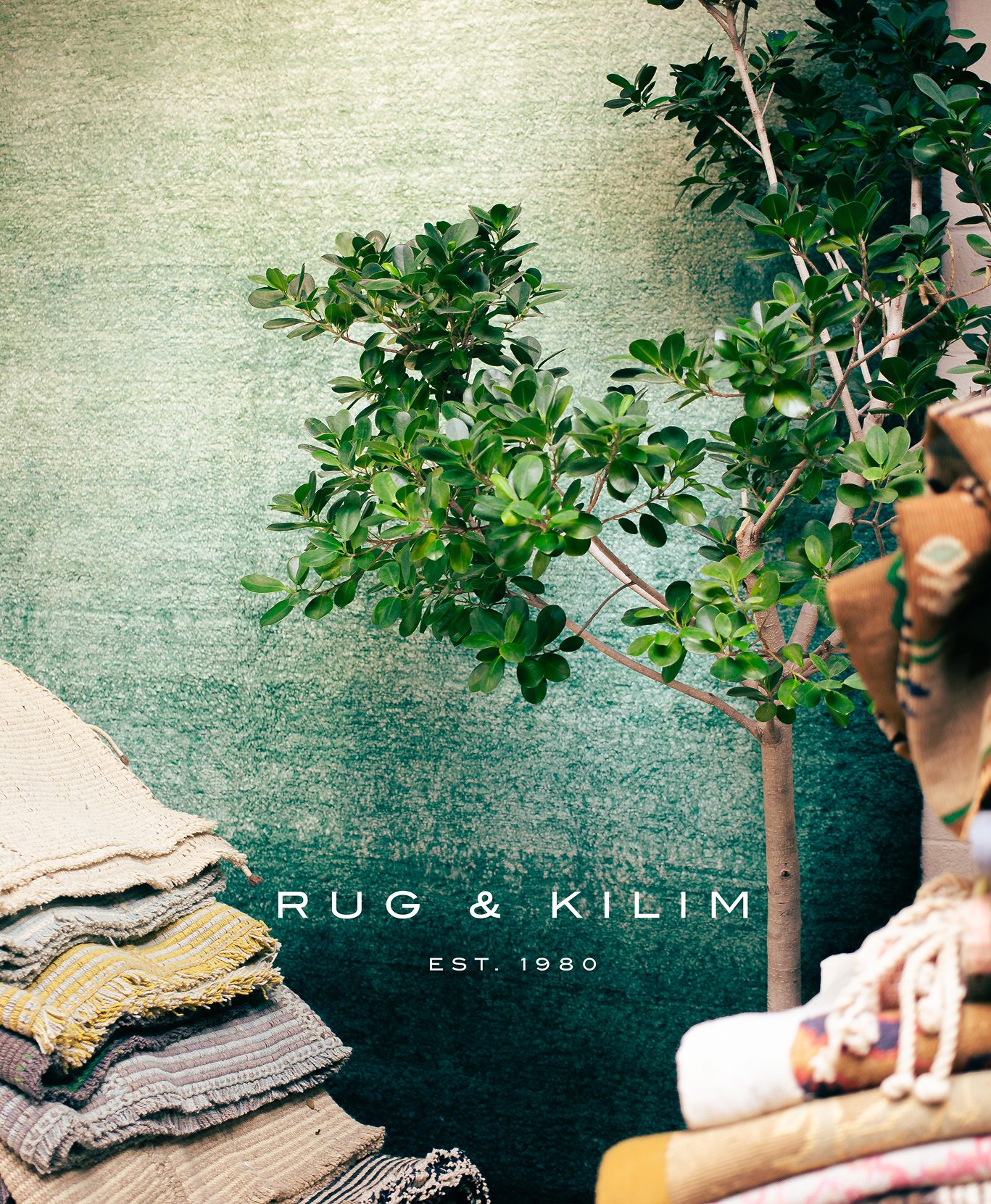


R&K Coastal presents rugs characterized by lightened palettes, natural fibers, and restrained patterning. The collection is informed by coastal environments and emphasizes balance, materiality, and ease within interior settings.




R&K · Coastal Collection
Light, Material, and the Discipline
of Quiet Interiors
Coastal design understands restraint as a form of luxury. Such interiors, when approached with seriousness, are not a style but an atmosphere. It begins with light, the peculiar clarity of coastal air that softens colour, dissolves contrast, and renders materials in subtler registers. The line where sea meets sky is one of the simplest compositions in nature: two planes, balanced and quiet.
The R&K Coastal Collection begins from this quieter premise. Lightened palettes, natural fibres, and restrained patterning define the collection, but their effect is less stylistic than architectural. They establish rooms that breathe. Sand. Limestone. Pale flax. Driftwood grey. Washed indigo. Natural fibres, wool, jute, cotton, introduce surfaces that register light rather than reflect it.
Texture replaces ornament.
Silence replaces statement.
One might think of these works in dialogue with the restrained material worlds of John Pawson or Tadao Ando, where the power of a space lies in proportion, light, and the honesty of materials. The rugs in this edit derive their authority from what they decline to do. Pattern is softened, palettes drift toward chalk and pale indigo. Weave structures create subtle topographies underfoot, the irregular textures of dune grass, wind-shaped sand, limestone worn smooth by tides.
Louis Kahn spoke of listening to materials, to understand what they wished to become. In Rachel Carson’s The Edge of the Sea, the shoreline is described as a place shaped by patience and exposure. The same could be said of the palette that defines coastal textiles: colours softened not by design, but by time and light.
The bleached tonalities recall Agnes Martin’s contemplative grids. The coastal light that haunted Sorolla’s Mediterranean scenes. Even when a pattern emerges, it does so with the discretion of tide lines across sand, suggested rather than declared.
Designers and connoisseurs often treat coastal rugs as horizon lines within a room.
A pale wool flatweave beneath a long, low sofa, a bronze cocktail table by Paul Evans, a woven lounge chair in the manner of Charlotte Perriand, the disciplined teak lines of Scandinavian modernism, can visually extend the architecture toward the sea. Pairing such rugs with a plaster console or travertine table creates interiors that feel composed by material rather than decoration. They anchor spaces without imposing narrative.
Beach houses in the Hamptons. Modernist villas overlooking the Pacific. Mediterranean homes where stone floors meet long horizons of water. A coastal rug beneath a Hiroshi Sugimoto seascape, or a minimalist canvas that echoes the horizon line. The dialogue between surface and space extends without end.
This versatility has made coastal palettes increasingly compelling for designers far from any shoreline. The collection is less about geography than sensibility. The rugs evoke the clarity and composure of coastal environments within urban apartments, mountain homes, contemporary galleries.
Coastal landscapes remind us that beauty often lies in subtraction, the gradual erasure of excess until only the essential remains. The rugs of the R&K Coastal Collection reflect that philosophy. They do not attempt to dominate a space. They introduce the quiet material intelligence that allows an interior to feel settled, much like the horizon itself, endlessly present and rarely noticed until it is absent.
The shore has always understood
what great interiors eventually learn.
Calm is a form of luxury.
R&K
Frequently Asked Questions
What is considered coastal interior design?
Coastal interior design is defined less by theme and more by atmosphere. It prioritizes light, material honesty, and spatial openness, drawing from environments where architecture responds to water, air, and horizon rather than decoration.
What makes a home feel coastal in design?
A coastal home is shaped by restraint. Natural light, softened palettes, and tactile materials take precedence over ornament, creating interiors that feel composed, open, and quietly connected to their surroundings.
What defines a coastal rug?
A coastal rug is defined by its tonal restraint, lightened palettes, natural fibres, and compositions that reflect the calm and diffusion of coastal light rather than overt thematic motifs.
How do you style a coastal rug in an urban penthouse?
By allowing it to counterbalance density. In glass-and-steel environments, coastal rugs soften light, reduce visual tension, and introduce a sense of openness typically absent in urban architecture.
Which materials are most common in coastal rugs?
Wool, jute, and cotton dominate, chosen for their ability to absorb light and create tactile surfaces that echo natural environments.
Are coastal rugs suitable for high-traffic areas?
Yes, particularly those with tighter weaves. Their tonal subtlety also allows them to age gracefully, making wear less visually disruptive.
What colors define coastal rug palettes?
Soft neutrals like sand, limestone, driftwood grey, pale indigo, and chalk, often with subtle tonal variation rather than strong contrast.
Can coastal rugs work outside of beach homes?
Absolutely. Their value lies in their ability to introduce clarity and calm, making them highly effective in urban, desert, or mountain interiors.
How do coastal rugs interact with natural light?
They diffuse rather than reflect it, creating interiors that feel luminous without becoming visually sharp.
What furniture pairs best with coastal rugs?
Pieces that emphasize material integrity, linen upholstery, bleached wood, travertine, plaster, and woven forms, allow the rug’s restraint to remain central.
How do you layer a coastal rug within a minimalist interior?
By allowing the rug to act as the primary source of texture. In restrained spaces, layering should remain minimal; linen upholstery, pale woods, and a single tactile rug create sufficient depth without visual excess.
What is the ideal scale for a coastal rug in open-plan spaces?
Versatile sizes are preferred. A generously scaled rug, 9×12, 8×10, 10×12, or 12×15, helps unify open layouts, creating a continuous visual field that mirrors the expansiveness associated with coastal environments.
Do coastal rugs always have to be neutral?
Not strictly. While neutrality defines the category, subtle blues, washed greens, and softened terracotta often appear, though never with the urgency of brighter palettes.
Is a coastal rug too understated for a statement interior?
On the contrary. In highly expressive spaces, a restrained rug often provides the balance that prevents the room from becoming visually overcommitted.
Where R&K Rugs Are Found
From the Hamptons to the Côte d’Azur, R&K coastal rugs are at home wherever architecture meets water.
|
United States · East Coast & Florida The Hamptons, New York |
United States · West Coast & Other Malibu, California |
|
Caribbean & Latin America St. Barthélemy (St. Barts) |
Europe · Mediterranean French Riviera (Monaco, Cap d’Antibes, Saint-Tropez) |
|
Europe · Atlantic & UK Cornwall, UK (St. Ives, Padstow) |
Australia & Oceania Gold Coast, Queensland |
|
Middle East & Asia Palm Jumeirah, Dubai |
R&K