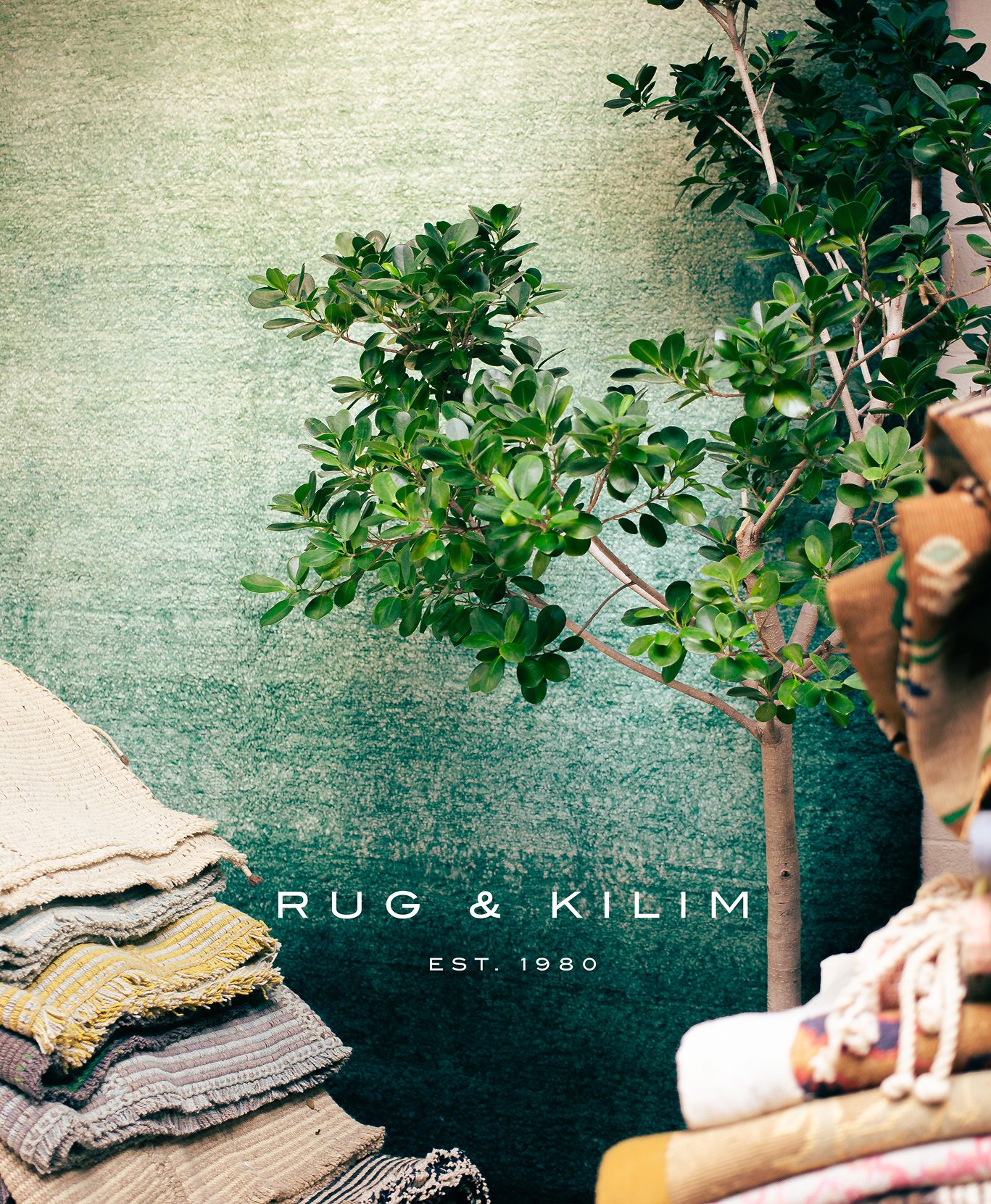


Country by Rug & Kilim focuses on rugs shaped by tradition, texture, and time. The collection draws on historic forms and established weaving practices, offering pieces that convey warmth, depth, and a sense of continuity




R&K · Country Collection
Tradition, Texture, and the Interior Language
of Time
Country interiors possess a quality designers sometimes call “memory.” Objects appear to have belonged to space long before the present moment. The most enduring country interiors rarely announce themselves as such. Their character emerges slowly, through materials that age well, textiles that soften with use, and objects that carry the quiet authority of having belonged somewhere for a very long time.
The Country Collection by Rug & Kilim reflects precisely this sensibility. These rugs draw from historic weaving traditions and established textile practices, where pattern and structure evolved not as stylistic gestures but as part of daily life. Their surfaces reveal texture, depth, and the subtle irregularities that accompany handmade craft, qualities that designers increasingly recognize as essential to interiors that aspire to feel lived rather than staged.
Some rooms feel designed.
Others feel inherited.
Historically, the country house has always been a laboratory of material honesty. Whether in the limestone farmhouses of Provence, the stone cottages of the English countryside, or the timber-framed homes of New England, interiors were shaped less by decorative ambition than by necessity, climate, and continuity. Floors required warmth; textiles required durability; patterns carried memory.
The country interior has always been tied to the philosophy of craftsmanship. In The Nature of Gothic, John Ruskin wrote that the beauty of handmade work lies in its visible humanity—the small irregularities that reveal the hand of the maker. Rugs within the Country Edit embody precisely this principle and developed a distinct character. Their palettes leaned toward earth and plant-based pigments, madder reds, walnut browns, indigo blues, wheat and parchment tones, colors that echo agricultural landscapes and weathered architecture.
In visual terms, such rugs possess a kinship with artistic movements that also explored the dignity of the handmade. One thinks of the philosophy of William Morris and the Arts and Crafts movement, where craftsmanship was seen as a moral counterpoint to industrial uniformity. Similarly, the quiet rural scenes of painters such as Jean-François Millet or the tactile surfaces of Gustave Courbet share a reverence for the material life of the countryside.
Designers frequently use country rugs to temper modern spaces that might otherwise feel overly pristine.
Within contemporary interiors, these rugs perform a particularly valuable role: they introduce historical gravity without requiring historical architecture. A softly aged rug beneath a farmhouse dining table, perhaps oak, generously worn, can anchor a room with the assurance of continuity. Furniture pairings tend toward forms that celebrate material weight and tactile presence. Think of ladder-back chairs, rustic trestle tables, hand-turned wood pieces, or upholstered seating in linen and wool.
The rugs respond beautifully to plaster walls, exposed beams, and natural stone floors, but they are equally effective in contemporary homes where designers seek to soften modern minimalism with layers of texture. Art within these rooms often follows a similar logic. Art pairings might include pastoral landscapes, early modernist prints, or even the quiet still-life compositions of Giorgio Morandi, whose muted palettes resonate beautifully with naturally dyed wool.
What distinguishes the Country Collection, however, is not nostalgia. These rugs do not attempt to recreate the past, rather, they carry its sensibility forward. Their value lies in their ability to make a room feel rooted, connected to craft traditions that extend beyond the immediate moment.
Such continuity offers a different kind of luxury. It suggests patience. It values permanence. And it acknowledges that some forms of beauty emerge only through repetition and time. The Country Collection by Rug & Kilim celebrates this philosophy. These are rugs that contribute to a room’s memory, lending warmth, texture, and the quiet assurance that good design, like the countryside itself, improves with age.
The countryside has always understood
what great interiors eventually learn.
Memory is a form of luxury.
R&K
Frequently Asked Questions
What defines a country-style rug?
A country rug is defined by its connection to tradition with natural dyes, inherited patterns, and textures shaped by long-standing weaving practices.
Why are country rugs popular in modern interiors?
They introduce warmth, irregularity, and historical depth, offering a counterpoint to the precision of contemporary architecture.
What colors are typical in country rugs?
Earth-derived tones such as madder red, walnut brown, indigo blue, wheat, and muted ochres dominate.
How should country rugs be placed within a room?
They are most effective when anchoring primary furniture arrangements like beneath dining tables, seating areas, or beds where their texture can define the space.
Do country rugs improve with age?
Yes. Natural dyes soften, fibers relax, and the rug develops a patina that enhances its character over time.
Can country rugs work in minimalist spaces?
Very effectively. They introduce necessary warmth and complexity without disrupting the overall clarity of the room.
What makes handmade country rugs distinct from machine-made alternatives?
Subtle irregularities in weave, variation in dye, and structural integrity that reflects human craftsmanship rather than uniform production.
What interiors benefit most from country rugs?
Farmhouses, converted barns, and modern homes seeking warmth and continuity all benefit from their presence.
How do you style a country rug without making the space feel traditional?
By pairing it with contemporary architecture or furniture. The contrast between historic textile and modern form creates a balanced interior that feels grounded yet current.
Can country rugs be layered with other textiles?
Yes, particularly in relaxed interiors. Layering with natural materials like linen throws, wool upholstery, or even a secondary flatweave enhances the tactile richness without overwhelming the space.
Are country rugs meant only for traditional homes?
Not at all. In fact, they are often most compelling in contemporary spaces, where their historical depth contrasts with modern precision.
Why do designers continue to use traditional rugs in modern projects?
Because new architecture often benefits from a sense of age. A country rug introduces that dimension instantly without requiring the building itself to have history.
Where R&K Country Rugs Are Found
From the Hudson Valley to the Cotswolds, R&K country rugs are at home wherever architecture meets landscape.
|
United States Hudson Valley, New York |
Europe · France & Italy Provence, France |
|
Europe · United Kingdom The Cotswolds |
Middle East & Asia Al Barari Garden Estates, Dubai |
|
Australia & Oceania Yarra Valley, Australia |
Latin America Valle de Bravo, Mexico |
R&K