Style
Doroksh
Every piece in this style, across all of our collections. Narrow them down by size and price.
- Under 6 x 9
- Runners
- 6 x 9
- 8 x 10
- 9 x 12
- 10 x 14
- 12 x 15
- Over 12 x 15
Origin ▼
Style ▼
Material ▼
Width
Length
To connect with a specialist, click here
Stories from the Doroksh Archive
Essays, artist dialogues, and provenance notes drawn from Rug & Kilim’s editorial desk.
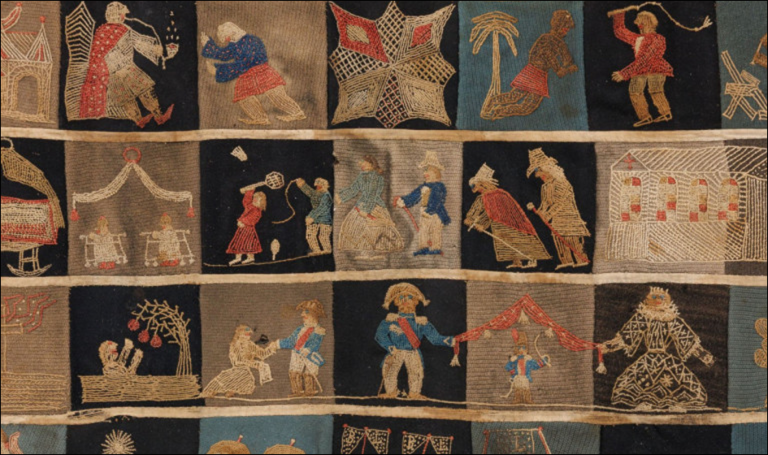
Tapestry of the Week: François Damiens, 475 Panels, and the Whole of a World in Pater Noster Embroidery of Arras
Some objects you appraise. This one you simply stand before, for a long time, and let it undo your sense of what a single human being can do. Hand-worked in wool and natural silk in Arras, France, in 1826, and signed four times over by its maker, the Pater Noster embroidery of François Damiens is composed of four hundred and seventy-five individual pictorial panels, each one a tiny woven scene, arranged in a vast grid that reads, from across a room, like the pixelated memory of an entire world. Biblical narratives. Processions. The labours of the seasons. Animals, trees, houses, saints, ordinary people doing ordinary things. Four hundred and seventy-five times, one small square at a time, a man sat down and embroidered a fragment of everything he knew.
Read the Feature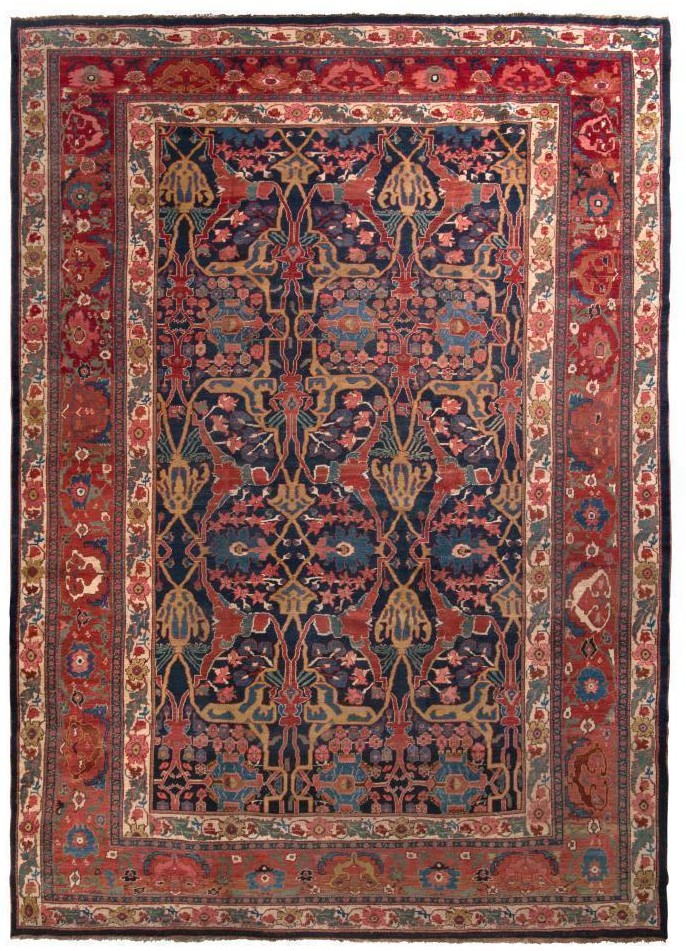
Bidjar Rugs: Persian Weaving Mastery and Historic Design
Among the most respected traditions of Persian carpet weaving, Bidjar rugs represent an extraordinary combination of strength, artistry, and technical mastery. Often referred to as the “Iron Rugs of Persia” because of their exceptional durability and dense construction, Bidjar carpets have earned a distinguished reputation among collectors, designers, and institutions worldwide. Originating from the town of Bidjar in western Iran’s Kurdistan region, these rugs reflect centuries of Kurdish weaving traditions combined with the broader artistic heritage of Persian carpet design. Their remarkable craftsmanship, sophisticated patterns, and rich color palettes have made them some of the most desirable examples of antique Persian carpets.
Read the Feature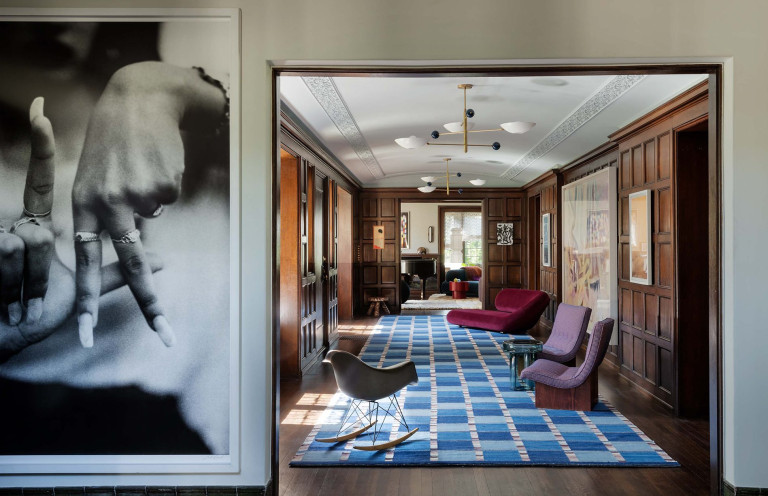
A Rug & Kilim’s Guide to Rug Patterns in Interior Design: A Study of Persian, European, Scandinavian, Art Deco and Modern Styles
There are rooms - rare, disciplined rooms, where nothing is accidental. A salon overlooking Lake Como, where a 19th-century Aubusson anchors parquet floors beneath frescoed ceilings. A Manhattan interior shaped by the restraint of Peter Marino, where a Scandinavian flatweave holds its ground against glass, steel, and silence. A private riad in Marrakech, where tribal geometry converses effortlessly with shadow, plaster, and time. In such spaces, pattern is not simply chosen. To understand pattern at this level is to move beyond decoration into discipline. Great decorators and architects like Jacques-Émile Ruhlmann, Le Corbusier, and Gio Ponti never treated surfaces as passive. Floors, like walls and ceilings, were compositional fields governed by proportion, rhythm, and intellectual clarity.
Read the Feature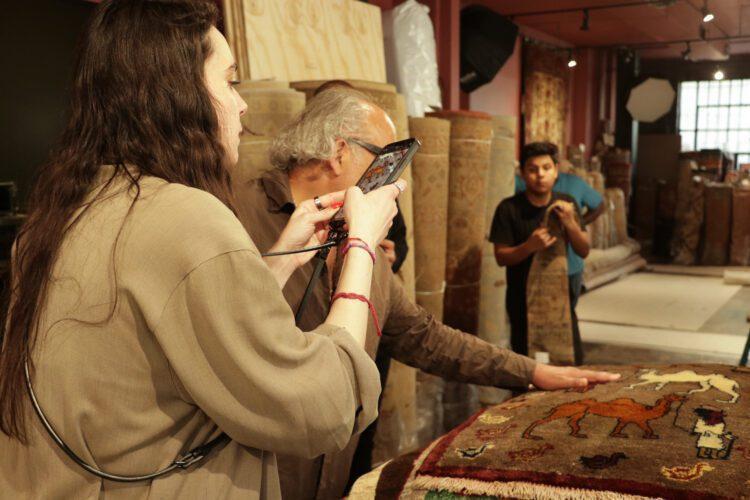
Our Favorite Handmade Rugs and Kilims of July 2022
July has been a revelation for the Rug & Kilim team: Summer may be our new favorite season. To be more specific, we're fascinated to see our Summers become exponentially prolific times in recent years. In an industry where Fall and Winter are the typical ‘busy’ seasons, full calendars and ever-flowing new inventory? These joys are never lost on us, but July’s many new faces and arrivals are in rare form. The projects keeping us busy are some of our most exciting yet, and the team is just as energized. A new website nears the finish line and two long-anticipated collections welcome dozens of new favorites in Deco and Modern Classics.
Read the Feature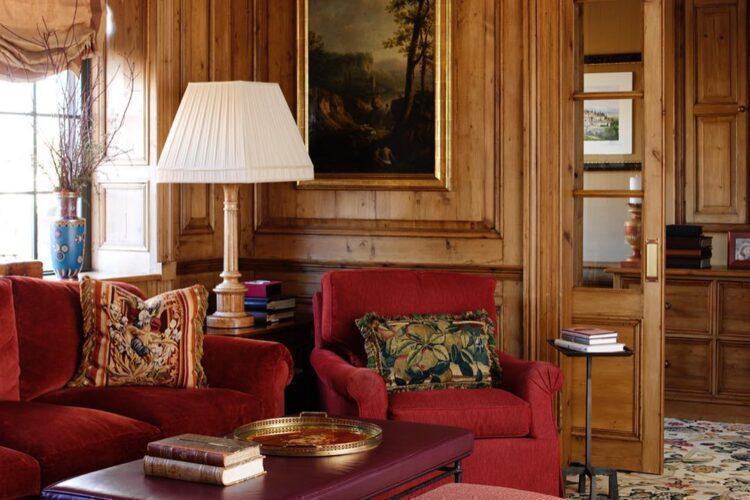
A Glossary of Handmade Rugs and Kilims: Understanding Terms, Types and Techniques Past and Present
Referring to the art style characterized by using shape and color withdrawn from traditional repetition or realism. Abstract rugs — sometimes referred to as art rugs — capture an expressive nature that reads as a very modern style, though many abstract rugs draw inspiration from works of the same art style in the mid-century. One of the more widely known mid-century lineages of this style is abstract expressionism, named for the literal "expressionists" of the 1950s. Some of the most notable names behind this style include Jackson Pollock and Mark Rothko. Referring to a lineage of nomadic Persian rugs (sometimes referred to as “Avsar” in the alternate spelling). Afshar rugs hail from the eponymous tribe in the region of Northeastern Iran.
Read the Feature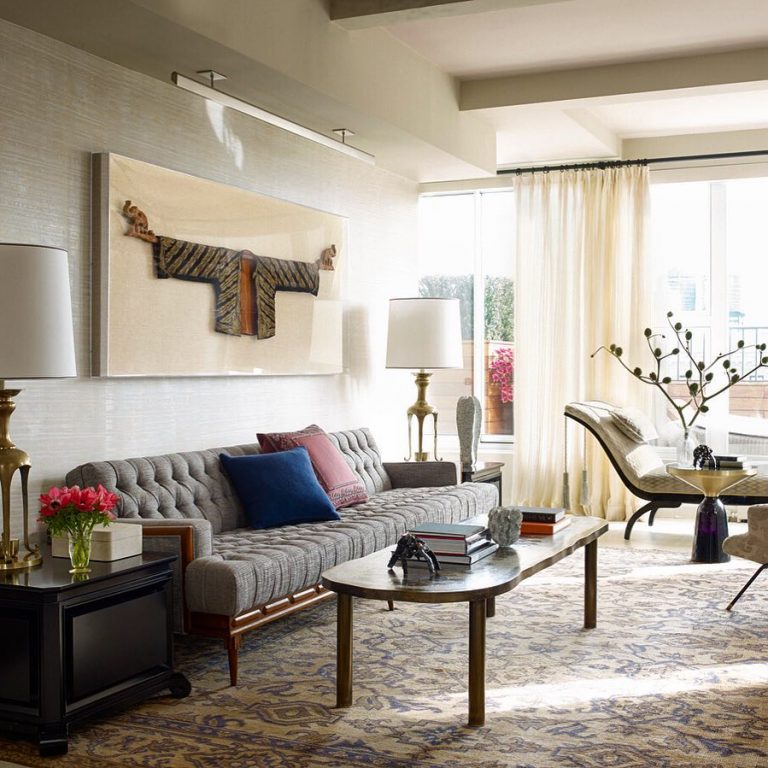
An Abbreviated Guide To Antique and Vintage Rugs
Antique rugs have been in Josh’s resume since he began in the industry almost 40 years ago when he was already recognized for one of the largest oriental rug collections in the United States. Each piece in the internationally recognized volume was hand picked for rarity, and of course aesthetic and beauty, now complementing one of the widest varieties of Persian rug and Turkish rug collections with the utmost attention to individuality and care. Because of Josh’s position in the wholesale rug industry he’s been responsible for promoting a number of collections throughout history, from breathtaking signature Tabriz, Sultanabad, Kerman Lavar, Agra, and Oushak classics to the more unsung jewels of the luxury industry.
Read the Feature