

A Rug & Kilim Perspective on Boutique Hospitality, Hotels, and the Art of Living Well
March 24, 2026
How Mid-Century Textile Artists Rewrote the Language of Art and Space Globally: A Lineage of Design Today
April 2, 2026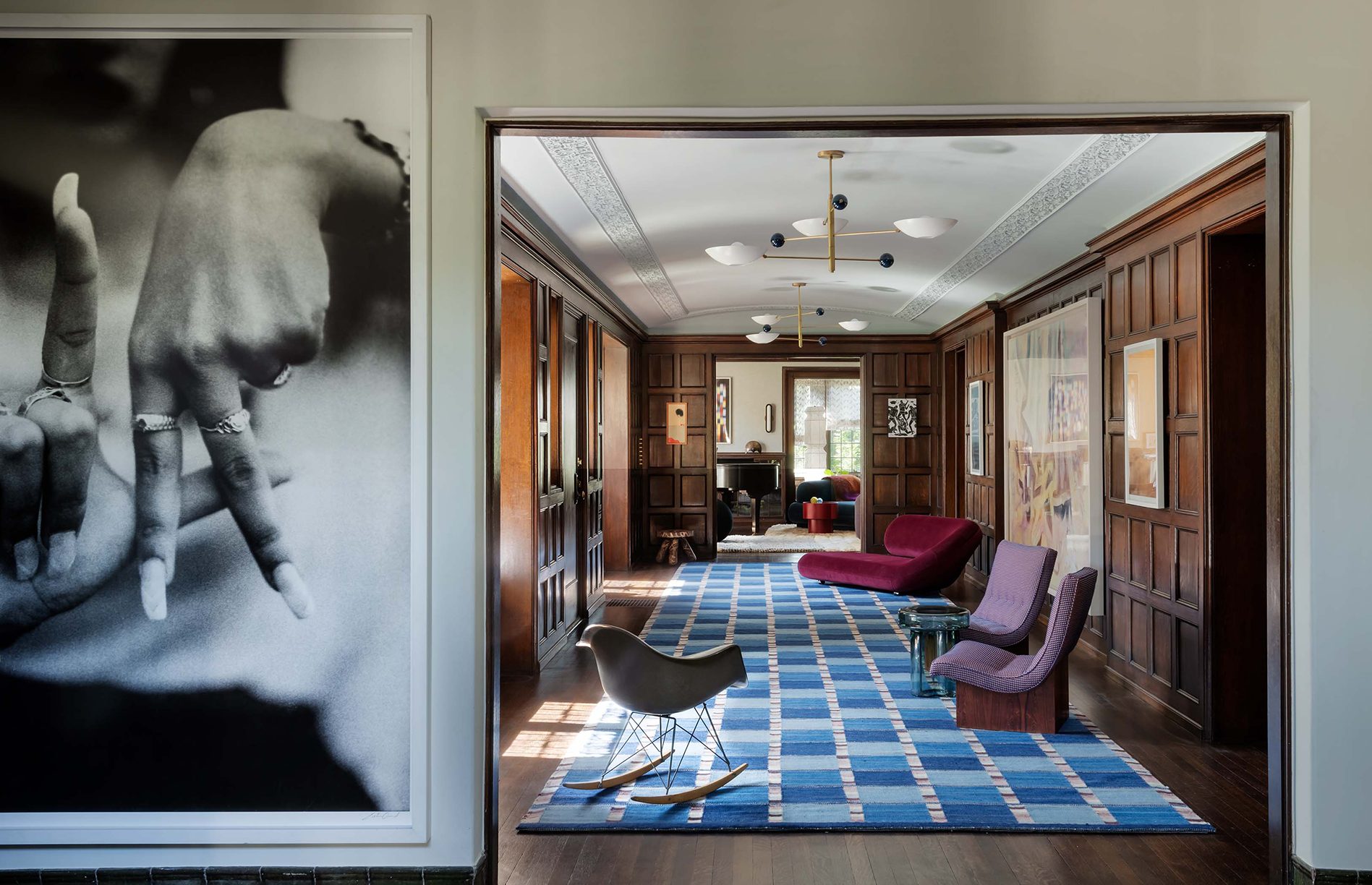
Rug & Kilim x Studio DB
There are rooms – rare, disciplined rooms, where nothing is accidental. A salon overlooking Lake Como, where a 19th-century Aubusson anchors parquet floors beneath frescoed ceilings. A Manhattan interior shaped by the restraint of Peter Marino, where a Scandinavian flatweave holds its ground against glass, steel, and silence. A private riad in Marrakech, where tribal geometry converses effortlessly with shadow, plaster, and time.
In such spaces, pattern is not simply chosen. To understand pattern at this level is to move beyond decoration into discipline. Great decorators and architects like Jacques-Émile Ruhlmann, Le Corbusier, and Gio Ponti never treated surfaces as passive. Floors, like walls and ceilings, were compositional fields governed by proportion, rhythm, and intellectual clarity.
This idea is neither modern nor nostalgic. It is continuous. One finds it in the studied opulence of the Palace of Versailles, where Savonnerie carpets extended the language of painting underfoot; in the quiet rigor of Nordic interiors shaped by Axel Einar Hjorth; and in the layered domestic worlds described by Elsie de Wolfe, who understood early that rooms are narratives before they are arrangements. Literature has long recognized this spatial intelligence. In “In Search of Lost Time”, rooms are never inert; they accumulate memory through objects, textures, and repetition. Pattern, in this sense, behaves like prose: recursive, structured, and revealing more with time. Even in painting, from the symbolic density of The Arnolfini Portrait to the disciplined abstraction of Piet Mondrian, surface is never surface alone. It is a system.
And yet, in contemporary interiors, pattern is often misunderstood—reduced to motif, palette, or trend. What is lost is its original function: as a cultural grammar, a way of organizing space that precedes and outlasts style. The rug, perhaps more than any other medium, preserves this lineage intact. It is at once architecture, painting, and artifact—capable of carrying Safavid cosmology, French courtly theater, Scandinavian modernism, and tribal memory into the same present moment.
To speak of pattern, then, is not to speak of aesthetics. It is to speak of continuity, authorship, and the quiet discipline of living with things that mean more than they show. At its highest level, pattern is a discipline of thought.
Persian and Oriental Styles: Tree of Life Patterns
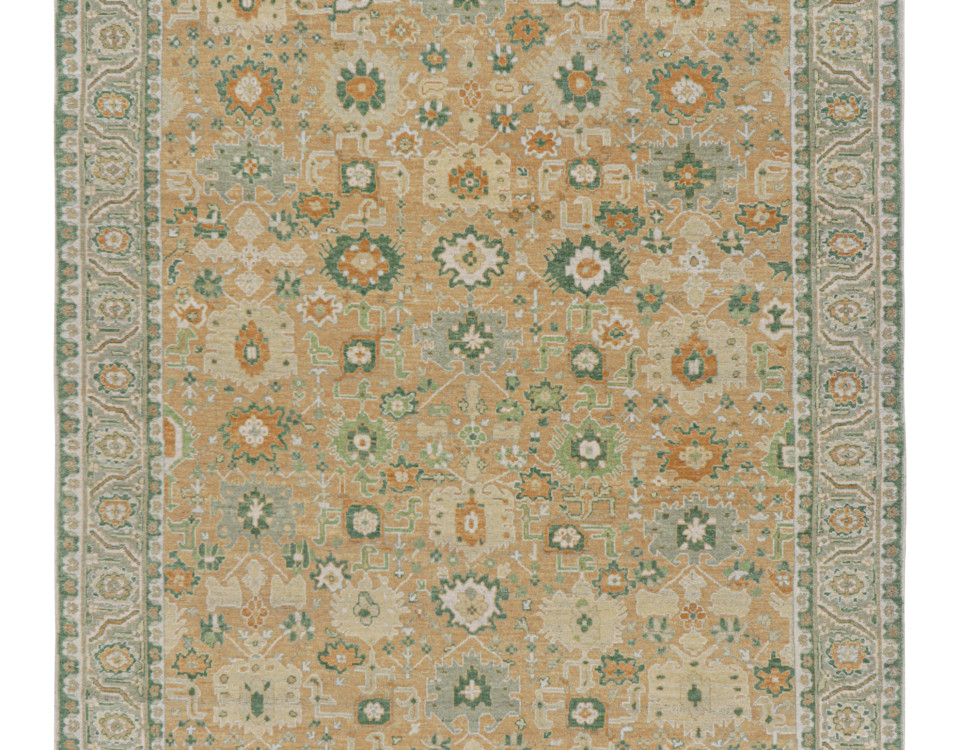
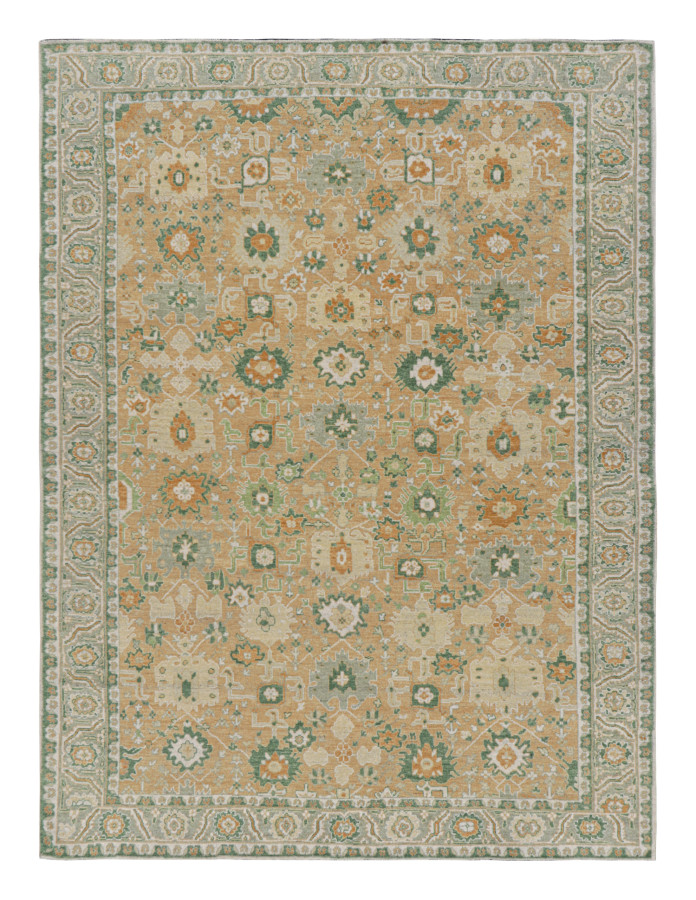
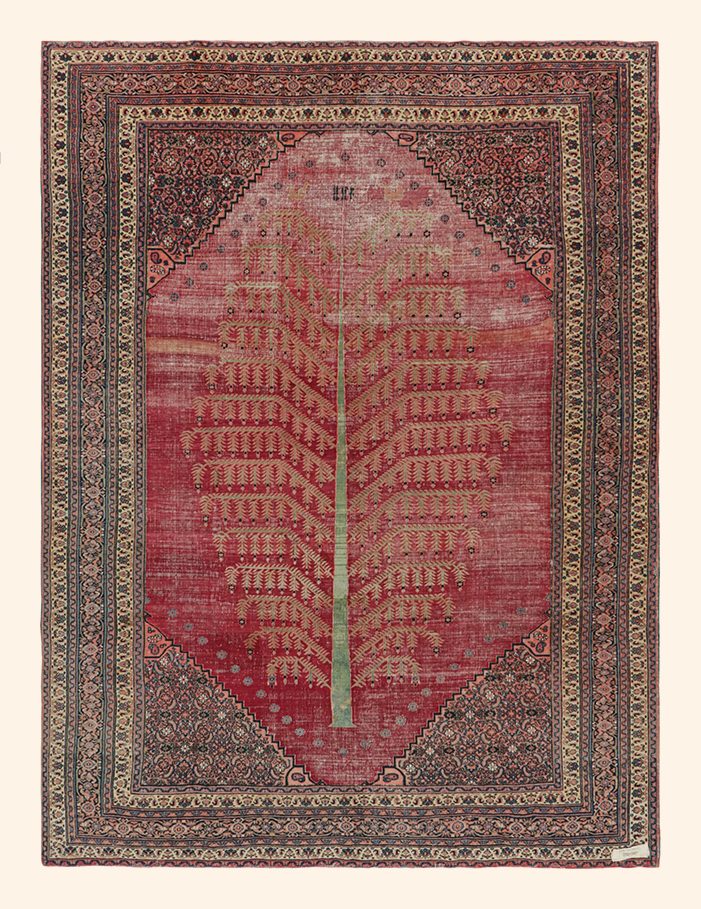
Few motifs in the history of design have endured with the intellectual and symbolic continuity of the Tree of Life. Its presence in Persian court carpets, particularly those emerging from Safavid ateliers of Isfahan and Kashan, positions it not merely as ornament, but as cosmology rendered in structure. The vertical axis of the Tree of Life mirrors architectural hierarchies found in sacred spaces. One might draw a direct line to the spatial logic of Sheikh Lotfollah Mosque, where geometry and ornament guide the eye upward toward transcendence. In both cases, the composition is not incidental—it is directive.
Art historically, this motif finds resonance in works such as The Arnolfini Portrait, where every object participates in symbolic narrative. Similarly, in literature, the Tree recalls the metaphysical layering of The Divine Comedy, a structured ascent through realms, governed by order and meaning. To place such a rug within an interior is to introduce a conceptual spine. It demands a setting that acknowledges its gravity: paneled libraries, formal salons, or contemporary spaces disciplined enough to allow narrative to lead.
Scandinavian Modernism
If the Tree of Life represents accumulation, Scandinavian design represents subtraction.
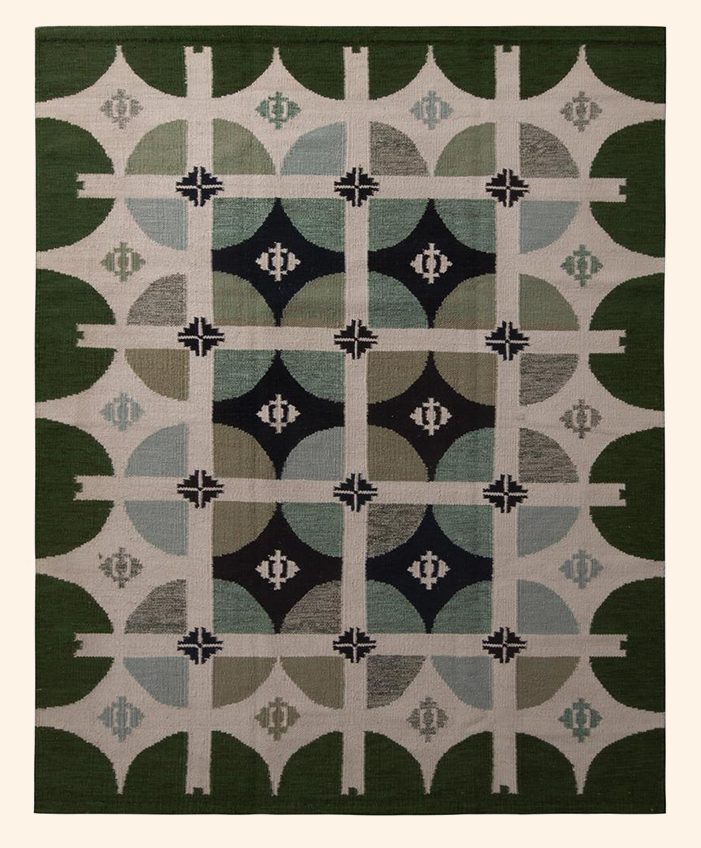
Mid-century Swedish weaving exemplified by figures such as Märta Måås-Fjetterström and Barbro Nilsson, transformed pattern into a study of restraint. Geometry replaces narrative; repetition replaces illustration. The result is a language of quiet authority. This reduction parallels the architectural ethos of Arne Jacobsen and Alvar Aalto, where form is purified to its essential logic. In painting, the closest analogue lies in the disciplined abstractions of Agnes Martin, whose grids approach the meditative.
In interiors, Scandinavian rugs operate as intellectual anchors. They are best placed in environments where material richness, wood, stone, leather—carries the weight of expression, allowing pattern to remain composed, almost reticent.
Art Deco and the Patterns of 1920s
Art Deco reframed pattern as a manifestation of modernity itself.
Emerging in the interwar period, it absorbed influences from industrial design, global trade, and the decorative arts. Designers such as Émile-Jacques Ruhlmann and textile innovators like Ivan da Silva Bruhns translated this energy into compositions defined by symmetry, velocity, and precision. Architecturally, this language finds its apex in structures like the Chrysler Building—a study in repetition, verticality, and controlled ornament. The same principles govern Art Deco rugs: pattern as structural rhythm.
Painting, too, offers parallels. The compositional clarity of Tamara de Lempicka reflects the same fascination with geometry and modern life. To deploy an Art Deco rug today is to engage with this lineage. It thrives in interiors that acknowledge architecture, spaces where furniture, lighting, and materiality are orchestrated with similar discipline.
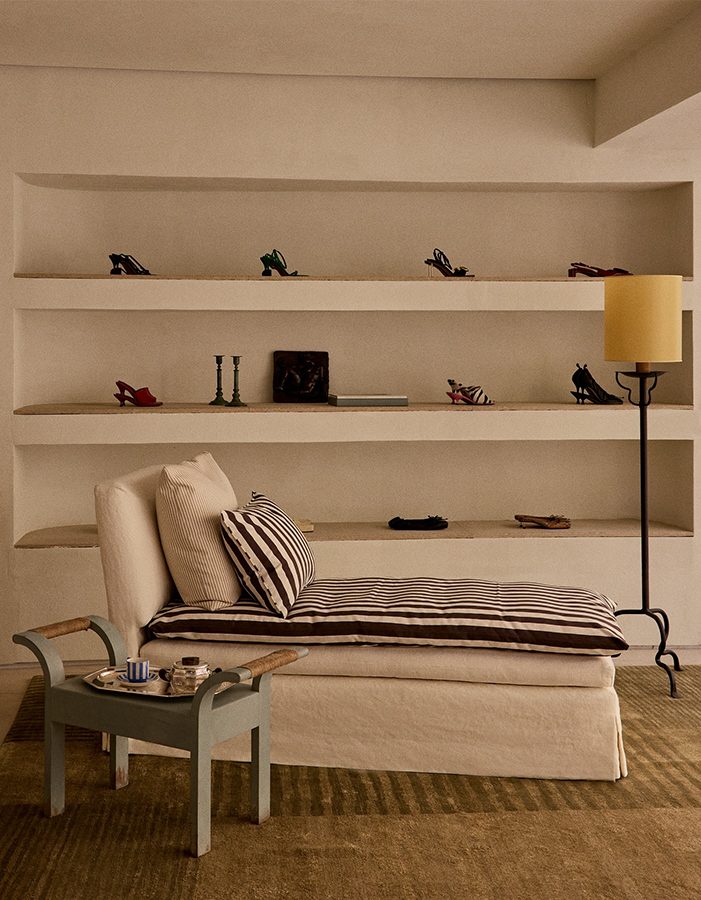
Rug & Kilim’s French Deco x JACQUEMUS
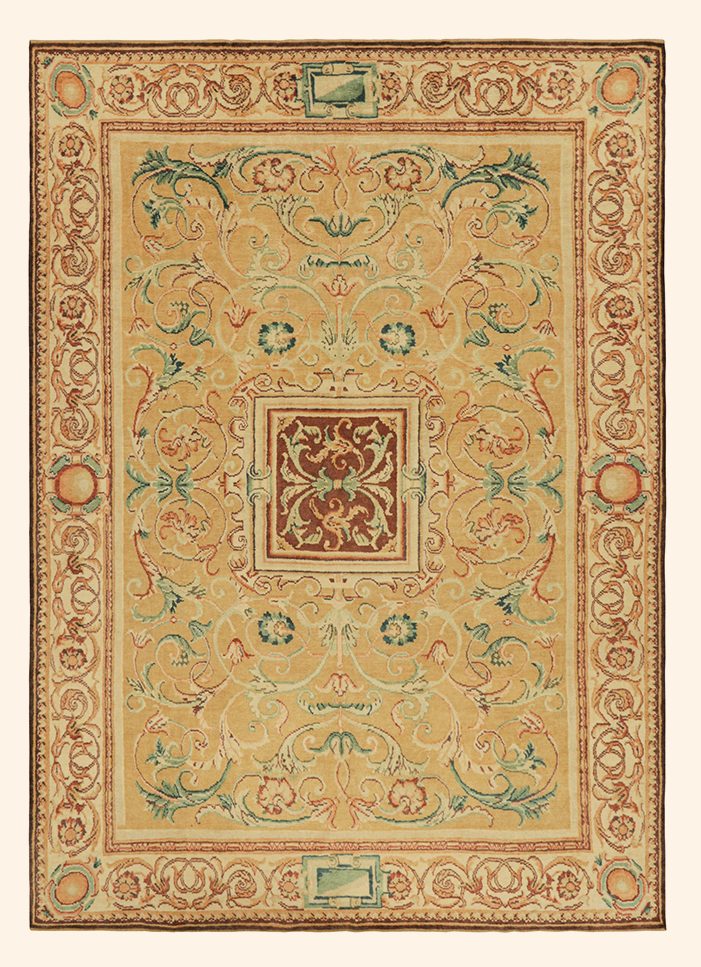
French Aubusson and Savonnerie Designs
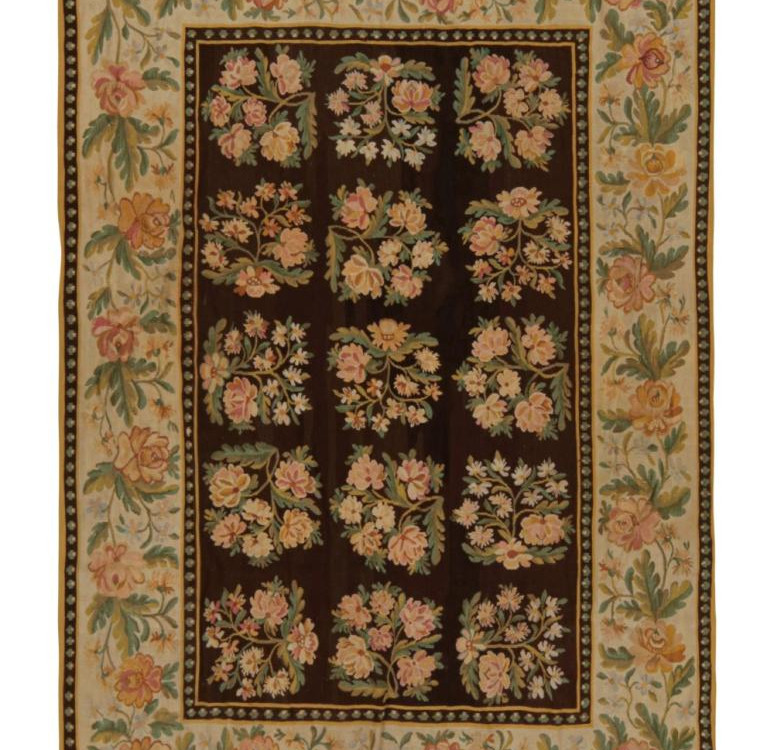
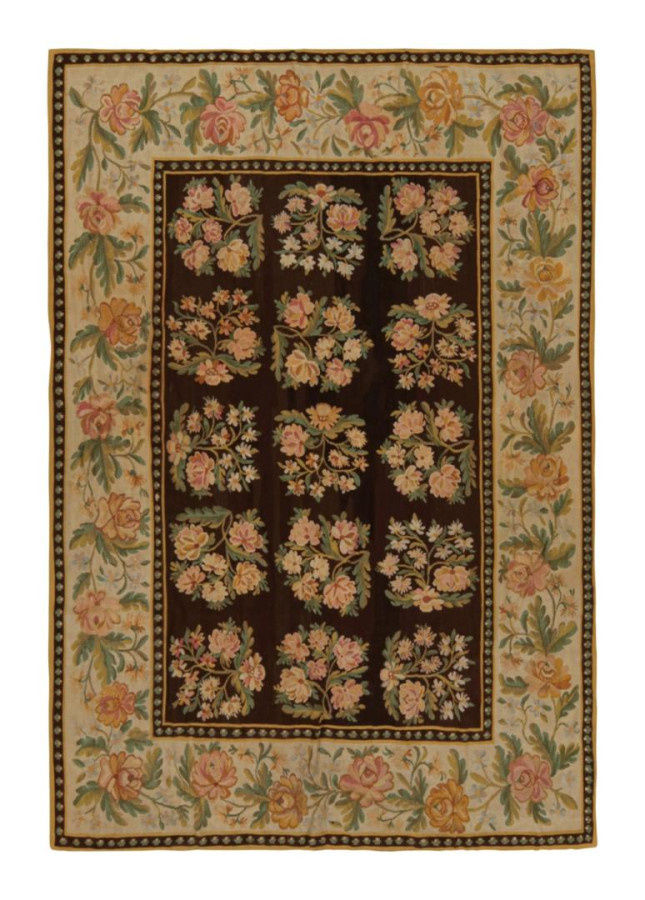
In the grand manufactories of France, Aubusson and Savonnerie; pattern reached a painterly apex. Under royal patronage, these workshops collaborated with artists such as Jean-Baptiste Oudry to produce rugs that functioned as extensions of the painted canvas. Floral garlands, scrolling acanthus, and medallions unfold with a theatricality reminiscent of Rococo painting. One need only consider interiors like the Palace of Versailles to understand their intended context. Here, pattern is not isolated; it is immersive—coordinated across ceiling, wall, and floor.
In literature, this sensibility aligns with the elaborate social choreography of In Search of Lost Time, where detail accumulates into atmosphere. In contemporary design, these rugs introduce a cultivated softness—particularly within modern spaces that benefit from a counterpoint to minimalism. Their success lies in tension: historical richness against contemporary restraint.
Modern Tapestry and the Artist’s Hand: Lurçat and Beyond
The 20th century redefined tapestry as a site of artistic authorship.
Figures such as Jean Lurçat, Jean Picart Le Doux, and Edmond Dubrunfaut rejected purely decorative traditions in favor of bold, graphic compositions. Their works engage directly with painting—often abstract, sometimes political, always intentional. This movement paralleled broader developments in modern art. One might place these tapestries in dialogue with the chromatic fields of Mark Rothko or the symbolic language of Pablo Picasso. Institutionally, their importance is affirmed by collections such as the Centre Pompidou, where tapestry is treated not as craft, but as contemporary art. In interiors, these works demand space, literal and intellectual. They are best positioned as primary statements, often replacing painting altogether. The wall becomes textile; the room becomes gallery.
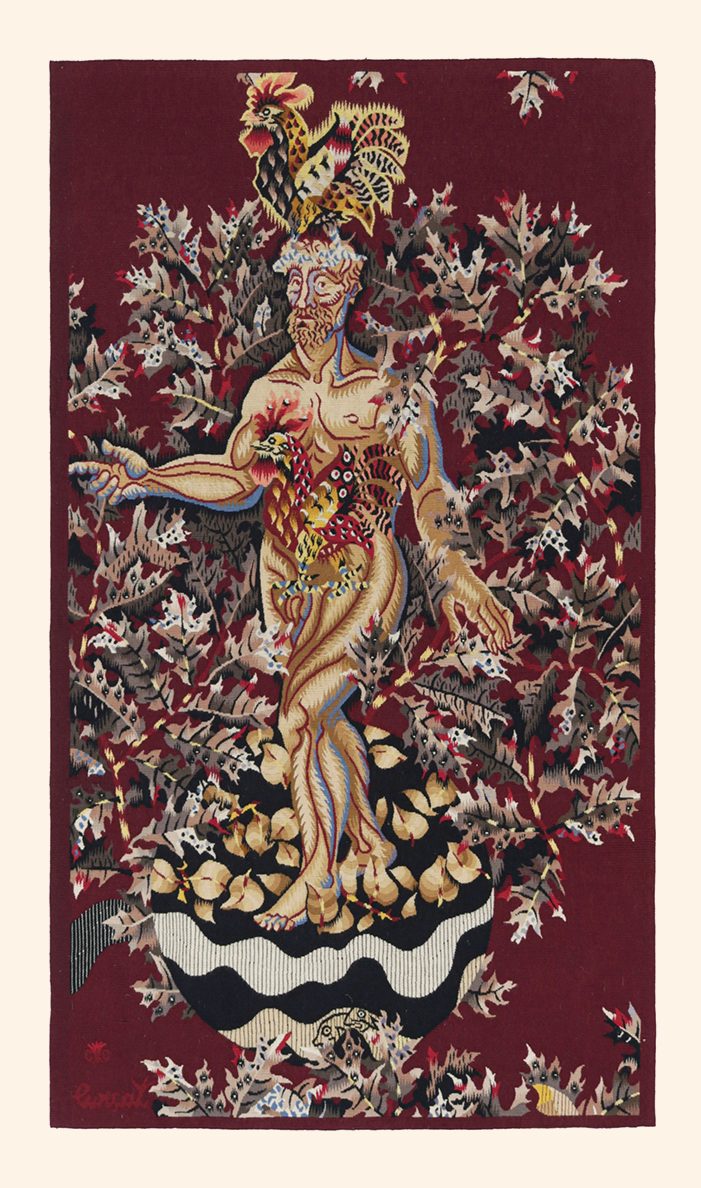
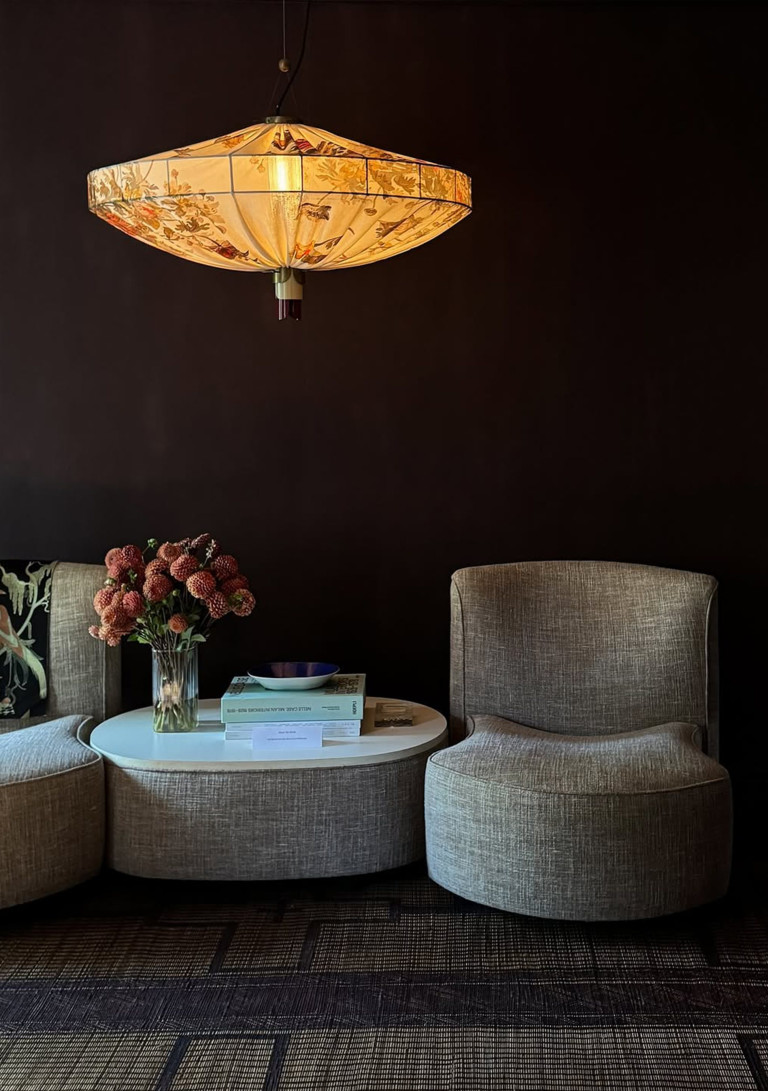
Olivia Williams Studio x Rug & Kilim
Tribal and Nomadic Designs
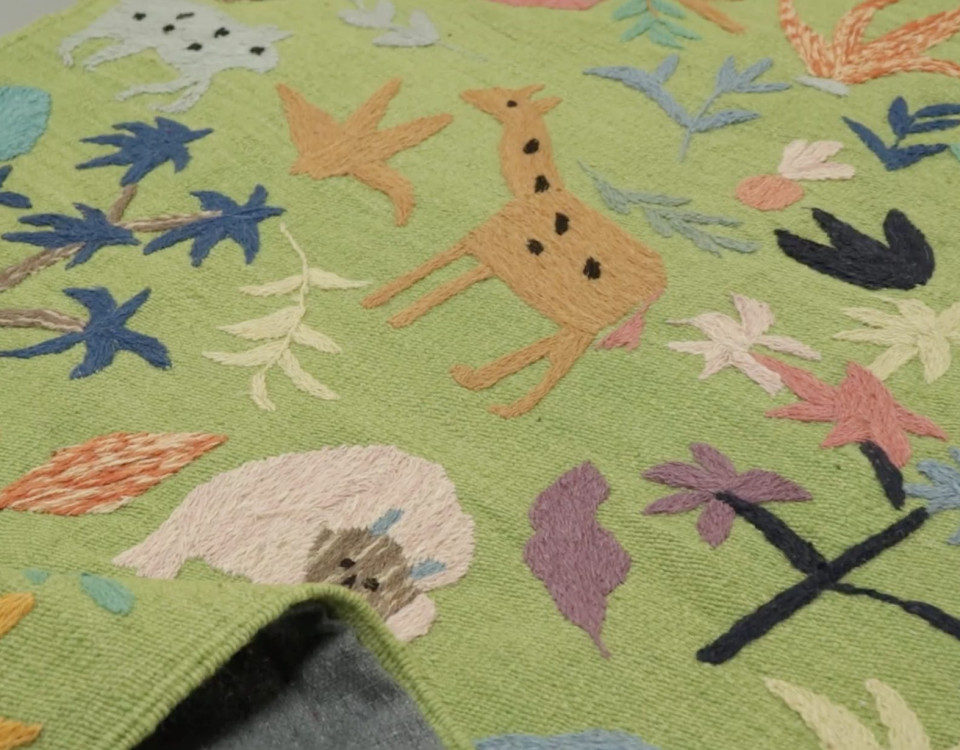
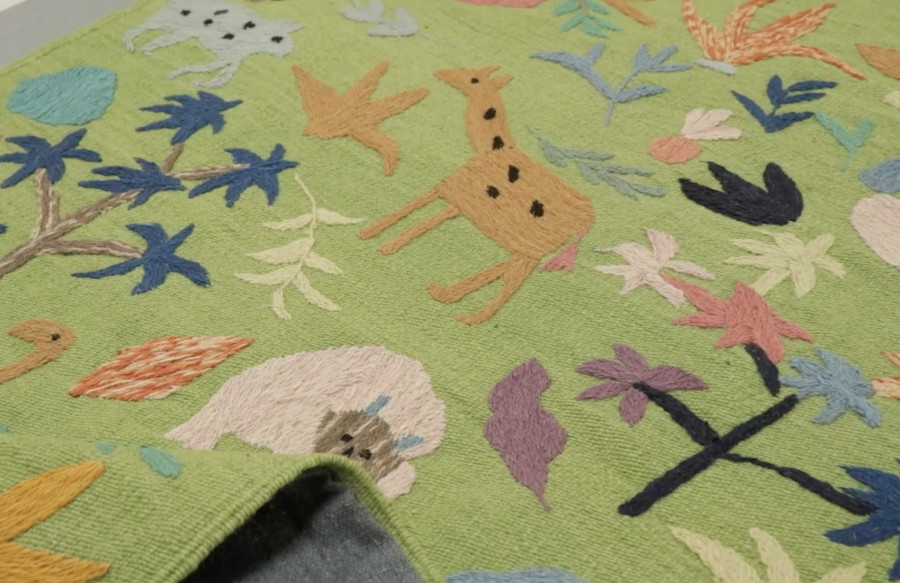
Beyond courts and ateliers lies another lineage: tribal weaving traditions, where pattern functions as memory. In Moroccan, Caucasian, and Central Asian textiles, motifs are transmitted across generations, each variation encoding identity, geography, and belief. These are not designed in the modern sense; they are inherited systems. Their abstraction has drawn sustained interest from modern artists. The visual language of these rugs finds echoes in the work of Paul Klee, whose fascination with non-Western pattern reshaped his approach to composition.
Anthropologically, such works are studied in institutions like the Smithsonian Institution, where they are understood as cultural documents as much as design objects. In contemporary interiors, they introduce a necessary irregularity—a disruption of perfection that restores humanity to space.
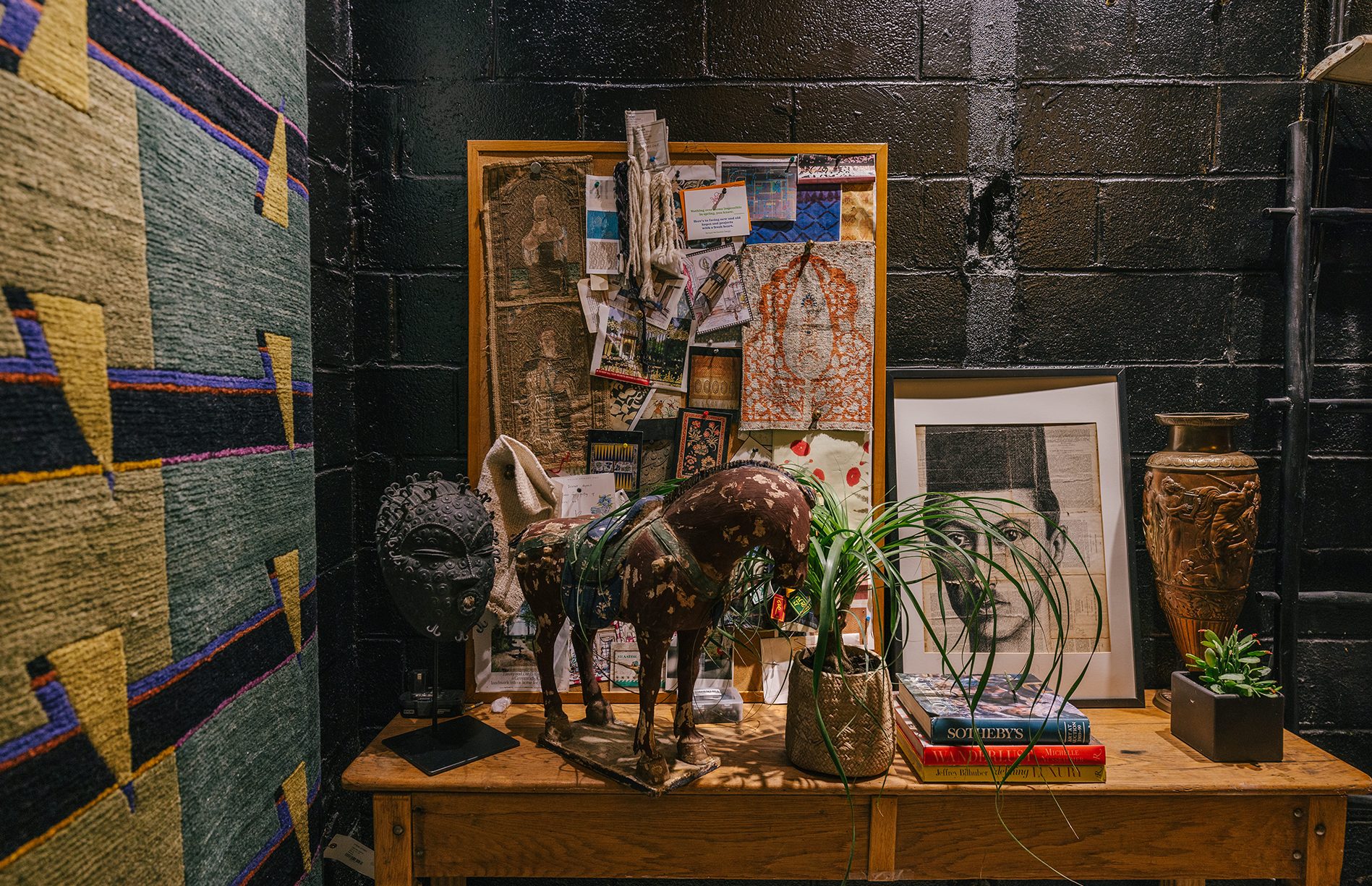
Rug & Kilim Showroom
The Rug & Kilim Perspective
At Rug & Kilim, pattern is approached not as style, but as scholarship. The collection spans Safavid court carpets, European masterworks, Scandinavian modernism, and contemporary interpretations, each selected for its place within a larger historical and design continuum. Artists such as Ivan da Silva Bruhns, Barbro Nilsson, and Jean Lurçat are represented not as isolated figures, but as part of an evolving dialogue between art, architecture, and textile.
This approach aligns more closely with curatorial practice than retail. Each rug is positioned within a lineage—understood in relation to painting, to architecture, to literature.
Because pattern, at its highest level, is intellectual infrastructure. It asks the eye to slow, to read, to recognize relationships across time and medium.
Pattern does not demand attention.
It rewards it.