Tapestry
Contemporary
Origin ▼
Style ▼
Material ▼
Width
Length
To connect with a specialist, click here
Stories from the Contemporary Archive
Essays, artist dialogues, and provenance notes drawn from Rug & Kilim’s editorial desk.
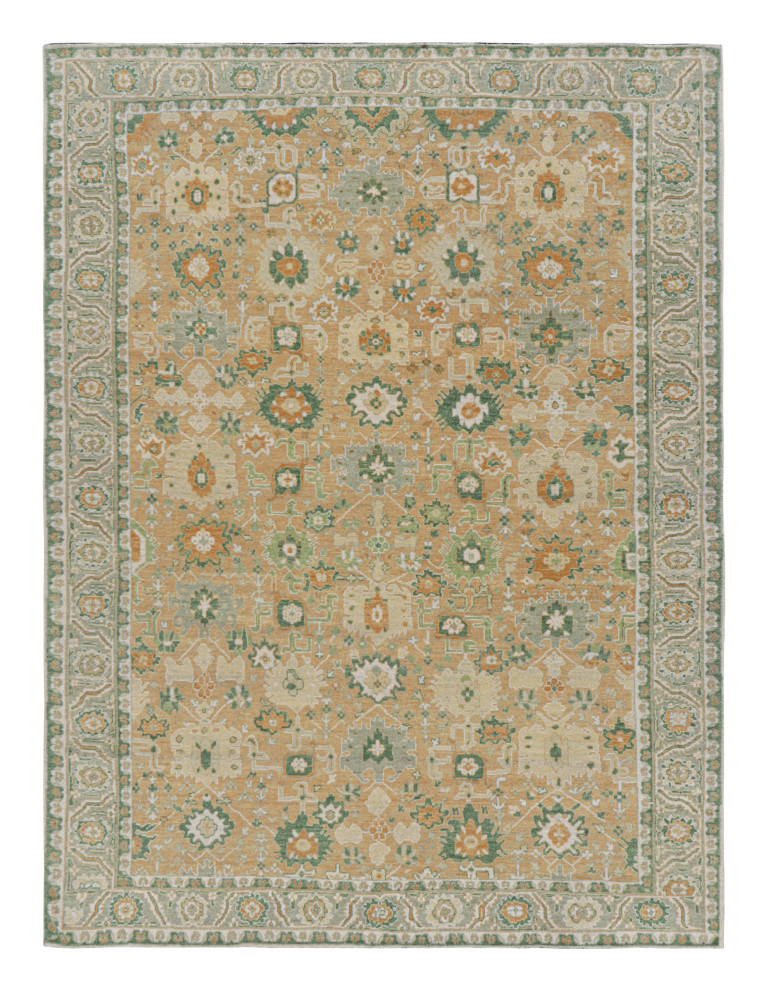
The Complete Guide to Oushak Rugs: History, Aesthetic Language, and Contemporary Design Use
Oushak rugs, also spelled Uşak or Ushak, stand among the most influential textile traditions in the history of interior design. Originating in western Anatolia, in the historic weaving town of Uşak in present-day Turkey, these carpets are not merely decorative artifacts; they are architectural design elements, cultural documents, and artistic statements that have shaped interior aesthetics across centuries. From Ottoman imperial courts to Renaissance European palaces and today’s luxury residential, hospitality, and gallery spaces, Oushak rugs continue to define a visual language of soft geometry, spacious design, muted tonal harmony, and painterly abstraction. Their enduring relevance places them at the intersection of art history, textile heritage, and contemporary interior design innovation.
Read the Feature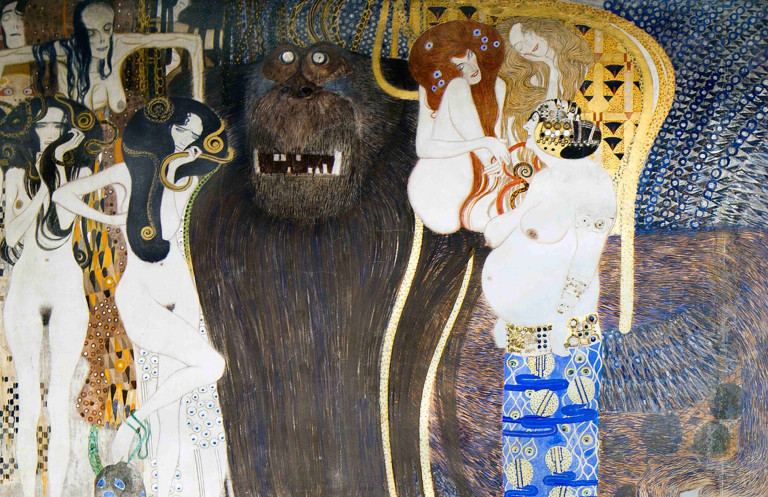
The Total Art: Vienna’s Century, From the Gold Frieze to the Contemporary Era
In the dining room of a banker's house in Brussels there is a wall of gold. Klimt designed it; the Stoclet Frieze, a tree of life branching across marble and enamel and coral, a dancer on one side and an embracing couple on the other, the couple a direct rehearsal for the painting the whole world would later know as The Kiss. But to stand in that room, were one ever permitted to, is to understand that the frieze is not the point of it. The point is that the frieze, the marble, the cutlery, the door handles, and the carpet underfoot were all conceived as a single object by a single mind. The Palais Stoclet, built by Josef Hoffmann between 1905 and 1911 and now sealed as a UNESCO World Heritage Site, is the most complete surviving statement of the idea that organised an entire Viennese century: the Gesamtkunstwerk, the total work of art, in which nothing; not the spoon, not the dress, not the floor, ranks below the painting on the wall.
Read the Feature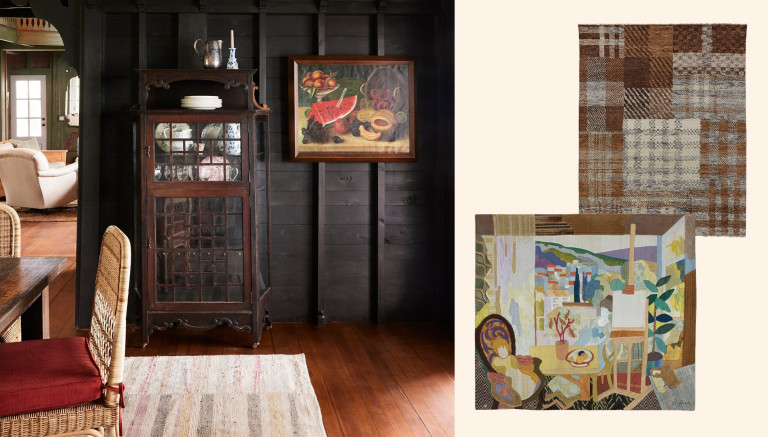
How the World’s Most Serious Art Spaces Are Rewriting the Rules of the Floor and the Contemporary Home
There is a room at Hauser & Wirth Somerset; the gallery that occupies a converted farmhouse in the English countryside, where Pipilotti Rist installations have shared walls with Phyllida Barlow sculptures and where the building itself feels like an argument against the idea that serious art requires a white cube to be taken seriously, where a single large antique textile lies on the stone floor beneath work of radical contemporary ambition. It does not announce itself. It simply holds the room together with the authority of an object that has been doing exactly this, in exactly this way, for several centuries longer than the art above it has existed. The artists whose work hangs on those walls have spent their careers thinking about surface, material, and the relationship between an object and the space it occupies. The carpet understood all of this before any of them picked up a brush.
Read the Feature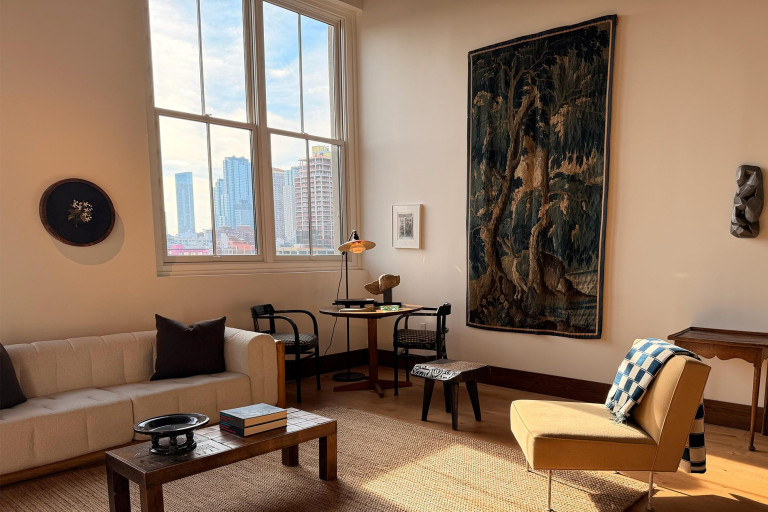
Tapestries in the Language of Contemporary Design: When Walls Speak
Tapestry is the oldest form of spatial storytelling. Before wallpaper became political, before murals were democratized, before art was framed, taxed, traded, or speculated upon, power was woven. Tapestries were the original soft architecture of authority—portable walls for empires on the move, visual treaties between monarchs, and declarations of taste that traveled more freely than armies. They insulated cold stone halls, softened acoustics for diplomacy, and—perhaps most importantly—controlled the narrative. In a world without screens, tapestries were the screens: projecting mythology, ideology, lineage, and aspiration in wool, silk, and gold thread.
Read the Feature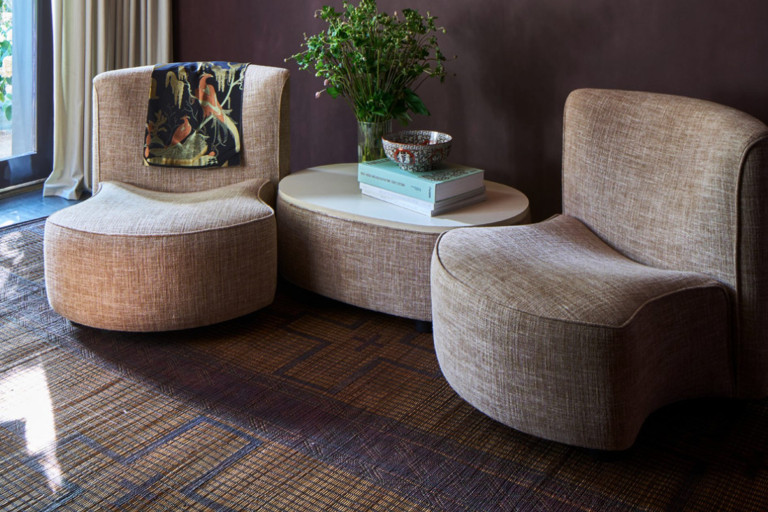
Tuareg Textiles and Design: History, Tribal Craft, and Contemporary Influence
The Sahara has never been short of ideas. It has merely been selective about who hears them. The Tuareg did not set out to create an aesthetic. They created a system. Long before design was professionalized, categorized, or monetized, Tuareg artisans developed a material language governed by movement, restraint, and exacting necessity. What remains today — in textiles, metalwork, and spatial logic — is not folklore but authorship: a coherent design intelligence that continues to inform contemporary practice, whether acknowledged or not. At Rug & Kilim, we approach Tuareg works not as ethnographic specimens, nor as romantic artifacts, but as foundational design objects. They belong not on the margins of decorative history, but firmly within its canon.
Read the Feature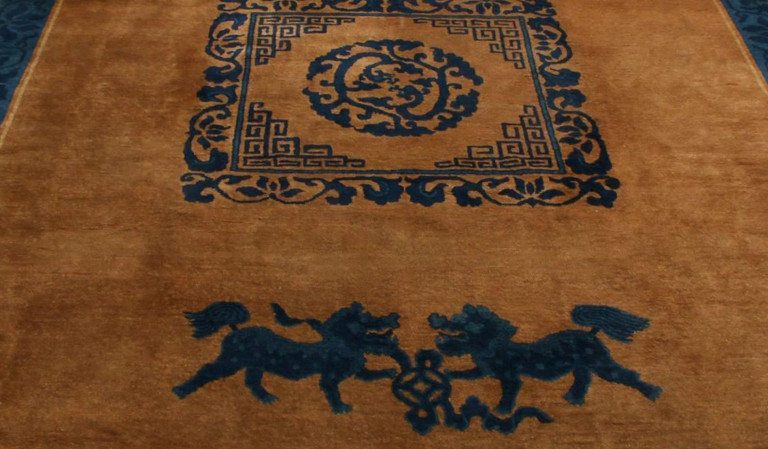
The Art, Politics, and Design of Peking Rugs: From Qing Palaces to Contemporary Interiors
To engage with an antique Peking rug is to step into a dialogue between art, politics, and spatial philosophy. Unlike their Persian or Ottoman counterparts, Peking rugs do not overwhelm with ornament. They persuade quietly, through disciplined geometry, reserved color palettes, and motifs that echo the restrained harmony of Chinese architecture and literati aesthetics. Born in the imperial looms of late Qing Dynasty Beijing and carried into early 20th-century trade ateliers, these rugs embody a convergence: the rigor of Confucian order, the symbolism of Taoist cosmology, and the pragmatism of a China entering global modernity. To own or study a Peking rug is not merely to examine a textile, but to read a palimpsest of political transition, philosophical belief, and design refinement.
Read the Feature