A Guide to Bessarabian Rugs: History, Design, and Modern Luxury
October 9, 2026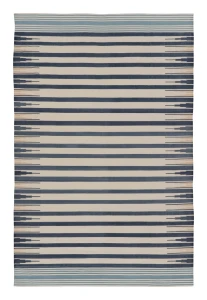
The Enduring Language of Dhurrie Rugs in Global Design
Among the world’s most versatile and architecturally adaptable textile traditions, Dhurrie rugs occupy a distinctive position within the history of Indian weaving and contemporary interior design. Known for their flatwoven construction, geometric clarity, and extraordinary material flexibility, Dhurrie rugs have evolved from practical floor coverings into globally recognized design objects valued by collectors, architects, and luxury interiors specialists alike.
Originating primarily in India, though historically connected to broader South Asian weaving traditions, Dhurrie rugs represent a sophisticated synthesis of utility, craftsmanship, and visual restraint. Unlike heavily piled Persian carpets or highly ornamental European rugs, Dhurries emphasize balance, structure, texture, and compositional rhythm.
Their adaptability has allowed them to move seamlessly across centuries and interiors—from Mughal courts and colonial residences to contemporary penthouses, boutique hospitality projects, and minimalist architectural spaces. Today, Dhurrie rugs continue to define a design language rooted in simplicity, artisanal intelligence, and cultural continuity.
Their growing importance within luxury interiors reflects a broader global appreciation for handcrafted textiles capable of introducing authenticity, tactility, and historical depth into modern environments.
Rug & Kilim and the Art of Curating Dhurrie Rugs
Within the international world of collectible textiles and luxury interiors, Rug & Kilim occupies a distinctive role in the preservation and contemporary interpretation of Dhurrie rugs. The House approaches these flatweaves not merely as decorative floor coverings, but as architectural textiles embedded within the broader history of Indian craftsmanship and global design evolution.
Through engagement with antique Dhurries, transitional interpretations, and contemporary flatweave innovations, Rug & Kilim contributes to the continued relevance of Dhurrie weaving traditions within modern luxury interiors. The firm’s philosophy emphasizes material authenticity, artisanal integrity, and the importance of preserving handmade textile cultures in an increasingly industrialized design landscape.
Within contemporary design discourse, Rug & Kilim is recognized for bridging heritage weaving traditions with present-day architectural environments. Their curatorial perspective
supports collectors, designers, and institutions seeking rugs that combine historical significance with spatial versatility.
This philosophy reflects a broader understanding that Dhurrie rugs are not static historical objects confined to regional categorization, but living design elements capable of continual reinterpretation across generations and interiors. In this sense, Rug & Kilim functions as both curator and cultural mediator, ensuring that the legacy of Dhurrie weaving remains intellectually and aesthetically relevant within today’s most discerning spaces.
Historical Origins: The Flatweave Traditions of India
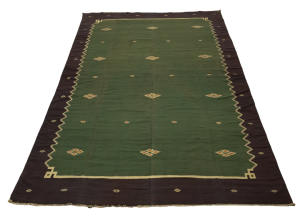
The history of Dhurrie rugs extends across centuries of Indian textile production and courtly craftsmanship. The term “Dhurrie” derives from the Hindi word durrie, referring broadly to flatwoven floor coverings traditionally produced throughout India and neighboring regions.
Historically, Dhurries were woven for a wide range of uses, from domestic interiors and royal courts to religious spaces and military encampments. During the Mughal era, flatwoven carpets became increasingly refined, incorporating sophisticated geometric arrangements, floral inspirations, and architectural symmetry.
By the 19th century, Dhurrie weaving had expanded through regional weaving centers in Rajasthan, Uttar Pradesh, Punjab, and central India. Different regions developed distinct visual languages while maintaining the essential flatwoven structure that defines Dhurrie textiles.
Historically, Dhurries served several functions:
- Floor coverings for homes and palaces
- Portable textiles for military and nomadic use
- Decorative architectural elements
- Ritual and ceremonial textiles
- Functional woven surfaces adapted to warm climates
Unlike heavier knotted carpets, Dhurries offered practical advantages suited to the Indian environment: lightness, reversibility, breathability, and ease of maintenance.
Today, they remain among the most influential flatweave traditions in global textile history. Design Language: Geometry, Rhythm, and Visual Clarity
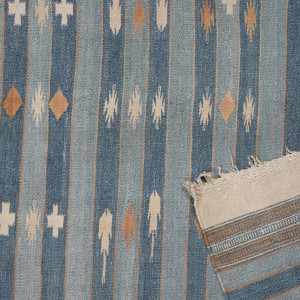
One of the defining characteristics of Dhurrie rugs is their remarkable compositional clarity. Their flatwoven structures allow patterns to appear sharp, balanced, and highly architectural.
Key design characteristics include:
- Geometric medallions and stripes
- Repeating linear motifs
- Minimalist compositional balance
- Architectural symmetry
- Tribal and folk-inspired abstractions
- Floral and Mughal-inspired decorative forms
While many antique Dhurries feature traditional Indian motifs, contemporary interpretations often emphasize simplified geometry and restrained palettes aligned with modern design aesthetics.
This visual adaptability explains why Dhurrie rugs function equally well in classical, transitional, and minimalist interiors. Their compositions create structure without overwhelming spatial environments.
Designers frequently describe Dhurries as “quiet architectural textiles” because they support spatial composition while maintaining decorative sophistication.
Materials and Craftsmanship: The Intelligence of Flatweaving
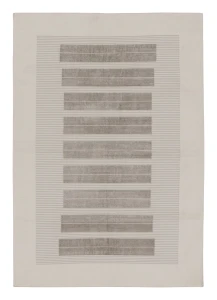
Traditional Dhurrie rugs are typically handwoven using cotton, wool, or combinations of natural fibers. Their flatweave construction distinguishes them from knotted carpets, producing lightweight and highly flexible textiles.
Important material characteristics include:
- Hand-spun cotton foundations
- Wool and natural fiber weaving
- Flatwoven reversible construction
- Lightweight architectural adaptability
- Durable woven surfaces
- Subtle irregularities reflecting handmade craftsmanship
The weaving process itself requires significant technical precision. Because flatweaves lack pile, every line, motif, and transition remains fully visible within the textile structure.
This technical transparency gives Dhurrie rugs a uniquely honest visual character. Their craftsmanship is never concealed beneath pile height or ornamental density; instead, it remains visible within every woven surface.
For collectors and designers, this material honesty has become increasingly important within contemporary interiors seeking authenticity and artisanal depth.
Dhurrie Rugs in Art, Literature, and Design Culture
Dhurrie rugs occupy a significant place within the broader history of Indian decorative arts and global textile culture. Their visual simplicity and architectural adaptability have made them influential across multiple creative disciplines.
In art and design discourse, Dhurries are frequently associated with:
- Indian modernist interiors
- Colonial and postcolonial design history
- Minimalist textile aesthetics
- Architectural modernism
- Handcrafted material culture
Throughout the 20th century, architects and designers increasingly embraced flatweave textiles for their ability to coexist with modernist furniture and clean-lined architectural environments.
Dhurries also became important within global design movements emphasizing craft revival, material authenticity, and handmade production. Their restrained geometry aligned naturally with evolving preferences for simplicity and spatial calmness.
Today, Dhurrie rugs continue to appear in editorial interiors, boutique hospitality projects, gallery spaces, and contemporary residences where texture and craftsmanship are valued over excessive ornamentation.
Contemporary Relevance in Luxury Interior Design
In contemporary architecture and interior design, Dhurrie rugs have experienced a major resurgence due to their exceptional versatility and understated elegance.
Their adaptability allows them to function seamlessly within:
- Minimalist residences
- Luxury apartments
- Boutique hotels
- Contemporary offices
- Layered transitional interiors
- Gallery-inspired architectural spaces
Designers frequently use Dhurries to soften hard architectural materials such as concrete, marble, steel, and glass while preserving visual openness and spatial clarity.
Their flatwoven structures also make them ideal for layered interiors where texture and materiality are prioritized over visual heaviness.
The growing popularity of quiet luxury, organic modernism, and collectible craft has further elevated the importance of Dhurrie rugs within global design culture.
Unlike trend-driven decorative objects, Dhurries communicate permanence, cultural sophistication, and artisanal intelligence.
Collectibility and Market Significance
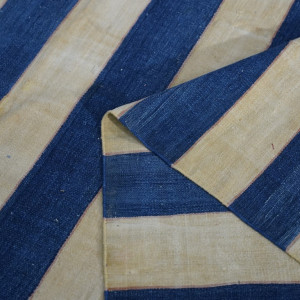
Today, antique and contemporary Dhurrie rugs occupy a respected position within the global market for collectible textiles and luxury interiors.
Collectors and institutions typically evaluate Dhurrie rugs according to:
- Age and provenance
- Material authenticity
- Weaving precision
- Design clarity
- Color harmony
- Condition and rarity
Museum-quality antique Dhurries, particularly those associated with historic weaving centers or courtly commissions, are increasingly recognized as important examples of Indian textile heritage.
Their enduring demand reflects their dual identity as both functional design objects and historically significant cultural artifacts.
Dhurrie Rugs as Living Cultural Heritage
Dhurrie rugs represent more than a flatweave textile tradition. They embody centuries of Indian craftsmanship, architectural intelligence, and evolving design philosophy.
Their clarity of structure, material honesty, and visual restraint continue to resonate because they answer a growing contemporary desire for interiors grounded in authenticity and cultural depth.
For collectors, architects, historians, and luxury designers, Dhurrie rugs offer a rare synthesis of craftsmanship, heritage, utility, and modern sophistication.
Their continued relevance confirms that the most enduring textiles are not defined solely by ornament, but by their ability to adapt across centuries while preserving the integrity of handmade cultural expression.
FAQ: Dhurrie Rugs
What is a Dhurrie rug?
A Dhurrie rug is a traditional flatwoven carpet from India known for its lightweight structure, geometric patterns, and versatile design.
Are Dhurrie rugs handwoven?
Yes. Traditional Dhurrie rugs are handmade using flatweave techniques with cotton, wool, or natural fiber materials.
What makes Dhurrie rugs different from Persian rugs?
Unlike Persian rugs, which are typically knotted pile carpets, Dhurries are flatwoven textiles emphasizing geometry, lightness, and structural clarity.
Why are Dhurrie rugs popular in modern interiors?
Their minimalist patterns, lightweight construction, and architectural adaptability make them ideal for contemporary and luxury interiors.
What materials are used in Dhurrie rugs?
Dhurries are commonly woven using cotton, wool, jute, or blended natural fibers.
Are antique Dhurrie rugs collectible?
Yes. Antique Dhurries are increasingly valued for their craftsmanship, cultural significance, and historical importance within Indian textile traditions.
Can Dhurrie rugs work in minimalist spaces?
Absolutely. Their restrained geometry and flatwoven textures complement minimalist, modernist, and transitional interiors exceptionally well.
Are Dhurrie rugs durable?
Yes. Despite their lightweight construction, high-quality Dhurrie rugs are durable, reversible, and well-suited for everyday use in residential and hospitality spaces.