
Dhurrie Rugs: History, Cultural Significance, and Contemporary Luxury
October 19, 2026From the painters of the great royal ateliers to the modern masters who made the wall a muse again, a field guide to the figures every serious collector should recognize
The Artists Behind European Tapestry
There is a persistent misconception about tapestry, and it is worth correcting at the outset: that the weaving is the whole of the art. It is not. Behind every great European tapestry stands an artist, the author of the design from which the weavers worked, and the history of the medium is in large part the history of these figures. To collect tapestry seriously, or simply to understand it well, is to know their names. What follows is a guide to the artists who matter most, arranged as the tradition itself unfolded, from the royal workshops of the old regime to the modern revival that made tapestry, once again, one of the most ambitious art forms in the world.
The Principle: The Cartoon and the Loom
Before the names, the method, because it explains everything that follows. A tapestry begins not on the loom but on paper, as a full scale painted design called a cartoon, or carton. The artist creates the cartoon; the weavers, working thread by thread, translate it into wool and silk. This division of labor is the defining fact of European tapestry. It means that the greatest tapestries are, always, collaborations between a painter of vision and weavers of extraordinary skill, and it means that the artist behind the cartoon is as essential to the work as the composer is to the symphony. Knowing the artists is knowing the art.
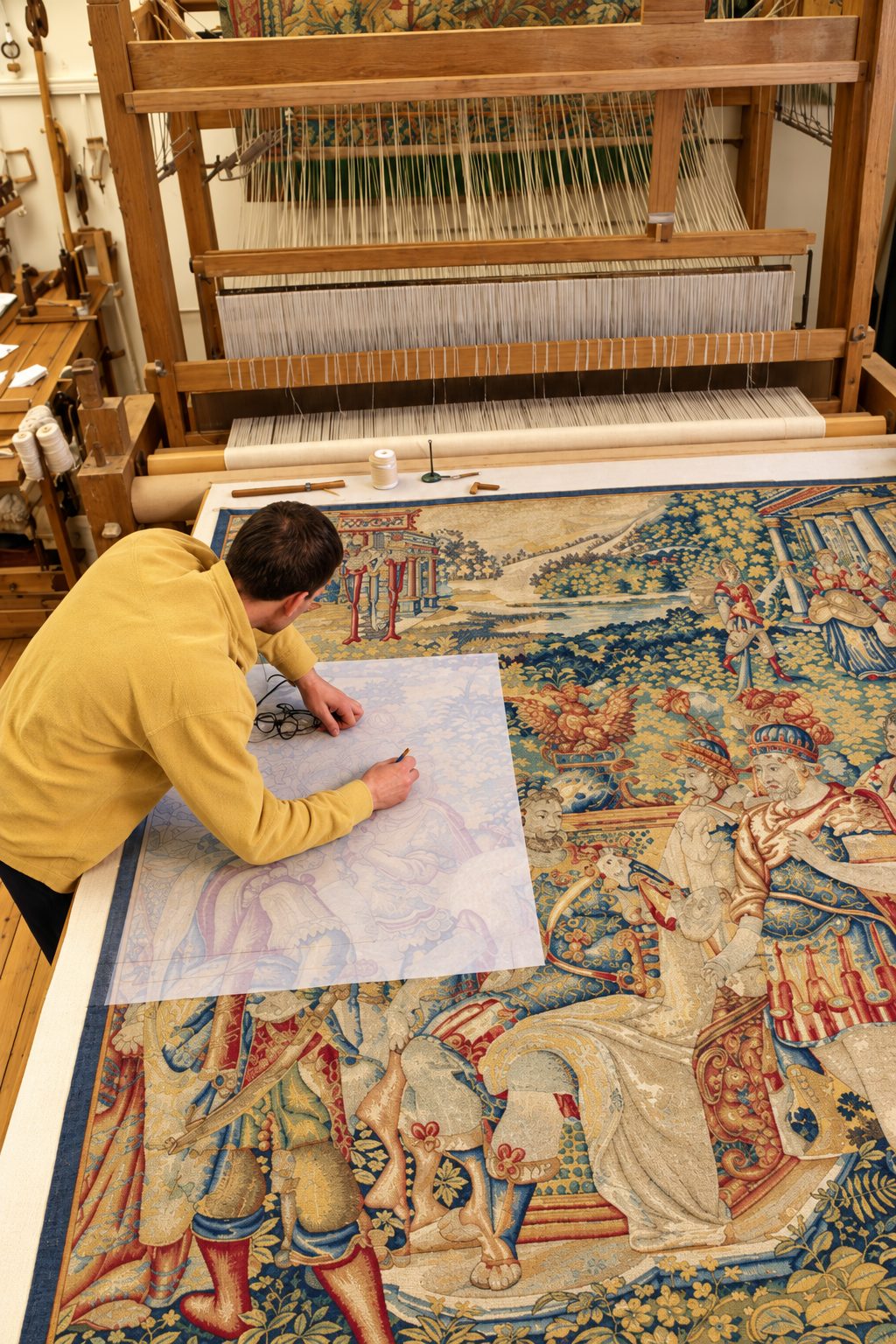
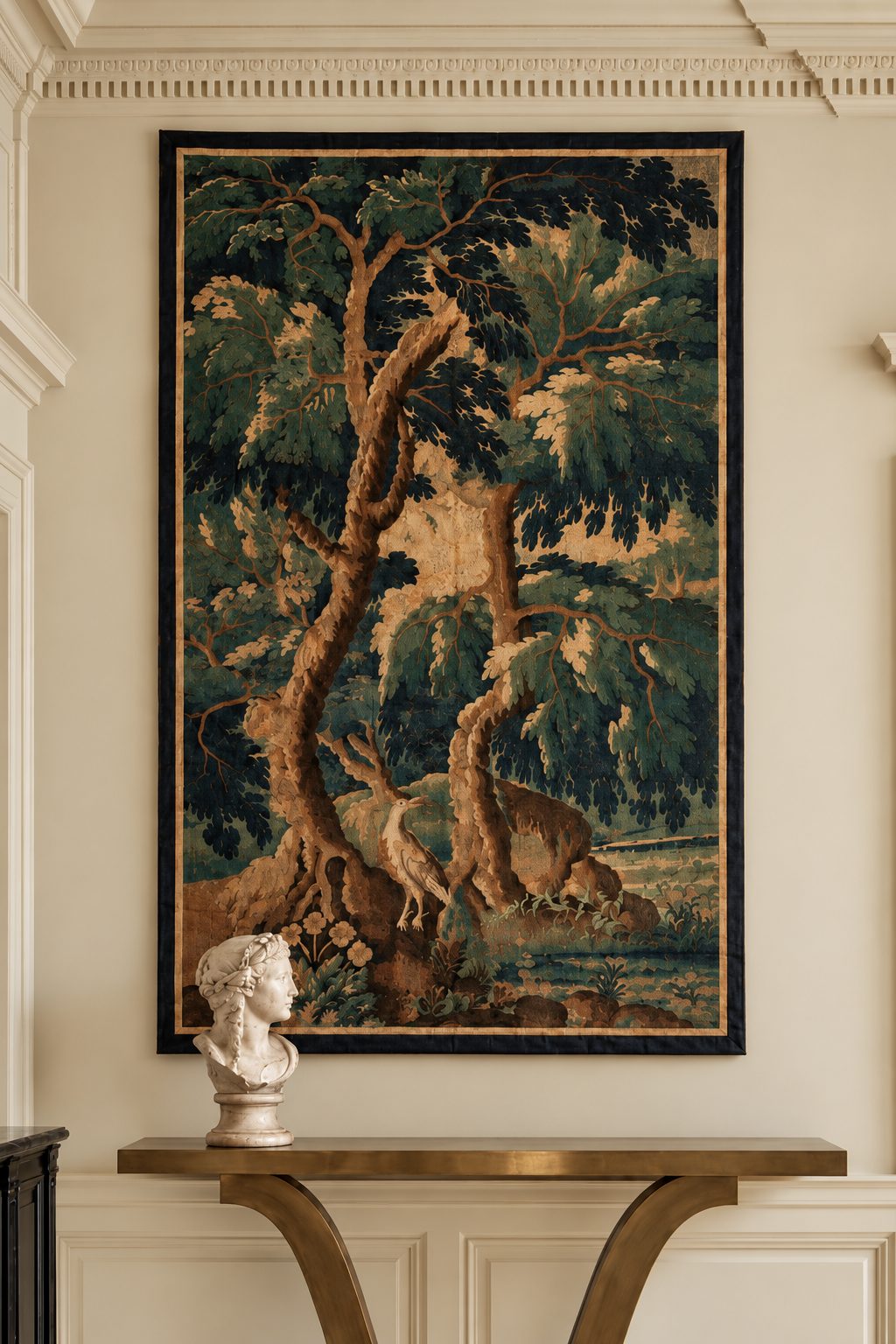
Antique 17th-Century Flemish Pictorial Landscape Tapestry – Rug & Kilim
The Old Masters: The Royal Ateliers
The story begins in the workshops that served the courts of Europe, where the finest painters of the age supplied designs for weavings of staggering ambition and cost.
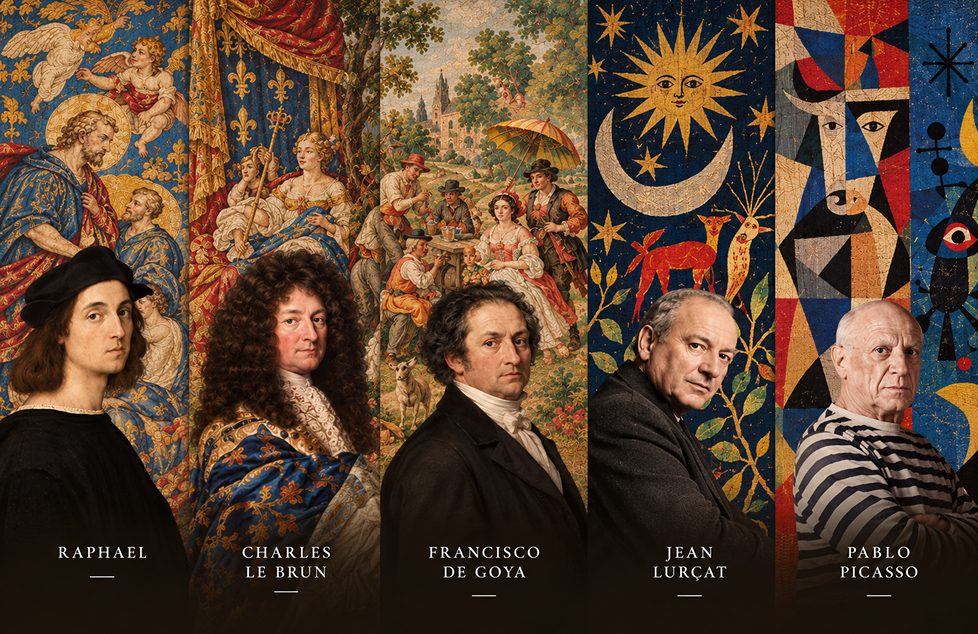
Raphael stands at the head of the tradition. His cartoons for the Acts of the Apostles, commissioned by Pope Leo X around 1515 for the Sistine Chapel and woven in Brussels, remain the single most influential set of tapestry designs ever made. They established, once and for all, that the greatest painters of the Renaissance considered tapestry a medium worthy of their fullest powers. The surviving Raphael cartoons are among the treasures of the Victoria and Albert Museum in London.
Charles Le Brun, first painter to Louis XIV and director of the Gobelins manufactory, defined the French royal style. His great narrative cycles, the History of the King, the Elements, the Seasons, made the Gobelins the visual voice of the French monarchy and set the standard of grandeur every subsequent court workshop measured itself against.
David Teniers the Younger, the Flemish master, supplied the genre scenes of peasant festivals and village life that became among the most popular and endlessly rewoven designs in the European repertoire, produced across Brussels and later Madrid.
Francisco de Goya brought the tradition into the modern age. Entering the Real Fábrica de Tapices in Madrid as a cartoonist in 1775, he produced luminous scenes of Spanish life, The Parasol, The Grape Harvest, The Pottery Vendor, whose originals now hang in the Prado and whose cartoons the Madrid factory still weaves today. Goya is the bridge between the royal tradition and the individual artistic vision that would come to define the modern era.
The Modern Revival: Jean Lurçat and the Rebirth of Aubusson
By the early twentieth century, tapestry had declined into mere reproduction, weavings that merely copied easel paintings, losing the monumental power that had once been the medium’s glory. Its rescue is the work of one towering figure.
Jean Lurçat (1892 to 1966) is the indispensable name in modern tapestry, the artist who single handedly restored it as a primary art form. Settling at Aubusson after a pivotal encounter at the 1937 Paris World Fair, he rejected the idea of tapestry as copied painting and returned it to its medieval strengths: bold flat color, monumental scale, a limited palette, and a frank embrace of the woven surface. His 1947 manifesto, Tapisserie du XXe Siècle, argued for tapestry as an autonomous medium, and his own compositions, drawn from mythology, nature, and cosmic symbolism, often woven with verses by poets such as Paul Éluard and Louis Aragon, proved the case. More than any other figure, Lurçat made the twentieth century a great age of tapestry once more. He also formed the first circle of modern cartoon painters, the peintres cartonniers, whose names follow.
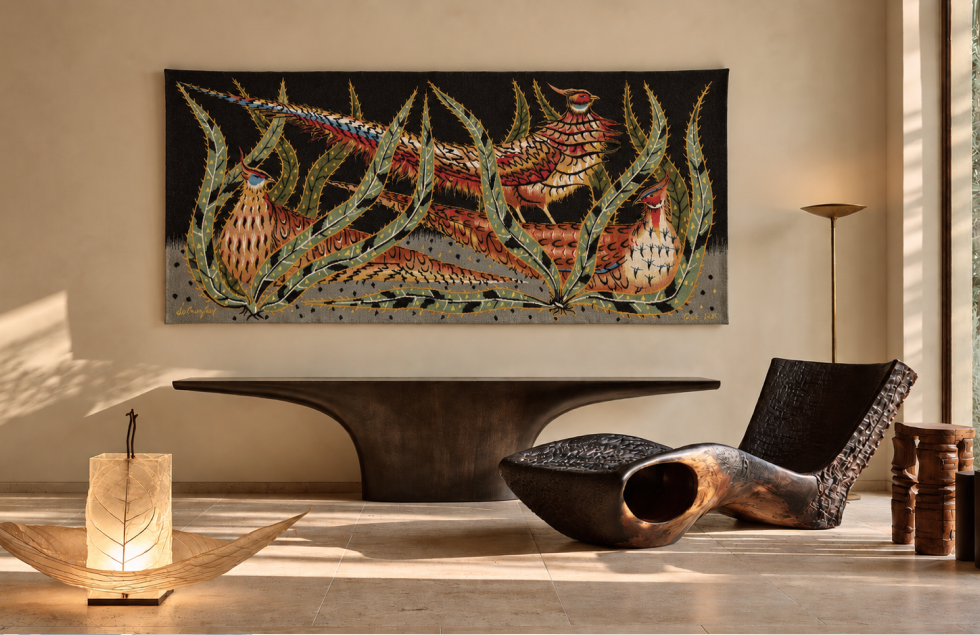
Dom Robert (1907 to 1997), the Benedictine monk of the Abbaye d’En Calcat, was discovered by Lurçat, who was struck by the originality of his watercolors. His exuberant, joyful studies of the natural world, flowering meadows alive with birds and beasts, are among the most beloved of all modern tapestries, and a dedicated museum in the Sorèze Abbey now honors his work.
Marc Saint-Saëns and René Perrot, both close to Lurçat, were central to the Aubusson revival, Saint-Saëns for his mythological and allegorical compositions, Perrot for the storyteller’s eye he brought to scenes of nature and rural life.
André Borderie extended the movement into pure modernist abstraction, his fragmented architectural compositions and bold geometry bringing a distinctly contemporary energy to the loom.
Mathieu Matégot (1910 to 2001), better known to many for his modernist furniture, was among the most gifted of the abstract cartonniers, his tapestries alive with a painterly, almost impressionistic play of light and color.
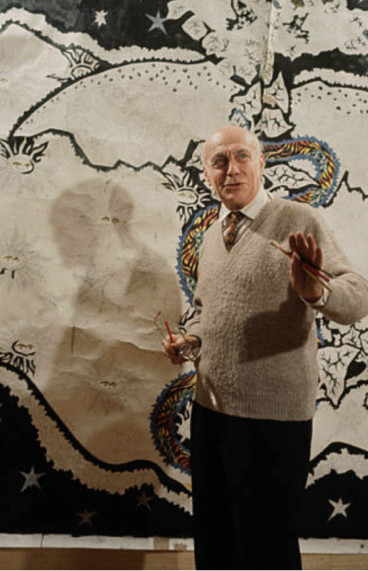
Jean Lurçat in his studio in Paris. Photo courtesy of Henri Bureau.
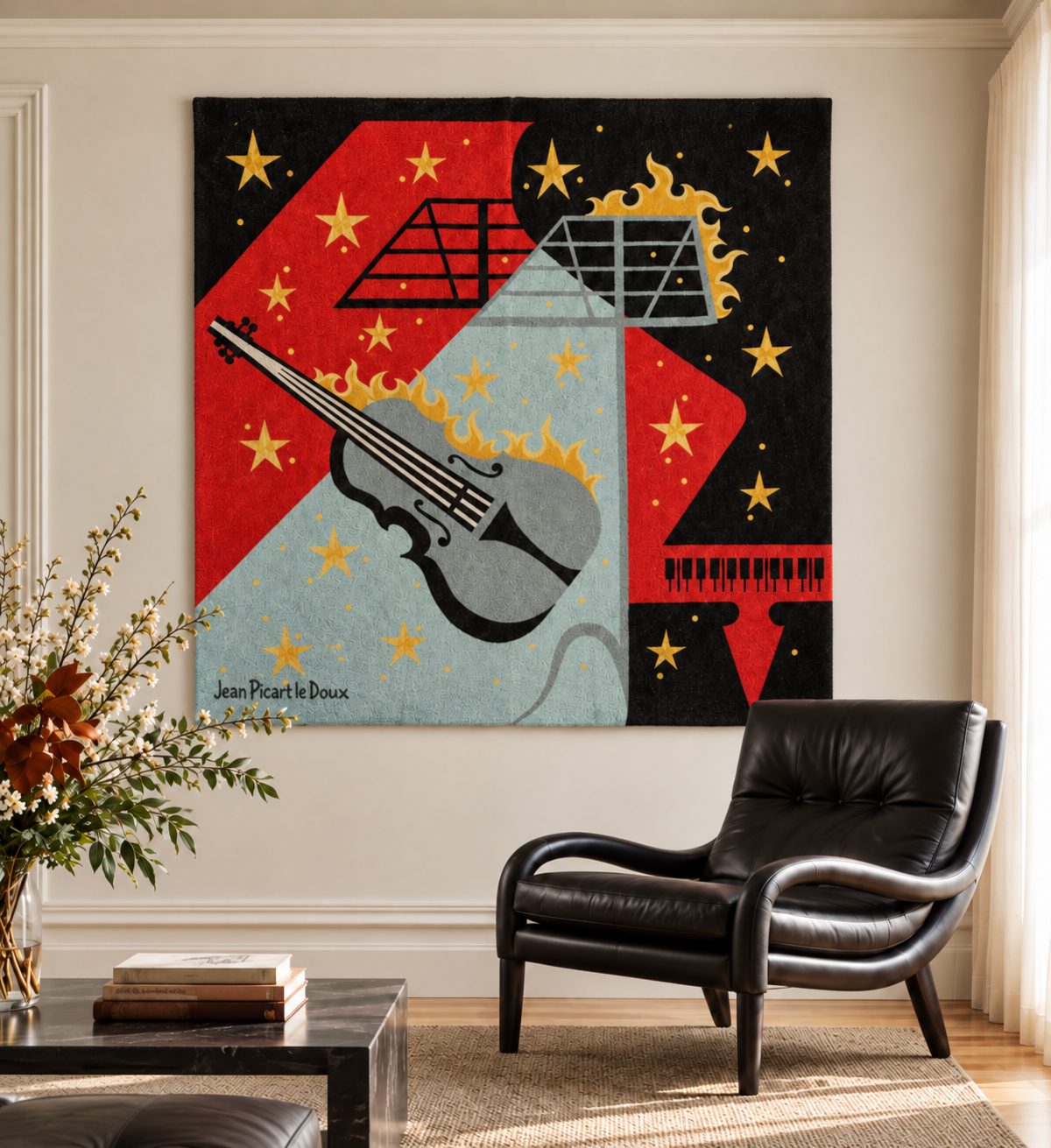
Vintage Jean Picart Le Doux Square Tapestry “Concerto de Ravel” | Rug & Kilim
The Painters Who Came to the Loom
Lurçat’s revival drew the greatest artists of the modern movement to tapestry, most working with the Aubusson ateliers and with the visionary dealer Marie Cuttoli, whose Paris gallery Myrbor first commissioned modern masters to design for weaving.
Pablo Picasso, Georges Braque, Fernand Léger, Joan Miró, and Le Corbusier all created tapestry designs, translating Cubism, Purism, and Surrealism into woven form. Sonia Delaunay brought the rhythmic color abstraction of Orphism to the medium. Alexander Calder, the American master of the mobile, produced bold, playful tapestries in limited editions with the celebrated Pinton workshop of Aubusson. Wassily Kandinsky, Victor Vasarely, whose optical geometry translated superbly to weaving, and Man Ray all added their names to the modern tapestry canon. Their works are not decorative reproductions but autonomous pieces, conceived at architectural scale by artists who understood the loom as a genuine site of experimentation.
Why These Names Matter Now
The market has confirmed what the collectors always knew. Major auction houses now record strong prices for the tapestries of Lurçat, Miró, Calder, and Dom Robert, and specialized galleries and fairs, from the International Tapestry Triennale in Łódź to Salon Art and Design in New York, signal a serious and growing scholarly interest. There is a reason. In interiors dominated by hard, monolithic materials, concrete, glass, steel, the modern tapestry offers exactly the warmth, scale, and human presence those spaces lack. It is a work of fine art that also softens a room, absorbs sound, and holds a wall the way nothing else can.
To recognize these names is to read a tapestry the way it was meant to be read: not as anonymous craft, but as the meeting of a great artist and a great loom. From Raphael to Calder, the finest European tapestries have always carried an author. Knowing who they are is the beginning of knowing the art.
At Rug & Kilim, our European collection includes signed works from this lineage, tapestries by the modern masters who made the medium new again. To hold one is to hold a work by an artist worth knowing, in a form that has been prized by the courts and the collectors of Europe for five hundred years.
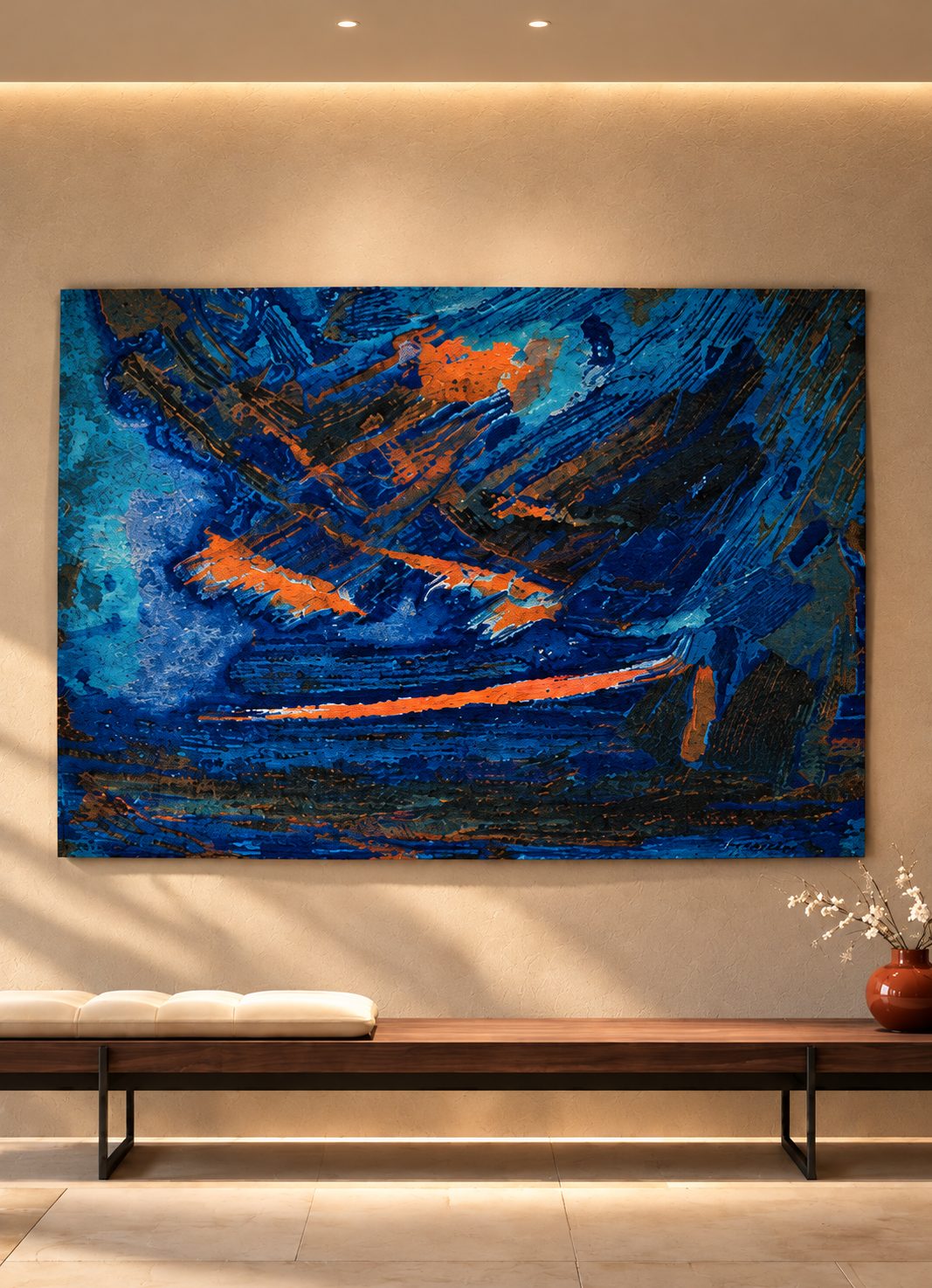
Signed Vintage Abstract Tapestry “Spring by the Sea in Oceanic Hues Rug & Kilim