
A Guide to Traditional Swedish Flamskväv Textiles in Scandinavian Folk Art
December 19, 2023
Rug & Kilim Returns from the United Nations Sustainable Development Goals Forum in Maldives
December 27, 2023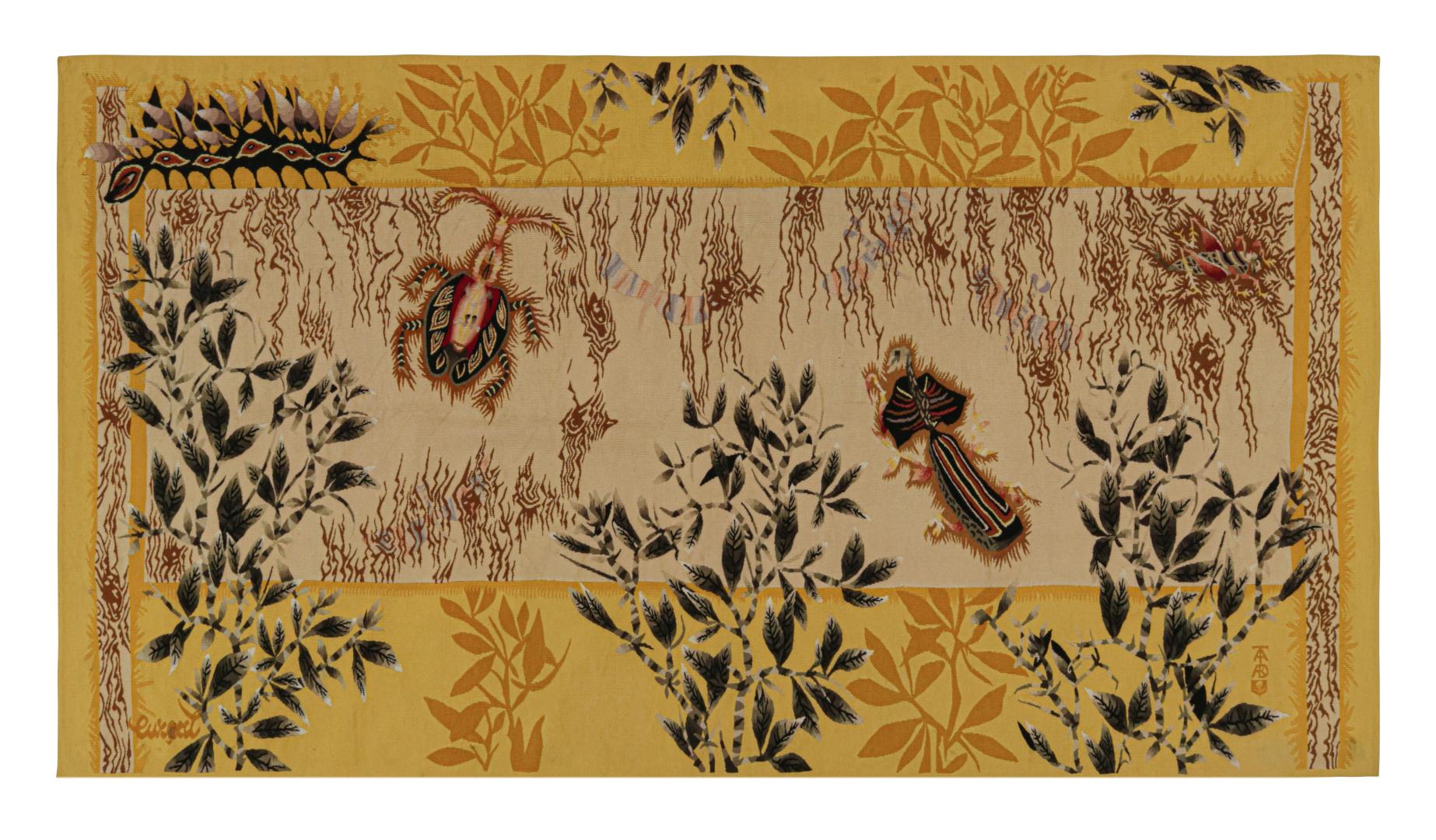
The inauguration of The State Hermitage Museum’s exhibition titled “Nineteenth-and Twentieth-Century Tapestries in the Hermitage Collection” marked a significant milestone in art history. It unveiled, for the first time, a collection of tapestries with a distinct emphasis on the masterpieces crafted by French artists. The showcased tapestries were not mere artifacts, but vibrant expressions of European tapestry weaving, spanning Historicism, the Art Nouveau, and Modernism.
One major tapestry exhibited was Jean Lurçat’s “Blaze of Fire” honoring his innovative designs and use of narrative elements transformed tapestry weaving from a decorative craft into a serious art form that could convey emotion and depth of thought. Rug & Kilim curates masterpieces of culture with the utmost quality of craft and graphic personality like so few in existence. Above is one such masterpiece that we have collected — a signed Lurcat vintage Aubusson tapestry, handwoven circa 1940-1950. The design features gold border and beige field, both of which underscore insect pictorials and florals, leafage and botanicals in brown, rust and amber tones. Collectors will note signatures both on the lower left face of the piece and on the underside panel (initials I.I.).
At Rug & Kilim, we take great pride in honoring historical traditions by upholding the authentic forms of art. Lurçat’s mastery in combining elements of Surrealism, Cubism, and Classicism aligns seamlessly with our philosophy of recognizing and respecting the genuine form of art that speaks. This tapestry not only exemplifies the artist’s unique vision but also serves as a bridge between the historical roots of the craft and our contemporary appreciation of true artistic expression.
With an expansive body of woven masterpieces, Jean Lurçat (1892-1966) stands as the foremost contributor to the resurgence of tapestry-making in mid-20th century France, leaving behind the most substantial legacy among tapestry designers. His extraordinary designs, untethered by specific schools or doctrines, injected an avant-garde vitality into the medium, serving as a catalyst for numerous French artists to re engage with tapestry — a craft that had, in its decline, lost both its distinct characteristics and creative impetus once celebrated in Northern Europe. What sets Lurçat’s works apart is their unique reflection of the diverse aesthetics prevalent in the early and mid-twentieth century. They seamlessly blend elements of Surrealism, Cubism, and Classicism, creating a distinctive artistic signature that remains singularly distinct amidst the rich artistic influences from that era.
Surrealism
Established in Paris in 1924 by the poet André Breton, Surrealism emerged as a profound artistic and literary movement. At its core, Surrealism challenged the prevailing ideals of the Enlightenment — a significant intellectual movement of the 17th and 18th centuries that extolled reason and individualism. The overarching objective of Surrealism was to emancipate thought, language, and the human experience from the constraining confines of rationalism. Surrealism aimed to unveil the richness of human experience beyond the boundaries set by conventional rationalistic perspectives.
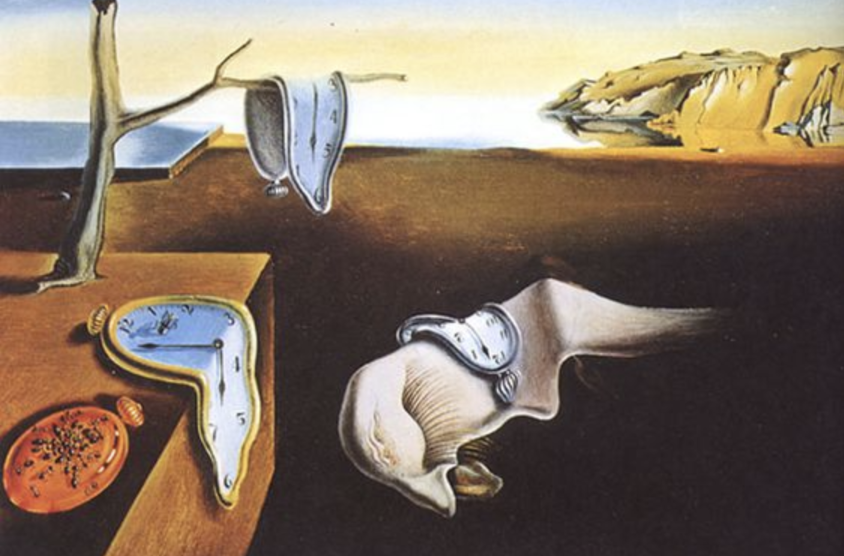
“The Persistence of Memory” by Salvador Dali
Cubism
Originating in 1907, Cubism stands as a groundbreaking art movement spearheaded by the collaborative efforts of Pablo Picasso and Georges Braque. Distinguished by its revolutionary approach, Cubism is defined by the fragmentation of subject matter, meticulously deconstructed to enable viewing from multiple angles simultaneously. This style challenged traditional artistic norms, offering a dynamic and multifaceted perspective that marked a significant departure from conventional representations in the art world.
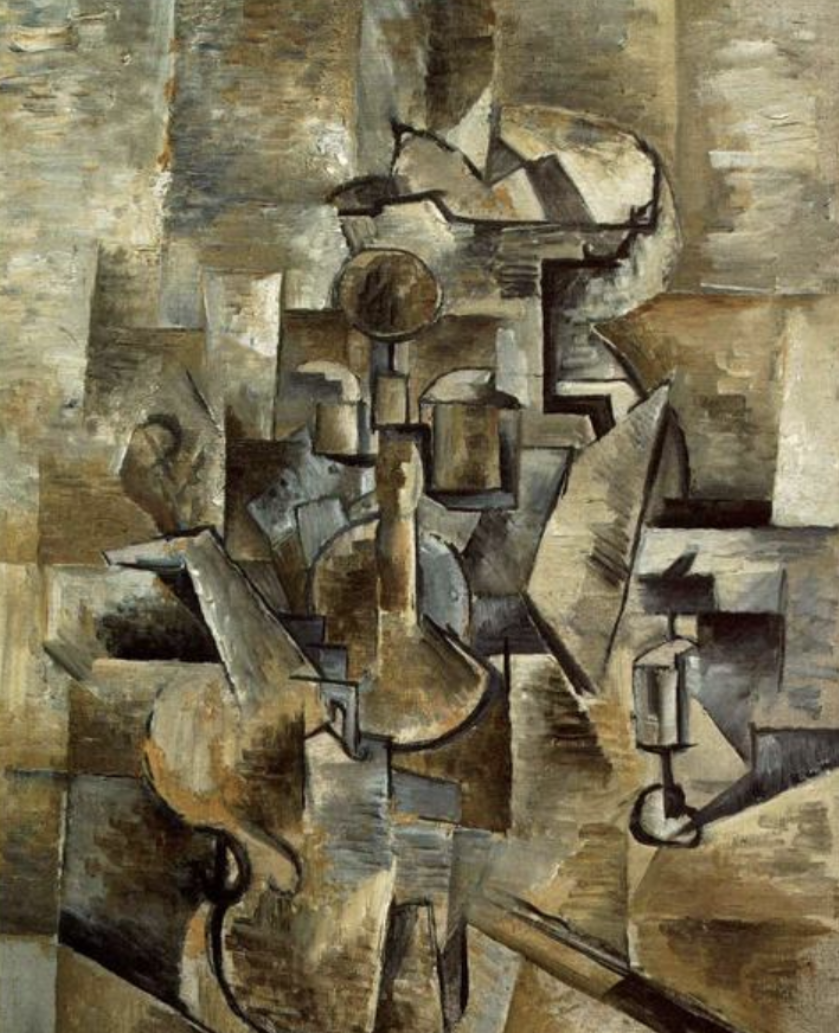
“Violin and Candlestick” by Georges Braque
Classicism
Classical art, commonly known as Classicism, encompasses artistic works that derive inspiration from the cultural, architectural, literary, and artistic traditions of ancient Rome and ancient Greece. Flourishing predominantly during the Renaissance period in Western art, Classicism is characterized by its portrayal of scenes from mythology. This artistic movement manifested itself across various mediums, including painting, sculpture, and printmaking, as it sought to capture the timeless and idealized elements found in the classical heritage of ancient civilizations.
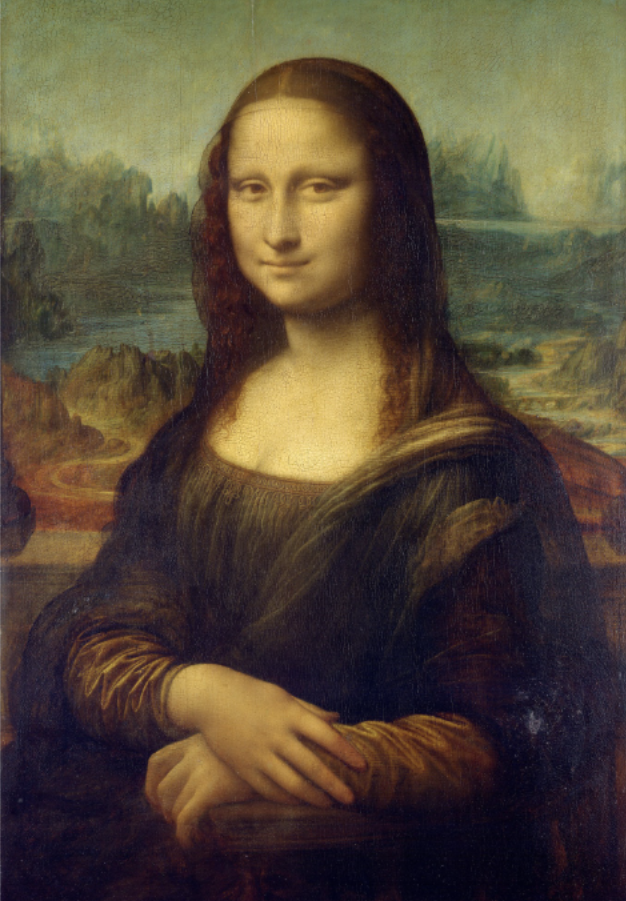
“Mona Lisa” by Leonardo Da Vinci
Lurçat’s artistic dialogue closely aligned with the Cubist movement led by Pablo Picasso (1881-1973) and Georges Braque (1882-1963). His creations often featured recurring motifs such as nature, animals, and the cosmos, evolving into increasingly ambitious and intricate forms over time. While steeped in Cubist inspiration, Lurçat’s works possess a unique singularity, reflecting the diverse aesthetics prevalent in the early and mid-20th century — melding elements of Surrealism, Cubism, Modernism, and Classicism. Notably, one of his masterpieces, “The Eighth Tapestry of the World’s Song” (1957–1966), encapsulates an entire cosmology of ancient world mythical figures, solidifying Lurçat’s status as a visionary tapestry artist of unparalleled distinction.
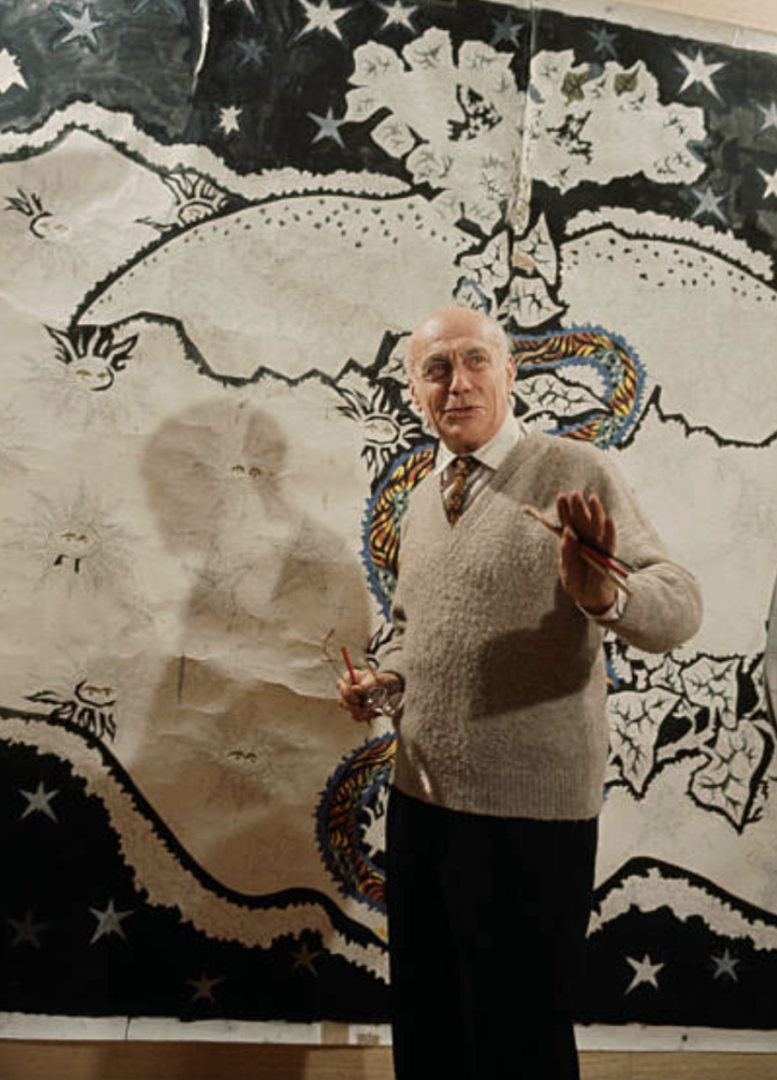
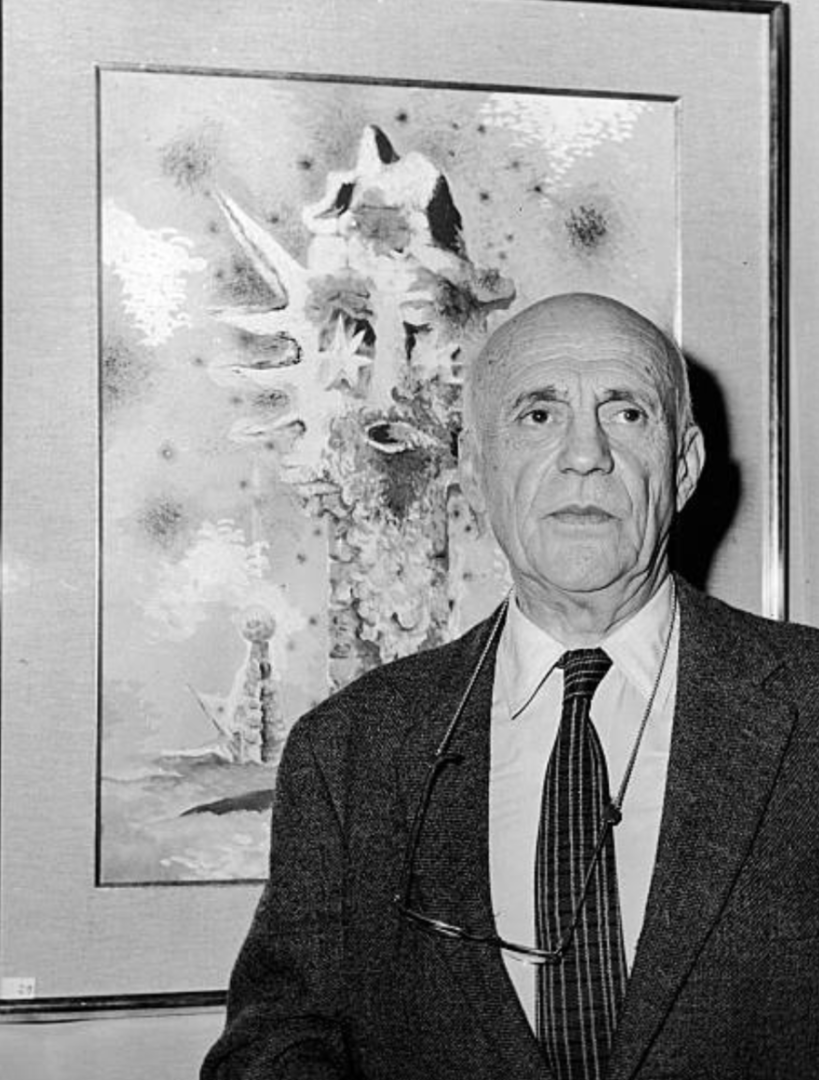
Jean Lurçat in his studio in Paris. Photo courtesy of Henri Bureau.
Lurçat’s Early Years
Born in Bruyères, France, Jean Lurçat initially pursued studies in medicine before immersing himself in the realm of art under the mentorship of Victor Prouvé, a prominent figure associated with the Alliance provincial des industries d’art, also known as the Ecole de Nancy. Notably, Victor Prouvé is the father of the distinguished architect and designer Jean Prouvé (1901-1984). Lurçat further honed his artistic skills by implementing Prouvé’s ideas at the Ecole des Beaux-Arts and later at the renowned Académie Colarossi after relocating to Paris in 1912. Entering the vibrant artistic circles of the time, Lurçat engaged with luminaries such as Henri Matisse (1869-1954) and Pierre-Auguste Renoir (1841-1919), forming close friendships with Rainer Maria Rilke (1875-1926), Antoine Bourdelle (1861-1929), and Élie Faure (1873-1937). Advocating for Fauvism and the avant-garde movement, Lurçat established the art review “Les Feuilles de Mai” (The Leaves of May), a platform that published essays on painting doctrine, alongside poetry and artworks contributed by notable figures like Faure, Rilke, and Bourdelle. Lurçat also contributed his own essays, focusing on “the positive sense of life and art.”
Fauvism
Fauvism defines the artistic style of les Fauves, which translates to “the wild beasts” in French. This movement emerged among a group of early 20th-century modern artists who prioritized painterly qualities and vibrant colors over the representational or realistic values upheld by Impressionism. Fauvist works are characterized by bold, non-naturalistic color choices and expressive brushstrokes, reflecting a departure from conventional artistic norms in favor of a more subjective and emotionally charged approach to painting.
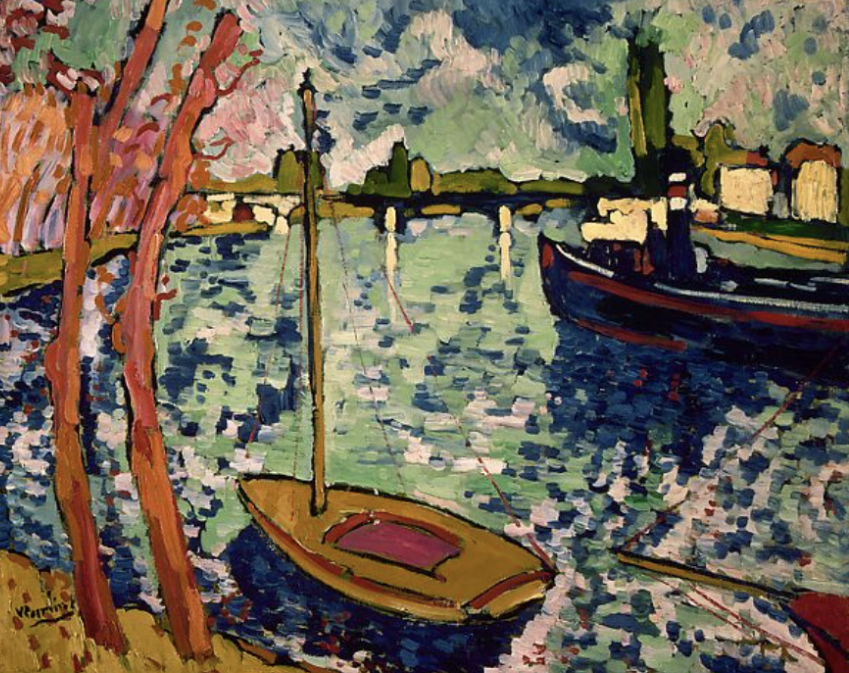
“The River Seine at Chatou” by Maurice de Vlaminck
Avant Garde
The term “avant-garde” — originally signifying the vanguard of an army — found its way into the art lexicon in early 19th-century France. In the realm of art, it came to represent any artist, movement, or artwork that ventures into experimental concepts, processes, and forms, challenging the established status quo. Inherently radical, avant-garde art is characterized by its inclination to push against pre-existing boundaries and explore uncharted artistic avenues. By its very nature, the avant-garde seeks to break away from tradition, encouraging innovation and often serving as a catalyst for the evolution of artistic expression.
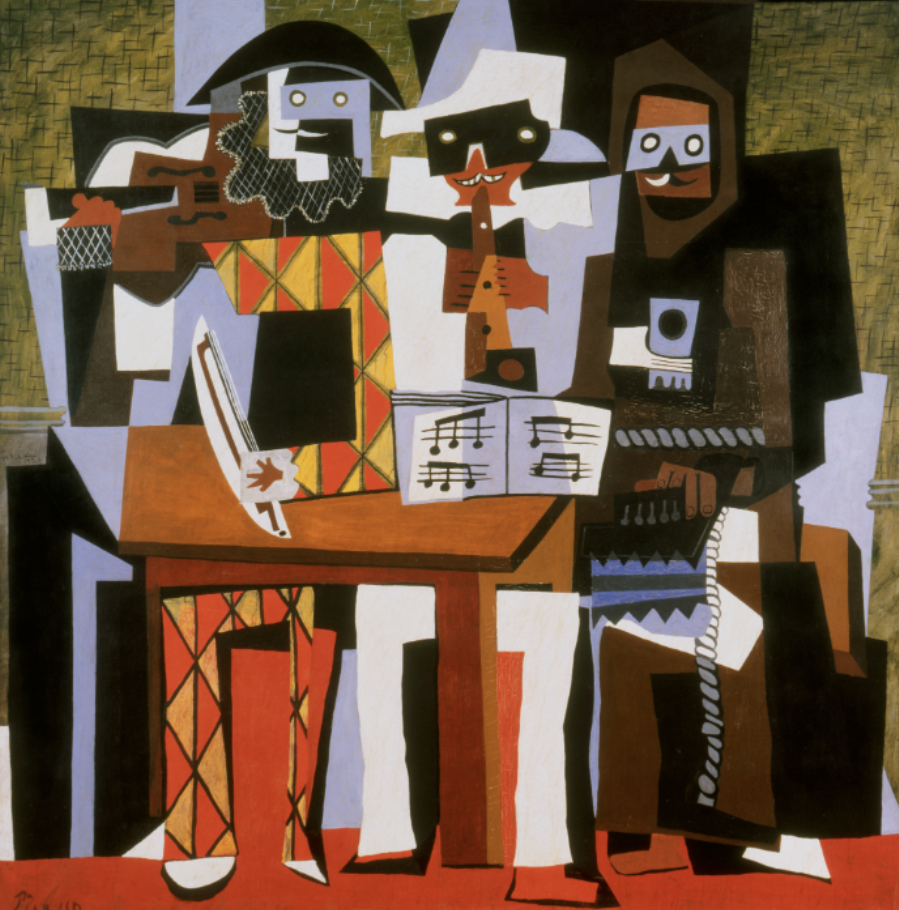
“Three Musicians” by Pablo Picasso
Lurçat and Cubism
In the early issues of “Les Feuilles de Mai,” Lurçat offered a discerning, if subtly critical, evaluation of “La Maison Cubiste” (“The Cubist House”), an architectural installation featured in the Art Décoratif section of the 1912 Paris Salon d’Automne, presenting a Cubist vision of architecture and design. Despite this stance, Lurçat’s interest in Cubism persisted, leading Surrealist Philippe Soupault (1897-1990) to assert in 1928 that Lurçat’s unique approach allowed for a departure from Cubism, creating a new artistic trajectory. Lurçat, differentiating his work through a vibrant palette and a penchant for decorative elements, steered clear of complete abstraction. Rejecting the notion of stripping a work of its subject, he maintained that the removal of subject matter deprived a piece of its poetic impact, likening it to the removal of a verb from a sentence, rendering it devoid of meaning.
Lurçat’s Debut in the Tapestry World
In 1915, Jean Lurçat made his debut in the art world by participating in an exhibition in Zürich, showcasing paintings inspired by Cubism, notably influenced by the works of Braque and drawings by Matisse. Two years later, in 1917, he unveiled his inaugural significant tapestries, “Filles Vertes” (Green Girls) and “Soirée dans Grenade” (Evening in Grenada). While initially establishing himself as a painter, Lurçat’s longstanding interest in textile art, partially nurtured by his mother’s canvas sewing based on his drawings, steered his career in a new direction. Post-World War I, Lurçat’s artistic style matured, leading to a prolific period marked by the fusion of grand themes from human history with fantastical depictions of the botanical and insect worlds. Remarkably, he reconciled the stylizations of medieval religious tapestry with modern abstract modes. His artistic journey saw significant milestones, including encounters with influential figures like Louis Marcoussis, Picasso, and Max Jacob. Notably, he contributed to the decoration and costumes for “Le spectacle de la Compagnie Pitoeff: Celui qui reçoit des gifles” in 1921.
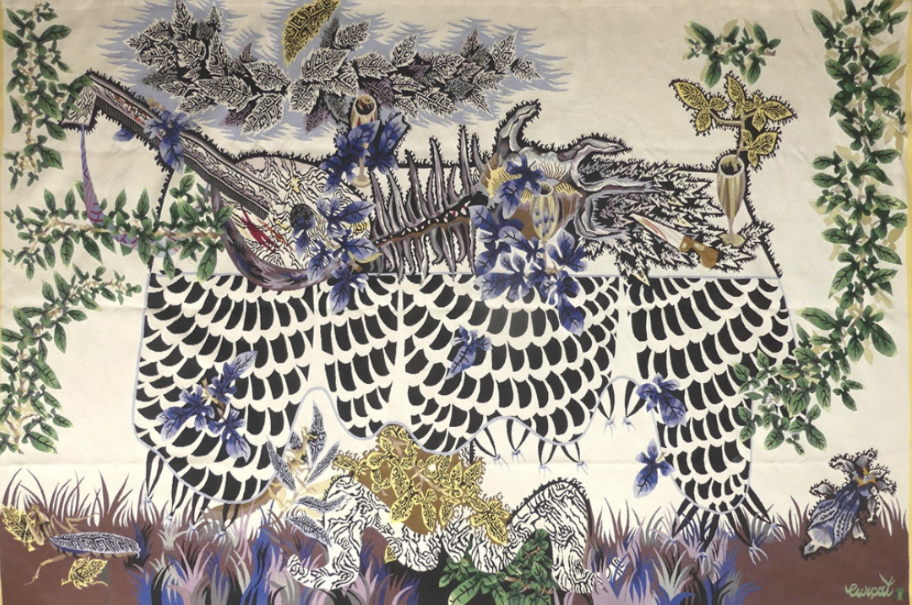
“La Table” by Jean Lurcat
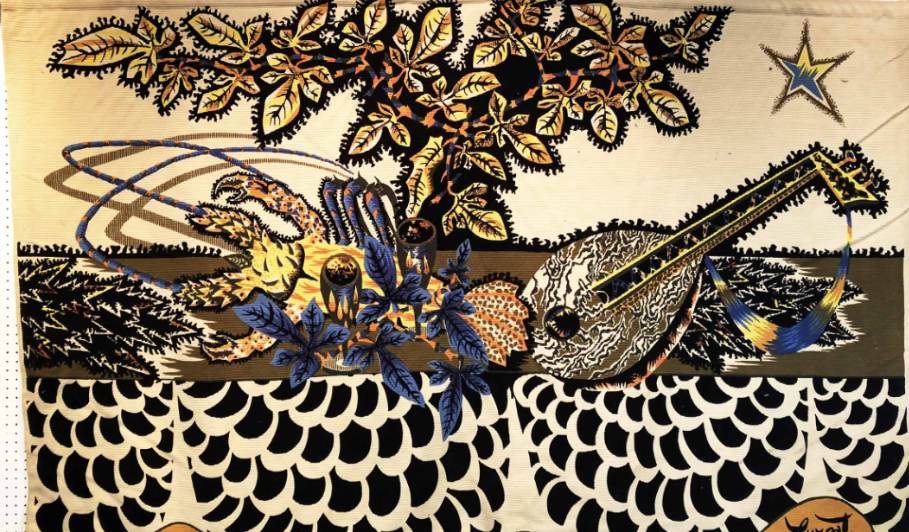
“Le Table” by Jean Lurçat’
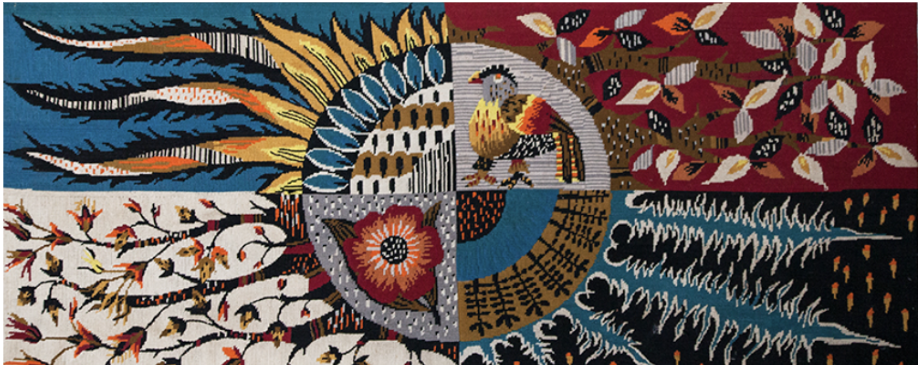
“Métamorphose de la Nature” by Jean Lurçat’
Lurçat’s passion for travel became a catalyst for artistic growth as he explored Spain in 1923 and ventured through the Middle East, North Africa, and parts of Asia from 1924 to 1929. Along the way, he created commissioned tapestries and achieved the distinction of being one of the first Western artists to exhibit in Soviet Russia. From 1925, he exhibited regularly in Paris at esteemed galleries alongside luminaries such as Hans Arp, Braque, Max Ernst, Jacques Lipchitz, and Picasso, ultimately enjoying three solo exhibitions between 1930 and 1936, significantly contributing to Jeanne Bucher’s gallery. By the late 1930s, Lurçat transitioned away from painting entirely, dedicating himself to revitalizing revered French textile companies such as Aubusson and the Manufacture Gobelins. In 1937, he formalized his interest in tapestry-making by establishing professional relationships with the Beauvais weaving factories. Even during the German occupation of France, Lurçat, residing in the rural south, used his giant mural tapestries to confront both the Vichy and Occupation regimes, aligning his art with the resistance against Nazi rule.
Following the war, Lurçat’s vision extended globally as he aspired to spread the “tapisserie virus” worldwide. In 1957, he embarked on a monumental series, “Chant du monde” (Songs of the World), a ten-part work depicting a 20th-century apocalypse. Noteworthy international engagements included his participation in II. documenta in 1959 and the founding of the International Centre for Old and New Tapestries in 1962, organizing the International Tapisserie Biennale in Lausanne. Beyond tapestry, Lurçat showcased his versatility across various artistic mediums, including engraving, book illustrations, and notably, ceramics. In the 1950s, he collaborated with the ceramic workshops of Firmin Bauby in Sant-Vicens, near Perpignan. His ceramic designs, featuring vibrant colors within sharp outlines, mirrored the distinctive aesthetic of his tapestries, setting them apart from contemporaries like Picasso, who favored earthy tones in his ceramic works at Madoura during the same period.
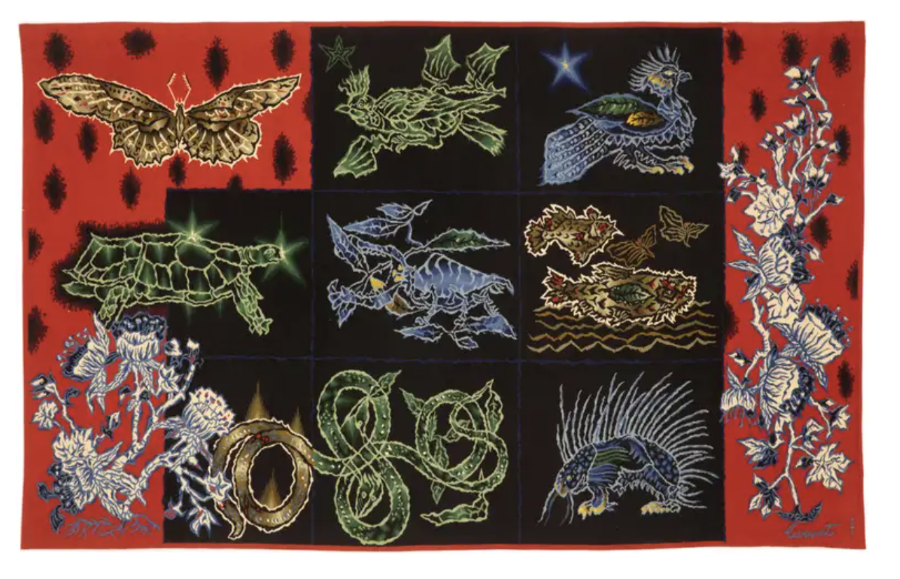
“Coral Bestiary” by Jean Lurçat
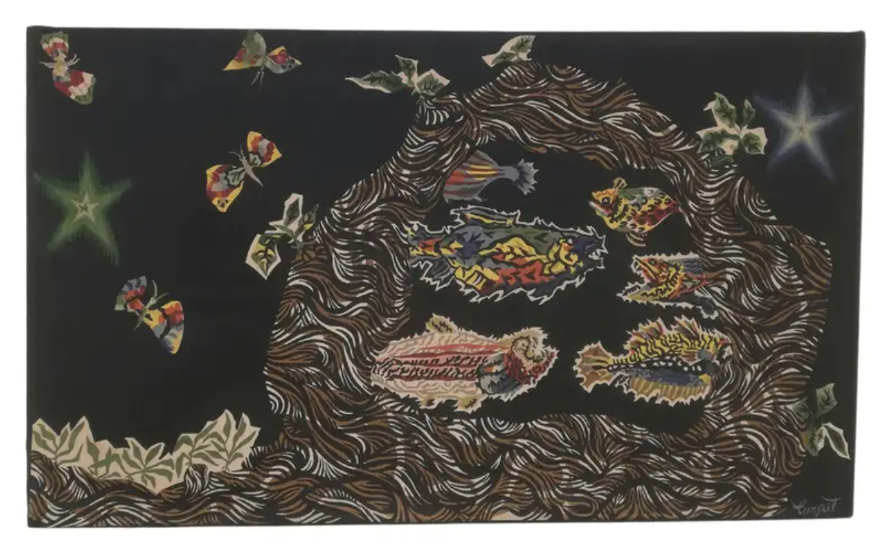
“Les Brochets” by Jean Lurçat
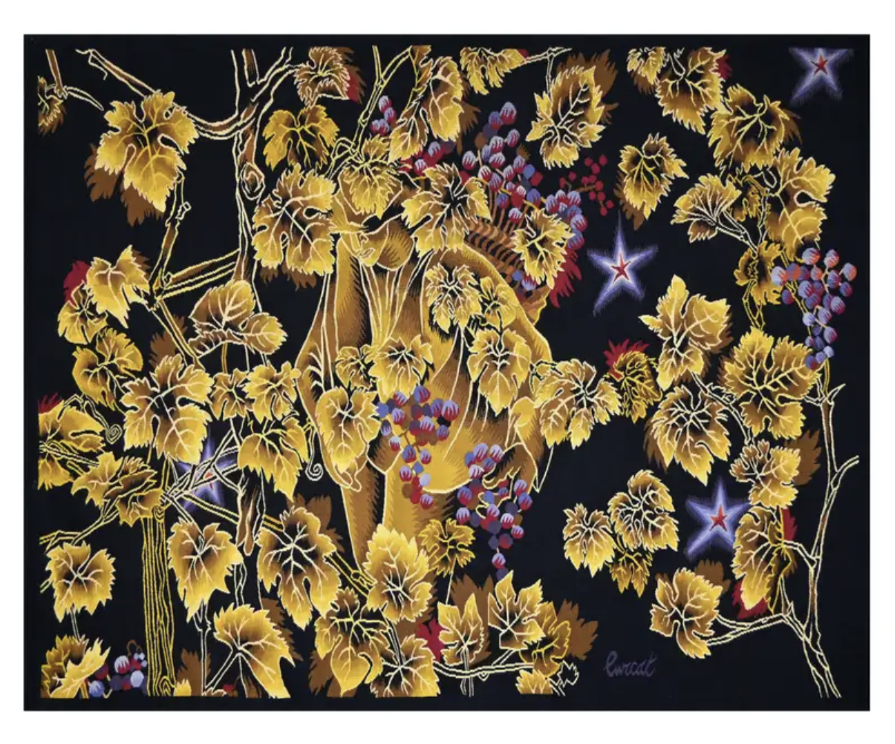
“Vendange” by Jean Lurçat
Both Jean Lurçat and Picasso share a predilection for subjects rooted in symbolism and mythology, establishing a direct connection with Classical and Renaissance traditions. Their stylistic influences often draw from Mediterranean and North African cultures. Lurçat’s artistic expression is deeply anchored in the symbolic and poetic, evident in his choice of creatures from the Apocalypse and the Zodiac. This inclination reflects his profound appreciation for rural life, with a particular fondness for the rooster and the owl. Symbolizing the sunrise and wisdom, respectively, these creatures embody the awakening of the spirit in Lurçat’s artistic narrative. Lurçat’s collaboration with the Saint-Vicens workshop not only endowed it with an international dimension but also attracted other artists such as Jean Picard le Doux (1902-1982) and Marc Saint-Saëns (1903-1979). The global appeal of Lurçat’s ceramics was evident through exhibitions in prominent venues, including the Maison de la Pensée française in Paris (1952), the Hannover Museum in Hannover (1963), the Musée des Arts décoratifs in Paris (1964), the La Bussola Gallery in Turin for the landmark exhibition “Ceramiche Lurçat-Picasso” (1965), and the Académie des Beaux-Arts in Paris (2004).
Comment or reach out with your thoughts on Lurçat’s life and works, and keep an eye on our collection of tapestries for other rare acquisitions.