
What Defines a Scandinavian Rug?
December 8, 2023
A Guide to Jean Lurçat: Pioneer of the Mid-20th Century Tapestry Renaissance
December 20, 2023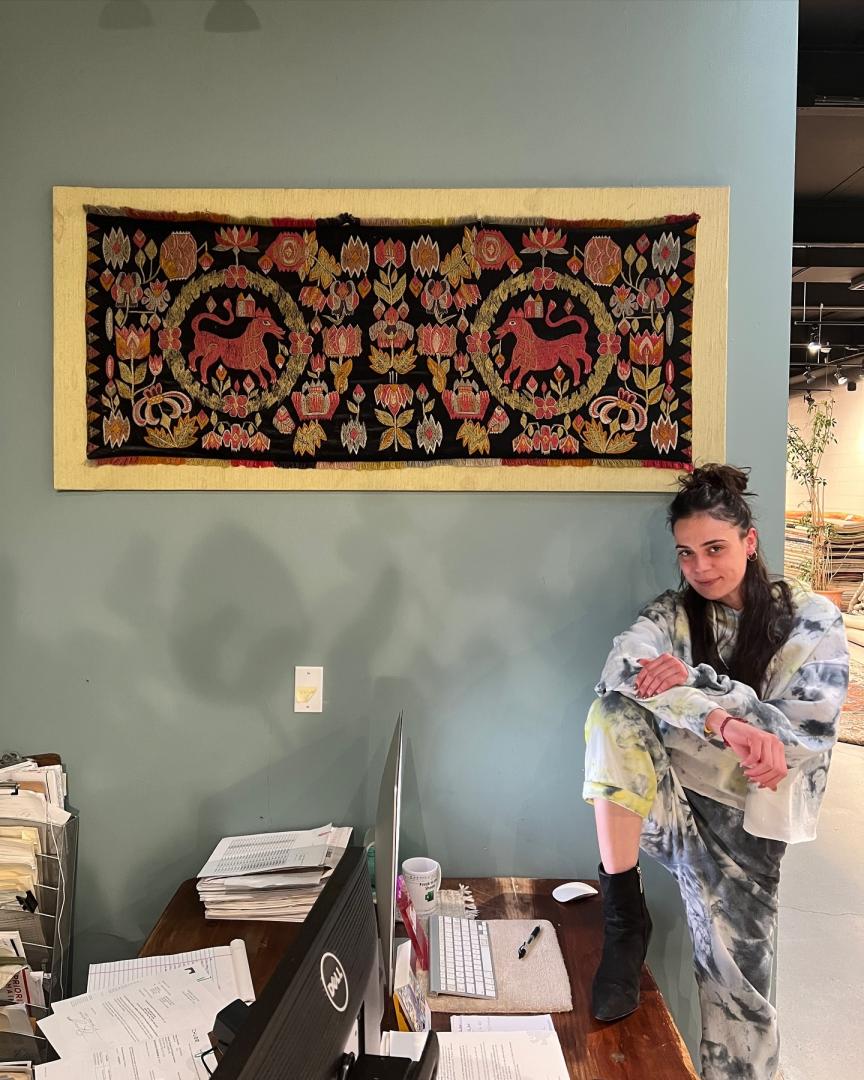
Above, our own Nina Gilden pauses to appreciate a rare Swedish “flamskväv” textile in the Rug & Kilim showroom.
Rooted in the Swedish province of Skåne (or “Scania” to some), flamskväv represents an adaptation of the gobelin tapestry techniques originally from Flanders. The weaving process involves an upright loom, with the weaver seated on a stool. What sets Flamskväv apart is its unique construction method—it is woven sideways. This means that the narrower dimension of the piece occupies the loom, and as a result, the warp runs from side to side on the finished textile. This distinctive weaving technique contributes to the characteristic look and feel of Flamskväv textiles, showcasing the region’s adaptation and evolution of traditional Flemish weaving practices. The textile tradition in Skåne, the southernmost Swedish county, has roots that delve into its history, especially considering its past as part of Denmark. Skåne has a notable heritage of immigrant Flemish weavers who brought their expertise in tapestry weaving to the region. When Skåne, along with other southern provinces, became part of Sweden in 1658, it underwent cultural shifts.
The rich tradition of textile weaving in the historical province of Skåne (or Scania), located at the southernmost part of Sweden, has roots dating back to at least the 16th century. Emelie Wilhelmina von Walterstorff (1871-1948), in her 1925 book on textiles preserved at the Nordic Museum in Stockholm, aptly noted that the practice of textile art had become instinctive to Swedish women, intimately woven into the fabric of Swedish home life. Over centuries of dedicated craftsmanship, specific methods and a plethora of characteristic and beautiful designs evolved into cherished traditions, demonstrating the enduring artistry inherent in Swedish textile weaving. The historical production of colors in textiles involved a fascinating process, with various hues derived from natural sources. Yellow, for instance, was often obtained from apple bark, birch leaves, or mignonette—a dye plant with roots tracing back to Roman times. Red and indigo hues were crafted from plants like madder and woad, both of which have ancient origins in the creation of these colors. This intricate use of natural elements not only added vibrant tones to textiles but also showcased the resourcefulness and ingenuity of historical dyeing practices.
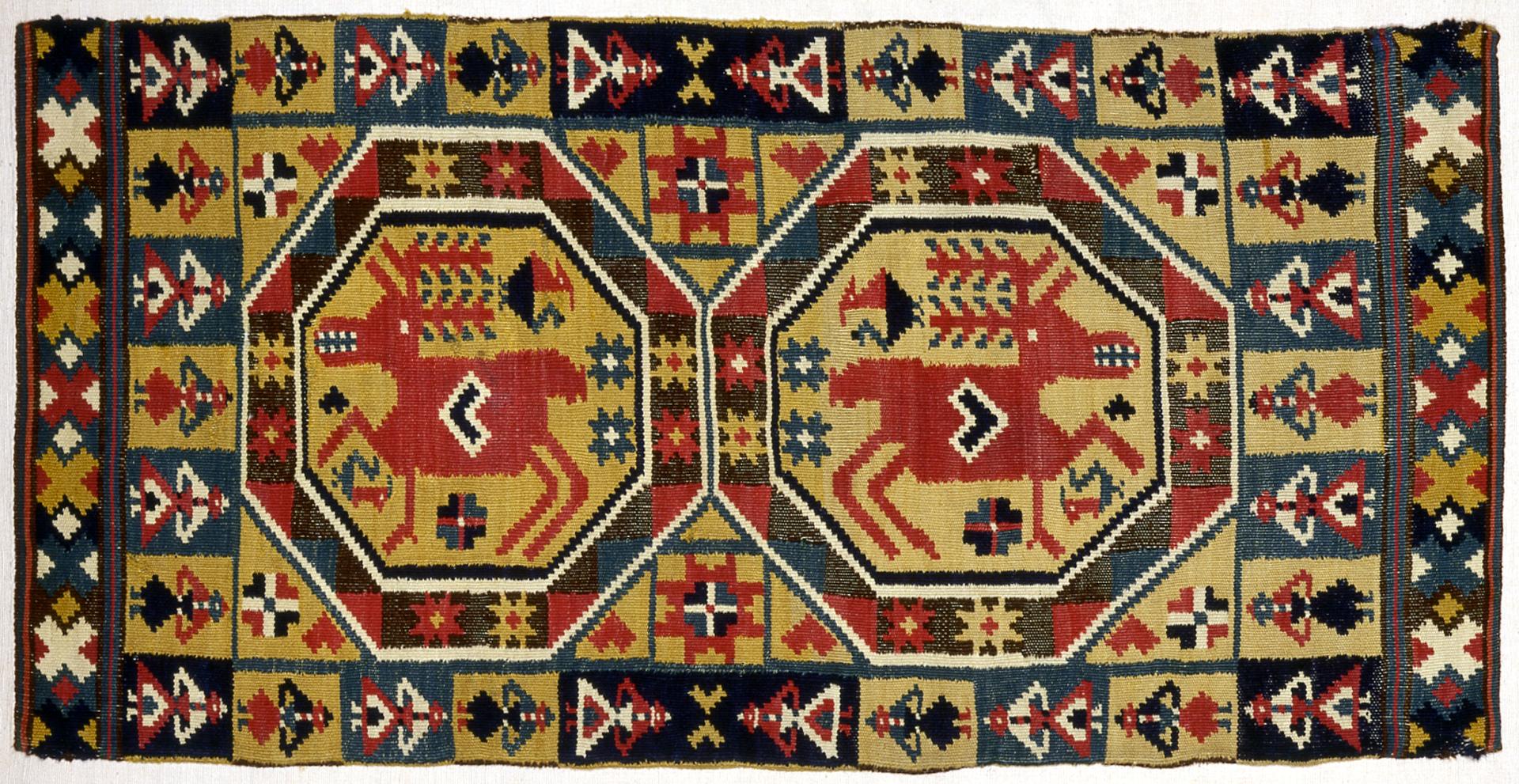
 With changing furniture styles came a transformation in the types of seat covers used. Flemish weavers, who initially crafted chair and bench covers for the merchant classes, found themselves on the fringes of the evolving trends favoring leather, silk, and velvet. In response, these weavers became itinerant, carrying traditional weaving patterns into the local countryside, particularly around Malmo and Lund. Over time, these patterns were adopted and replicated by generations of peasant women.
From the late 18th century well into the 19th century, Skåne developed a rich tradition of crafting smaller flat-woven textiles. These pieces showcased vibrant floral patterns and often depicted biblical imagery. The practice reflected not only the region’s weaving heritage but also the adaptability and creativity of the local community in embracing and evolving traditional weaving techniques.
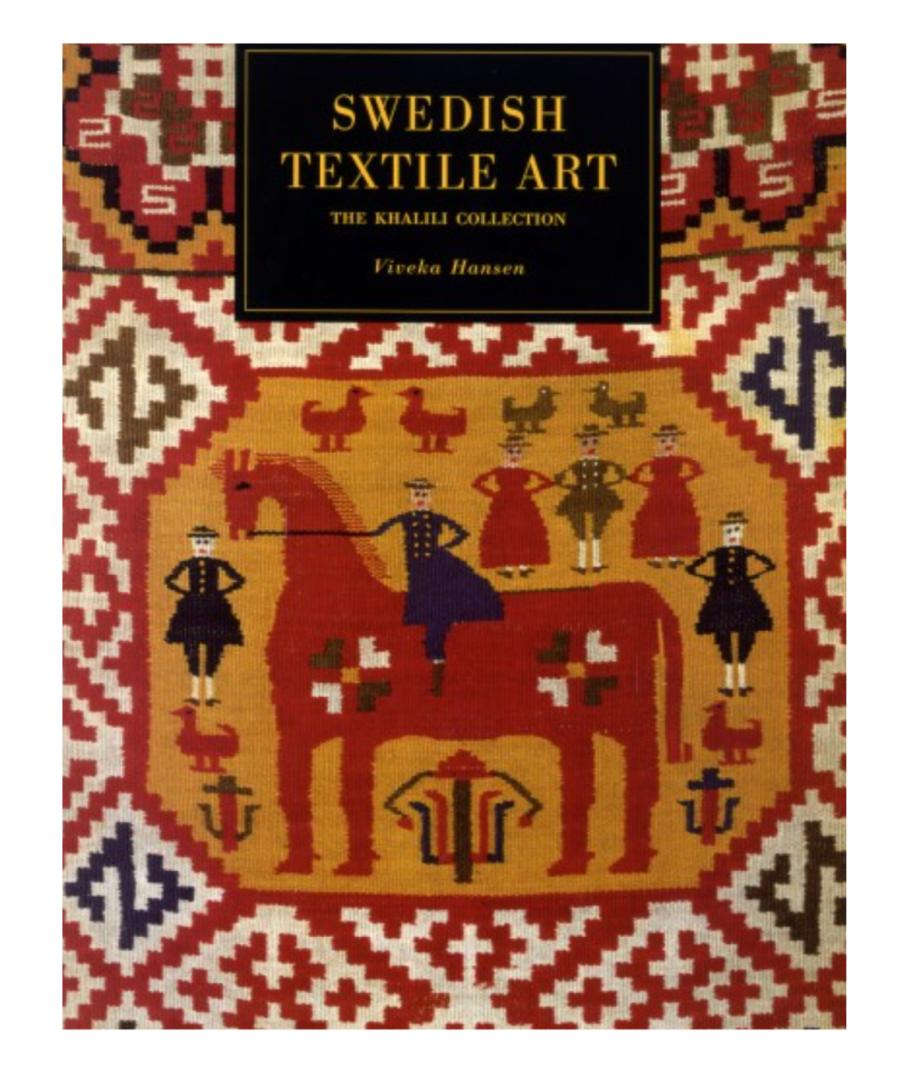
In 1996, Viveka Hansen conducted a comprehensive and scholarly study of early weavings and published a book that focused on a particularly exceptional collection. “Swedish Textile Art: Traditional Marriage Weavings from Scania, the Kahalili Collection” This publication delves into the intricacies of traditional marriage weavings from the Skåne region, showcasing the Kahalili Collection. Hansen’s work provides valuable insights into the cultural and artistic aspects of these textiles, offering a deeper understanding of the historical and artistic significance of traditional Swedish weaving practices.
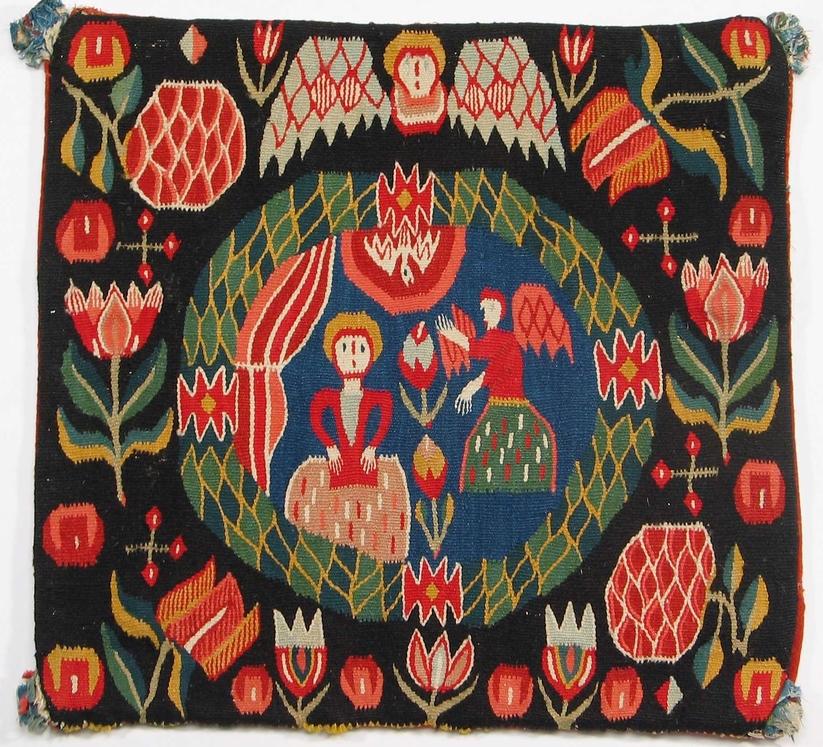
This particular textile (above) is an Annunciation scene designed as a carriage cushion cover, known as “åkdyna” in Swedish. The imagery features duplicate representations of the angel Gabriel appearing to Virgin Mary, who is depicted with a large-skirted attire and a halo. Positioned above is the dove, symbolizing the Holy Ghost. In Gabriel’s hand is a flowering branch, likely representing Jesus, akin to a flower on the branch of Jesse. The scene is framed by a pink background, with a drawn-back curtain to the right.
Typical and stylized elements, including angels above, flowers, and green wreaths surrounding the portrayed scene, contribute to the vibrant and fresh aesthetics of this Annunciation scene. The use of color and the stylized presentation enhance the overall visual appeal of this traditional textile. The vibrant imagery seen in early Swedish flamskväv pieces reflects the vitality of the natural world. These pieces not only celebrate the beauty of nature but also serve as reminders of the religious stories that played a significant role in the spiritual life of the individuals who used these textiles. The incorporation of religious narratives in these weavings underscores the cultural and historical context in which they were created.
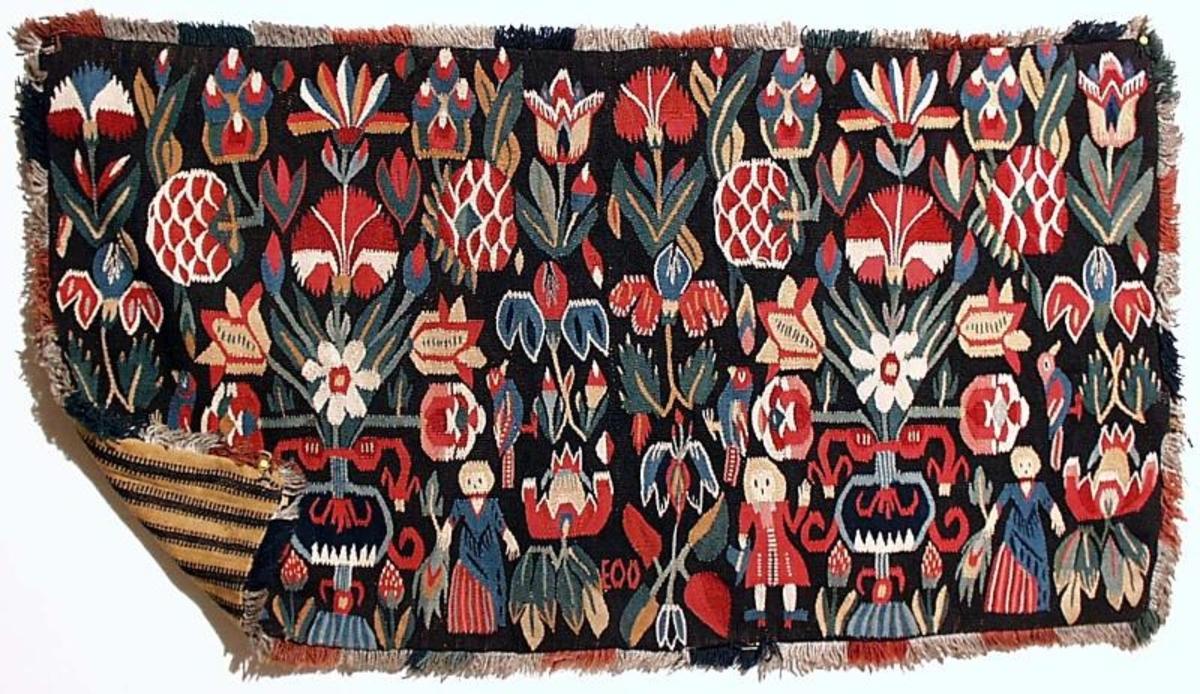
As the flamskväv tradition continued into the 20th century, there was a notable trend of direct copies of these early pieces. However, by the mid-20th century, when tapestry designers took up the tradition, there was a shift away from the religious component. Instead, the imagery evolved to tell different stories, often embracing a celebratory secularism. The weavings began to reflect a broader range of themes and narratives, moving beyond religious symbolism to explore new avenues of expression and creativity.
Undoubtedly, folklore, superstitions, and stories held a profound influence on the intricate textile works of historical times, permeating the lives of the working communities. Beyond mere artistic expression, these cultural influences even shaped the very process of textile creation. A recorded account from the Folklore Record Office of the Ethnological Institute in Lund, detailing practices in a parish named Fru Alstad, attests to this influence: “You could not warp on a Monday, as the weave would not turn out well. When you took down the weave, you had to sweep, and no pregnant woman should walk over it, as the baby would then catch a serious disease… No husband should be in the room when the weave was taken down, if so he would not win anything.“
Beyond these superstitions, folk stories and beliefs also manifested in the subjects depicted on the textiles themselves. In addition to traditional motifs like reindeer, weavers would incorporate mythical creatures such as unicorns and brook horses—figures from Swedish folklore known to lure innocents onto their backs and then drown them. These depictions may have served as talismans or memento mori, offering not only artistic expression but also a grounding reminder of mortality amid visions of love and hope. The interweaving of folklore into the textile tradition reflects a deep connection between craft and culture, capturing the essence of historical communities and their beliefs.
Comment or reach out with your thoughts on flamskvävs, and view other classic and contemporary takes on Scandinavian folk art in our collection here.