
What Are Anatolian Rugs and Kilims? History, Craft, and Significance for Modern Interiors
July 15, 2025
How are Dhurries Becoming the Sustainable Statement Pieces in High-End Interior Design?
July 28, 2025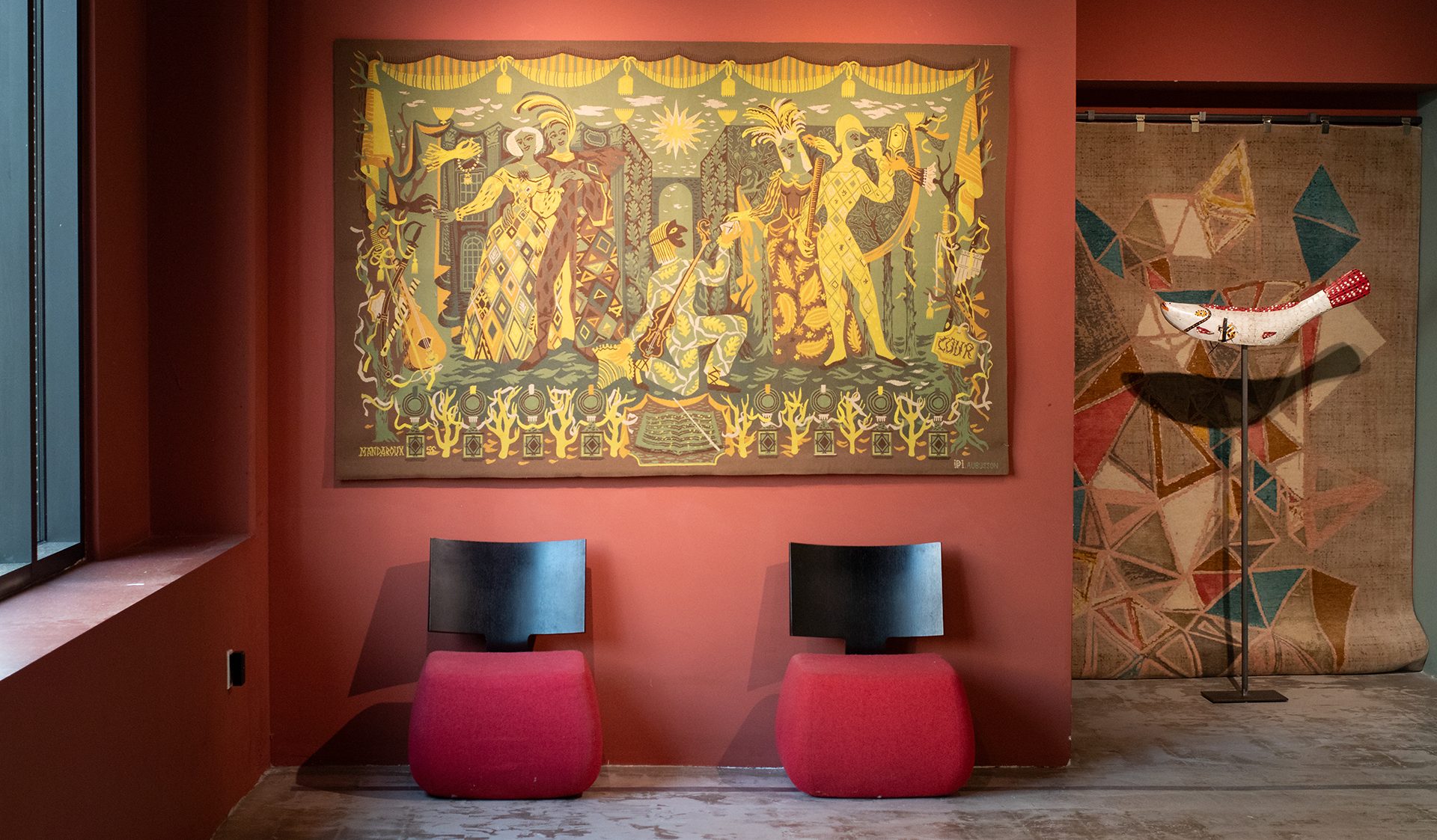
Volumes by Rug & Kilim
The Evolution of Tapestry: From Feudal Heraldry to Modern Abstraction
When studying connoisseurship and collectible design, modern tapestries are no longer relegated to static wall adornments of a bygone aristocracy. They are now insurgent and ideological—a confluence of art, fiber, and spatial intelligence. To speak of tapestry in the 21st century is to enter a discourse where Bauhaus minimalism meets postcolonial craft revival, where Brutalist architecture softens under the chromatic tension of Jean Lurçat’s legacy, and where Joan Miró’s biomorphic abstractions find sanctuary not in gilded salons but in concrete lofts and glass-clad penthouses.
Modern tapestries, by virtue of their scale, tactility, and historical depth, are reasserting themselves as vital instruments of interior language—objects that operate simultaneously as art, texture, insulation, and ideology. They offer not just decoration, but dimensional poetics—distilled cultural narratives woven into the very warp and weft of contemporary space-making.
In a design culture now hyper-aware of material provenance, cultural context, and spatial consciousness, tapestry is not revival—it is revelation. And those who deploy it strategically, do so not for nostalgia, but for storytelling. The traditional centers of production—Aubusson, Beauvais, Gobelins in France; Mortlake in England; and Flanders—saw a paradigm shift in the post-war era. Tapestry moved into the studios of leading modern artists who saw in textile a new canvas, one where form, texture, and space could be reinterpreted for a new generation of viewers and collectors.
Jean Lurçat, Le Corbusier, Miró and the Post-War French Revival
The revival of tapestry in the mid-20th century owes much to Jean Lurçat who sought to redefine tapestry’s role in modern art. Lurçat viewed tapestry as an independent and monumental art form—not merely a derivative reproduction of painting. His 1947 manifesto, Tapisserie du XXe Siècle, argued for tapestry as a primary artistic medium, proposing a visual language aligned with abstraction, mythology, and symbolism.
This revival gained international momentum through collaborations between tapestry ateliers and modern masters. Joan Miró, Fernand Léger, Alexander Calder, and Le Corbusier worked with the Aubusson workshops to produce seminal pieces that merged modernist idioms with the tactile sophistication of handwoven technique. Le Corbusier, in particular, viewed tapestries as “muralnomads”—portable murals that could integrate spatial narratives within modern architecture.
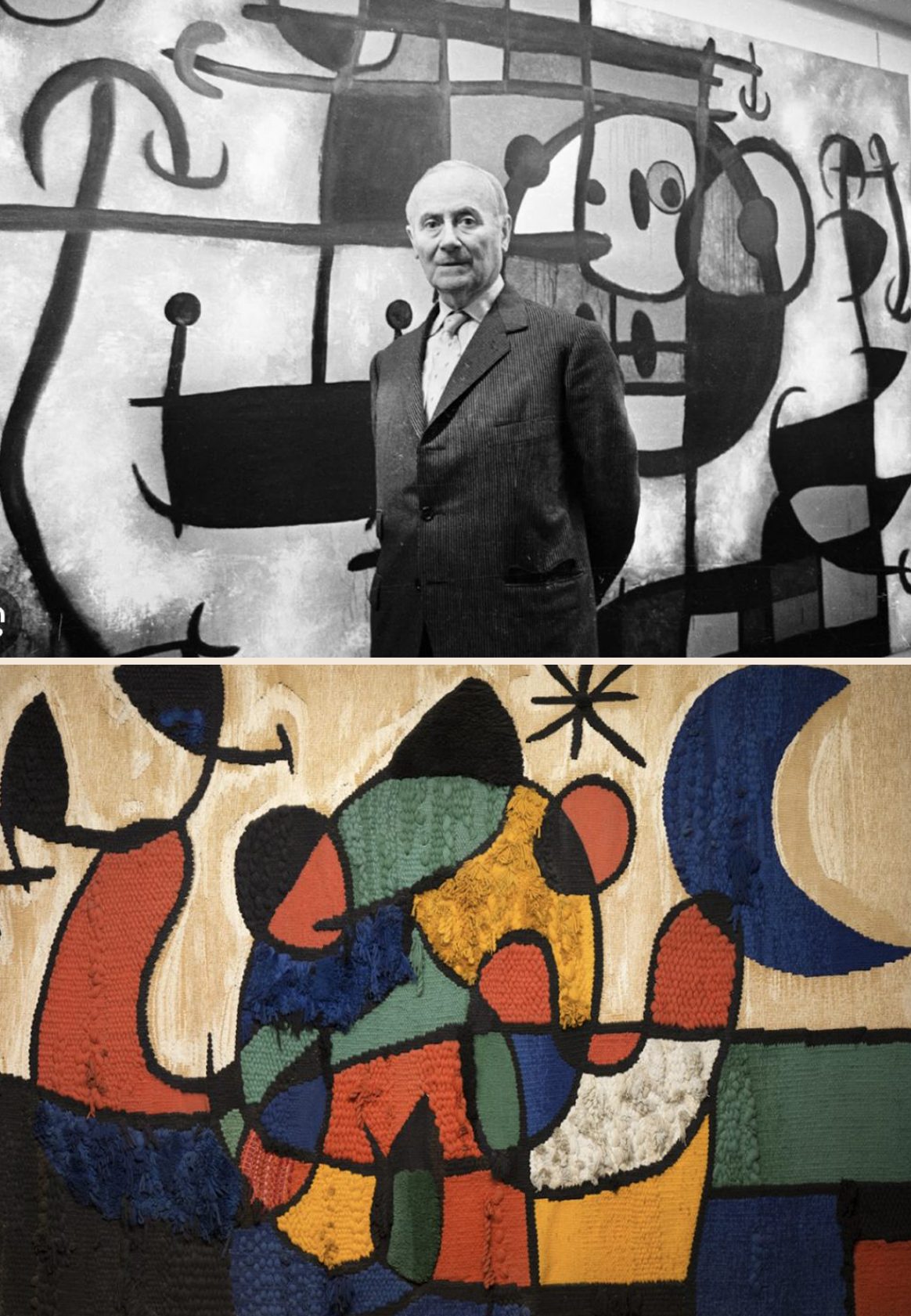
Among Miró’s tapestries, Tapisserie de la Fondation (1973), now housed at the Fondation Maeght, stands as a pinnacle of synthesis between surrealist whimsy and textural monumentality. Calder’s abstract compositions, meanwhile, translated his kinetic vocabulary into soft, static form—creating visual contradictions that elevated tapestry beyond traditional categories.
Aubusson, Dovecot, and Manufactures Nationales
The workshop or atelier became central to the postwar tapestry resurgence. Aubusson, with its centuries-old legacy, served as a fertile ground for avant-garde experimentation. Its looms and lissiers translated painted cartoons into highly textured textile interpretations, preserving the unique visual identity of the original artists while imbuing them with material depth. Dovecot Studios in Edinburgh, founded in 1912, also emerged as a modern hub for collaborations between contemporary artists and master weavers. From Eduardo Paolozzi to Chris Ofili, Dovecot enabled complex reinterpretations of modern visual languages in textile media.
Today, institutions such as Manufacture des Gobelins and Beauvais continue to commission contemporary tapestries that push conceptual and material boundaries, working with artists like Annette Messager and Louise Bourgeois, and maintaining the relevance of state-sponsored ateliers in contemporary discourse.
Modern Tapestry Inspirations: From Bauhaus to Brutalism
The visual language of modern tapestry has been deeply shaped by 20th-century art movements. The Bauhaus, with its emphasis on design unity and functional aesthetic, profoundly influenced the geometry, minimalism, and chromatic discipline in many mid-century tapestries. Anni Albers, trained at the Bauhaus weaving workshop, remains one of the most critical figures whose works bridged the gap between fine art and craft, paving the way for women artists in a previously patriarchal discipline.
Similarly, the Brutalist movement in architecture inspired a new wave of monumental tapestries in corporate and civic buildings during the 1960s and 70s. These works—textural, monochromatic, often woven in jute, wool, and sisal—spoke to the raw materiality and formalism of Brutalist architecture. Magdalena Abakanowicz, the Polish artist, notably created three-dimensional “Abakans” that suspended tapestry in sculptural space, breaking the two-dimensional constraint of the wall and entering a dialogue with architectural form.
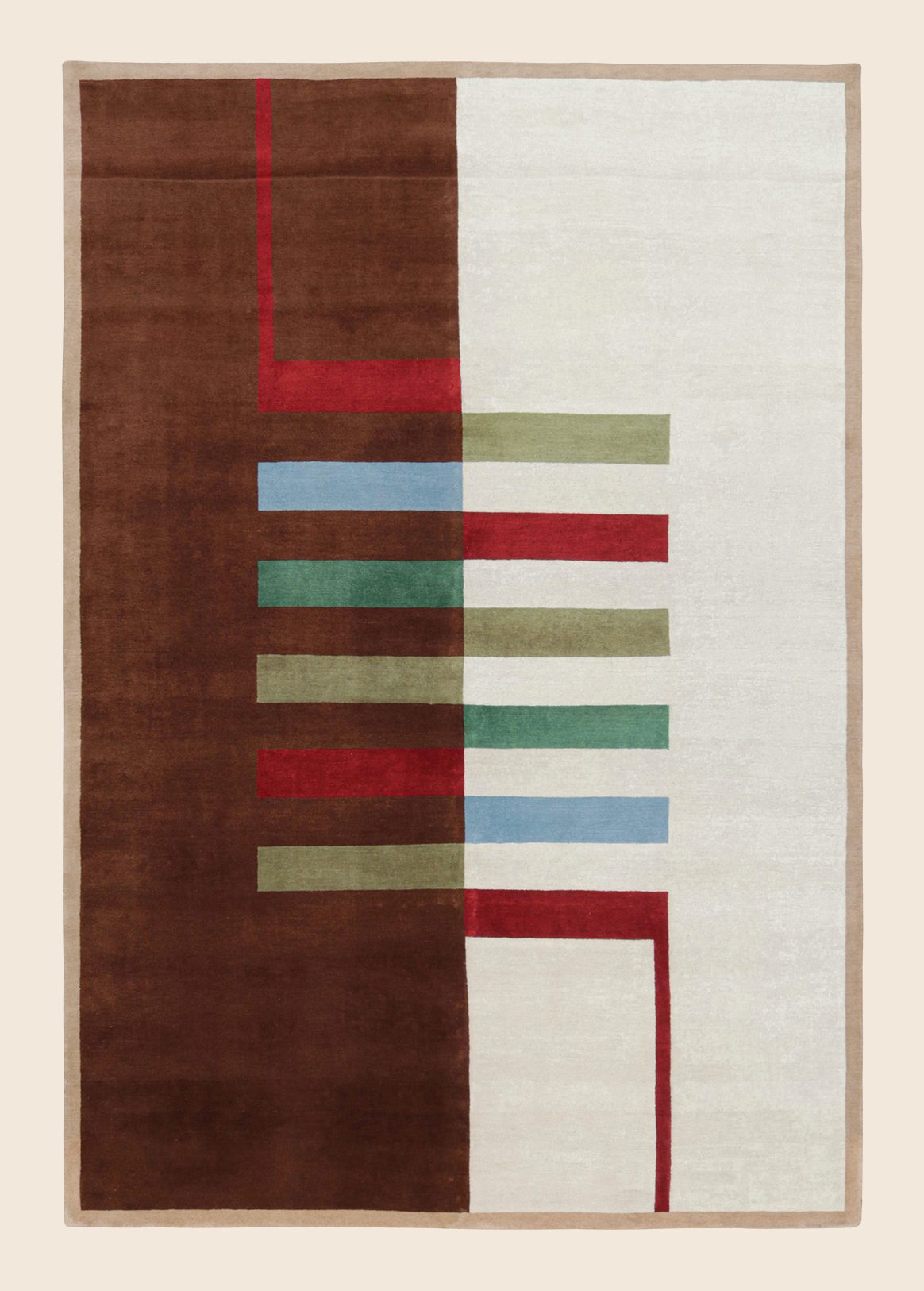
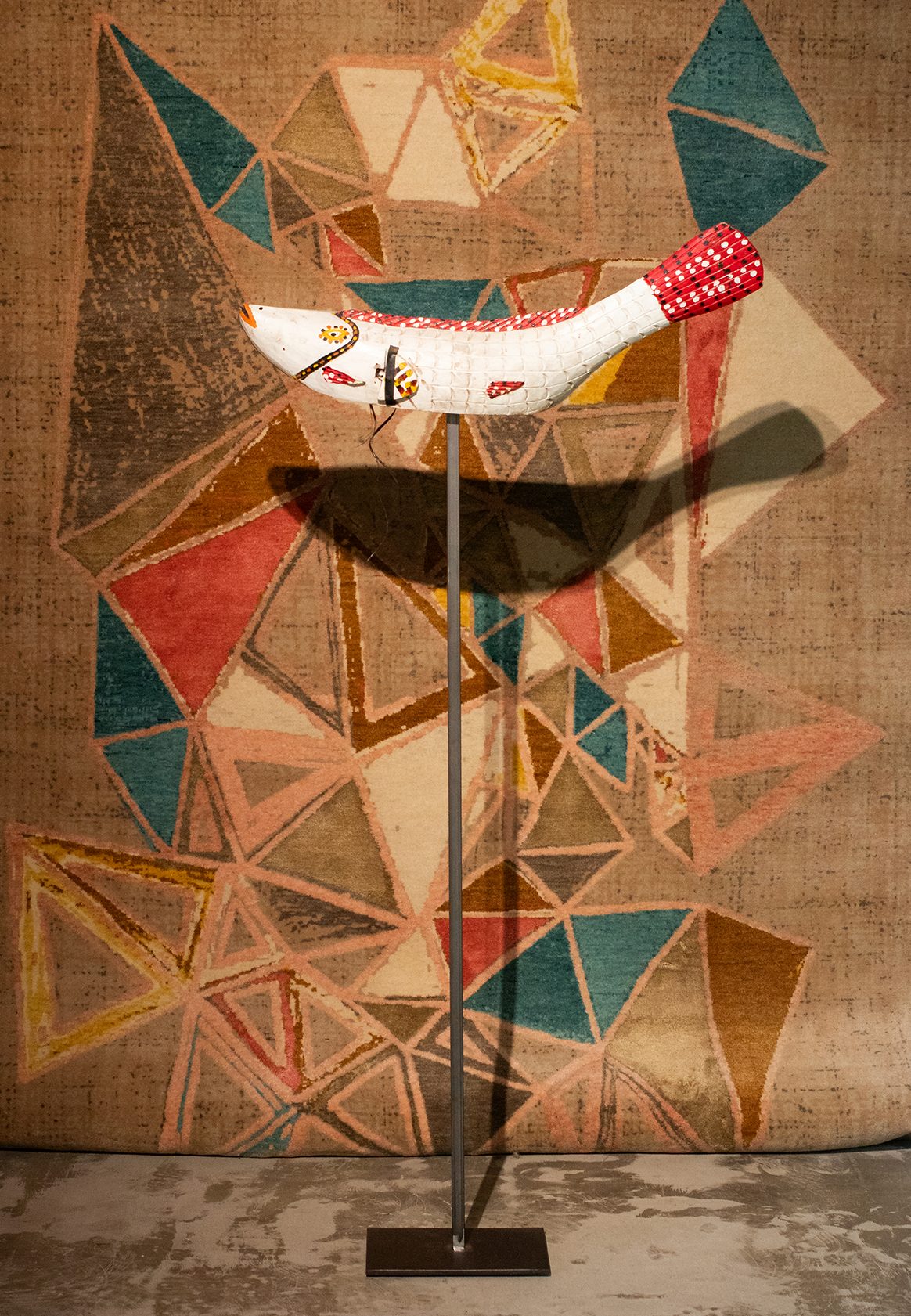
Hand-knotted in wool, this 6×9 modern Bauhaus rug from India, is inspired by the designs of Anni and Josef Albers. Details >>
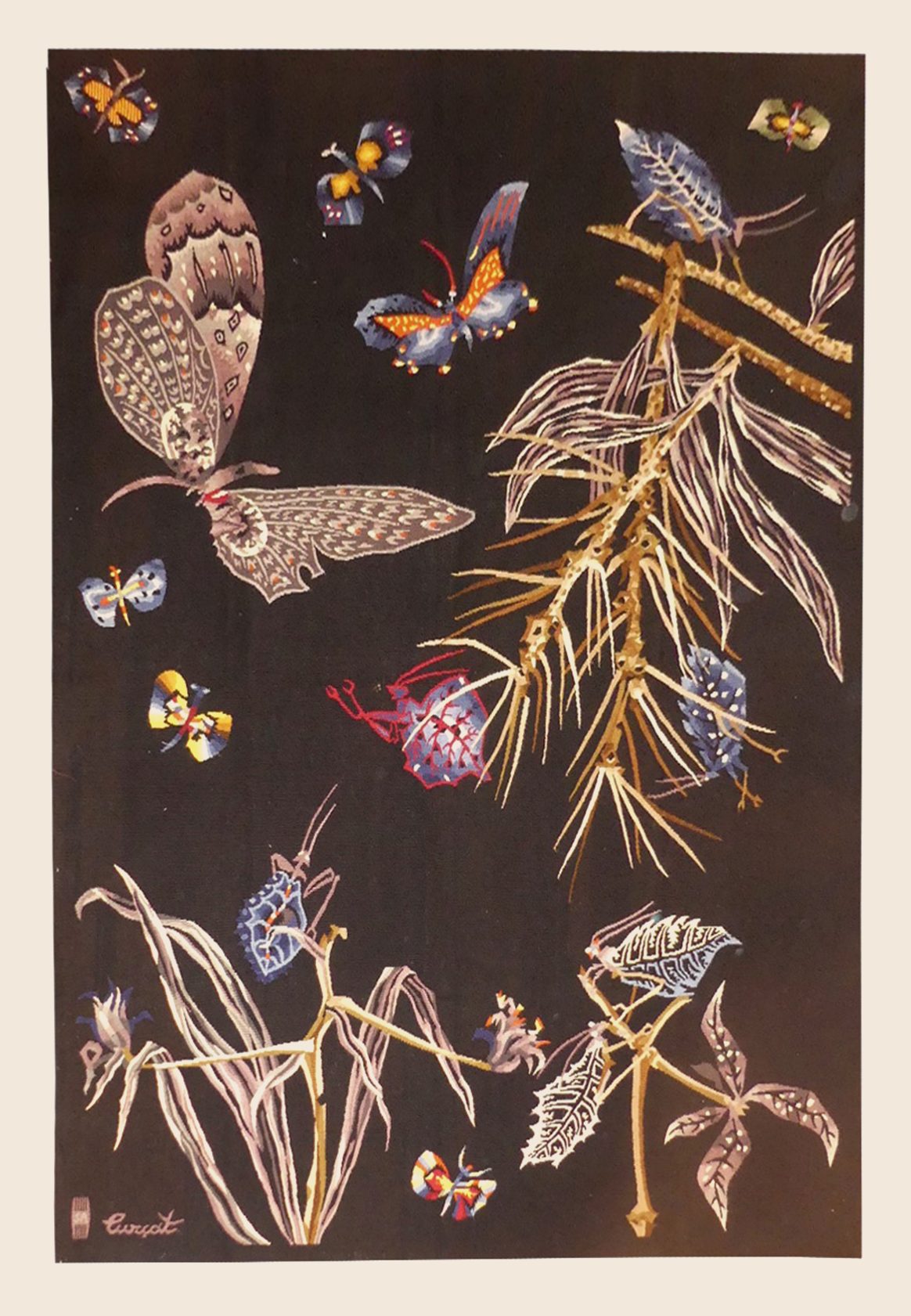
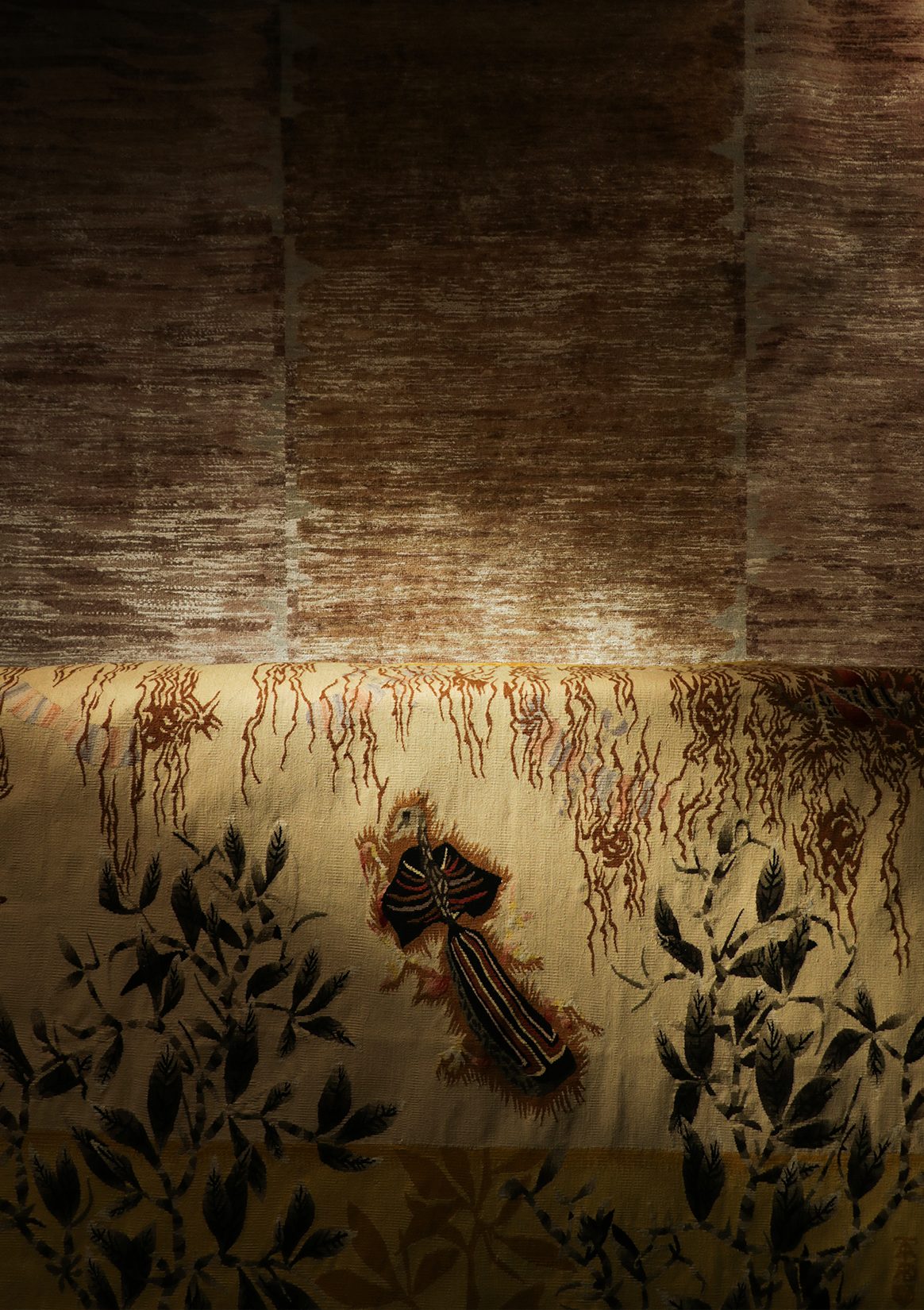
Jean Lurçat Aubusson tapestry woven in the Simone André workshop at La Tapisserie du 20e siècle (Art gallery in Paris, France) Circa 1955.
Collections, Provenance, and Institutional Recognition
Major museums and institutions have embraced the historical and artistic significance of modern tapestries. The Mobilier National in Paris holds over 8,000 modern tapestries, many commissioned by the French state. The Victoria and Albert Museum in London and the Metropolitan Museum of Art in New York have acquired significant pieces by Lurçat, Miró, and Gilioli. Notably, the Centre Pompidou and the Musée d’Art Moderne de la Ville de Paris house major installations of French and international postwar tapestry. Provenance plays a vital role in evaluating a tapestry’s worth and rarity. Works directly produced under the supervision of the artist or authenticated by a certified atelier—especially signed or with original design cartoons—carry significant scholarly and commercial value. Tapestries produced in the early series, often under 6 or 8 editions, tend to be the most collectible.
Contemporary Practitioners: Reviving and Recontextualizing Textile Language
A new generation of artists continues to redefine the tapestry medium. Artists like Ernesto Neto, Sheila Hicks, Aubrey Roemer, and Tanya Aguiñiga use fiber not only for aesthetic exploration but as a tool for socio-political commentary. Their works, often handwoven and materially experimental, bring tapestry into direct engagement with issues of migration, identity, gender, and memory. Digital weaving technologies have also opened new possibilities. The Jacquard loom, once manual, is now digitally guided, enabling a seamless integration of photographic imagery, algorithmic design, and complex visual layering. Artists such as Chuck Close and Grayson Perry have utilized digital weaving to produce tapestries that collapse the boundary between hyperrealism and fiber art.
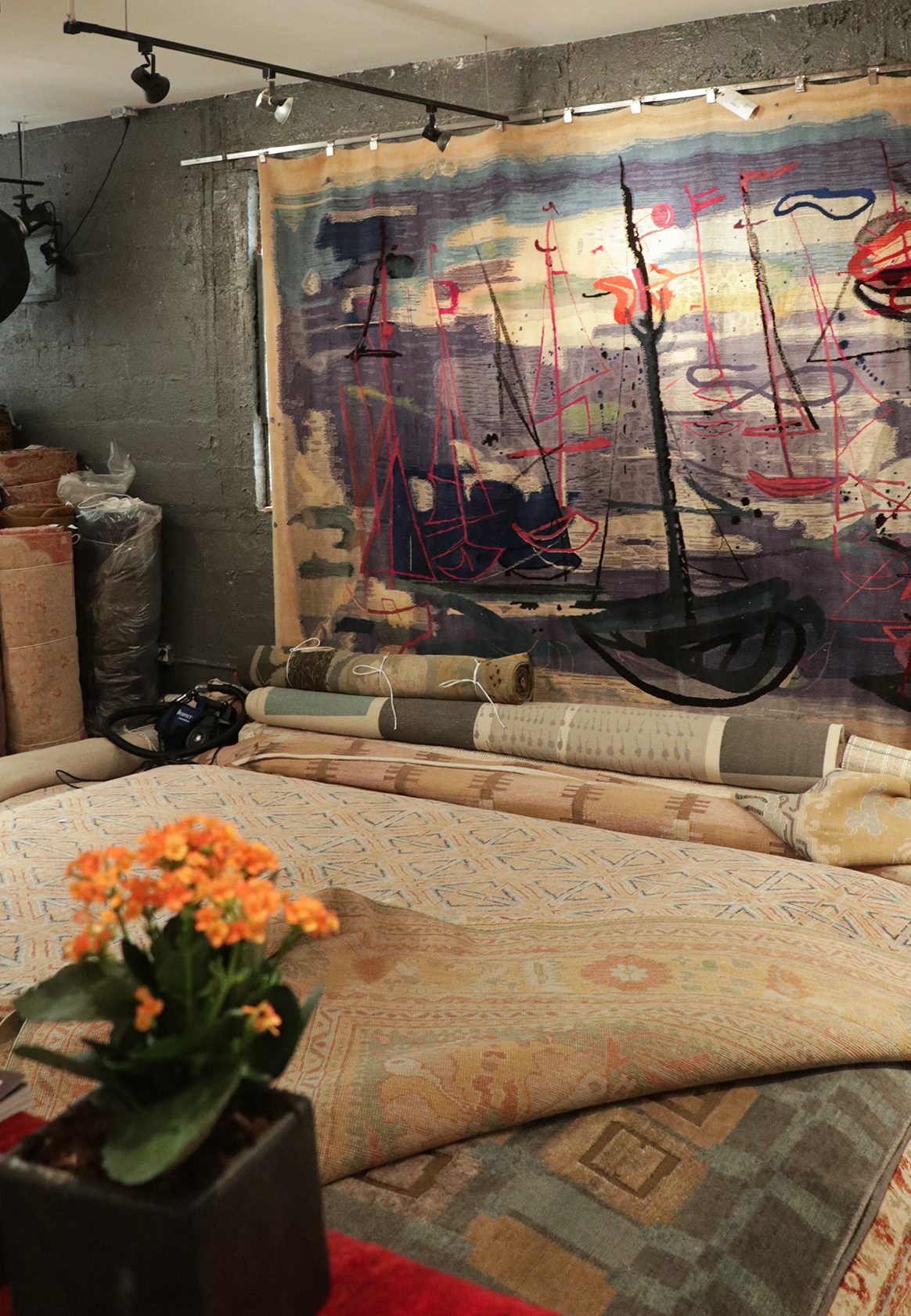
Rug and Kilim Showroom
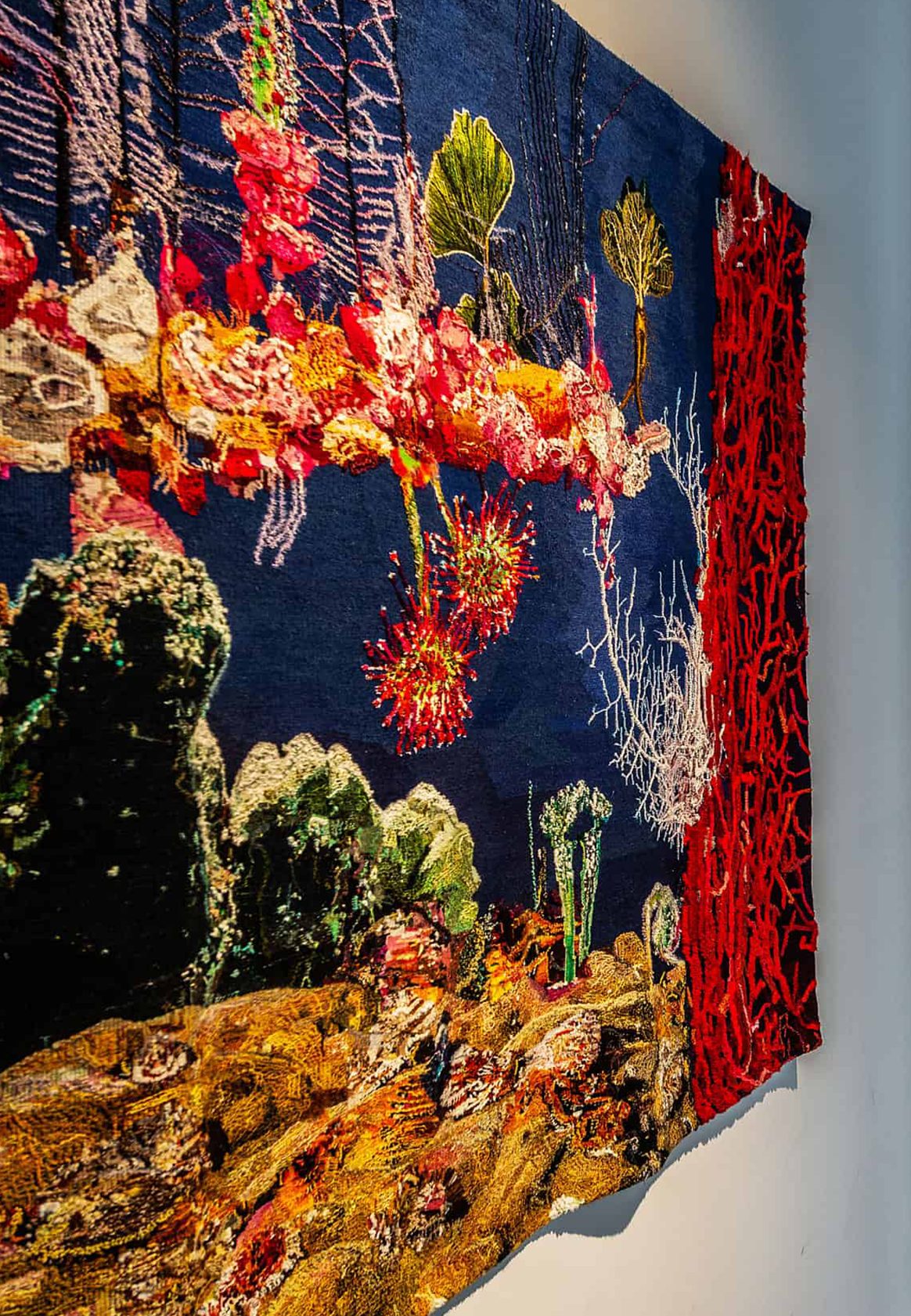
Tapestry at International Tapestry Triennale in Lodz
Tapestries in Contemporary Interiors
Modern tapestries are no longer relegated to institutional walls or aristocratic interiors. They now serve as focal points in minimalist, industrial, and postmodern spaces. Interior architects and designers increasingly employ tapestries not only for their aesthetic presence but for their acoustic, insulating, and textural value. Tapestries by Miró or Perrot juxtapose strikingly well against concrete or steel interiors, adding warmth and visual rhythm. Modular textile panels, suspended installations, and custom wall tapestries are being commissioned for boutique hotels, private residences, and even co-working spaces—blending traditional craftsmanship with architectural innovation.
Design houses such as Kvadrat, Maharam, and Roche Bobois have also collaborated with contemporary artists and textile artisans to integrate tapestries into furniture and space design, further blurring the boundaries between art object and functional décor.
Over the last decade, the market for modern tapestries has seen a resurgence. Major auction houses have recorded record-breaking prices for works by Lurçat, Miró, Calder, and Dom Robert. The limited-edition nature of these works, their monumental scale, and their increasing institutional recognition have contributed to their rising investment appeal. While the postwar period remains the most coveted era, collectors are now turning toward contemporary artists whose works straddle craft and conceptualism. The emergence of specialized galleries and art fairs—such as the International Tapestry Triennale in Lodz, Collect (London), and Salon Art + Design (New York)—signals a growing demand and scholarly interest.
The New Canon of Placement and Meaning, Monumentality in Modernist Spaces
In interiors dominated by monolithic materials—concrete, glass, steel—modern tapestries offer deliberate counterpoint. A Lurçat or Miró piece on a raw Brutalist wall does more than decorate—it fractures the orthodoxy of concrete with a burst of myth, color, and hand-woven narrative. Tapestries absorb sound, warm up acoustically harsh environments, and—most crucially—reclaim visual softness in highly geometric spatial compositions.
Placement Strategy:
Mount large-scale tapestries on primary accent walls, particularly in double-height foyers, open-plan salons, or above stairwells—spaces that require an anchoring visual monument.
For collectors of mid-century modern architecture, particularly those by Niemeyer, Kahn, or Eames, a tapestry by René Perrot or Thomas Gleb can introduce organic irregularity into otherwise highly rational spaces.
Converging with Art Movements: A Dialogue with Modernity
Modern tapestries function best when placed in art-historically literate contexts. Their visual language can be matched or juxtaposed with other modern movements:
With Bauhaus and De Stijl: Use tapestries with geometric abstraction and controlled chromatics (e.g. Eileen Gray’s textile work, Anni Albers’ weaving) to echo architectural lines and rhythmic minimalism.
With Surrealism: Integrate tapestries from Joan Miró or Max Ernst that subvert form and narrative, ideally framed by curved walls or arched ceilings—spaces where geometry bends into dream.
With Arte Povera and Wabi-Sabi: Raw, sculptural fiber pieces by Magdalena Abakanowicz or contemporary artists like Judith Scott can be suspended in voids or placed against clay-plastered walls to maximize their material fragility and anti-monumentalism.
Placement Strategy:
Position near conceptual art or post-minimalist installations to elevate the tapestry as part of a polyphonic curatorial statement.
Avoid clustering with framed works; instead, give the textile room to “breathe”—at least 18–24 inches of negative space from adjacent artworks.
Interior Trends and the Return of the Tactile
The rise of textural maximalism and slow design has propelled tapestry into the lexicon of leading interior architects and art consultants. As spaces become more sensorial and materially articulate, tapestry is being reintroduced as a first-choice wall solution, not an afterthought.
In Minimalist Spaces: Choose neutral-tone tapestries with exaggerated weave or relief-like structure—e.g., natural fiber pieces in jute, wool, or mohair. These work particularly well in Scandinavian-influenced interiors and Japanese ryokan-inspired retreats.
In Maximalist Interiors: Go bold with chromatic explosions—Miró’s surrealist colorways, Calder’s dynamic forms, or Perrot’s narrative-rich figurative work.
In Hybrid Spaces (Live/Work/Exhibit): In the age of multifunctional architecture, use tapestries to demarcate zones within open plans. A suspended textile partition can divide a gallery-style loft into visual quadrants while maintaining material unity.
Placement Strategy:
Above fireplaces: Replace traditional oil paintings with framed or floating tapestries—ideal for organic modernist homes or adaptive reuse spaces (former warehouses, barns, industrial lofts).
On pivoting panels: Use rotating walls or room dividers clad in tapestry to create flexible spatial choreography in dynamic living spaces.
In ceiling alcoves: Install upward-hung tapestries (Abakan-like forms) in recessed ceiling cavities for contemplative drama, especially in meditation or reading nooks.
High-value modern tapestries—especially limited-edition Aubusson works by 20th-century masters—must be preserved with museum-grade framing or hanging systems. However, floating installation, where the tapestry is mounted with discrete backing bars or magnetic tension systems, allows the textile’s movement, texture, and hand-woven dimensionality to remain visible.
For Miró tapestries, which often include organic shapes and raw edges, avoid glass framing—opt instead for a suspended system that respects the irregularity.
For woven Bauhaus-style pieces, use shadow-box framing with UV-resistant acrylic to highlight formal geometry without flattening texture.
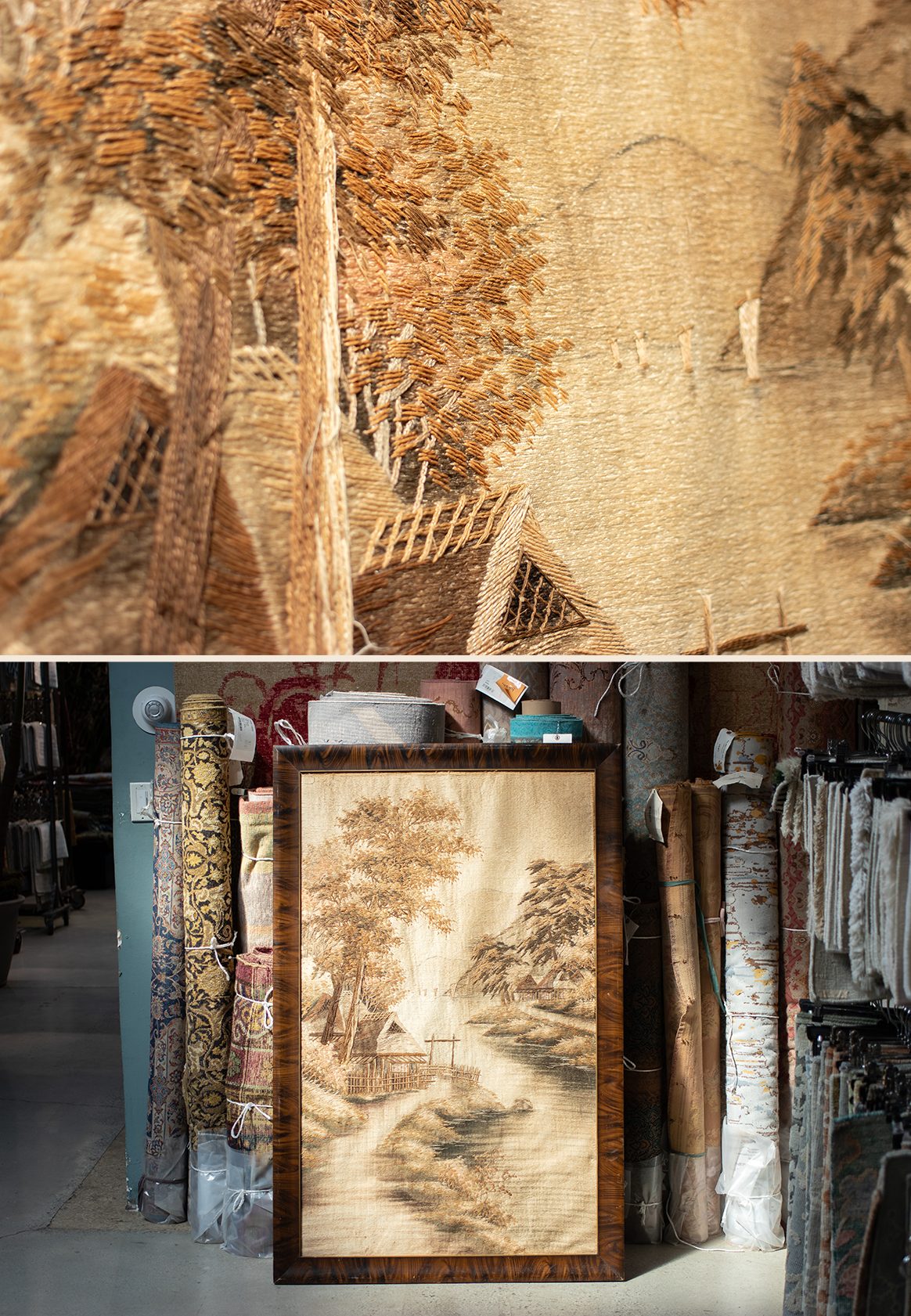
Objects at Volumes by R&K
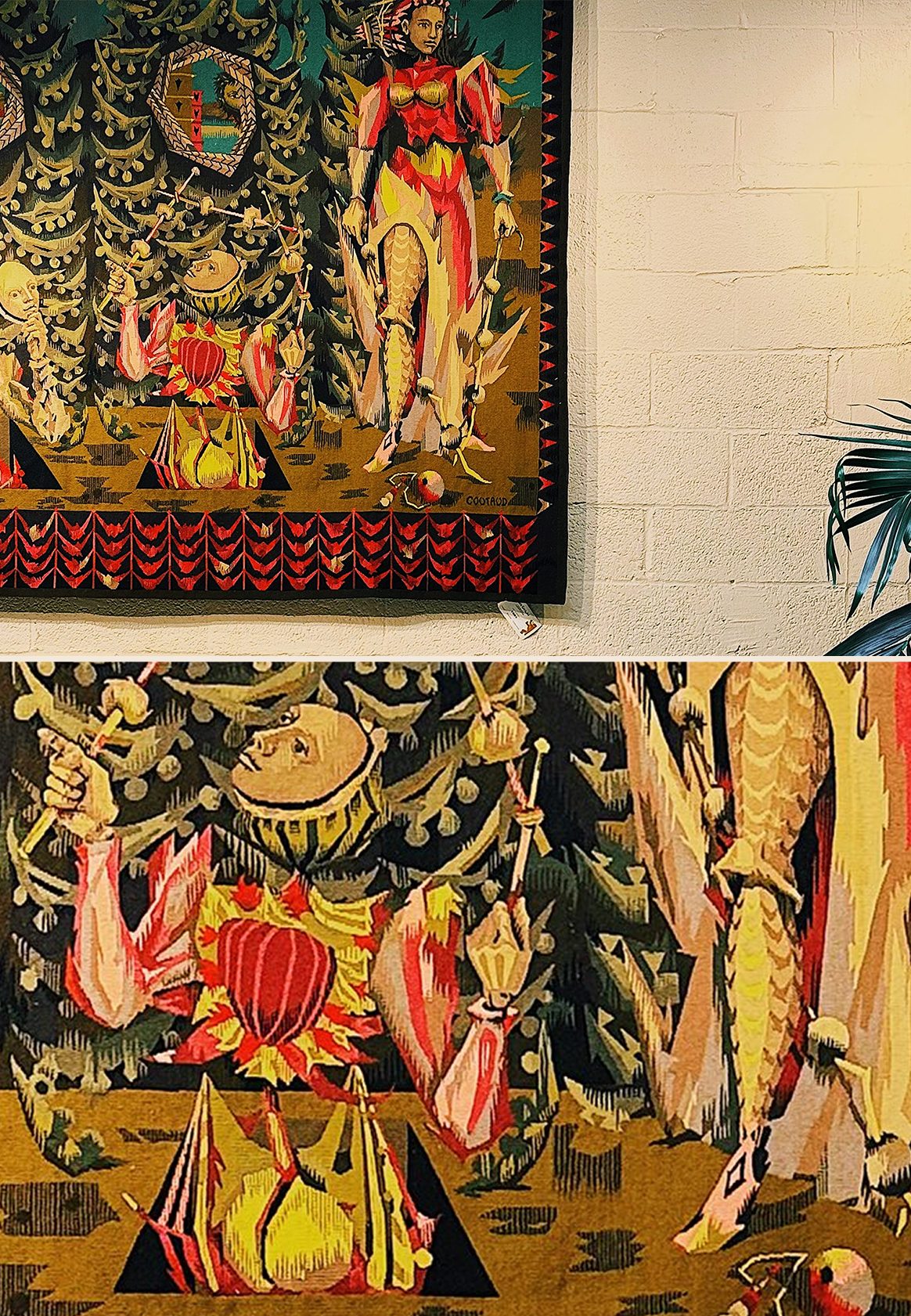
Rug & Kilim Tapestries
Design Philosophies That Favor Tapestries
Spatial Storytelling: Tapestries offer narrative density—ideal for design languages that embrace historicism, regionalism, or symbolic materiality.
Acoustic Intelligence: Particularly relevant for modern architecture, which often ignores sonic warmth. Tapestries soften reverberation in high-ceiling environments.
Cultural Integration: In luxury hospitality design, tapestries offer a means to introduce localized craftsmanship into globally branded aesthetics—especially effective in boutique hotels, diplomatic residences, or cultural pavilions.
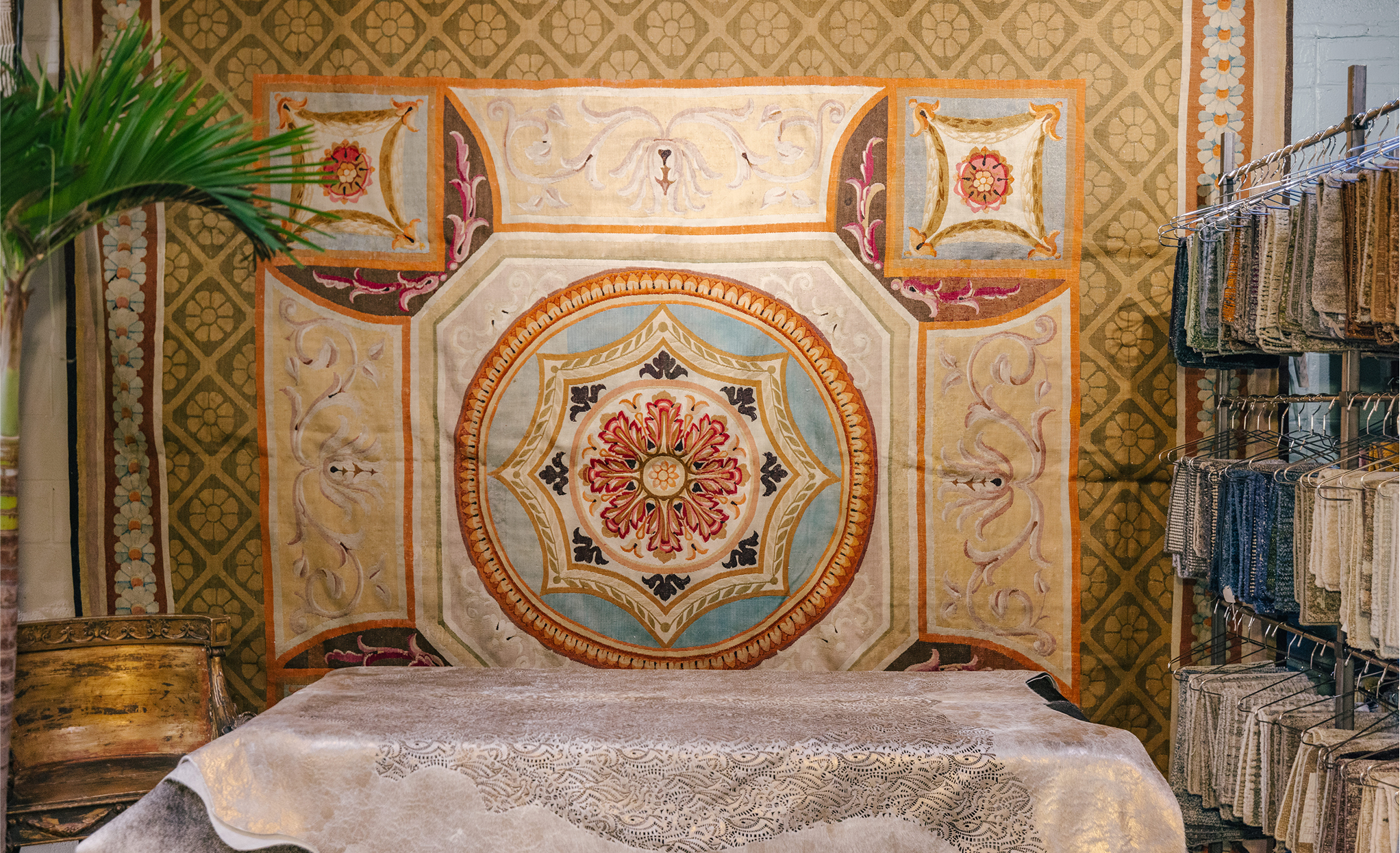
A Modern Renaissance
The modern tapestry is no longer a relic of feudal prestige or courtly grandeur.
From the looms of Aubusson to the walls of MoMA, from the brushstrokes of Miró to the fiber sculptures of Abakanowicz, the tapestry has reclaimed its rightful position in the pantheon of modern and contemporary art. To integrate a modern tapestry into your space is to curate—not just decorate. It requires sensitivity to art movements, understanding of material legacies, and strategic interior fluency. Whether Miró’s dreamscapes, Lurçat’s cosmic allegories, or Hicks’ sculptural fiberworks, these are protagonists, demanding presence and precision. Place them with intention, and they will not merely adorn a room—they will author it.
As collectors, institutions, and designers reappraise the tapestry’s value, it is increasingly clear: modern tapestry is not a decorative afterthought—it is a primary, autonomous art form.
~~~