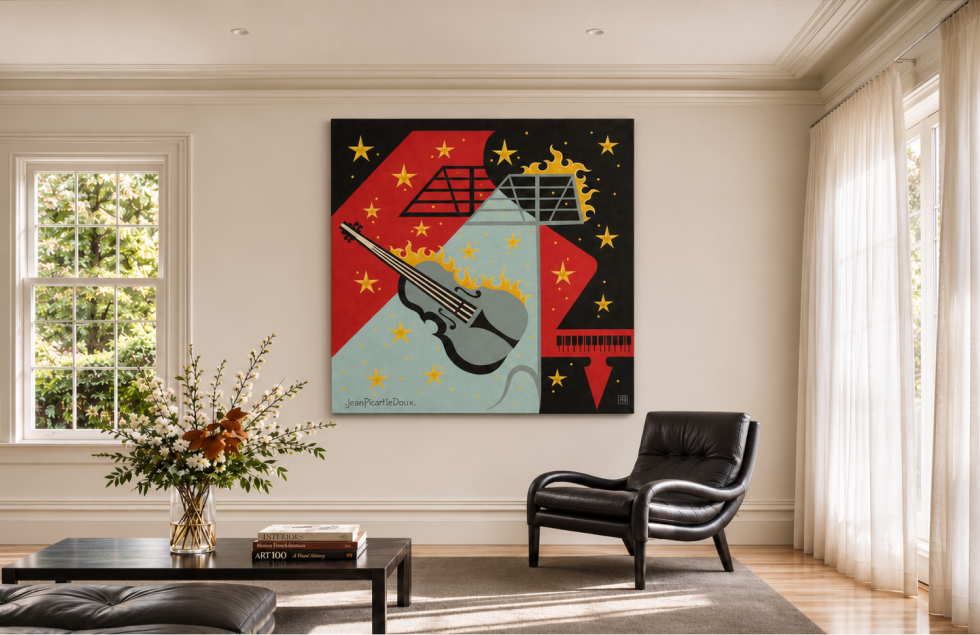
A Guide to Axminster Rugs: History, Craftsmanship, and British Design Heritage
November 4, 2026
There is a particular pleasure, known to every serious collector, in turning an object over. The front of a great tapestry or carpet is what seduces; the back, and the edges, are what tell the truth. And on the finest modern tapestries, that truth is written in a specific and often misunderstood language, a language of signatures, edition numbers, and a small woven label the French call the bolduc. To read it fluently is to hold the difference between a decorative object and a documented work of art.
It is the same literacy that governs the print room and the rare book library, where a collector learns to read a plate mark, a watermark, a colophon. The modern tapestry, elevated to the status of fine art by Jean Lurçat and his circle in the mid-twentieth century, borrowed the apparatus of the fine art edition precisely because it wished to be understood as fine art. To understand the apparatus is to understand the ambition.
The Signature in the Weave
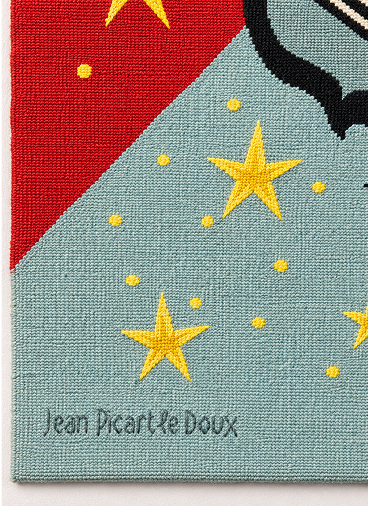
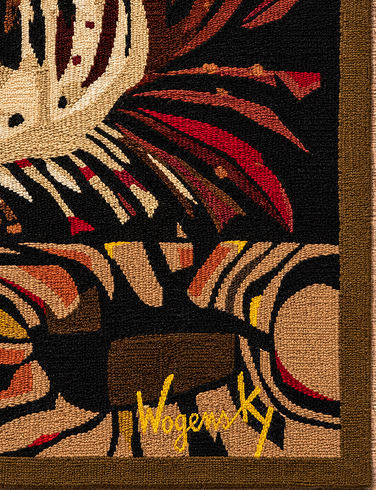
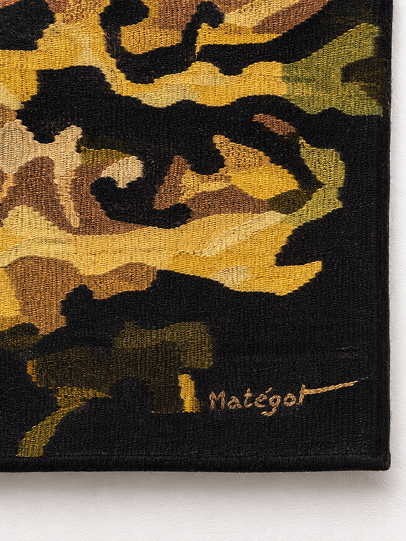
Begin with the signature. On a tapestry designed by an artist of the Lurçat school, the signature typically appears woven directly into the lower portion of the design, part of the fabric itself rather than added after. This is a crucial distinction. A woven signature was planned into the cartoon and executed by the weavers as an integral element, which means it certifies the design at the level of its conception. One learns to read its character: the confident initials of a Lurçat, the particular hand of a Dom Robert or a Mathieu Matégot. The signature on the face declares the author of the vision.
But the face is only the beginning.
The Bolduc: The Tapestry’s Birth Certificate
Sewn to the reverse of a properly produced modern tapestry is the bolduc, a woven or printed band that functions as the work’s birth certificate and is, to the knowing collector, the single most important element of all. The bolduc records what the front cannot: the title of the work, the name of the artist, the name of the workshop that wove it, and, critically, the edition number. On the finest examples it carries the signatures, in ink, of both the artist and the master weaver, the two authors of the collaboration, jointly attesting to the piece.
The edition number is the heart of the matter. Modern tapestries, following the logic of the fine art print, were woven in strictly limited editions, often of six, sometimes fewer. A bolduc reading “3/6” tells you that this is the third of six authorized weavings of that design, and that no more than six were ever meant to exist. This limitation is what confers both rarity and value. An unnumbered weaving, or one produced outside the authorized edition, belongs to a different and lesser category entirely, however beautiful it may be. The bolduc is the document that distinguishes the authorized work from the mere copy, and its presence, legibility, and completeness are the first things a specialist examines.
Reading the Workshop
The bolduc also names the atelier, and here a second layer of connoisseurship opens. The great Aubusson workshops, Pinton, Tabard, Goubely, each carried its own reputation and its own standard of execution. A tapestry woven by the Pinton frères, who executed the editions of Calder and Lurçat, carries an authority of workmanship that the market recognizes and rewards. To read the workshop name on a bolduc is to know whose hands translated the artist’s cartoon into thread, and to know, therefore, something essential about the quality of the translation.

When the Bolduc Is Missing
Not every genuine tapestry retains its bolduc; labels are lost, linings replaced, histories interrupted. The absence of a bolduc does not automatically condemn a piece, but it shifts the burden of authentication onto other evidence: the quality and character of the weave, the woven signature, documented provenance, and comparison against the known catalogue of an artist’s editions. This is where the trained eye and the reference library become indispensable, and where a house with deep experience in the category earns its standing. Reading a tapestry without its bolduc is like attributing an unsigned drawing: possible, but only for those who truly know the hand.
The Literacy of the Serious Collector
To learn to read the signature, the edition, and the bolduc is to join a tradition of looking that runs through every serious field of collecting, from the hallmarks on silver to the editions of a fine press book. It is the difference between buying what pleases the eye and acquiring what will hold its meaning across generations.
The finest modern tapestries were made to be read as well as admired, their makers having gone to considerable trouble to document exactly what they were and how few of them existed. To honor that documentation, to turn the work over and read its language, is the beginning of collecting them well. The front is for the room. The back is for the record. The connoisseur attends to both.
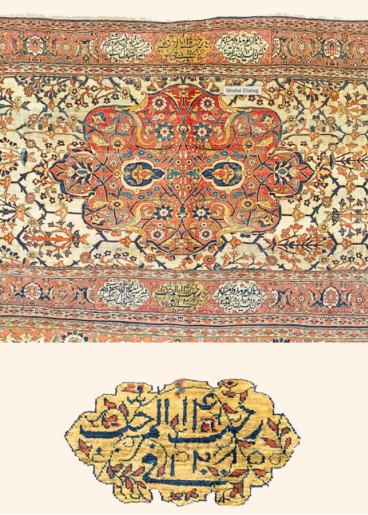
The Silk Heriz Triclinium Carpet of 1868