Signatures, Editions, and the Bolduc on Modern and Rare Tapestries: The Mark of the Masters and Artists
November 4, 2026
The Enduring Language of Aubusson Rugs in Global Design
Among the great weaving traditions of Europe, few names carry the artistic prestige and cultural significance of Aubusson. For centuries, Aubusson rugs have represented the pinnacle of French decorative arts, embodying the refinement, sophistication, and creative ambition that defined some of Europe’s most influential artistic movements. Their importance extends far beyond floor coverings; Aubusson rugs occupy a distinguished position within the histories of design, architecture, collecting, and luxury interiors.
Originating from the historic weaving center of Aubusson in central France, these rugs emerged as part of a broader tapestry-making tradition that would ultimately influence aristocratic residences, royal palaces, cultural institutions, and significant architectural projects throughout Europe and beyond. Their graceful ornamentation, sophisticated color palettes, and exceptional craftsmanship established them among the most admired carpets ever produced.
Unlike many Eastern carpet traditions rooted in tribal symbolism or geometric abstraction, Aubusson rugs reflect the decorative ideals of European classicism. Their compositions often draw inspiration from architecture, landscape design, painting, botanical studies, and courtly aesthetics, creating carpets that function as extensions of the interiors they inhabit.
Today, Aubusson rugs continue to inspire collectors, designers, architects, and historians. Their enduring relevance demonstrates the timeless appeal of craftsmanship, artistic excellence, and thoughtful design.
Rug & Kilim and the Contemporary Interpretation of Aubusson Rugs
Within the international world of collectible textiles and luxury interiors, Rug & Kilim occupies a distinctive role in preserving and advancing appreciation for Aubusson rugs. The House approaches these carpets not merely as decorative objects but as important works within the broader history of European decorative arts.
Through engagement with antique Aubusson carpets, French decorative traditions, and contemporary reinterpretations inspired by historic weaving languages, Rug & Kilim contributes to the continued relevance of Aubusson design within modern architecture and interior environments.
The firm’s philosophy emphasizes scholarship, material authenticity, and curatorial understanding. This approach enables collectors, architects, and institutions to engage with Aubusson rugs as living cultural artifacts that continue to inform contemporary design.
By bridging historical craftsmanship with modern spatial needs, Rug & Kilim helps ensure that the elegance and artistic legacy of Aubusson weaving remain active within today’s most sophisticated interiors.
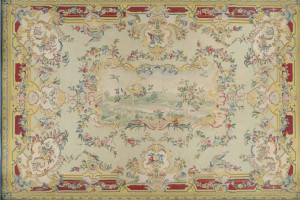
Historical Origins: The Rise of Aubusson Weaving
The story of Aubusson rugs begins in the town of Aubusson, located in the Creuse region of central France. By the fifteenth century, the town had established itself as an important center of textile production, particularly known for tapestry weaving.
Over the following centuries, Aubusson workshops flourished under royal patronage and growing European demand for luxury decorative arts. During the seventeenth and eighteenth centuries, Aubusson became one of the most influential weaving centers in Europe.
The region’s artisans developed extraordinary expertise in:
- Tapestry production
- Decorative carpets
- Court commissions
- Architectural textiles
- Custom interior furnishings
As French aristocratic culture expanded during the reigns of Louis XIV, Louis XV, and Louis XVI, Aubusson workshops increasingly supplied textiles for palaces, châteaux, and elite residences.
These carpets reflected broader European artistic developments, incorporating influences from Rococo, Neoclassicism, landscape painting, and decorative architecture.
The result was a uniquely French weaving tradition that remains among the most celebrated in textile history.
Design Language: Elegance, Ornament, and Architectural Harmony
One of the defining characteristics of Aubusson rugs is their extraordinary relationship with architecture and interior design.
Unlike carpets designed as independent decorative objects, Aubusson rugs were often conceived as integral elements within larger decorative schemes.
Common design characteristics include:
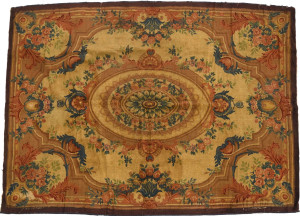
- Floral garlands
- Classical medallions
- Architectural borders
- Scrollwork and arabesques
- Rococo ornamentation
- Botanical motifs
- Cartouches and decorative frames
- Symmetrical compositions
These elements were carefully organized to create visual harmony within grand interiors.
The resulting carpets possess an exceptional sense of proportion and refinement. Rather than overwhelming a space, Aubusson rugs establish an atmosphere of balance, elegance, and sophistication.
This quality explains why they remain highly valued in both traditional and contemporary design environments.
Aubusson Rugs and the French Decorative Arts Tradition
Few carpet traditions are as closely connected to a broader artistic movement as Aubusson rugs.
Throughout the seventeenth, eighteenth, and nineteenth centuries, Aubusson workshops collaborated with artists, designers, architects, and patrons who shaped the visual culture of France.
The rugs reflect influences from:
- French Rococo
- Neoclassicism
- Baroque design
- Decorative painting
- Landscape architecture
- European furniture design
Many Aubusson carpets were designed to complement important interiors, functioning alongside furniture, tapestries, paneling, and architectural ornament.
As a result, these rugs are frequently studied not only as textiles but also as significant examples of decorative arts history.
Their influence continues to inform contemporary luxury interiors where elegance, craftsmanship, and historical continuity remain central values.
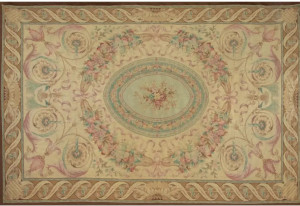
Color Palettes: Soft Sophistication and Decorative Refinement
Aubusson rugs are renowned for their subtle and highly sophisticated color palettes.
Unlike carpets characterized by dramatic contrast or intense saturation, Aubusson designs typically emphasize harmony and refinement.
Common colors include:
- Soft ivory
- Powder blue
- Sage green
- Blush pink
- Warm gold
- Lavender
- Cream and parchment
- Muted terracotta
These tones create interiors that feel luminous, elegant, and inviting.
Over time, antique Aubusson rugs often develop remarkable patinas that further enhance their visual depth and historical character.
Their restrained palettes continue to resonate strongly within contemporary interiors where understated luxury and material authenticity are increasingly valued.
Aubusson Rugs in Art, Literature, and Cultural History
The cultural significance of Aubusson rugs extends well beyond the decorative arts.
Throughout European history, they have appeared within aristocratic residences, royal collections, historic estates, and significant architectural projects. Their presence often symbolized refinement, education, and participation in the highest traditions of European culture.
Within art history, Aubusson rugs are associated with:
- French court culture
- European aristocratic interiors
- Enlightenment aesthetics
- Decorative arts movements
- Historic preservation
Their influence can also be traced through literature, design theory, museum collections, and scholarly studies of European material culture.
Today, Aubusson carpets remain important reference points for historians and designers seeking to understand the evolution of luxury interiors and decorative excellence.
Contemporary Relevance in Luxury Interior Design
Although rooted in centuries of history, Aubusson rugs remain remarkably relevant within contemporary design.
Modern architects and interior designers frequently employ these carpets in:
- Luxury residences
- Historic restorations
- Boutique hospitality projects
- Cultural institutions
- Formal reception spaces
- Contemporary transitional interiors
Their refined ornamentation introduces warmth, texture, and cultural depth without sacrificing sophistication.
The growing appreciation for craftsmanship, provenance, and collectible design has further strengthened demand for Aubusson rugs among discerning collectors and design professionals.
Their ability to complement both classical and contemporary architecture demonstrates the enduring flexibility of exceptional design.
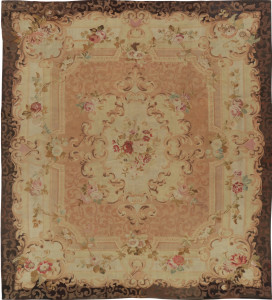
Collectibility and Market Significance
Today, Aubusson rugs occupy a respected position within the global market for antique carpets and decorative arts.
Collectors typically evaluate examples according to:
- Historical provenance
- Artistic quality
- Design originality
- Condition and preservation
- Craftsmanship
- Rarity
Particularly desirable are eighteenth-century and nineteenth-century examples featuring exceptional artistry and well-preserved coloration.
Their enduring market significance reflects both their decorative appeal and their importance as cultural artifacts.
For many collectors, Aubusson rugs represent one of the purest expressions of European decorative sophistication.
Aubusson Rugs as Living Cultural Heritage
Aubusson rugs represent far more than beautiful carpets. They embody centuries of artistic achievement, technical mastery, and cultural ambition.
Their refined compositions, elegant palettes, and architectural intelligence continue to resonate because they address timeless principles of design: harmony, proportion, craftsmanship, and beauty.
For collectors, architects, historians, designers, and institutions, Aubusson rugs offer a remarkable synthesis of decorative arts, cultural heritage, and contemporary relevance.
Their continued presence within the world’s most distinguished interiors confirms that truly great design transcends fashion and era. Instead, it evolves gracefully across generations while retaining its essential elegance and significance.
FAQ: Aubusson Rugs
What is an Aubusson rug?
An Aubusson rug is a French decorative carpet originating from the historic weaving center of Aubusson, renowned for its elegance, refined ornamentation, and connection to European decorative arts.
Are Aubusson rugs handmade?
Yes. Traditional Aubusson rugs were handmade by skilled artisans using techniques closely related to tapestry weaving.
Why are Aubusson rugs important?
They represent one of the most influential traditions within European decorative arts and played a major role in furnishing aristocratic and royal interiors.
What designs are common in Aubusson rugs?
Common motifs include floral garlands, medallions, botanical ornamentation, architectural borders, scrollwork, and Rococo-inspired decorative elements.
Are antique Aubusson rugs collectible?
Yes. Antique Aubusson rugs are highly sought after for their historical significance, craftsmanship, rarity, and artistic value.
What colors are typical of Aubusson rugs?
Typical palettes include ivory, sage green, blush pink, powder blue, lavender, cream, gold, and muted earth tones.
Can Aubusson rugs work in contemporary interiors?
Absolutely. Their refined elegance and sophisticated palettes allow them to integrate seamlessly into both traditional and modern luxury spaces.
How are Aubusson rugs different from Persian rugs?
While Persian rugs often emphasize knotting traditions, tribal symbolism, and Eastern design languages, Aubusson rugs reflect European decorative arts traditions rooted in architecture, classical ornamentation, and French interior design.