Tapestry & Textile
- Under 6 x 9
- Runners
- 6 x 9
- 8 x 10
- 9 x 12
- 10 x 14
- 12 x 15
- Over 12 x 15
Origin ▼
Style ▼
Material ▼
Width
Length
To connect with a specialist, click here
Stories from the Tapestry & Textile Archive
Essays, artist dialogues, and provenance notes drawn from Rug & Kilim’s editorial desk.
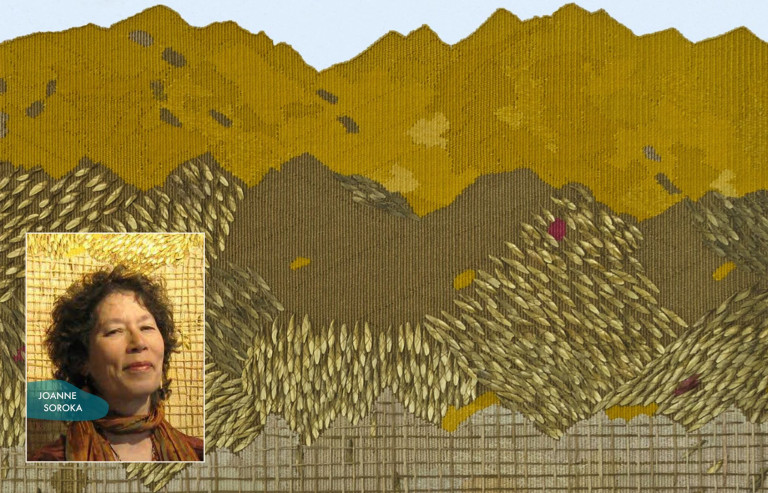
Rug & Kilim’s Tapestry Artists’ Series: In Dialogue with Joanne Soroka
There are artists who weave cloth and the ones who weave ideas. And then there are artists; rare, serious, working at a register that most practitioners of any medium never reach, who weave lives. Not their own lives, though those are present too, but the lives of people who left no other record: emigrants who crossed oceans under duress, ancestors who worked rivers in foreign countries, families scattered across continents by persecution and necessity and the simple human desire for somewhere better than where they were. Joanne Soroka weaves these lives. She gives them, as she has said herself, the meaning that history denied them. The loom, in her hands then, is an act of remembrance, slow, physical, irreversible, and as close to justice as textile art has ever come.
Read the Feature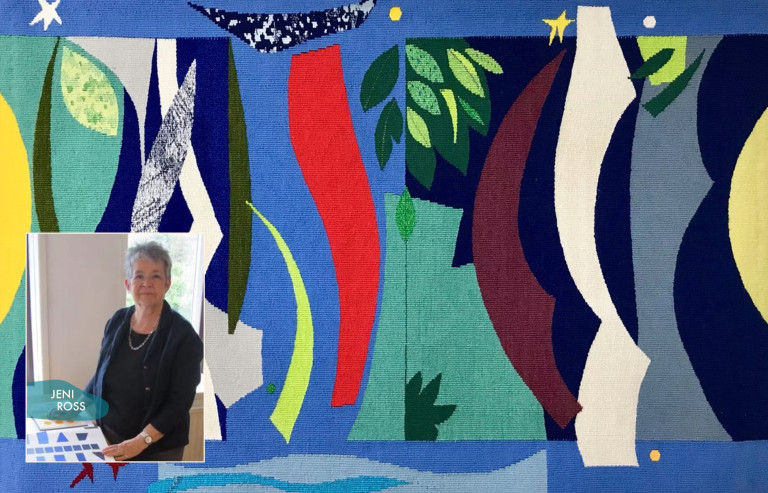
Rug & Kilim’s Tapestry Artists’ Series: In Dialogue with Jeni Ross
There is a moment, familiar to anyone who has stood inside a Jeni Ross installation, when the room stops being a room. Not because the work overwhelms the space in the manner of spectacle not because it shouts, but because it restructures. A Ross textile does not hang on a wall so much as claim it, establishing a gravitational field of color and material density that reorganizes everything around it with the quiet authority of a load-bearing element. You do not look at a Jeni Ross. You adjust to it. You find your position in relation to it. The room, in the most literal architectural sense, has acquired a new wall.
Read the Feature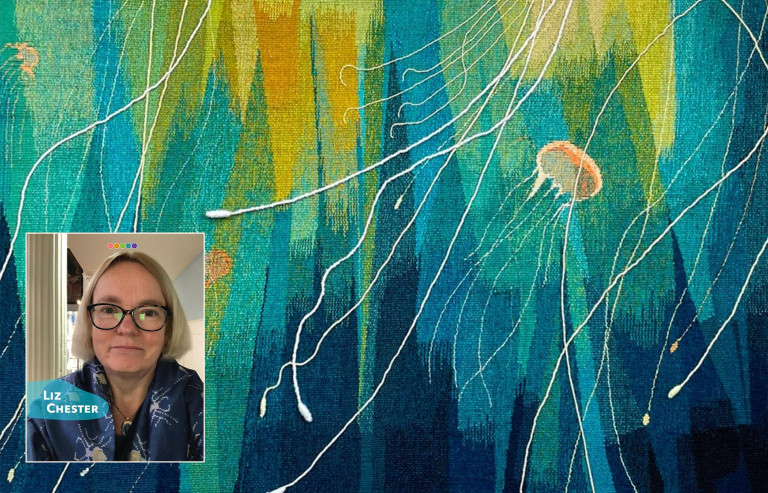
Rug & Kilim’s Tapestry Artists’ Series: In Dialogue with Elizabeth Chester
There is a particular kind of looking that a great tapestry demands, slower than painting, more physical than sculpture, closer to reading than to seeing. The eye must travel. It must follow the thread, understand the structure, and then, having understood it, surrender to the illusion that the structure has been designed to create. The greatest European tapestries have always operated this way: technically transparent to the scholar and visually overwhelming to everyone else simultaneously. It is the most demanding of the textile arts, and the one that rewards sustained attention most completely.
Read the Feature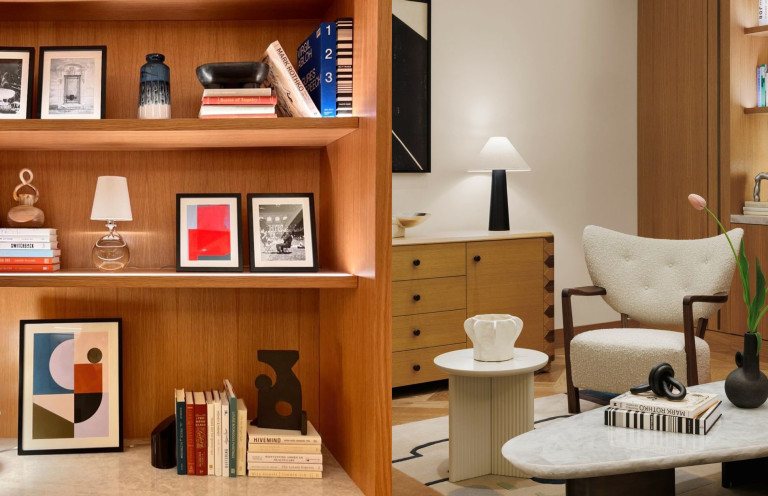
How Mid-Century Textile Artists Rewrote the Language of Art and Space Globally: A Lineage of Design Today
There is a particular kind of interior; rare, deliberate, and intellectually composed, where a rug does not decorate, but makes it art in itself. A residence overlooking Central Park, where glass and steel are softened not by excess, but by a singular woven field. A discreet apartment in Mayfair, where a tapestry holds the wall with the authority of painting. A villa in Cap Ferrat, where modernist furniture and mid-century textiles coexist with the quiet confidence of shared lineage. These are styled interiors. And at the center of many such spaces lies a quiet revolution that began in the mid-20th century, when textile artists stepped out of the decorative margins and into the intellectual core of modernism.
Read the Feature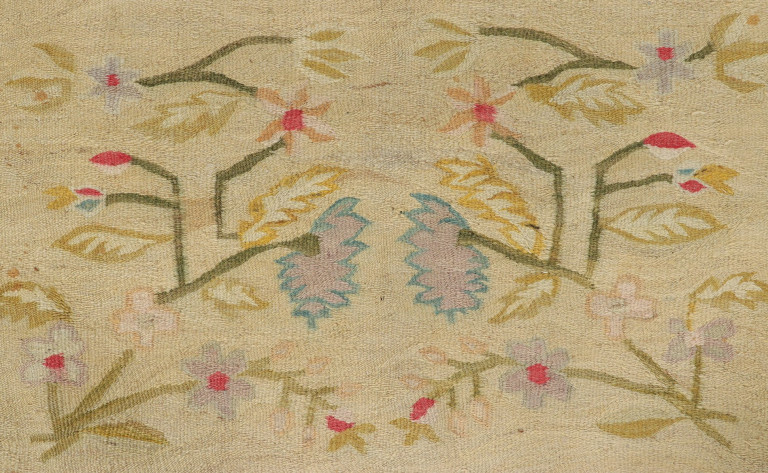
Bessarabian Rugs and Kilims: A European Textile Tradition at the Crossroads of Art, Empire and Design
In a quietly elegant London dining room, a vintage Bessarabian Kilim unfolds beneath the table like an unexpected conversation. Its geometry—subtle yet assertive—draws the eye before one quite realizes why. Inspired by the visual language of early twentieth-century design, the rug nods gently toward the stylized symmetry of Art Deco while remaining unmistakably rooted in a much older European weaving lineage. The effect is a foundation that feels both deliberate and effortless, an object whose presence quietly animates the room. Those who spend time studying interiors often admit a particular fondness for photographs that capture rooms in use rather than in perfection. The slight shift of a chair, the shadow of evening light on polished wood, a glass forgotten after supper—these small evidences of life soften even the most composed design. In such moments, a rug becomes more than a decorative surface. It becomes the mediator between architecture and living.
Read the Feature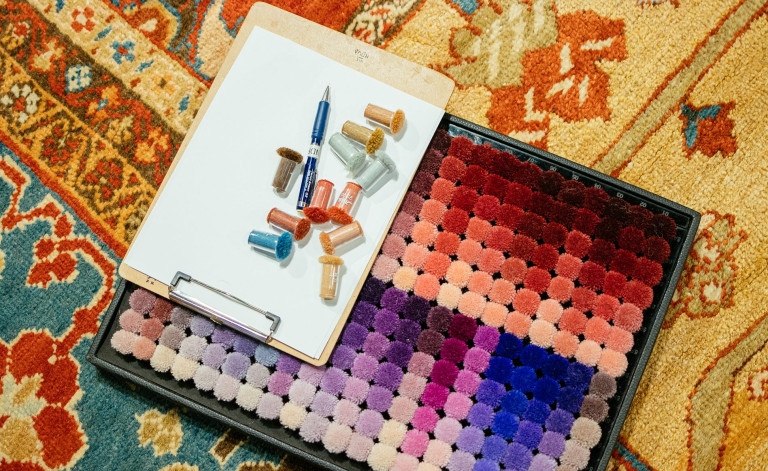
Color, Craft, and the New Language of Joyful Luxury in Rug & Textile Design: The Dopamine Décor Trend
As “dopamine décor” sweeps across contemporary interiors, color is no longer merely an accent — it is a strategy, a psychology, and a revival of age-old textile traditions. From Anatolian kilims to Bauhaus tapestries and modern hand-woven artworks, color has always carried emotional intelligence. Today, as designers embrace vibrant palettes with renewed literacy, Rug & Kilim reflects on the historical, artisanal, and cultural roots of this chromatic renaissance. Dopamine décor simply reminds us why humans have always woven joy into cloth. The Global Rise of Dopamine Décor—And Why It Matters to the Textile World Dopamine décor, the design philosophy centered on colour-driven emotional uplift, has dominated recent discussions in luxury interiors. Unlike fleeting microtrends, its foundation lies in behavioural psychology: the understanding that saturated hues and expressive materials can elevate a room, energize mood, and create a sense of personal freedom.
Read the Feature