
Rug & Kilim’s Tapestry Artists’ Series: In Dialogue with Jeni Ross
June 10, 2026
Vintage Andean Frazada Kilim and the Three Thousand Years of Living Memory Held in Its Weave
June 29, 2026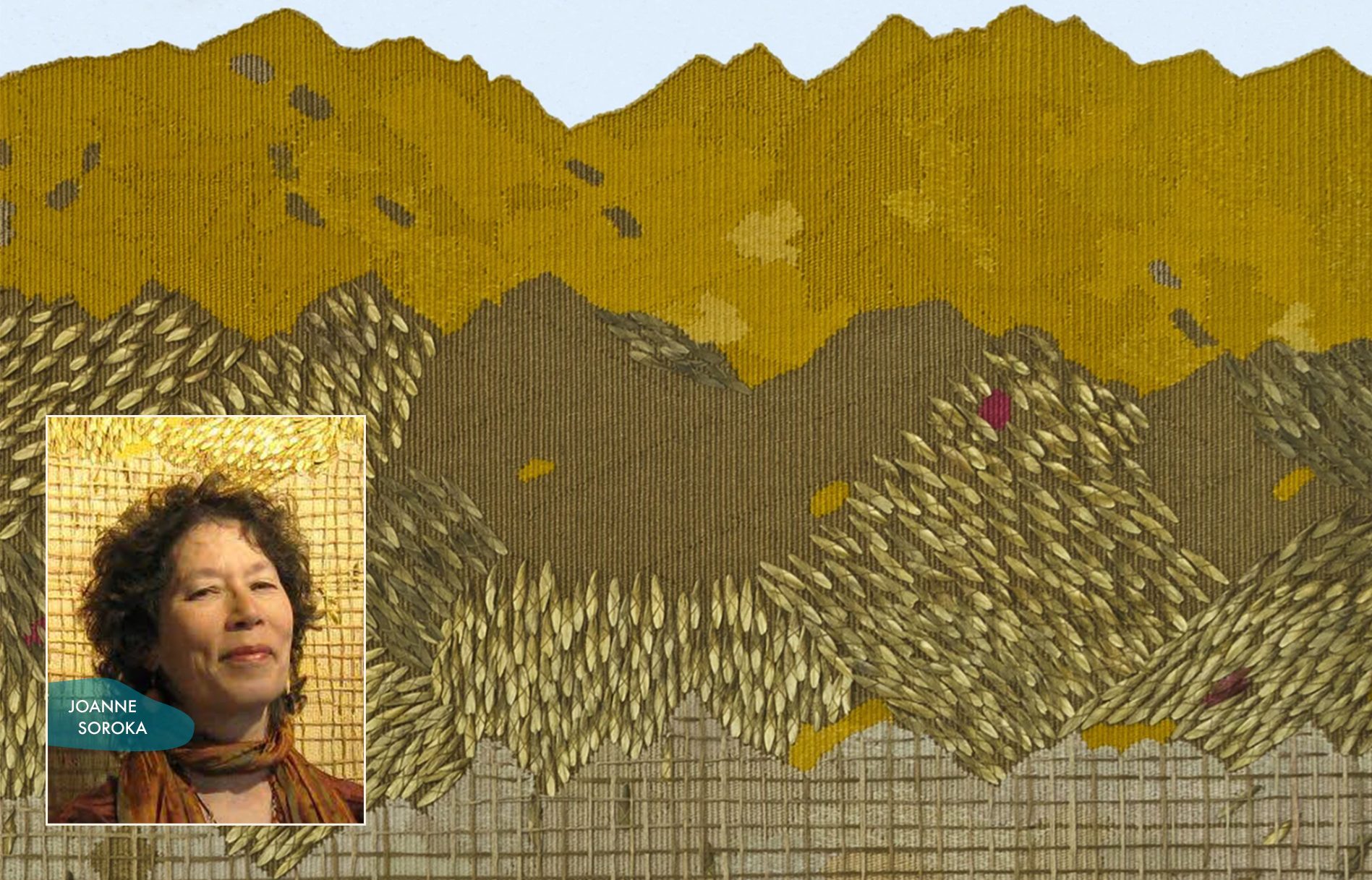
Tapestry by Joanne Soroka
There are artists who weave cloth and the ones who weave ideas. And then there are artists; rare, serious, working at a register that most practitioners of any medium never reach, who weave lives. Not their own lives, though those are present too, but the lives of people who left no other record: emigrants who crossed oceans under duress, ancestors who worked rivers in foreign countries, families scattered across continents by persecution and necessity and the simple human desire for somewhere better than where they were. Joanne Soroka weaves these lives. She gives them, as she has said herself, the meaning that history denied them. The loom, in her hands then, is an act of remembrance, slow, physical, irreversible, and as close to justice as textile art has ever come.
A Journey to the Loom
Soroka’s path to the tapestry loom was neither direct nor inevitable which is, perhaps, why she arrived at it with so much more than technique. She began with garment construction, then taught herself the wax-resist dyeing technique of batik, before the Nova Scotia College of Art and Design gave her a rigorous grounding in fiber that no self-directed practice could have produced alone. She crossed the Atlantic to study at the Edinburgh College of Art; a crossing that was, in its own quiet way, a rehearsal for the themes of displacement and transit that would eventually define her mature work. Edinburgh became home. The loom became the site where everything she had carried across that distance was finally set down and examined.
Her book, Tapestry Weaving: Design and Technique, internationally recognized, used in weaving schools across the world — is the technical record of what she learned at that loom: that weaving is not a pastime but a physical discipline, a constant negotiation between weft and warp that requires strength, patience, and the particular quality of attention that only a practice built over decades can produce. The book is a pedagogy. The tapestries are something else entirely. They are what the pedagogy was in service of all along.
A Conversation with Joanne Soroka
Whose work within the broader world of fiber art commands your attention?
Among my favourite textile artists are Olga de Amaral, Magdalena Abakanowicz, Maureen Hodge (my former teacher), Ruth Asawa, Chiharu Shiota, El Anatsui. They are not artists I try to emulate, it’s that I love their creativity and innovation.
The physical act of weft-interlacing requires intense endurance. What drives you to sit at the loom day after day?
I love the process of weaving. The ability to take limp yarns and make them into an art fabric is magical to me. The repetition involved in placing the weft and beating it into place is also meditative and calming. I enjoy the thought process of deciding exactly which yarns will be appropriate in a given area and how it all fits together, creating something that will outlive me.
Is there a specific piece in your portfolio that represents a structural or conceptual breakthrough for you?
Although it is hard to choose a favourite, one I particularly like is Golden Section. I had been struggling to find a direction and asked my former teacher, Maureen Hodge, for help. She suggested I base a tapestry on one of the watercolour collages I had been making out of torn and layered Japanese paper. It was a eureka moment — why hadn’t I thought of that? It was the first tapestry I made that wasn’t a rectangle and the first with layers, so it was a big departure.
During your time as Artistic Director at Dovecot Studios, how did turning paintings into woven tapestries change your view of art?
I learned so much at the Dovecot Studios. It was such a small business that I was in charge of everything from marketing to publicity, ordering materials and the overall quality of the tapestries. I dealt with important artists who were having their work translated in tapestry and with individual and corporate clients, along with the majority owner, the Marquis of Bute, a Scottish nobleman. Translating the work of painters into tapestry is different from what I do, and that was something else I learned about. Work had to be done with precision, skill and care to please the artists, the clients and the owners.
The Geography of Thread
To understand what Soroka makes, it helps to understand where she comes from or rather, where the people she carries in her work came from. Her genealogy is the map of the twentieth century’s great displacements: ancestors born in Lithuania, Ukraine, Scotland, Japan, people who left behind persecution or poverty or simply the closed horizons of the place that produced them, and made lives elsewhere that history recorded, if at all, only in the most anonymous terms. Soroka has spent her practice recovering those anonymous lives, not through documentation or narrative but through the one medium that understands displacement as intimately as the displaced themselves: the woven textile, which has always been the art of people in motion, carried across distances because it could be rolled, folded, and transported when nothing else could.
Kawa, the tapestry that honors her Japanese ancestors who worked the timber trade, does not represent a river. It is a river: chaotic, rhythmic, carrying its logs with the particular energy of water that has no interest in the human lives depending on it. The motion captured in static thread is not an illusion produced by technical virtuosity alone. It is the record of something Soroka understands at a level deeper than observation, the knowledge of what it means to work a body of water in a country not your own, to make a life from the movement of things too heavy to carry any other way.
Upturned Boats does not merely depict vessels. It carries the weight of the voyages that required them, the Atlantic crossings, the Channel passages, the journeys made with everything a family owned reduced to what could fit in a hold. Migration maps displacement as literal textural geography: tufted zones and flat regions separating visually into distinct landmasses, the textile’s own structure becoming the argument that words could not make with the same precision. Here is the departure point. Here is the ocean. Here is the arrival. The space between them is not empty. It is woven.
The Mechanics of Memory
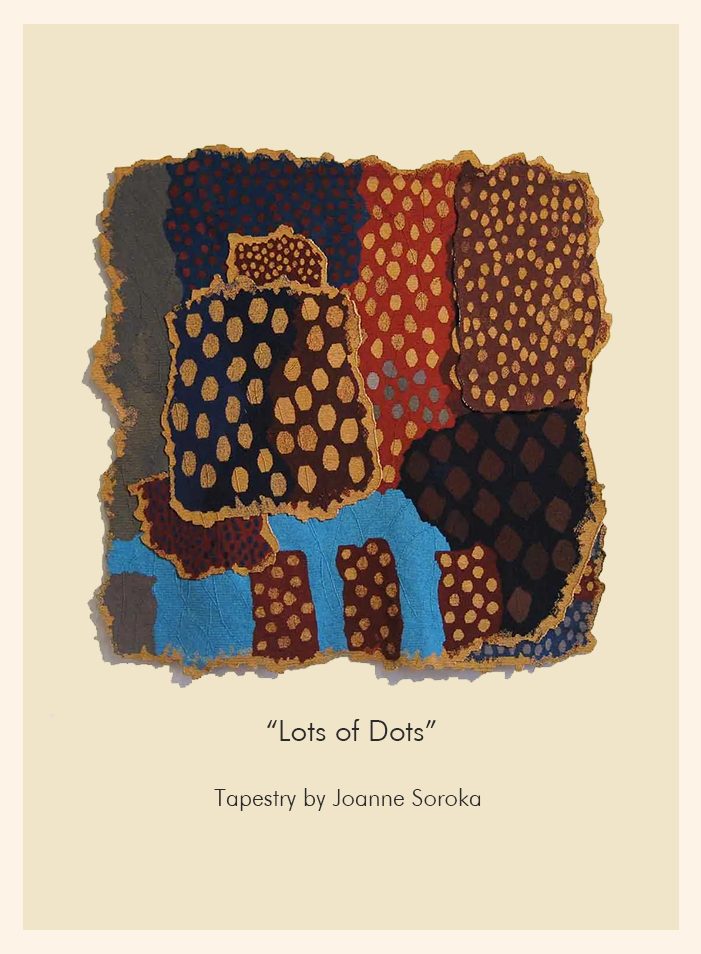
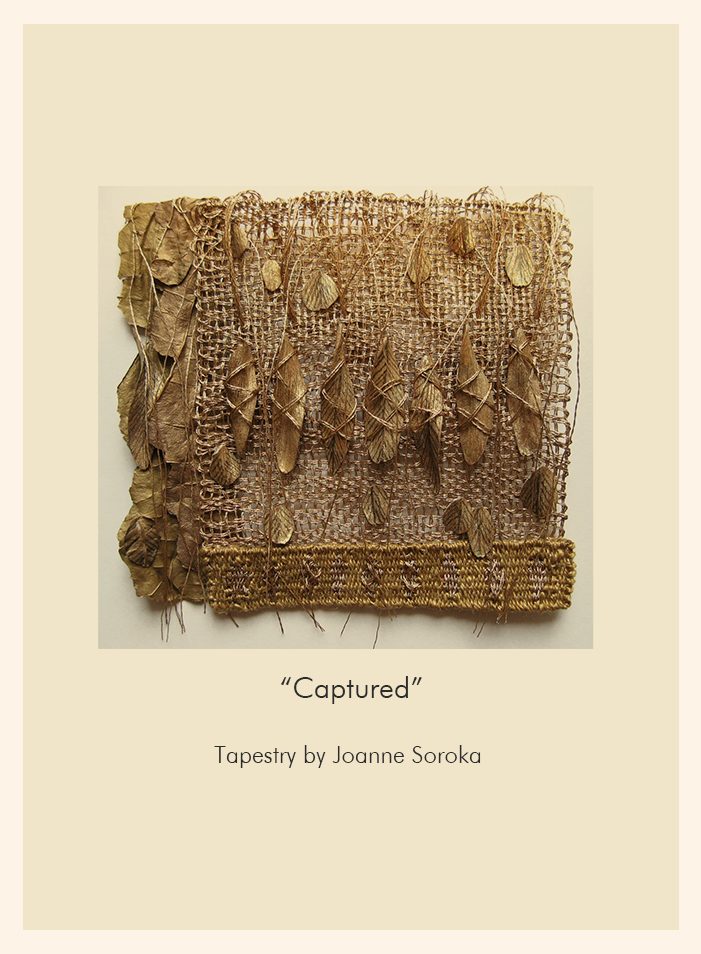
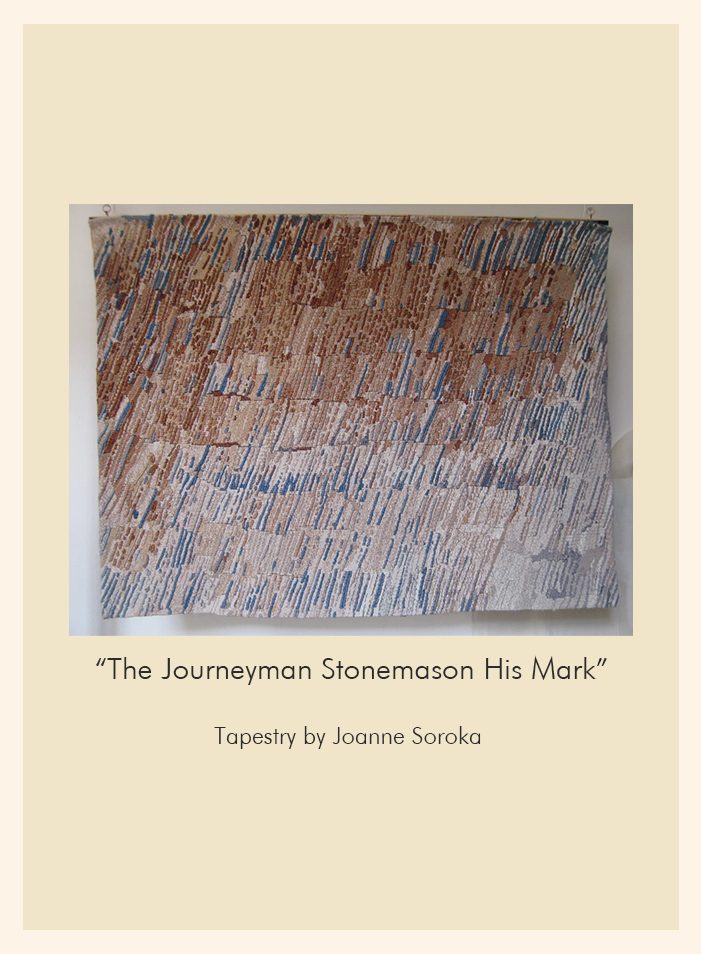
The technical means by which Soroka produces these effects are as deliberate as their emotional content. Her weft completely obscures and consumes the warp structure beneath, a weft-faced construction that shares its structural logic with the great tribal flatweave traditions, in which the concealment of the warp produces the chromatic intensity and color-blocking authority that distinguishes the finest kilims from every other category of textile. This is slow art by any measure: rhythmic, physically demanding, requiring the kind of sustained attention that the contemporary world has largely lost the patience for and that the finest handmade textiles have always required as a condition of their making.
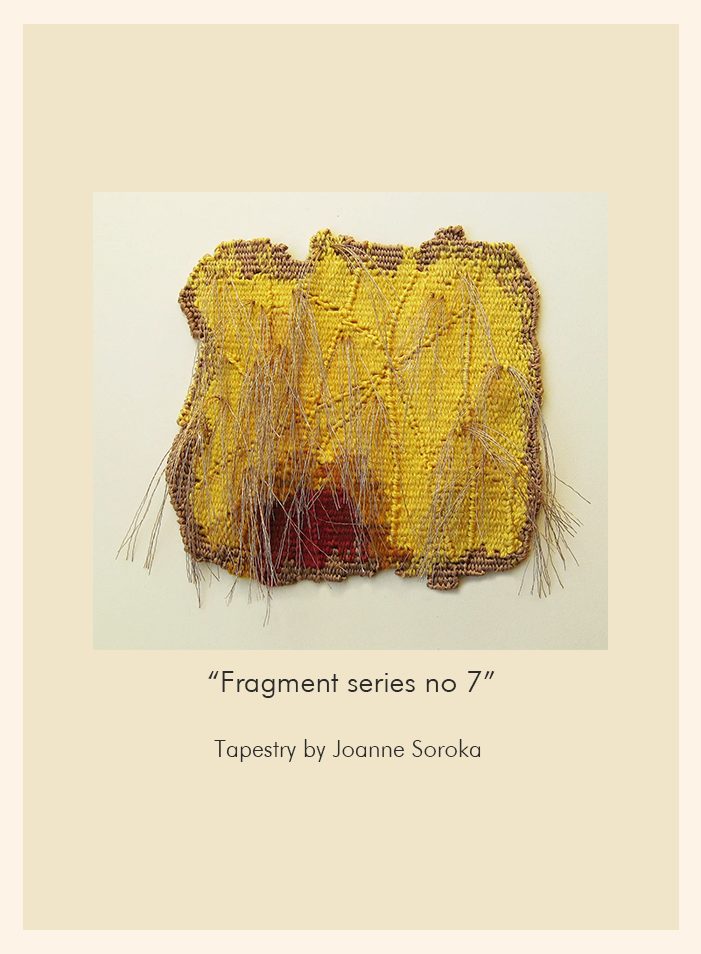
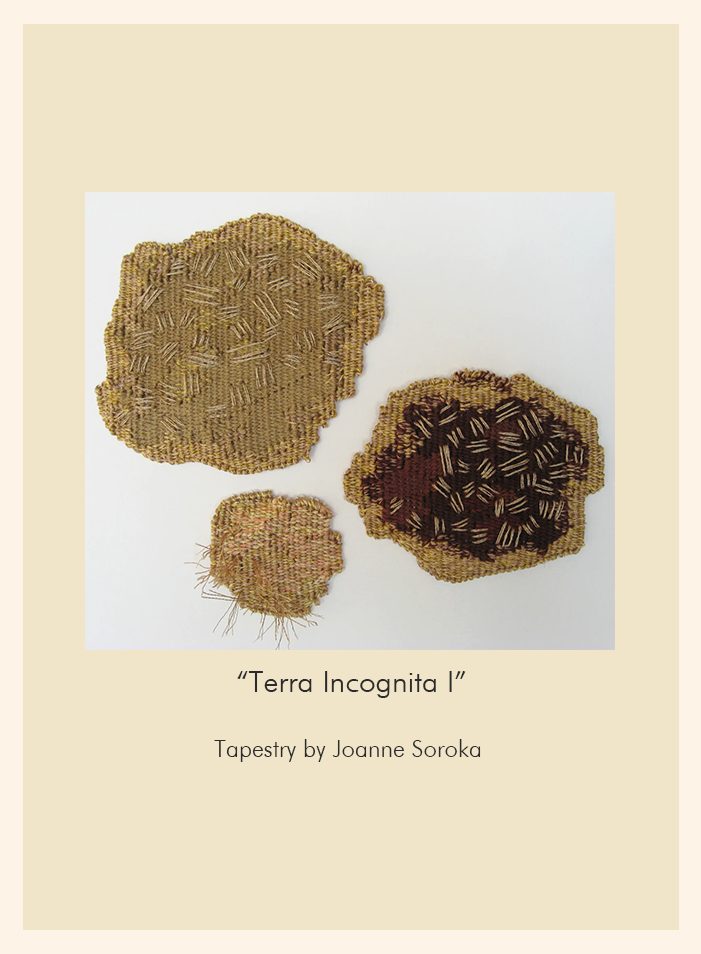
Tufting enters her vocabulary at specific moments, borrowed directly from the structural logic of the hand-knotted carpet, set against the taut flat-woven kilim surfaces that constitute her primary language. The effect is a textural geography as precise as any cartographic document: pile and flatweave establishing territories within the same object, each with its own visual weight, its own physical presence, its own claim on the space around it. Golden Section, the breakthrough piece she describes in conversation, the first tapestry she made that departed from the rectangle, the first with layers, demonstrates this spatial ambition at its most fully realized: an object that does not conform to the wall it inhabits but negotiates with it, establishing its own terms for how the space between them is to be understood.
The post-war context matters here. Following the Second World War, a generation of artists, Magdalena Abakanowicz among the most significant, Ruth Asawa among the most formally inventive, moved weaving from the floor to the wall, from the utilitarian to the monumental, from the domestic to the institutional. Soroka’s practice participates in this lineage while extending it in a direction that none of her predecessors quite anticipated: not upward toward the monumental alone, but inward toward the personal, the genealogical, the specifically human weight of lives that the historical record failed to hold.
Dovecot Studios, the Edinburgh tapestry workshop where Soroka served as Artistic Director, one of the most respected institutions of its kind in the world, working with artists of international significance under the patronage of the Marquis of Bute, gave her a third dimension of understanding that neither her own practice nor her teaching alone could have provided: the knowledge of what it means to translate another artist’s vision into woven form with precision, skill, and absolute fidelity to an intention that is not your own. This discipline of subordination, of making your own considerable abilities entirely invisible in service of someone else’s work, produced in her a clarity about what her own work required that no amount of independent practice could have generated so efficiently. She learned, at Dovecot, exactly what she was not. And that knowledge set her free.
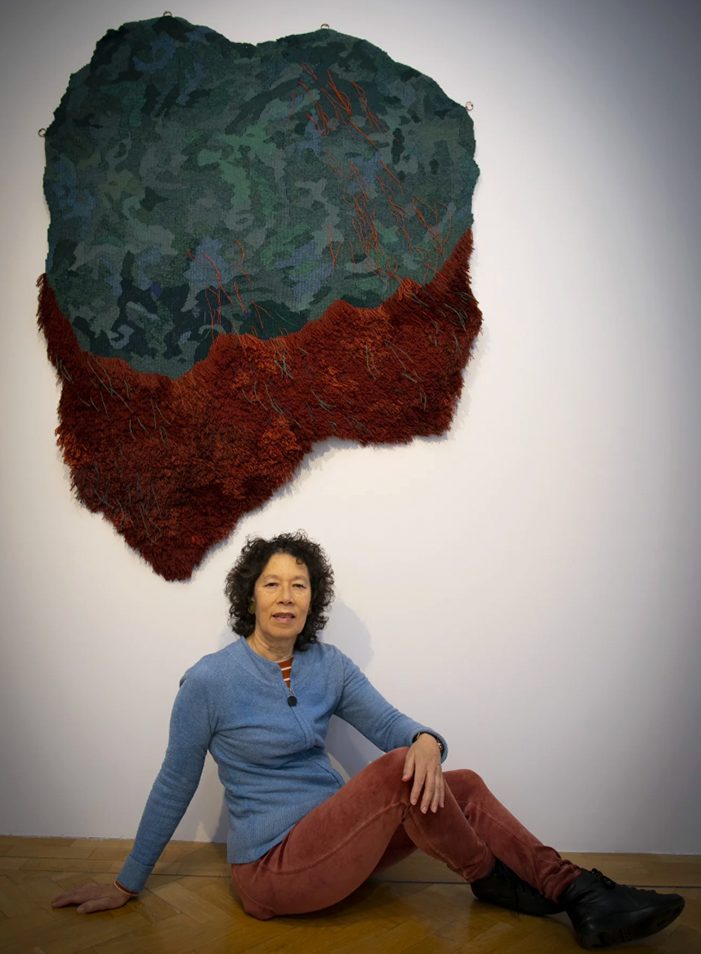
Joanne Soroka
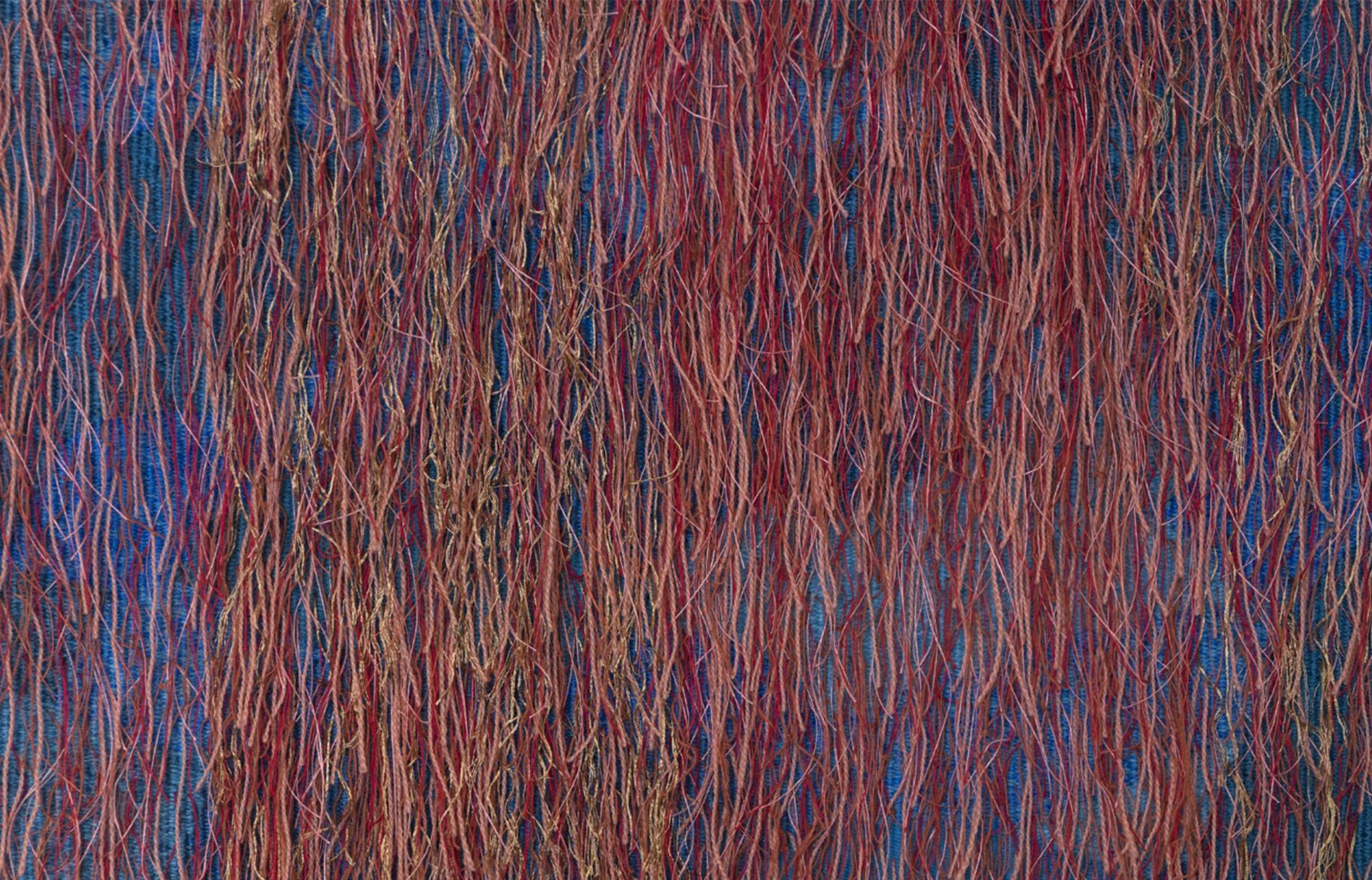
Detail of Tangle, by Joanne Soroka
What Rug & Kilim Recognizes
At Rug & Kilim, the relationship between the handmade textile and the architectural space it enters has always been understood as one of mutual obligation. The space owes the textile the conditions for its fullest expression, the right wall, the right light, the right room. The textile owes the space something that no other object can provide: the warmth, weight, and human presence of an object made entirely by hand, carrying within its structure the accumulated time, decision, and physical effort of its making.
In the minimalist interior, the poured concrete loft, the plate-glass pavilion, the deliberately emptied room that contemporary architecture has made its most powerful statement, this obligation becomes most acute. Minimalism does not diminish the need for the handmade textile. It intensifies it. A stark interior does not require less. It requires more, more authority, more physical presence, more of the quality that only a woven object made with genuine structural intelligence can provide. The heaviness of texture is best understood against the background of starkness. It is there that it becomes not decoration but necessity.
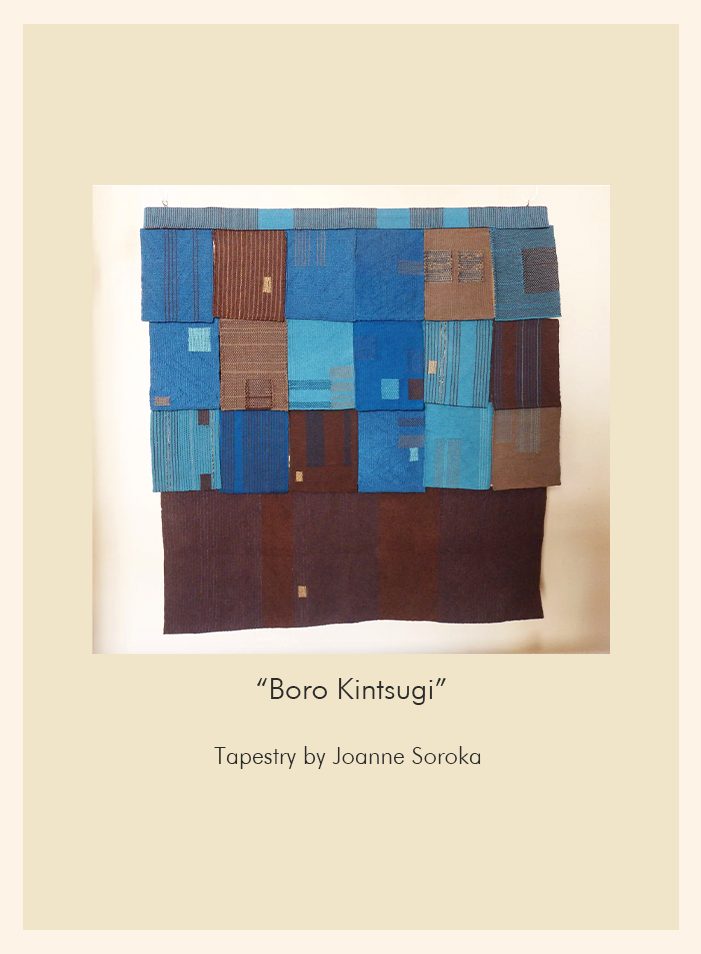
Joanne Soroka’s tapestries meet this necessity with the full weight of what they carry, not only the weight of Norwegian and Merino wool, of silk and linen and cotton combined with a material intelligence that decades of practice have made instinctive, but the weight of the lives woven into them. The Lithuanian ancestor. The Ukrainian emigrant. The Japanese timber worker on an unfamiliar river. They are all there, in the thread, held permanently in a medium that does not permit revision and does not require it.
At Rug & Kilim, we have always believed that the finest handmade textiles outlast the rooms they enter, the designers who specify them, and the collectors who acquire them. Joanne Soroka’s work outlasts something more than that. It outlasts forgetting. And that, in the end, is the highest thing a textile, or any work of art, can be asked to do.
By Sana for Rug & Kilim, Tapestry Specialist
Edited by Bhavna for Rug & Kilim, Editor