
Rug & Kilim’s Tapestry Artists’ Series: In Dialogue with Joanne Soroka
June 23, 2026
Deventer, KVT and the Dutch Carpet: The Workshop that Wove for Royalty
July 10, 2026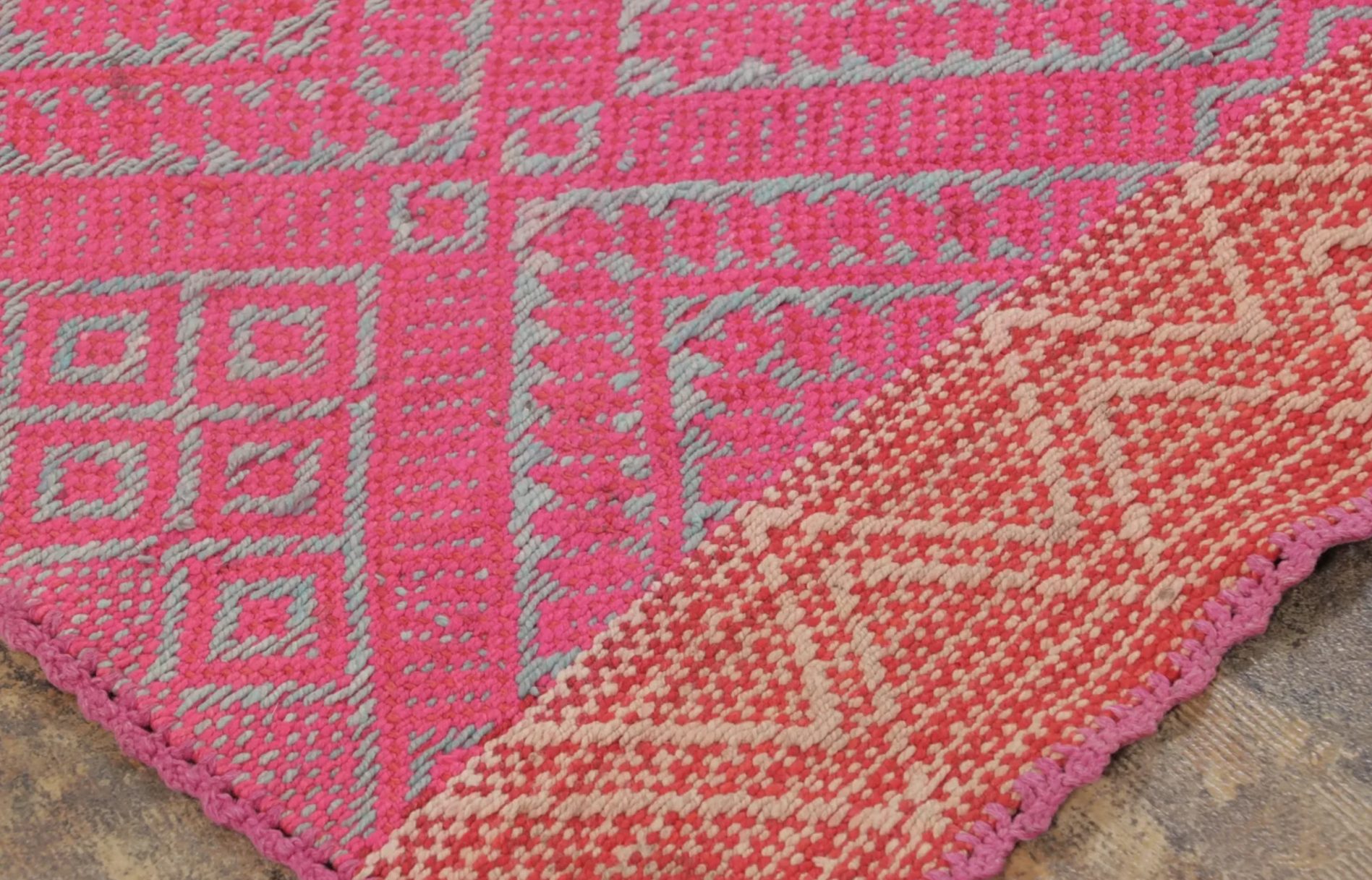
The most sophisticated rooms in America are being furnished, increasingly, with an object its makers never intended to sell. The Andean frazada, a handwoven kilim produced for centuries in the high villages of Peru and Bolivia for one reason only, to survive the cold, has become one of the most quietly coveted textiles in contemporary design. Collectors who could specify anything are choosing these. The reason has nothing to do with trend, and everything to do with what a frazada actually is.
To understand a frazada, you must first understand the altitude.
Above four thousand meters in the Andes, higher than any peak in the contiguous United States, in air so thin that newcomers move slowly and sleep poorly for days, the cold is not a season. It is a constant. It arrives every night, regardless of the calendar, and it has arrived every night for as long as people have lived in these mountains. The frazada was the answer to that cold: a thick, dense, hand-woven wool blanket, made not for sale, not for export, not for the floors of distant apartments, but for survival. For warmth. For the bed of a family that would not otherwise make it through the dark.
This is the first thing to know about these textiles, and the most important. They were never decorative objects pretending to be useful. They were useful objects so beautiful that the world eventually noticed, which is an entirely different, and far rarer, kind of thing.
The Loom That Wraps Around the Body
The frazada is woven on a backstrap loom, perhaps the most intimate weaving instrument ever devised. There is no frame, no machinery, no architecture to it at all. One end is tied to a post, a tree, or a fixed point. The other end is a strap that wraps around the weaver’s own waist. The tension that holds the warp threads taut, the tension that makes weaving possible at all, comes from the weaver’s own body, leaning back, leaning forward, the entire loom an extension of the person operating it. The cloth is, quite literally, woven against the body that makes it.
This is not a quaint survival of an obsolete technique. It is a technology that has remained virtually unchanged in the Andean highlands since before the Inca, warp-face weaving in this region dates to the Chinchorros culture of northern Chile, between 1800 and 400 BC, which means the gesture a weaver makes today is the same gesture her ancestors made more than three thousand years ago. In the 1615 chronicle of the indigenous author Guaman Poma de Ayala, there is an illustration of a thirty-three-year-old weaver at her backstrap loom. She is doing exactly what the women of Chinchero and the high villages of Peru and Bolivia are doing this morning, at this hour, as you read this.
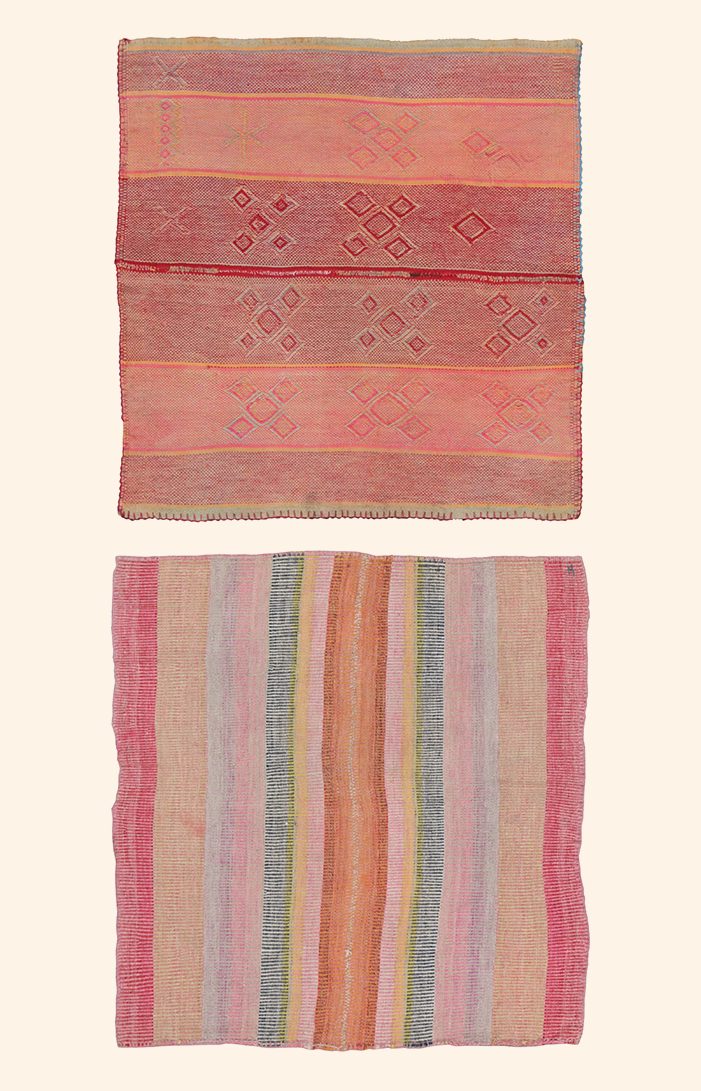
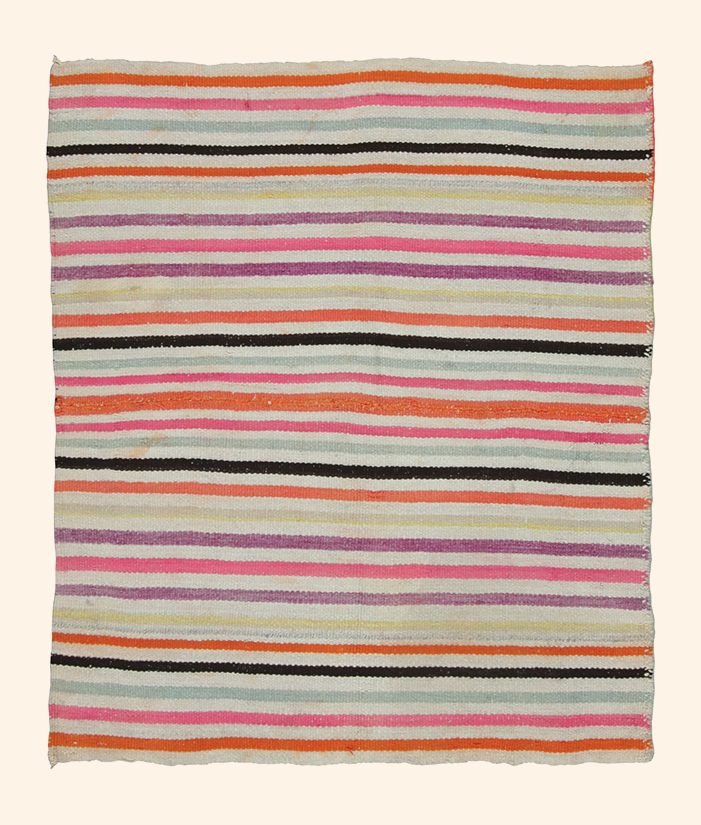
The work is slow. A single frazada can take weeks or months. Because the loom is limited by the width of the weaver’s own body, most frazadas are woven in two long panels and then joined down the center by hand, the decorative central seam that is the signature of the form, the visible record of two halves becoming one. The weaver sits on the ground, often outdoors, the mountains around her, and she weaves. She has done this since she was a child. Her mother taught her, as her mother’s mother taught her mother.
The Color Comes From the Living World
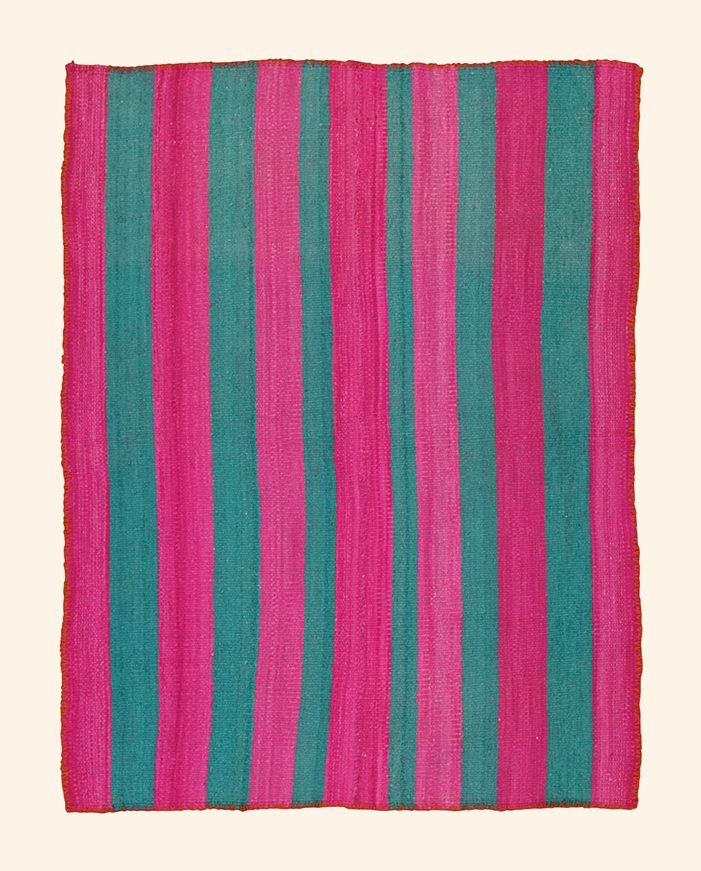
The colors of a frazada, the deep scarlets, the rose and vermillion, the earthy olives and terracottas, the blues, were never bought from a shelf. For most of the history of these textiles, synthetic dye was simply not available in the high country. So the color came from the world itself.
The most extraordinary of these is the red. The brilliant scarlet that runs through Andean textiles comes from the cochineal, a small insect that lives on the prickly pear cactus. The women of the Andes dried the female insects in the sun and ground their bodies into a powder that yielded a spectrum of rose and crimson, some lighter, some deeper, depending on the hand that made it. To the pre-Inca peoples, the same red came also from plants — Relbunium species still found in the highlands today, known by names that have survived as long as the techniques themselves. Indigo gave the blues. Minerals and native plants gave the rest. Every color in a frazada is, in this sense, a piece of the specific place it came from, the particular insects, the particular flora, the particular earth of one valley in one range of one of the highest inhabited regions on the planet.
This is why no two frazadas are alike, and why they never could be. The wool is hand-spun from high-altitude sheep, dense with the natural oils that the cold demands. The dye is gathered from the immediate world. The pattern is held in the weaver’s memory, not drawn from a cartoon. And the tension, the rhythm, the very dimensions of the cloth are set by the body of the woman who made it. A frazada is is a person, a place, and a tradition, made briefly visible in wool.
The Women Who Carry the Knowledge
It would be a mistake, a common one, and a diminishing one, to think of frazadas as anonymous folk craft. They are the work of named traditions, specific communities, and in our own time, specific women who have become custodians of an inheritance that nearly disappeared.
In the Andes, the women are the backbone of the weaving communities. The knowledge passes from mother to daughter, hand to hand, in a chain that has not broken in three thousand years, but it came close. In the twentieth century, as synthetic dyes arrived and younger generations left for the cities, the natural-dye techniques and the most complex patterns began to vanish. That they survived at all is owed in large part to figures like Nilda Callañaupa Alvarez, who learned to weave from her Chinchero ancestors, spun her first yarn at the age of seven, and in 1996 co-founded the Center for Traditional Textiles of Cusco, an institution built expressly to ensure the survival of the tradition and the dignity and livelihood of the women who carry it.
Her story contains a detail that says everything about how close this knowledge came to being lost. As a girl, fascinated by the old weaving, she found that her teachers did not understand why she cared about it. So, much of the time, she simply did not talk about it. The tradition survived in the space between what was taught in schools and what was passed quietly between generations in the home, which is precisely where the most precious human knowledge has always lived.
Today, the frazadas that reach the world are most often vintage, woven for use, lived with, slept under, and only later recognized as the works of art they always were. Acquired under fair-trade principles, from cooperatives often led by the women themselves, they carry forward not only a technique but an entire way of being in the world: patient, rooted, made by hand, made to last, made with the knowledge that beauty and use were never opposites.
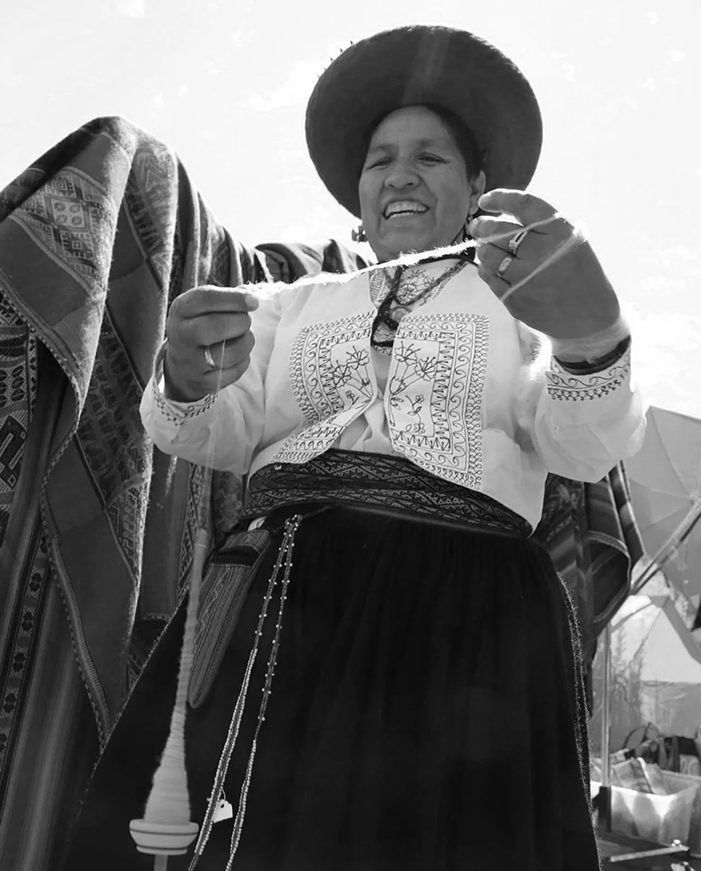
Nilda Callañaupa Álvarez
The Frazada in the Contemporary Room
There is a reason the frazada has found its way, in recent years, into the most sophisticated interiors in the world, into rooms designed by people who could specify anything and choose this.
The frazada offers the visible evidence of the human hand. The slight irregularity of the hand-spun yarn. The central seam where two panels meet. The color that varies across the field because it was dyed in small batches from living material. The pattern that holds within it the memory of a specific community and a specific weaver. They are the signature of authenticity, the proof that a person, not a process, made this object.
Placed in a contemporary interior, against concrete, pale plaster, beneath modern furniture of clean line and restrained palette, the frazada does what the greatest textiles have always done: it warms the room. Not only literally, though it does that too, but in the deeper sense. It introduces the human, the ancestral, the handmade, into spaces that might otherwise risk coldness. It is, in the truest sense, a quiet luxury, luxury that does not announce itself in a logo, but in the unrepeatable fact of having been made by one pair of hands, in one place, over many weeks, for reasons that had nothing to do with the market and everything to do with warmth.
Why Rug & Kilim Tells This Story
At Rug & Kilim, we have spent forty-five years in the company of the world’s great weaving traditions, the Safavid court carpets, the French Savonnerie and Aubusson, the Tibetan tiger rugs, the Scandinavian modernism and many more. We have learned, across those decades, that the value of a textile is never only in its rarity or its provenance. It is in the human truth it carries, the knowledge, the labor, the love, the inheritance made visible in wool and dye.
The frazada carries that truth as purely as any object we know. It was made at the edge of what is humanly possible, at altitude, in cold, by hand, from the living material of one of the most remote regions on earth, and it was made beautiful not for profit but for need, which is the oldest and most honest reason to make anything at all.
We tell this story because it deserves to be told at the level these textiles deserve. The women of the high country have been weaving for three thousand years. The least the rest of the world can do is learn to see what they have made.
Rug & Kilim is honored to present a curated selection of vintage Andean frazadas, acquired under fair-trade principles that support the weaving communities and women of the Peruvian and Bolivian highlands.
Each piece is one of a kind.
Rug & Kilim | Royal Culture