
Vintage Andean Frazada Kilim and the Three Thousand Years of Living Memory Held in Its Weave
June 29, 2026
Zeki Müren and the Carpet as Self-Portrait: The Pasha Who Designed His Own Floor
July 17, 2026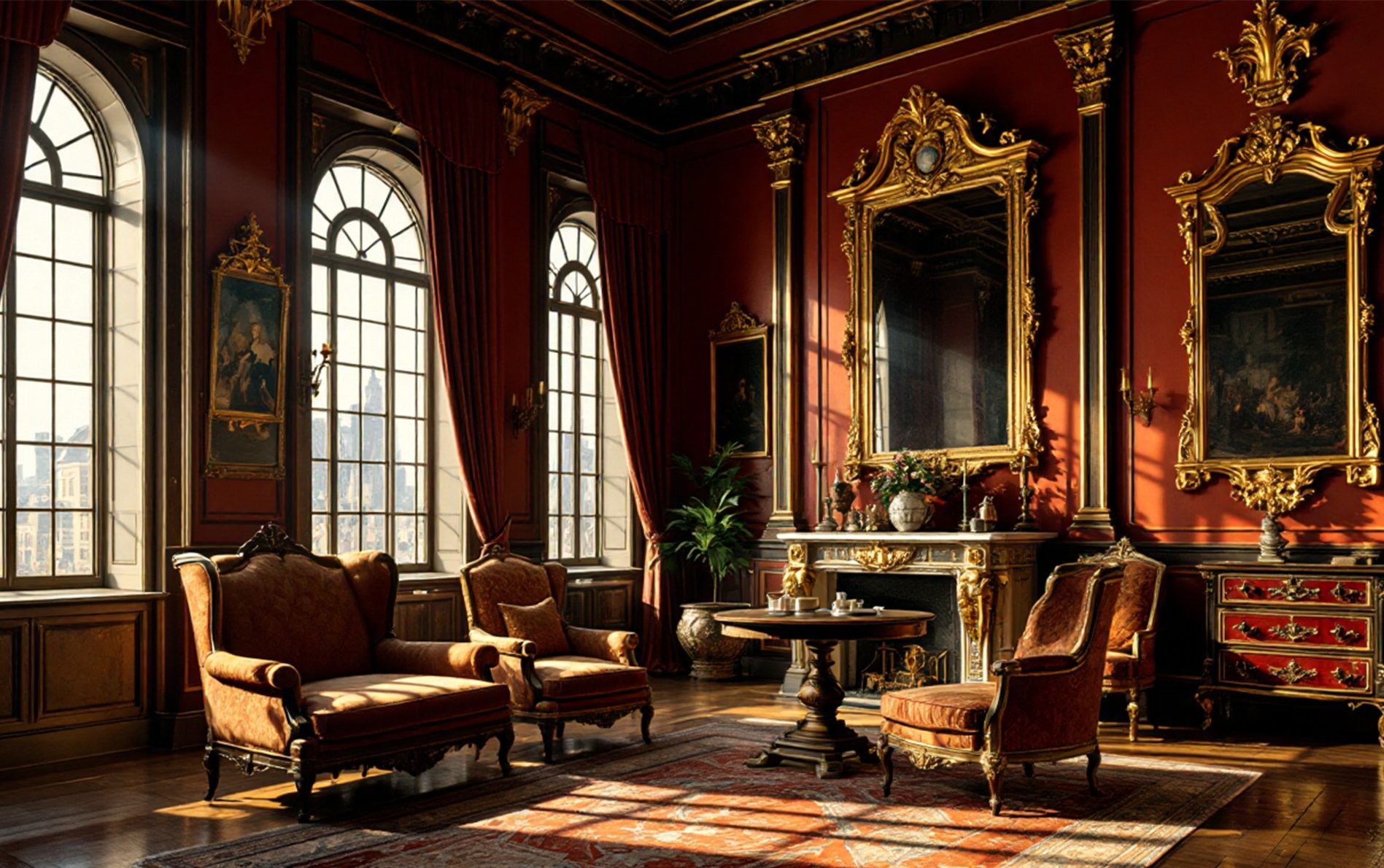
Luxurious Dutch Interior
The Dutch did not look abroad for the floors of their palaces.
This is a small fact with large implications. When the courts of Europe sent to Aubusson and Savonnerie for their carpets, when the very word Smyrna on a label conferred the authority of the East, the House of Orange laid beneath its ceremonial rooms a carpet woven in a river town in the eastern Netherlands, at a factory that had, with a confidence bordering on provocation, named its own street after Smyrna itself.
Smyrnastraat, in Deventer. The address of the Koninklijke Vereenigde Tapijtfabrieken, and a declaration of standing made in cobblestone.
The Connoisseur’s Blind Spot
There is a category of object that the market overlooks precisely because it refuses to announce itself, and the KVT carpet is its perfect specimen. The factory furnished the Royal Palace on the Dam in Amsterdam, Jacob van Campen’s great civic monument, later the royal residence of the Bonapartes and then of the Orange dynasty. It supplied the Knight’s Hall in The Hague and the chamber of the States General. These were the rooms in which a nation conducted its sovereignty, and the floor on which that sovereignty was performed came not from Persia but from Deventer. The Dutch sensibility, then as now, found the advertisement of one’s own quality faintly vulgar.
KVT began in the late eighteenth century as a welfare project, a wool workshop opened by two entrepreneurs in cooperation with the Deventer city council, employing the city’s poorest residents. By the middle of the nineteenth century it had grown into the most serious carpet-making enterprise the northern European tradition had produced. Its hand-knotted pieces drew on the vocabulary of Persia and the Levant and then did something entirely Dutch with it: stripped away the romanticism, tightened the geometry, deepened the palette to the particular jewel tones of madder, indigo, old gold, that the Low Countries have always known how to use without excess.
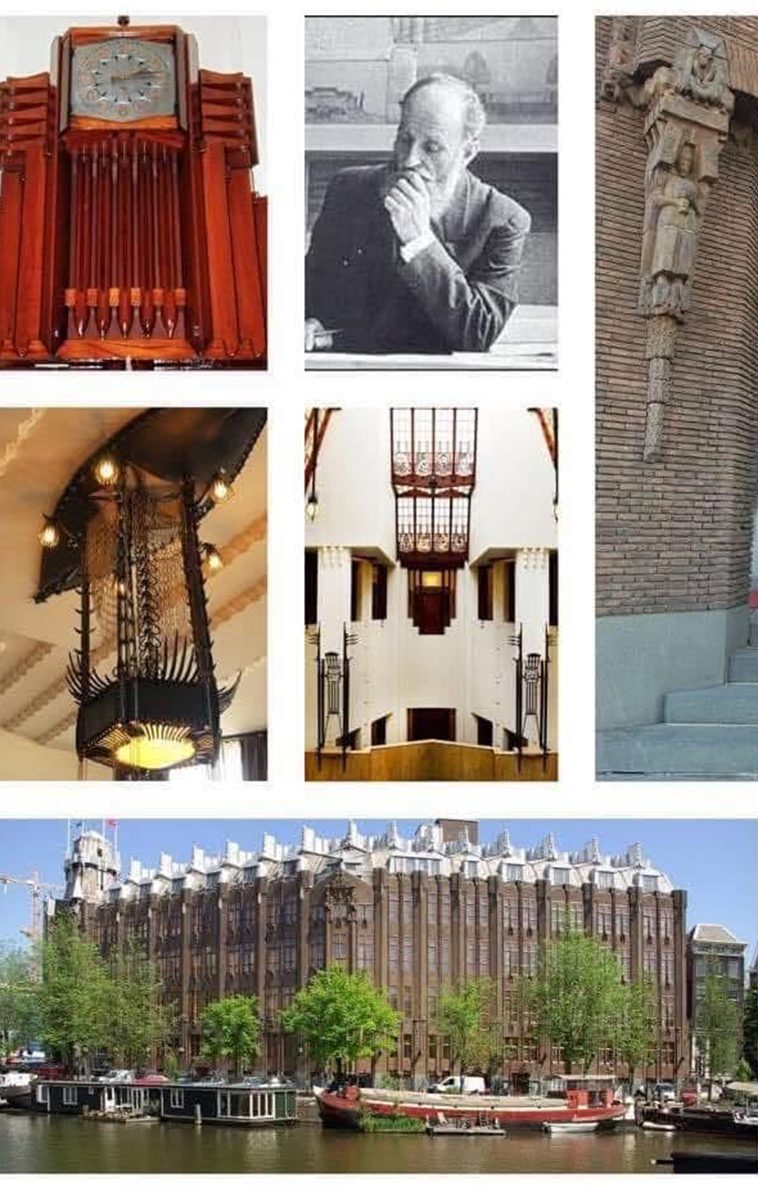
Piet Kramer and Amsterdam School architecture
The Object as Provenance
What KVT wove, at its highest level, was the hand-knotted carpet reconceived through a northern intelligence. The influence descended from Tabriz and the Caucasus; the execution belonged entirely to the Low Countries. By the 1910s, as the architects of the Amsterdam School were carving their expressionist brick across the canal belt, the factory’s designers were composing floors to match them, geometry tightened to the edge of austerity, the palette drawn down to madder, indigo, and the burnt gold that Amsterdam masonry takes on at dusk.
The Amsterdam School was a sensibility; ornamental, expressionist, anti-industrial in its impulse even as it thrived in the industrial city. Its architects, Michel de Klerk, Piet Kramer, Johan van der Mey, understood the interior as an extension of structure, and the floor as foundational to the entire design.
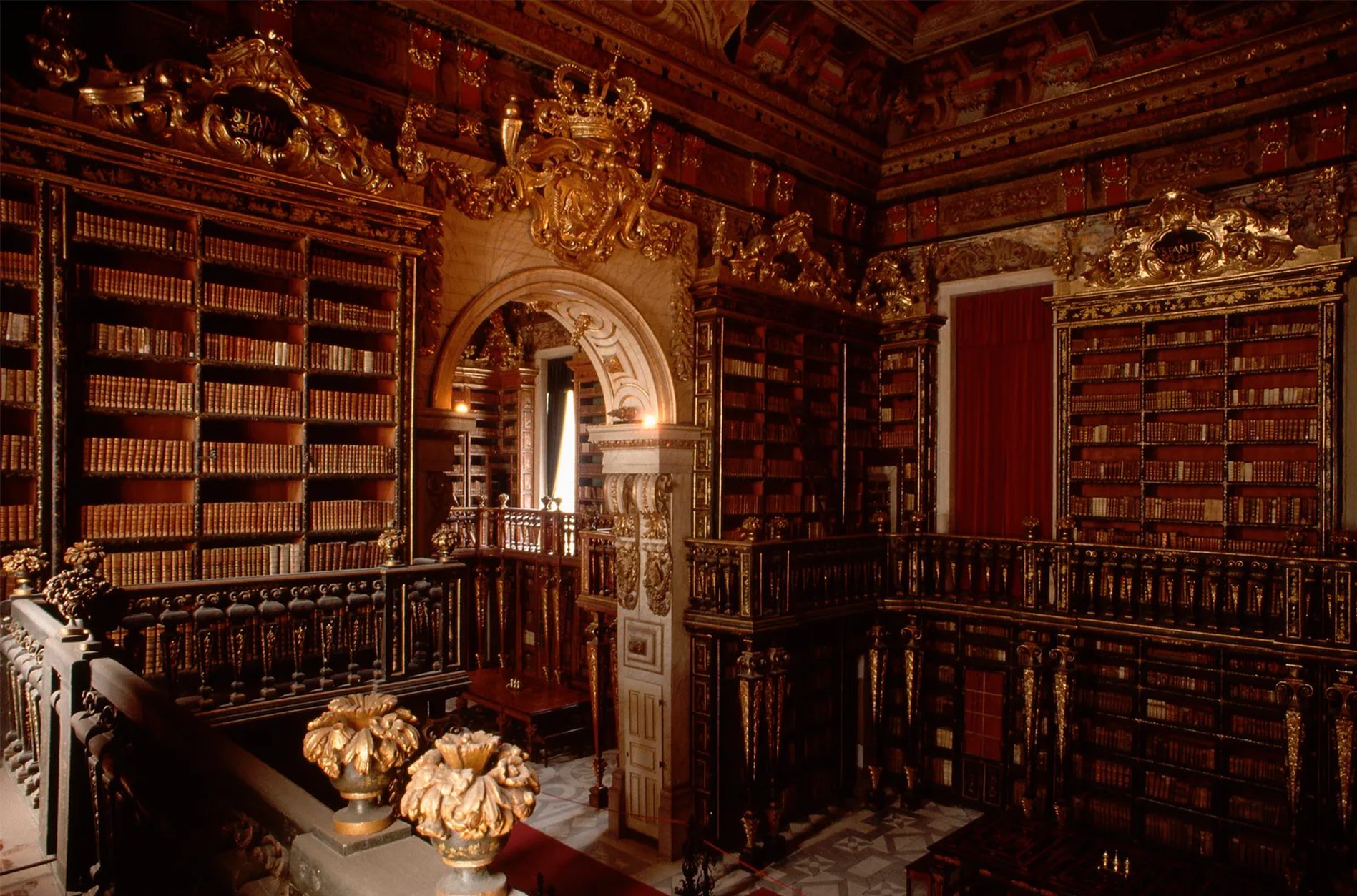
Biblioteca Joanina (Joanine Library) at the University of Coimbra in Portugal
What Remains
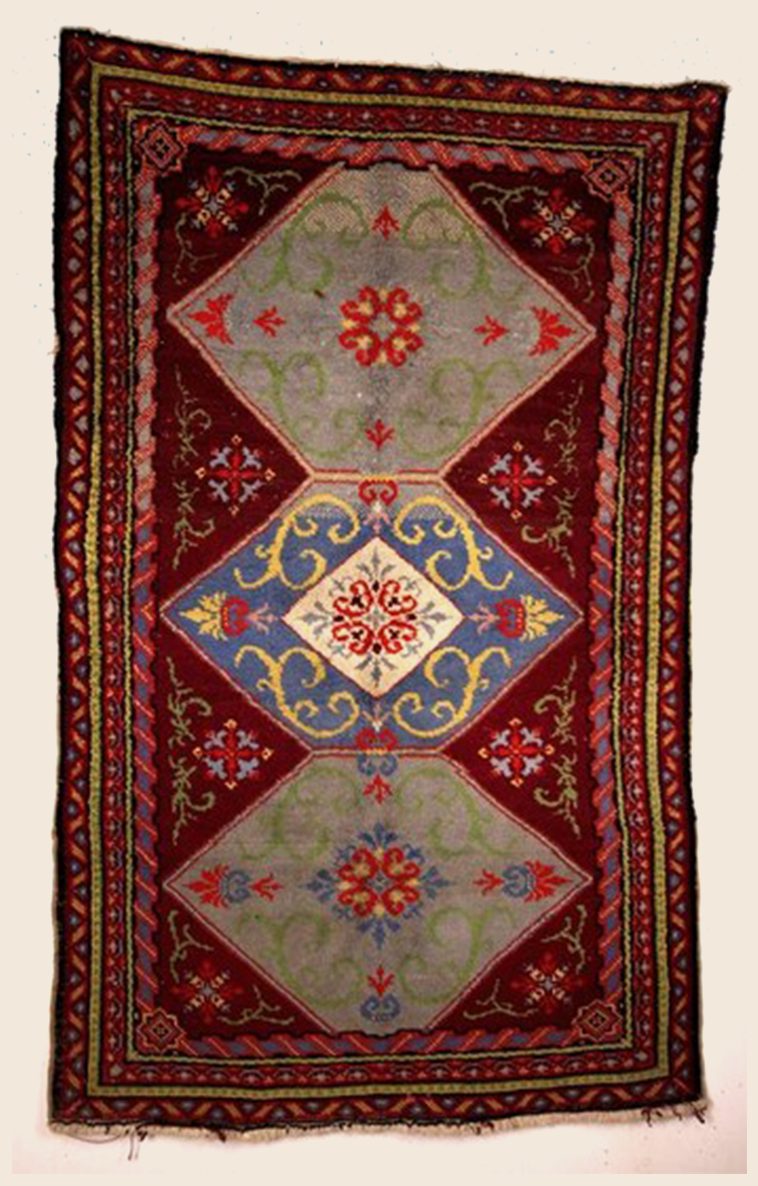
A single hallway carpet survives to make the case. Woven at KVT around 1919, attributed to M.D. Renssen, conceived for the new Rotterdam City Hall, it was exhibited at the Historisch Museum Deventer and recorded in the standard literature; a portion now rests in the permanent collection of the Stedelijk Museum Amsterdam, among the Mondrians, among the founding documents of Dutch modernism. It entered here because a curatorial eye recognised it as the equal of the painting on the wall. Interior designers working today in the European tradition, those who prize rooms with intellectual weight, with what Axel Vervoordt once described as a sense that time has been allowed to settle, find in these pieces an anchor that is irreplaceable.
KVT ceased weaving in 1978, which is to say the archive is closed and the supply will only contract. The finest examples surface now at Botterweg in Amsterdam, the house that knows the material best, and at Catawiki, occasionally crossing into the New York trade. They are still priced as Dutch curiosities rather than as the sovereign-grade carpets they are, a discrepancy that the serious collector will recognise as opportunity.
Laid in a panelled library, beneath good European furniture, in any room that has the confidence to be quiet, a KVT carpet does what only an object of real provenance can: it makes the case for itself without ever once raising its voice.
The Dutch named the street after Smyrna and said nothing further. The carpet has been saying it ever since.