
The Ukrainian Rugs and Kilims: The Floral Carpets Designers Are Rediscovering
March 10, 2026
Designing Across Eras: Persian, Art Deco & Scandinavian Influences for the Modern Interior
March 16, 2026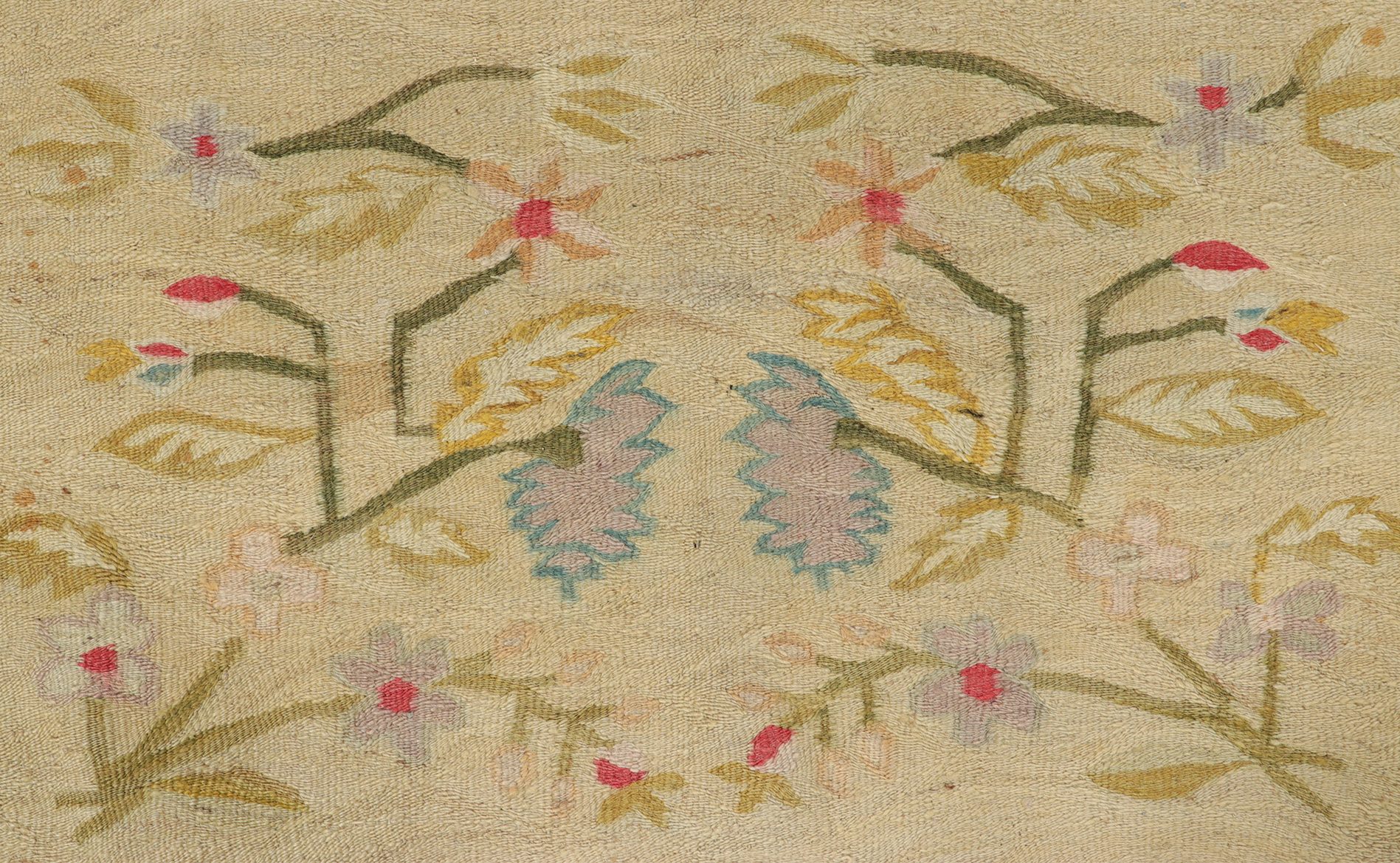
In a quietly elegant London dining room, a vintage Bessarabian Kilim unfolds beneath the table like an unexpected conversation. Its geometry—subtle yet assertive—draws the eye before one quite realizes why. Inspired by the visual language of early twentieth-century design, the rug nods gently toward the stylized symmetry of Art Deco while remaining unmistakably rooted in a much older European weaving lineage. The effect is a foundation that feels both deliberate and effortless, an object whose presence quietly animates the room.
Those who spend time studying interiors often admit a particular fondness for photographs that capture rooms in use rather than in perfection. The slight shift of a chair, the shadow of evening light on polished wood, a glass forgotten after supper—these small evidences of life soften even the most composed design. In such moments, a rug becomes more than a decorative surface. It becomes the mediator between architecture and living.
What, then, might one notice about this particular kilim? Some viewers may see how its muted palette harmonizes with the subtle tonal shifts in the hardwood floor, creating a graceful transition between the architectural bones of the room and the furniture above. Others might find it the single graphic punctuation in an otherwise calm composition—a bold gesture beneath clean white geometry and the quiet ritual of a dining table. A few might even read it as modern art: a mid-century flatweave whose balance of abstraction and discipline feels startlingly contemporary. Such differences in perception are hardly surprising. Beauty, after all, remains resolutely subjective. Yet context—historical and cultural—can deepen our appreciation immeasurably.
And few rugs reward context quite as generously as the Bessarabian.
The Enigma of Bessarabian Rugs and Kilims
The term “Bessarabian,” today used broadly in the rug trade, refers to carpets and flatweaves produced primarily in the nineteenth and early twentieth centuries across territories once belonging to the historical region of Bessarabia. That territory—now divided among Moldova, Romania and Ukraine—sat at the crossroads of empires, trade routes and artistic exchange. Unsurprisingly, the carpets woven there reflect a similarly cosmopolitan dialogue. Produced largely during the late nineteenth and early twentieth centuries under shifting Ottoman and Russian influence, Bessarabian textiles stand at the cusp of what scholars often call the meeting point of “European and Oriental” carpet traditions.
Unlike Persian or Anatolian carpets—whose designs are often closely tied to identifiable weaving villages—Bessarabian rugs resist strict geographic classification. Instead, the term describes a broader aesthetic and technical family encompassing both flatwoven kilims and knotted pile carpets. In many cases, flatweaves are labeled Bessarabian kilims, while pile examples are sometimes categorized as Ukrainian carpets, though the stylistic overlap remains substantial.
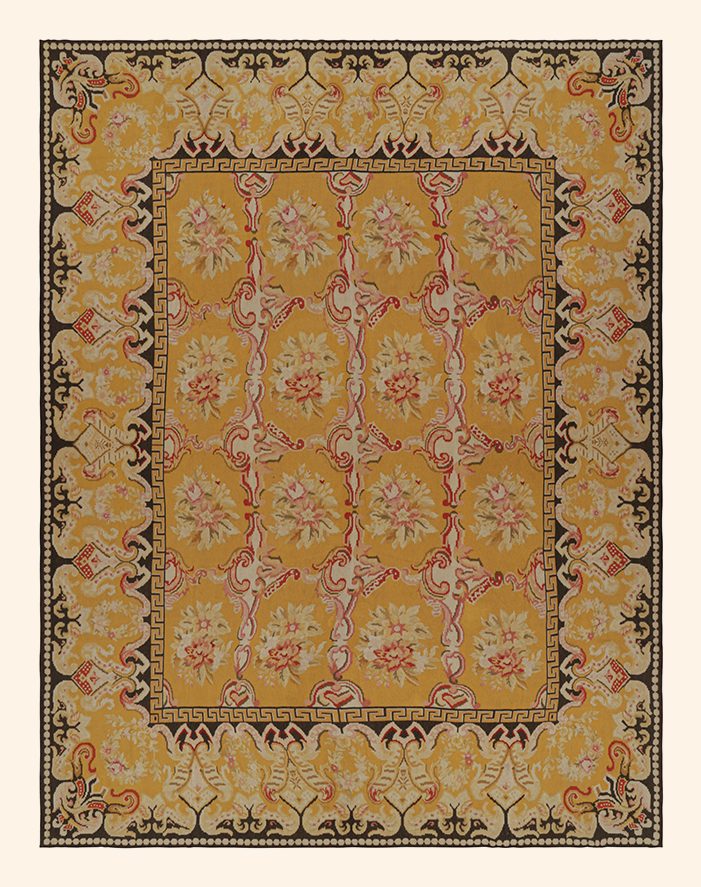
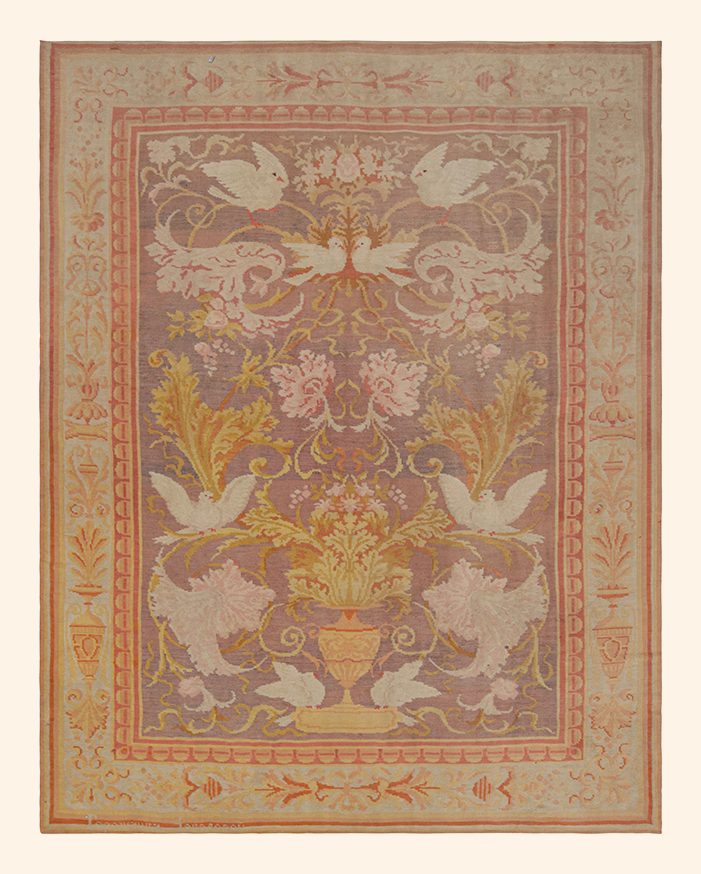
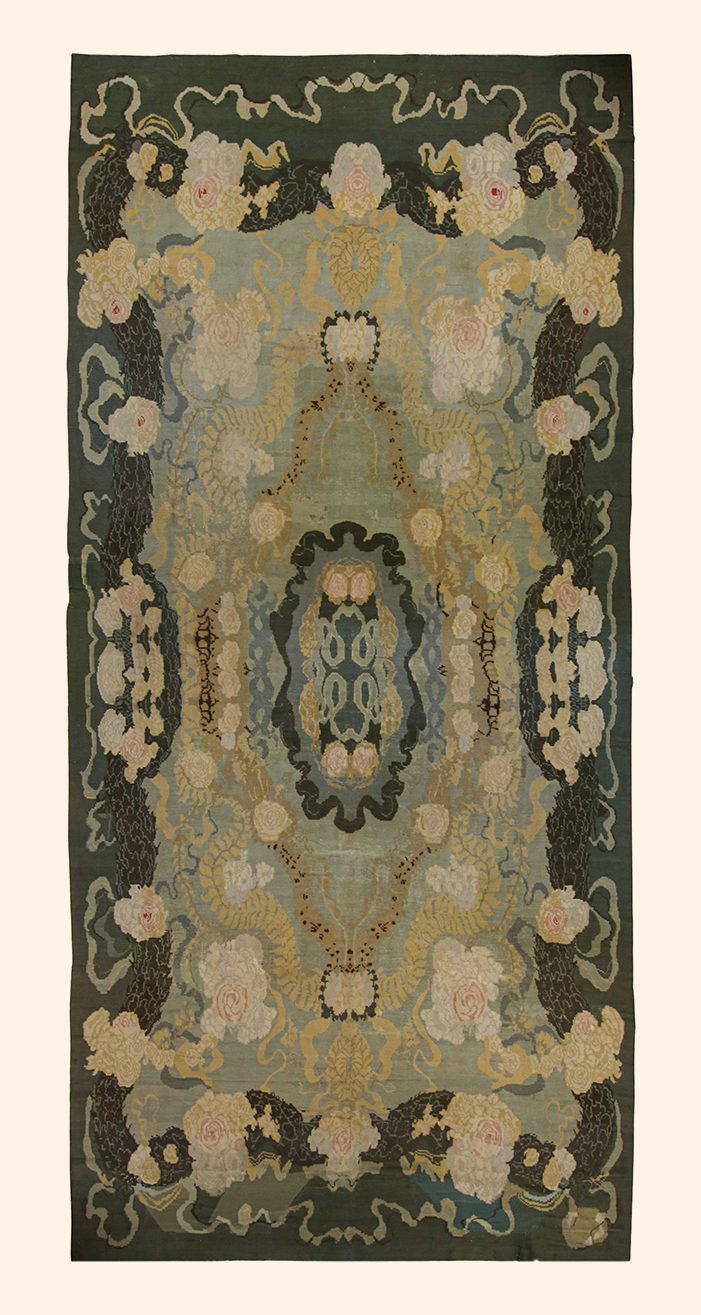
To the institutional eye—whether that of the museum curator, textile scholar, or seasoned collector—the Bessarabian rug represents one of the most unusual syntheses in the history of carpet weaving. Beginning in the eighteenth century, artisans in this region began producing finely woven flatweaves and pile carpets that absorbed stylistic influences from across the continent. Designs drew heavily from the ornamental languages of French and English court carpets, including the grand botanical flourishes associated with Aubusson, the regal symmetry of Savonnerie carpets, and the structured elegance of Axminster production.
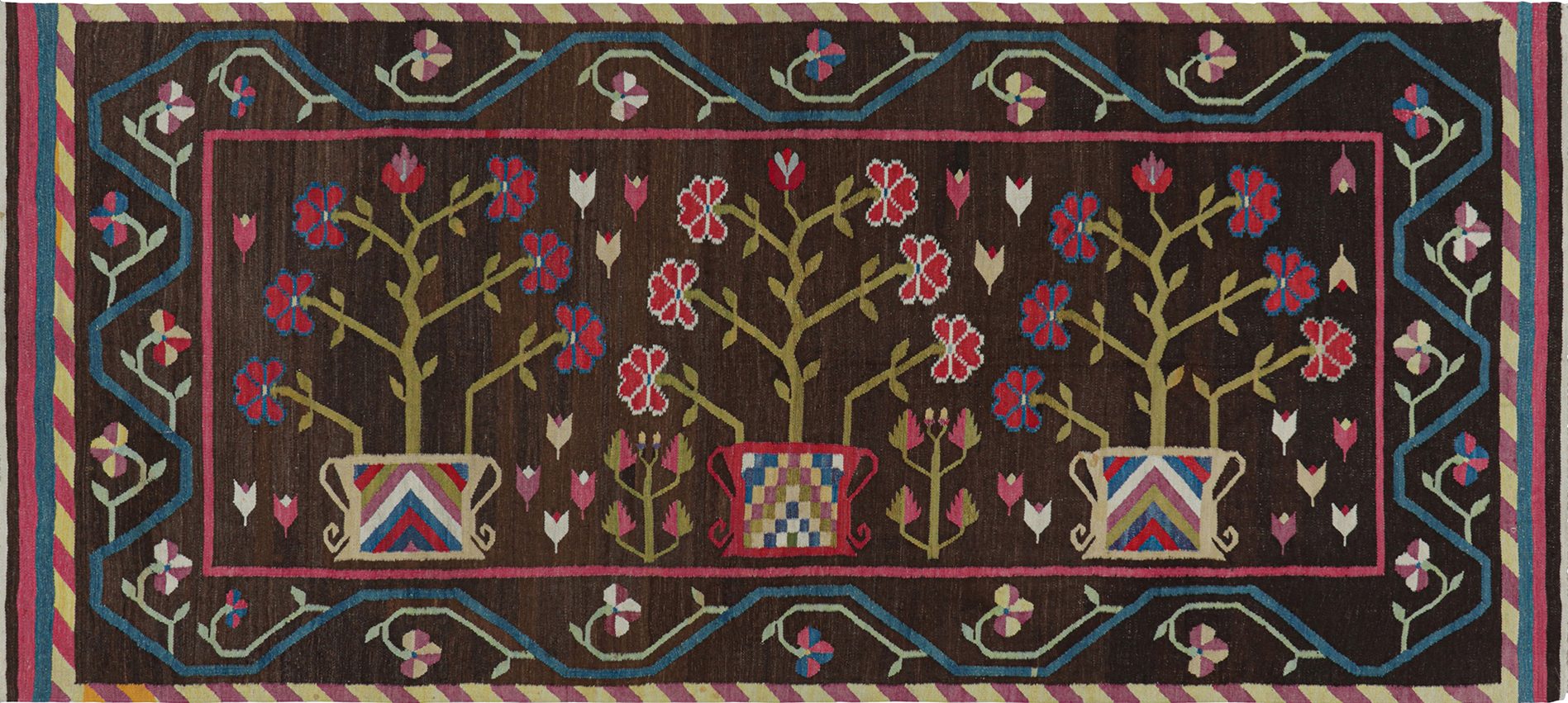
Indeed, one of the most intriguing aspects of Bessarabian weaving is the way it quietly anticipated design movements that would only later emerge across Europe. While many early examples remain deeply rooted in neoclassical ornament, certain vintage and mid-twentieth-century interpretations display a compositional clarity that resonates uncannily with the visual discipline of Art Deco. Bold borders, stylized floral medallions and balanced negative space give these flatweaves an almost architectural quality—qualities that today’s designers instinctively recognize as strikingly contemporary.
Influences of European Art Movements
Seen through a broader art historical lens, Bessarabian rugs quietly intersect with several European design movements. Their earliest floral arrangements reflect the symmetry and botanical ornament favored during the era of Neoclassicism, whose decorative ideals permeated architecture, painting, and textiles across eighteenth-century Europe. Later examples reveal more fluid vines and stylized blossoms that resonate with the organic rhythms of Art Nouveau, reminiscent of the decorative panels of Alphonse Mucha. By the early twentieth century, certain Bessarabian kilims display a remarkable graphic restraint—bold borders, simplified floral geometry, and balanced negative space—that align unexpectedly with the compositional clarity of Art Deco. In this way, the tradition spans centuries of European design thinking, moving gracefully from classical ornament to modern abstraction.
The cultural world in which Bessarabian rugs flourished also finds resonance in European literature. The estates, provincial salons, and rural landscapes described by writers such as Leo Tolstoy and Nikolai Gogol evoke interiors where such carpets might have quietly lived beneath dining tables or in drawing rooms. Their works often portray a society poised between aristocratic refinement and rural tradition—the same cultural tension visible in Bessarabian weaving, where courtly European ornament meets the intuitive artistry of village looms. The rugs thus become subtle artifacts of a broader cultural environment, reflecting the domestic life of Eastern Europe during a period of profound social and artistic transformation.
Aristocratic Taste and Imperial Patronage
Like many textile traditions, the early success of Bessarabian rugs owed much to aristocratic enthusiasm. During the eighteenth century, the courts of the Russian Empire—particularly under the influence of Catherine the Great and Peter the Great—developed a deep fascination with neoclassical European design. Palaces demanded carpets that reflected this aesthetic alignment with the West, yet local production remained limited.
To satisfy this demand, imperial patronage supported the establishment of weaving workshops and looms across the region. In doing so, it unintentionally nurtured a distinctive hybrid tradition: Eastern European artisans interpreting Western European decorative ideals through their own technical vocabulary.
One might draw an intriguing parallel here. In the history of Indian carpets, the Mughal emperor Akbar famously encouraged the flourishing of court workshops that blended Persian techniques with Indian sensibilities. In a similar spirit—though with rather different stylistic results—Russian imperial taste catalyzed the emergence of Bessarabian weaving.
Over time, however, the craft moved beyond palace patronage. Provincial workshops and small domestic looms began producing more accessible versions of these designs. What emerged were rugs and kilims that retained aristocratic elegance while embracing the intimacy of domestic life.
The Aesthetic Language of Bessarabian Weaving
To speak of a single “style” in Bessarabian weaving is perhaps misleading. These textiles are among the most individualistic in the history of European carpets.
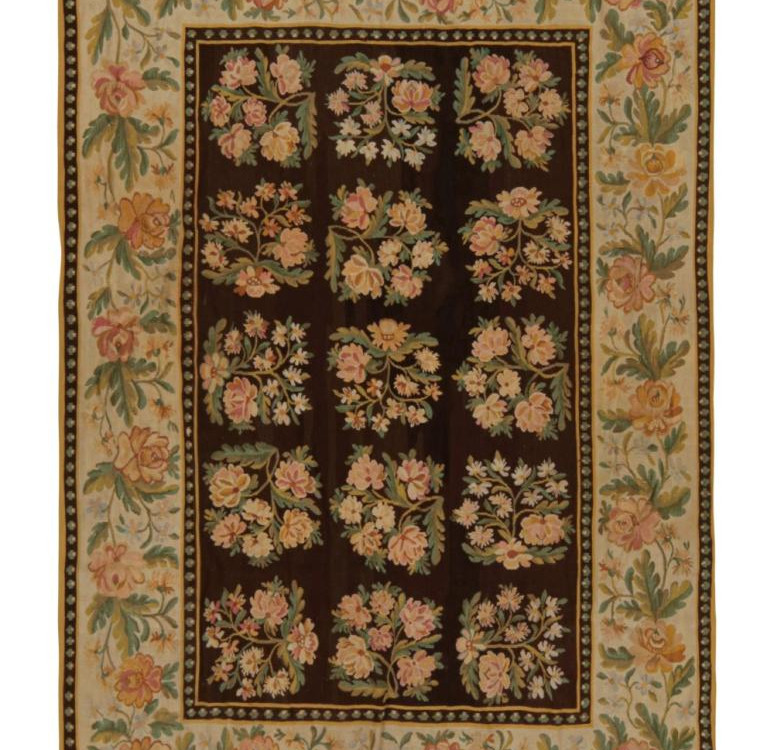
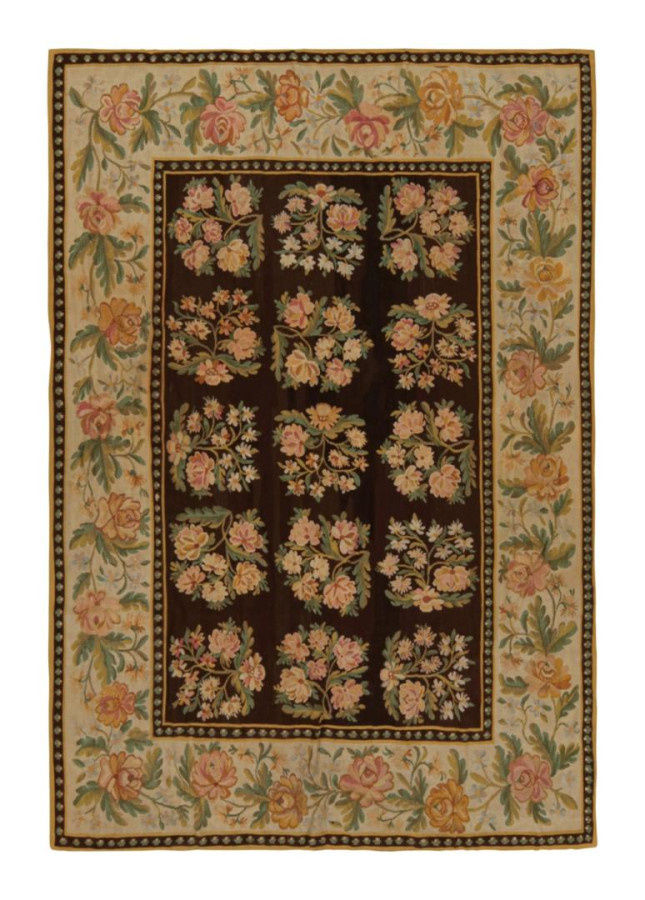
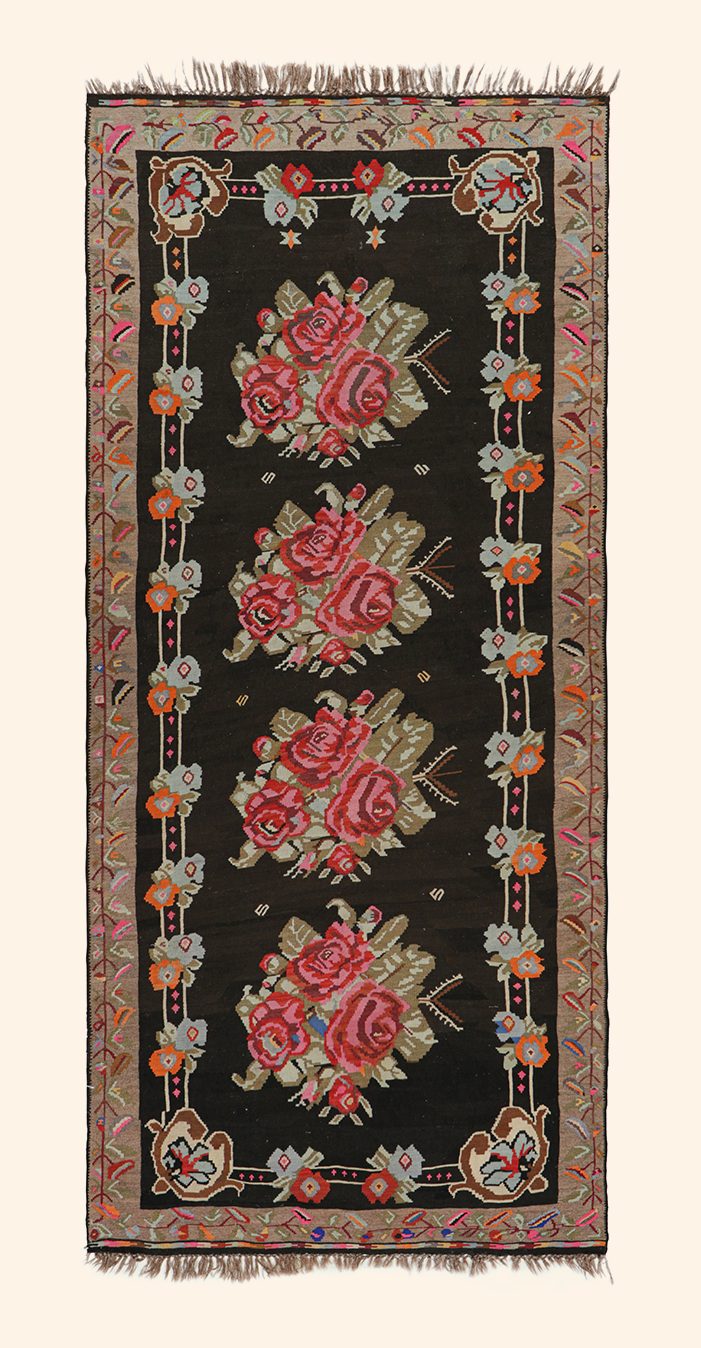
At first glance, many Bessarabian kilims resemble woven still lifes. Bouquets of roses, branching vines, and stylized botanical arrangements drift across dark fields in a manner reminiscent of European floral painting traditions. One might easily imagine them alongside the lush botanical studies of Pierre-Joseph Redouté or the atmospheric floral canvases of Henri Fantin-Latour. The flowers appear almost suspended, as though translated directly from pigment into wool.
Indeed, this painterly sensibility reflects the broader decorative culture of nineteenth-century Europe. As printed textiles, botanical illustrations, and ornamental pattern books circulated widely, artisans across Eastern Europe absorbed these visual references into their weaving traditions. The result was something both refined and slightly dreamlike: carpets that feel less like repeating patterns and more like compositions.
Many antique examples favor deep, resonant palettes: rich browns approaching black, velvety reds, saturated rose tones and warm earth pigments. Such colors lend an almost painterly gravity to the compositions. Yet later vintage pieces often shift dramatically toward brighter or more varied palettes—sometimes approaching near-polychromatic exuberance. Technically, Bessarabian kilims are notable for their exceptionally fine weave, often executed using slit-tapestry techniques that allow for precise pictorial motifs. Some resemble woven tapestries more than floor coverings, with elaborate floral cartouches framed by scrolling vines. Others adopt geometric medallions or gallery-runner formats that feel unexpectedly modern.
Pile rugs from the tradition introduce yet another dimension: a soft, sometimes almost luxuriant texture that contrasts beautifully with the graphic discipline of their flatwoven counterparts. This diversity reflects an important truth about Bessarabian production. Workshops large and small—metropolitan factories with expansive looms as well as rural ateliers working within modest constraints—interpreted the aesthetic vocabulary in their own way. Each adaptation reveals a slightly different conversation between tradition, ambition and circumstance.
For today’s designers, Bessarabian rugs possess a rare versatility that allows them to move seamlessly between historic and modern interiors. In contemporary dining rooms, their dark grounds anchor pale architectural palettes while floral compositions soften the geometry of sculptural tables and modern seating. In living spaces, they function almost like floor-bound tapestries—introducing color and narrative beneath neutral upholstery or minimalist furnishings. Because their compositions often resemble paintings, designers frequently treat them as the visual focal point of a room, pairing them with modern art, bronze lighting, or restrained architectural settings that allow the rug’s botanical motifs to breathe.
A Rug That Bridges Centuries
Seen through this lens, the kilim beneath that London dining table becomes something far richer than a decorative flourish. It is a quiet witness to centuries of cultural exchange—where French courtly ornament met Eastern European craftsmanship, and imperial taste eventually gave way to domestic artistry.
Perhaps that explains why Bessarabian rugs continue to intrigue designers today. A Bessarabian rug may be one of the most quietly versatile carpets in the European canon. Born at the intersection of empire, trade and artistic curiosity, it remains a promise to how textiles, perhaps more than any other art form, absorb and reinterpret the cultures that produce them.
And beneath the calm light of an evening meal, they remind us that even the most refined interiors are ultimately meant to be lived in.