
The Persian Carpet and the Making of Modern Interior: Power, Trade and Redefining Cultural Prestige
March 5, 2026
Bessarabian Rugs and Kilims: A European Textile Tradition at the Crossroads of Art, Empire and Design
March 12, 2026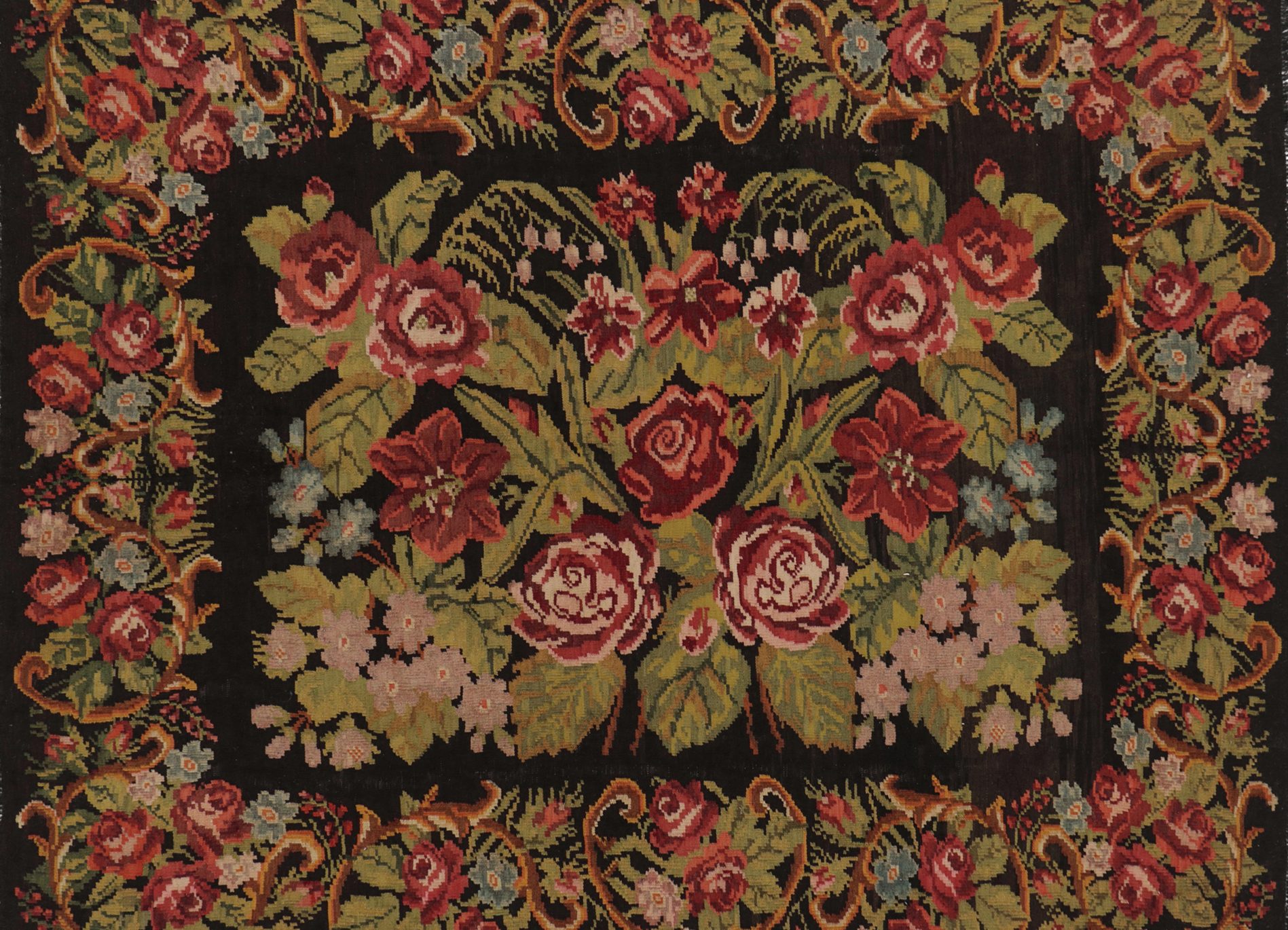
To speak of Ukrainian rugs and kilims is to speak of a culture where textiles were never merely decorative objects but expressions of identity, memory, and landscape. Across centuries, Ukrainian carpets evolved within a unique cultural geography that bridged the worlds of Central Europe, the Ottoman East, and the Russian Empire. The resulting aesthetic language—rich with floral symbolism, rhythmic geometry, and painterly color—reflects the same cultural currents that shaped Ukrainian painting, poetry, and decorative arts.
In village homes, noble estates, and eventually museum collections, these carpets became quiet witnesses to history. Their patterns echo fields of wildflowers across the Ukrainian steppe, their colors recalling the deep reds and earth tones that dominate traditional folk painting. Today, designers and collectors increasingly recognize Ukrainian rugs as part of a broader artistic tradition that connects textiles to the visual arts, literature, and interior architecture of Eastern Europe.
Ukraine occupies a quietly influential yet often underappreciated position in textile history. Long before contemporary designers began rediscovering Eastern European decorative traditions, Ukrainian rugs, kilims, and tapestry weavings had already developed a visual language that bridged worlds: the refined ornamental vocabulary of European court design and the deeply expressive artistry of rural weaving cultures.
To encounter a Ukrainian carpet today—whether a floral Bessarabian kilim, a Poltava tapestry weaving, or a boldly geometric Hutsul rug—is to encounter an object that carries centuries of cultural exchange woven into its fibers.
Ukraine’s position between East and West has always shaped its artistic identity. Situated along major historical trade routes between the Ottoman world, Central Europe, and the Russian Empire, the region absorbed influences from many directions. Decorative motifs from Persian and Anatolian carpets arrived alongside European floral ornament, while Slavic folk traditions contributed their own symbolic patterns and color sensibilities. The result was not imitation but synthesis. Ukrainian rugs developed a distinctive aesthetic that feels at once sophisticated and deeply rooted in local culture.
From Village Looms to Noble Estates
The story of Ukrainian carpets begins, quite literally, in the home. By the seventeenth and eighteenth centuries, weaving had become an integral part of domestic life across rural Ukraine. In villages throughout regions such as Poltava, Chernihiv, and Kyiv, women produced kilims and woven tapestries not merely as utilitarian objects but as expressions of family identity and cultural heritage. These textiles decorated walls, covered benches, and formed part of ceremonial dowries, embedding themselves in the rhythms of everyday life.
Yet Ukrainian weaving did not remain confined to rural interiors. By the eighteenth century, aristocratic estates across the Russian Empire began cultivating an interest in local decorative arts. Under the patronage of rulers such as Catherine the Great, workshops were established to develop textile production that could rival the elegance of Western European decorative arts. These ateliers encouraged artisans to study imported carpets and tapestries, particularly those from the renowned French weaving centers of Aubusson and Savonnerie.
The influence of these traditions soon appeared in Ukrainian carpets: lush floral garlands, balanced botanical compositions, and elegant borders reminiscent of European palace interiors. Yet Ukrainian weavers interpreted these motifs with remarkable freedom. Rather than replicating courtly patterns exactly, they infused them with the rhythm and spontaneity of folk design. Flowers became bolder, vines more fluid, and compositions more graphic—an aesthetic that today feels strikingly modern.
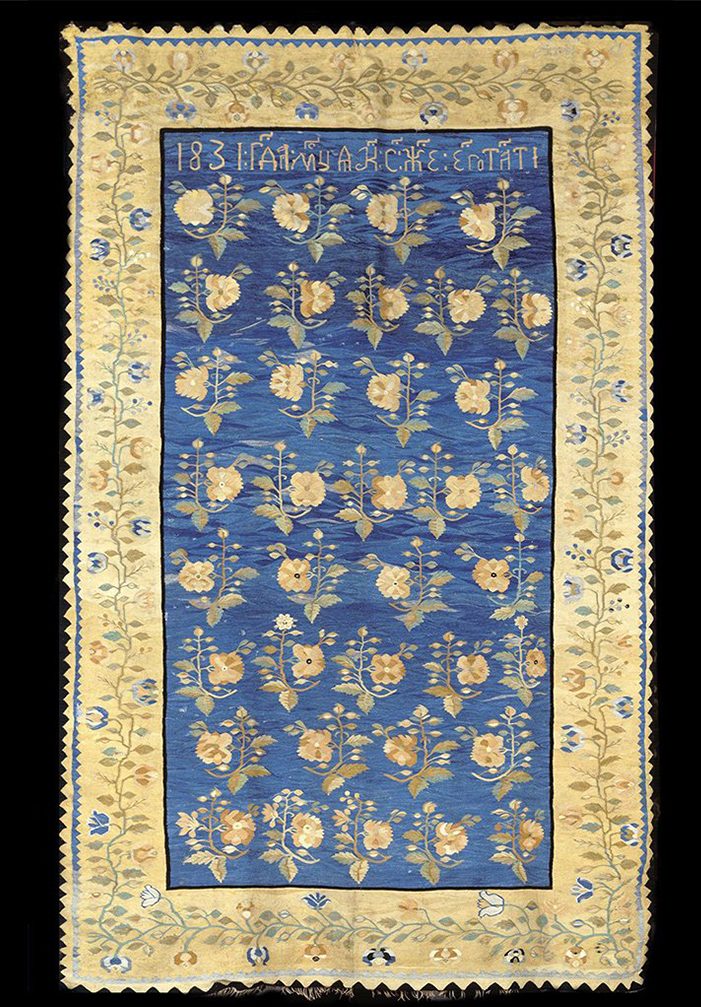
Carpet, 1831. Poltava region. Collection of National Museum of Ukrainian folk decorative art, Kyiv
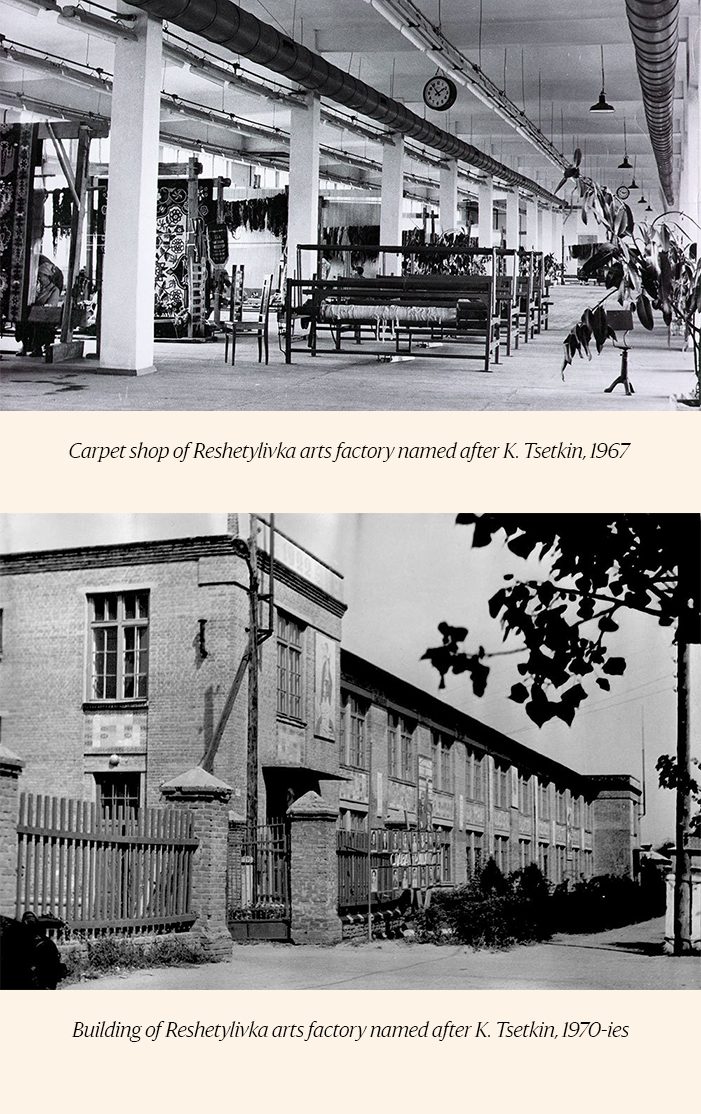
Ukrainian Weaving Centres
Several historic regions became renowned for their distinctive weaving traditions.
Poltava
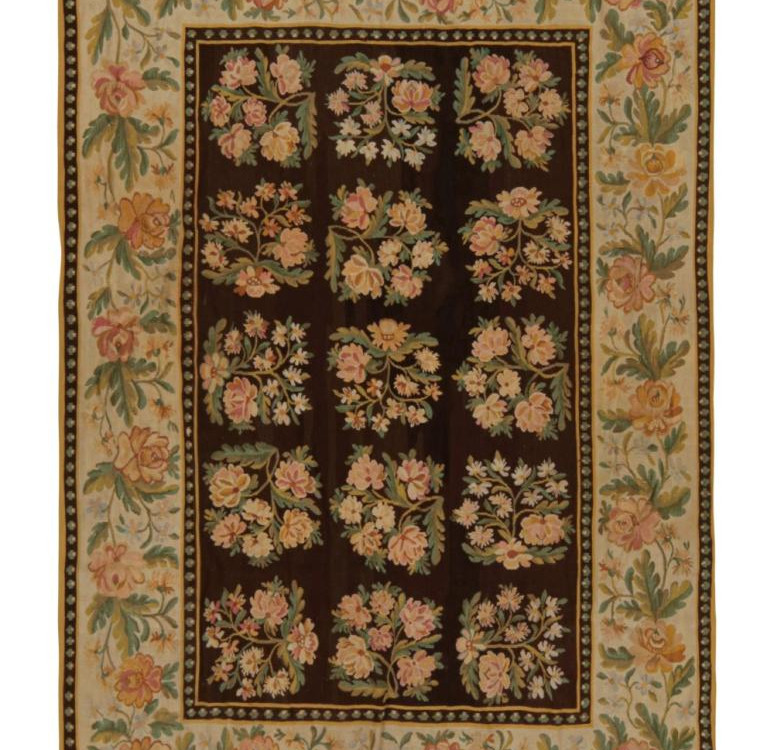
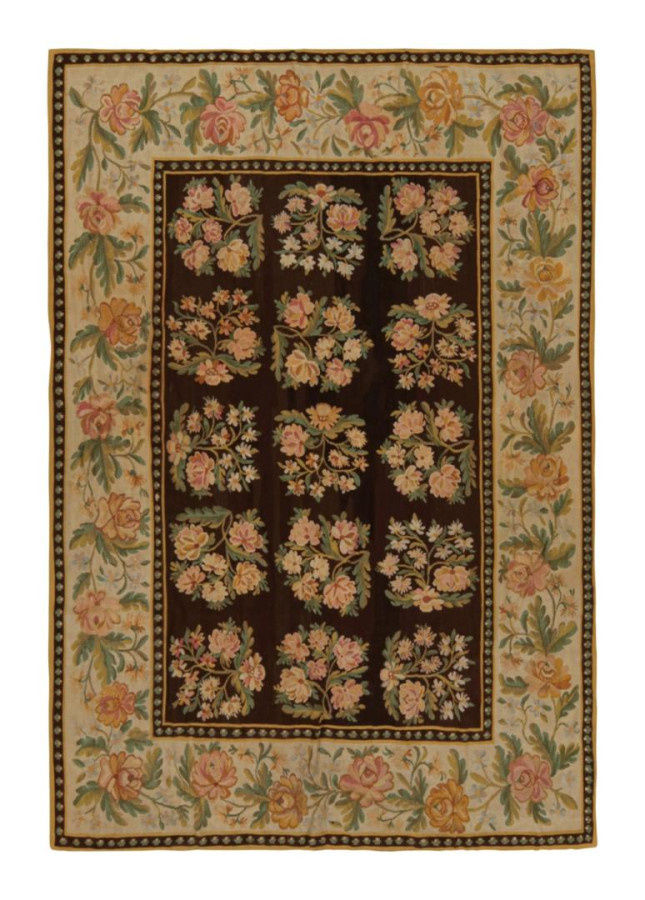
The central Ukrainian region of Poltava developed one of the most celebrated carpet traditions in Eastern Europe. Poltava kilims are known for their refined floral compositions, often arranged as bouquets or garlands against dark grounds. These rugs frequently resemble botanical paintings translated into wool, with roses, poppies, and carnations rendered in vibrant reds and soft pinks.
Kyiv and Chernihiv
Workshops in Kyiv and the surrounding Chernihiv region produced elaborate tapestry-style carpets known as kobertsy. These textiles often featured large central bouquets framed by ornate borders and were frequently used as wall hangings rather than floor coverings, reflecting the influence of European tapestry traditions.
Hutsul Region (Carpathian Mountains)
In western Ukraine, the Hutsul highlands developed a very different weaving language. Rugs from this region favor bold geometric patterns and strong color contrasts, reflecting mountain folk traditions rather than aristocratic European design.
The diversity of these regional styles illustrates how Ukrainian carpet weaving absorbed influences from multiple cultural spheres while retaining a strong local identity.
Tapestry Traditions: The Ukrainian Koberts
One of the most distinctive forms of Ukrainian textile art is the koberts, a tapestry-style carpet traditionally used to decorate walls. Unlike many carpets intended primarily for floors, these textiles functioned almost like woven paintings within the home.
Their compositions often depict: floral bouquets, stylized trees of life, pastoral landscapes and symbolic folk motifs.
Because of their tapestry-like construction, kobert weavings are structurally closer to European tapestry traditions such as those produced in the renowned French weaving centers of Aubusson and Savonnerie.
This structural and visual relationship explains why Ukrainian tapestries are increasingly studied alongside European decorative arts rather than solely within folk art traditions.
The Language of Ukrainian Kilims and Tapestries
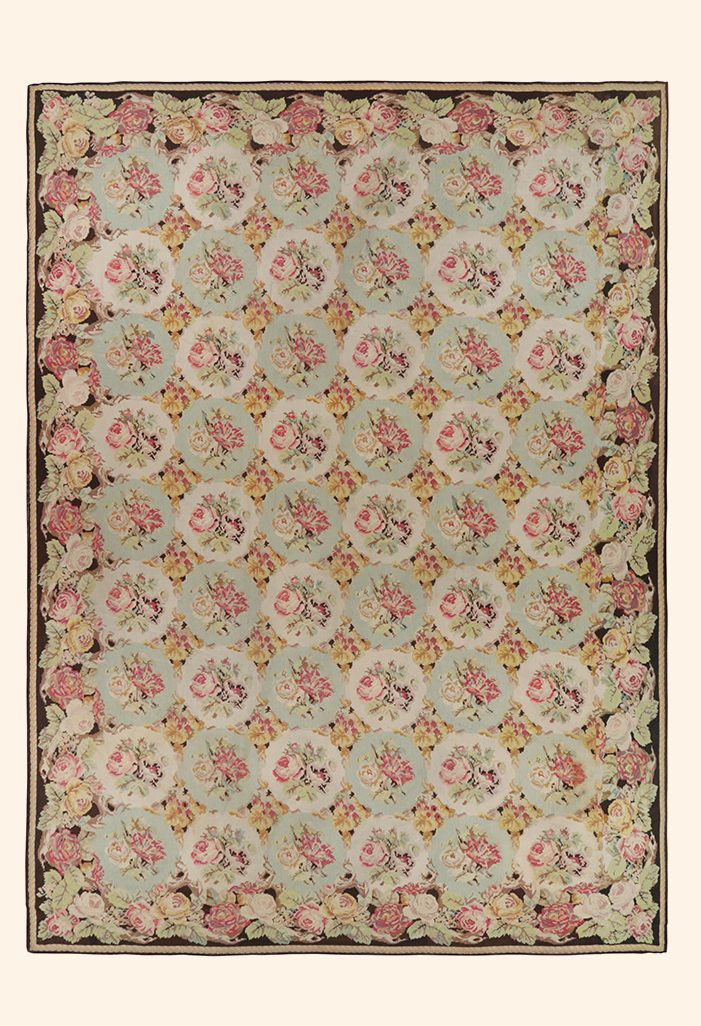
Technically, Ukrainian textile traditions encompass several distinct forms. Flatwoven kilims are perhaps the most widely recognized, admired for their fine slit-tapestry construction that allows for remarkably detailed floral compositions. These kilims often feature bouquets of roses, poppies, or lilies arranged across dark grounds—motifs that resemble the luminous floral still lifes of painters such as Henri Fantin-Latour.
Tapestry-style weavings, known historically as kobertsy, represent another important category. These large decorative textiles were frequently displayed on walls rather than floors, functioning much like European tapestries. Their compositions could range from elaborate floral arrangements to stylized landscapes and symbolic motifs drawn from Ukrainian folklore.
In addition to flatweaves, knotted pile carpets were also produced, particularly during the nineteenth and early twentieth centuries. These rugs often featured softer, more luxurious textures while retaining the botanical motifs and rich color palettes characteristic of the region.
Across all these forms, certain colors appear repeatedly: deep reds derived from madder root, mossy greens, warm golds, and rich browns approaching black. When set against dark backgrounds, these colors create a dramatic painterly contrast that designers continue to admire today.
Bessarabian Rugs and the Ukrainian Connection
Among the most internationally recognized examples of Ukrainian weaving are the floral kilims commonly referred to as Bessarabian rugs. Produced primarily during the nineteenth century in territories that now belong to modern-day Ukraine, Moldova, and Romania, these textiles combine Western European decorative influences with local weaving techniques.
Their lush bouquets and scrolling vines evoke the decorative elegance of French tapestry traditions, yet their compositions often possess a graphic clarity that anticipates modern design movements such as Art Deco. This unexpected modernity is one reason Bessarabian kilims remain so compelling in contemporary interiors.
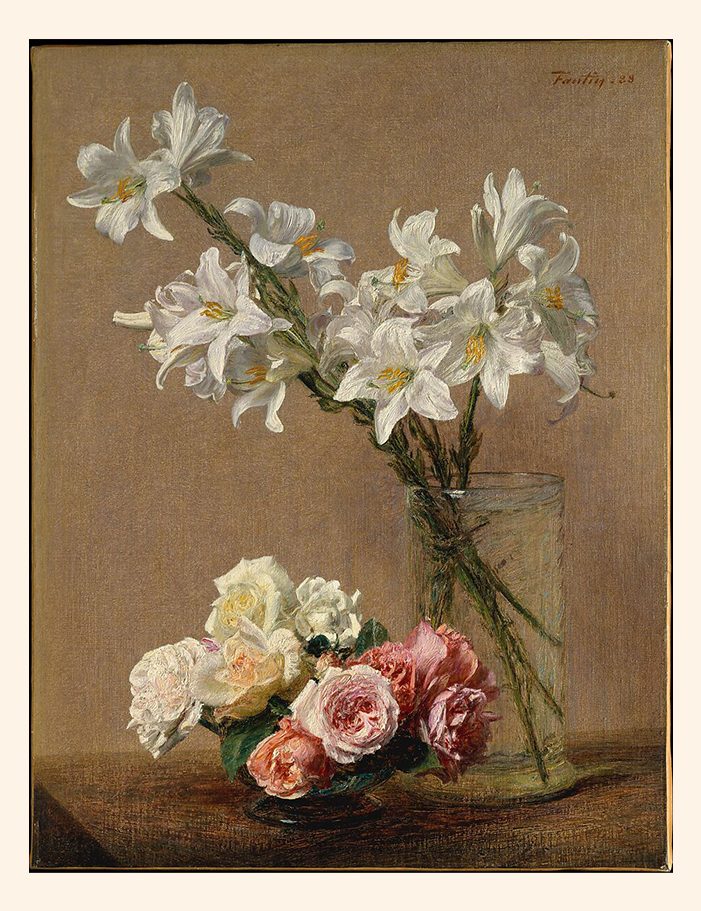
Roses and Lilies
Henri Fantin-Latour French
1888
On view at The Met Fifth Avenue in Gallery 821
The Painterly Tradition in Ukrainian Decorative Arts
Many Ukrainian rugs—especially the floral kilims of the nineteenth century—possess an unmistakably painterly quality. Their compositions recall the floral still lifes of European artists such as Henri Fantin-Latour, whose bouquets appear suspended against dark backgrounds.
Similarly, the botanical sensitivity found in Ukrainian carpet design parallels the work of Pierre-Joseph Redouté, whose studies of roses and lilies circulated widely across Europe and influenced decorative arts from porcelain to textiles.
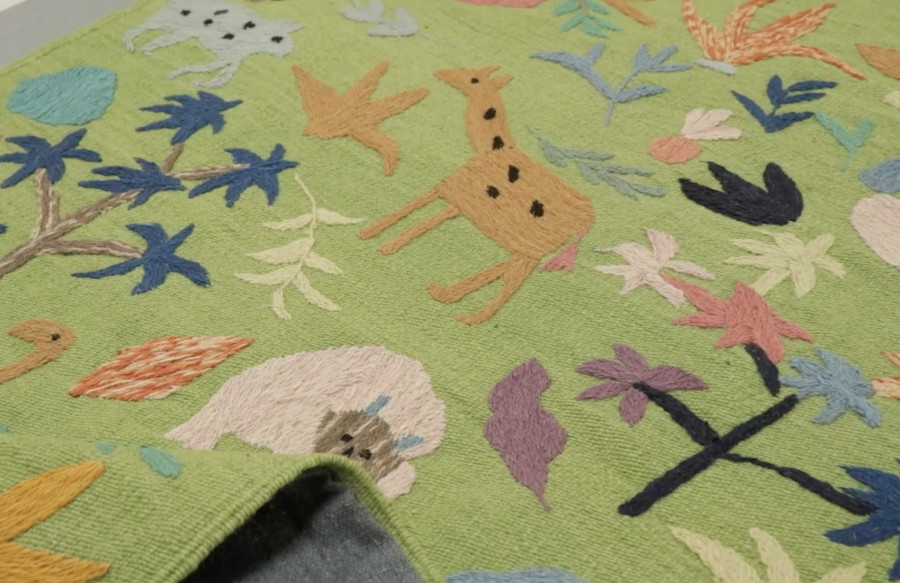
Even within Ukrainian painting itself, the relationship between folk ornament and fine art becomes visible in the work of artists such as Maria Prymachenko, whose vibrant compositions draw upon the same symbolic visual language found in traditional textiles.
Through this lens, Ukrainian carpets appear not merely as craft objects but as part of a broader artistic ecosystem.
Museums, Collections and Cultural Legacy
Today, Ukrainian carpets and tapestry weavings are increasingly recognized as important contributions to the broader history of European decorative arts. Examples appear in the textile collections of major institutions such as The Metropolitan Museum of Art and Victoria and Albert Museum, where scholars study them as artifacts of cultural exchange between Eastern and Western Europe.
In these museum settings, Ukrainian textiles reveal their full complexity. They are not merely regional crafts but objects that embody centuries of artistic dialogue—between rural artisans and imperial patrons, between folk symbolism and European decorative ideals.
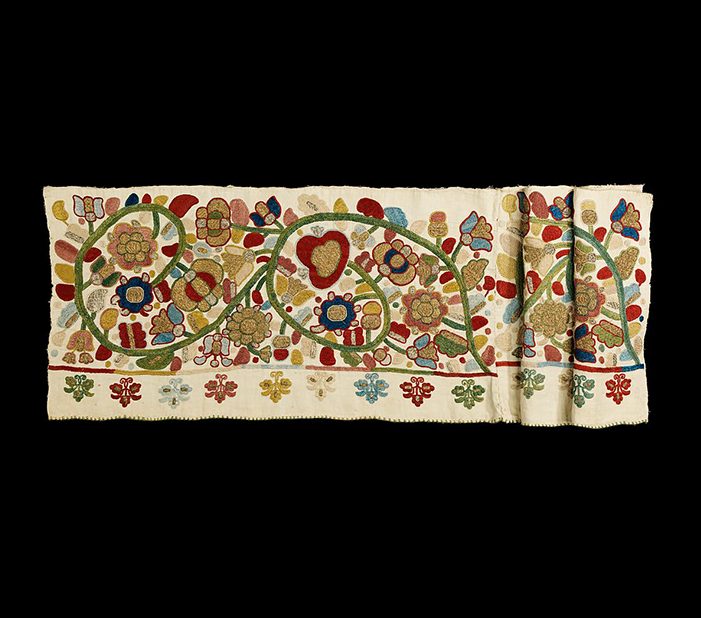
Fragment of a shirt
Ukrainian
fourth quarter 18th century
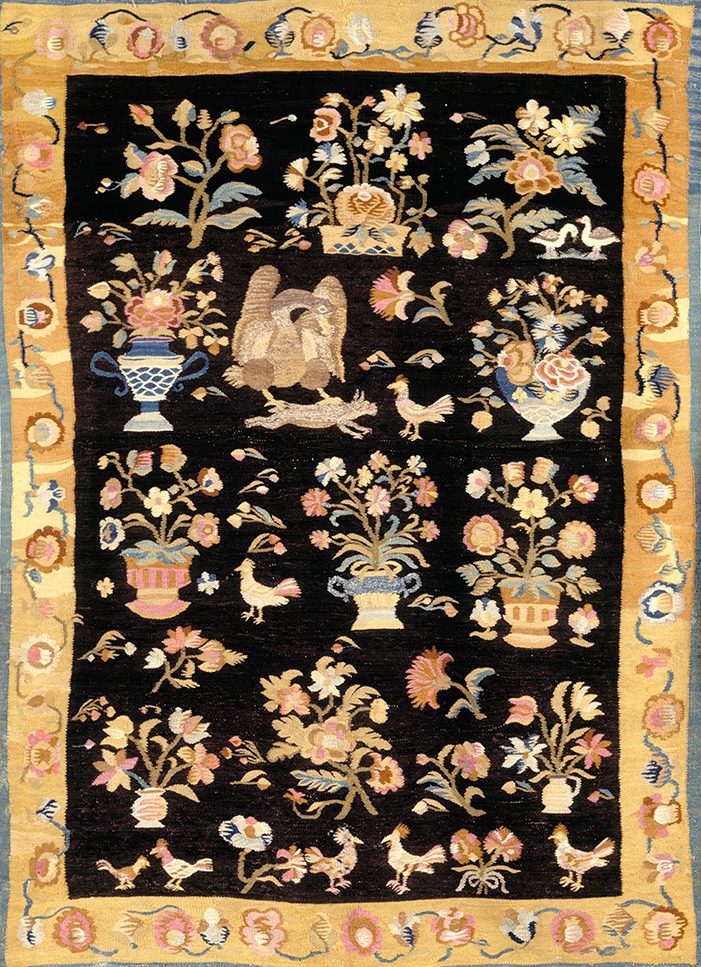
Carpet, XVIII century. Poltava region. Collection of National Museum of Ukrainian folk decorative art, Kyiv
Ukrainian Rugs in Contemporary Design
For designers today, their floral compositions soften minimalist interiors, while their deep color palettes anchor modern architectural spaces. In dining rooms, they create intimate visual warmth beneath sculptural tables. In living rooms, they function almost like woven paintings—introducing narrative and texture without overwhelming the room.
This ability to bridge historical craftsmanship and modern design sensibility explains why Ukrainian textiles have begun to attract renewed attention from collectors and interior designers alike. They speak to a contemporary desire for objects that carry both aesthetic beauty and cultural memory.
Ultimately, Ukrainian rugs remind us that the most compelling design traditions are often those shaped at cultural crossroads. In their woven surfaces converge centuries of history, artistic influence, and human creativity—proof that even the most humble village loom can produce works worthy of the world’s finest interiors.
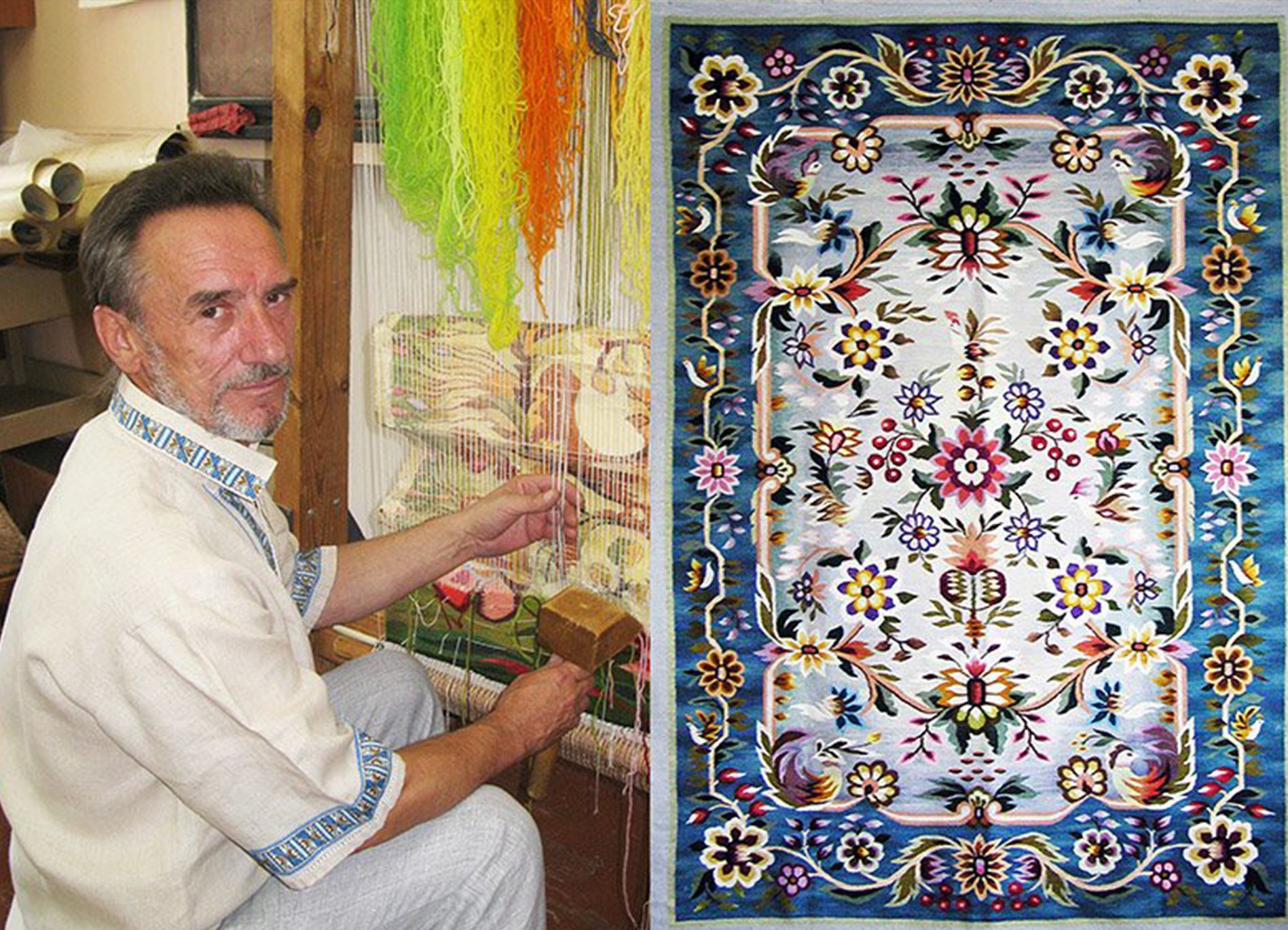
“Spring Kilim” – Master Petro Shevchuk, Honored Master of Folk Art of Ukraine.
Interior Design: Why Designers Are Rediscovering Ukrainian Rugs
In contemporary interiors, Ukrainian rugs possess a versatility that many historic carpets lack. Their floral compositions soften minimalist spaces, while their rich palettes anchor rooms dominated by pale architecture or modern furniture.
Designers often use them in several ways:
Dining Rooms
A Ukrainian floral kilim beneath a sculptural dining table introduces warmth and painterly depth while grounding the furniture arrangement.
Modern Living Rooms
In minimalist spaces, these carpets function almost like woven artworks—introducing pattern without overwhelming the architecture.
Layered Historic Interiors
When paired with antique furniture, Ukrainian rugs reinforce the sense of narrative within a room, connecting objects across centuries.
This adaptability explains why designers increasingly view Ukrainian carpets not simply as antiques but as enduring design elements capable of bridging historical craftsmanship with contemporary aesthetics.
A Tradition Re-emerging
For much of the twentieth century, Ukrainian rugs remained overshadowed by the better-known traditions of Persia, Turkey, and the Caucasus. Yet today, collectors and designers are rediscovering the remarkable sophistication of these textiles.
Their enduring appeal lies in their unique balance: the intimacy of village craftsmanship combined with the compositional elegance of European decorative arts. Within their woven surfaces converge painting, folklore, literature, and design—a reminder that textiles have always served as both functional objects and expressions of cultural imagination.