
Rugs, Books, and the Fine Art of Living with Intention: Rug & Kilim’s Dialogue with Art and Literature
March 2, 2026
The Ukrainian Rugs and Kilims: The Floral Carpets Designers Are Rediscovering
March 10, 2026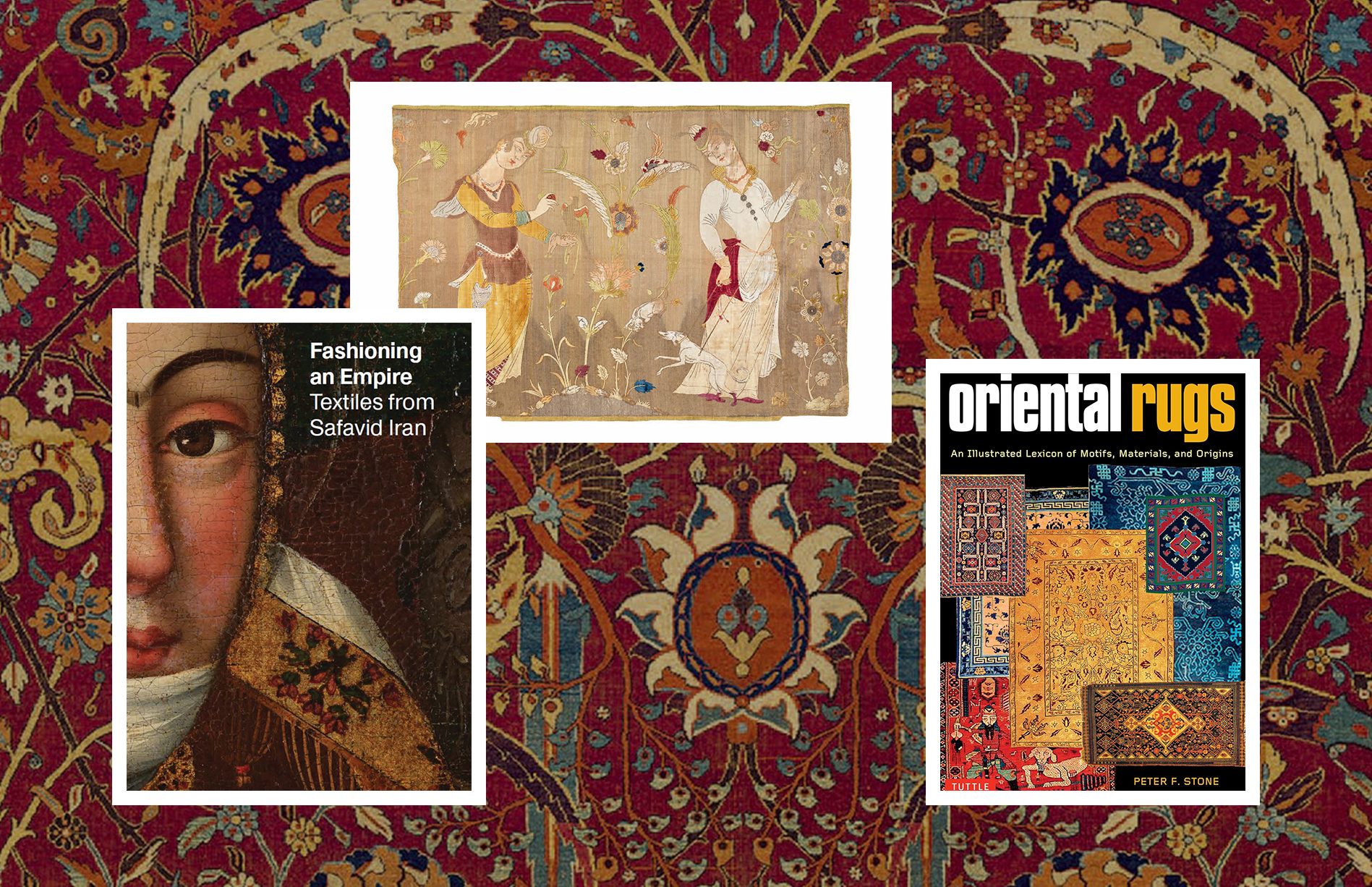
Materials from our Books on Persian Rugs. Available at Volumes by Rug & Kilim >>
By the late nineteenth century, the Persian carpet had become an essential component of the European interior. Not decorative. Structural.
As Qajar Persia expanded trade relationships with Britain, France, and the United States, carpets from Tabriz, Isfahan, Kashan, Kerman, and Sultanabad entered Western markets in unprecedented numbers. This was organized production responding to foreign demand. Workshops adapted scale, palette, and composition for European rooms while maintaining Persian essence.
Architecture, Empire, and the Rise of the Cultivated Room
The European salon — particularly in Paris and London — required more than furniture and painting. It required cohesion, and Persian carpets provided it.
To understand their impact, one must consider the salon as an intellectual environment. It was where literature was debated, where political ideas circulated, where collections were displayed as evidence of cultural range. A Persian carpet in such a room signaled access to global trade networks and aesthetic fluency beyond Europe.
In painting, this literacy was visible. Seventeenth-century Dutch artists had already used so-called “Oriental” carpets draped across tables as symbols of mercantile wealth. By the nineteenth century, carpets returned to the floor, fully integrated into domestic space. They no longer signaled exoticism; they signaled cultivation.
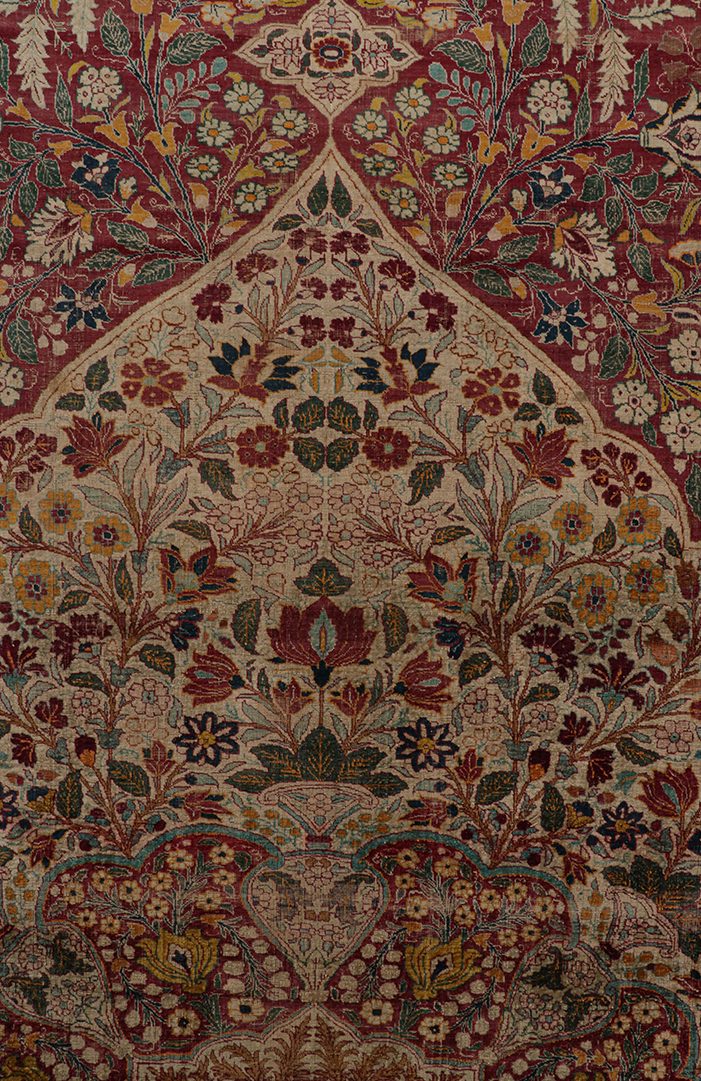
What distinguished Persian carpets in particular was compositional intelligence. The medallion format — prominent in Tabriz and Isfahan examples — functions architecturally. It establishes axial balance. It centers space. In large drawing rooms, this geometry organized furniture placement long before modern interior planning formalized such strategies. Similarly, all-over Herati and boteh patterns created visual continuity across expansive surfaces. These were not merely ornamental devices. They were spatial regulators.
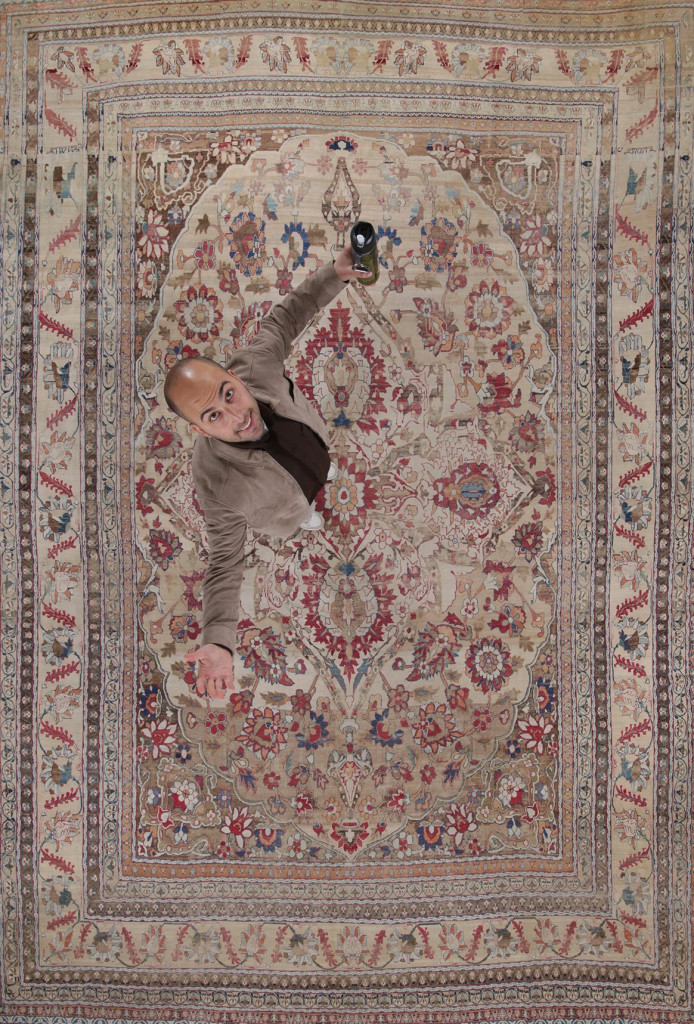
Cyrus Nazmiyal standing on an Oversized Antique Persian Kermanshah Rug with Floral Patterns, from Rug & Kilim
Before Modernism, There Was Persia
The Persian carpet also mediated between art and architecture. In rooms layered with oil paintings, carved wood furniture, marble mantels, and heavy drapery, the carpet absorbed visual density. Its wool pile softened acoustics. Its scale unified disparate materials. In practical terms, it was both aesthetic and environmental design.
Technically, Persian workshops of the eighteenth and nineteenth centuries maintained dye sophistication that European manufacturers struggled to replicate. Madder roots produced varied reds depending on mordant and soil conditions. Indigo fermentation yielded depth unattainable through early synthetic substitutes. Subtle abrash — natural tonal variation — resulted from batch dyeing and hand-spun wool. What industrial production labeled inconsistency, connoisseurs now recognize as evidence of authenticity.
This matters today.
The contemporary interior, particularly at the highest end of the market, is reconsidering permanence. After decades of polished minimalism, designers are reintroducing material depth: plaster walls, bronze surfaces, natural stone, untreated woods. Antique Persian carpets operate naturally within this vocabulary because they were never surface decoration. They were built objects.
The modern collector; more informed than previous generations — asks different questions. Where was it woven? Which workshop tradition? Vegetable or synthetic dyes? What period? How does scale interact with architecture? These are not academic inquiries. They determine longevity and value.
Provenance: Structure, Region, and Identity
A Persian carpet is not defined by ornament alone. It is defined by origin.
Tabriz carpets are immediately recognizable for their refined drawing and balanced medallions. Isfahan examples exhibit meticulous knotting and architectural symmetry rooted in Safavid design logic. Kashan weavings often demonstrate exceptional dye clarity and curvilinear elegance. Kerman carpets reflect fluid pattern interpretation and chromatic sophistication.
These are regional signatures — shaped by access to materials, workshop hierarchies, court patronage, and trade infrastructure.
The Persian knot (asymmetrical knotting) allows for greater curvilinear precision than many other weaving traditions. This foundation enabled intricate arabesques, finely articulated floral networks, and centralized medallions of clarity.
Dye sources further distinguish provenance. Madder roots cultivated in varying soils produced distinct tonal ranges. Indigo vats, carefully fermented, yielded blues of notable depth. Variations in wool — highland sheep versus lowland herds — affected sheen and durability.
In other words, provenance is material intelligence.
For the connoisseur, it informs scale selection, period attribution, and ultimately long-term value. Provenance establishes continuity — a carpet’s place within a lineage of production extending across centuries.
In this context, antique Persian carpets offer distinct advantages:
Provenance – Established weaving centers with documented stylistic characteristics.
Material integrity – Hand-spun wool and natural dyes age predictably and gracefully.
Architectural versatility – Balanced compositions adapt to both traditional and contemporary settings.
Sustainability – Production completed a century ago requires no new extraction or industrial energy.
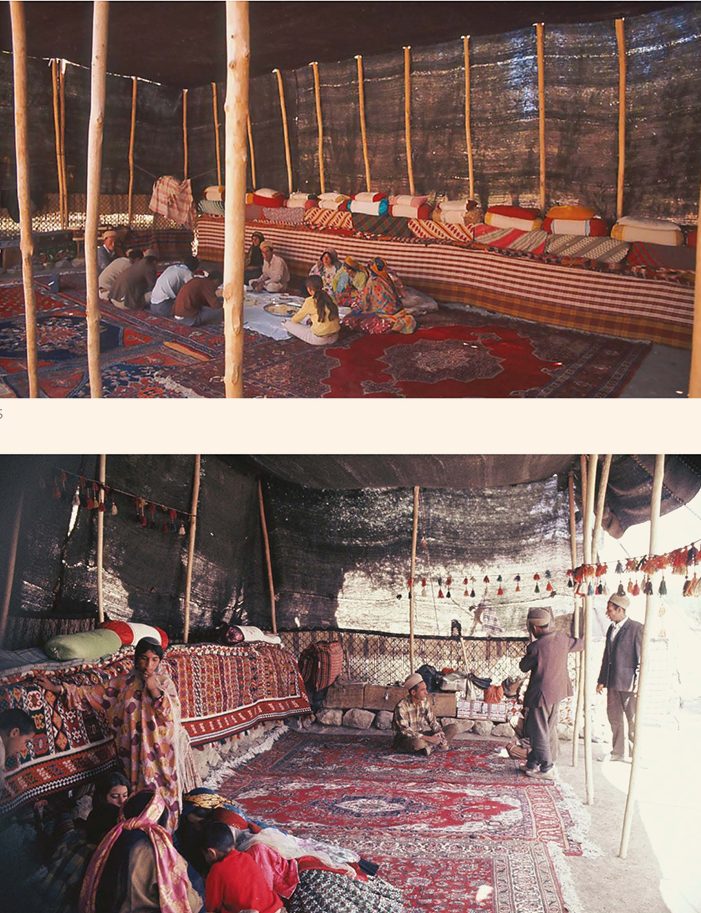
Weavings of Nomads in Iran, available at Volumes by Rug & Kilim
Persian Carpets and the Formation of the Modern Interior
There is also a geopolitical layer that cannot be ignored. Persian carpets historically functioned as economic instruments within fluctuating trade agreements and diplomatic negotiations. Today, sanctions, cultural heritage debates, and shifting global markets continue to shape how Persian textiles circulate. Collecting antiques becomes, in part, preservation of cultural production that modern industry often sidelines.
Yet the most compelling reason for their endurance remains architectural logic.
A medallion carpet anchors open-plan lofts as effectively as it once grounded salon seating. An all-over Kashan pattern stabilizes minimalist furniture without competing for attention. The subtle asymmetry of hand-knotting resists the sterility of machine perfection.
There is a misconception that antique Persian carpets belong exclusively to traditional interiors. Historically inaccurate. They have always existed in transitional spaces — between cultures, between architectural eras, between aesthetic movements. Their adaptability is the result of disciplined design, not nostalgia.
If the nineteenth-century salon used Persian carpets to express cultural reach, the twenty-first-century interior uses them to express discernment. The difference is subtle but important. Reach suggests acquisition. Discernment suggests understanding.
Persian carpets endure because they were never decorative trends. They were resolved systems of design. If nineteenth-century Europe used them to express reach, the twenty-first century uses them to express understanding. In every era — imperial, industrial, modern — the rooms that last are those grounded in structure. The Persian carpet has always provided it.
Underfoot, yes.
But never incidental.
And rarity, properly understood, is the foundation of lasting design.