
The Art of Appraisal: Inside Rug & Kilim’s Culture of Connoisseurship
February 27, 2026
The Persian Carpet and the Making of Modern Interior: Power, Trade and Redefining Cultural Prestige
March 5, 2026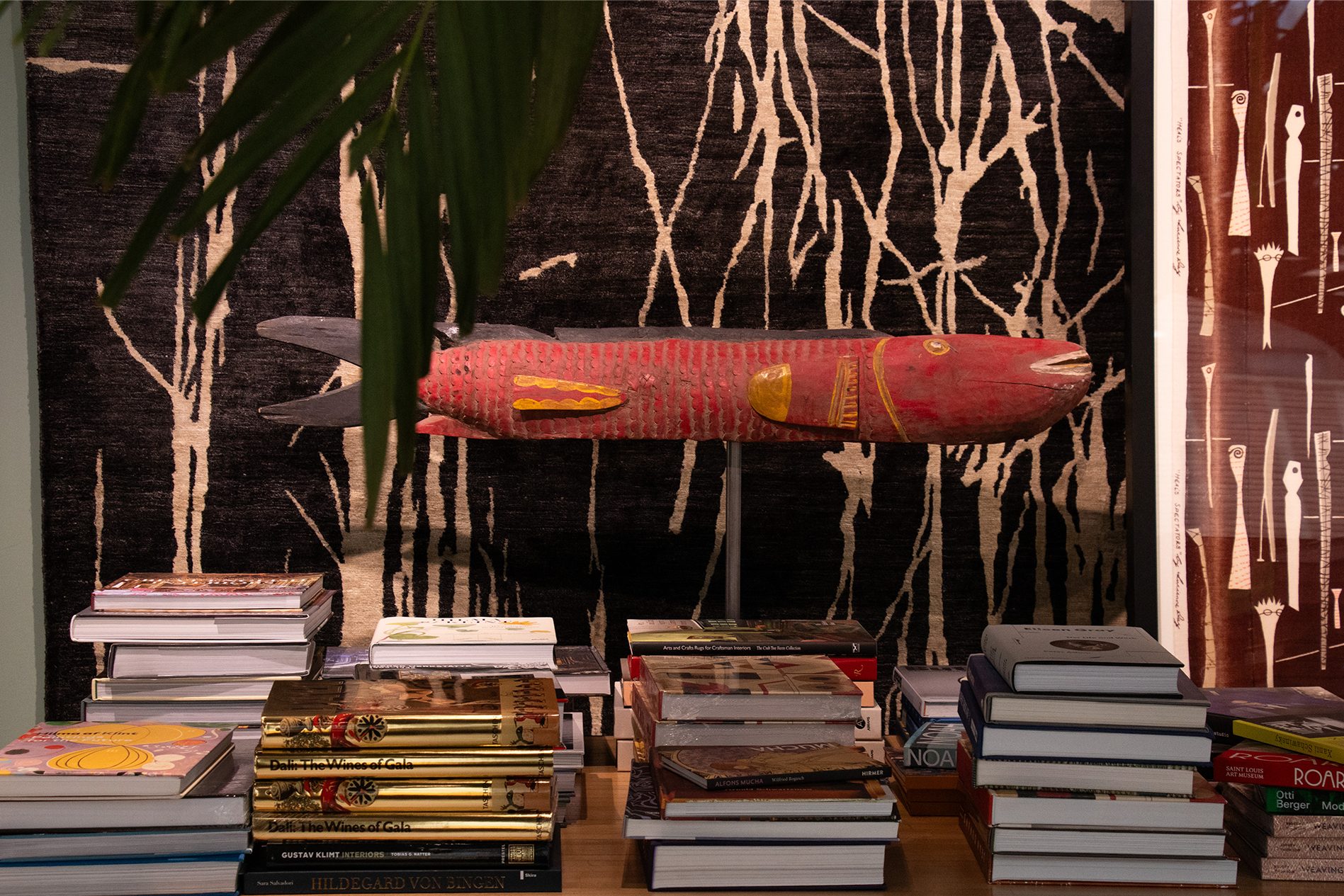
A great house is measured not only by what lies underfoot, but by what rests within reach.
At Rug & Kilim, The Royal Collection and Volumes are not parallel endeavors—they are twin expressions of the same language: that art, design, and intellect belong in continuous dialogue. Both are products of patronage, atelier discipline, and an unwavering belief that beauty must be structured.
A serious interior does not begin with furniture. It begins with a position.
For centuries, the rug has been the most intellectually charged plane in a room—the only surface that holds architecture, painting, mythology, and diplomacy in a single field. Likewise, the book is not décor; it is declaration. It reveals the mind that inhabits the space.
The floor, in this sense, is a library laid horizontally.
True luxury is intellectual continuity — the quiet coherence between what lies beneath our feet, what hangs before our eyes, and what rests within our hands. It is the alignment of textile, text, and art into a singular cultural statement.
The Court and the Study: Power in Ornament
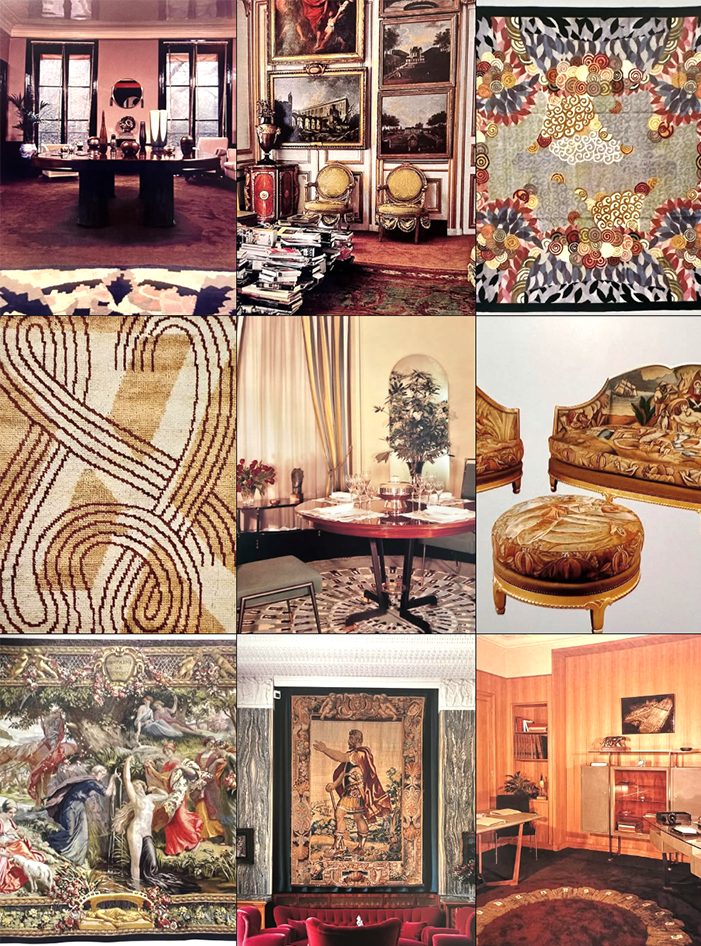
Long before the salon or the gallery became displays of taste, noble houses understood that a room is a text written with materials. The rug—the first canvas placed in a space—sets the grammar. The book—the first text placed within arm’s reach—shapes the mind that occupies it. Together, they form the foundational syntax of a cultivated interior.
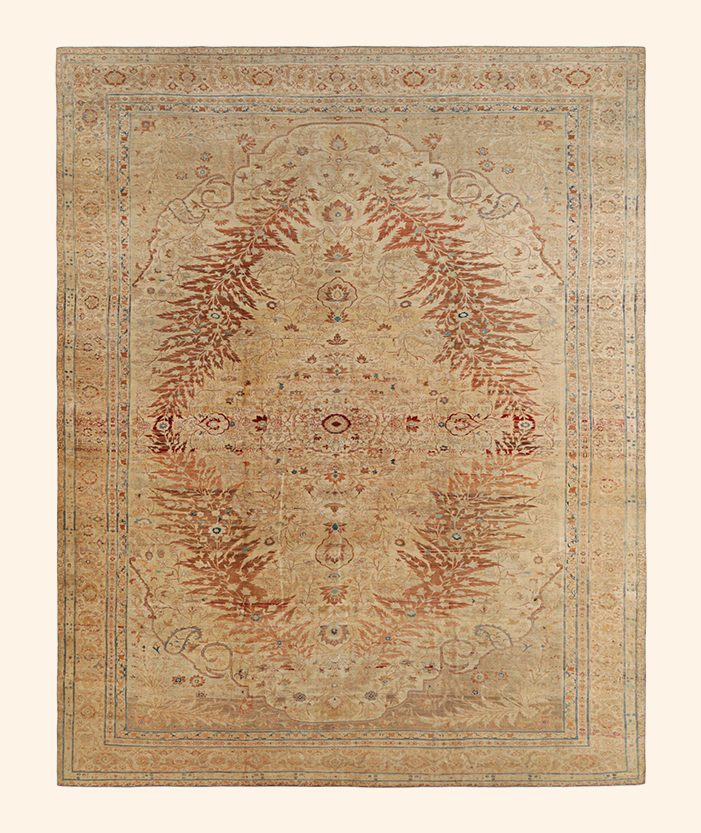
Born under royal patronage in the 17th century as the grand tradition of French Savonnerie, these carpets were instruments of statecraft as much as decoration. Their scrolling acanthus and medallions articulated hierarchy—who stood where, who entered from which axis. They were architectural.
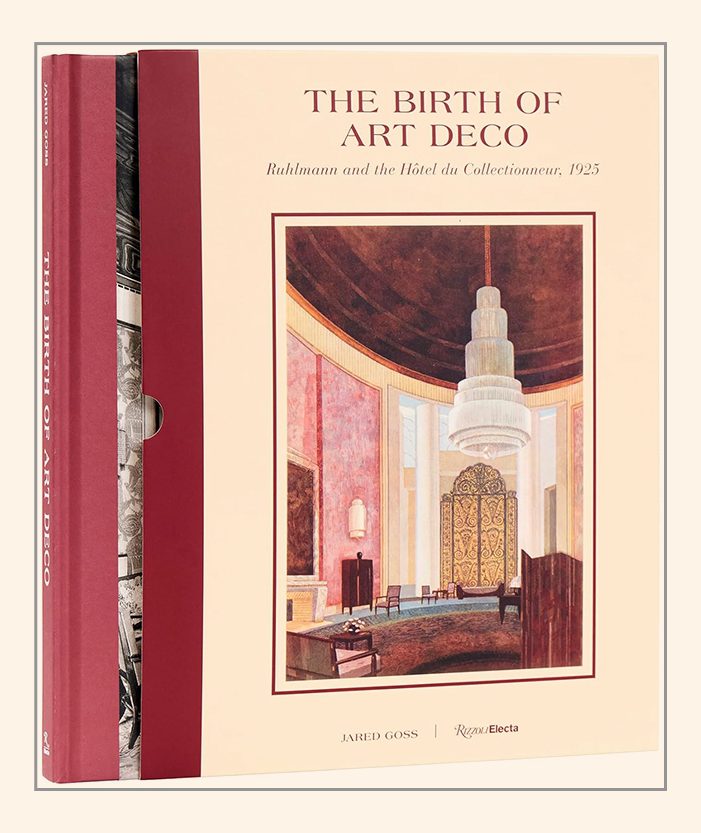
To pair such a work with a volume like The Birth of Art Deco: Ruhlmann and the Hôtel du Collectionneur, 1925 is historical continuity. Jacques-Émile Ruhlmann understood, as the Savonnerie workshops did, that luxury must be disciplined. The Hôtel du Collectionneur was not excess; it was calibration. Veneer thickness, curvature of leg, placement of bronze—everything was intentional.
Today’s leading designers—particularly those shaping New York’s most rarefied interiors—are returning to this rigor. We see a decisive shift away from casual eclecticism toward scholarship: provenance matters, atelier matters, context matters. A Savonnerie beneath a contemporary sculptural table is not juxtaposition for spectacle. It is dialogue across centuries of French design intelligence.
Geometry as Philosophy
If the French court perfected ornament as power, Persia perfected geometry as metaphysics.
A Heriz or Bakshaish medallion is not merely decorative symmetry. Long before abstraction entered European painting, Persian weavers were structuring space with radical confidence—fields of negative space punctuated by architectural forms that feel startlingly modern.
For instance, the monumental Oversized Antique Tabriz Persian Rug in Gold with Medallion (No. 32246)—a 15-by-19-foot orchestration of Safavid lineage and late Qajar refinement. Its gilded field, anchored by a sovereign medallion, recalls the architectural gravitas of a Beaux-Arts salon, yet in a contemporary Manhattan interior—pared-back plaster walls, sculptural bronze lighting—it becomes almost modernist. Paired with Le Corbusier: Album Punjab, 1951, the conversation sharpens. Corbusier’s disciplined eye for vernacular geometry finds its textile counterpart here; both rug and architect understand proportion as moral force. The rug’s arabesques are not ornament—they are structure disguised as lyricism.
To place such a carpet beneath shelves holding Vasily Kandinsky: Around the Circle is to recognize an uncomfortable truth: abstraction did not begin in the 20th century. Kandinsky theorized the spiritual potential of form; Persian weavers practiced it through lineage. This is not romanticism. It is education. As contemporary interiors lean once again into primary geometry—monolithic sofas, planar tables, reductive lighting—the antique Persian carpet reveals itself not as relic but as precedent. The most advanced rooms today often rest upon the oldest ideas.
Color as Territory
In an era marked by geopolitical tension and renewed interest in cultural identity, color has become charged again. Designers are abandoning timid neutrals for saturated fields—deep blues, mineral reds, vegetal greens.
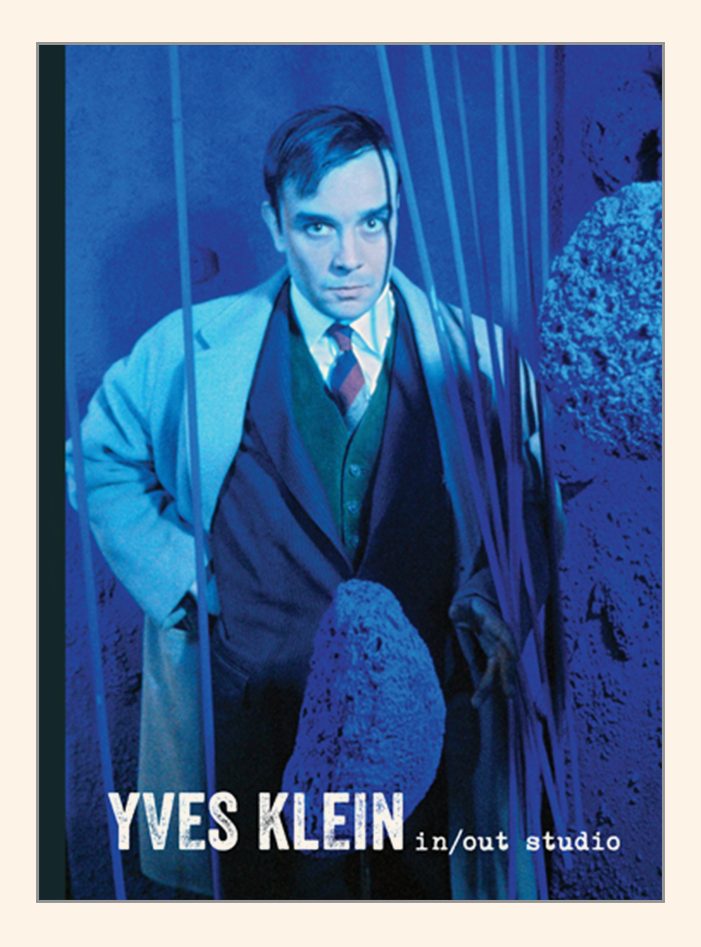
Like the chromatic audacity of a Karabagh or a Kerman Lavar. They are regional signatures, shaped by local dye traditions and trade routes. To understand them is to understand empire, agriculture, migration. Pair such works with volumes on modern art—Yves Klein: In/Out Studio or American Modern: Hopper to O’Keeffe—and the conversation sharpens. Klein pursued transcendence through ultramarine. Persian dyers achieved permanence through indigo vats centuries earlier.
Narrative Floors, Narrative Shelves
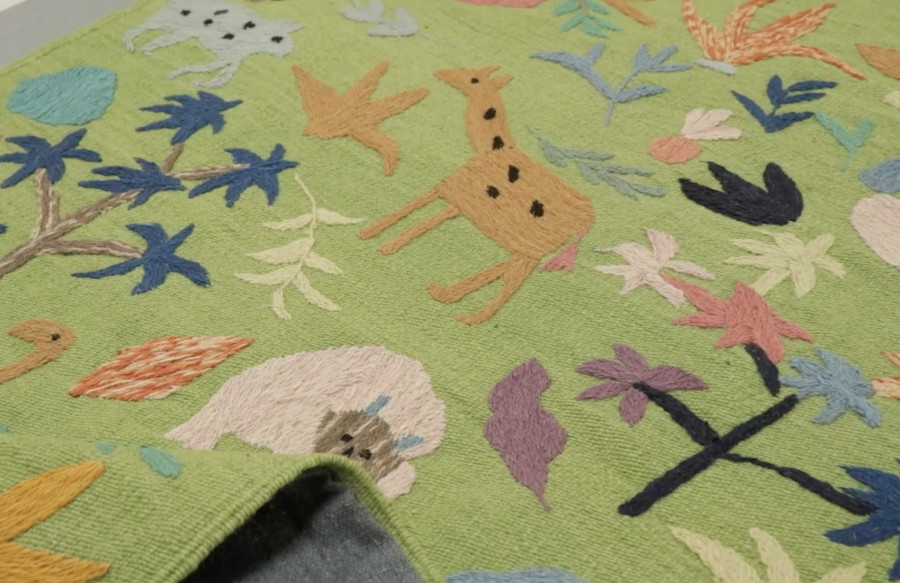
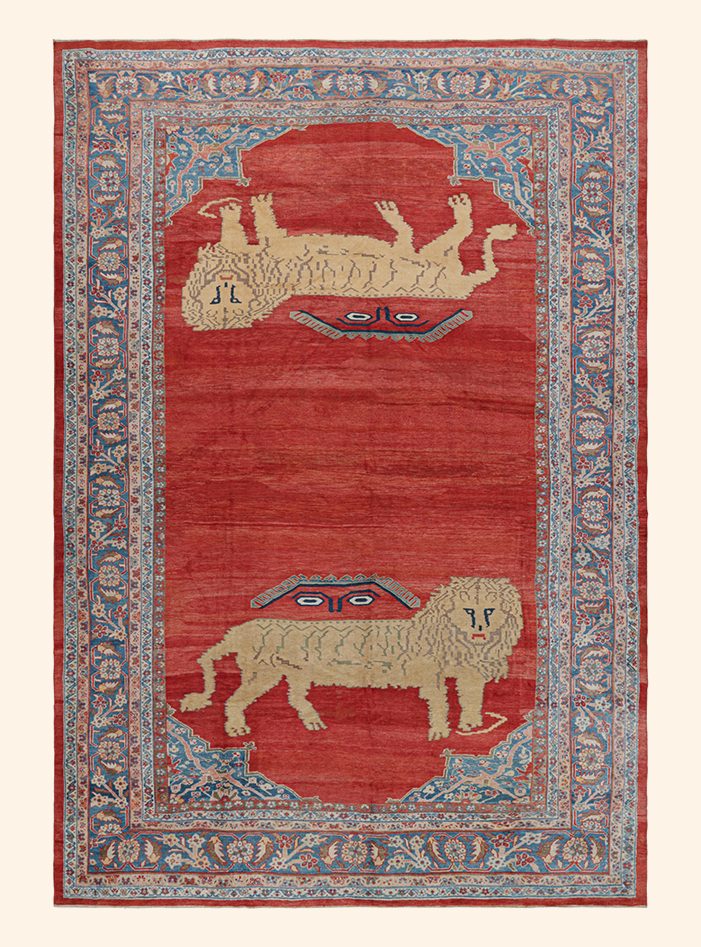
There is a quiet humor in the fact that some of the most scholarly collectors will debate first editions with fervor—while walking across a 19th-century pictorial carpet whose iconography they have never decoded. Pictorial rugs from Mahal or Bakshaish traditions carry lions, gardens, courtly scenes—woven literature. Likewise, a shelf holding Christian Bérard or Just Kids speaks to narrative, persona, performance.
Both rug and book are vessels of story. One is read standing; the other, seated. In a thoughtfully composed library, they reinforce each other. The lion in wool echoes the lion in print. The garden underfoot mirrors the garden in prose.
The point is not clever pairing. It is literacy of space.
The Gesamtkunstwerk of the House
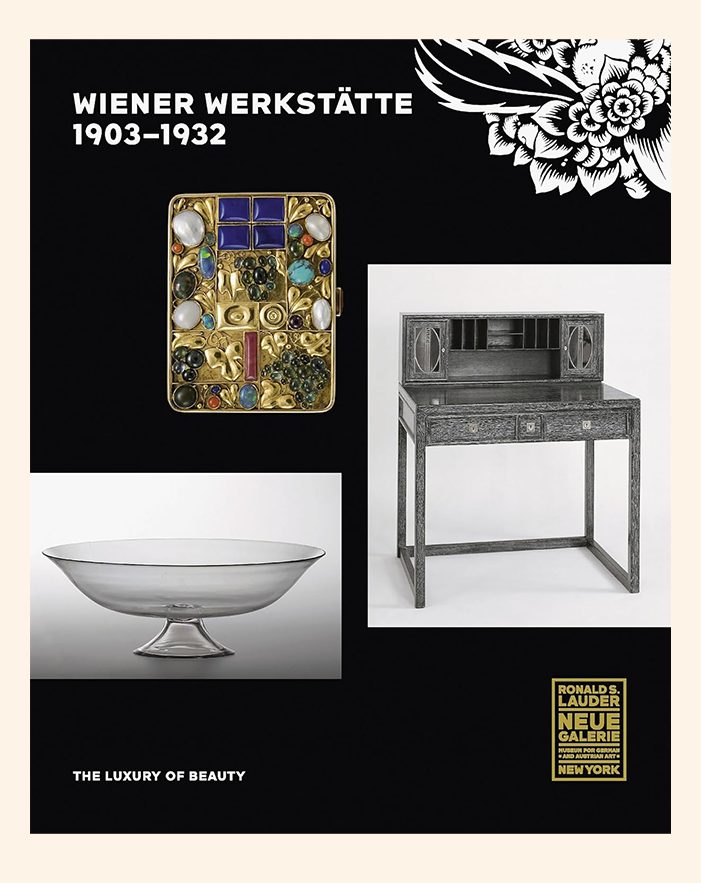
The Wiener Werkstätte believed in the total work of art—the Gesamtkunstwerk—where architecture, furniture, textile, and object form a cohesive philosophy. That idea feels urgent again.
Today’s most sophisticated interiors reject trend-chasing in favor of authored environments. A room may combine a Persian medallion carpet, a French Art Deco console, a Shaker ladder-back, and a contemporary abstract canvas—but only if the collector understands the intellectual through-line.
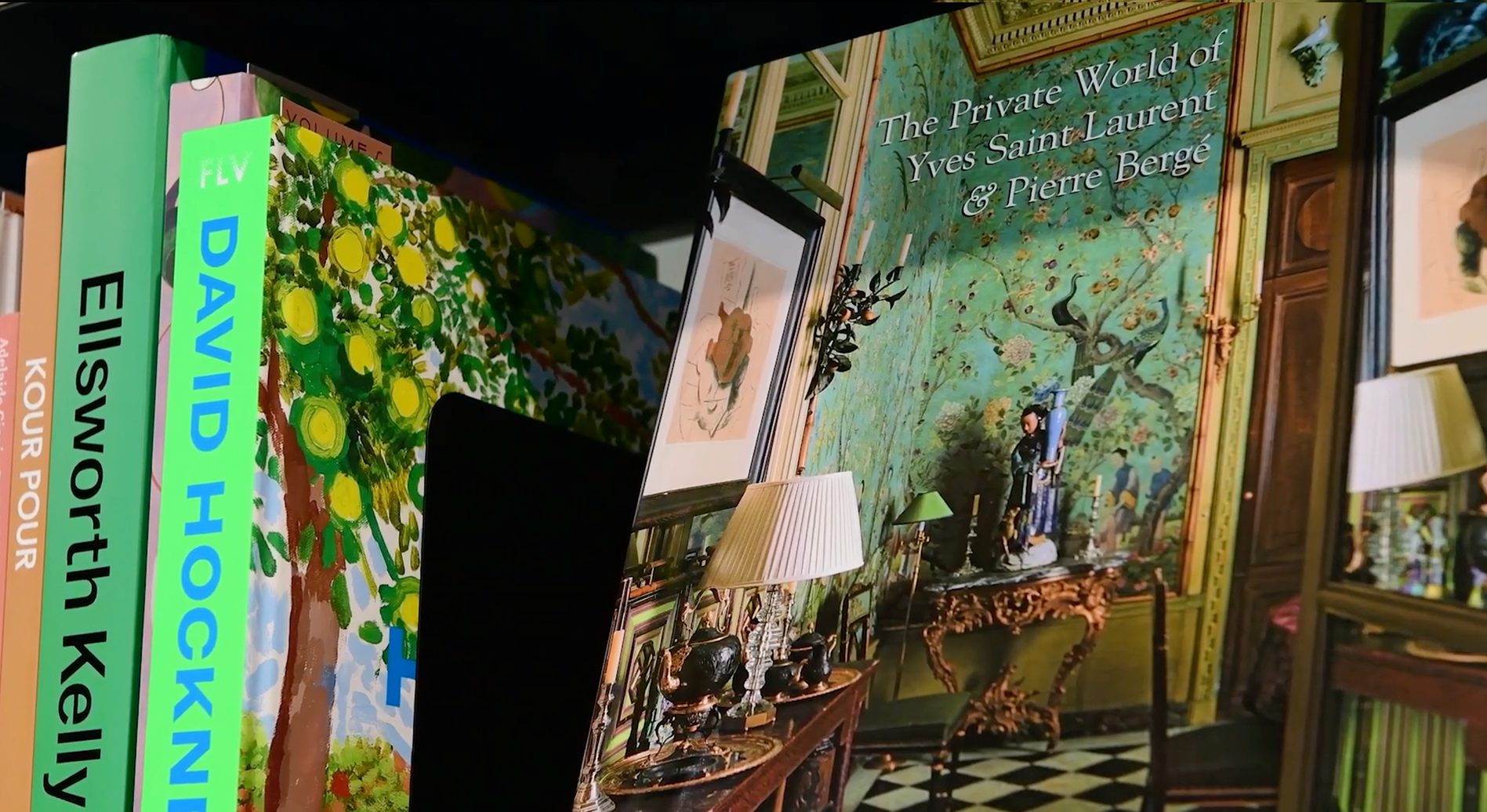
Volumes itself is no afterthought. Titles such as Wiener Werkstätte, 1903–1932: The Luxury of Beauty and Die Fläche speak directly to the decorative arts’ most rigorous intellectual movements. The Wiener Werkstätte believed in Gesamtkunstwerk—the total work of art. So do we. A Vintage Leleu French Art Deco Rug (No. 35702) placed beneath a stack of Paris Art Deco is not merchandising; it is curatorial argument. Leleu’s geometry distilled the optimism of interwar France; the book contextualizes it. Together, they educate without didacticism.
Volumes exists within this philosophy. Its selection—ranging from Wiener Werkstätte, 1903–1932: The Luxury of Beauty to The Yoshijima House—is not decorative merchandising. It is a curriculum. The Royal Collection is its tactile counterpart.
Together, they argue that the house is not a showroom. It is an archive.
On Literacy and Luxury
Luxury, in its highest form, is not scale or price. It is discernment.
A monumental Tabriz does not command a room because of its dimensions, but because of its architectural intelligence. A Savonnerie does not impress because of its silk highlights, but because of its lineage. A book does not belong on a table because of its spine color, but because of its argument.
At Rug & Kilim, we see rugs and books as parallel acts of authorship. Both require patience. Both demand study. Both reward those willing to look longer. In the end, a house that pairs an antique Tabriz with a monograph on Château Lafite understands something elemental: luxury is not acquisition; it is literacy. Both are bound—one in silk, one in paper—and both, at their finest, are works of art meant to be lived with, studied, and passed forward.
And the house, finally, becomes what it was always meant to be: a place where art is not displayed, but understood.