
Bessarabian Rugs and Kilims: A European Textile Tradition at the Crossroads of Art, Empire and Design
March 12, 2026
A Rug & Kilim Perspective on Boutique Hospitality, Hotels, and the Art of Living Well
March 24, 2026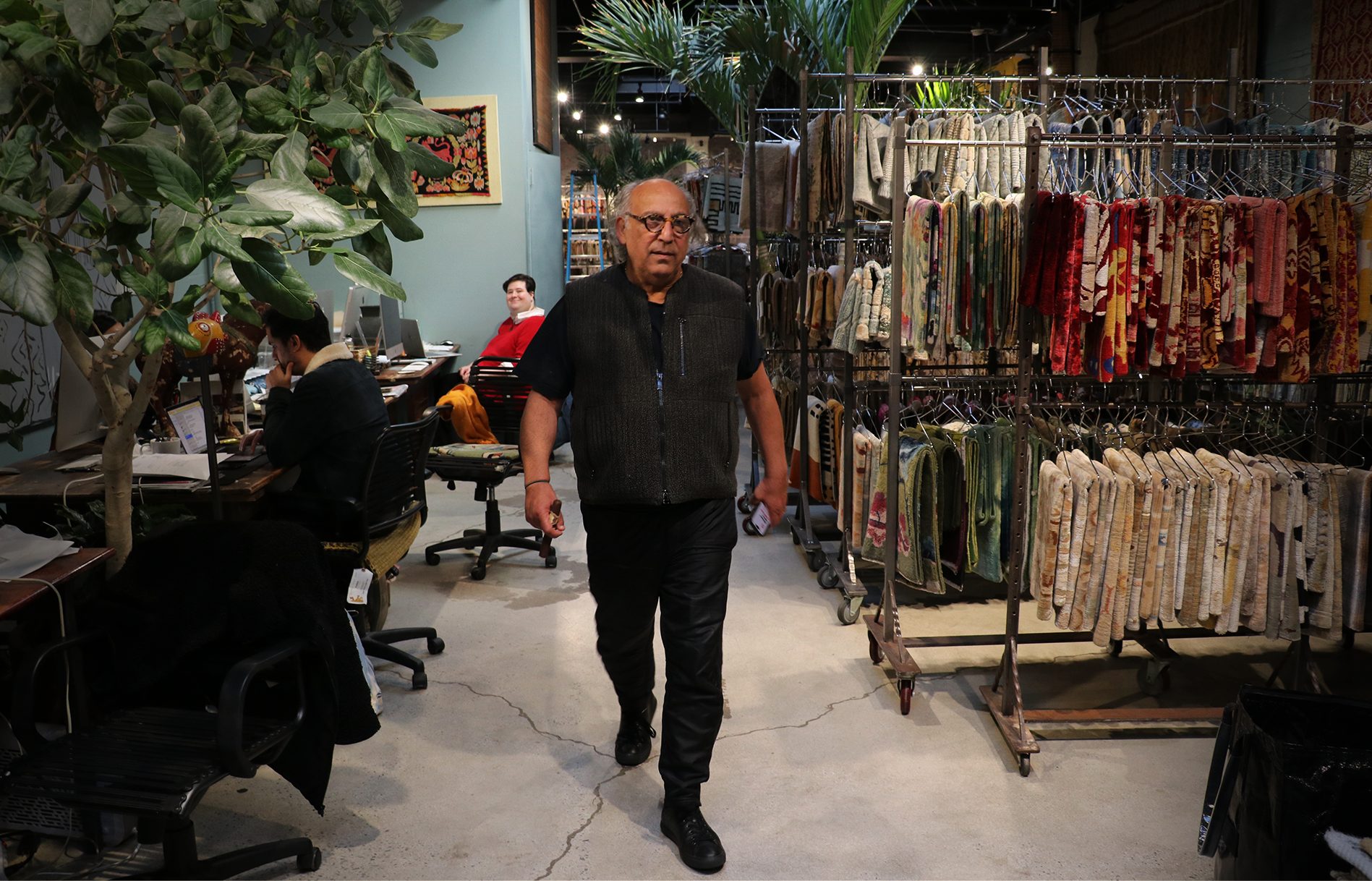
Jahanshah Josh Nazmiyal, Principal – Rug & Kilim
There is a quiet misconception in contemporary interiors: that rugs belong to style categories, that they serve periods, that they follow trends.
At Rug & Kilim, we see something different. We see a continuum — a lineage that begins in imperial courts, evolves through European ateliers, collides with modernism, and extends into the custom future of today’s architectural spaces.
Textiles have never merely decorated history. They have shaped it.
What follows is not a chronology of rugs. It is a narrative of power, authorship, reform, and reinvention — and why designing across eras, rather than within them, is the most intelligent way forward.
Part I: Court — When Textile Was Empire
In Safavid Persia, the carpet was not a furnishing. It was sovereignty made visible. The great court carpets of Isfahan and Kashan were woven with silk foundations, vegetal dyes, and disciplined arabesques that mirrored architectural vaults and garden plans. They were diplomatic gifts, theological metaphors, and spatial declarations of order.
Similarly, in 17th- and 18th-century France, royal manufactories such as Gobelins Manufactory and Beauvais Manufactory transformed tapestry into political theater. Walls became woven murals. Mythological scenes reinforced monarchical legitimacy. Textile was propaganda, scholarship, and spectacle at once.
Literature of the Enlightenment often described interiors as microcosms of civilization. The rug was not incidental to that vision — it was foundational. Beneath courtly furniture and gilded consoles lay intricate weavings that encoded cosmology, trade routes, and imperial ambition.
Today, when a Safavid-inspired carpet or a French royal tapestry enters a contemporary interior, it carries this embedded gravity. It is inherited authority.
Part II: Atelier — When Craft Became Intellectual
The fall of courts did not diminish textile ambition; it relocated it.
By the late 19th and early 20th centuries, the atelier replaced the monarchy as the site of design innovation. Artisans collaborated with architects. Decorative arts movements reframed craft as art. The carpet was no longer only aristocratic — it was aesthetic.
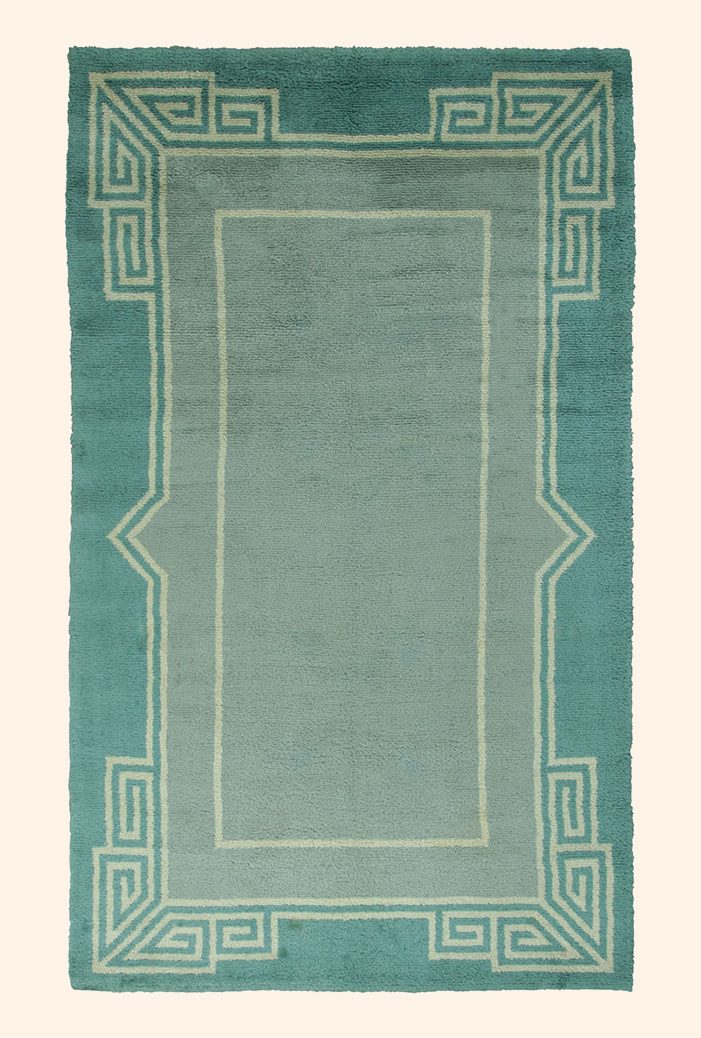
Art Deco, for example, disciplined ornament into geometry. French ateliers translated classical motifs into linear abstraction, aligning carpets with the architecture and fashion of the interwar period. Couture houses structured garments with the same clarity that Deco designers structured interiors. Ornament did not disappear; it evolved.
Museums began formalizing this shift. Textile departments expanded. Decorative arts entered serious discourse. Rugs were no longer relegated to background. They became artifacts of cultural authorship.
At Rug & Kilim, this atelier spirit informs our curation. A Swedish flatweave, a French Deco carpet, and a Persian Sultanabad are not competing genres. They are iterative responses to the same question: how should a surface structure space?
The atelier era taught us that craftsmanship is intellectual labor. Every texture choice, every knot density, every design proportion reflects design theory in material form.
Part III: Modernism — Reduction, Reform, and the Return of the Handmade
Modernism attempted to simplify the world. Steel, concrete, glass — clarity over embellishment. Architects sought universality, and interiors became disciplined compositions of light and proportion.
Yet even modernism could not eliminate the need for warmth.
Mid-century Scandinavian flatweaves reduced pattern to essential geometry, aligning with democratic design ideals. Postwar European tapestries returned to abstraction, engaging modern art movements while maintaining handwoven integrity. The floor remained necessary. The wall still required texture.
In literature and design journals of the 1950s and 60s, one finds recurring emphasis on honesty of materials. Textile exemplifies this honesty. Wool absorbs sound. Silk reflects light. Natural dyes age with nuance rather than fade with fatigue.
Museums began presenting textiles alongside painting and sculpture, acknowledging their role in shaping visual culture. The rug became modern not by abandoning history, but by distilling it. In contemporary glass towers and minimalist lofts, antique Persian rugs and Deco carpets introduce dimensional contrast. They soften hard architecture without undermining it.
Modernism, paradoxically, reaffirmed the necessity of textile.
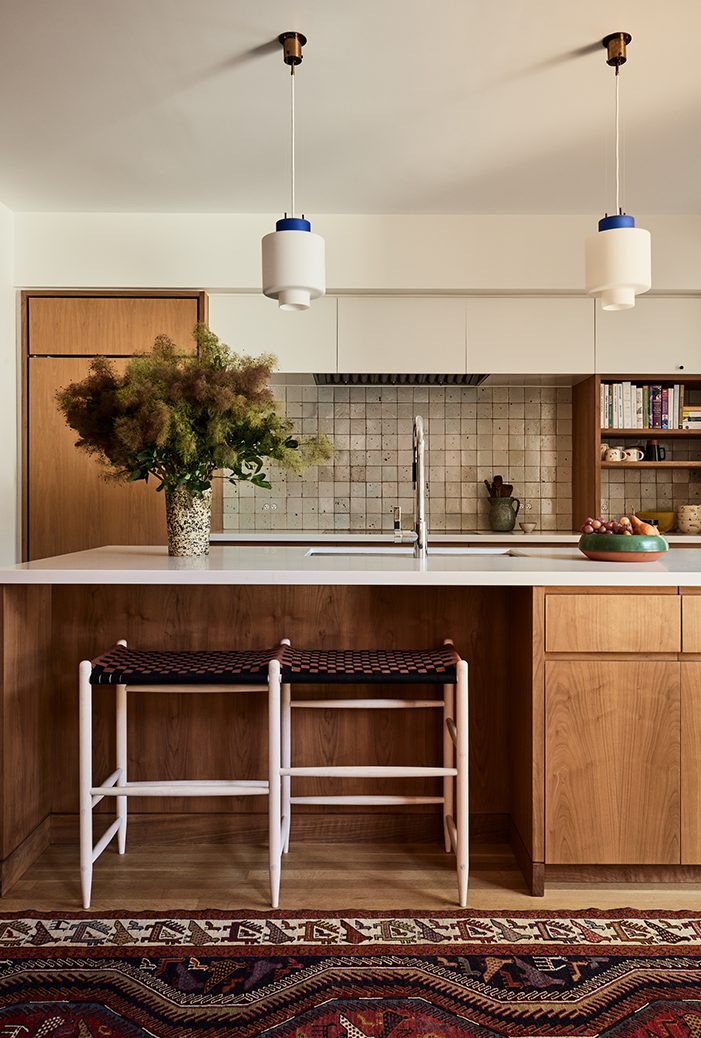
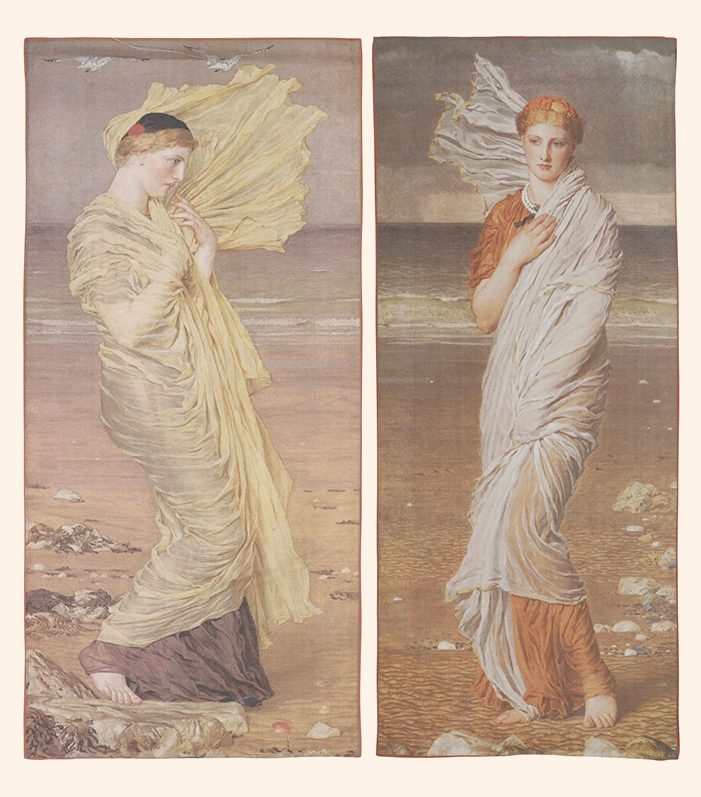
As seen in 1stDibs Introspective, the kitchen of a Brooklyn neo-Tudor townhouse designed by Jesse Parris-Lamb features a vintage Persian Shahsavan Kilim from Rug & Kilim. Read More >>
Why Curate Across Eras Instead of Within Them
The most compelling interiors today do not commit to a single period. They layer time deliberately.
An 18th-century tapestry commands a minimalist dining room.
A Swedish Deco flatweave anchors sculptural Italian seating.
A Persian Sultanabad stabilizes a modern penthouse of glass and steel.
These juxtapositions succeed because they share structural intelligence — proportion, rhythm, material integrity — even if their origins differ.
Designing within a single era risks mimicry. Designing across eras demands scholarship.
Rug & Kilim curates across centuries because continuity is more enduring than cohesion by trend. Empire, atelier, modernism, and custom innovation are not chapters to be separated; they are movements within a single design lineage.
Part IV: Custom Future — Where Ideas Are Woven
If the court established authority, and the atelier refined authorship, the custom studio defines the future.
At Rug & Kilim, custom design is a dialogue — between tradition and innovation, archive and architecture, designer and loom. It is where centuries of textile intelligence meet the realities of contemporary living.
We do not see custom as modification. We see it as authorship.
Every commission begins with a question: what does this space require that history has not yet fully resolved?
Sometimes the answer lies in re-scaling a 19th-century Sultanabad for an expansive Manhattan loft. Sometimes it means distilling the geometry of a Scandinavian flatweave into a quieter, architectural palette. Sometimes it means engineering a heavier body, a denser knot count, or a more resilient construction to meet the demands of high-traffic modern interiors.
Where ideas are woven, innovation is grounded in literacy.
Our forte lies in producing custom rugs that surpass their samples — technically, structurally, chromatically. Under the direct guidance of Jahanshah Josh Nazmiyal and our design team, drawing upon over four decades of scholarship and field experience, every commission is personally overseen from concept to installation.
Our long-standing relationships with the world’s leading weaving ateliers — among the top workshops globally — allow us to push technical boundaries while respecting the timelines of serious design practice. Texture, yarn composition, dye calibration, structural integrity: these are not afterthoughts.
We explore new possibilities daily — silk-wool hybrids that refract light differently in glass towers, matte vegetal palettes that temper minimalist interiors, high-low pile constructions that introduce sculptural depth without visual noise. Each rug is one of one. Even when inspired by archive, it is never derivative.
The Process
Custom should feel rigorous — not complicated.
Beginning
We start with essentials: inspiration, timeline, budget, architectural context. Whether virtually or in person, we curate initial samples and directional studies, ensuring alignment before design development begins.
Design
You may draw from our archive of historical motifs or bring your own vision. Our team refines proportion, scale, and palette — through poms, renderings, and in-person consultation — ensuring the rug integrates structurally with the room rather than merely complementing it.
Approval
Renderings, strike-offs, yarn samples — every technical element is clarified before loom initiation. Confidence precedes commitment.
Production
We manage direct communication with partner looms, providing progress updates and interim materials so your broader project can advance in parallel. Efficiency is built into the process without compromising craftsmanship.
Finishing
White-glove delivery, padding coordination, installation oversight — the final phase is treated with the same precision as the first sketch.
We work with demanding timelines. We understand the rhythm of architectural projects. And we deliver with discipline.
What makes this custom practice different is its foundation.
Our archive — spanning court carpets, Deco masterpieces, Scandinavian flatweaves, and European tapestries — functions as research. We analyze historical dye chemistry, knot density, weave structure, proportion systems. Then we reinterpret these principles for contemporary contexts.
This is how tradition evolves without dilution.
In fashion, heritage houses revisit archival silhouettes and reconstruct them for modern bodies. In architecture, classical principles inform contemporary towers. Similarly, Rug & Kilim’s custom studio re-engineers historical intelligence for today’s spatial demands.
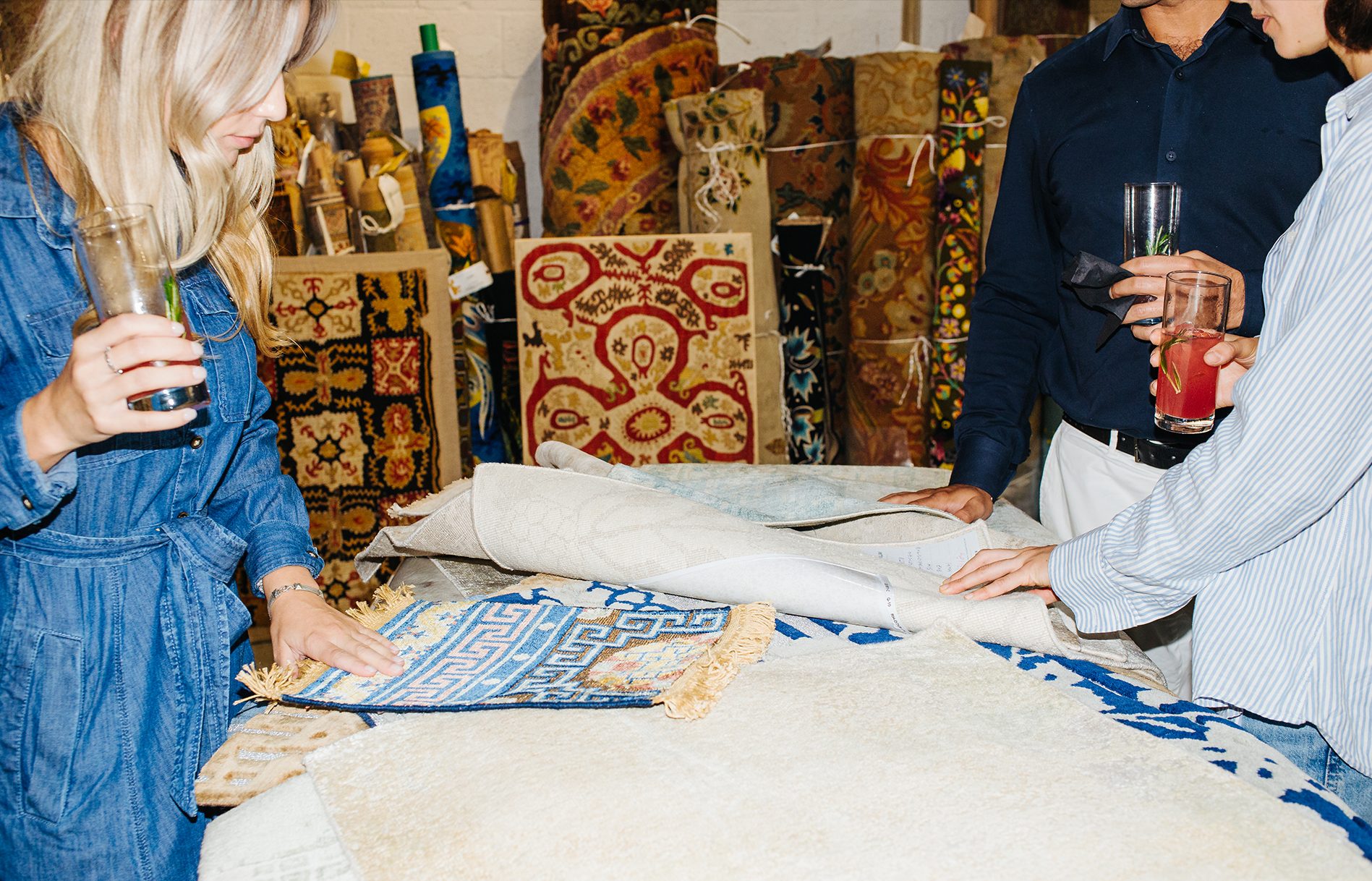
Rug & Kilim Custom
Designing for Permanence
Custom weaving offers something rare: permanence with intention.
A commissioned rug is not selected from trend. It is authored for place. It absorbs the life of the space it inhabits. It patinates, deepens, and remains structurally relevant long after seasonal palettes have shifted.
This is why designers increasingly move beyond catalog solutions. They seek specificity — scale calibrated to architecture, color tuned to light, structure adapted to use.
We give you the most personal experience because the outcome is personal. One dedicated liaison leads your project. One design team shapes it. One loom brings it into physical reality.
Empire gave textile authority.
The atelier gave it refinement.
Modernism tested its restraint.
Custom gives it authorship.
At Rug & Kilim, ideas are not merely imagined.
They are woven.