

Designing Across Eras: Persian, Art Deco & Scandinavian Influences for the Modern Interior
March 16, 2026
A Rug & Kilim’s Guide to Rug Patterns in Interior Design: A Study of Persian, European, Scandinavian, Art Deco and Modern Styles
March 27, 2026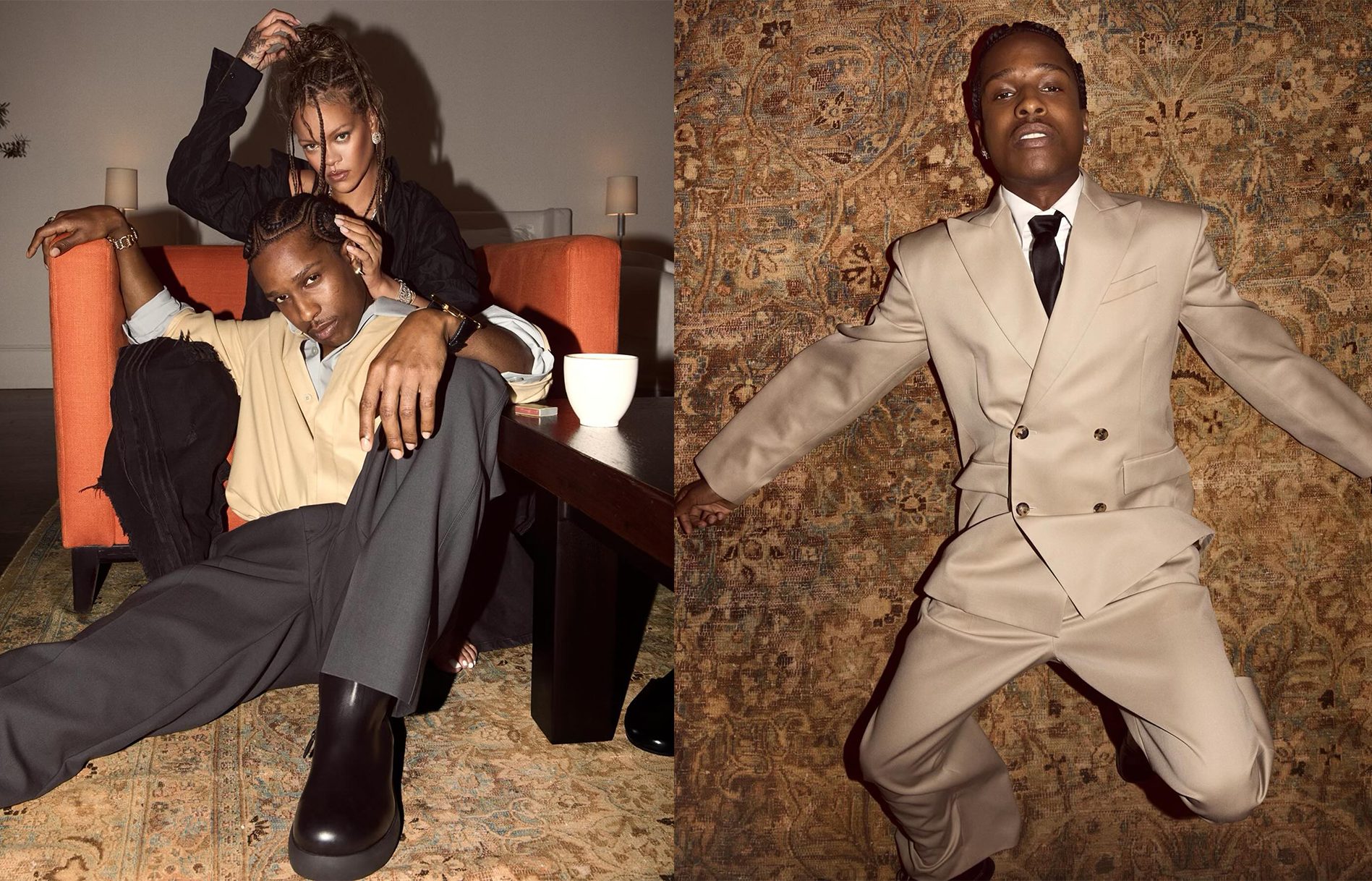
ICONIC… The celebrity duo Rihanna and A$AP Rocky behind some of fashion and music’s most recognized moments open up to W magazine with a backdrop to die for. Sitting in one of the luxury suites at the momentous Mercer Hotel in SoHo NYC is an antique Persian rug by the Rug & Kilim Collection.
Living, Collecting, and Designing at the Highest Level
There are interiors that impress, and there are interiors that endure. The latter; quietly commanding, intellectually composed, are rarely the result of singular gestures. It is intellectual, atmospheric, and deeply material. From the restrained grandeur of Mayfair to the cinematic restraint of Avenue Montaigne, from the private villas of Lake Como to the upper floors of Central Park South, and from Claridge’s, to the villas of Hotel du Cap-Eden-Roc, or in the rarefied interiors of Aman Tokyo; spaces where luxury is not declared, but resolved.
Boutique hospitality, at its highest register, belongs to this lineage. It draws less from commercial typologies and more from the disciplines of collecting, connoisseurship, and spatial narrative. In such environments, design is an editorial act.
Hospitality has always been a theatre of first impressions. A guest arrives not merely to retreat, dine, or convene—they arrive to feel something. In the most successful boutique hotels of our time, that feeling is rarely accidental. It is composed carefully, through light, architecture, scent, art, and perhaps most quietly yet powerfully, through textile.
Long before guests notice the lighting design or the carefully chosen artwork, they feel the floor beneath them. The rug mediates the first tactile encounter with a space. It softens scale, absorbs sound, anchors furniture, and, when chosen well, introduces narrative.
There was a time when hospitality design pursued spectacle. Today, it pursues memory.
The most compelling boutique hotels no longer rely on excess, but on authorship, spaces that feel composed rather than decorated, and collected. They borrow as much from private residences, galleries, and couture houses as they do from traditional notions of luxury. In this evolution, textiles—and particularly rugs have re-emerged not as background elements, but as foundational gestures.
At Rug & Kilim, boutique hospitality has become one of the most intellectually exciting arenas for our work precisely because it sits at the intersection of architecture, storytelling, and lived experience.
Repositioning the Rug Within Contemporary Hospitality Design
Modern architecture, from Le Corbusier onward, taught us to read space as system—proportion, light, circulation. But what it often left unresolved was the question of feeling. It is here that textile re-enters the conversation. Where architecture defines structure, the rug defines inhabitation.
Boutique hospitality has matured into a discipline where design decisions are expected to hold both aesthetic and operational rigor. The best projects today are not defined by visual novelty alone, but by how convincingly they resolve atmosphere, durability, and identity within a single framework. In this equation, rugs are no longer peripheral, they are among the most consequential elements in shaping how a space performs and is perceived over time.
At Rug & Kilim, our work with boutique hotels is grounded in this understanding. We approach each project not as a styling exercise, but as a study in how textiles interact with architecture, circulation, and use. In environments where guests move continuously—from lobby to elevator to suite—these transitions must feel intuitive. Rugs quietly enable that continuity.
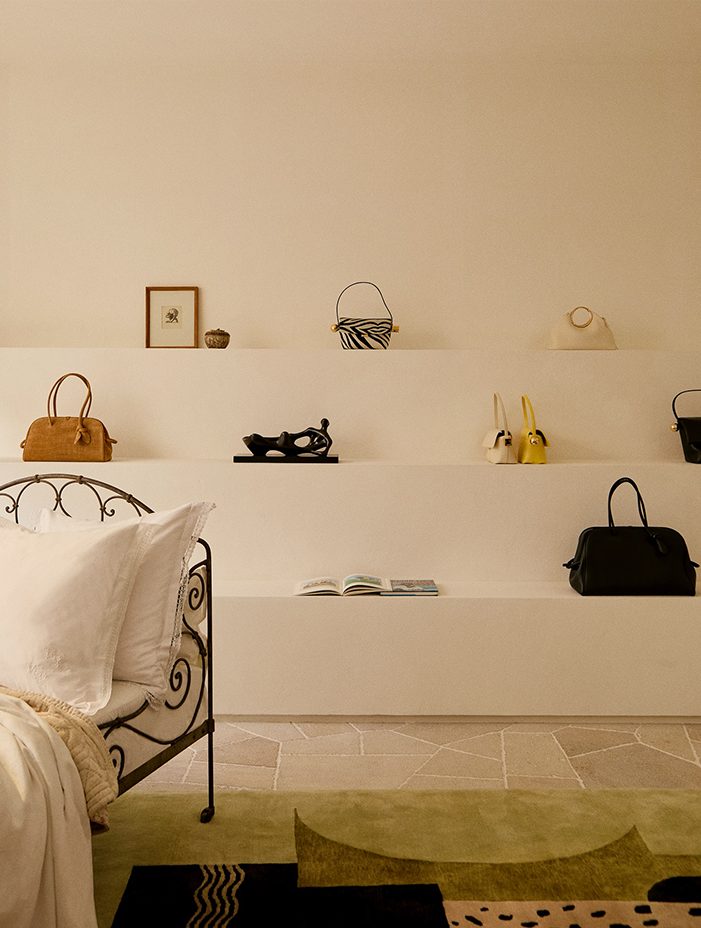
Rug & Kilim x Jacquemus New York Flagship
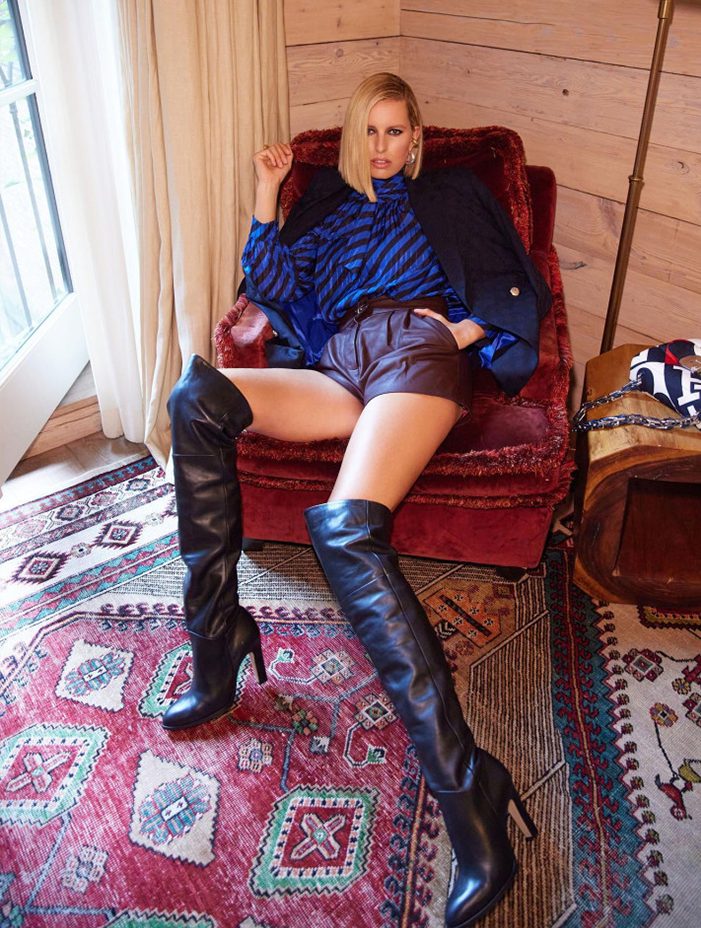
Karolína Kurková, a former Victoria’s Secret Angel and Vogue cover star, at The Greenwich Hotel. Rugs by Rug & Kilim.
The Lobby as Prelude: Establishing Authority
The most sophisticated hotels understand the lobby not as just a point of entry but scale, circulation, and identity converge. From the quiet monumentality of Claridge’s to the studied eclecticism of Hotel Costes, the lobby sets the intellectual tone of the entire property.
At Rug & Kilim, this moment is approached with curatorial discipline. Rugs selected for lobbies must perform on multiple registers: they must withstand significant foot traffic, resolve acoustics, and, most critically, establish a visual language that will resonate throughout the property. Antique and vintage works—particularly those with architectural clarity, such as early Art Deco or restrained Persian compositions—are often favored for their ability to command space without excess.
In high-value boutique environments; lobbies that function as salons, suites that rival private residences, villas that demand both intimacy and scale—this continuity becomes essential. A project succeeds when no transition feels abrupt, when each space anticipates the next. Rugs, in this context, act as connective tissue: modulating proportion, softening thresholds, and ensuring that the guest experience unfolds with quiet inevitability.
How Rug & Kilim Works Across Centuries Without Repetition
To work across Safavid, Art Deco, Scandinavian, and contemporary provenances is not an act of eclecticism but of fluency. The challenge is not access to history, but restraint within it.
Institutions such as the Metropolitan Museum of Art and the Victoria and Albert Museum have long positioned textiles as cultural documents, objects that carry not only aesthetic value but political, social, and technological histories. Rug & Kilim operates with a similar premise, though applied to living interiors rather than vitrines.
Each project becomes a question: what does this space need to say and through which era should it speak?
What distinguishes boutique hospitality from larger commercial formats is the absence of repetition. Each property is expected to carry a distinct identity, often drawing from multiple design languages at once. This requires a sourcing approach that is both historically informed and technically flexible. Rug & Kilim’s archive spanning antique Persian carpets, Chinese Art Deco pieces, mid-century European designs, and contemporary flatweaves allows us to respond to this complexity without defaulting to a singular aesthetic.
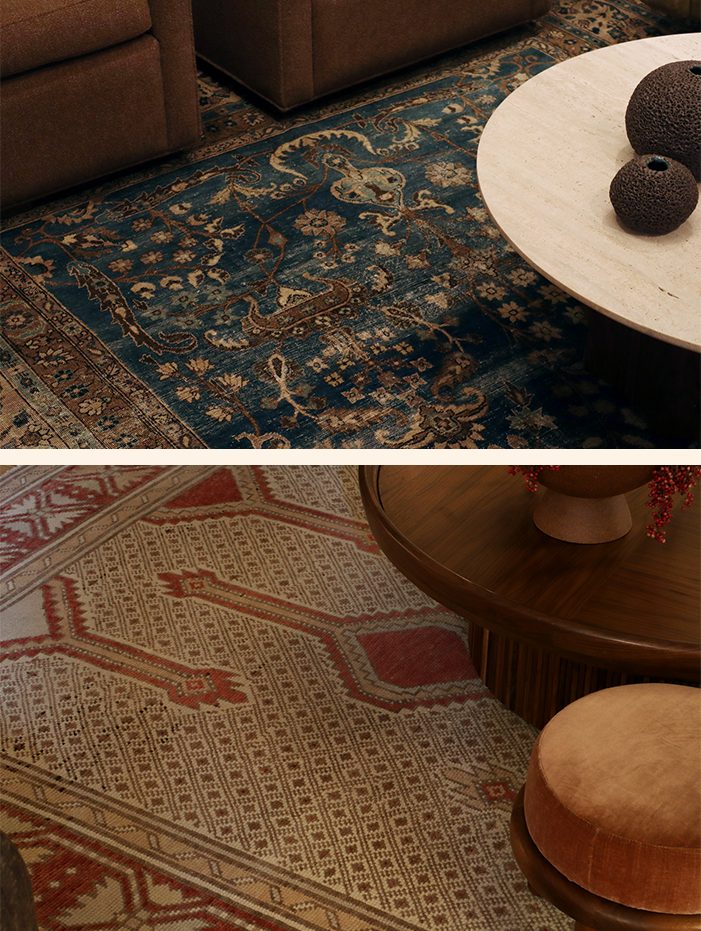
Rug & Kilim x Lawson Fenning
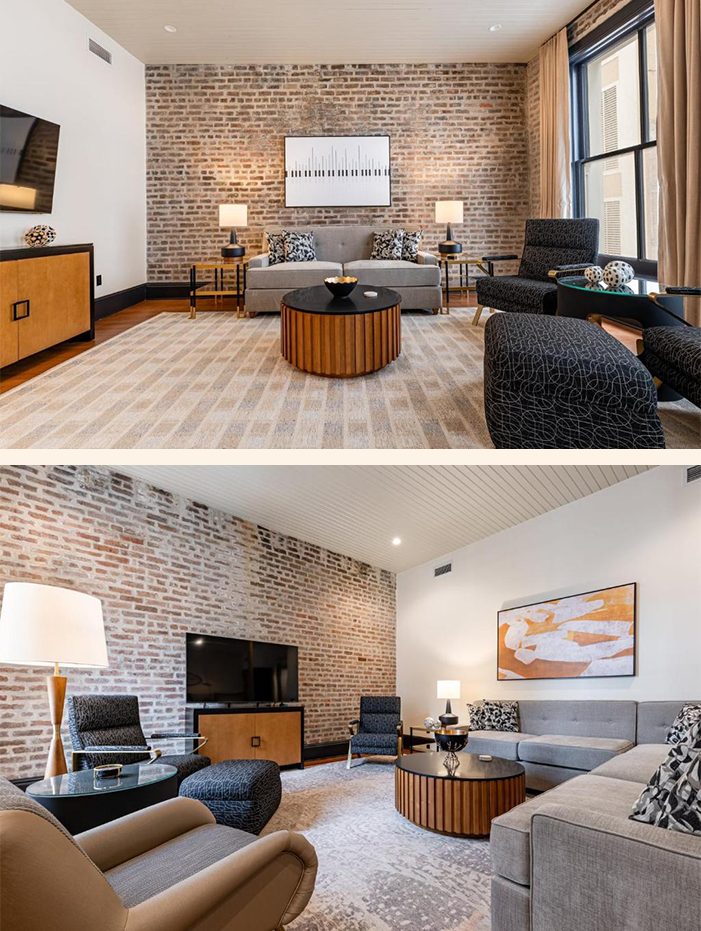
Rug & Kilim x The Mayfair, New Orleans
Geographies of Luxury: Interiors at the Highest Addresses
The most exacting standards in hospitality design are often set not by brands, but by place. The penthouses of Central Park South, the hôtels particuliers of Faubourg Saint-Germain, the private residences of Belgravia, the coastal estates of Cap d’Antibes—these are environments where materials are expected to carry both cultural and aesthetic authority. Here, one finds parallels with the interiors documented in The Decoration of Houses and later reinterpreted through the modernist restraint of Axel Vervoordt. The emphasis is not on abundance, but on calibration.
Boutique hotels increasingly borrow from these residential codes. The result is a shift away from standardized luxury toward something more nuanced: interiors that feel collected, layered, and deeply personal.
Within this framework, rugs assume a role closer to that of art.
A mid-century Scandinavian flatweave may stabilize a minimalist suite with the same restraint found in a canvas by Mark Rothko. A French Art Deco carpet, in the lineage of Ivan da Silva Bruhns, may articulate a lobby with the geometric discipline of Le Corbusier. An antique Persian rug may introduce the temporal depth described by Walter Benjamin—an “aura” that cannot be replicated, only inherited.
These are not stylistic choices. They are intellectual positions.
Corridors, Transitions, and the Discipline of Continuity
A recent collaboration with Anne Macdonald Design illustrates this approach with clarity. A large-scale Chinese Art Deco rug was selected to anchor a contemporary interior. The reference point—the 1920s Chinoiserie movement—is evident, but the execution is deliberately restrained. The palette avoids excess, the pattern is scaled to the architecture, and the material quality ensures longevity in a working environment. The rug functions less as a decorative feature and more as a stabilizing element within the room, holding together disparate design components.
The true test of a hospitality project lies not in singular rooms, but in transition. Corridors, elevator landings, and intermediate spaces are often treated as secondary. In the most rigorous projects, they are anything but. Drawing from spatial theories articulated in The Poetics of Space, these thresholds are where memory is constructed. Movement through a hotel should feel intuitive, continuous—an experience of unfolding rather than interruption.
This is where Rug & Kilim’s most distinct strength emerges: harmony across placement. When tasked with full-scale projects, rugs are not selected in isolation, but as part of a sequence. A language is established in the lobby, modulated through corridors, and resolved within suites and private spaces. This continuity is particularly powerful when working with antique and vintage inventories. Subtle variations in age, weave, and composition create a rhythm—rooms that differ, yet belong unmistakably to the same narrative.
Rug & Kilim’s archive—spanning 18th-century masterpieces to contemporary flatweaves—offers a rare advantage in hospitality: the ability to source entire projects without fragmentation. In large-scale hospitality projects, a recurring challenge is consistency—maintaining design integrity across hundreds of rooms and multiple spatial typologies. Our encyclopedic inventory addresses this with unusual clarity. Spanning centuries and geographies—from Persian court weavings to European Deco, Scandinavian modernism to contemporary flatweaves—the archive allows designers to source comprehensively within a single framework. This is not merely a question of volume, but of organization. The ability to curate, compare, and assemble entire projects—from lobby to suite to outdoor terrace—within a unified system offers both creative and logistical precision. Digital tools, including a structured wishlist function, extend this process beyond the showroom, allowing designers to compose projects remotely with the same level of control.
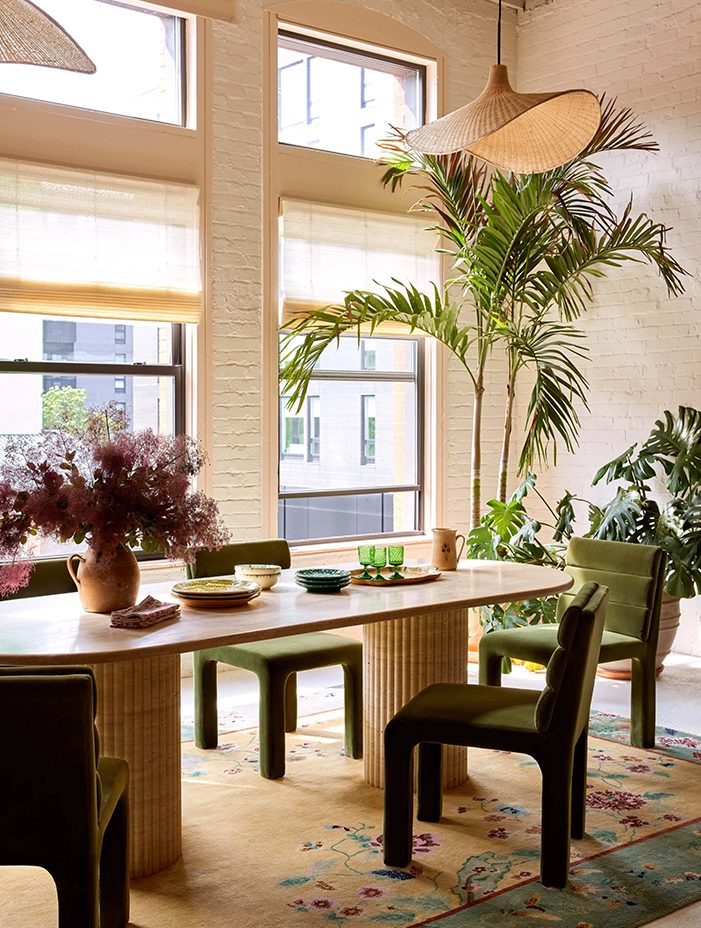
Rug & Kilim x Anne Macdonald Design
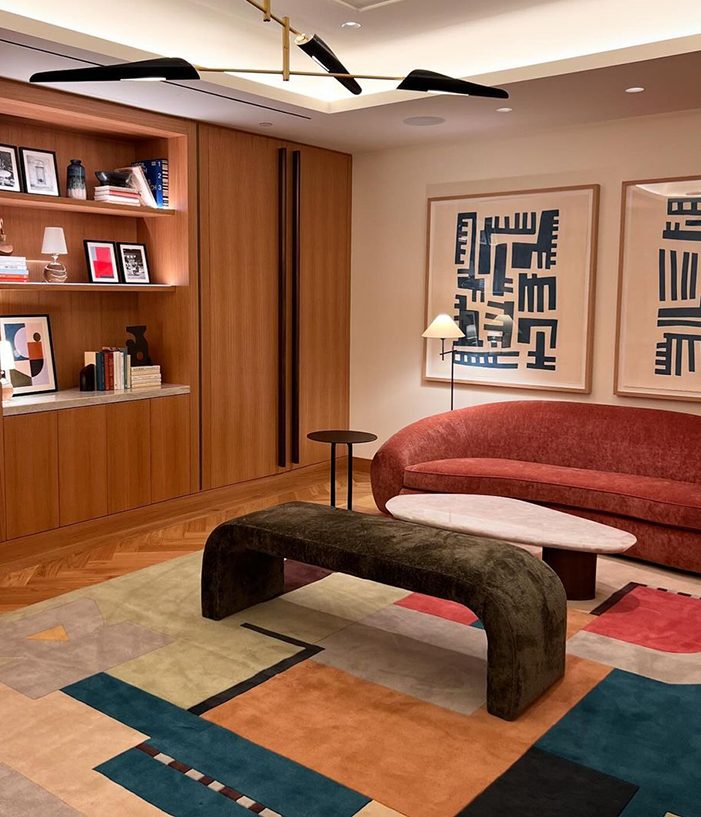
Rug x Kilim x Park Terrace Hotel
At Park Terrace Hotel, the requirements were different. Here, mid-century modern rug was introduced across public spaces where foot traffic is constant and spatial clarity is essential. The designs rely on proportion and repetition rather than ornament, aligning with the architectural language of the interiors. These rugs are effective precisely because they do not compete with the space but reinforce it. In hospitality settings, this level of restraint often proves more durable, both physically and visually, than more expressive alternatives.
In Dubai’s Muse Hotel, the emphasis shifted toward texture and construction. A flatwoven “Rez Kilim” was developed with a heavier body than traditional kilims, specifically to address the demands of a high-traffic environment. Its design, black, off-white, and beige stripes derived from a panel-based weaving technique reads as contemporary, but its logic is rooted in traditional craftsmanship. The result is a piece that performs structurally while maintaining a clear visual identity.
This balance is critical in hospitality, where rugs must withstand use without appearing utilitarian, as also seen in the Tory Burch New York Project featuring our special French Art Deco design and Jacquemus New York Flagship Project featuring a minimalist textural design.
Amenity Spaces, Villas, and the Expansion of Luxury
Contemporary hospitality extends far beyond the room. Spas, lounges, private villas, and outdoor environments now carry equal weight in defining a property’s identity.
In destinations such as Saint-Tropez or Malibu, the boundary between interior and exterior dissolves. Here, rugs must adapt—technically and visually—to shifting conditions. Flatweaves and robust constructions become essential, offering durability without compromising design integrity.
Amenity spaces, meanwhile, demand a different register. These are environments of gathering and pause—libraries, lounges, and dining rooms where the influence of designers like Jacques Garcia or Kelly Wearstler is often felt. Rugs in these spaces must anchor without overwhelming, allowing furniture, art, and architecture to coexist in equilibrium. The objective is not to impress momentarily, but to sustain experience over time.
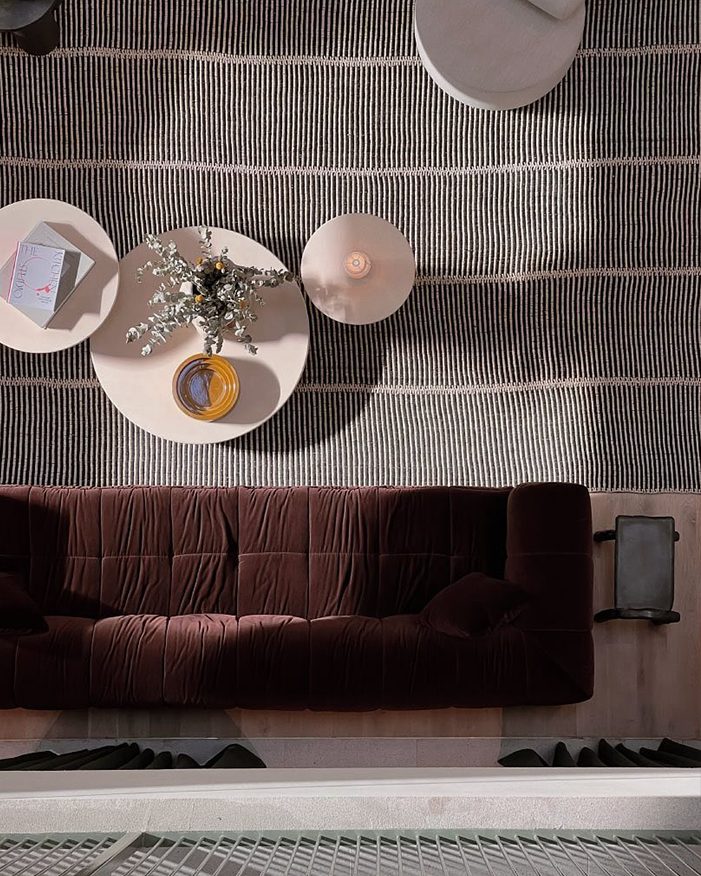
Rug & Kilim x The Muse Hotel (Dubai)
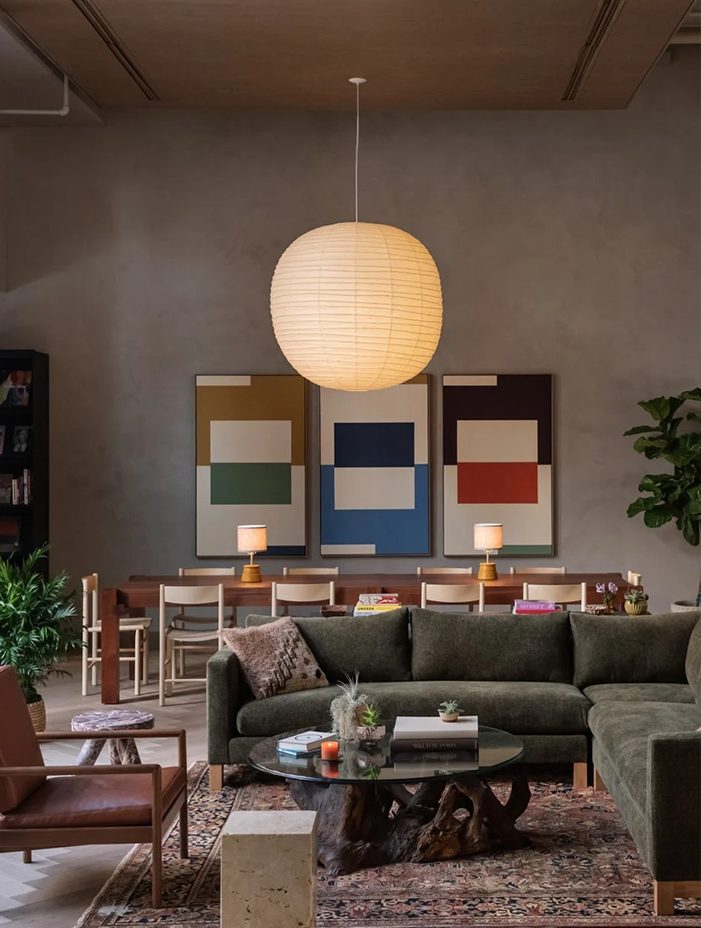
Rug & Kilim x Roost, Baltimore
Why Antique Rugs Are Re-entering Contemporary Hospitality
Provenance has returned as a form of resistance. Nowhere is this more evident than in boutique hospitality, where antique rugs are once again being introduced as anchors of authenticity.
As Walter Benjamin wrote, the value of an object lies in its “aura”—its presence in time. Antique rugs carry this aura not as abstraction, but as material fact.
Our projects reflect a broader shift in how boutique hotels approach materiality. There is a growing preference for pieces that carry either historical weight or technical precision—ideally both. Antique rugs are increasingly used to introduce authenticity and irregularity into otherwise controlled environments, while custom and contemporary pieces address specific spatial and performance requirements. The most successful interiors tend to combine these approaches, allowing contrast to create depth.
Romanticizing the craft and Executing it
From a production standpoint, hospitality work imposes constraints that are often underestimated. Lead times, installation schedules, and maintenance considerations all influence design decisions.
Rug & Kilim’s relationships with established weaving workshops enable us to meet these constraints without compromising on quality. Heavier constructions, reinforced foundations, and carefully selected materials ensure that rugs retain their structure and appearance over time, even in demanding conditions.
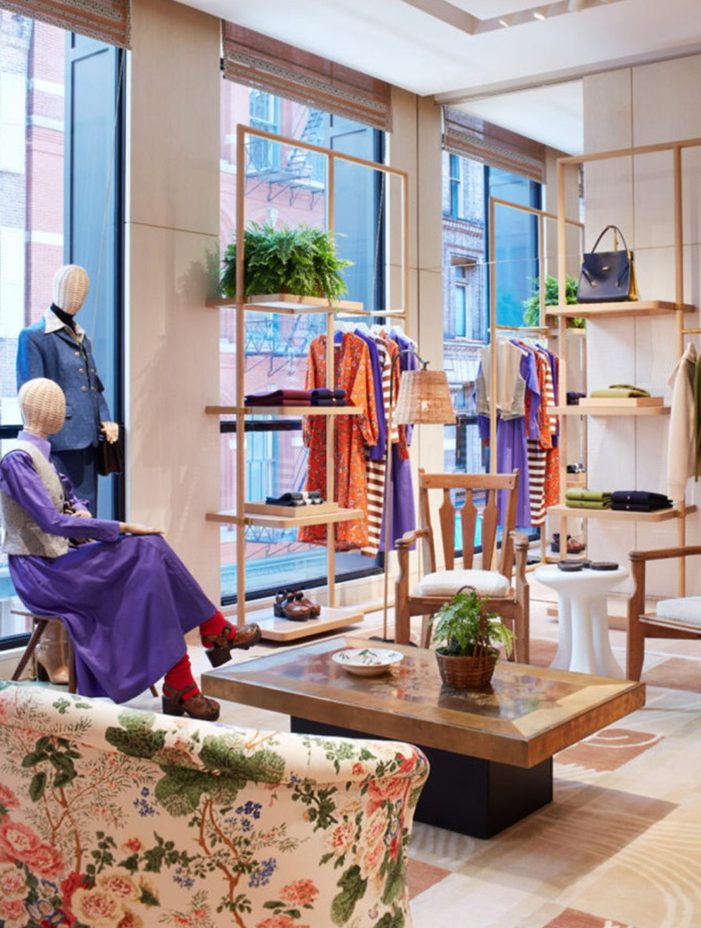
Rug & Kilim x Tory Burch, New York
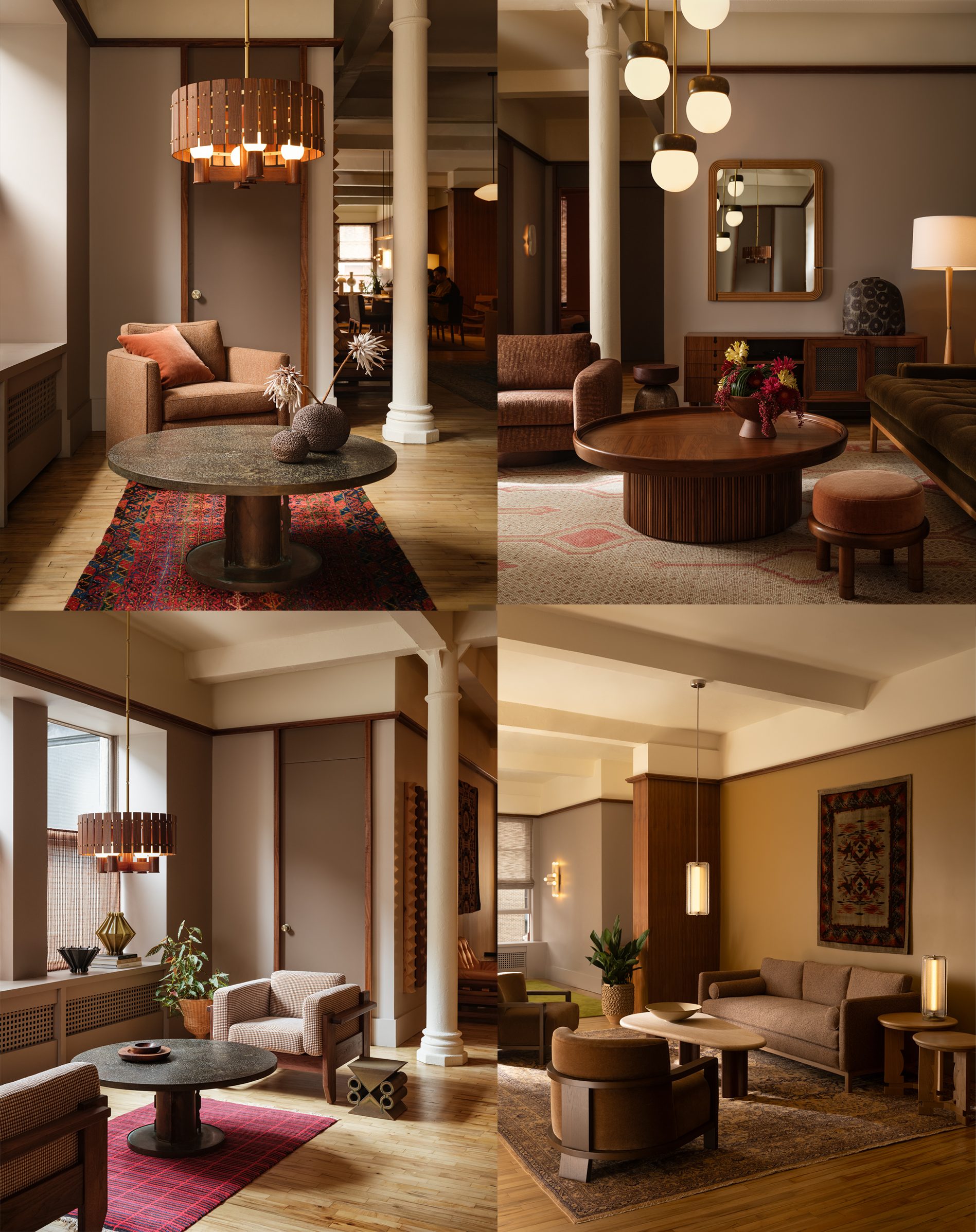
Rug & Kilim x Lawson Fenning
Interiors as Narrative, Memory, and Sequence
To design a hotel is, in many ways, to write a story—one that unfolds through movement rather than text. Lobbies introduce, corridors transition, rooms resolve.
Gaston Bachelard, in The Poetics of Space, reminds us that intimacy is not given; it is constructed. Materials, textures, and proportions all contribute to this construction. The rug, in this narrative, is both setting and subtext. It holds memory. It softens transition. It allows the guest to feel, rather than simply observe. At the highest level, the rug occupies a rare position—between disciplines. It is at once functional and collectible, architectural and artistic.
Luxury houses like Hermes have long understood this duality: that material excellence is not separate from cultural value. Similarly, the work of designers like Yves Saint Laurent demonstrates how art can be translated into form without losing its integrity. Ultimately, the role of rugs in boutique hospitality is both practical and atmospheric. They are responsible for managing acoustics, guiding movement, and supporting furniture layouts. At the same time, they contribute to the intangible qualities that define a guest’s experience—comfort, coherence, and a sense of place.
Rug & Kilim’s position within this field is shaped by a dual commitment: to the historical knowledge required to source and interpret significant textiles, and to the technical expertise necessary to adapt them for contemporary use. This combination allows us to work across project types, from singular statement pieces to full-scale installations, while maintaining a consistent standard of quality.
After more than forty years, Rug & Kilim has come to occupy a particular position within the design world as a reference point. Our collections—spanning artists such as Ivan da Silva Bruhns, Barbro Nilsson, Jean Lurcat and Jules Leleu—are not assembled for continuity.
Each piece is considered in relation to history, material, and use.
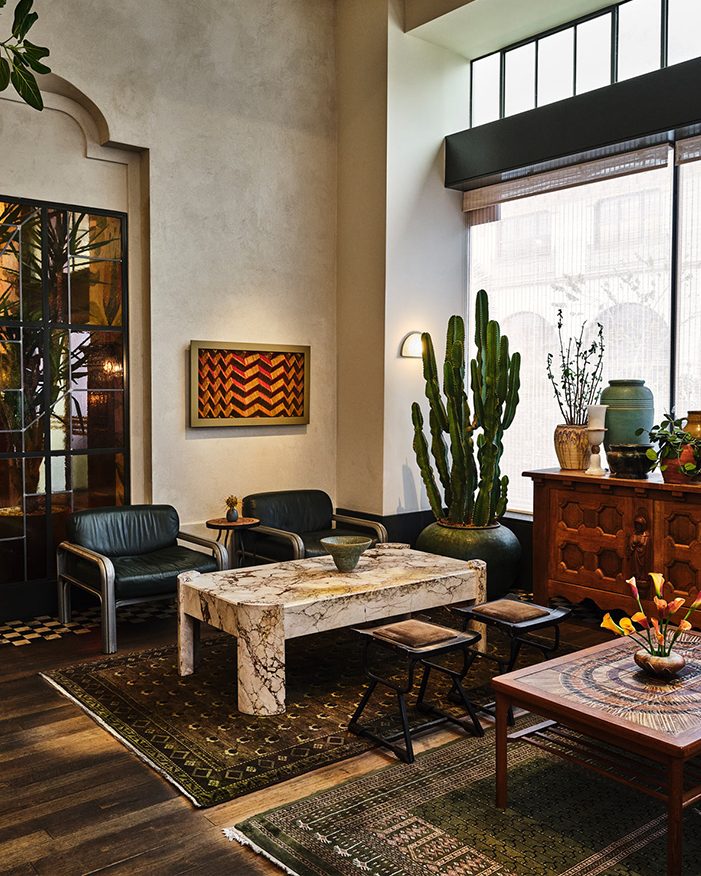
Rug & Kilim x Kelly Wearstler Interiors (Downtown L.A. Proper Hotel)
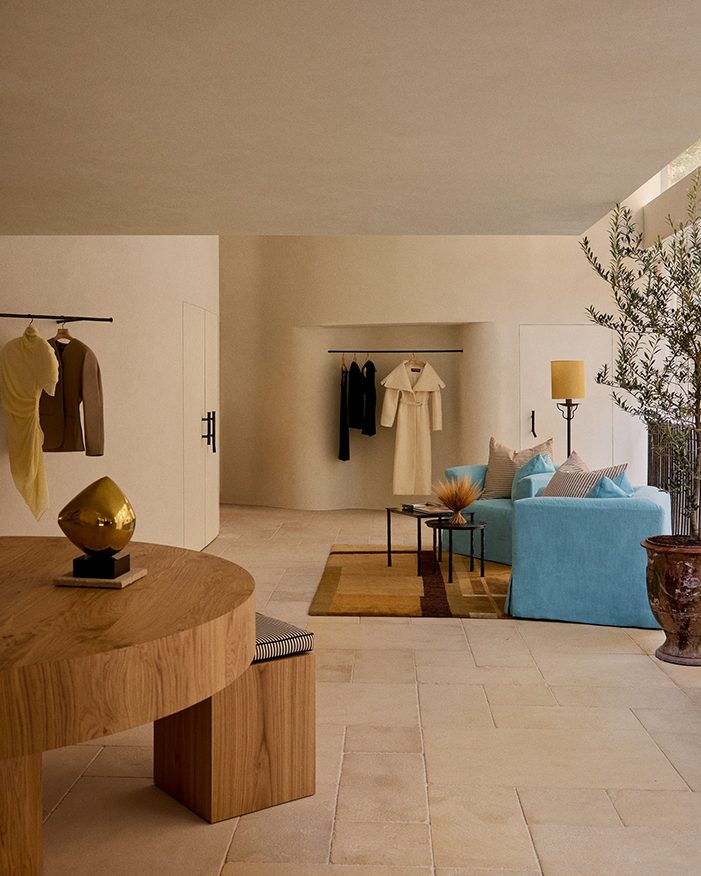
Rug & Kilim x JACQUEMUS
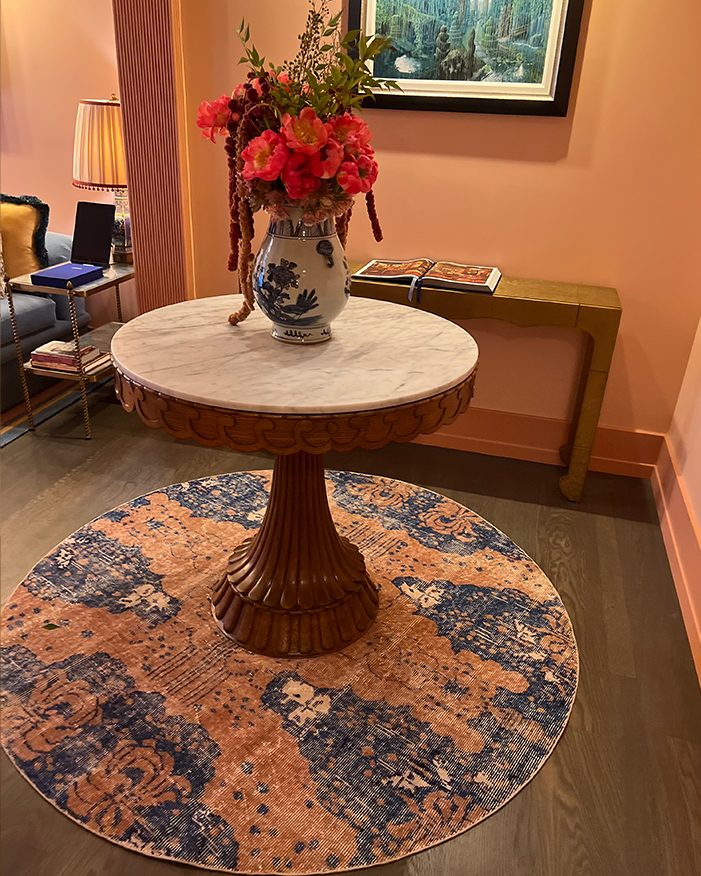
Rug & Kilim x Martin Brudnizki Design Studio (5th Ave. Hotel )
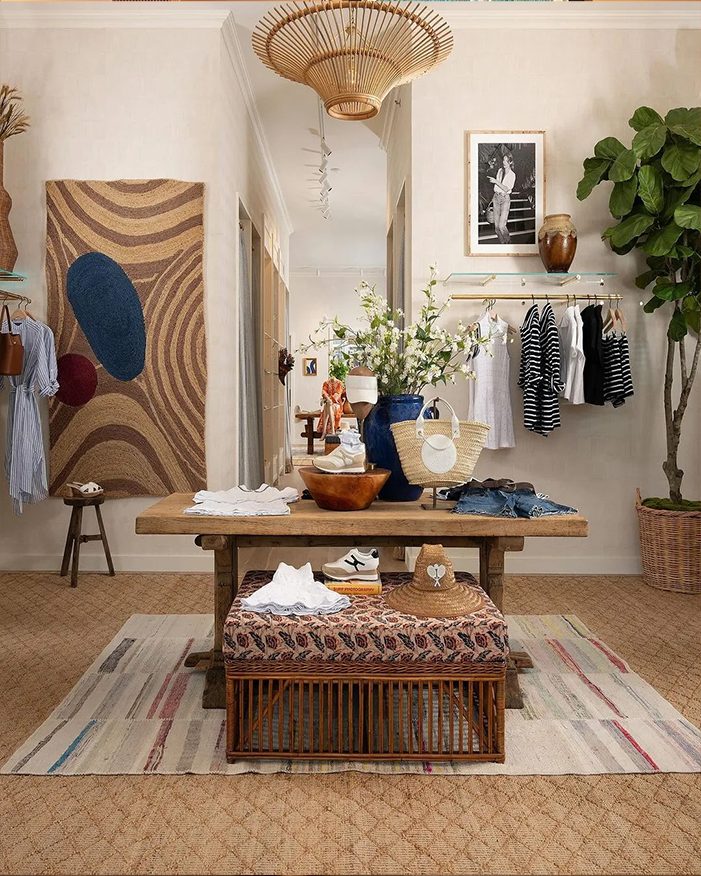
Rug & Kilim x Veronica Beard
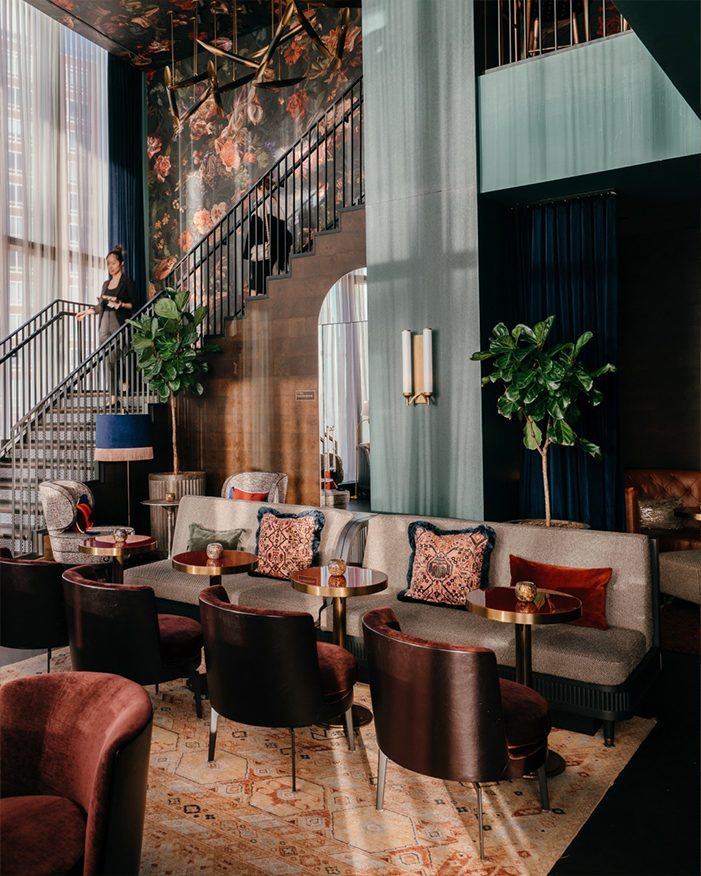
Rug & Kilim x Raffles (Boston)
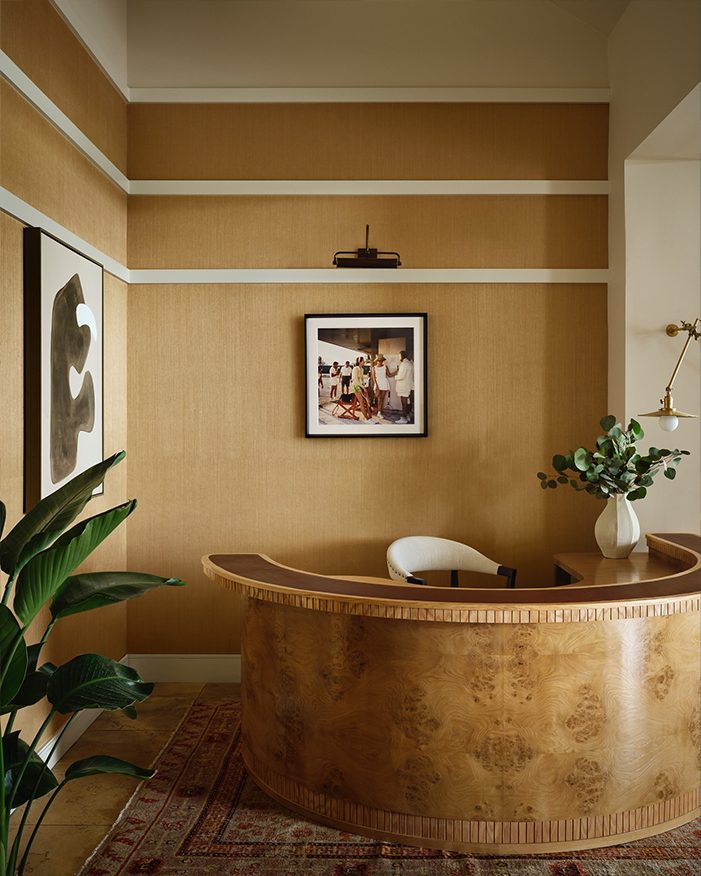
Rug & Kilim x Seagate Hotel Clubhouse
Luxury, at its highest level, is no longer a question of rarity alone. It is a question of resolution. The most successful boutique hotels—whether in New York City, Paris, Dubai, or Tokyo—are those in which every element feels considered, every transition intentional. Where nothing is excessive, yet nothing is missing. They are felt continuously, even when unseen.
And in the end, it is this quiet authority, this ability to unify architecture, interior, and experience that defines both the most exceptional interiors, and the role that Rug & Kilim continues to play within them.
In boutique hospitality, where differentiation is essential and repetition is avoided, this flexibility is a requirement.