
A Rug & Kilim’s Guide to Rug Patterns in Interior Design: A Study of Persian, European, Scandinavian, Art Deco and Modern Styles
March 27, 2026
Luxury Coastal Rugs: Styling High-End Interiors from the Hamptons to the French Riviera
April 10, 2026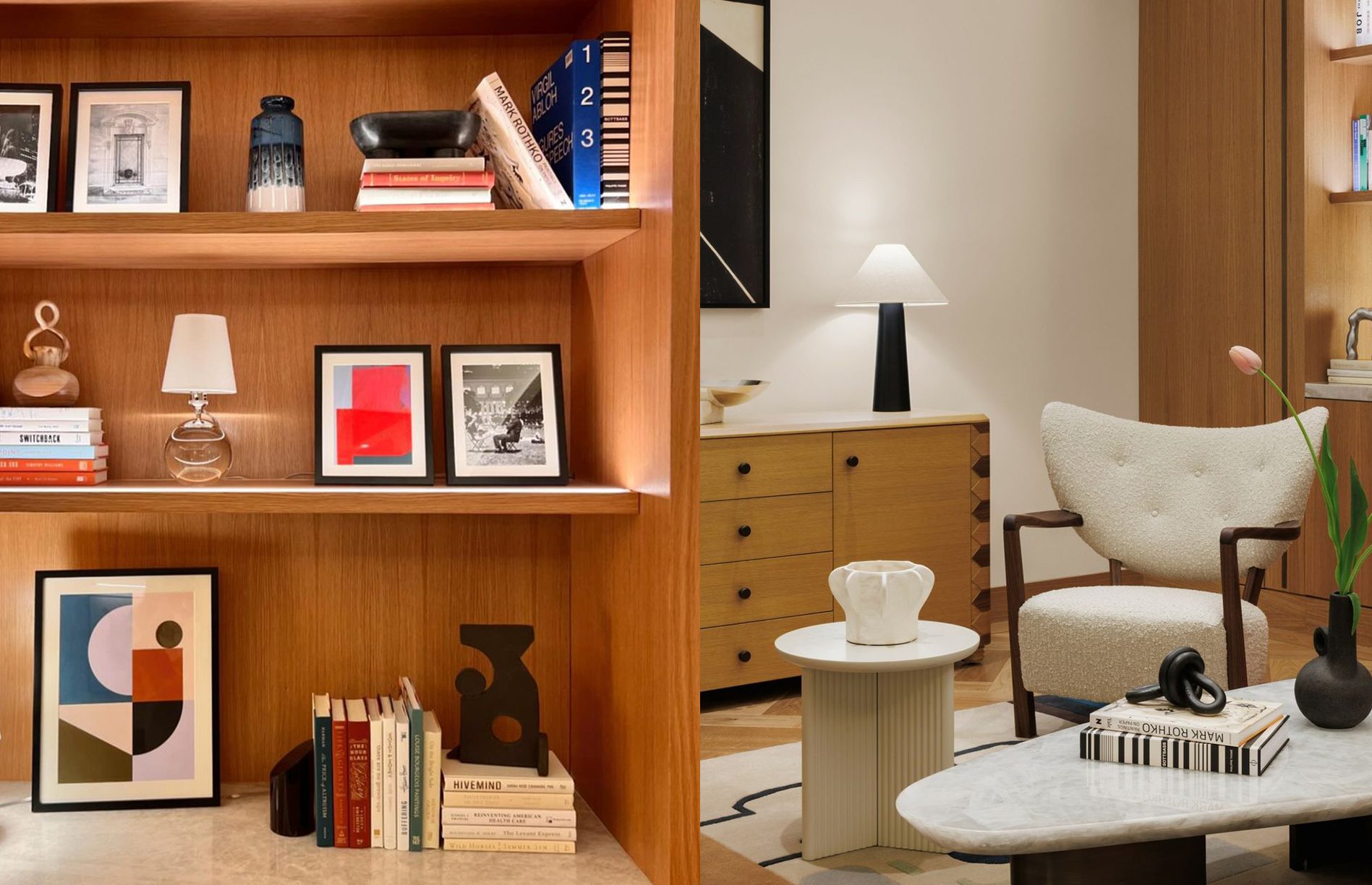
Rug & Kilim x Stonehill Taylor
There is a particular kind of interior; rare, deliberate, and intellectually composed, where a rug does not decorate, but makes it art in itself. A residence overlooking Central Park, where glass and steel are softened not by excess, but by a singular woven field. A discreet apartment in Mayfair, where a tapestry holds the wall with the authority of painting. A villa in Cap Ferrat, where modernist furniture and mid-century textiles coexist with the quiet confidence of shared lineage.
These are styled interiors. And at the center of many such spaces lies a quiet revolution that began in the mid-20th century, when textile artists stepped out of the decorative margins and into the intellectual core of modernism.
Jean Lurçat and the Reclaiming of Tapestry as Art
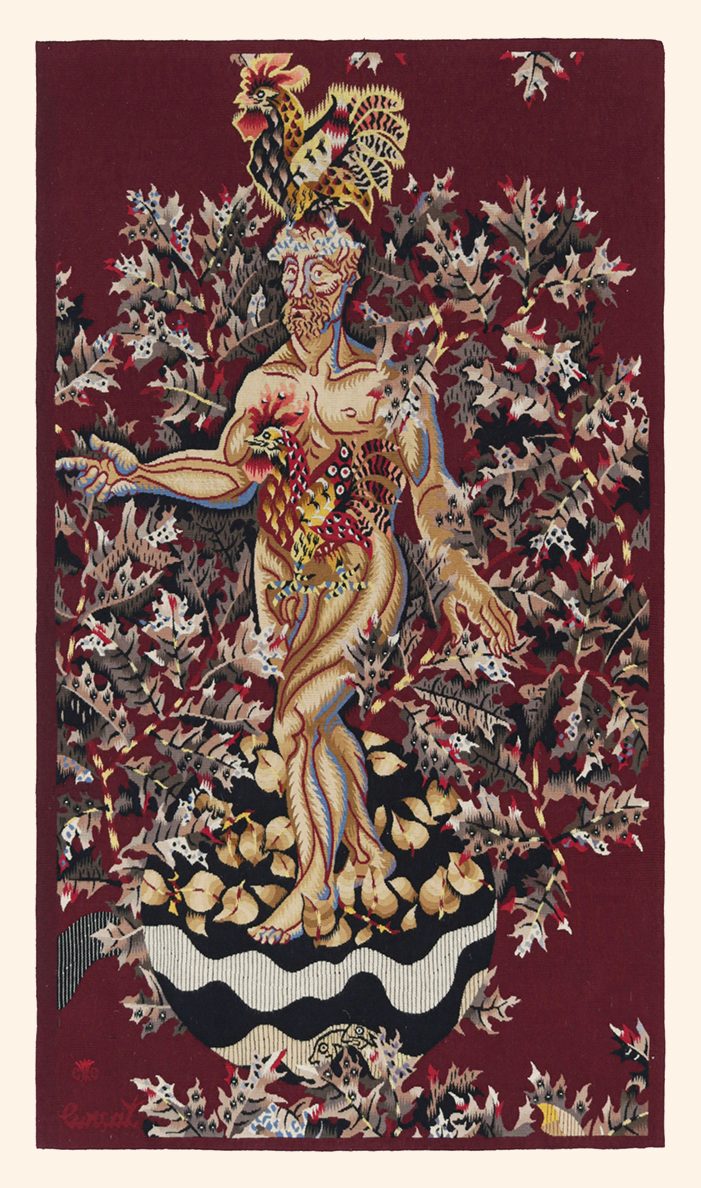
If one were to locate the moment tapestry re-entered serious artistic discourse, it would begin with Jean Lurçat.
Working in post-war France, Lurçat rejected the overly painterly illusionism that had dominated earlier European tapestry. Instead, he returned to clarity, bold fields of color, symbolic imagery, and a graphic language that aligned more closely with modern painting than historical decoration.
His work exists in direct dialogue with artists like Fernand Léger, where form is simplified but never diminished. The tapestry becomes not a reproduction of painting, but its equal, operating through material, scale, and presence.
Today, Lurçat’s works sit comfortably in institutions such as the Musée d’Art Moderne de Paris, but their true power is perhaps best understood in interiors—where they function as walls with intellect. Placed in a contemporary setting, a Lurçat tapestry does something few objects can: it absorbs architecture and returns it with meaning.
Swedish Master Barbro Nilsson and the Ethics of Pattern
Parallel to France, Scandinavia developed its own rigorous textile language; less symbolic, more structural.
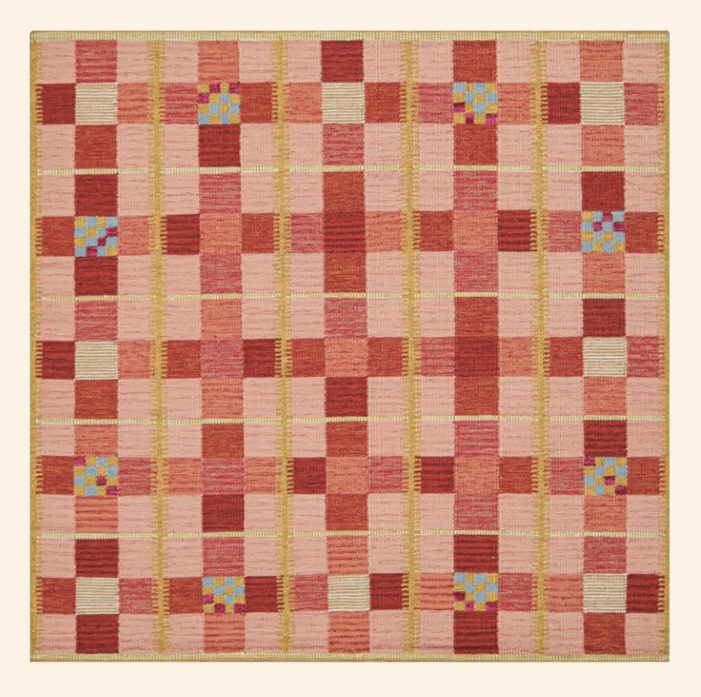
At the forefront was Barbro Nilsson, whose work at Märta Måås-Fjetterström’s atelier redefined what pattern could achieve within modern interiors. Her rugs are not narrative; they are systems carefully calibrated compositions of line, proportion, and repetition.
This approach aligns seamlessly with the architectural philosophies of Alvar Aalto and Arne Jacobsen, where every element serves a purpose, and beauty emerges from precision rather than ornament. One might even draw a parallel to the restrained abstractions of Mark Rothko; fields of color that demand stillness rather than attention.
In interiors across Stockholm and beyond, they are the visual equivalent of silence; intentional, measured, and essential.
French Deco to Modern Transition: Ivan da Silva Bruhns and the Geometry of Power
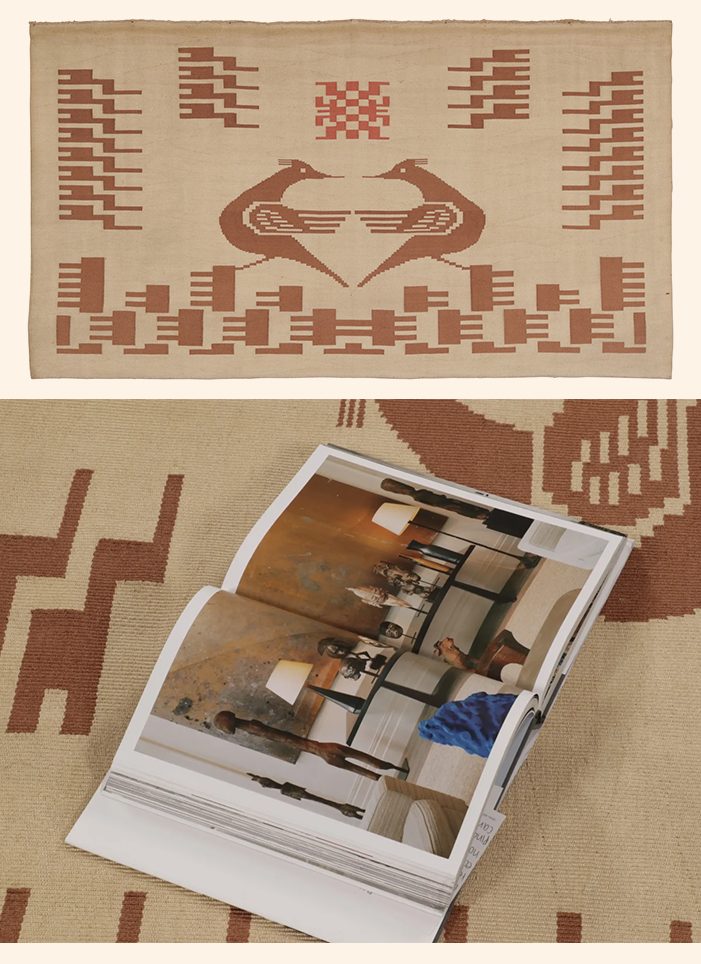
Between the ornamental excess of early 20th-century design and the restraint of modernism lies a critical bridge; one built by figures like Ivan da Silva Bruhns. His work distilled Art Deco’s fascination with geometry into something more architectural, more enduring. Patterns became sharper, compositions more deliberate—anticipating the spatial logic of modernist interiors.
This evolution finds its architectural counterpart in works like the Villa Savoye by Le Corbusier, where structure and proportion govern experience.
Bruhns’ rugs belong naturally in such environments. They articulate spaces. In today’s most refined interiors, particularly in neighborhoods like Upper East Side, these works act as both anchor and argument: proof that geometry, when disciplined, carries its own form of luxury.
The Belgian Synthesis: Edmond Dubrunfaut and Narrative Modernism
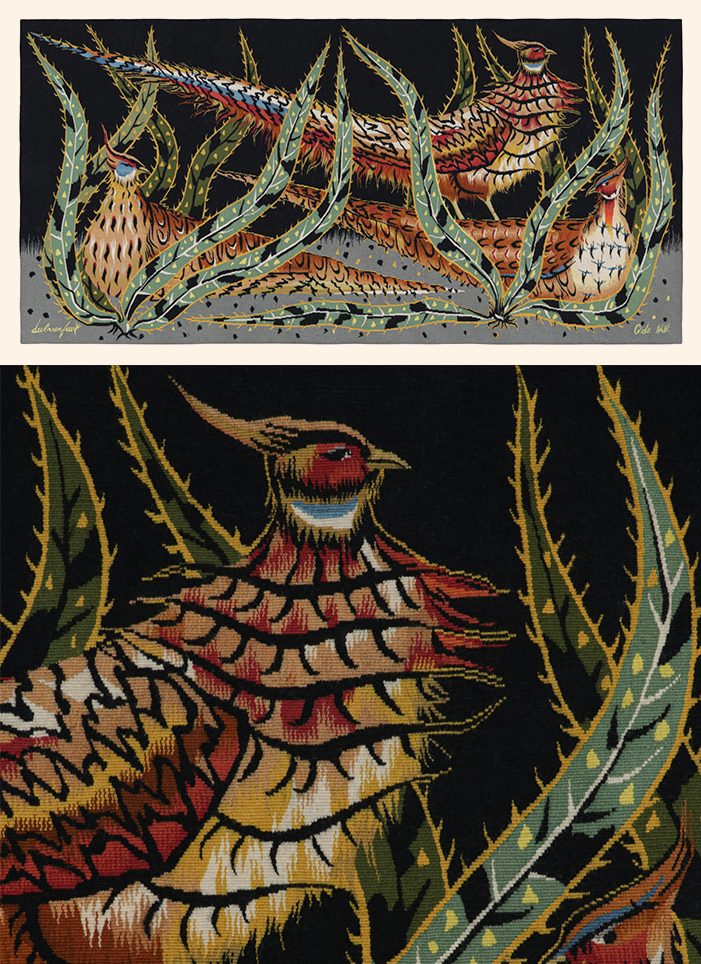
If Lurçat restored tapestry’s authority and Scandinavia refined its structure, artists like Edmond Dubrunfaut expanded its narrative potential.
Dubrunfaut’s work sits at a compelling intersection where figuration, abstraction, and social commentary converge. His tapestries are not quiet; they are declarative, often engaging with themes of labor, humanity, and collective memory. This places him in conversation with broader modernist movements, including the expressive distortions of Pablo Picasso and the political undertones of post-war European art.
In interiors, these works demand placement with intention. They are best suited to spaces that can accommodate narrative; double-height living rooms, gallery-like corridors, or cultural institutions where the boundary between art and design dissolves.
The Interior as Curated Dialogue
What unites these artists is not style, but position. Each redefined textiles as a primary medium within modernism, capable of engaging architecture, painting, and design on equal terms.
The most compelling interiors today understand this.
A Nilsson rug beneath a Hans Wegner chair.
A Lurçat tapestry facing a minimalist concrete wall.
A Bruhns composition anchoring a room of glass and light.
They are conversations across disciplines.
In global design capitals of New York City, Paris, Milan, this approach has become the quiet standard among leading designers: interiors that read less like rooms, and more like curated environments.
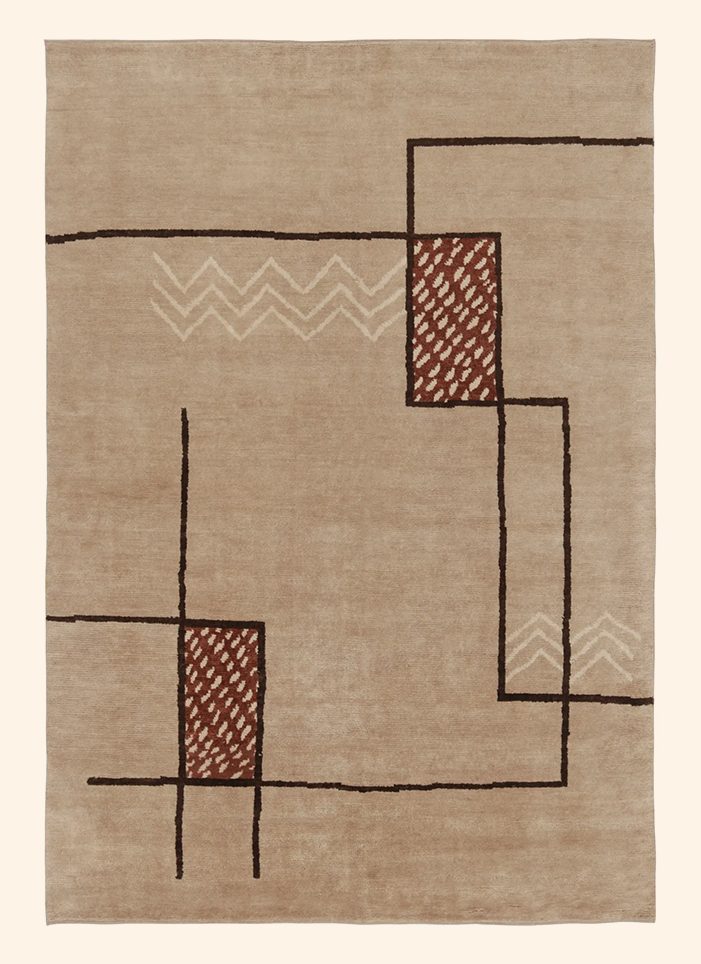
A particular influence from Da Silva Bruhns-style rectilinear designs. Rug & Kilim’s French Art Deco Rug in Beige-Brown with Geometric Patterns >>
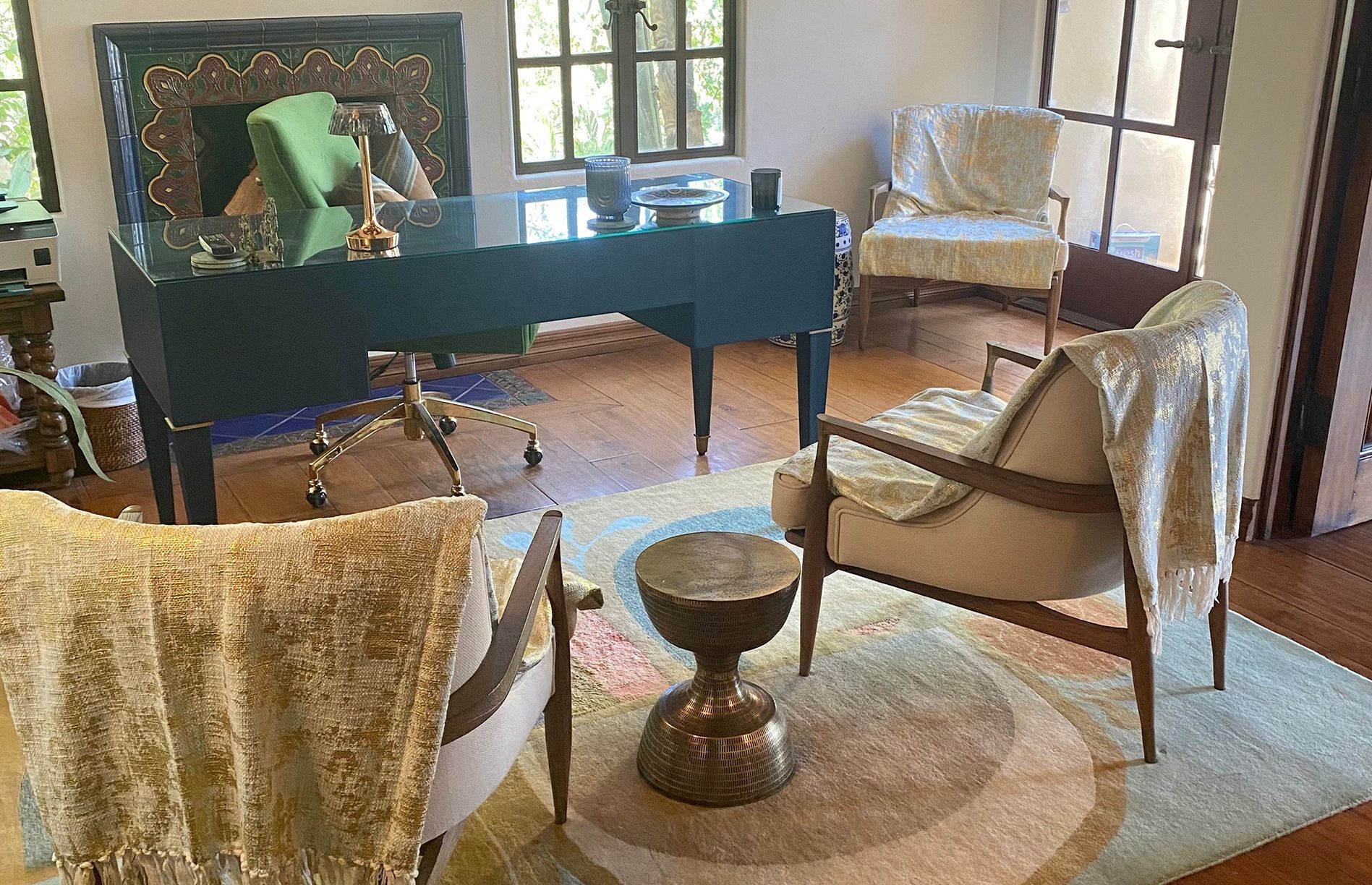
At Rug & Kilim, these lineages are treated as active frameworks for design.
Our collection spanning mid-century masters, European Deco innovators, and Scandinavian modernists; positions textiles within the same intellectual field as painting and architecture. Artists such as Lurçat, Nilsson, Bruhns, and Dubrunfaut are understood not as decorative contributors, but as authors of spatial language.
This is a critical distinction.
Because in the highest tier of design, the question is no longer what fills a room.
It is what defines it.
Mid-century textile artists did not simply create objects but redefined a medium. They positioned rugs and tapestries not beneath furniture, but alongside architecture.
Not behind art, but as art.
And in the most discerning interiors today, from the quiet grandeur of Belgravia to the glass towers of Hudson Yards; their ideas continue to shape how space is understood.
Not loudly.
But permanently.