

How Mid-Century Textile Artists Rewrote the Language of Art and Space Globally: A Lineage of Design Today
April 2, 2026
The Future of High-End Interior Design in the Age of Global Tariffs: Rugs, Trade Routes, and Regulation
April 13, 2026
Rug & Kilim x Allula Design Group
Hamptons to Riviera Interiors, High-End Styling, Art, Architecture, and the Philosophy of Coastal Living
The Problem with “Effortless”
The most convincing coastal interiors in the world share a peculiar quality: they appear inevitable.
Rooms in the Hamptons, along the French Riviera, in Malibu or Mallorca seem to arrive fully formed; light moving freely, materials perfectly resolved, nothing excessive, nothing missing. The effect is so seamless that it risks being misunderstood as ease.
It is not.
Coastal design, at its highest level, is one of the most demanding exercises in interior architecture. It allows for no distraction, no indulgence, and very little forgiveness. When a room is reduced to light, proportion, and material, every decision becomes visible.
And within this exacting framework, the rug performs one of the most complex roles: it must be present enough to ground the room, yet restrained enough to disappear into it.
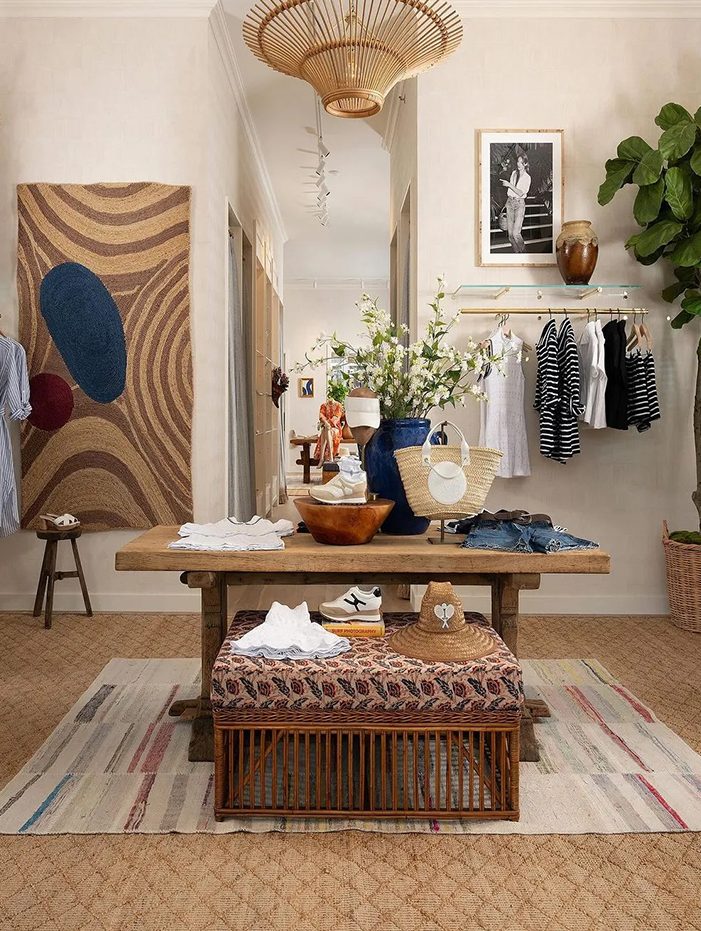
Rug & Kilim x Veronica Beard (Hamptons)
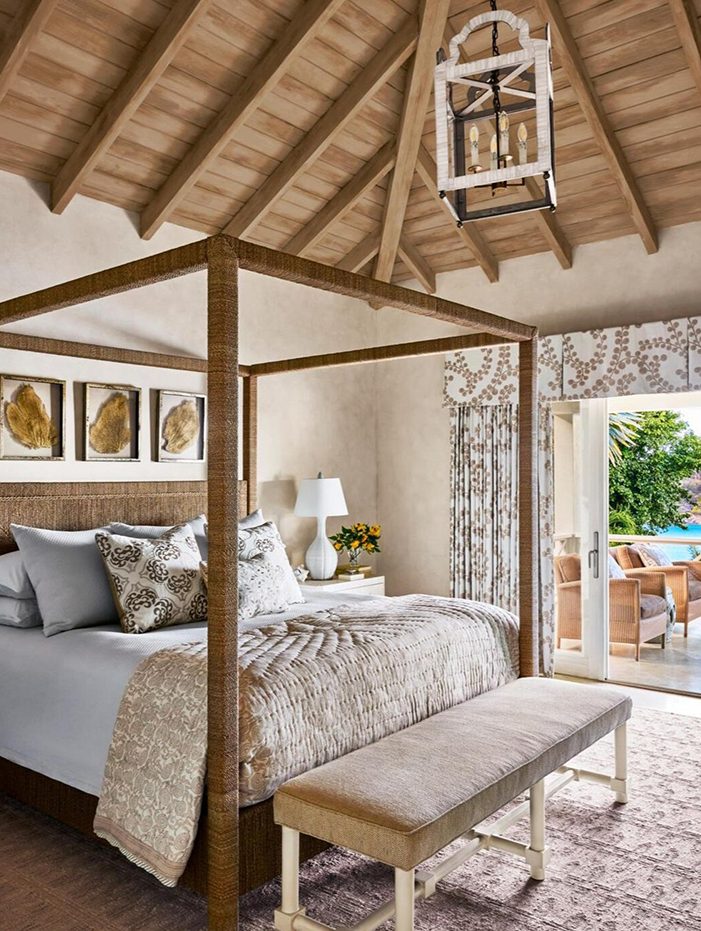
Rug & Kilim x Phoebe Howard Interiors (as featured in Coastal Living Magazine)
R&K Coastal — A House Defined by Restraint
R&K Coastal presents rugs characterized by lightened palettes, natural fibers, and restrained patterning. The collection is informed by coastal environments and emphasizes balance, materiality, and ease within interior settings.
But to describe it this way is only to describe its surface.
At its core, the collection begins from a quieter premise: that restraint, when executed with precision, is a form of luxury.
Coastal design, in this sense, is not a style but an atmosphere. It begins with light—the peculiar clarity of coastal air that softens color, dissolves contrast, and renders materials in subtler registers. The line where sea meets sky remains one of the most resolved compositions in nature: two planes, balanced and continuous.
The R&K Coastal Collection draws from this logic.
Sand. Limestone. Pale flax. Driftwood grey. Washed indigo.
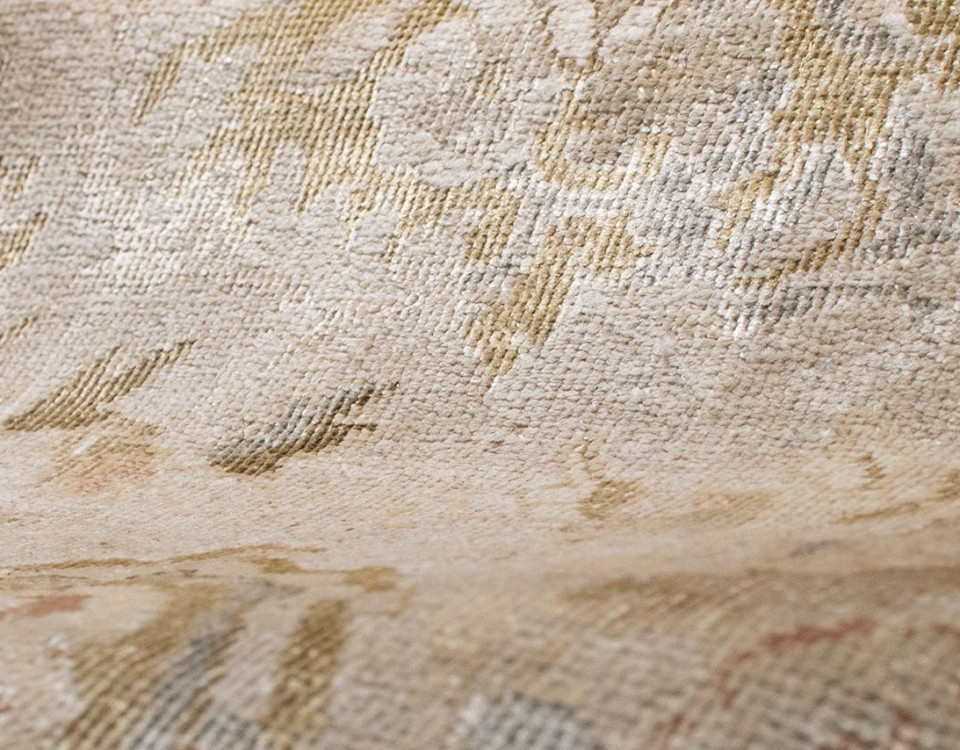
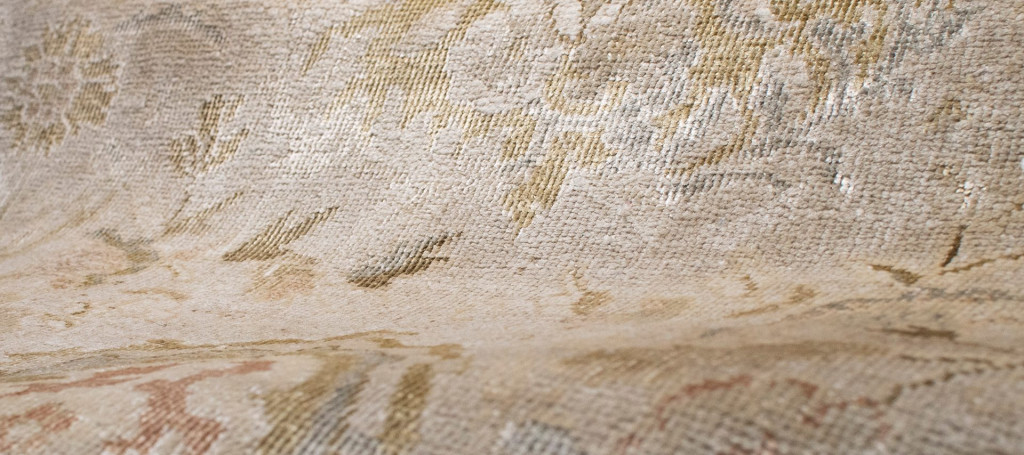
Natural fibers, wool, jute, and cotton introduce surfaces that register light rather than reflect it.
The History of Coastal Design — From Necessity to Ideology
Before coastal design became an aesthetic, it was a condition of living.
In early New England homes, from Nantucket to Cape Cod, interiors were shaped by climate and practicality. Floors were covered for warmth, walls left unadorned, materials chosen for durability rather than decoration. Similarly, along the Mediterranean, from the Amalfi Coast to the villages of southern France; stone, limewash, and woven textiles formed interiors that responded to heat, light, and salt air.
What emerged across these geographies was not a style, but a shared instinct: to remove what was unnecessary.
Over time, this restraint evolved into a design philosophy, one that contemporary architects and designers continue to refine. Coastal interiors today are not replicas of the past, but edited interpretations of necessity, distilled into clarity.
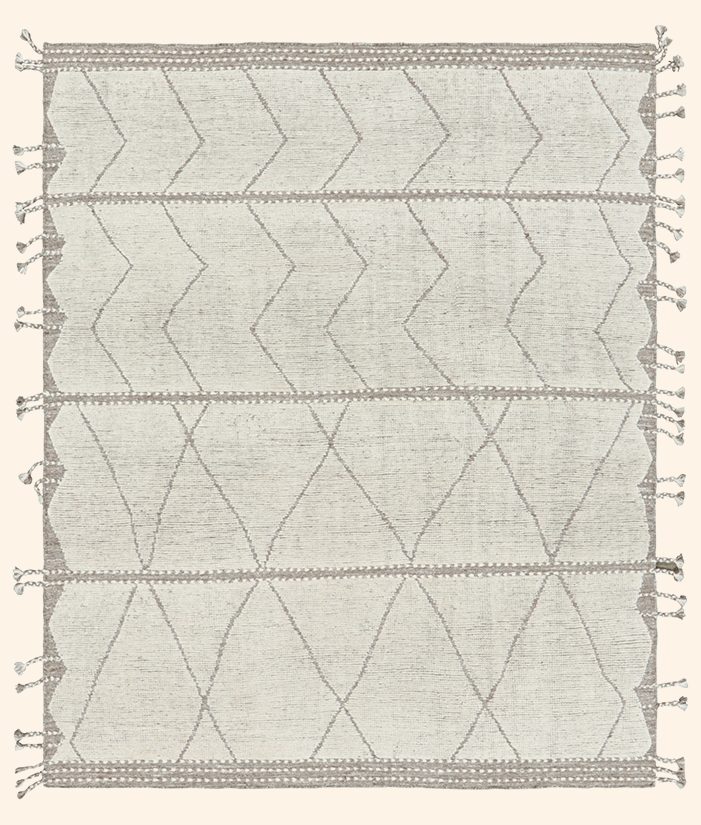
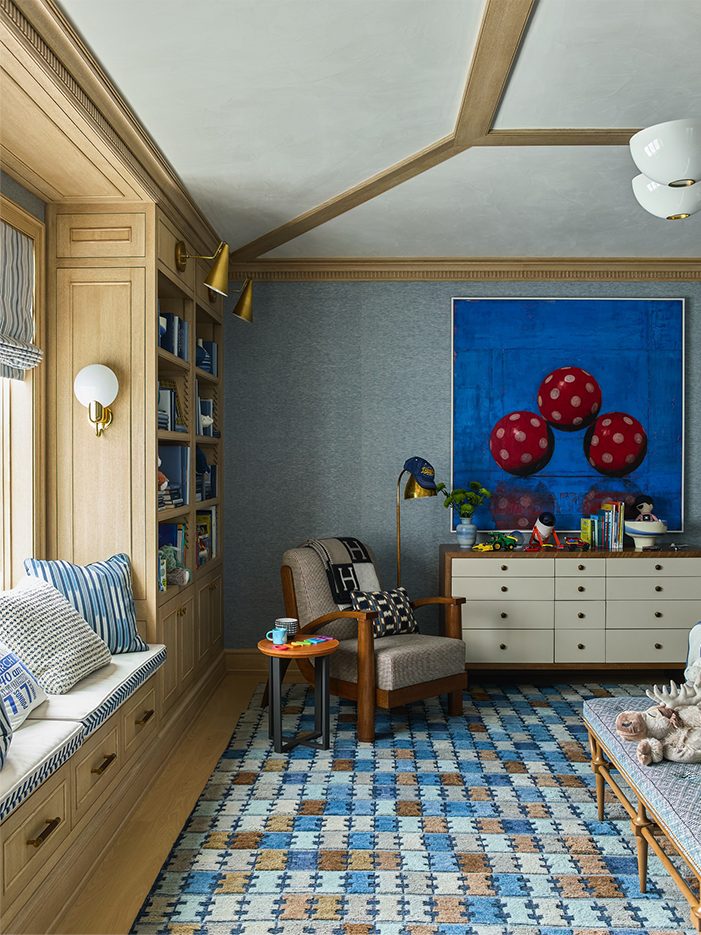
Rug & Kilim x Andrew Howard Interiors (Kips Bay Palm Beach)
Why Coastal Interiors Feel “Perfect” (and Why They Rarely Are)
There is a reason coastal interiors are so widely admired: they offer the illusion of resolution.
Everything appears balanced. Colors align effortlessly. Materials feel natural. Light moves without obstruction. It is, in many ways, the closest design comes to perfection.
And yet, this perfection is constructed.
Behind every seemingly effortless coastal room is a series of precise decisions:
which tones to soften
which textures to introduce
which elements to remove
Designers often note, quietly, that coastal interiors are among the most difficult to execute. There is nowhere to hide inconsistency. A rug slightly too dark, a texture too coarse, a scale slightly misjudged—each becomes immediately apparent.
Or, as one might put it with some restraint: coastal design is unforgiving, though it rarely appears so.
The Rug as Atmosphere, Not Object
Designers and connoisseurs often speak of coastal rugs as horizon lines within a room. In most interiors, rugs are chosen for pattern or visual impact. In coastal spaces, this approach fails almost immediately.
Here, the rug must operate differently. It must function as atmosphere.
Light-toned wool, undyed fibers, softened greys, pale blues; these are not aesthetic choices alone. They are responses to environment. Coastal light is diffuse, reflective, and constantly shifting. A rug that reflects too much will glare; one that contrasts too sharply will disrupt.
The correct rug absorbs light. It settles the room. It creates a surface that feels continuous with the architecture rather than applied to it.
Designers working in Malibu, Palm Beach, or Cap d’Antibes often describe this as “quieting the floor.”
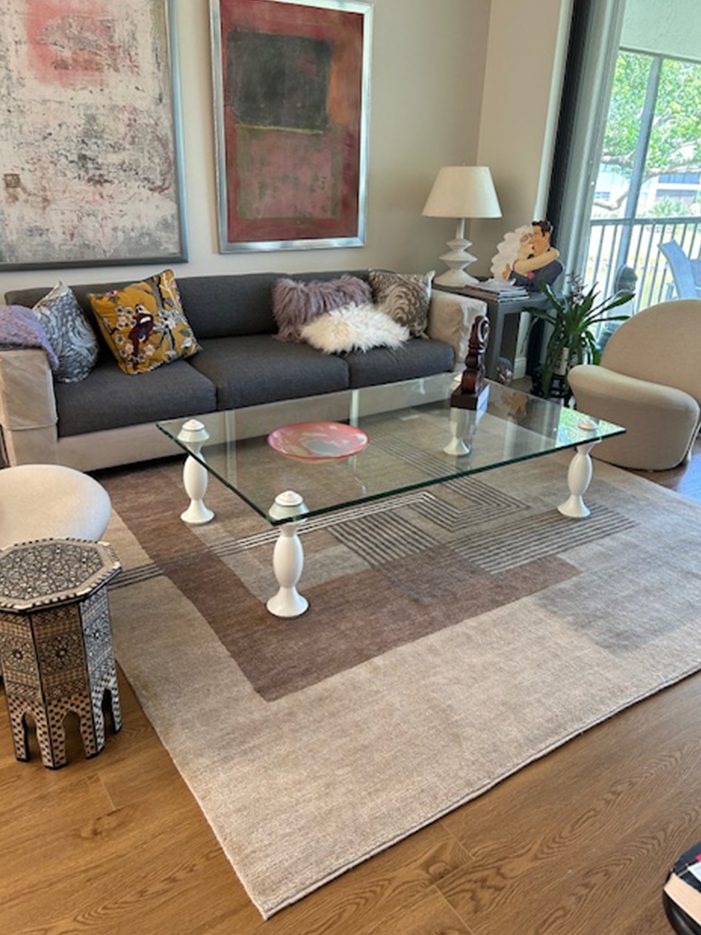
Rug & Kilim’s French Deco at Boynton Beach (by Karen Haber)
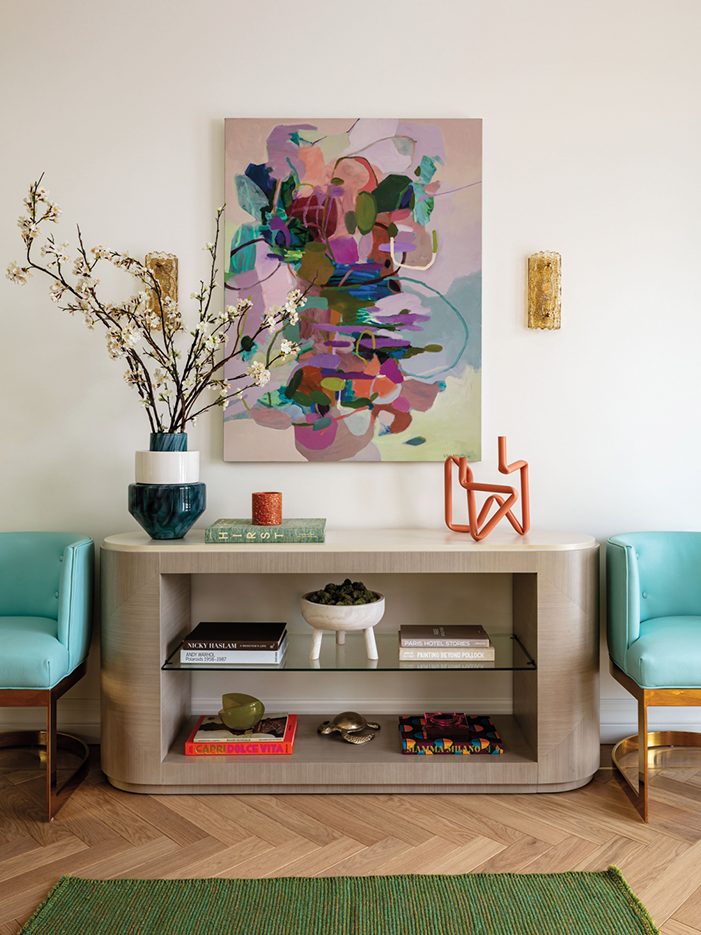
Rug & Kilim x Helen Bergin Interiors
Styling Coastal Interiors
The styling of coastal interiors is an exercise in control.
1. The Rule of Reduction
Every element must justify its presence. Excess is not merely discouraged but immediately visible.
2. The Balance of Materials
Linen against plaster
Wood against stone
Wool against light
The rug becomes the mediator. introducing texture without weight.
3. The Scale Question
Coastal rugs are rarely small. They extend beyond furniture groupings, unifying space rather than fragmenting it. In open-plan homes from the Hamptons to Sydney Harbour; this becomes essential.
4. The Art Pairing
Coastal interiors resist overt imagery. Instead, they favor:
atmospheric abstraction
tonal compositions
works that explore light rather than subject
The paintings of J. M. W. Turner, the quiet fields of Agnes Martin, or the meditative color of Mark Rothko find natural alignment here.
5. The Furniture Dialogue
Low, grounded seating. Materials that age. Pieces that do not compete.
Interiors influenced by Axel Vervoordt or the architectural clarity of John Pawson often provide the closest reference.
Coastal Across Disciplines — A Shared Language
Coastal design is not confined to interiors.
In fashion, it appears in the quiet luxury of Loro Piana or Brunello Cucinelli; linen, cashmere, tonal dressing, garments that move with the body rather than structure it.
In literature, coastal environments often serve as spaces of introspection. In To the Lighthouse by Virginia Woolf, the coast is not decorative; it is psychological, shaping perception and time. The Edge of the Sea by Rachel Carson describes the shoreline as a place shaped by patience and exposure—a description equally applicable to the evolution of coastal materials.
In architecture, it demands restraint. The work of Tadao Ando demonstrates how light and material can define space without excess.
Across all disciplines, the principle remains consistent: clarity requires discipline.
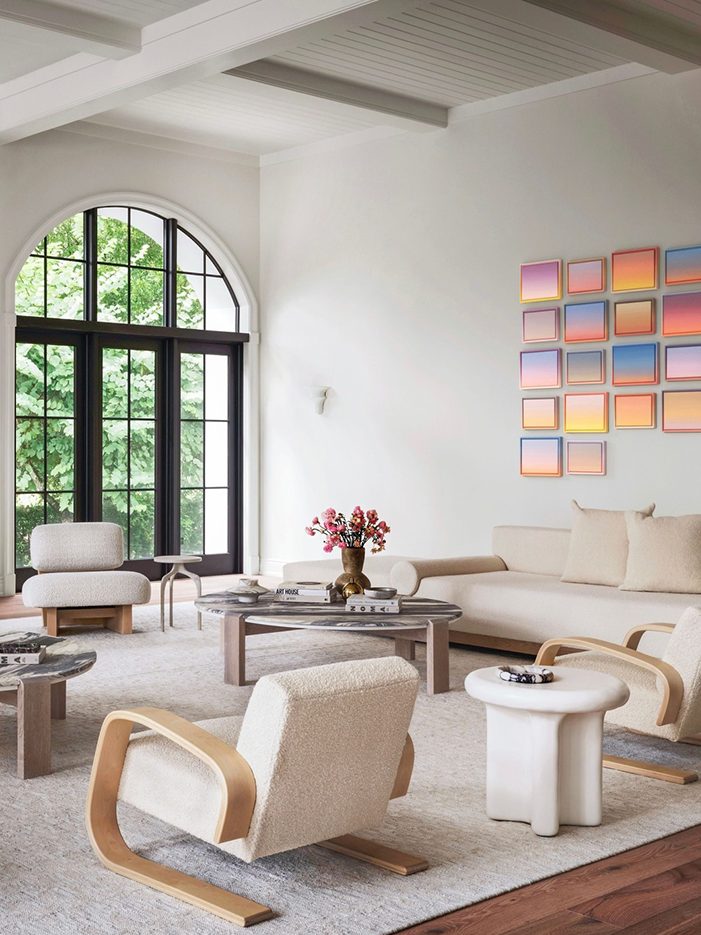
Rug & Kilim x Tamara Magel Design, Palm Beach Gardens, Florida
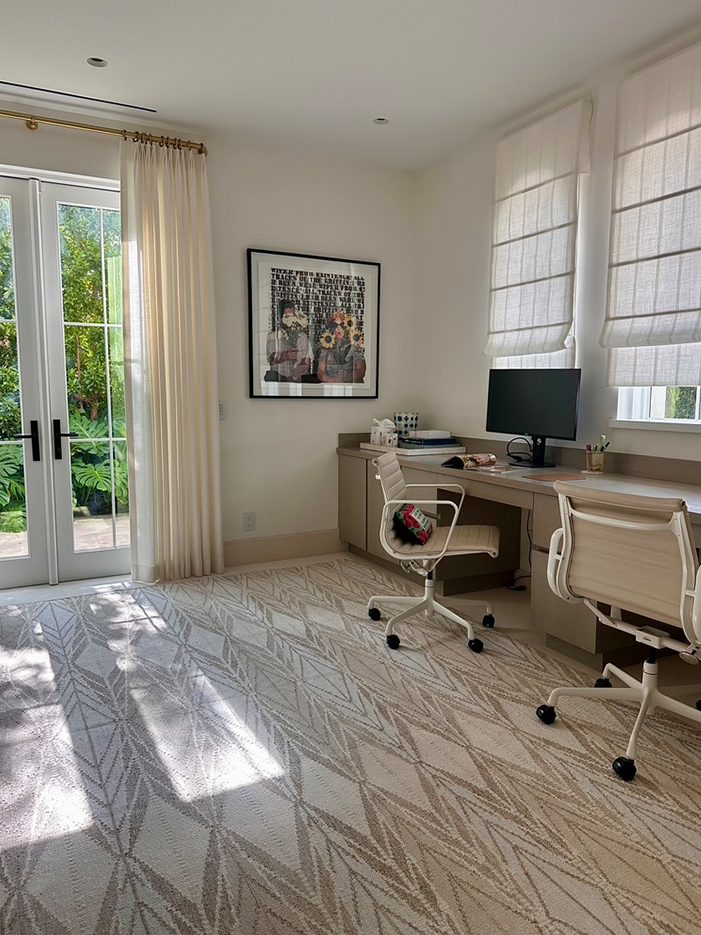
Rug & Kilim x McCann Design Group, Palm Beach
The Global Coastal Interior
Today’s coastal interiors are no longer bound by geography.
A penthouse in Manhattan may draw from the Hamptons. A villa in Dubai may reference the Mediterranean. A home in Hong Kong may interpret Malibu modernism.
From the French Riviera to Ibiza, from Turks & Caicos to Byron Bay, a shared aesthetic has emerged; one defined not by location, but by a way of seeing.
It is global, but never generic.
There is a quiet paradox within coastal design.
It is often described as relaxed, yet it requires extraordinary discipline. It is seen as natural, yet it is highly constructed. It appears effortless, yet it is anything but.
One might say; only half ironically; that coastal interiors are among the most carefully controlled environments designed to feel completely unconsidered.
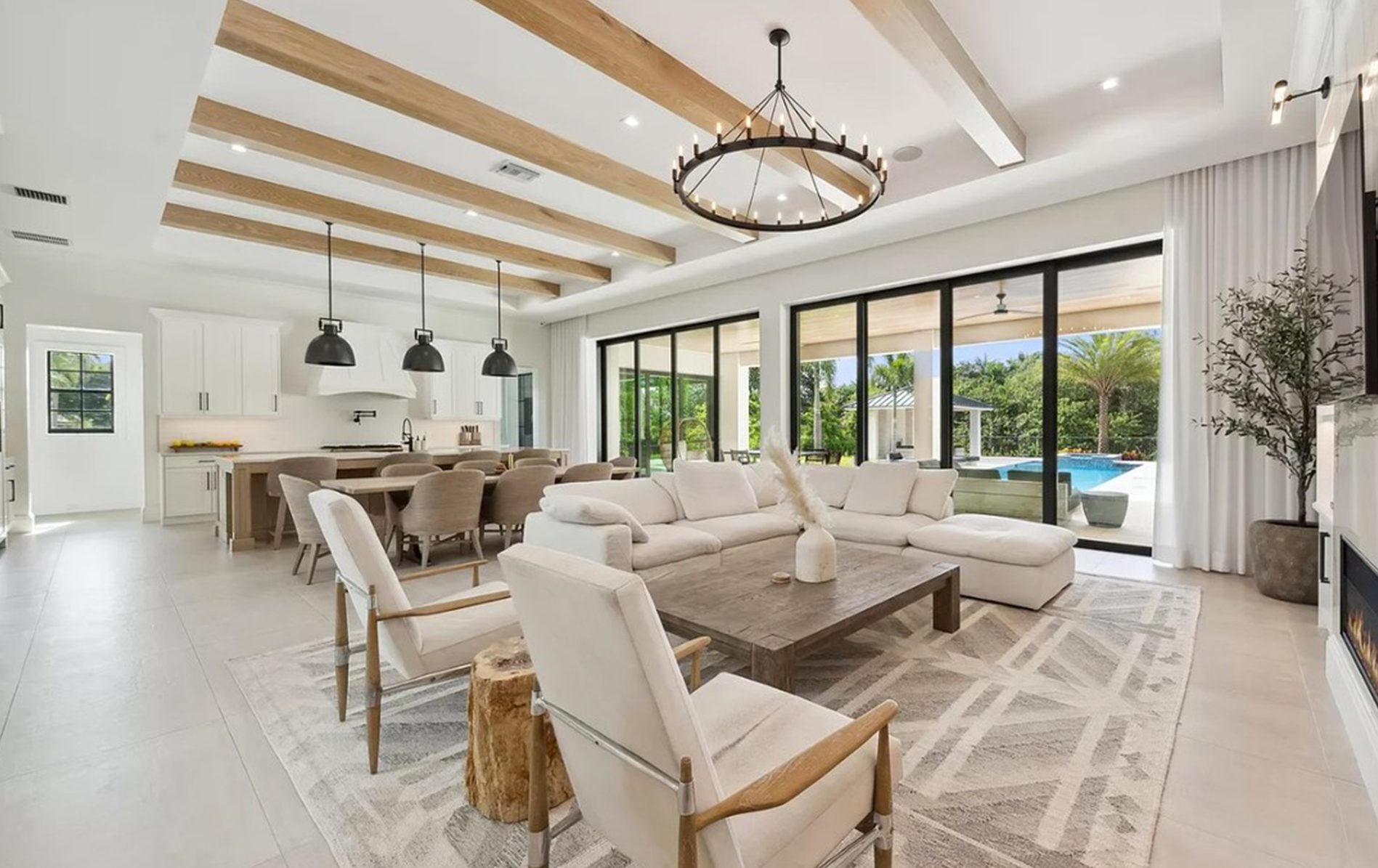
Rug & Kilim’s Scandinavian, Delray Beach, Florida
Why Coastal Rugs Matter
In these interiors, the rug is not an afterthought.
It establishes proportion before furniture; tone before color and atmosphere before decoration. It absorbs the imperfections that light inevitably reveals. It allows the room to feel resolved without appearing designed.
The finest coastal interiors are not memorable for what they contain. They are remembered for what they allow: light to move, materials to breathe, and space to remain open.
The rug, in this context, does not define the room. It makes the room possible.
And like the best elements of design, it succeeds precisely because it does not insist on being seen.
The shore has always understood what great interiors eventually learn. Calm is a form of luxury.