
The Persian Afshar Rug as Art, Tribal Artifact, and Archive
June 25, 2025
A Century of Rugs from Art Nouveau to Art Deco: Geometry, Ornament, and Ideology
July 7, 2025
For Connoisseurs, Curators, and Collectors of Textile Legacy
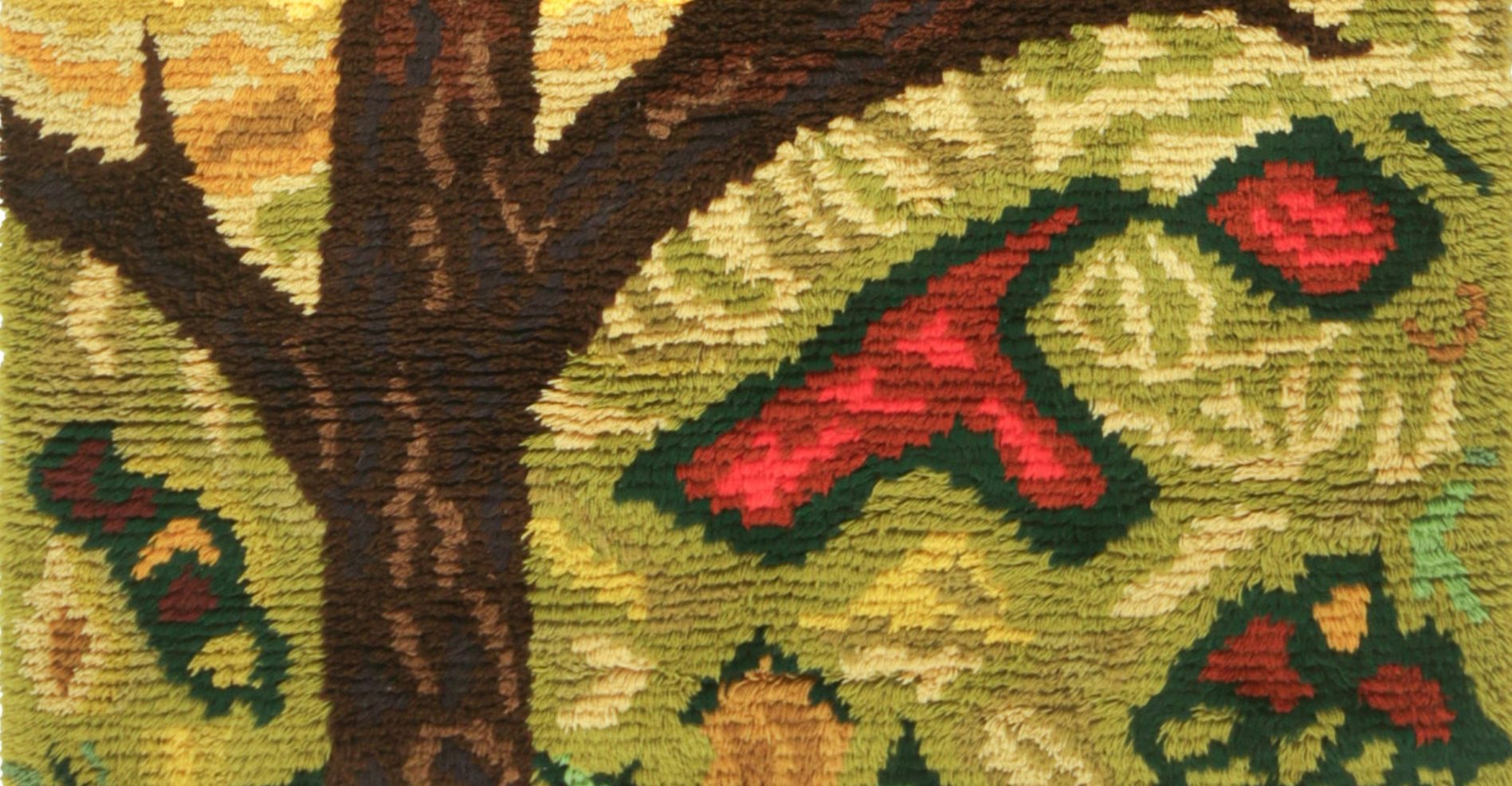
There are moments in design history when an object transcends its origins and becomes elemental — a distilled form of cultural continuity, tactile intelligence, and silent authorship. The Swedish Rya rug is one such object. At once sculptural and symbolic, utilitarian and conceptual, it occupies a singular position at the intersection of textile art, Nordic heritage, and the 20th-century design canon.
Rya rugs — with their distinctive long pile, deep textural vocabulary, and chromatic abstraction — are no longer merely archival textiles. They are now being recontextualized by leading curators, collectors, and architects as fine art pieces, ceremonial heirlooms, and textural interventions in high-design interiors.
Their resurgence is neither nostalgic nor decorative.
It is curatorial — architectural — and richly earned. From ceremonial cloaks in medieval Scandinavia to the wool-woven canvases of the mid-century avant-garde, the Rya has long threaded itself through the collective consciousness of the Nordic world. As Ryas command increasing attention in the curatorial collections of the Nordiska Museet, the Victoria and Albert Museum, and the Cooper Hewitt Smithsonian, the global design community is re-evaluating their position—not as regional relics, but as monuments of textile modernism, worthy of serious acquisition and scholarly reverence.
At Rug & Kilim, we have assembled a comprehensive and rigorously curated Scandinavian collection, backed by decades of provenance research, institutional collaboration, innovations in textures, scales and colors, and preservation expertise. This editorial seeks to illuminate the Rya’s enduring cultural power, aesthetic versatility, and its newly elevated role in the canon of collectible 20th-century design.
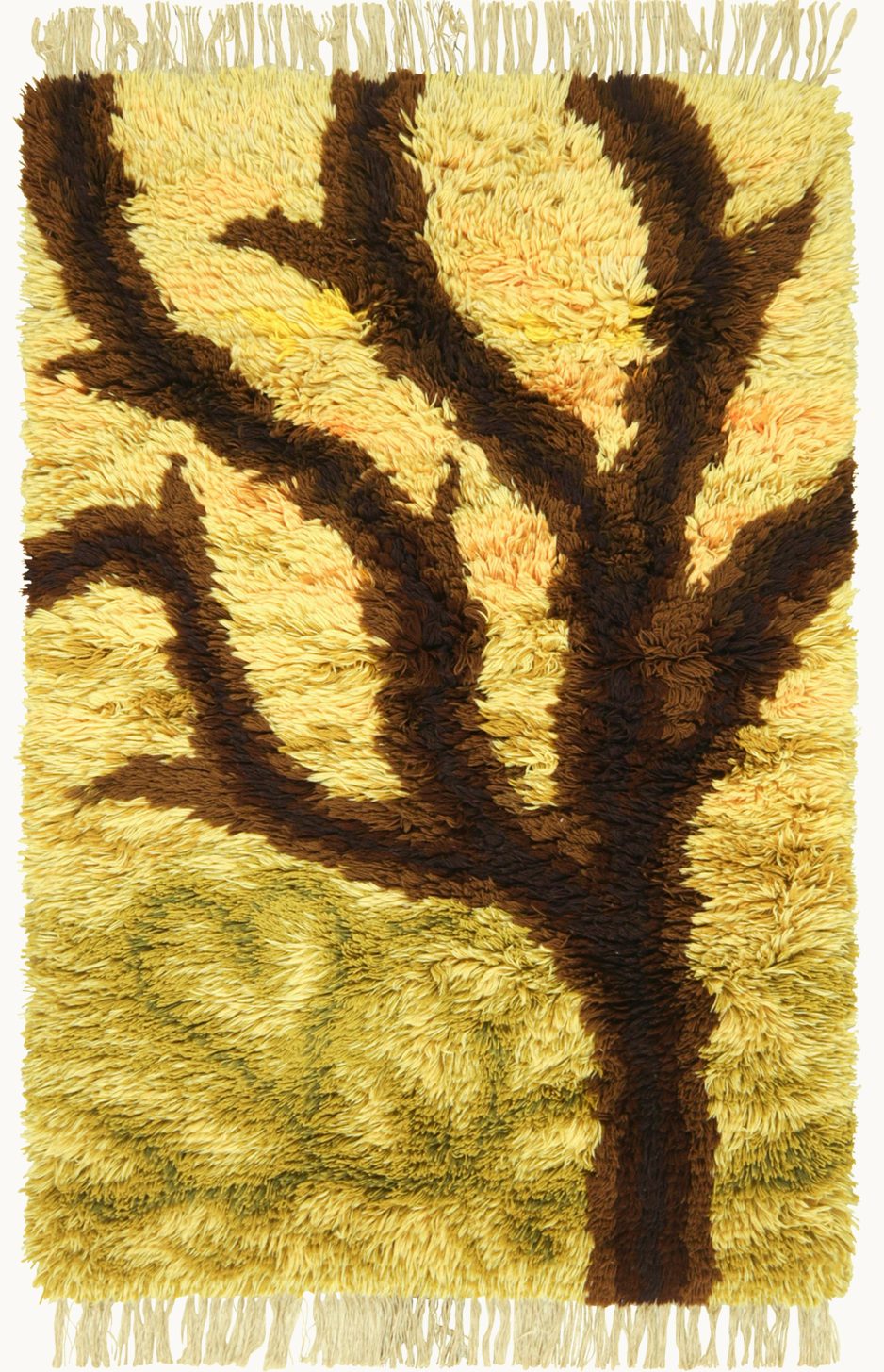
Origins and Evolution: From Dowry Weavings to National Icons
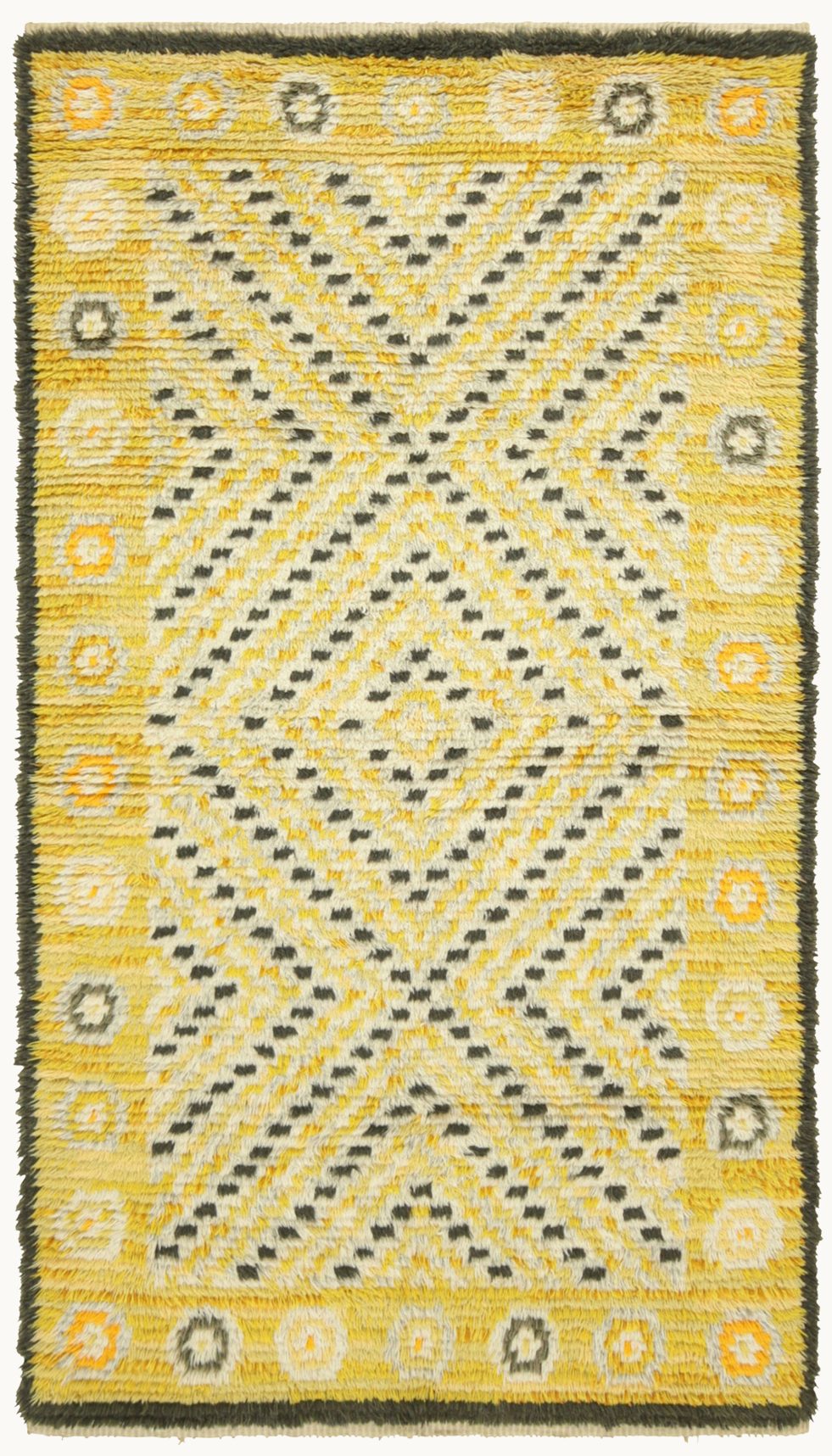
The earliest known Ryas emerged in 15th-century coastal Sweden, inspired by maritime necessity and noble ceremony. Initially woven as functional bedcovers and cloaks, their thick, hand-knotted pile provided insulation against the Nordic cold. But by the 17th century, Ryas had evolved beyond their utilitarian purpose. They were woven with complex iconography — suns, deer, fertility symbols — and became integral to Swedish bridal ceremonies and noble households. Historically, Ryas were worn with the pile inward for warmth, yet displayed outward in ceremony—underscoring their dual identity as both intimate utility and public spectacle. The iconography in early examples ranges from religious motifs to heraldic symbols and maritime scenes, showcasing an evolving visual language rooted in both folklore and Christian ritual.
More than adornments, Ryas were woven declarations of identity, encoded with folklore and generational knowledge. Their presence in castles and estates signaled not only warmth but station. By the early 20th century, this vernacular textile had entered the design studios of Sweden’s leading female designers, catalyzing its transformation into a painterly medium for woven modernism.
Materiality and Technique
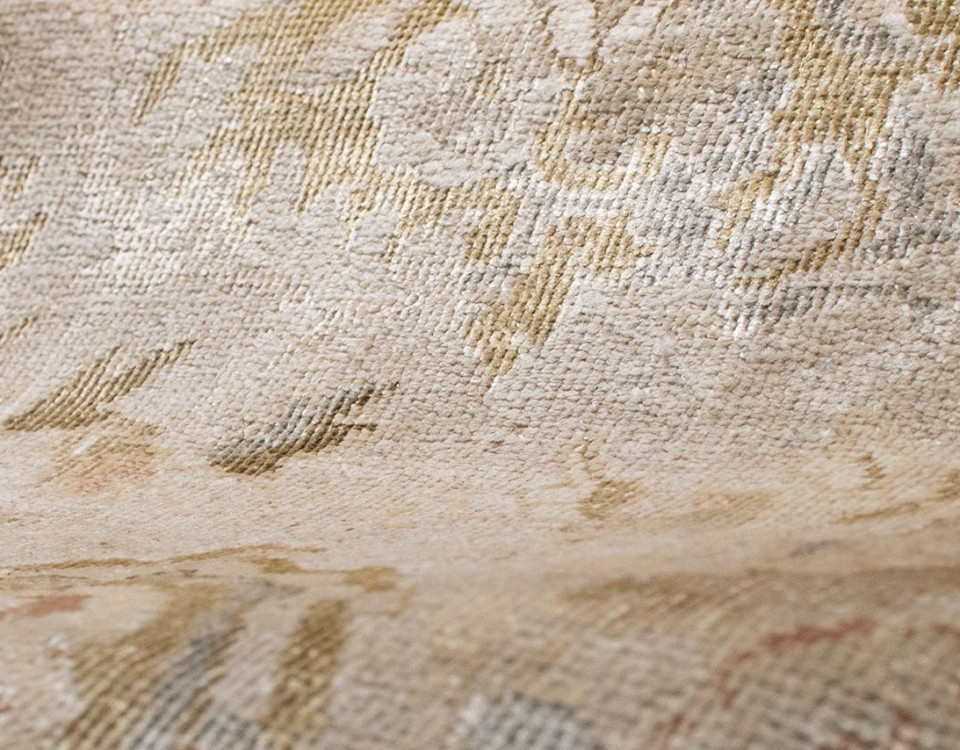
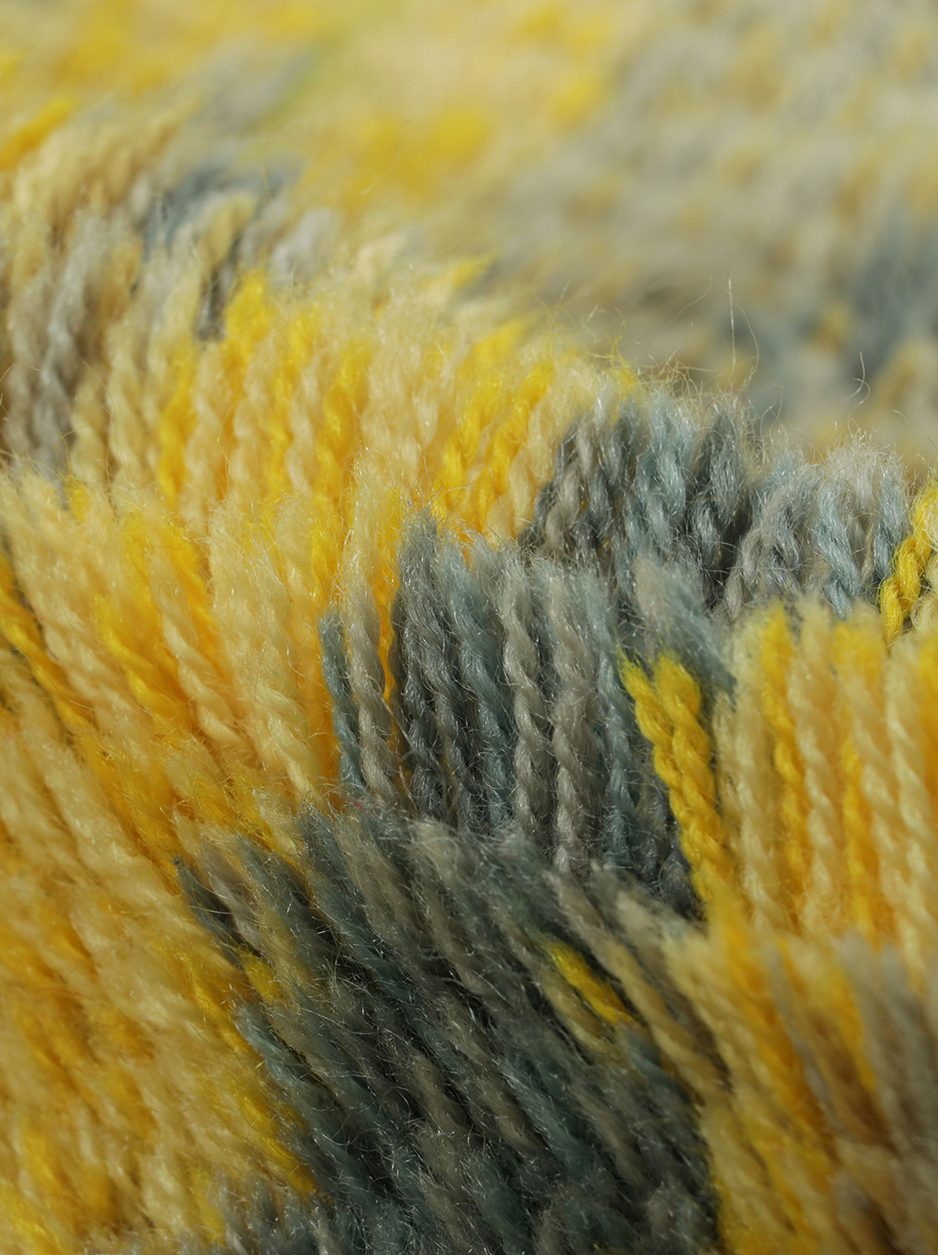
Rya rugs are distinguished by their long, resilient wool pile, traditionally knotted onto a woven backing of linen or cotton. Unlike Persian or Turkish knots, the Rya knotting technique allows for long-pile verticality, creating a tactile surface that catches both shadow and light with theatrical sensitivity.
The technical process is slow and exacting—each rug requiring thousands of knots, carefully spaced for both density and movement. Natural Swedish wool, renowned for its high lanolin content, imparts not only a lustrous softness but also an innate resilience. The color palettes, originally dominated by plant-based dyes, evolved post-WWII to embrace bolder pigments and increasingly abstract compositions.
The Mid-Century Rebirth: From Textile to Modernist Canvas
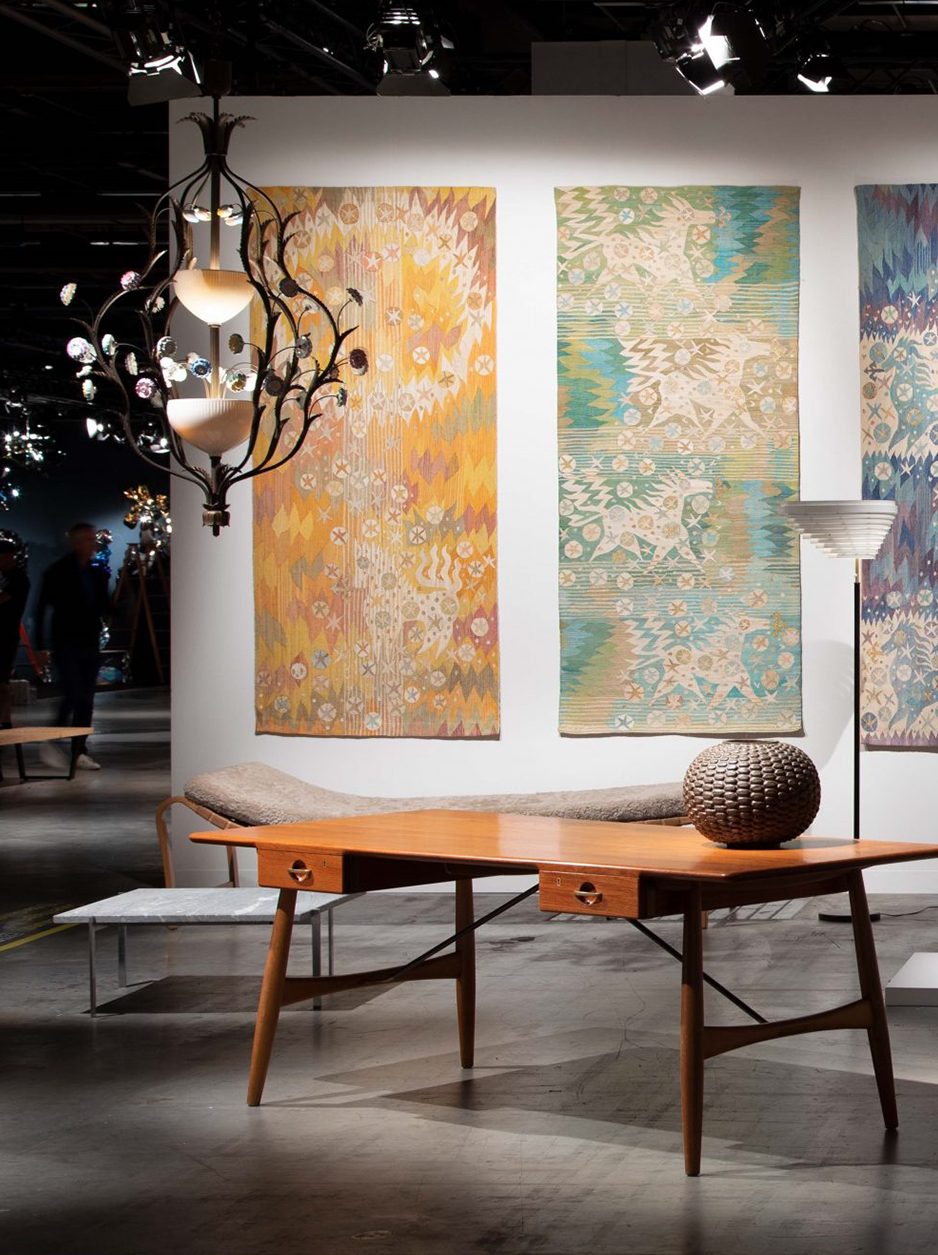
By the early 1900s, the Rya entered a new conversation — one shaped by the Scandinavian Arts & Crafts movement, and later, post-war modernism. Textile pioneers like Barbro Nilsson, Marianne Richter, and Viola Gråsten revolutionized the form, treating the Rya not as rustic artifact, but as a canvas of expression — merging geometry, color theory, and woven depth.
These pieces aligned with the Bauhaus legacy of textile as architecture. They were commissioned for civic buildings, embassies, and cultural institutions. In this period, Ryas became painterly — even sculptural — with graphic compositions rivaling contemporary tapestries and post-cubist paintings.Under the guidance of Nilsson at MMF, the Rya became a signature element in architect-designed interiors across Sweden, Germany, and the United States.
Collectors today prize mid-century Ryas for their balance of structural purity and emotive palette, embodying both post-war optimism and hand-woven sophistication.
In the context of art history’s rediscovery of textile, the Rya serves as a critical case study. Nearly all the major innovators of the 20th-century Rya revival were women. Their work was often relegated to the applied arts, despite its formal innovation, abstraction, and monumental scale.
Figures such as Barbro Nilsson (Märta Måås-Fjetterström atelier), Viola Gråsten, and Brita Grahn pioneered the movement that blurred the line between tapestry, rug, and art. Their compositions, though made of wool, should be read with the same attention as any oil on canvas.
Rya Rugs in Institutional Collections
The repositioning of Ryas within top-tier museum collections signals a profound reevaluation of textile art’s status in the global decorative arts canon. The Nordiska Museet preserves ceremonial examples that speak to Sweden’s social and spiritual fabric, while the Victoria and Albert Museum presents Ryas alongside works by Jean Arp and Charlotte Perriand, asserting their place in modernist dialogues.
Meanwhile, MoMA’s recent textile retrospectives and permanent acquisitions at the Cooper Hewitt Smithsonian Design Museum have elevated Ryas as paradigms of both design anthropology and aesthetic philosophy.
These institutional placements validate the Rya as a transcultural object—a piece of Northern Europe’s domestic intimacy that resonates universally through texture, symbolism, and silence.
Rya Rugs and the Bauhaus, Wiener Werkstätte, and Textile Modernism
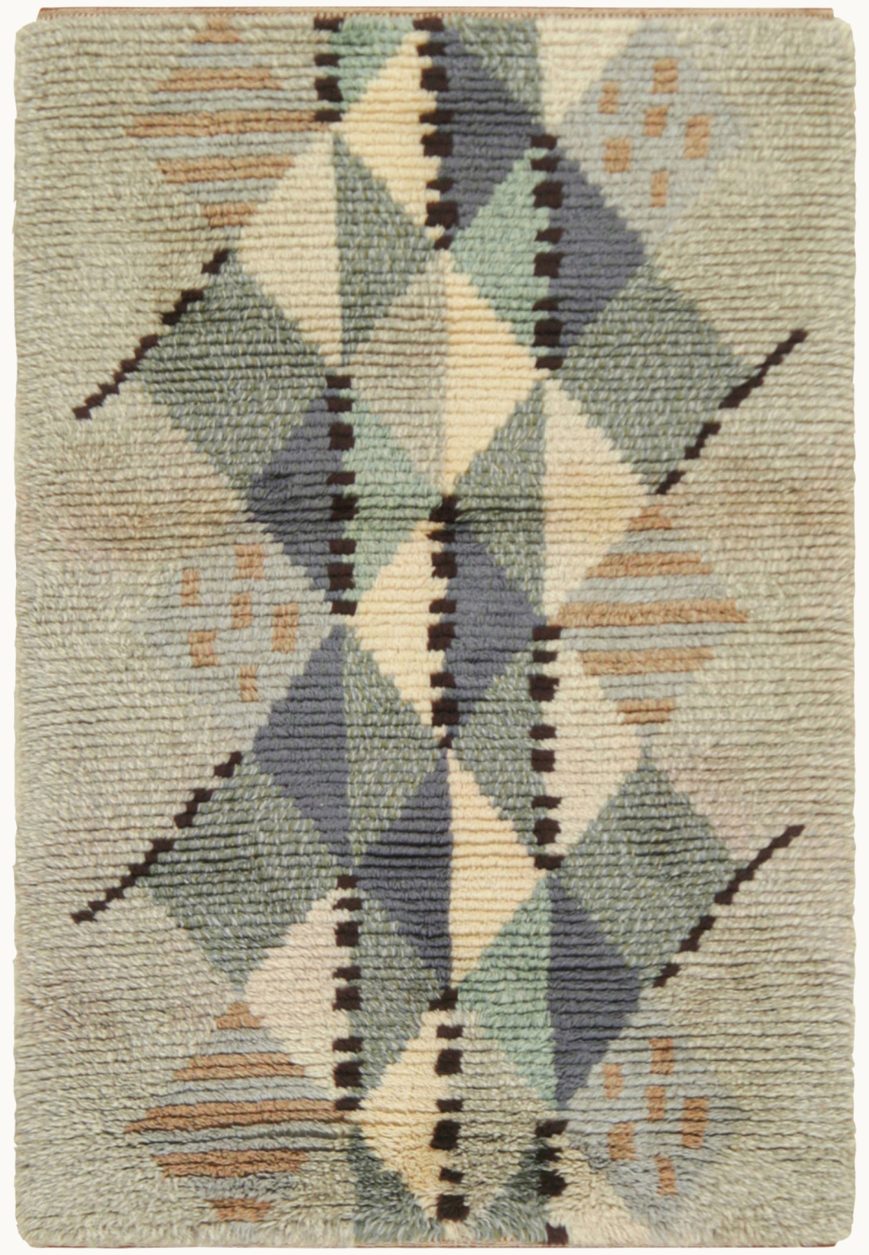
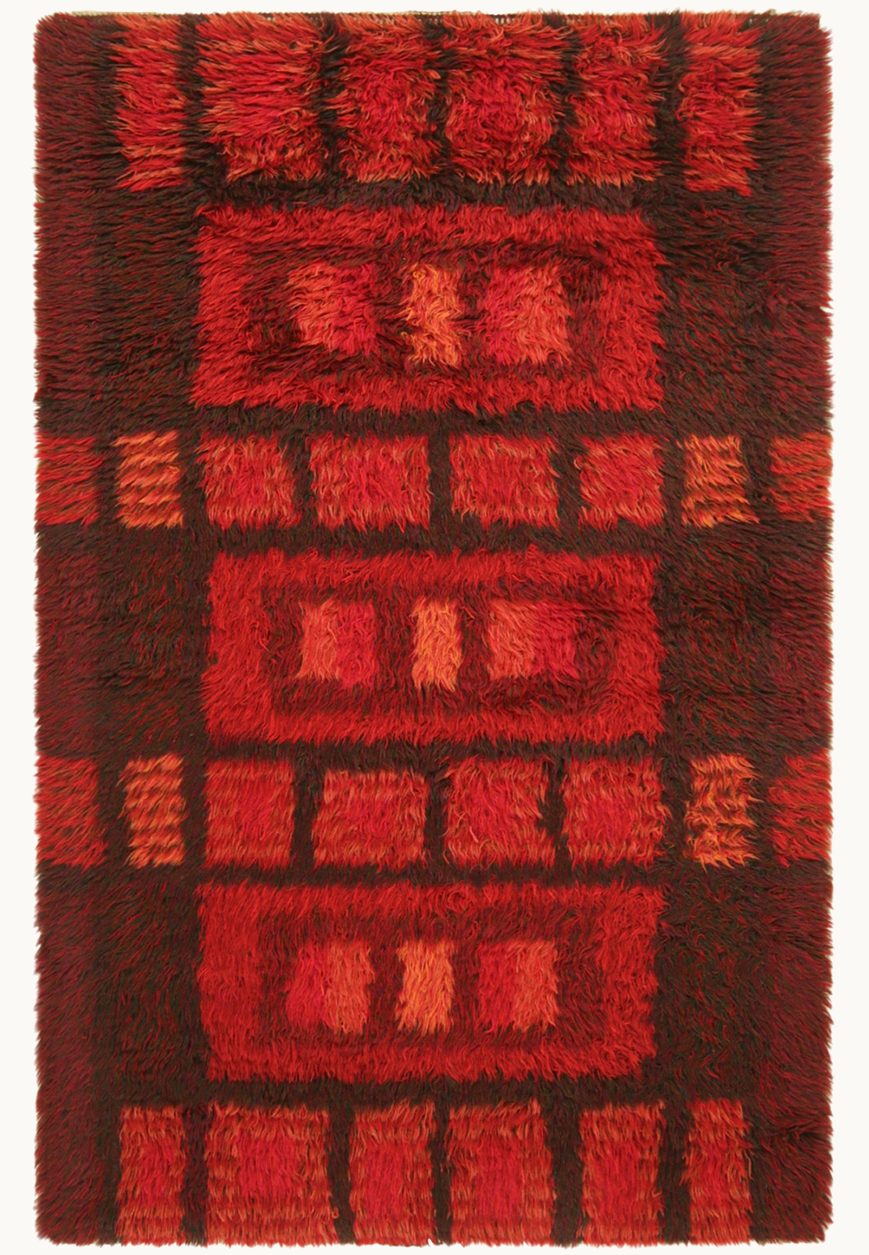
The Rya’s geometric experimentation and material honesty find rich resonance with the Bauhaus Weaving Workshop, the Wiener Werkstätte, and postwar Finnish Rationalism. The clarity of Gunta Stölzl or Anni Albers echoes in the grid-bound minimalism of Ingrid Dessau’s Ryas. The rhythmic color theory of Sonia Delaunay is reborn in the chromatic pulses of Märta Måås-Fjetterström’s late-period works.
These convergences are ideological alignments. Each movement treats the textile as both visual plane and philosophical vessel, asserting that the woven form is not secondary to painting or sculpture, but instead a sovereign language in the modernist vocabulary.
Rya Rugs in Contemporary Interiors and Installations
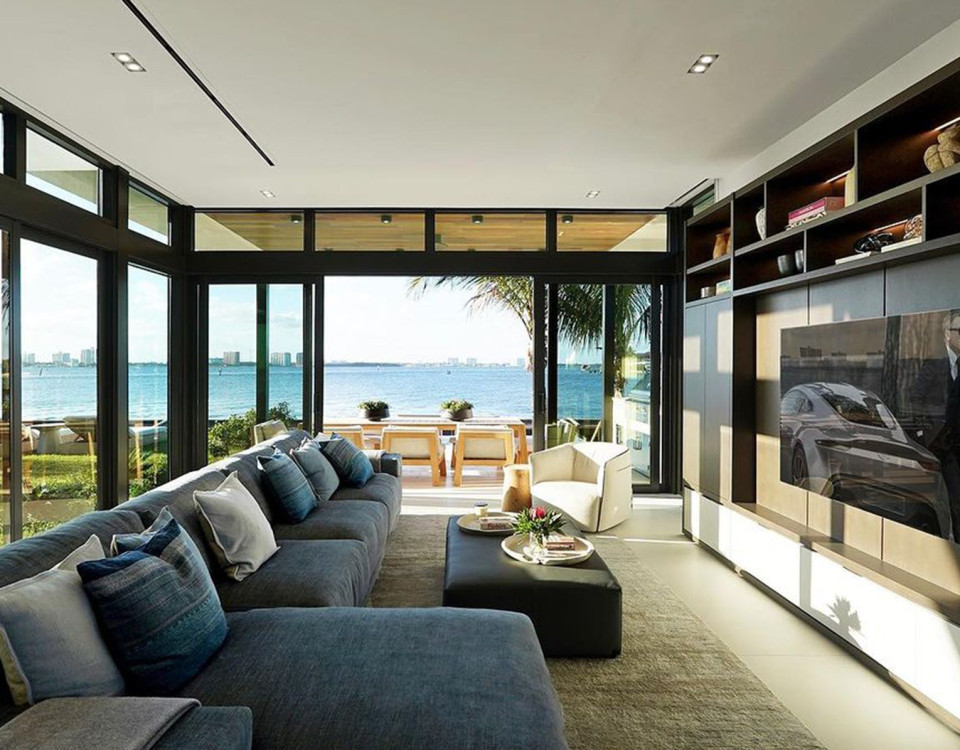
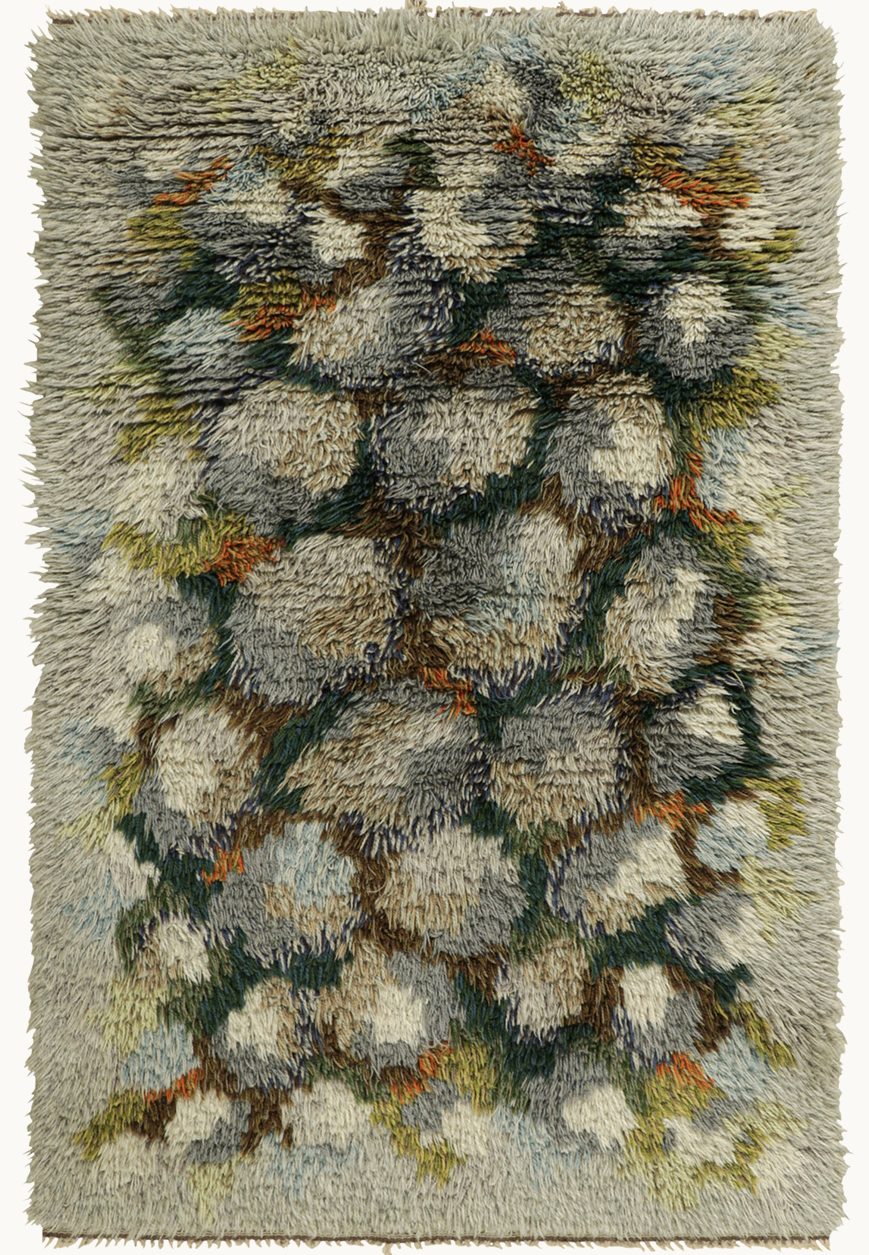
Today’s top-tier interior designers and curators are re-embracing Ryas not as nostalgic accents, but as textural anchors of highly conceptual spaces. Visionaries such as Ilse Crawford, Faye Toogood, and Pierre Yovanovitch deploy Ryas to disrupt the visual monotony of minimalism, reintroducing tactility and soul into contemporary settings.
In museum installations, Ryas are increasingly treated as textile sculptures—hung vertically, illuminated dramatically, and contextualized as immersive spatial experiences. The Rya asserts itself as an object of visual silence and depth—an antidote to digital overstimulation.
Valuation, Conservation, and Collectible Trajectory
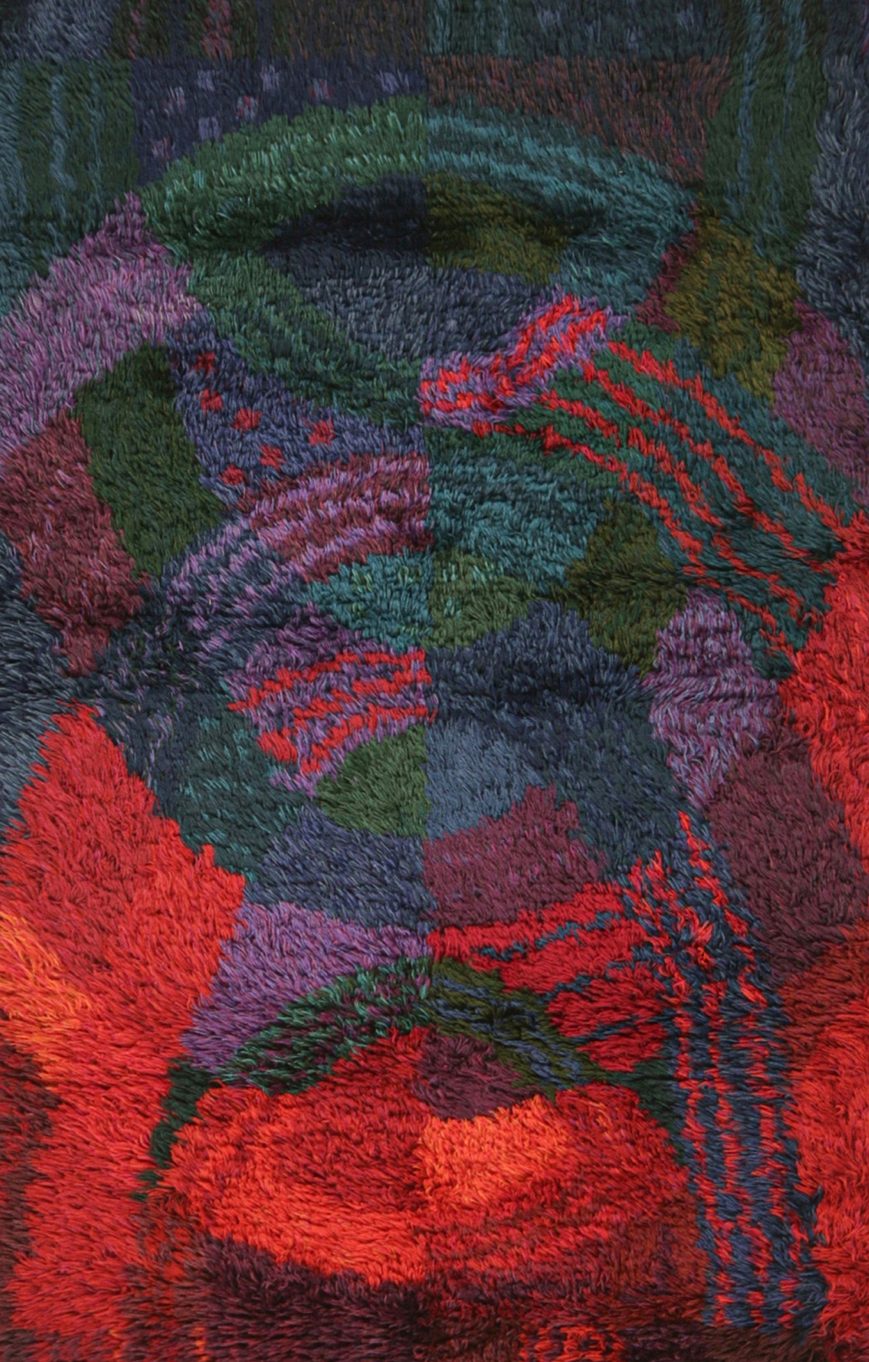
Rya rugs now represent a compelling opportunity for collectors, positioned at the intersection of underappreciated heritage and rising cultural capital. High-caliber examples—particularly signed or workshop-attributed works—have achieved notable sales at Bukowskis, Phillips, and Sotheby’s Design Paris, with prices climbing as scholarship and demand align.
Critical valuation factors include:
Designer attribution (e.g., MMF, Barbro Nilsson, Märta Måås-Fjetterström)
Color integrity and wool condition
Original purpose (floor vs. wall-mounted)
Year and origin (pre-1950 vs. mid-century studio)
Provenance, especially institutional or notable private estates
Conservation best practices require humidity control, minimal UV exposure, and archival-grade mounting techniques. At Rug & Kilim, each Rya is preserved in museum-standard conditions, supported by documentation and restoration notes.
The Rya as a Living Heirloom of Art, Design, and Sovereignty
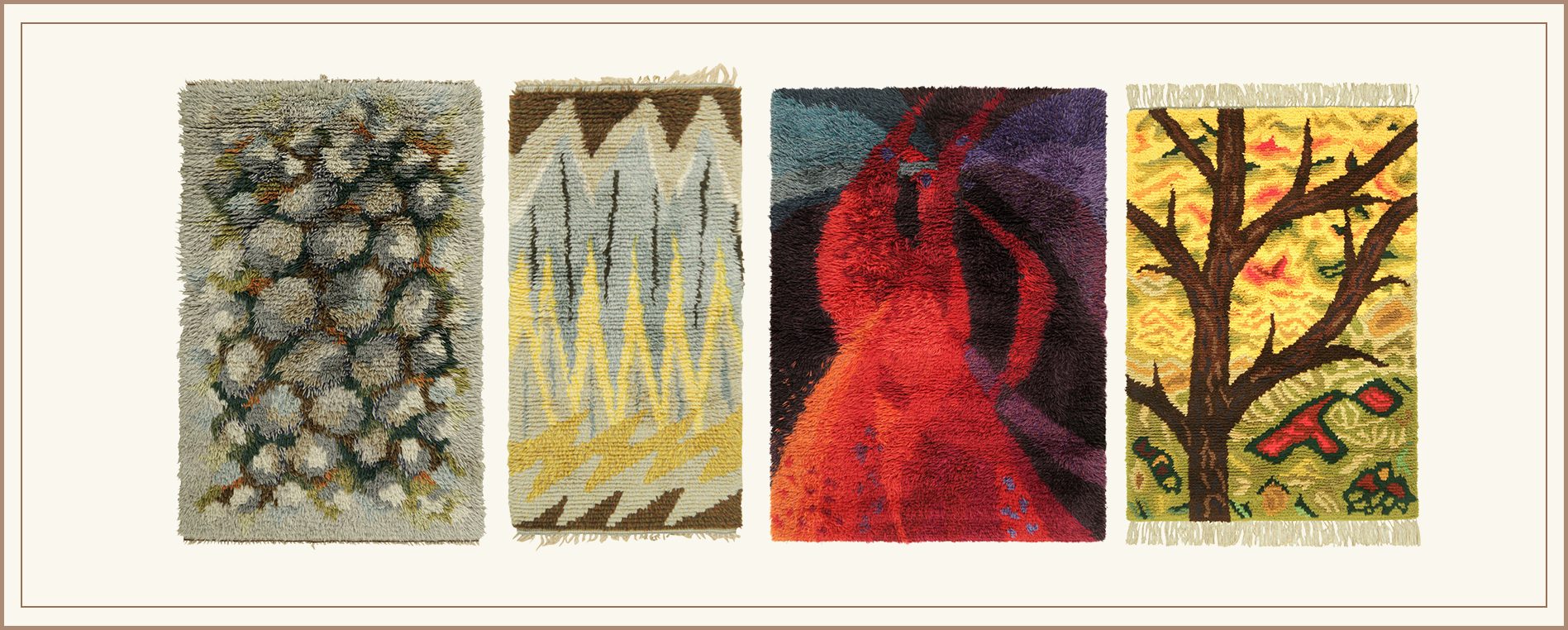
The Rya rug speaks with quiet authority. It offers us material time—a slowed, sculptural rhythm that invites not just aesthetic admiration, but personal reflection.
As institutions reevaluate the boundaries between art and craft, the Swedish Rya rug ascends not only in aesthetic value, but in cultural and intellectual capital. Its enduring relevance lies not in fashion but in meaning — a textile that carries the landscape, labor, and lineage of a region into the spaces of today’s most forward-thinking designers and collectors.
To live with a Rya is to curate an intimacy with history.
It is not a reproduction of style, but a continuation of voice—of craft, of warmth, of sovereign cultural narrative. Whether in a private gallery, a design-forward penthouse, or an architectural commission, the Rya is no longer an accessory.
It is, definitively, a legacy woven.
For acquisitions, institutional collaborations, or inquiries, please contact the Rug & Kilim team. We are honored to steward the next chapter of Rya rug scholarship and collection.