
Elsa Gullberg and Swedish Design Innovations through ‘Textilier’
March 26, 2024
Anne Marie Hoke and her Rug and Tapestry Design Inspirations from Biblical Texts
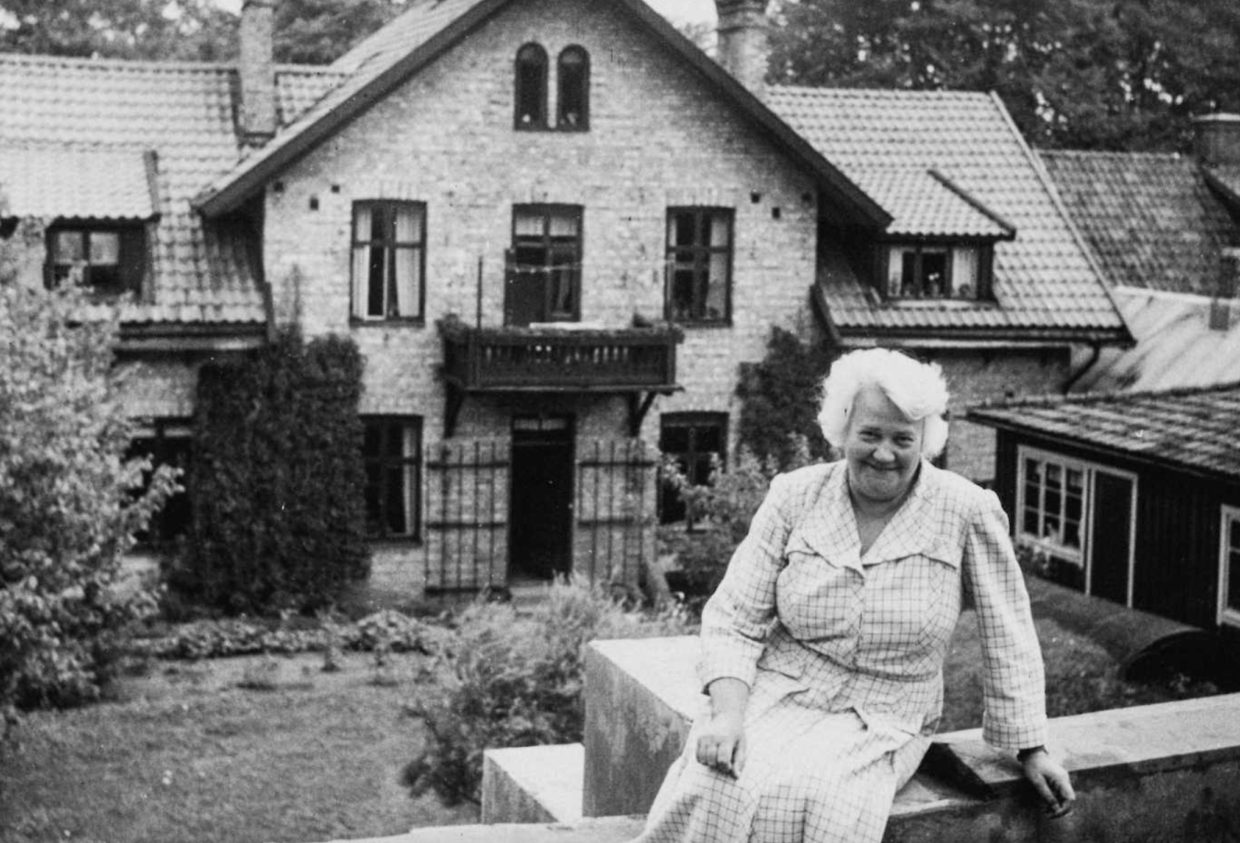
March 26, 2024Barbro Nilsson, a distinguished Swedish textile artist, played a pioneering role in the development of 20th-century Nordic textile design. For nearly thirty years, she served as the artistic director at the MMF workshop, where she stewarded the legacy of Märta Måås-Fjetterström. Possessing a deep understanding of the art of weaving, Nilsson combined it with a keen eye for colors and a commitment to using quality materials, thus pushing the boundaries of possibilities in rug and tapestry weaving. Her designs often showcase a pronounced emphasis on color, incorporating subtle variations in hue that breathe life into her creations. While her early works bear the imprint of traditional Swedish decorative art elements and the nation’s rich folk heritage, the 1960s saw her embark on a bold transition into the realm of Modern design.
En bok om Barbro Nilsson
Under Nilsson, the studio received a commission from Sydkraft, a prominent Swedish hydropower company, to create a series of tapestries for display in its upcoming headquarters in Malmö. This building was set to be designed by the accomplished Swedish architect Klas Anshelm (1914-1980), known for his extensive work in Malmö and Lund.
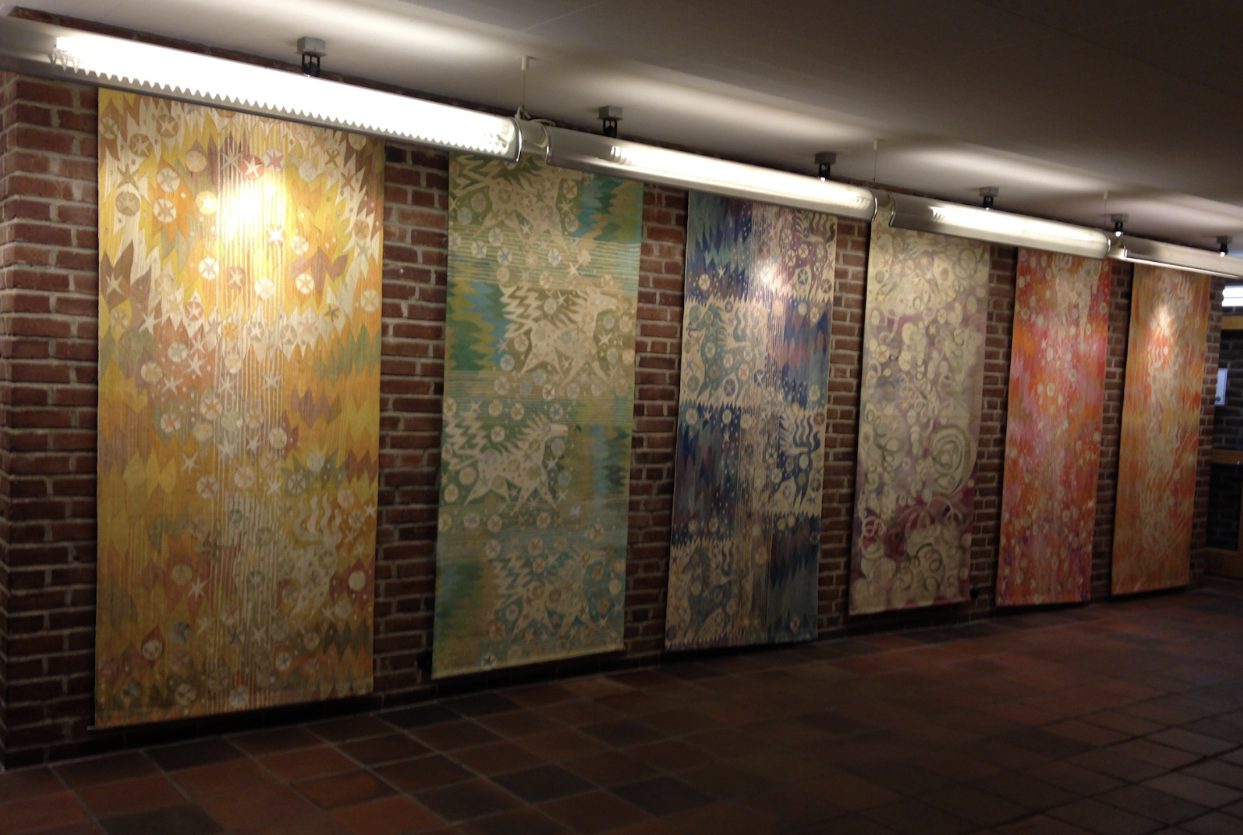
6 of the 7 gobelin tapestries for Sydkraft now hanging in lobby of E.ON building
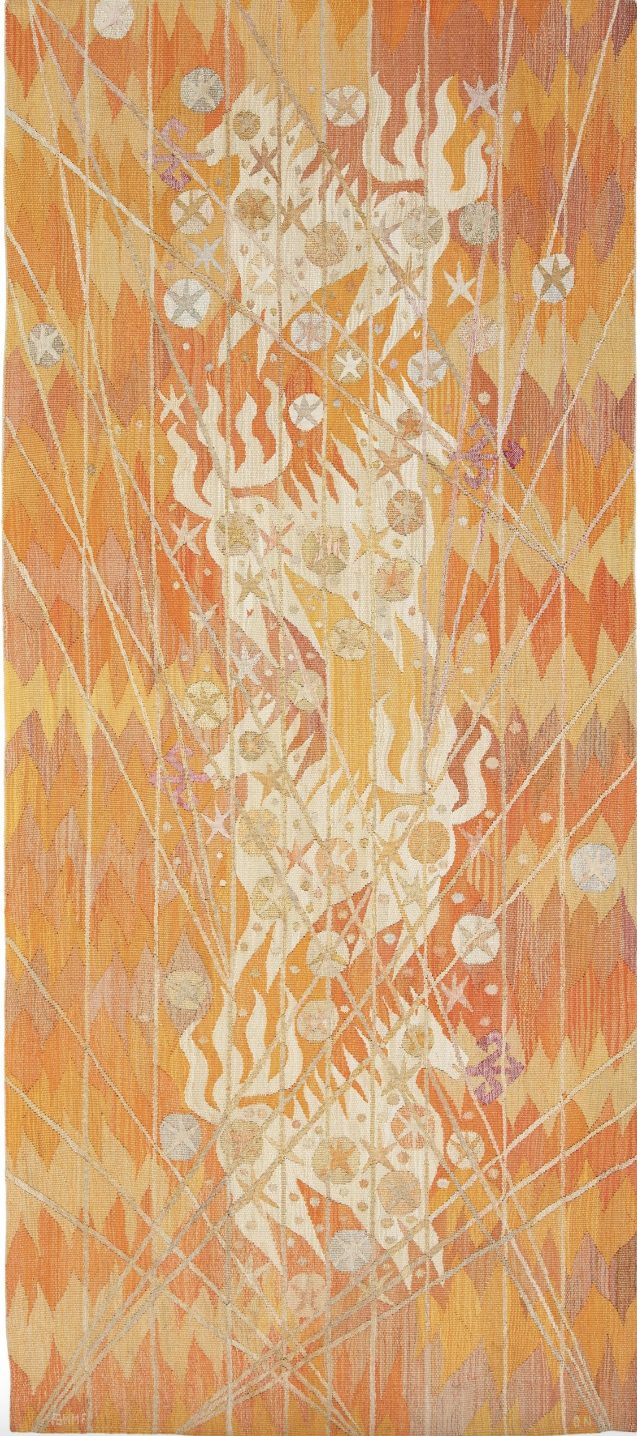
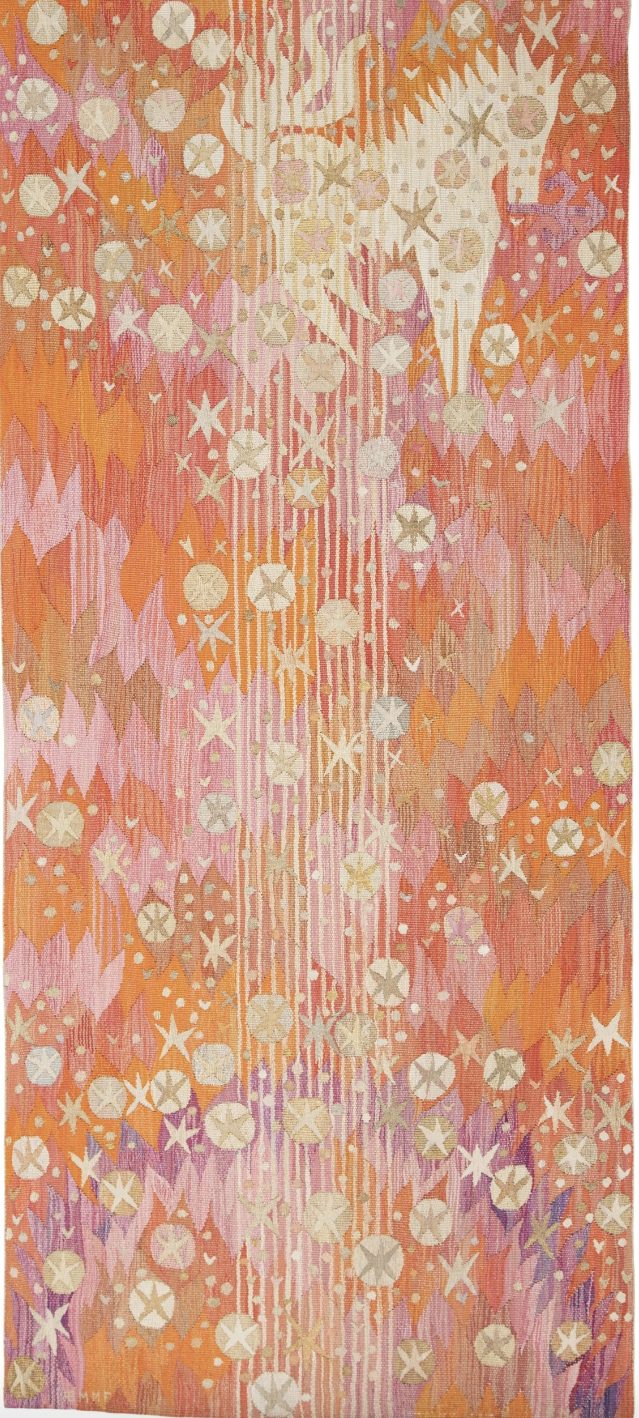
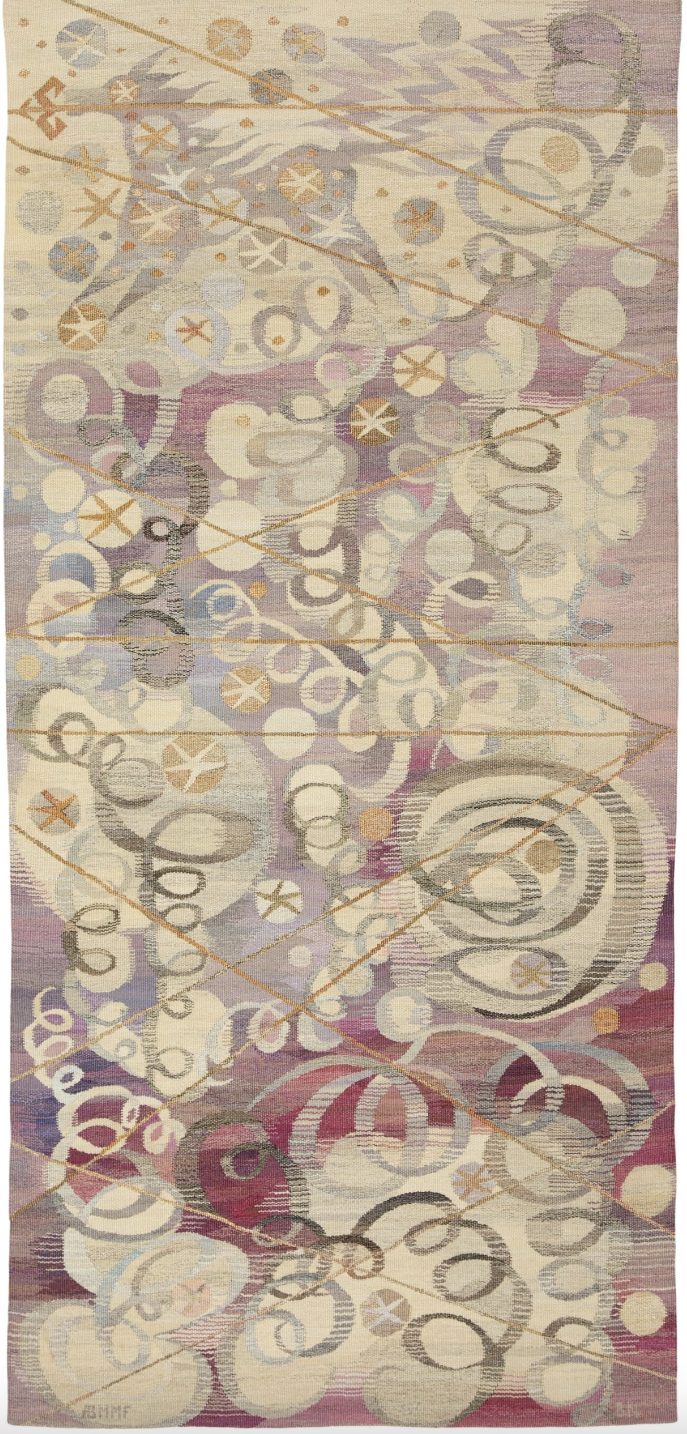
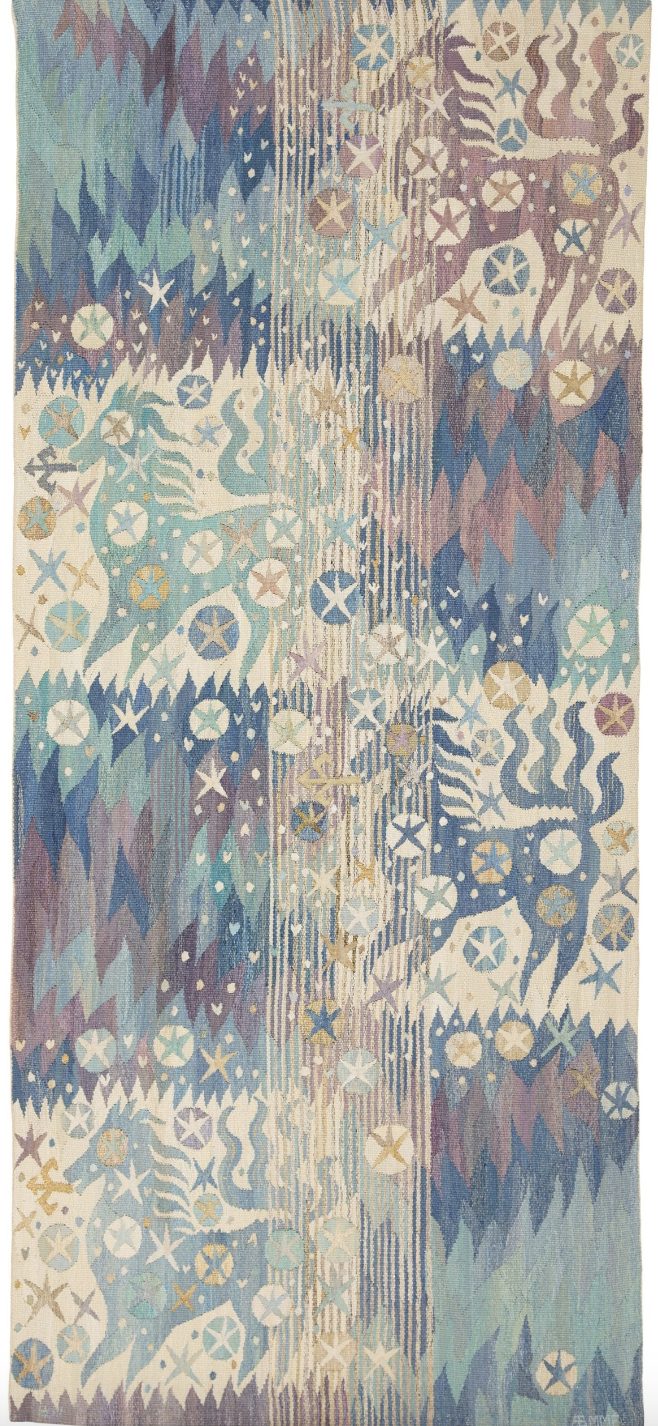
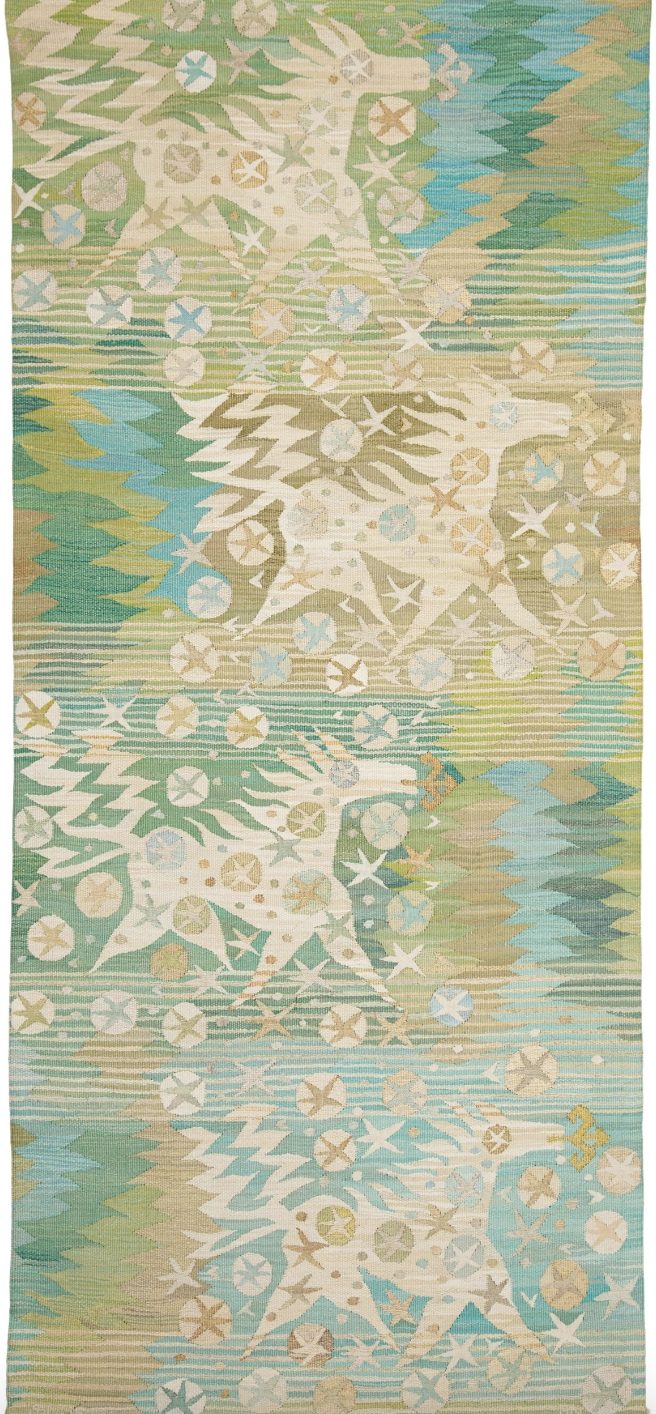
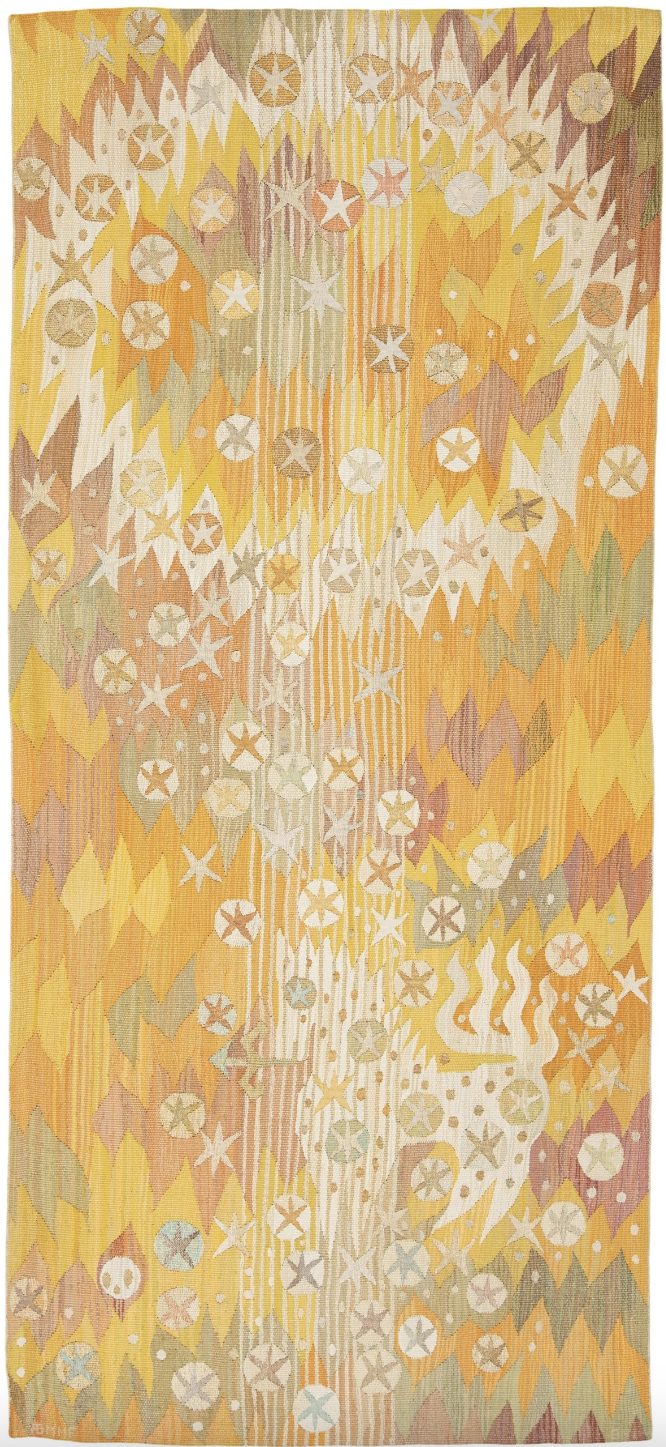
The tapestries in the respective order are titled as and represent “Solen” (the Sun), “Åar” (Rivers), “Forsar” (Waterfalls), “Ångan” (Steam), “Atomkraftverk” (Nuclear power), and “Linjenätet” (The electric grid). Their corresponding base colors, in order, are yellow, green, blue, purple, red, and orange. Once again, Nilsson’s color palette is a vibrant yet subtly nuanced, enhancing the visual texture of the pattern. She skillfully created a delicate interplay of colors, ensuring that the base color of each tapestry subtly transitioned towards the next color in the spectrum. Notably, within each tapestry, the colors transitioned towards the subsequent segment of the color spectrum. For instance, yellow held subtle hints of green, green incorporated elements of blue, and blue encompassed areas tinged with purple, and so forth. Furthermore, Nilsson placed the horses [ Bäckahäst ] differently in each tapestry, directing their movement and positioning to convey specific aspects of the energy being represented.
Nilsson conceived these intricate gobelin tapestries as an interconnected series, employing the depiction of Bäckahäst as a representation of natural forces. She utilized color to symbolize various facets of water-generated energy. Each tapestry featured a distinct base color, with dynamic horses traversing through fields of interlocking shades, defined by a sequence of lines and radiant diagonals. Nilsson meticulously planned the arrangement of the six tapestries to narrate the process of converting water into energy. They were intended to be displayed in a specific order, each contributing to the unfolding narrative.
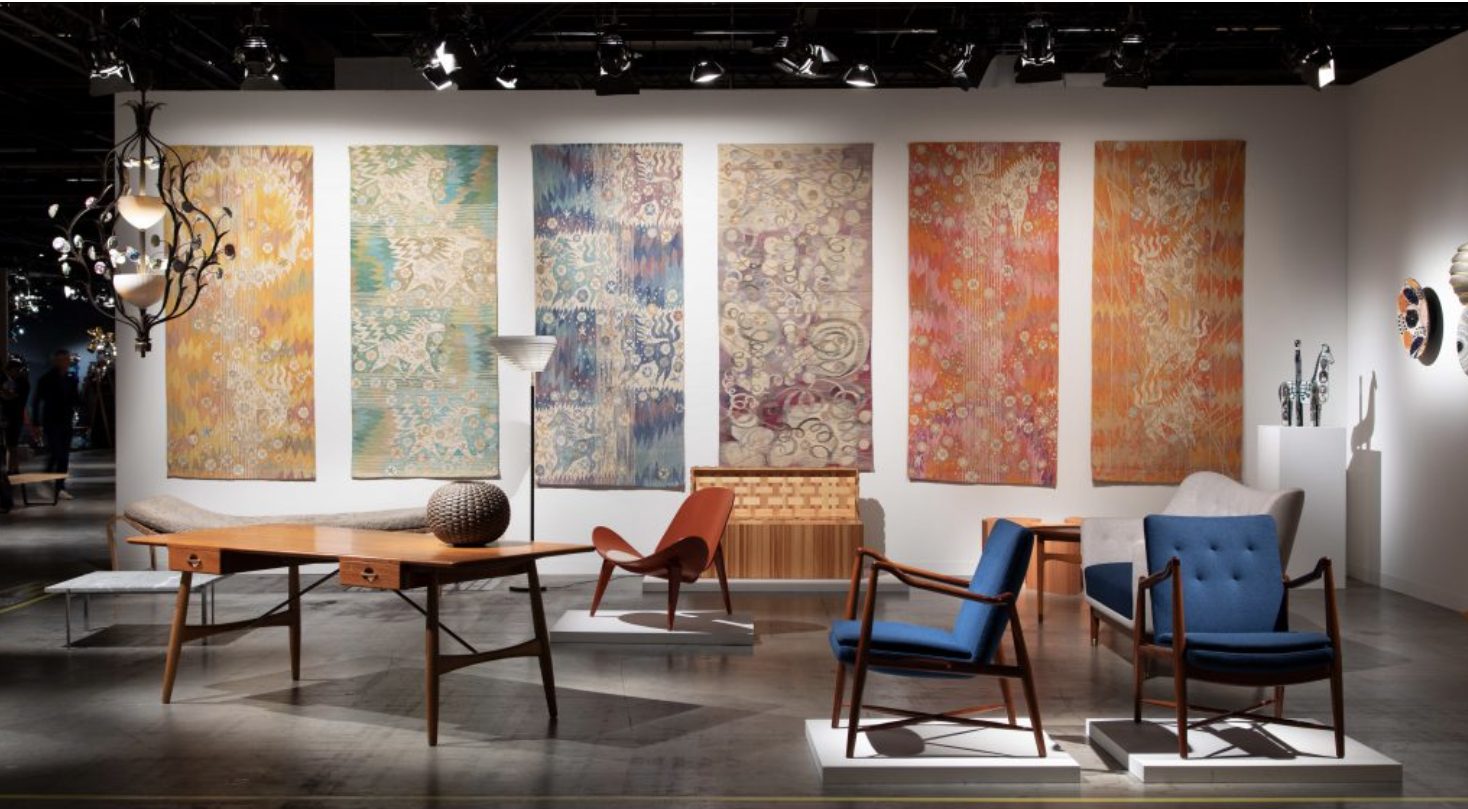
Dansk Møbelkunst Gallery
Barbro Nilsson explains the design motive behind this series of tapestries in her own words –
“In local people’s imagination the mists over the rivers of Skåne took the form of a mythical figure, the horse known as Bäckahästen, that gallops over the landscape – through AIR, CLOUDS and RAIN, through the SLOWLY RUNNING WATER, through RAPIDS and WATERFALLS to the SEA. The water provides STEAM POWER. The flowing water is converted into electric power that is distributed to the industry through the ELECTRIC GRID and regulated by SWITCHES.”
This series of tapestries stands as a testament to Nilsson’s technical prowess and artistic brilliance. Widely regarded as a cornerstone of Nilsson’s career and a milestone in Nordic textile art, it boldly expanded and revitalized the Nordic weaving tradition. This accomplishment solidified Nilsson’s position as a leading figure in 20th-century Scandinavian textile art. She adeptly steered the pioneering artistic vision of Märta Måås-Fjetterström’s workshop, elevating it to a pivotal hub for Swedish textile art in the 20th century.
Have a look at her tapestries below –
Dansk Møbelkunst Gallery
Dansk Møbelkunst Gallery
Dansk Møbelkunst Gallery
Dansk Møbelkunst Gallery
Dansk Møbelkunst Gallery
Dansk Møbelkunst Gallery