
Marianne Richter and Scandinavian Textile Designs: From Båstad to United Nations
March 26, 2024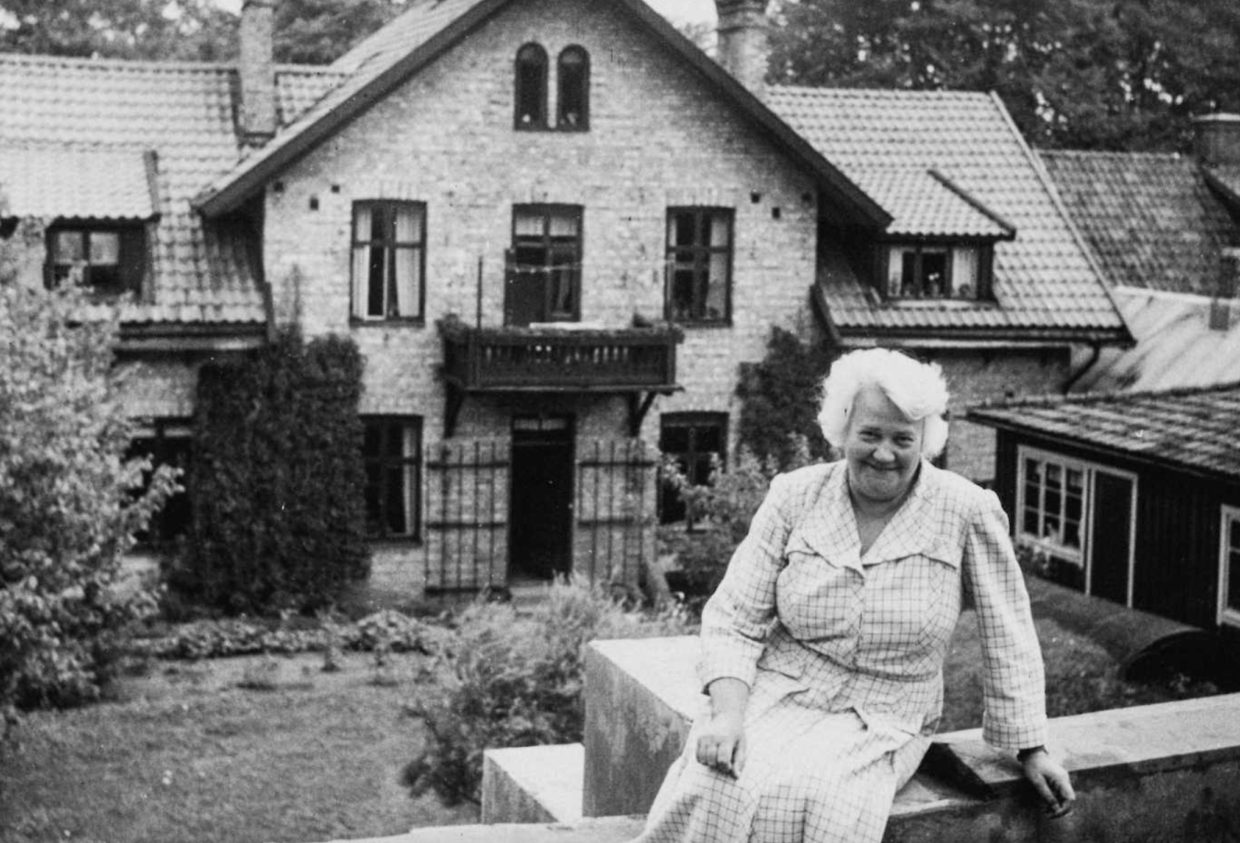
A Profile on Barbro Nilsson and her Tapestry Series for Sydkraft
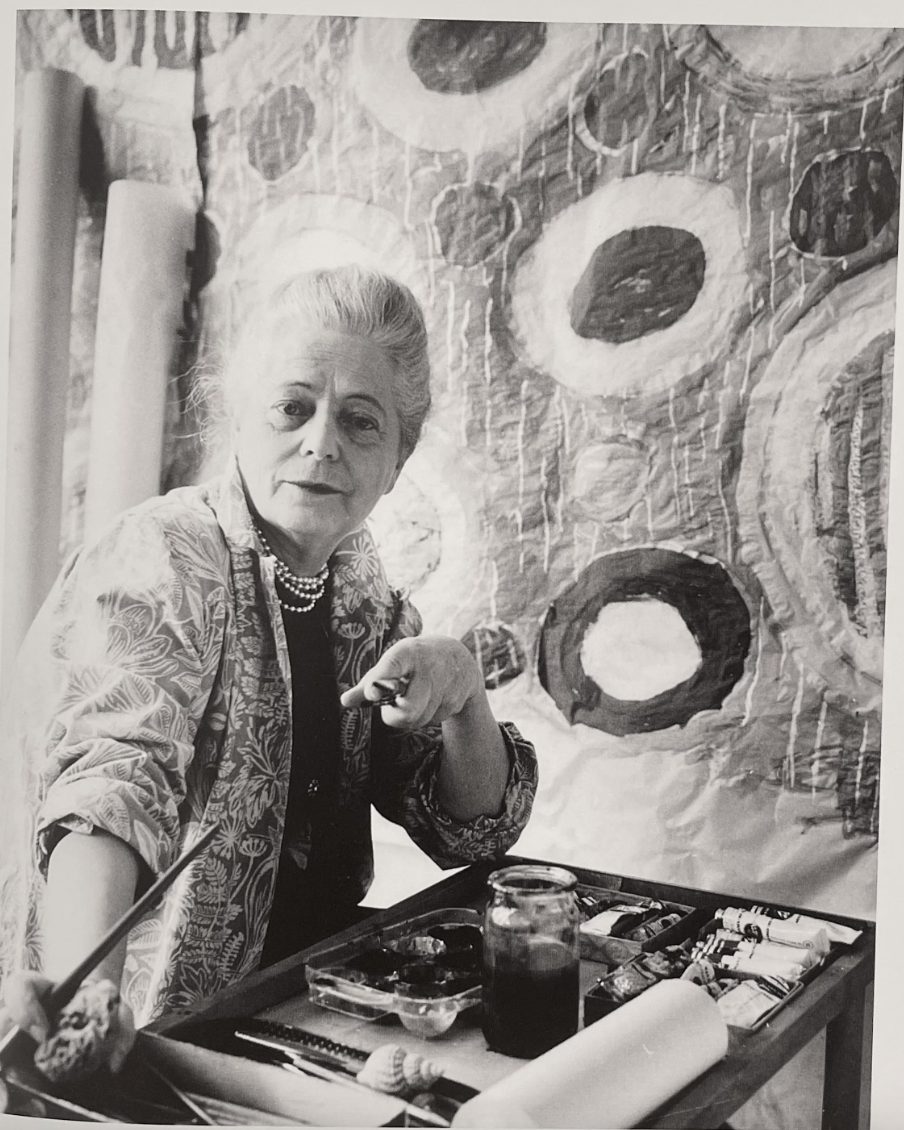
March 26, 2024Elsa Gullberg founded “Textilier och Inredning” in 1927, a pioneering company that seamlessly bridged the realms of handicraft and industrial production, focussing on functionalism with a tradition-based style. Through her visionary approach, Gullberg brought artistically designed textiles to a wider audience, blurring the lines between traditional craftsmanship and modern manufacturing and contributed to the expansion of modernism in Swedish design. At a time when Swedish arts and crafts were gaining international acclaim, Gullberg’s innovative efforts played a pivotal role in elevating the status of textiles as a true art form.
Stockholm City Museum
The late 19th and early 20th centuries witnessed a surge of aesthetic and societal reform movements across Europe and the United States. In Britain, the Arts and Crafts movement, inspired by visionaries like John Ruskin and William Morris, emerged. They critiqued the mechanized production methods of the industrial age, contrasting them with the more engaging and gratifying craftsmanship of yesteryears. Morris drew inspiration from both the Middle Ages and contemporary Japan to advocate for this artisanal approach to production. Meanwhile, in the United States, the Arts and Crafts Movement intertwined with social reform. Figures like Jane Adams, and institutions like Hull House in Chicago, spearheaded courses in various crafts including pottery, weaving, bookbinding, and metalwork.
The objective was twofold: to impart aesthetic knowledge and impart practical skills by teaching the creation of handmade goods. This dual focus aimed to empower individuals both artistically and economically. Sweden responded to these movements through the influence of a feminist social critic and reformer named Ellen Key. She viewed the ability to craft a beautiful, simple home as a fundamental catalyst for societal advancement.
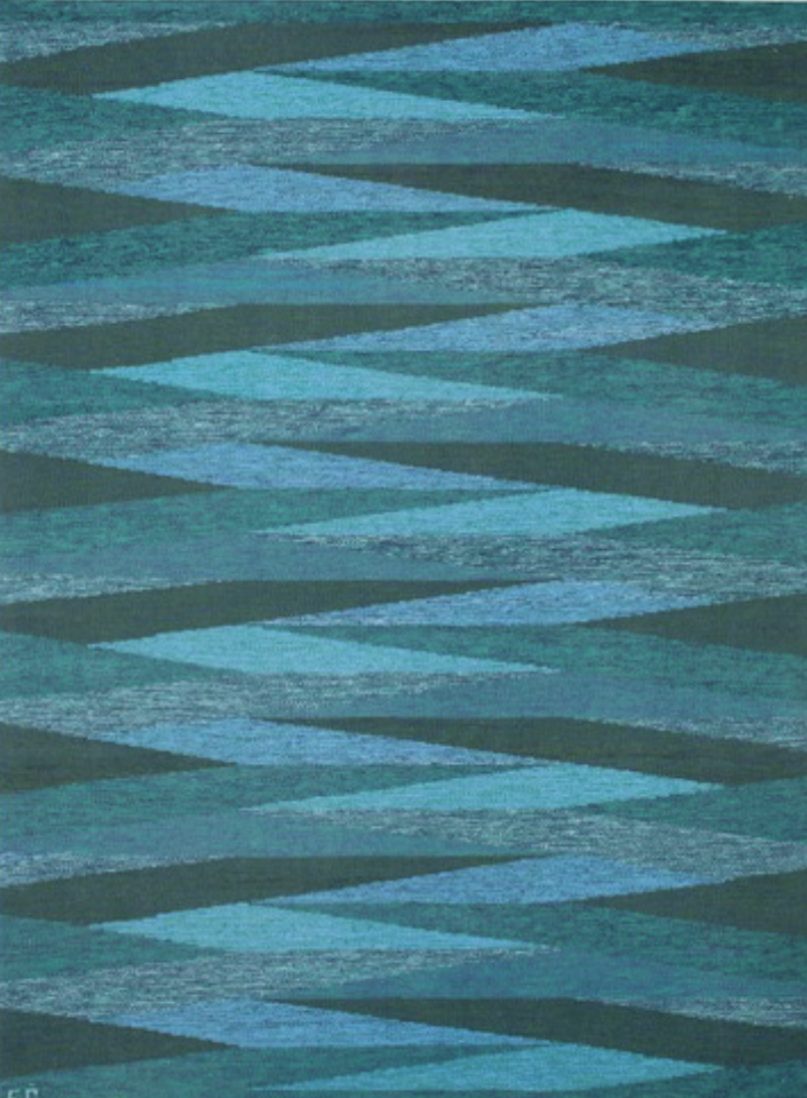
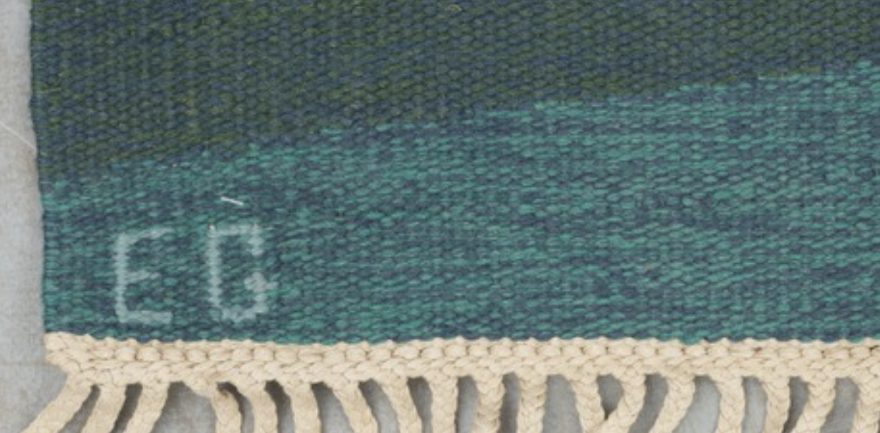
In 1917, at the age of 31, Gullberg was appointed by the Society of Crafts and Design to oversee a brokerage or “contract bureau.” Its purpose was to facilitate collaborations between artists and industries, aiming to yield mutual advantages for both parties. Elsa Gullberg, primarily focused on designing machine-made carpets and upholstery materials under her brand “Textilier.” Although she occasionally ventured into creating handwoven wall hangings and flatweave rugs, these were typically signed by her. The majority of her production, however, centered around machine-made pieces that remained unsigned. While not all her manufacturing partners are documented, known collaborators include the Mauritz Textile and Interiors firm in Jönköping, and Almedahl Dalsjöfors in Dalsjöfors.
It’s worth noting that, potentially due to cost or quality considerations, some of Gullberg’s pile rugs were handwoven, even up until the 1940s. This reflects the intriguing dynamics of the Swedish textile industry, where handweaving still held advantages in certain cases well into the mid-20th century. Furthermore, Gullberg commissioned several designers she had encountered through her association with the Swedish Society of Crafts and Design to create both tapestries and printed fabrics for her firm, solidifying her role as a patron of emerging talent.
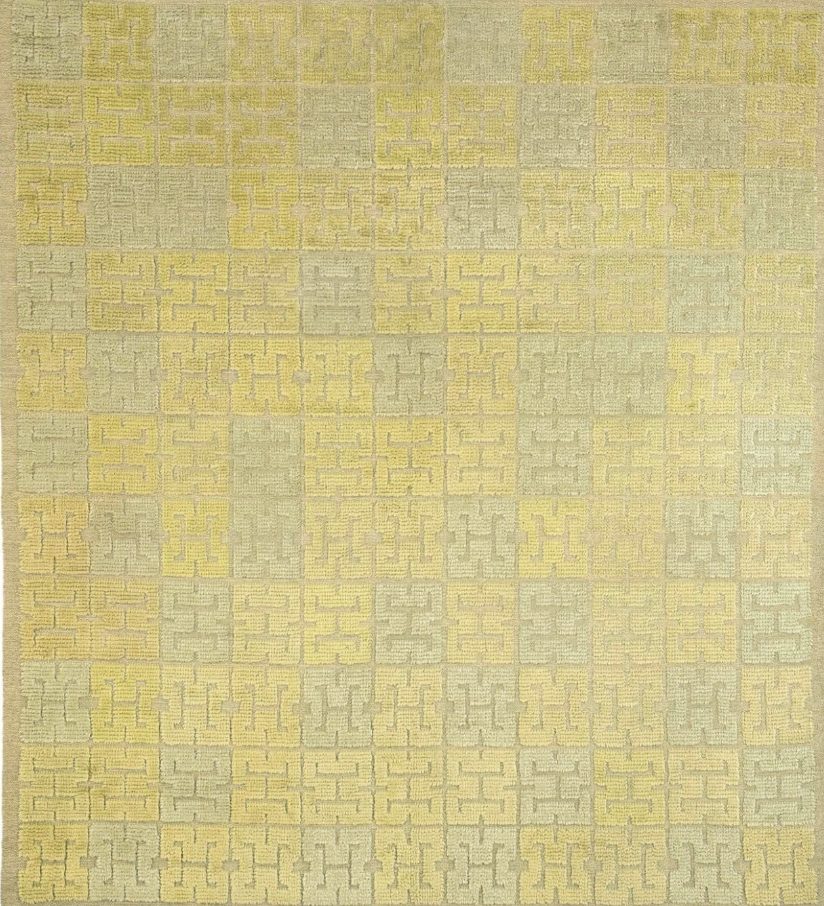
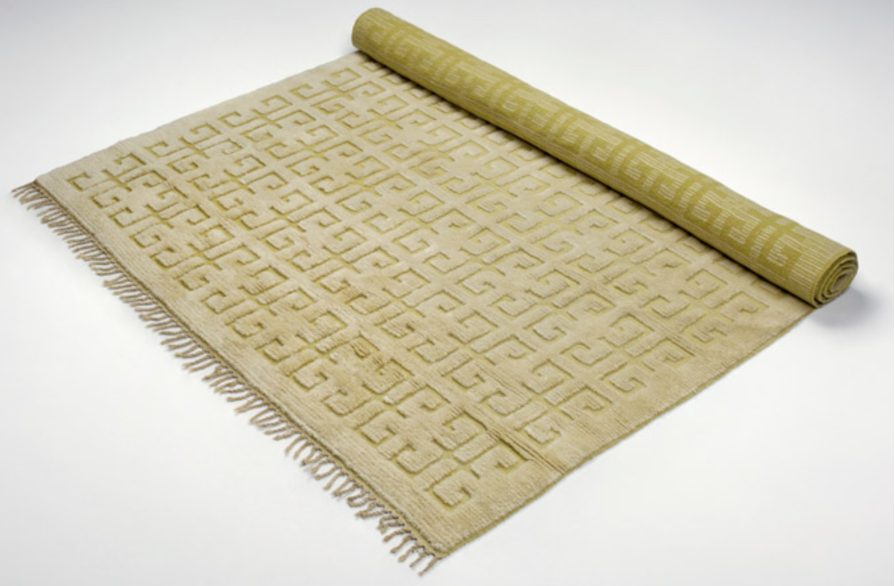
Phillips Nordic Design auction
Elsa Gullberg demonstrated remarkable foresight as a designer and textile entrepreneur. She recognized the evolving needs of modern society, realizing that it would require more than individual hand-woven rugs or tapestries for elegant homes. Her firm was established to meet this specific demand. In a testament to her expertise, she furnished notable spaces like the Swedish liner MS Kungsholm within a year of founding her company. Over nearly three decades, Gullberg’s firm supplied theaters, offices, universities, and city halls with intricately designed carpets featuring captivating textural patterns. Her reputation for reliability, contemporary style awareness, and understated elegance became well-established.
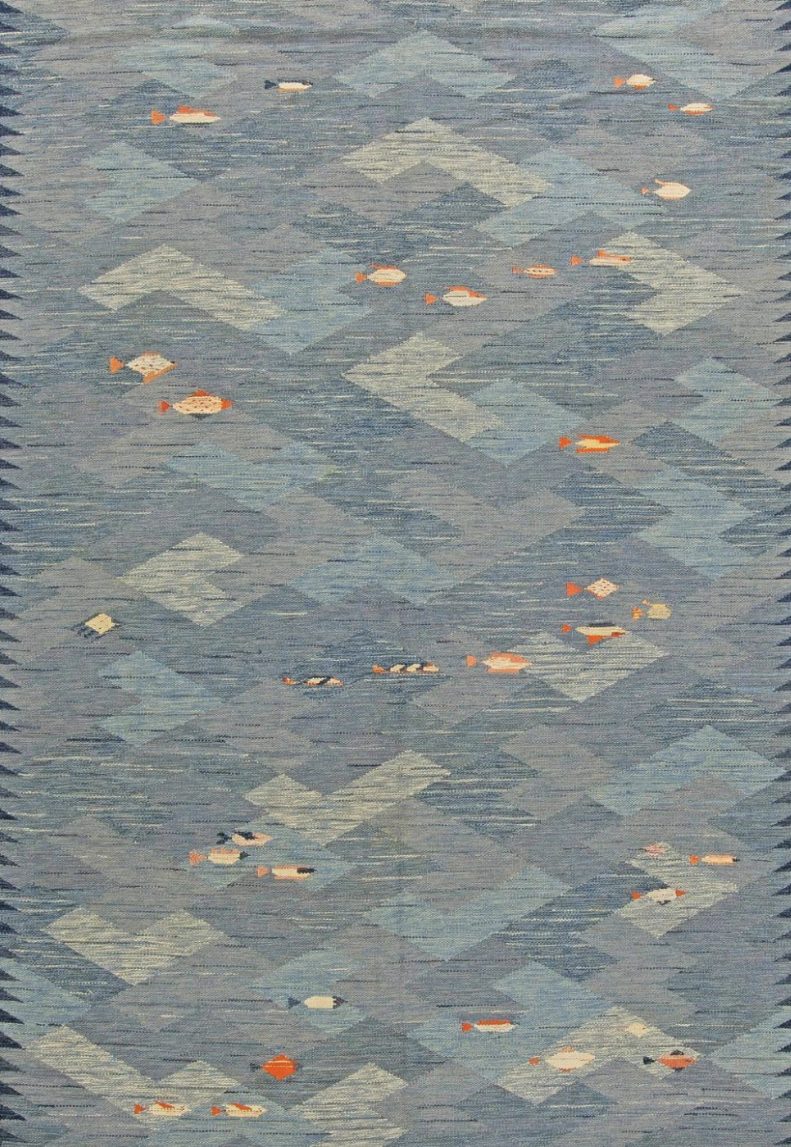
Nationalmuseum, “Elsa Gullberg – Textil pionjär”, 1989, jämför s. 83.
Gullberg’s carpets, primarily characterized by relief pile technique wherein the pattern’s height differs from the rest of the rug, often featured neutral hues and repetitive overall geometric patterns. While she initially designed some pictorial tapestries early in her career, her focus shifted towards texture over intricate patterns. In the 1930s, she occasionally incorporated classical motifs—common in other Swedish rugs of the period—yet refrained from employing more folkloric elements. Her designs exude a subtle art-deco quality, reflecting Gullberg’s exposure to both European and Swedish design influences. With their neutral tones and consistent patterning, these pile rugs also foreshadow the modern concept of “contract furnishings,” where the carpet is just one component of a comprehensive furnishing scheme.
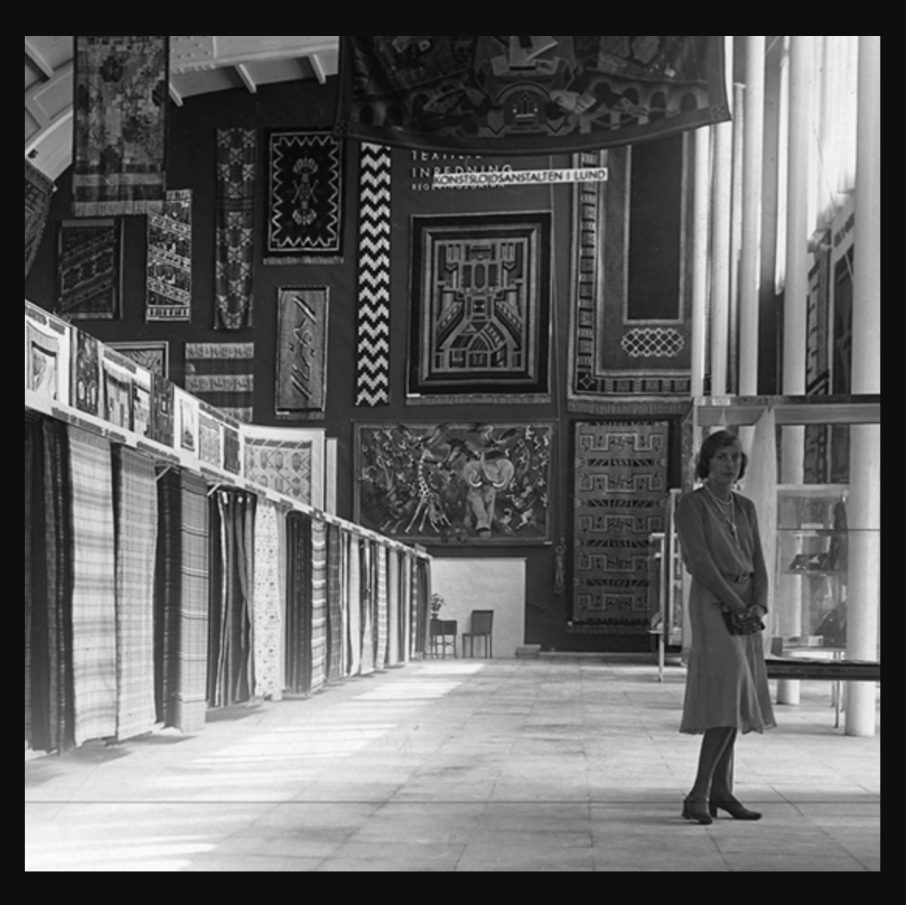
Elsa Gullberg’s notable contributions to various exhibitions, including the 1917 Liljevalchs exhibition and the 1930 Stockholm fair, catapulted her to international recognition, extending beyond Sweden’s borders. Among her major undertakings was the comprehensive provision of fabric and interior design for the opulent Swedish cruise liner, MS Kungsholm, in 1928. By 1936, Gullberg had emerged as a prominent advocate for Swedish textiles. She penned an extensive eight-page article on Swedish tapestry, featuring contemporary works, which was published in the Swedish American Review, a periodical aimed at keeping Americans of Swedish descent informed about Sweden. In the subsequent year, her article titled “Textiles in the New Interiors” was featured in a significant Swedish book on interior design, “The Modern Home” (Det moderna hemmet) by Hans Raben. In 1939, her textile design, “Lilies,” was showcased at the 1939 World’s Fair. Her drapery and upholstery materials received consistent coverage in British and Danish design reviews throughout the 1940s and 50s.
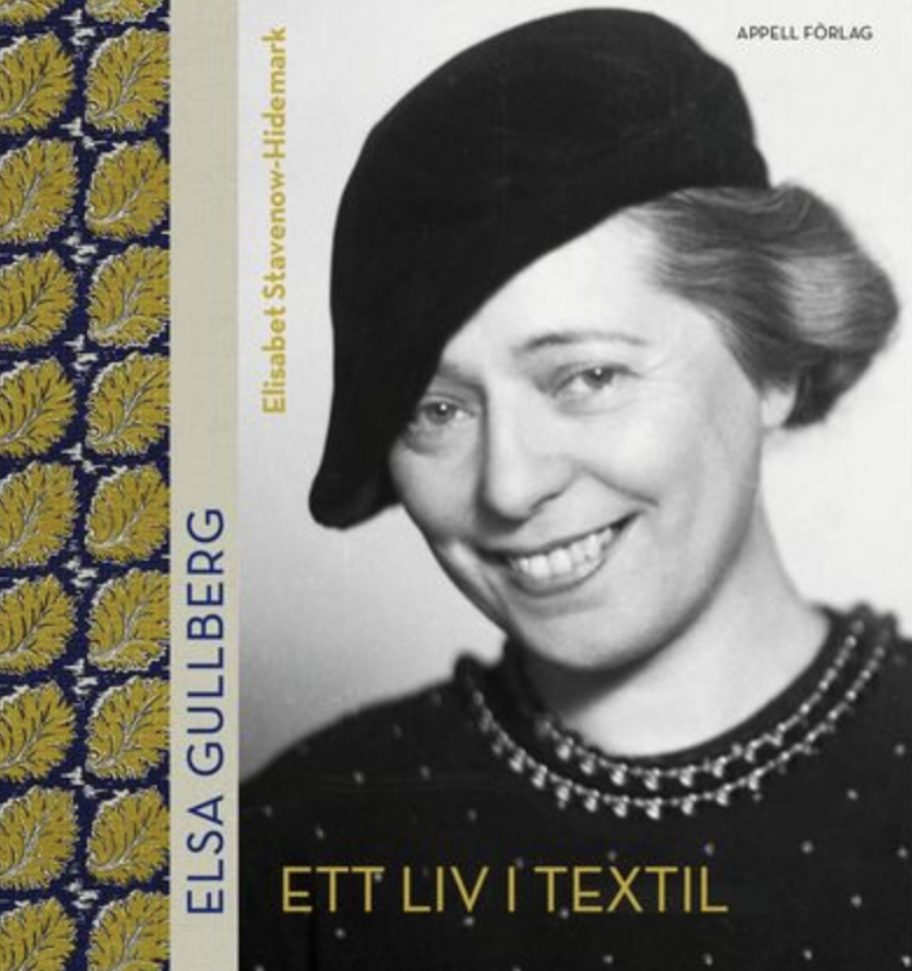
Konstig Books
Elisabet Stavenow Hidemark published Elsa Gulbberg’s biography in 2019 outlining her pioneering work in the Swedish textile and design industry. Some excerpts from the book outlining her role in Scandinavian design –
“Between 1943 and 1945, Elsa Gullberg employed a total of 45 individuals, comprising weavers, seamstresses, retail staff, receptionists, office workers, cleaners, and colleagues working at the silkscreen printers. Collaborating with Austrian textile engineer Richard Künzl, Gullberg became a trailblazer in Sweden by introducing silkscreen printing to her business. This breakthrough allowed for the cost-effective printing of small quantities of drop-curtains and cloth by the meter, a feat unattainable with conventional textile industry rouleaux machines that necessitated larger material volumes. Through silk screen printing, designs crafted by artists such as Arthur Percy, Vicke Lindstrand, and Elsa Gullberg herself were translated into metered materials. Her store boasted an extensive array of interior fabrics tailored for private use. Gullberg’s enterprise remained rooted at its original location until 1955, when she relocated to Vaxholm and rebranded her business as E. G. textil AB.”
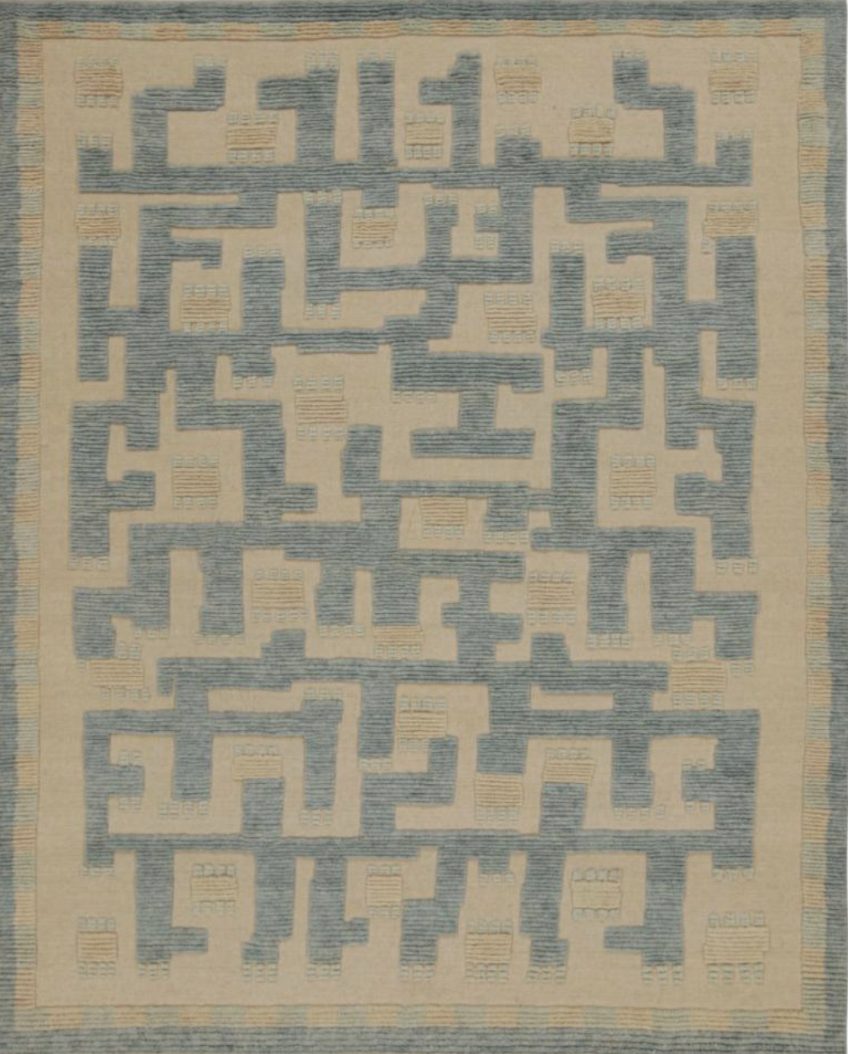
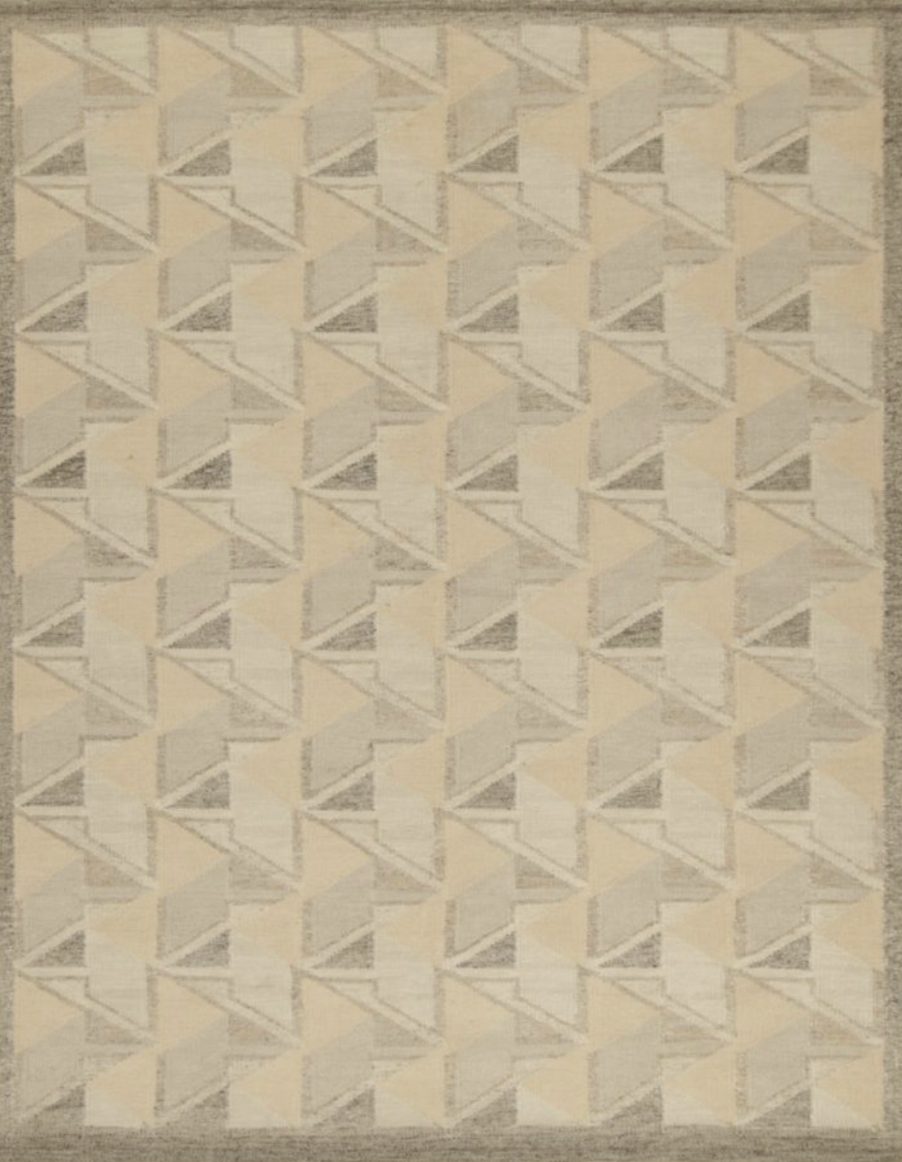
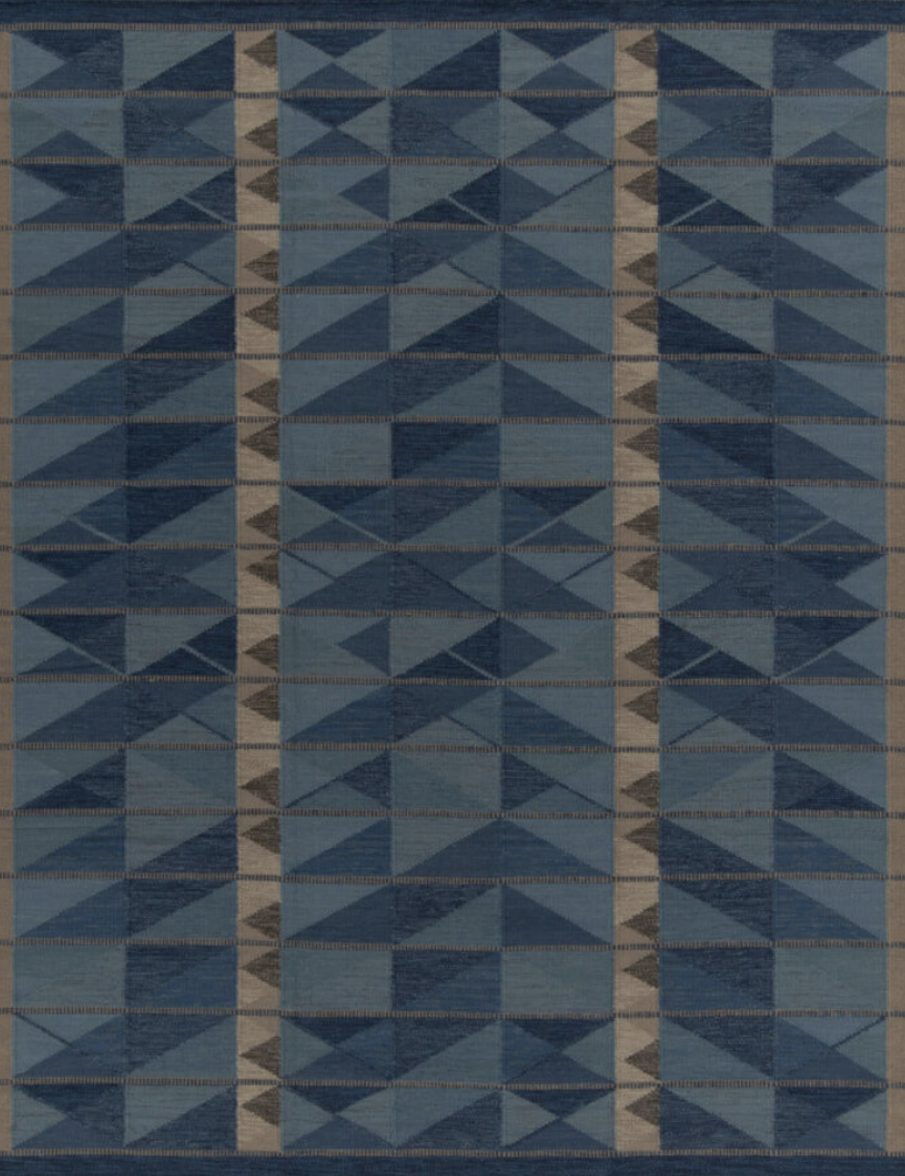
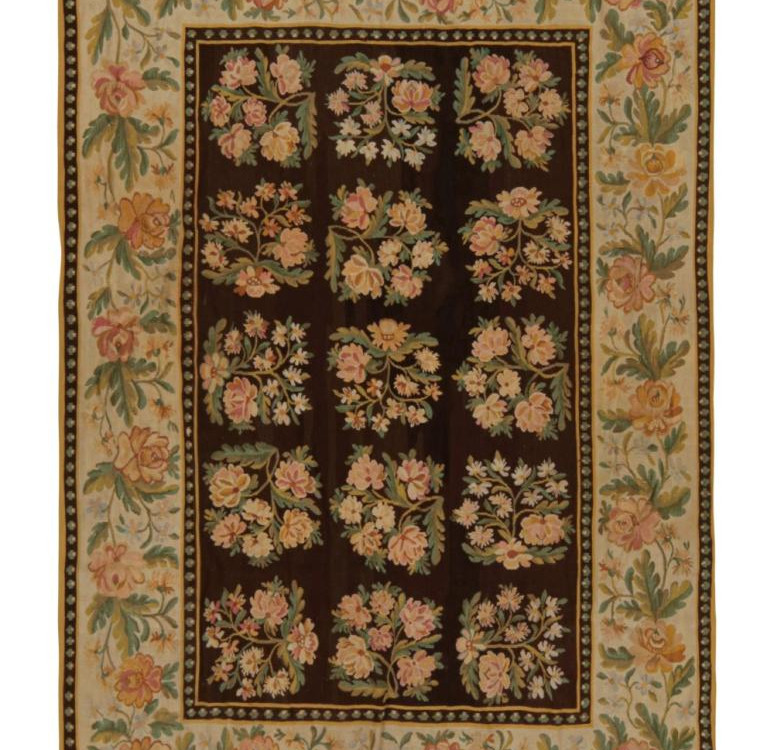
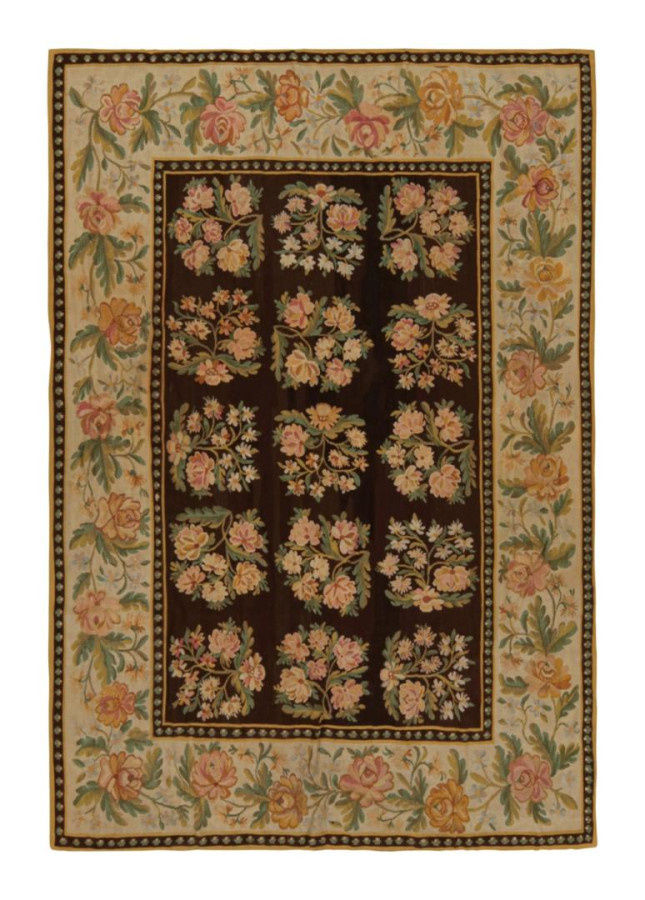
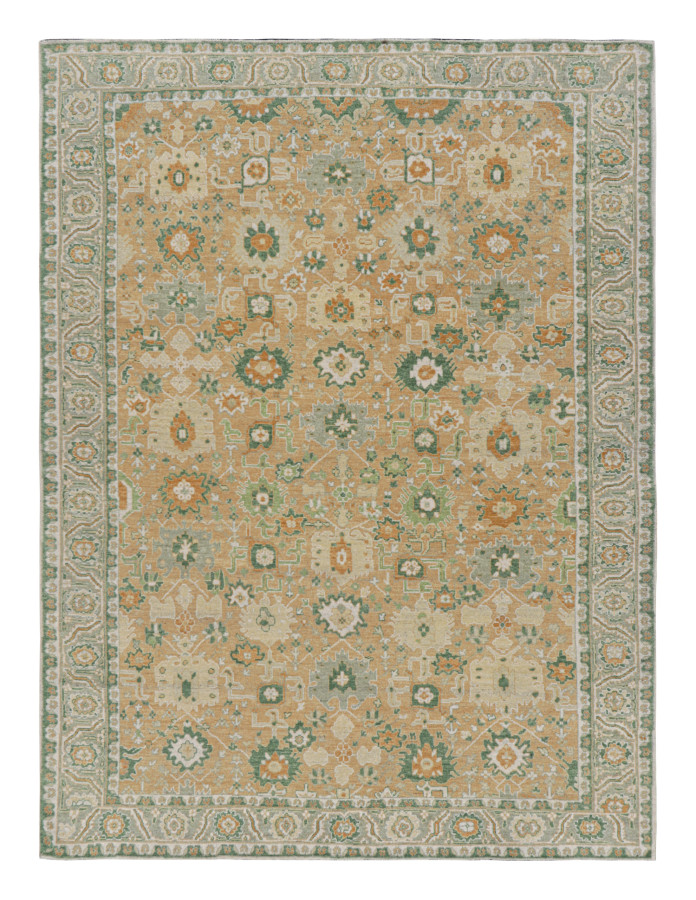
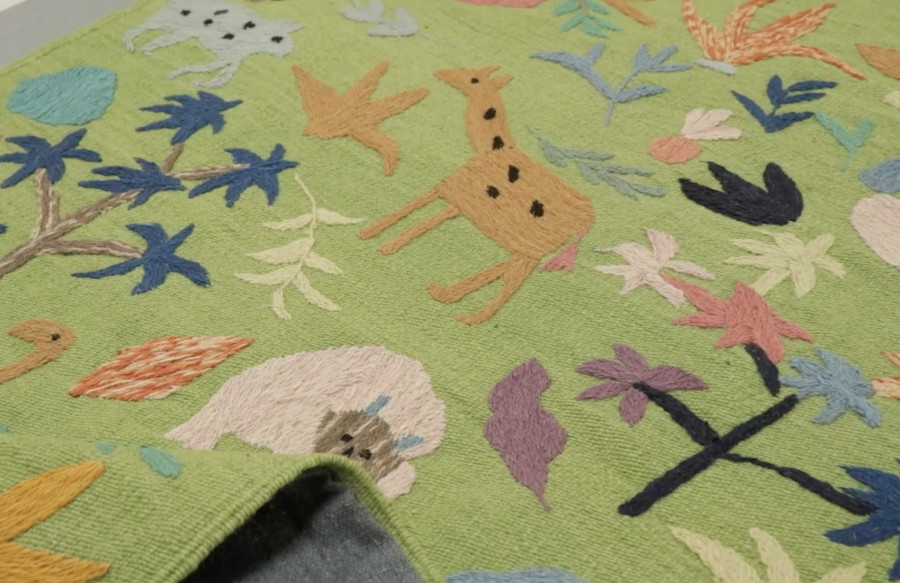
View Rug & Kilim’s Scandinavian rugs and flatweaves as inspired by Elsa Gulberg’s designs and reinterpreted in a modern sensibility with refined textures, durable construction, large sizes, and wider range of colors –