

Art Deco And Art Nouveau Movements: A Comparative Analysis
March 26, 2024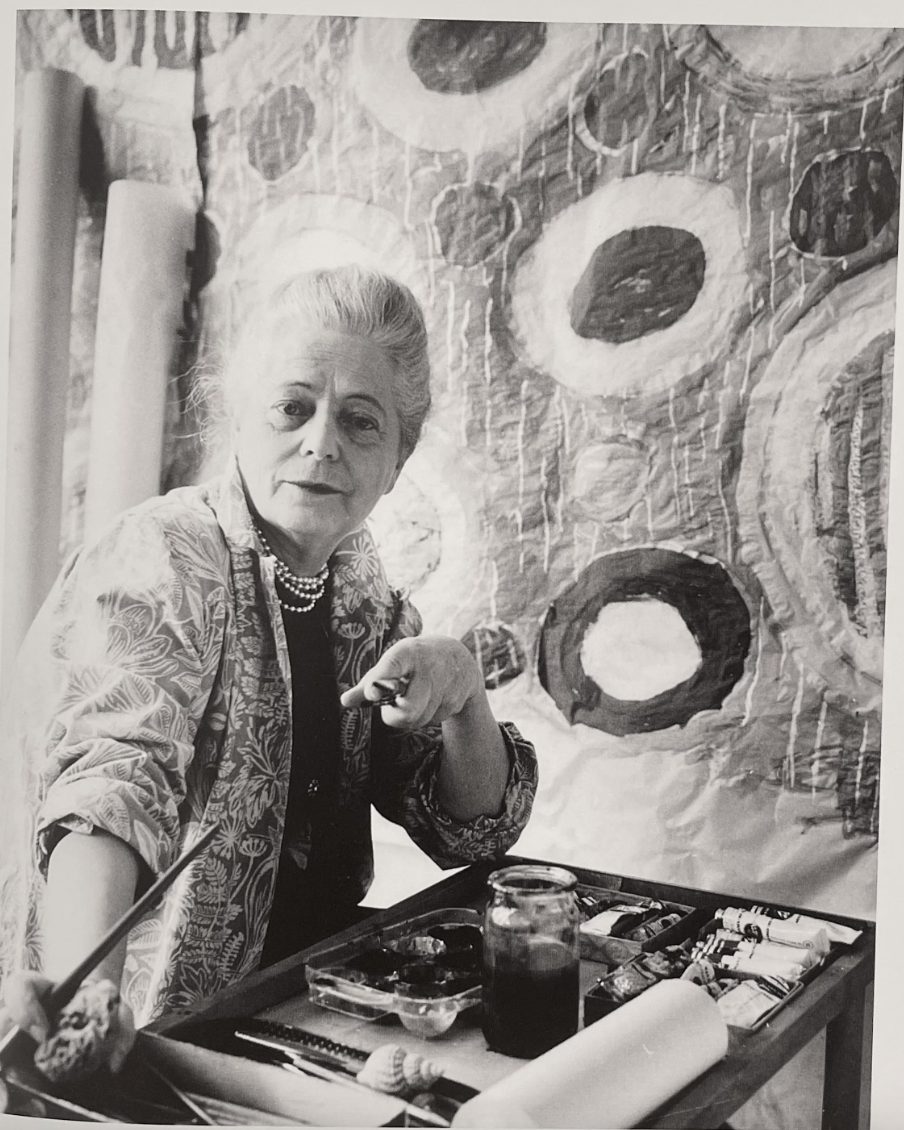
Elsa Gullberg and Swedish Design Innovations through ‘Textilier’
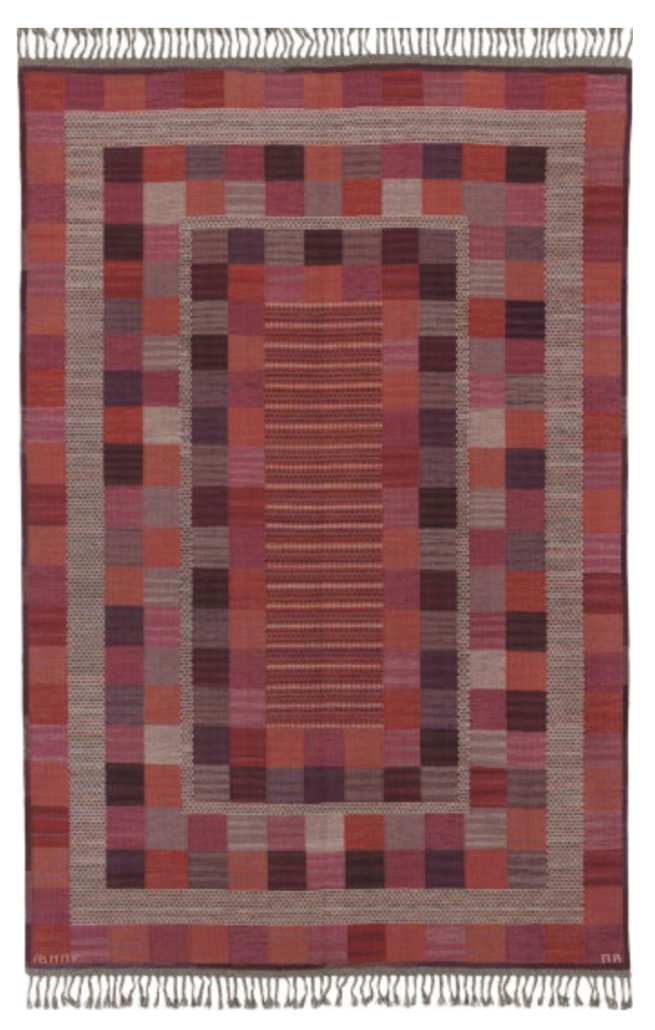
March 26, 2024Marianne Richter gained recognition for her daring use of vibrant and unconventional colors. Her designs radiated a sense of optimism, featuring intricately woven geometric elements with robust textures. She pioneered employing unique materials like jute, hemp, and paper cord, and demonstrated exceptional skill in working with high-quality yarns, as well as varying yarn weights within a single piece to achieve a more dynamic effect.
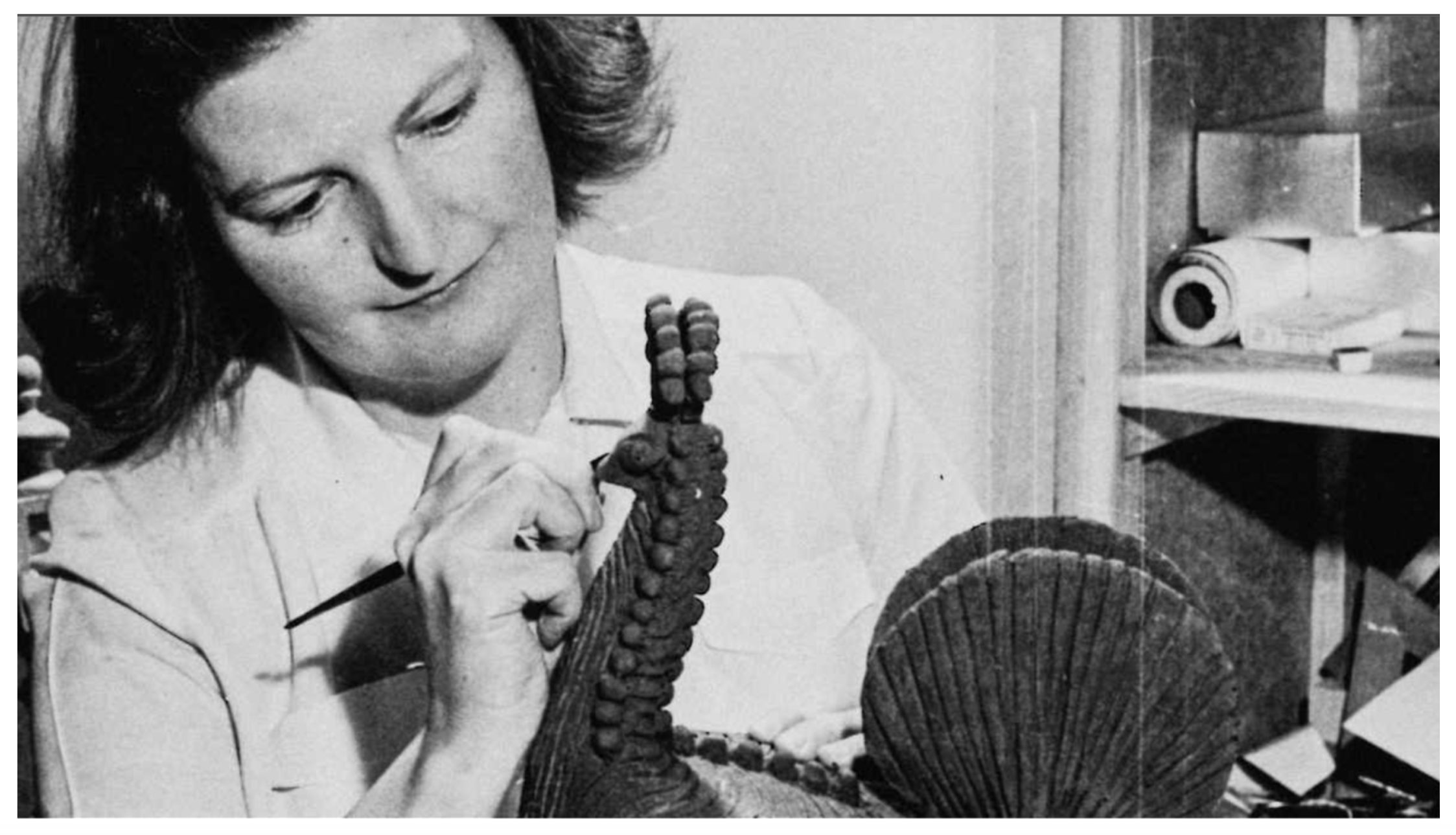
Märta Måås-Fjetterström {MMF} https://www.mmf.se/story/artists/marianne-richter
In 1937, Richter embarked on a summer position at Märta Måås-Fjetterström in Båstad, referred to as “the weavers’ temple” in Sweden. Here, she focused on creating drawings and watercolor paintings, marking the inception of her illustrious career in the arts. Five years later, she was officially brought on as a designer, swiftly establishing herself as one of the workshop’s most influential leaders. At a time when machine-made rugs were gaining prominence, Richter’s exceptional hand-weaving skills set her apart. She honed various innovative weaving techniques, producing a range of Swedish flatweaves, pile rugs, tapestries, and the longer pile rugs known as “rya” in Swedish. Richter held this significant role until the 1970s, concurrently teaching at Konstfack, a distinguished arts and design university in Sweden. Alongside her tenure at Märta Måås-Fjetterström, she also lent her talent to designing patterns and fabrics for other notable fashion and textile houses in Sweden.
In the post-World War II era, Sweden was undergoing significant progress, and the populace sought to move beyond the somber of previous years. Marianne Richter astutely observed the shifting preferences of the public and responded by creating vibrant and cheerful designs tailored for a broad audience. These pieces departed from tradition, offering a fresh perspective that resonated with a nation hopeful for the future. Richter’s rugs found their way into the homes of countless Swedes and were also exported worldwide, reaching destinations as far-flung as the Far East, Europe, and the United States.
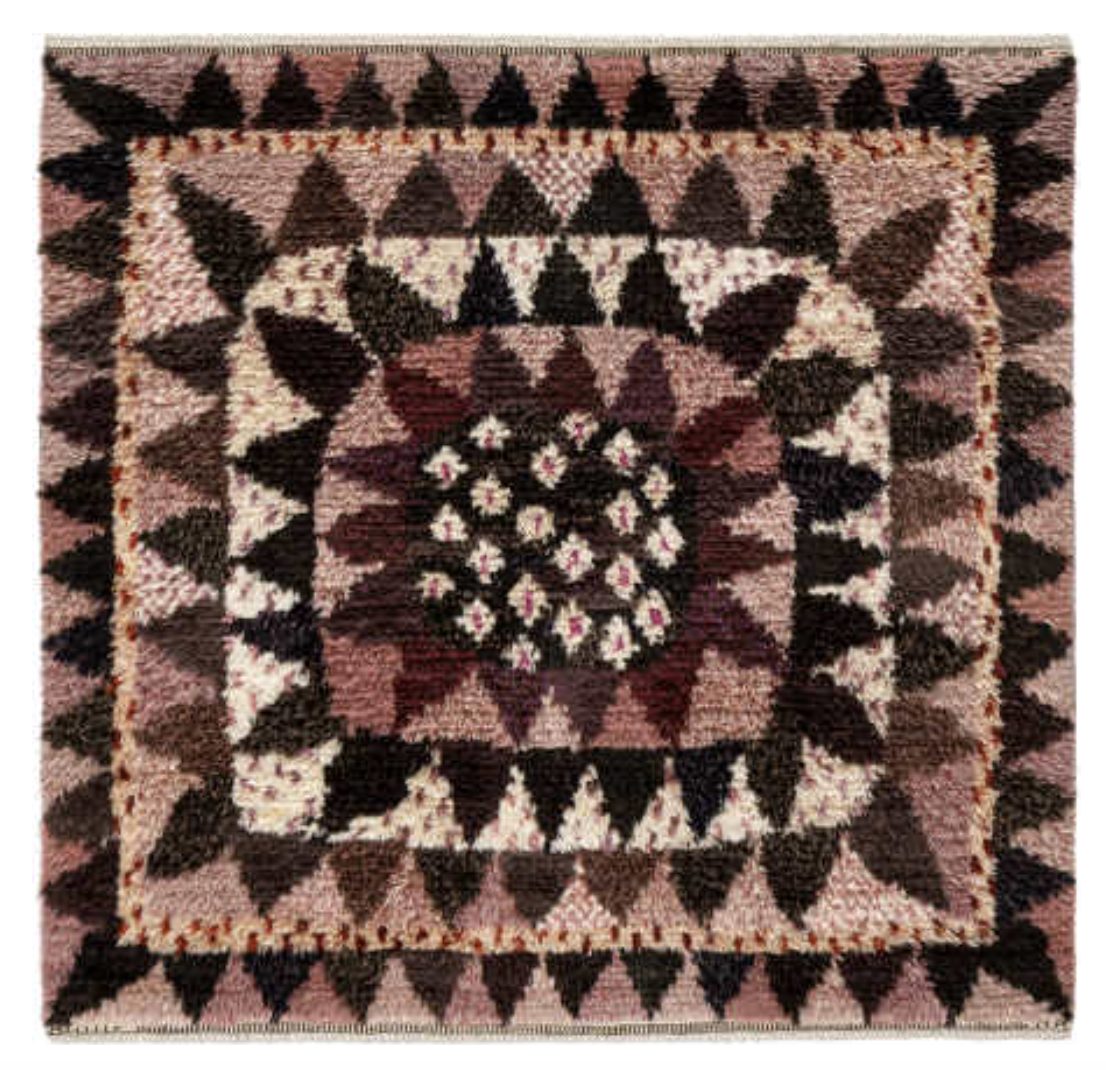
MMF – https://www.mmf.se/story/artists/marianne-richter
As the mid-20th century approached, other textile makers like Ingrid Dessau and Berit Koenig began to adopt design principles of Richter. Her contemporaries recognized the value and saw the growing public interest in these lively, graphic designs, which, at the time, stood out as remarkably original and nuanced.
In a remarkable collaboration, the Nordic countries took on the task of designing different rooms within the United Nations headquarters in New York. The responsibility for creating the “Swedish Room,” also known as the United Nations Economic and Social Council Chamber, fell to the esteemed architect Professor Sven Markelius.
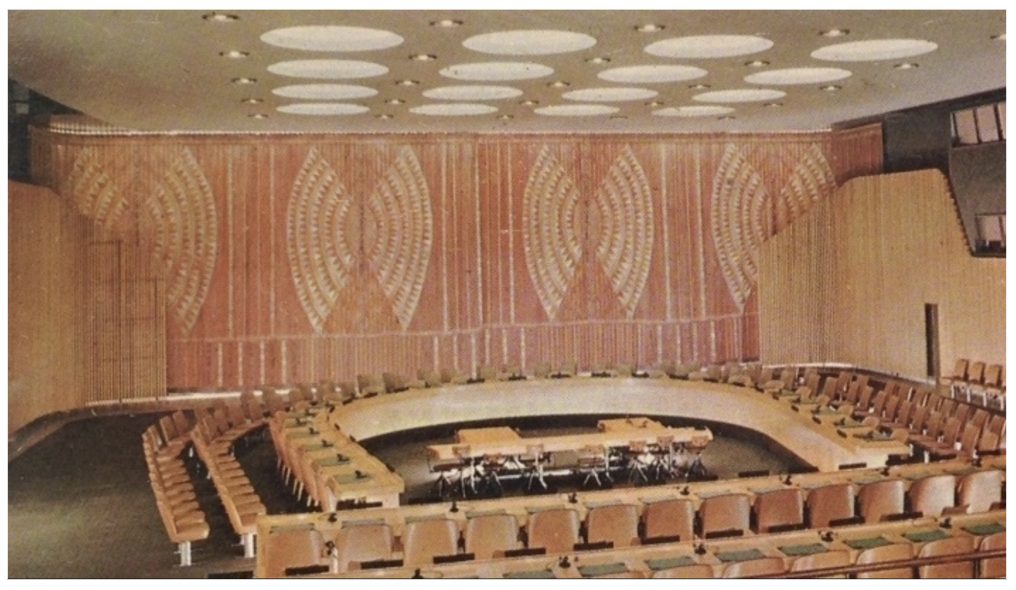
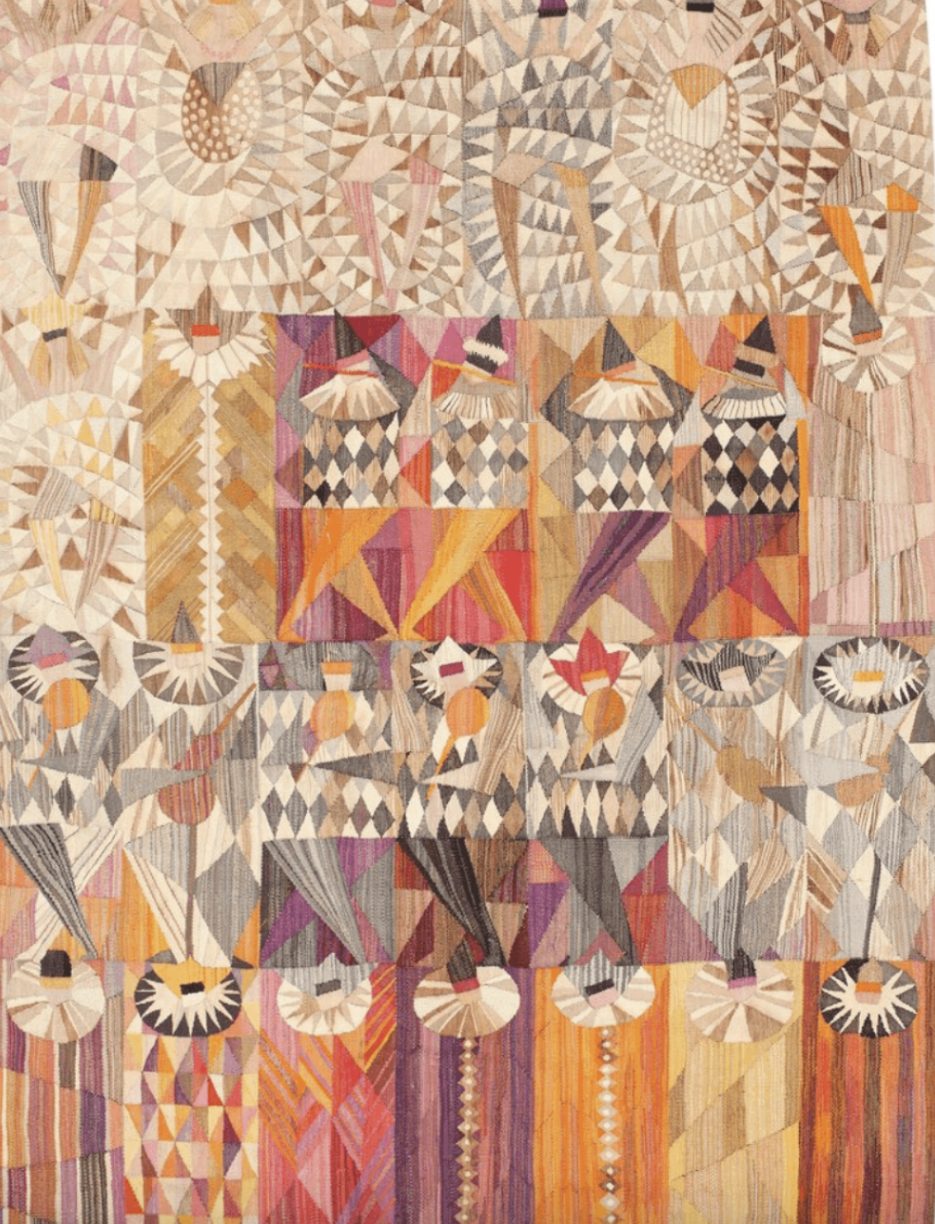
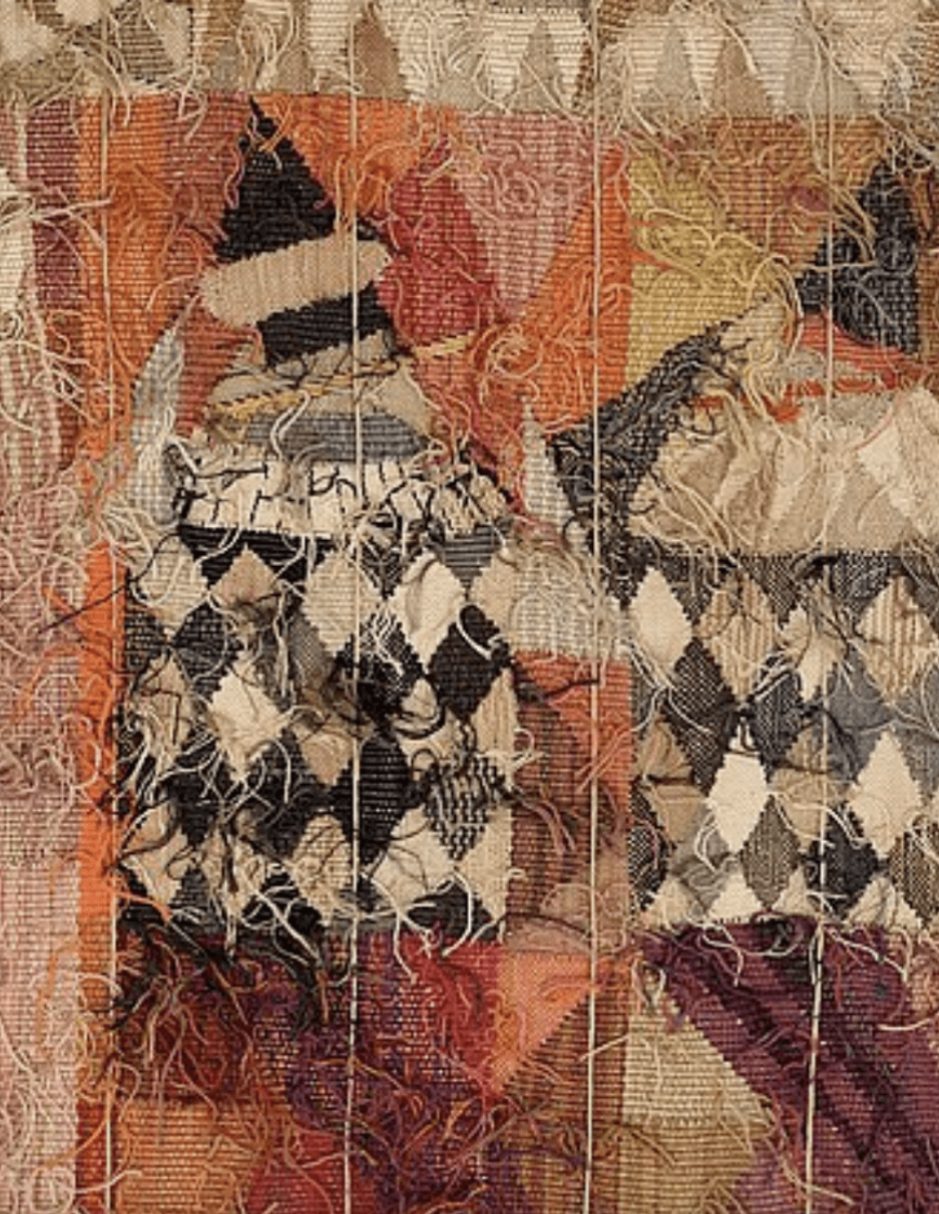
Marianne Richter was entrusted with the commission to design an extraordinary textile. Once Richter had finalized the design, incorporating a weaving technique innovated by Barbro Nilsson, the curtain required the dedicated efforts of ten skilled MMF weavers, who dedicated two full years to its creation. The curtain, measuring an impressive 220 square meters, stood approximately seven meters in height and stretched over 22 meters in length. It was woven in four distinct pieces, consisting of a bottom border piece and an upper section for each side of the curtain. In accordance with Richter’s design, the warp threads were oriented horizontally. This technique, borrowed from tapestry weaving, helped minimize drooping once the curtain was hung. In 1952, as a generous gift from the Swedish government, the curtain found its permanent home at the United Nations. Its vibrant red and orange hues, coupled with the distinctive “angel wing” pattern, garnered much admiration both in Sweden and the United States. However, there was some initial confusion regarding the interpretation of the large woven shapes.
Throughout her illustrious career, Marianne Richter received numerous prestigious commissions. Her creations, including tapestries and rugs, found a place of honor in significant locations such as the United Nations headquarters in New York, the Swedish embassies in Argentina and Brazil, and the Swedish legation in Tehran, Iran. In later years, Richter’s work became a staple in upscale offices, hotels, and private residences worldwide. Marianne Richter passed away in 2010 in Mölle, Sweden, leaving behind a substantial legacy. Among Nordic designers, her contributions remain highly esteemed.
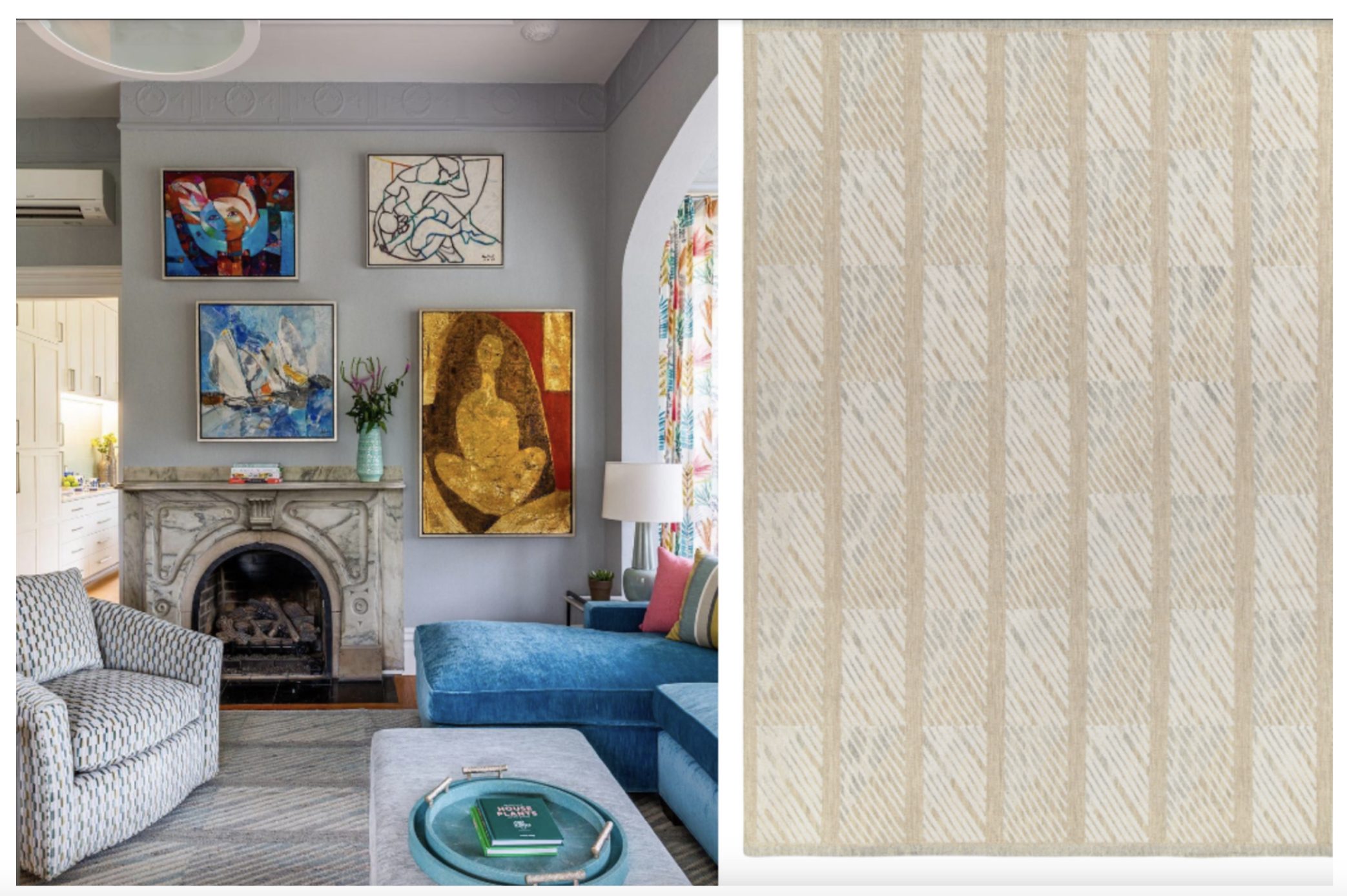
Betsy Wentz X Rug & Kilim
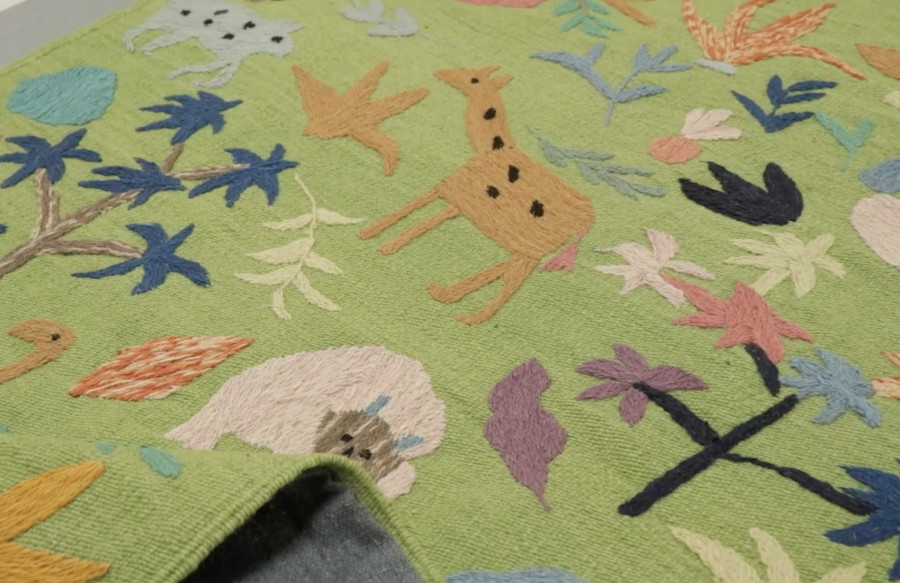
Rug & Kilim’s custom Scandinavian flat weave based on Richter’s mid-century aesthetics, placed in a space designed by Betsy Wentz, one of the numerous prominent designers that we work with.
View more similar Scandinavian rug, kilim and flat weave patterns as influenced by weaving traditions and the leaders behind the Swedish rug movement, here – https://rugandkilim.com/product-category/scandinavian/
“While each texture and weave in the Scandinavian Collection enjoys a culmination of honorific and innovative elements, it’s fair to argue that the Scandinavian Flat Weave line has become the most exempletive of honoring the weaving traditions and preserving the spirit while still innovating the process for a modern audience. An already-proven hallmark of the Scandinavian flat weaves we create, conversely, is undoubtedly the durability and weight of the body that’s been achieved in the weaving process. Having known every major style of Kilim and flat weave for more than 40 years of collecting and studying the cultures of renown, Rug & Kilim has developed a noteworthy, proprietary construction that has proven itself on the modern market in the current luxury designer’s foremost considerations.”
Read more about our Scandinavian custom rugs, kilims and flat weaves here– https://rugandkilim.com/a-guide-to-handmade-custom-rugs/
Here are some of the other designs by Marianne Richter –