
Palatial Rugs as Centerpieces in Salons, Galleries & Embassy Homes
June 20, 2025
Swedish Rya Rugs in Art, Architecture, and Culture: The High Art of Scandinavian Textiles
July 7, 2025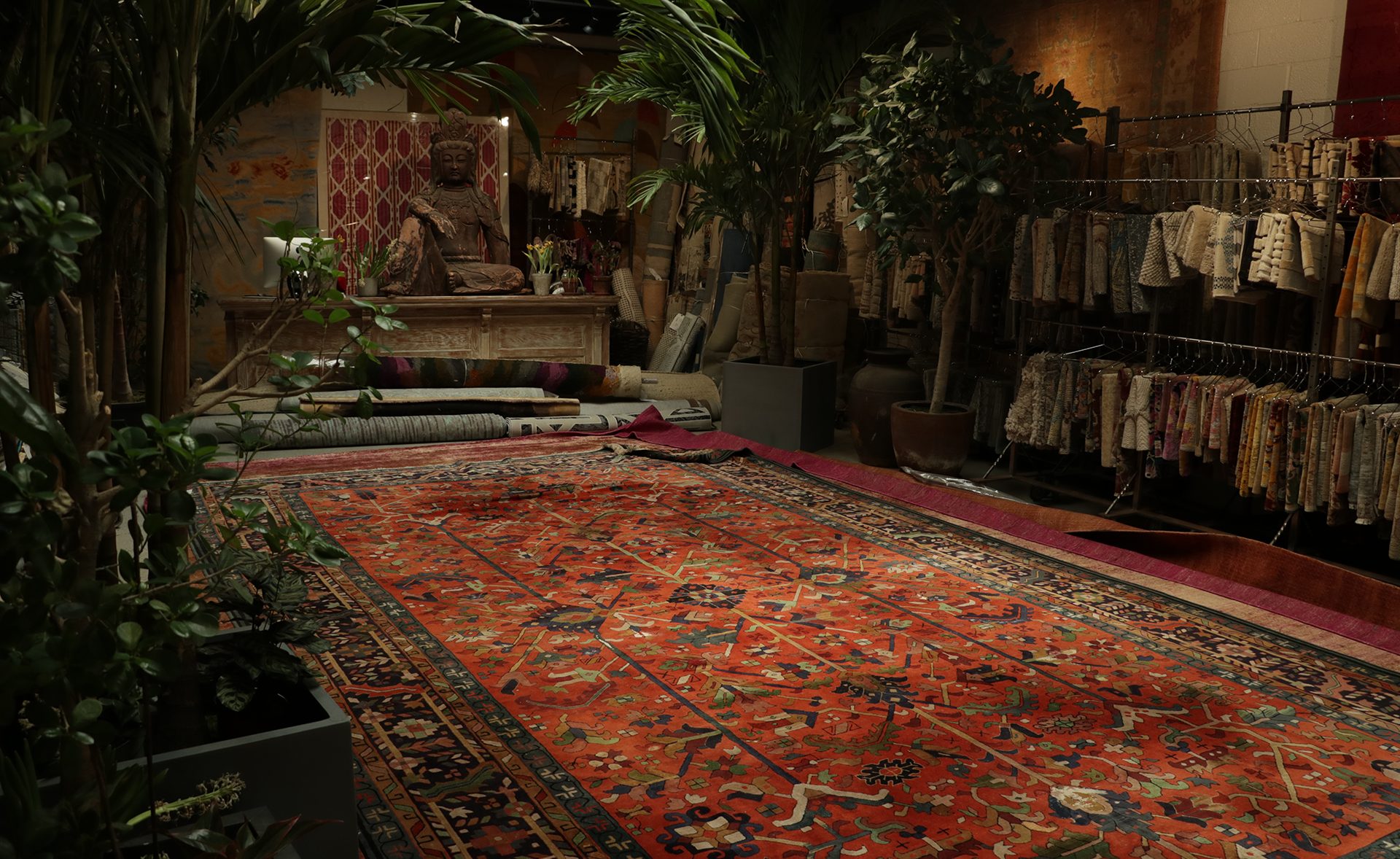
R&K Showroom
Afshar rugs are among the most compelling expressions of nomadic Persian weaving. Originating from the Afshar tribe—a semi-nomadic Turkic-speaking group with roots in Central Asia—these rugs represent a distinct confluence of tribal tradition, migratory culture, and artisanal precision.
Today, Afshar rugs are recognized for their deeply saturated natural dyes, structurally sound weaving, and the geometric clarity of their aesthetic—qualities that place them alongside Baluch, Shahsavan, and Qashqai weavings in the taxonomy of Persian tribal carpets.
Historical Provenance: From Oghuz Migration to Iranian Plateau
The Afshars were originally part of the Oghuz Turkic confederation and migrated into Iran during the Seljuk and later Safavid periods (11th–17th centuries). By the 18th century, Afshar tribes were prominently settled in southeastern Iran, particularly around Kerman, Sirjan, Baft, and Rafsanjan—regions that would become critical nodes of rug production.
This migratory history is reflected in their rugs, which display design elements absorbed from multiple regions: Northwest Persian medallion structures, Caucasian color palettes, and Central Asian motifs. Unlike urban Persian carpets, which are tied to workshop traditions and royal patronage, Afshar rugs emerged from domestic, tribal, and seasonal contexts, often woven on portable horizontal looms.
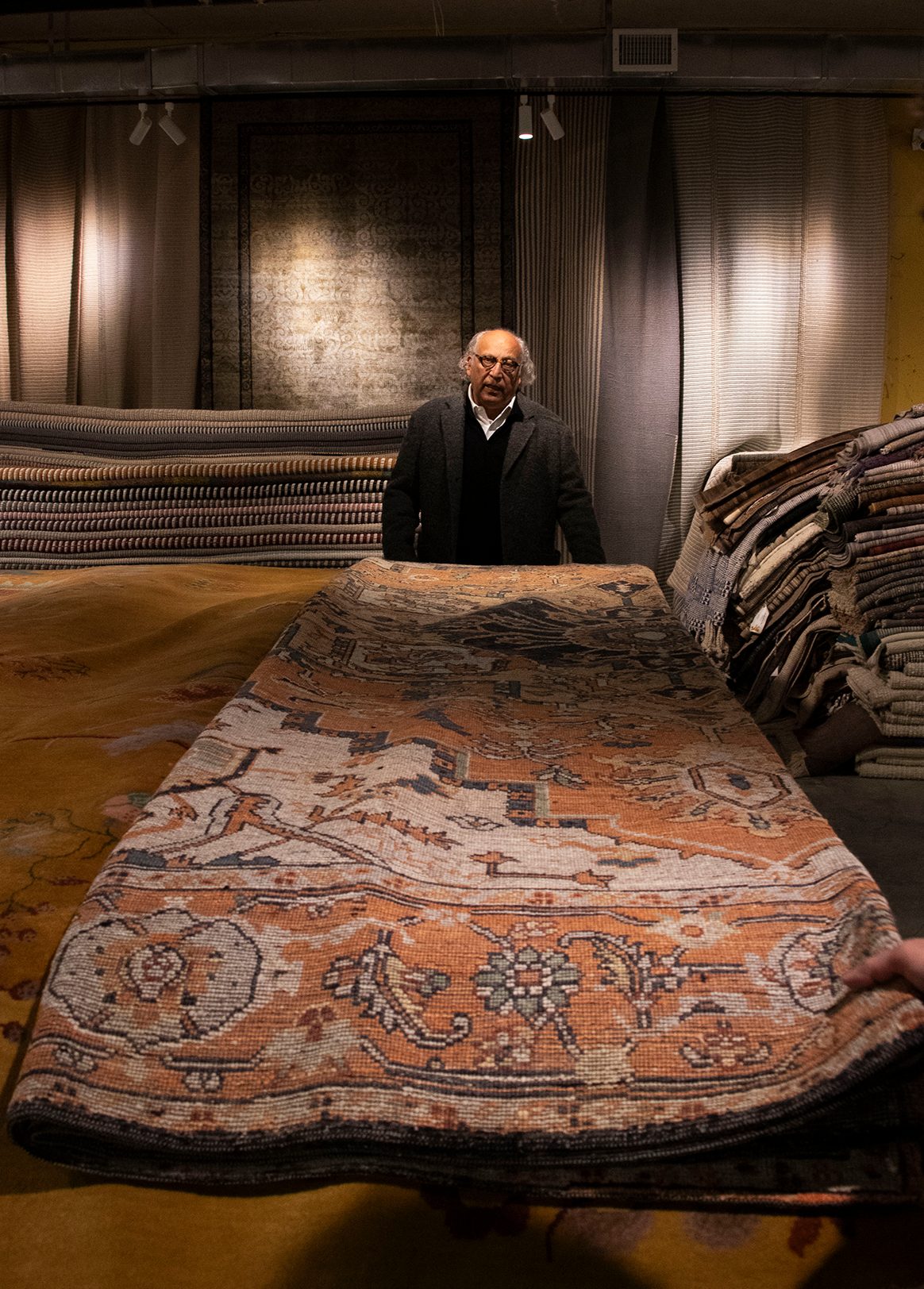
Our Principal: Jahanshah Nazmiyal
Format, Foundation, and Technique
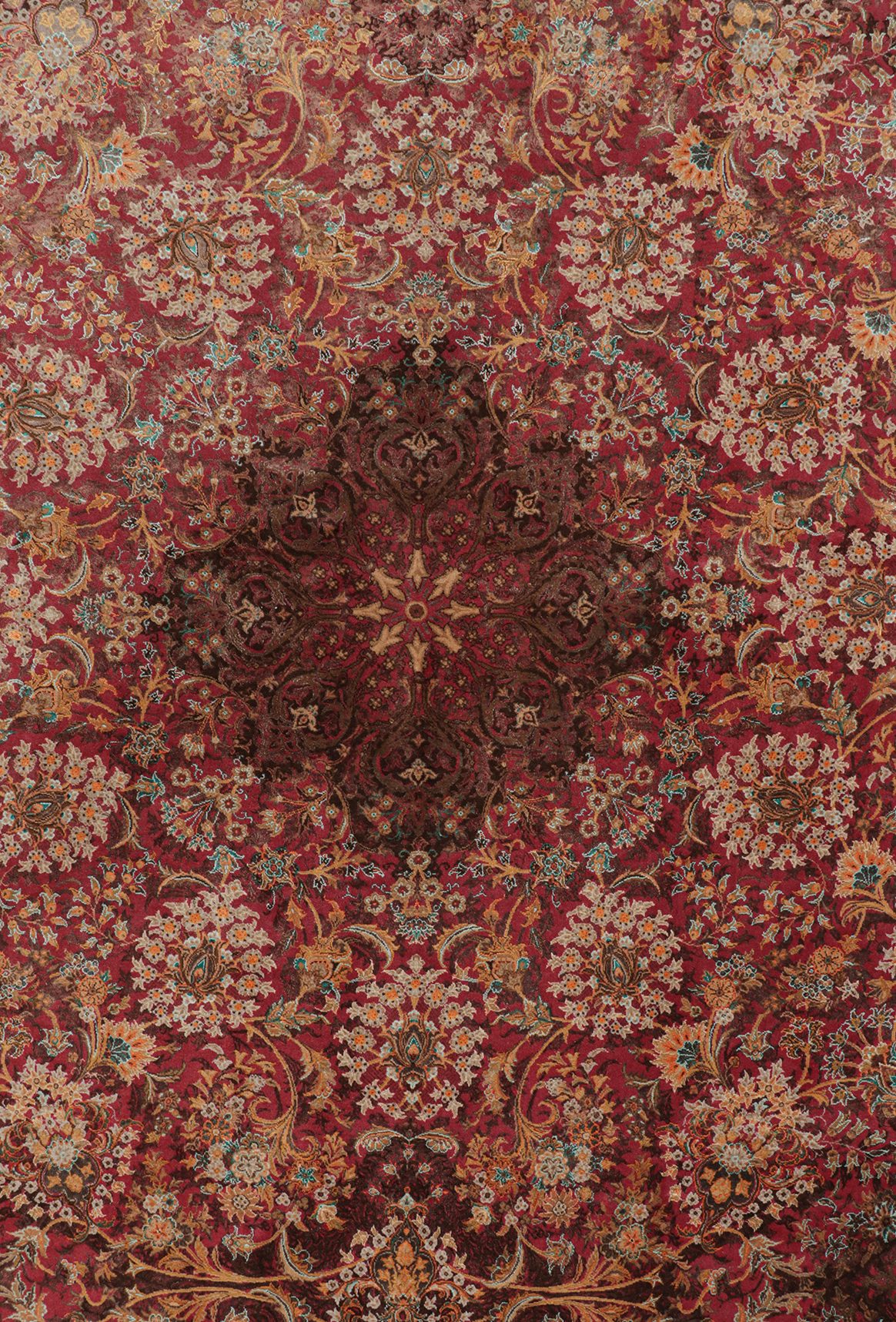
Afshar rugs are most often small to mid-sized, ranging from 3×5 to 5×7 feet, due to their semi-nomadic weaving environment. The construction is uniformly symmetrical (Turkish) knot on wool warps and wefts, although late 19th-century examples may introduce cotton. Knot density varies but tends toward 90 to 130 knots per square inch, placing them above utility-grade tribal rugs but below the refined densities of Tabriz or Kashan pieces. Edges often display braided selvages or goat hair binding, and the finishes on the kilim ends can sometimes feature embroidered tribal signatures or motifs. These technical choices are not merely utilitarian but encode cultural and familial information.
Iconography and Coloration
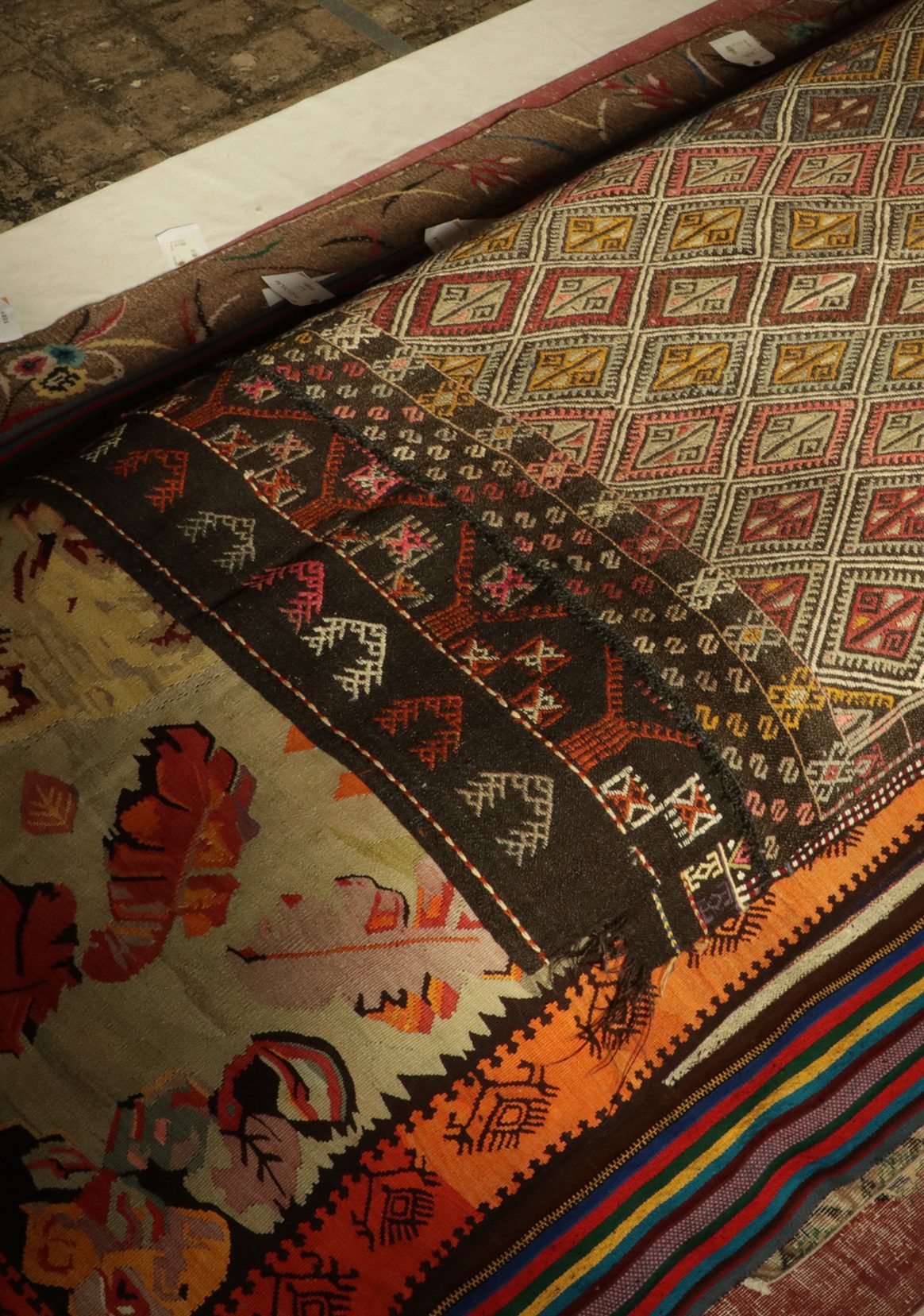
Afshar rugs are notable for their geometric clarity—repetitive octagons, stylized botehs, angular palmettes, and so-called “dragon and phoenix” forms appear in frequent rotation. Central medallion compositions (especially elongated hexagons and “multiple stepped” diamonds) are common, but often placed within field layouts that resist rigid symmetry—mirroring the improvisational ethos of nomadic life.
Coloration is among their most celebrated features. Using natural dyes, Afshar weavers consistently employed a deep madder red, indigo blue, ivory, burnt sienna, and occasional pistachio or celadon greens. These palettes are not arbitrary but are tied to the mineral and botanical landscape of southeastern Iran.
A unique class within Afshar styling is the “Tree of Life” design, which often breaks the field into a narrative schema—a rare feature in tribal rugs. Another hallmark is the “Chicken Design” or Morgh rug, wherein stylized birds populate the field in rhythmic, directional patterns.
R&K Library
Tribal motifs
Kerman, Sirjan, and Baft Subtypes
While broadly grouped under the Afshar name, significant regional variations exist:
Kerman-Afshar Rugs: Exhibit the highest technical refinement. Fine knotting, soft wool, and complex medallion layouts.
Sirjan-Afshar Rugs: More rustic and densely colored, often with strong tribal motifs such as lattice arrangements or repeated botehs.
Baft and Rafsanjan: Known for bolder colors and heavier wool piles. These are often more robust and utilitarian.
Collectibility and Valuation
Afshar rugs have increasingly gained traction among collectors and institutions in the last 30 years. Their authentic tribal character, compact sizes, and artisanal integrity make them especially attractive in a modern context where appreciation for handmade and narrative textiles is resurging.
At auctions, 19th-century Afshar rugs with intact structure and strong color retention can command $5,000 to $15,000, with particularly rare examples fetching significantly more. Early 20th-century rugs are more accessible, typically ranging from $1,500 to $4,000, depending on condition and design uniqueness.
Leading institutions, including The Textile Museum (Washington, D.C.), Louvre’s Islamic Art Department, and The Carpet Museum of Iran, hold documented Afshar examples in their permanent collections. Notably, several seminal exhibitions—such as “Tribal Rugs of Iran” (2007, British Museum)—have highlighted the genre’s distinct status.
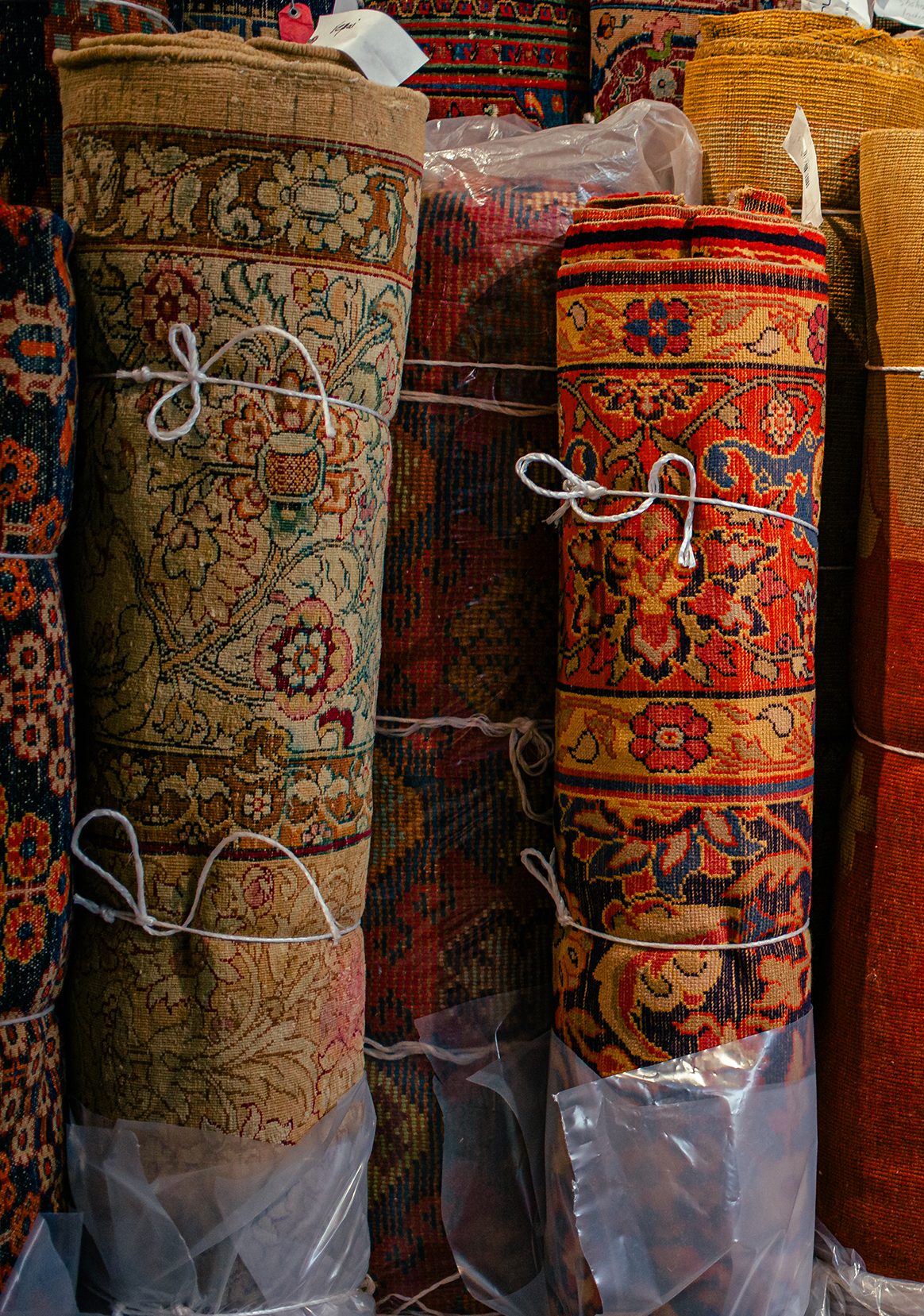
R&K Inventory
Authentication and Conservation
Due to increasing demand, market adulteration has become an issue. Rugs falsely labeled as Afshar but woven in Pakistan or Afghanistan have entered the lower end of the market. Therefore, expertise in structural analysis (e.g., knot orientation, selvage construction, and dye spectroscopy) is essential for authentication.
Conservation of Afshar rugs requires careful balance: their dyed wool fibers are reactive to UV and moisture, and improper cleaning (especially chemical washing) can damage both dye saturation and pile integrity. Institutions often recommend low-humidity storage, rotational display, and conservation-grade lining for wall mounting.
The Contemporary Relevance: Why Afshar Rugs Matter Now
The global art market’s renewed interest in tribal authenticity, indigenous techniques, and material culture has positioned Afshar rugs as both collectible art and historical documents. Their semi-nomadic heritage resonates with modern themes of mobility, transcultural exchange, and identity.
Moreover, contemporary designers and collectors are using Afshar rugs in minimalist and industrial interiors—creating compelling dialogues between rustic geometry and modernist spatial principles. The current moment is not about nostalgia, but re-contextualization.
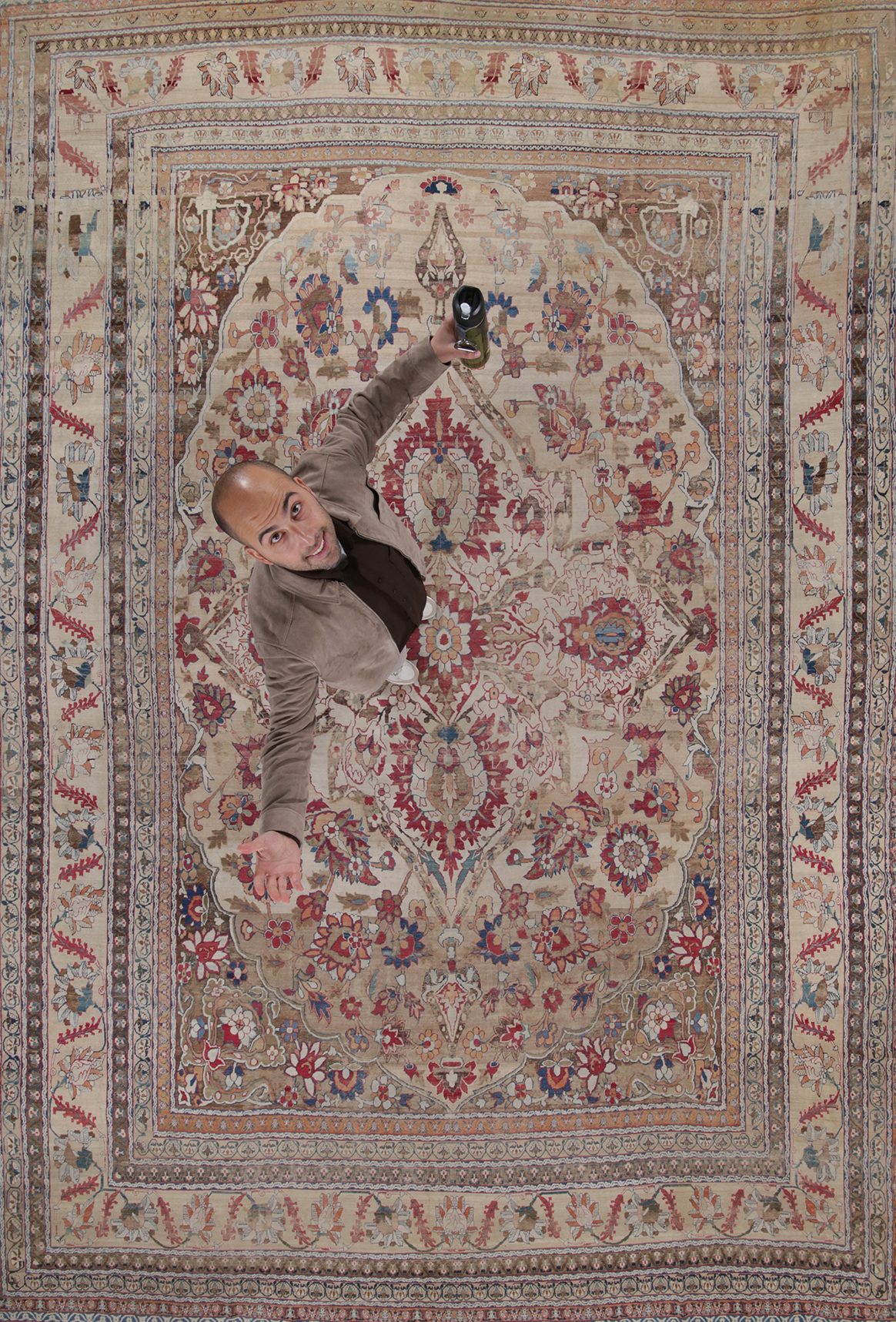
Cyrus Nazmiyal standing on an Oversized Antique Persian Kermanshah Rug with Floral Patterns, from Rug & Kilim
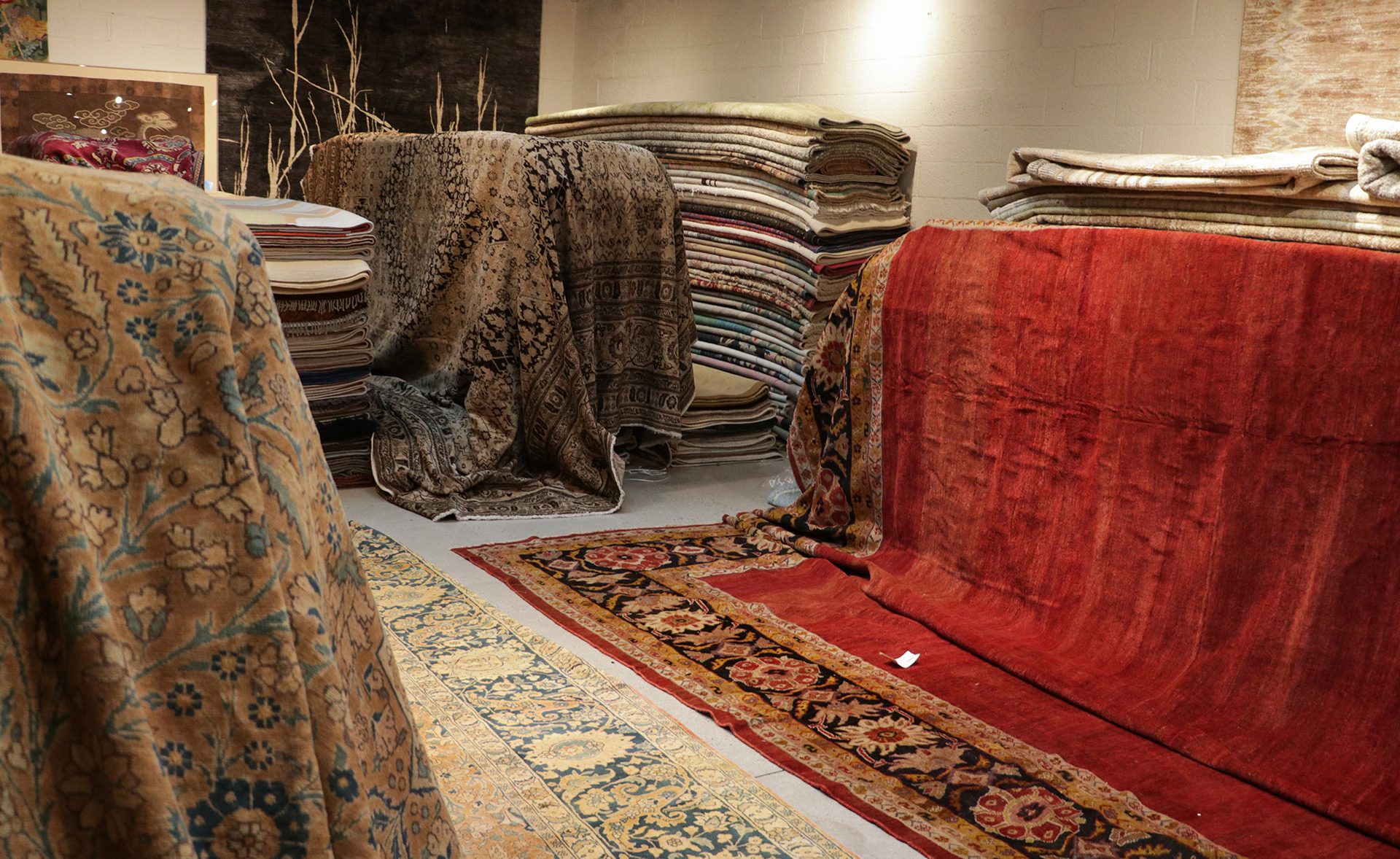
R&K Warehouse
A Textile Archive of a Vanishing World
Afshar rugs are not merely decorative floor coverings. They are tactile repositories of history, migration, and visual literacy. Each piece encapsulates an ecosystem—floral dyes, regional iconographies, intergenerational memory—that resists the standardization of mass-produced textiles.
As institutions, collectors, and designers increasingly turn to authentic, storied objects in an era of digital saturation, Afshar rugs stand out not just as art, but as cultural evidence.
To understand them is to read a map—one woven in wool, stretched across time, tribe, and terrain.