
Margaretha Reichardt and the Introspective Modernism of Bauhaus Design
April 14, 2025
Why We Fell for the Floor: The Soul of Rug & Kilim
April 20, 2025
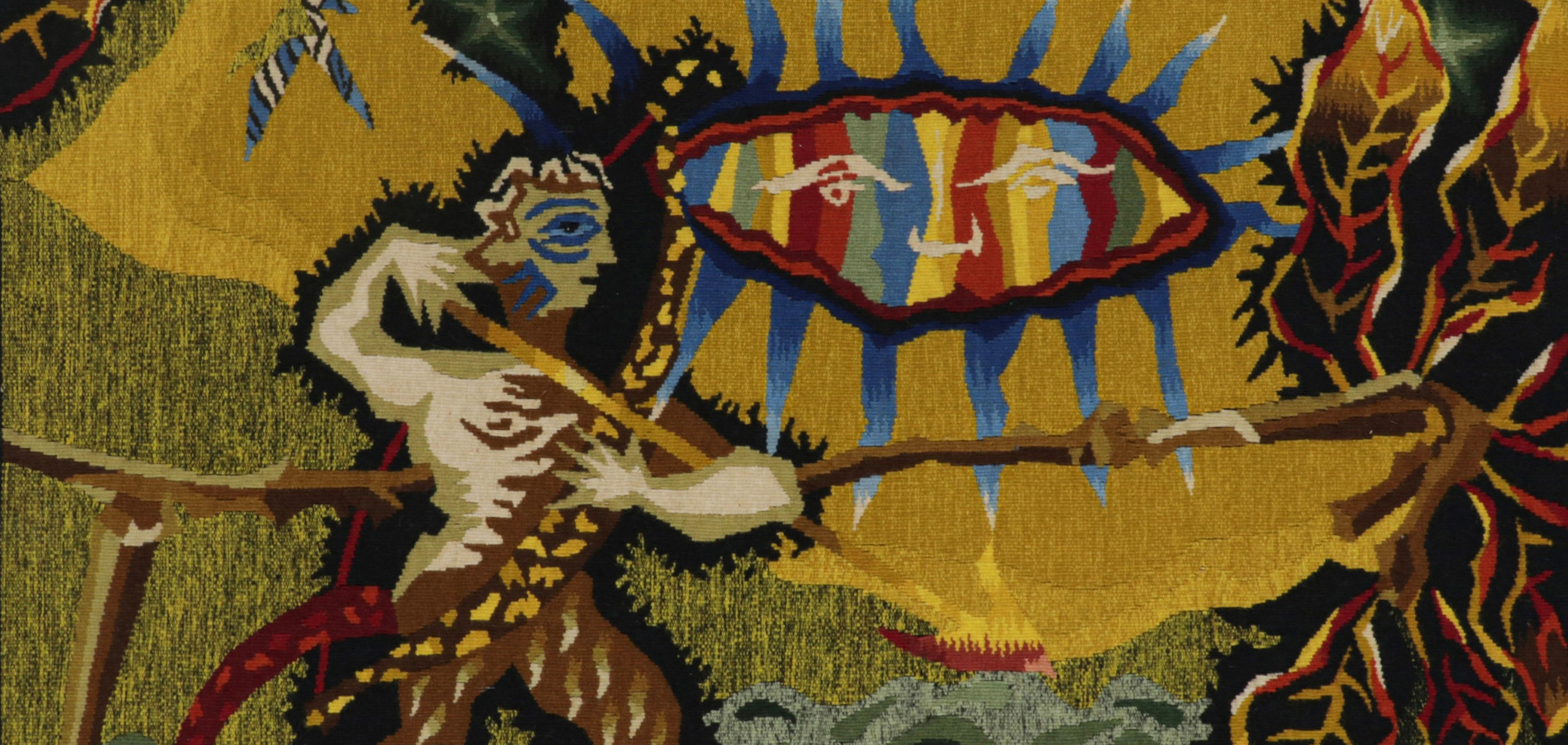

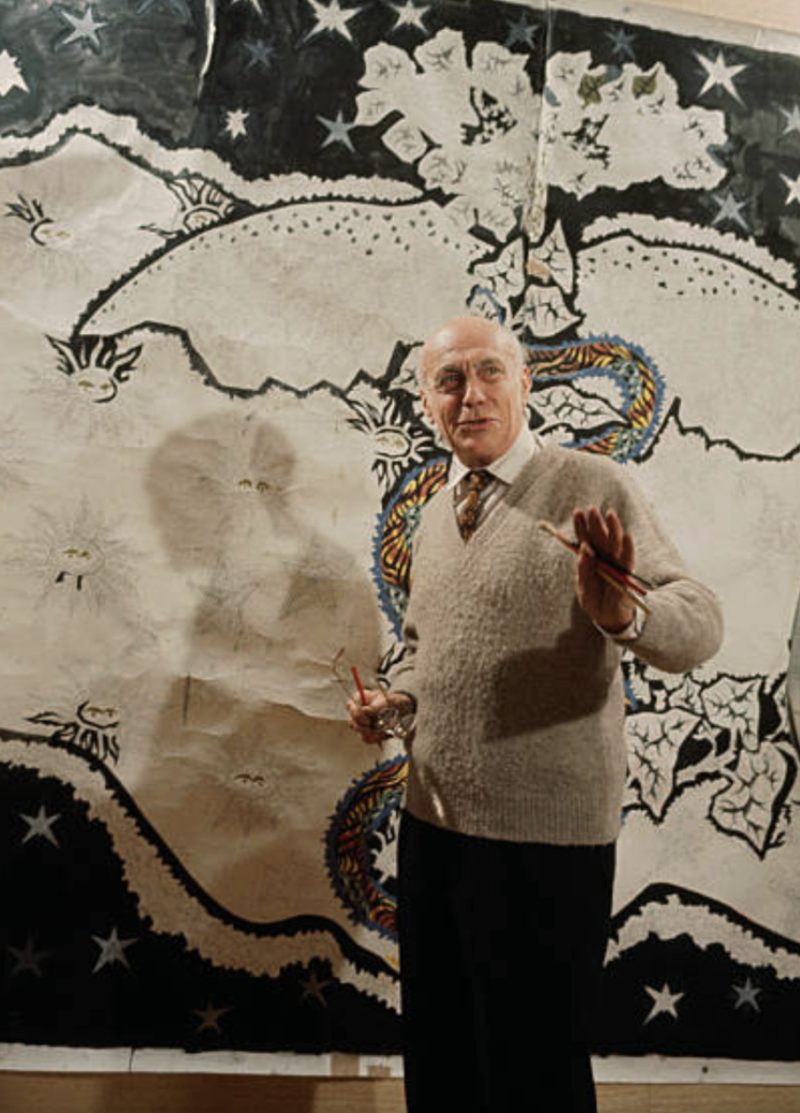
Jean Lurçat
The wall is never just a wall
It is the first silence in a room. A vertical abyss that listens before it echoes. A surface, yes — but also a skin, a threshold, a psychic borderland where the self dissolves into ornament, into memory, into dream.
It is here, at this metaphysical edge, that the tapestry unspools itself — not merely as fabric or decor, but as an expression of interiority. When the needle becomes an oracle, and fiber a fugue of the subconscious, we arrive in the singular realm of Jean Lurçat and Leonora Carrington — two figures whose imaginations stitched surrealism into the very seams of space.
Lurçat and Carrington did not simply adorn the wall; they reinscribed its purpose.
Through their hands, it ceased to be background. Instead, it became architecture for the mind, a theatre of the irrational. Their tapestries are not soft furnishings. They are woven psychodramas, visual hauntings, offering the wall as canvas, stage, and sanctuary — a place where the fantastical breathes and the erotic, mythical, and esoteric linger in wool and weft.
The Post-War Phoenix: Jean Lurçat and the Aubusson Resurrection
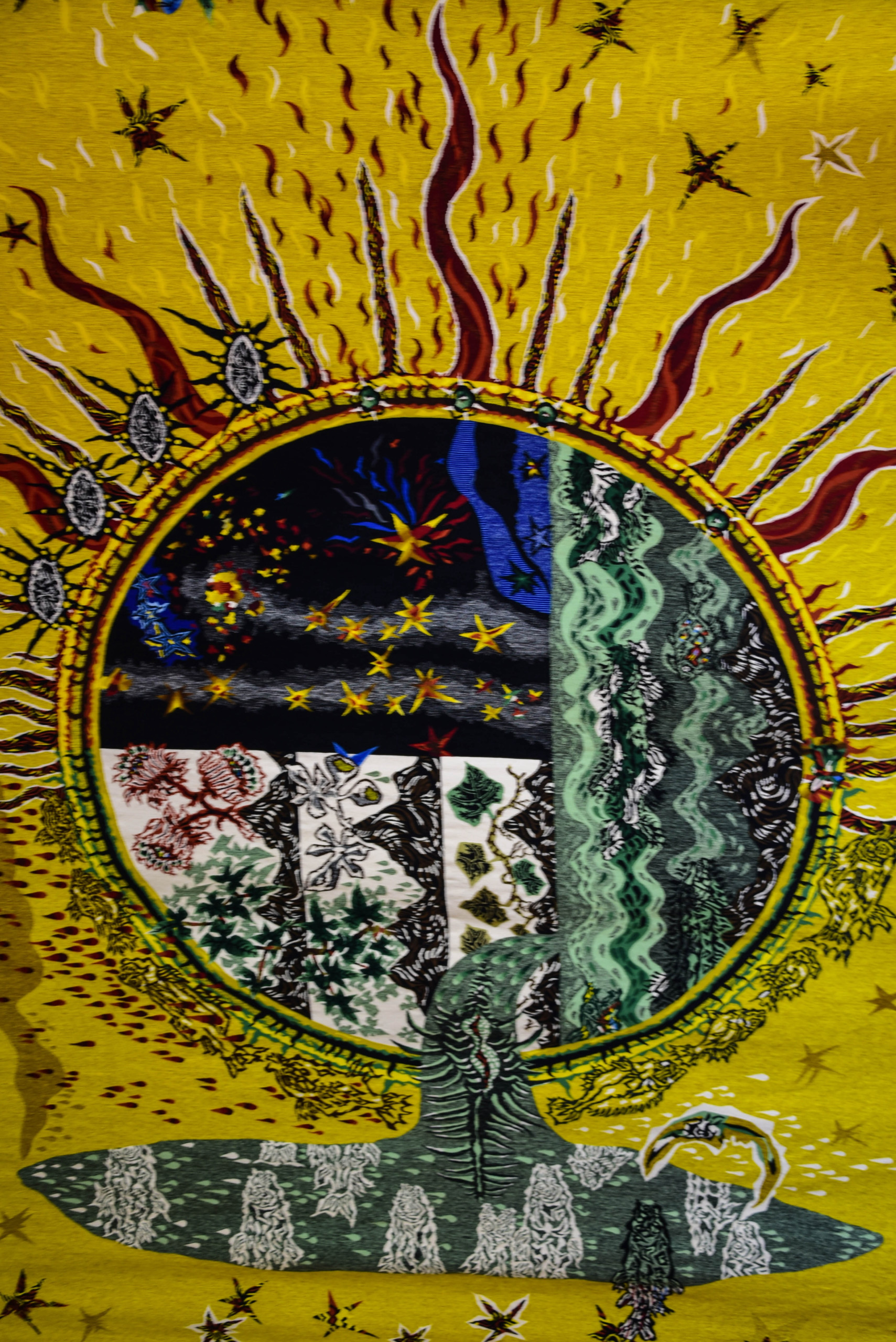
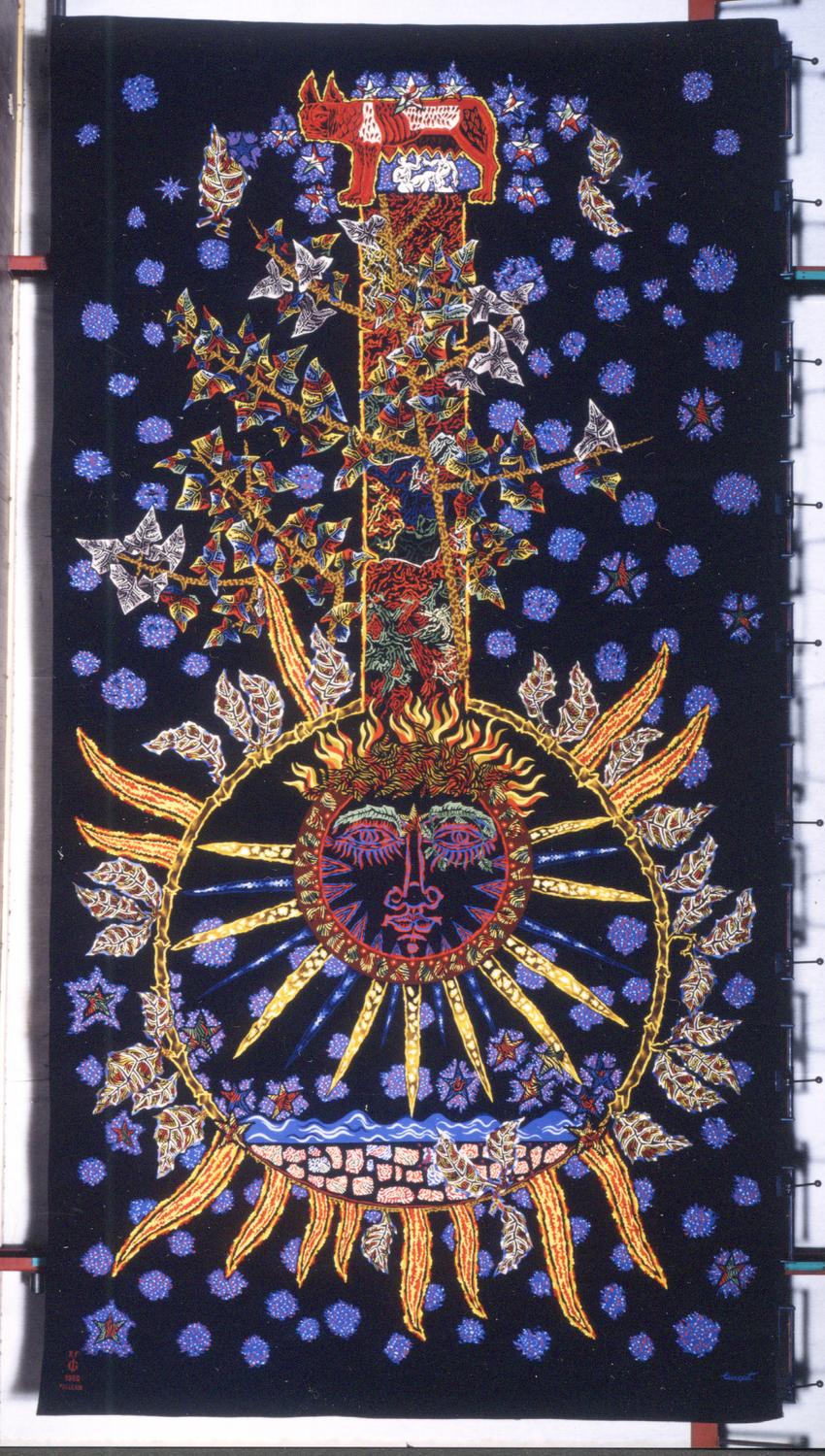
In the ashes of World War II, France sought to recover its soul — and Jean Lurçat reached for the loom. A painter turned master weaver, Lurçat revitalized the Aubusson tapestry tradition, elevating it from near-extinction into a potent symbol of cultural resurrection. But his vision was not nostalgic. Instead, it was modernist and mystic, marrying bold, hieroglyphic forms with cosmic allegory.
Drawing from medieval iconography, astronomy, and alchemical symbology, Lurçat’s compositions were not simply decorative but metaphysical cartographies. His famous cycle Le Chant du Monde (The Song of the World), a spiritual response to the apocalypse of Hiroshima, is perhaps the closest tapestry has ever come to theology. Through firebirds, solar flares, and undulating glyphs, he rendered the wall into a philosophical cosmos — a place where time unravels and the universe dreams.
In contrast to the post-war obsession with utilitarianism and stripped-down forms, Lurçat rejected functionalism. He reasserted ornament as existential necessity. For him, the tapestry was not an indulgence but a moral imperative — “the mirror of the soul of a people,” as he once wrote. In an era of concrete and steel, Lurçat dared to demand wool, myth, and resurrection.
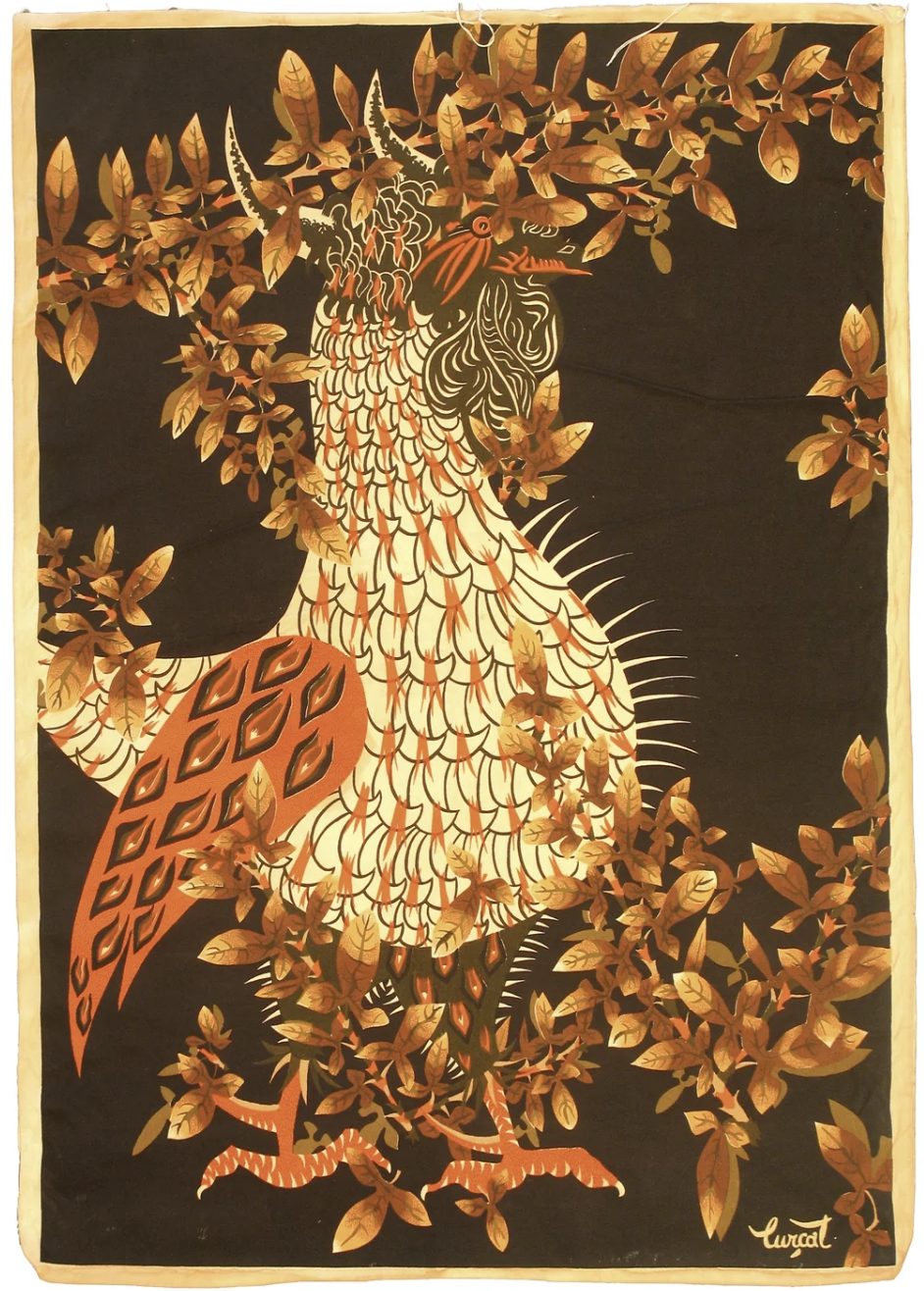
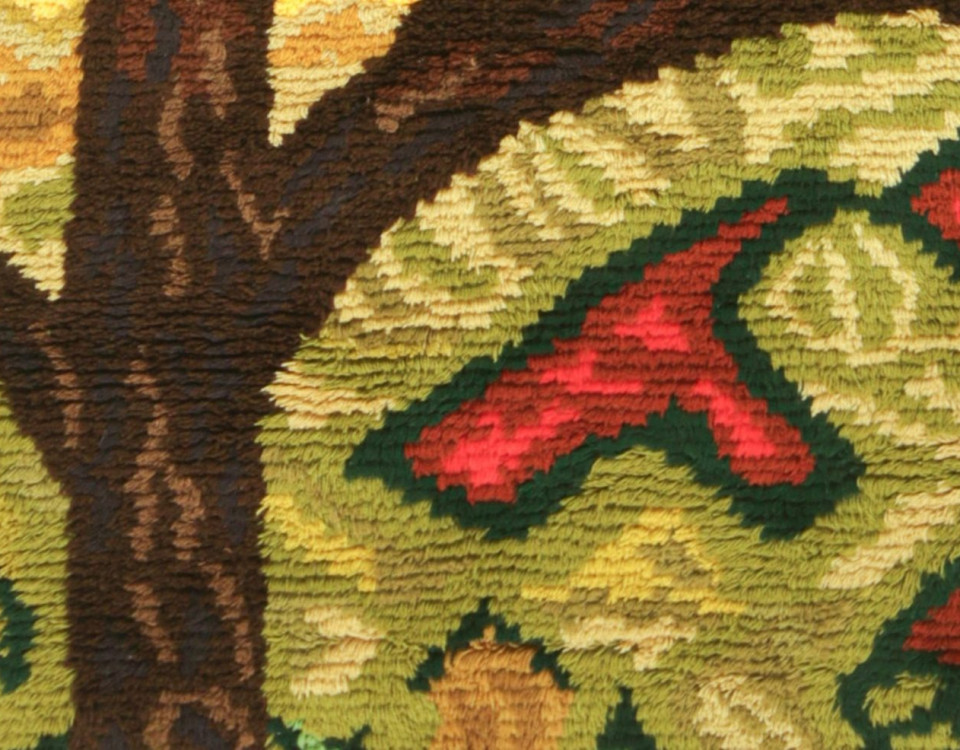
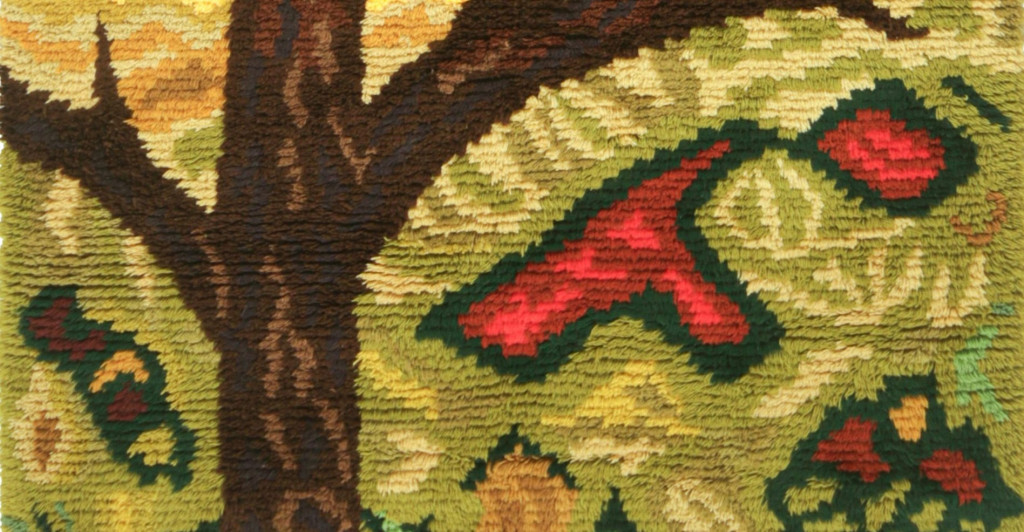
Jean Lurçat Signed Tapestry | 20th century
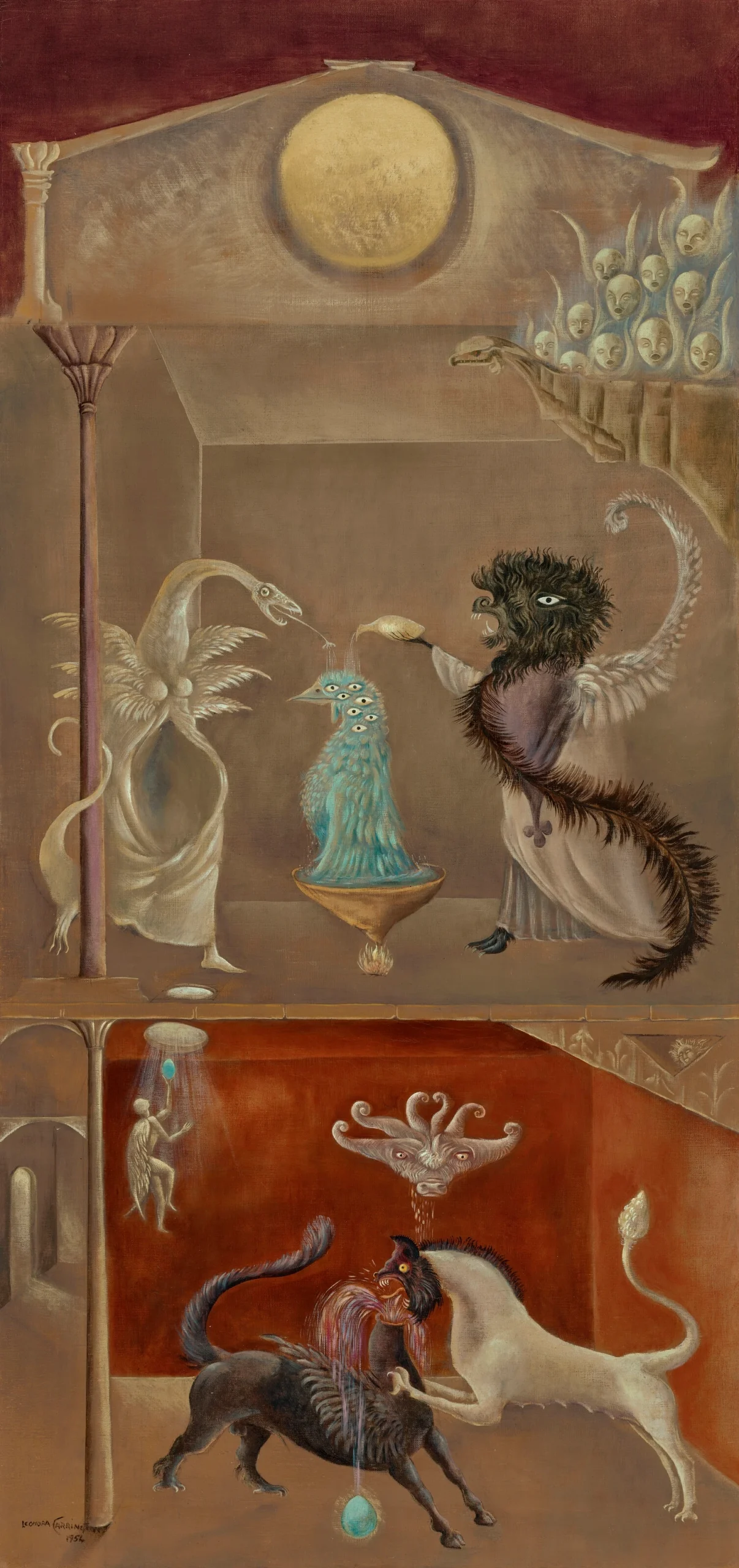
Leonora Carrington | Sacrament at Minos (1954)
Carrington’s Esoteric Loom: The Feminine as Portal
If Lurçat’s wall offered a cosmological map, Leonora Carrington’s tapestries became wombs of the unconscious — a dreamlike weaving of myth, magic, and womanhood. Better known for her paintings and prose, Carrington’s foray into fiber was less prolific but no less profound. Collaborating with Mexican artisans in Chiapas and Oaxaca, she explored tapestry as a ritual act, fusing Celtic, Mesoamerican, and surrealist traditions into a language of interior resistance.
Carrington’s worlds are peopled by chimeric priestesses, veiled beasts, alchemical rites — a bestiary of the psyche. In her textile work, as in her larger practice, she rejects patriarchal logic and invokes the irrational as liberation. These woven surfaces speak to a feminine esotericism, a language of symbols lost to empirical reason but alive in intuition and dream.
Her tapestries become mythopoetic furnishings, inhabiting the home as both talisman and text. They are not hung but invited — as oracles, protectors, or provocateurs. In Carrington’s hands, the tapestry becomes a psychic garment for the room, one that cloaks space in a language too ancient, too tender, for modern speech.
Of Silk and Shadow: Symbolism and Visual Identity
What gives these tapestries their enduring, almost unshakable resonance in contemporary interiors is not simply their aesthetic appeal, but their emotional gravity. There is something primordial in the tactile symbolism of fiber art — a return to the loom as both maternal matrix and mythic labor. The threads of Lurçat and Carrington carry weight, not merely in warp and weft, but in memory, ritual, and dream.
Their works resist the slick surfaces of design minimalism. They absorb light rather than reflect it, drawing the gaze inward. They ask more than to be looked at; they summon remembrance. In today’s high-end interiors, where every object must justify its existence beyond function, their tapestries become the anchor of metaphysical identity — the soul of the space.
Designers like Studio Peregalli infuse Lurçat’s cosmic abstraction into neoclassical grandeur, allowing the archaic to converse with the opulent. Pierre Yovanovitch, known for his soulful restraint, often styles surrealist tapestries as sacred interruptions — where quiet rooms are unsettled by a sudden oracle in wool. Faye Toogood, with her sculptural sensuality, has gestured toward Carrington’s mythology, drawing on dream logic to build spaces that feel both tactile and uncanny.
These tapestries are no longer simply collected — they are curated as psychic events.
Collectors, Custodians of the Sublime
It is no surprise that collectors of surrealist tapestry are often curators of personal mythologies. Peggy Guggenheim, whose Venetian palazzo still echoes with the visual ghosts of Max Ernst and Carrington, embraced these woven dreamscapes as emotional anchors. Niki de Saint Phalle, herself a mythmaker in mosaic, curated spaces thick with symbolism — where the tapestry functioned as ritual wall and dreamscape window alike.
To hang a Lurçat or Carrington is not to decorate. It is to enter a contract with the unconscious.
It is to offer the wall not as a frame for power or precision, but as a sanctuary for ambiguity. The collector becomes not just an owner, but a witness — a keeper of visions spun in silence.
The Wall as Portal: A Closing Reflection
In an age of digital speed and visual fatigue, we hunger again for the slow, the sacred, the symbolic. We rediscover, in wool and silence, the luxury of ambiguity. The wall — once seen as a limit — is reimagined as a liminal site, a breathing surface between the seen and the unseen.
Jean Lurçat and Leonora Carrington taught us that to dress the wall is to disclose the self. Their tapestries are not vestiges of a bygone aesthetic but maps for a different mode of seeing — one that values the irrational, the erotic, the esoteric, and the enchanted. In their visions, the wall becomes an altar for inner worlds, where memory, myth, and matter are woven into revelation.
To live with a tapestry, then, is not just to curate a room — it is to invite the subconscious to dwell beside you, thread by thread, shadow by shadow.
The wall is not a boundary. It is a beginning.
For collectors, gallerists, and dreamers alike — this is not merely about textile. This is about a way of seeing, of remembering, of dwelling within the imaginative contours of our lives. When Lurçat and Carrington reimagined the wall, they offered us not decoration, but deliverance.