

Viola Gråsten and the Rewilding of Scandinavian Rugs and Tapestries
April 10, 2025
When Jean Lurçat and Leonora Carrington Reimagined the Wall — Tapestries of surrealism and dreamscapes.
April 17, 2025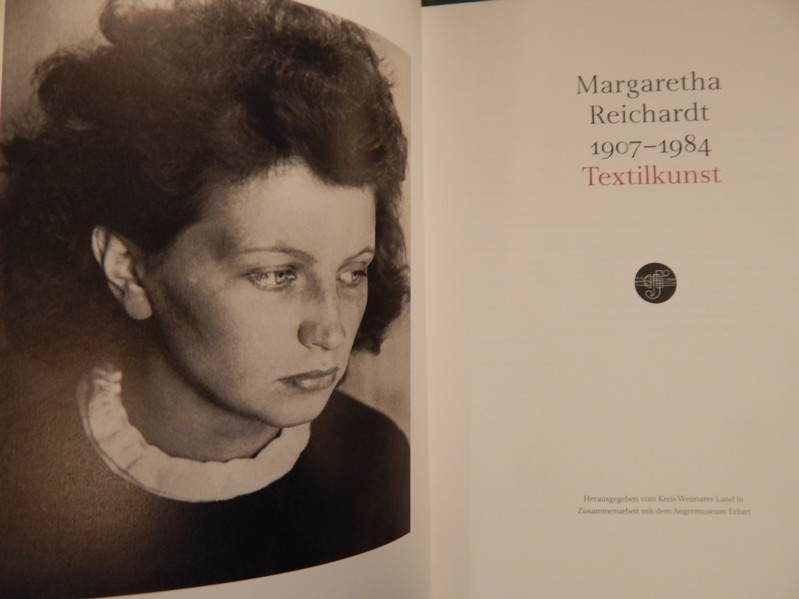
Margaretha Reichardt 1907 – 1984 – Textilkunst

In a room where form speaks in whispers and light lingers like memory, a textile functions as an atmosphere.
Its presence is quiet yet insistent, like a held breath in a space otherwise defined by steel-framed clarity.
The weaving—an interplay of ochre, slate, and bone—does not shout for attention. It listens, absorbs and remembers.
This is the language of Margaretha Reichardt, a Bauhaus-trained artist whose work operates more like poetry than product. At a time when modernism moved toward the sharp efficiencies of metal and machine, Reichardt chose the loom: a slower geometry, a deeper rhythm, a metaphysical architecture made of thread.
And yet, her name is largely missing from the loud, linear histories of the Bauhaus. In Reichardt’s weavings, we find a different modernism—one that favors touch over torque, stillness over spectacle.
In an era rediscovering the value of the handmade and the quietly profound, her work emerges not as an archival curiosity, but as a necessary voice.
A Woven Rebuttal to Industrial Masculinity
Margaretha Reichardt trained at the Bauhaus Dessau under the formidable Gunta Stölzl, the only female master in the school’s short-lived history. While male contemporaries like Marcel Breuer bent chrome into tubular furniture and Walter Gropius drew grids of utopia, Reichardt sat at the loom.
Her work formed a quiet counterpoint to the Bauhaus’s industrial bravado.
She internalized the Bauhaus ethos—experimentation, abstraction, the unity of art and function—but expressed it not through mass production but through material intimacy.
At a time when the school’s narrative pushed ever outward, toward machines and manufacturing, Reichardt turned inward.
Her loom became a space for design contemplation—one thread at a time.
The Textile Approach of Margaretha Reichardt
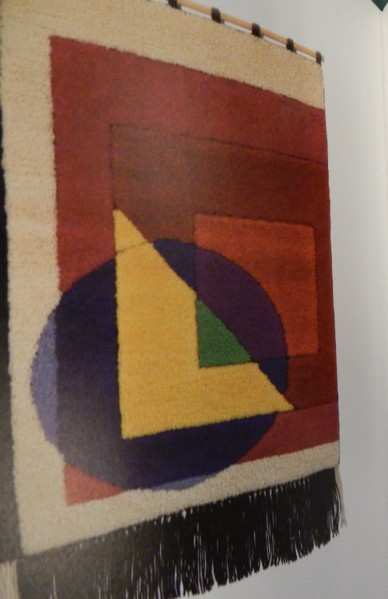
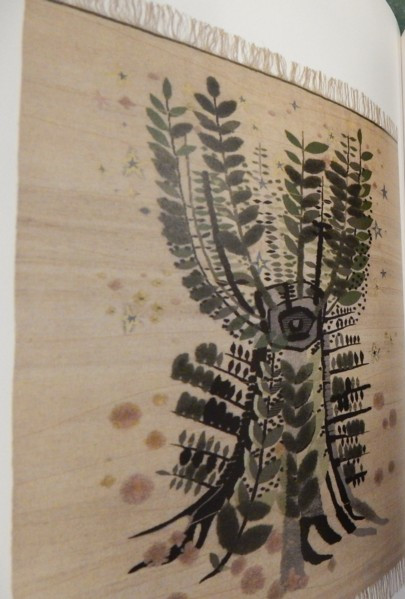
To encounter a Reichardt weaving is to feel rhythm made tangible. Her textiles are spare but never minimal.
Think tonal modulations rather than bold declarations—patterns that breathe in syncopation.
She employed color not as decoration but as structure. Terra cotta against chalk, ultramarine balanced with bark brown—her palette was cultivated from nature but distilled into design.
There’s an almost musical logic to her designs, a quiet improvisation within the loom’s constraints.
Her handwoven rugs and panels resist ornament while still communicating depth—inviting touch as much as sight. Unlike other Bauhaus works that heralded the future, Reichardt’s textiles seem rooted in the present moment: still, grounded, deliberate.
The Echo of Margaretha Reichardt in Today’s Interiors
We live in a design era increasingly enamored with tactility, provenance, and restraint. In this context, Reichardt’s legacy feels prophetic.
The current vocabulary of quiet luxury, of interiors layered with natural materials and narrative textures, finds a close kinship with her weavings.
They speak to a sensibility that values slowness over spectacle, intention over excess.
Designers are returning to handwoven rugs not as afterthoughts but as foundations. In a Scandinavian-modern space, a Reichardt textile tempers the geometry with warmth.
In minimalist interiors, it introduces a trace of the human.
Her work also connects to a broader reclamation of textile histories and female craft—filling in the silences left by canonical modernism.
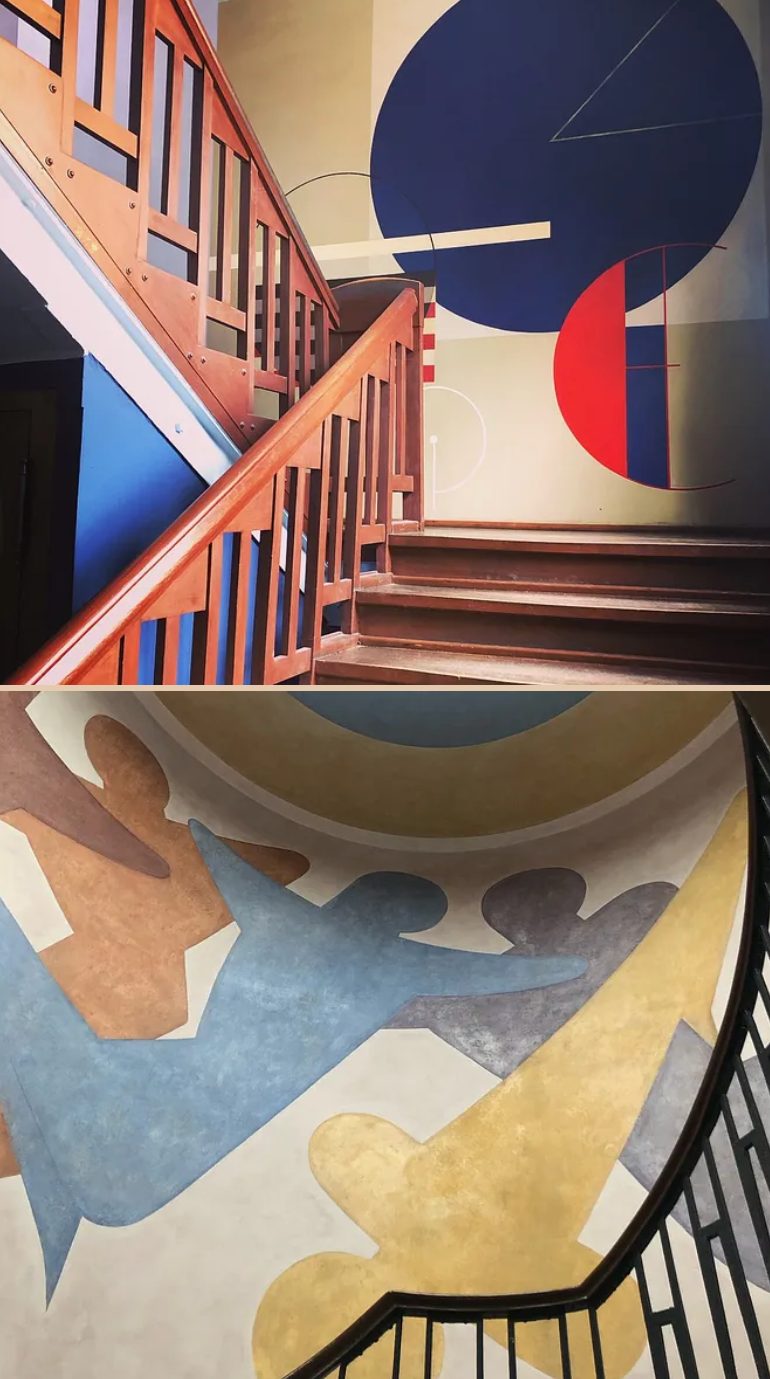
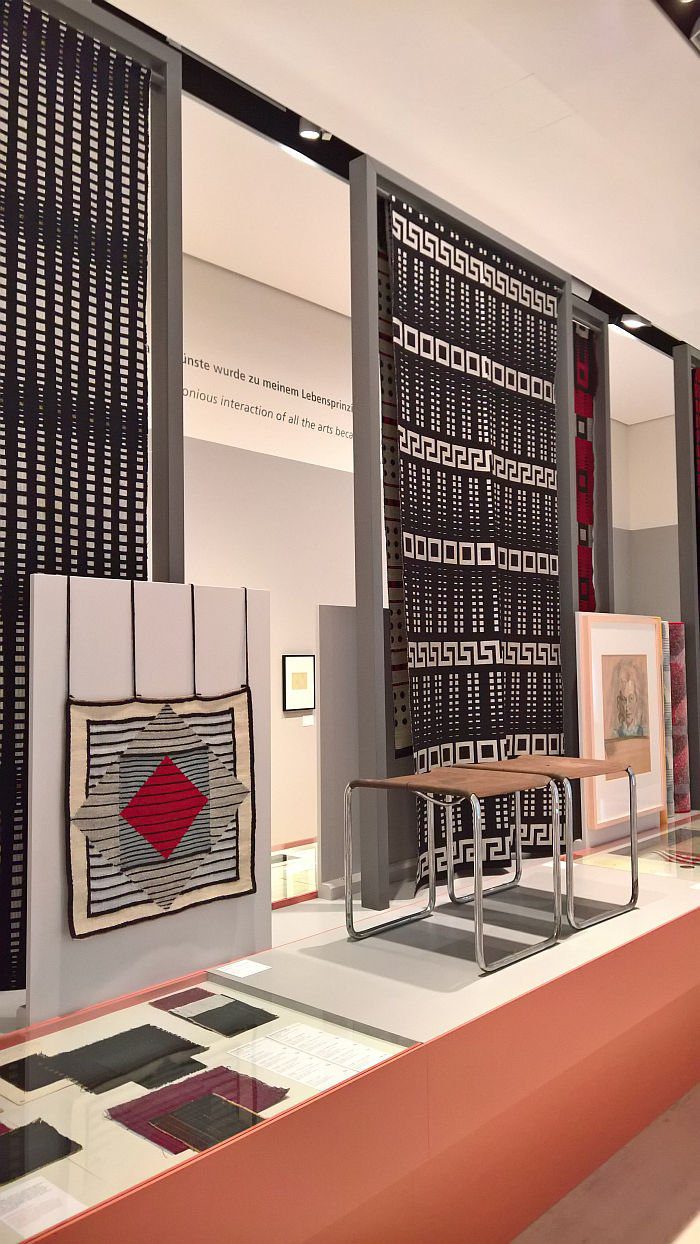
Works by Margaretha Reichardt including two B9T stools by Marcel Breuer with Eisengarn covers, as seen at Four “Bauhausmädels”, Angermuseum, Erfurt
Why Collectors and Designers Should Pay Attention
For collectors, Margaretha Reichardt’s work represents an underexplored confluence of Bauhaus innovation and artisanal mastery.
Rare examples surface in European museum collections and the occasional auction, often attributed generically to “Bauhaus weaving.” But provenance matters. As more institutions reexamine the contributions of Bauhaus women artists, Reichardt’s pieces carry both aesthetic and scholarly weight.
For interior designers, her textiles offer more than just surface—they offer narrative.
A Reichardt weaving introduces rhythm, restraint, and relevance into contemporary projects, bridging modernist heritage with today’s sensibilities.
In rooms that value story as much as silhouette, her work feels not just appropriate—but essential.
Shop Rug & Kilim’s Bauhaus Curation >>
~~~