
100 Years of Art Deco: The Enduring Desire of Ornament, Opulence, and Order
May 1, 2025
Cyrus Nazmiyal and the Renaissance of Rug & Kilim: Inside the Legacy and Vision
May 13, 2025
~ To weave in gold is to speak in the language of light.
Not all threads are meant to hold — some are meant to shine. In the quiet, glinting presence of metallic-thread rugs, we do not merely find decorative excess — we encounter intention. Gilt and silver threads, spun into the warp and weft of masterful rugs, were never just aesthetic gestures.
They were declarations of reverence. Of power. Of the sacred.
In every glimmer of light cast by these ancient fibers, a message was — and still is — delivered: this is not ordinary ground.
Woven for the Divine: The Sacred Origins of Metallic Thread
In the palaces of Isfahan and the courts of Constantinople, rugs were not furnishings — they were ceremonies made visible.
During the 16th and 17th centuries, under the Safavid and Ottoman dynasties, weaving with metallics reached its most exalted form. In these royal ateliers, gold and silver were not confined to coins or crowns — they became fibers of diplomacy and devotion. These were not rugs for resting feet; they were for sanctifying space.
The Ardabil Carpet, though devoid of metallics itself, signals the artistic zenith of Safavid weavers. Yet in parallel, court-commissioned textiles inlaid with gold-wrapped threads flourished — adorning mosques, palatial halls, and ambassadorial gifts. In Topkapı Palace, fragments of Hereke rugs shimmer still, testifying to a time when a rug was not woven — it was composed, like a poem.
Every strand of gold was a word. Every rug, a manuscript.
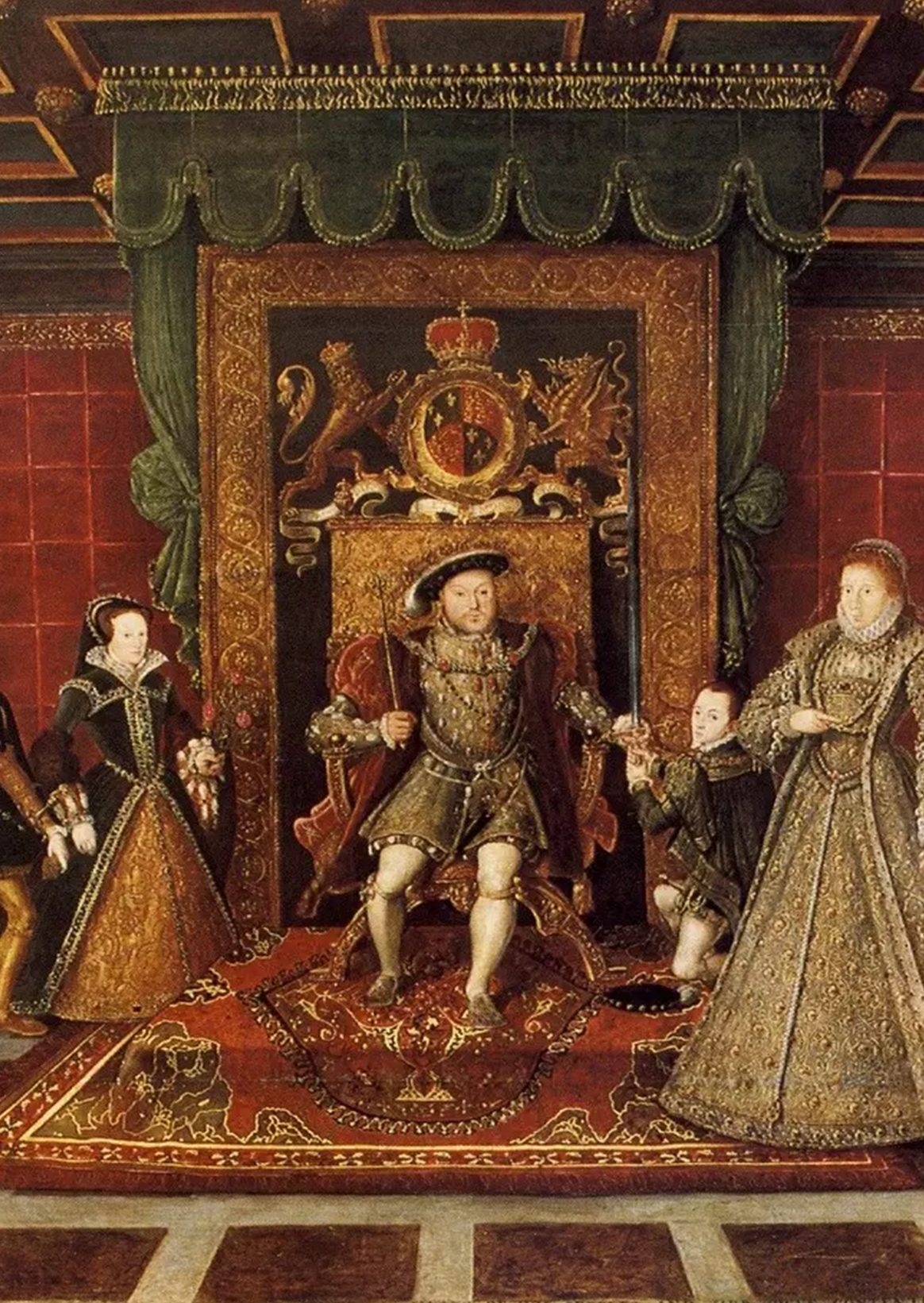
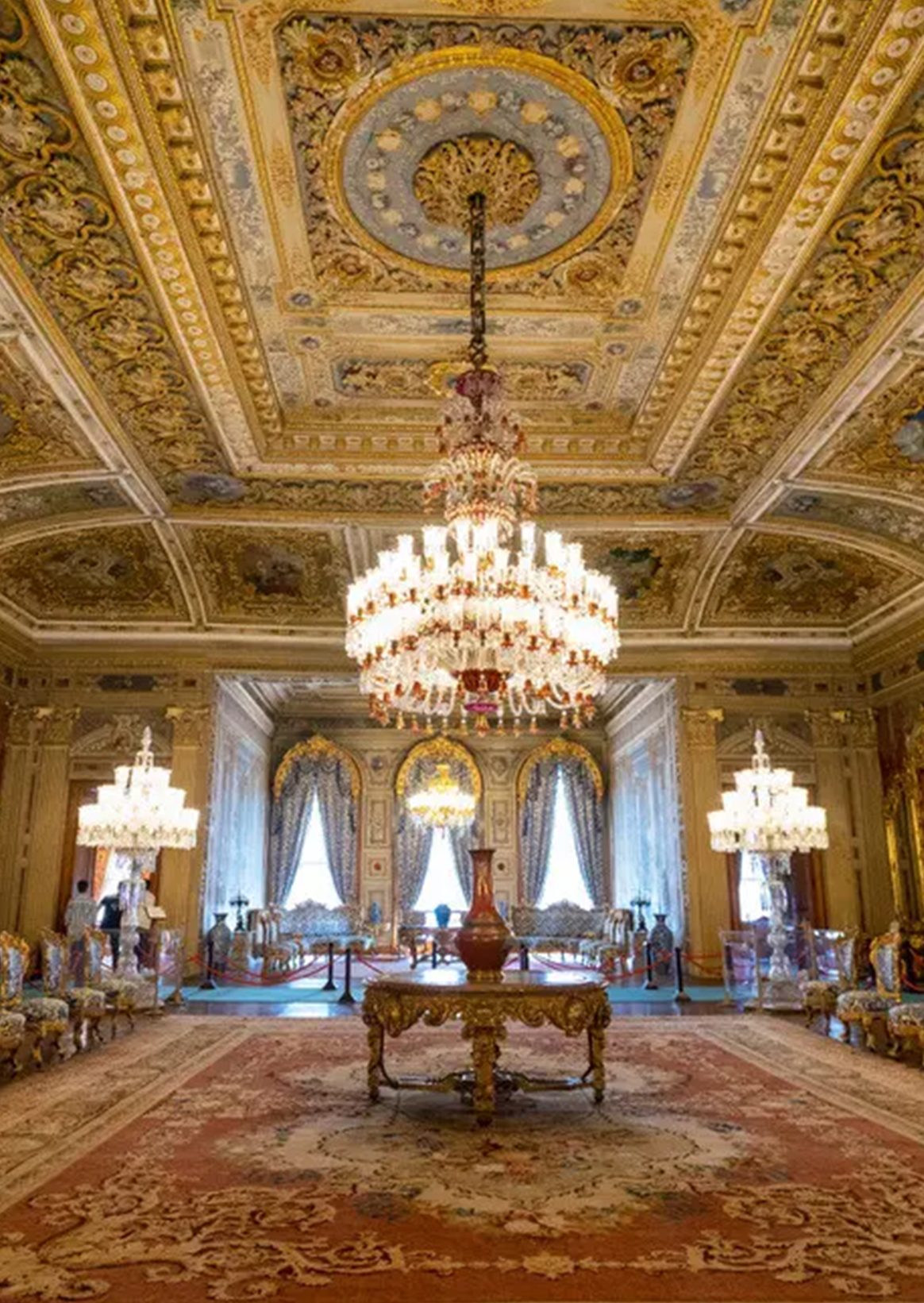
Dolmabahce Palace Hereke Carpets
The Origins: Metal as Sacred Thread
The use of metallic threads in textiles is ancient, predating their use in rugs. In early Chinese, Indian, and Byzantine traditions, gold-wrapped threads were used in ceremonial garments and religious vestments. But it was in Persia and Ottoman Turkey, between the 16th and 18th centuries, that this practice reached its peak sophistication within the art of rug weaving.
In Safavid Iran, the royal court in Isfahan fostered a renaissance of textile production. Metallic threads — typically silver or copper gilded with gold leaf — were wrapped around a silk or cotton core, creating a flexible, reflective thread capable of being woven into fine rugs. These threads transformed rugs from utilitarian floor coverings into symbols of statehood, offerings of diplomacy, and expressions of divine order.
Such carpets were often reserved for:
~ Royal courts and audiences, where light-catching threads amplified the sense of ceremonial grandeur.
~ Mosques and religious shrines, where gold thread symbolized the eternal, a material reflection of the divine light (nur in Islamic theology).
~ Diplomatic gifts, signifying the prestige, power, and cultural excellence of the giver.
Material as Meaning
Gold doesn’t just catch light. It anchors it.
Metallic threads bring more than visual brilliance. They carry optical weight — a kind of gravity that silks and wools alone cannot achieve. There is alchemy in their presence: the transformation of hard metal into something soft, pliable, and expressive.
This interplay of the eternal and the ephemeral — the cold permanence of gold, spun into the impermanence of textile — reveals a deeper truth: these are not just legacy textiles. They are visual prayers. Memory, woven and shimmering.
To touch a metallic-thread rug is to trace the emotional architecture of empire.
As global tastes and trade routes shifted in the 19th century, the use of metallic threads declined. Industrialization favored mass-produced wool and cotton textiles. The laborious and costly practice of metallic weaving receded into history — maintained only by a handful of artisan workshops in Turkey, Iran, and parts of India.
In recent decades, however, a quiet revival has emerged. Contemporary weavers and designers — especially those working with heritage studios — are once again incorporating metallic threads, not as nostalgic gestures but as acts of cultural continuity.
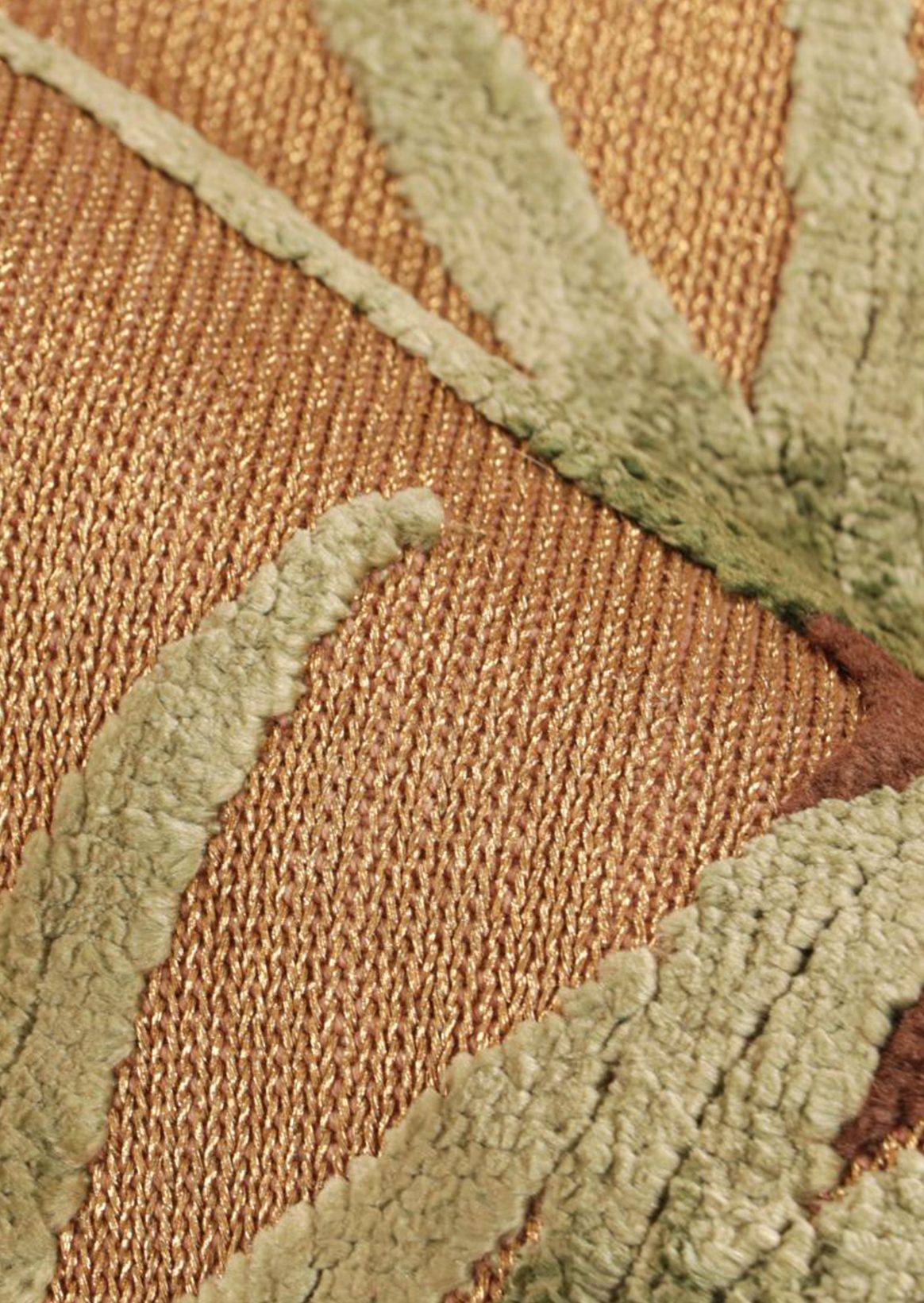
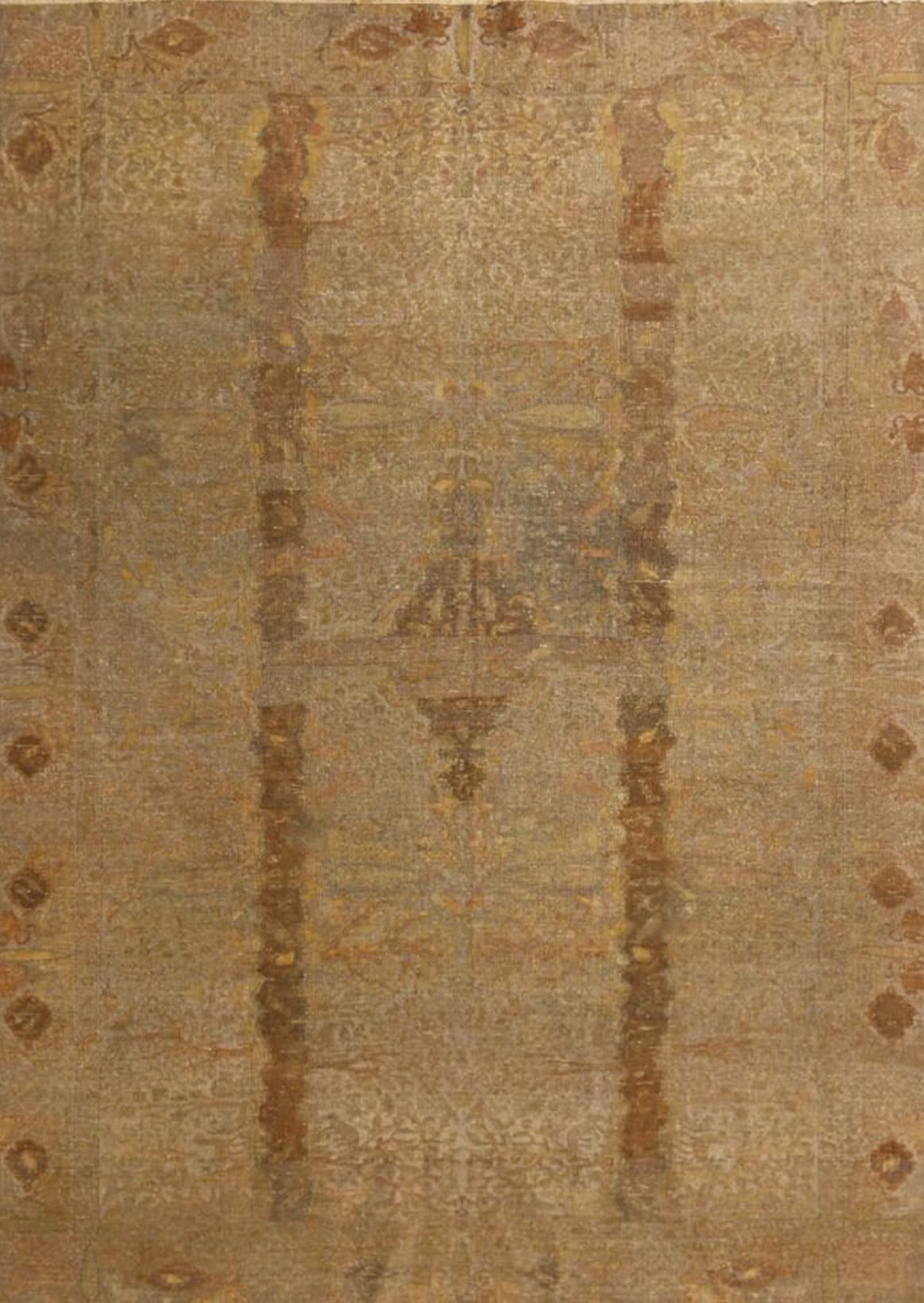
From Sovereigns to Collectors: A Legacy Reimagined
Today’s collectors don’t acquire metallic-thread rugs for spectacle. They choose them for stillness.
In the curated interiors of refined collectors, antique metallic thread rugs — especially Ottoman gilt rugs or antique Persian rugs with gold — are no longer symbols of overt opulence. Instead, they offer a counterpoint to fast design and fleeting fashion. Elite designers now integrate these collectible luxury rugs not as novelties, but as points of stillness. Anchors of heritage.
They lend not shine, but subtle gravity to a room. A shimmer of history, not trend. A gesture, not a statement.
Today, metallic thread rugs hold a unique position in the design world. They are not flashy. They are not trend-driven. Instead, they resonate with quiet gravity.
Elite designers and discerning collectors incorporate them not for their sheen, but for their symbolism:
~ As centerpieces in otherwise minimalist spaces.
~ As visual manuscripts in rooms that honor history, heritage, and human craftsmanship.
~ As a counterpoint to transient design trends — an anchor of lineage in an age of digital decor.
Metallic Threads as Legacy
A single thread of gold can reframe an entire room — not through dominance, but through dignity.
In the end, to live with such a rug is to share space with history. These are not merely antique textiles; they are heirlooms of meaning. Each metallic filament carries with it not just the wealth of empires, but the pulse of the hands that made them.
The light they hold is not just visual — it is emotional. Cultural. Sacred. They don’t just survive the centuries; they speak them.
Metallic threads illuminate not just space, but memory. Not just design, but devotion.
Weaving with metallics is a dialect reserved for the rarest conversations — those about reverence, empire, beauty, and endurance. These rugs are not about shine. They are about soul.
In a quiet room, a gold-threaded rug doesn’t shout — it remembers.
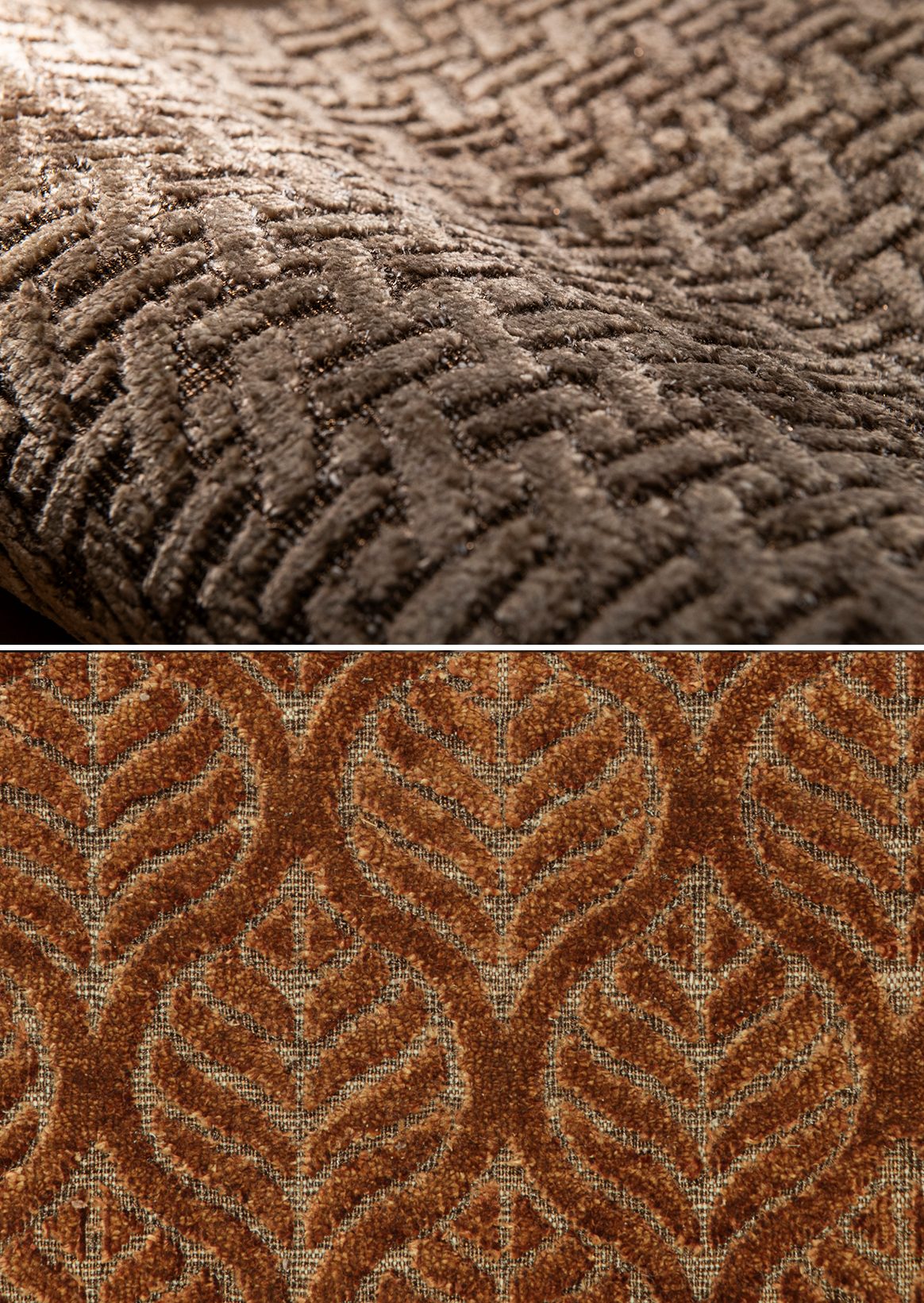
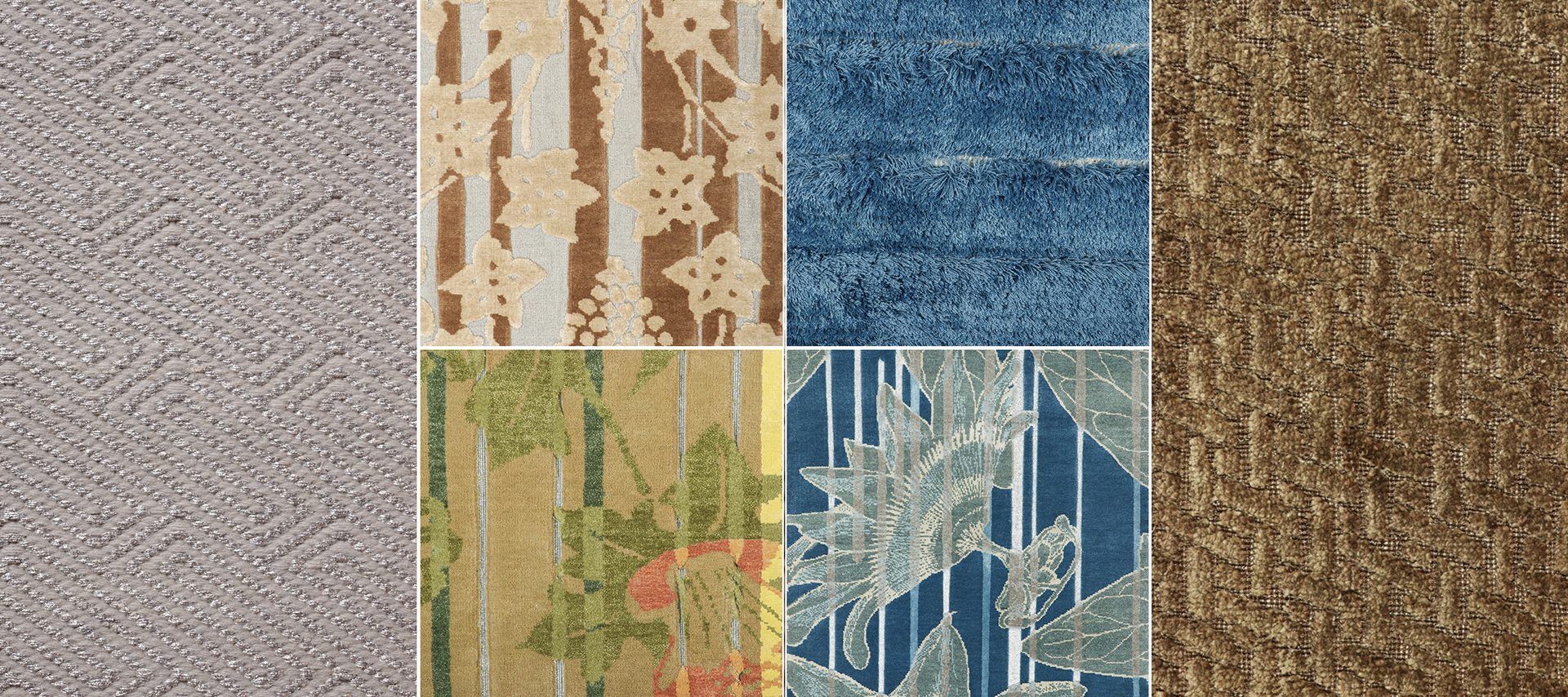
Rug & Kilim’s Metallic Samples. Enquire at info@rugandkilim.com
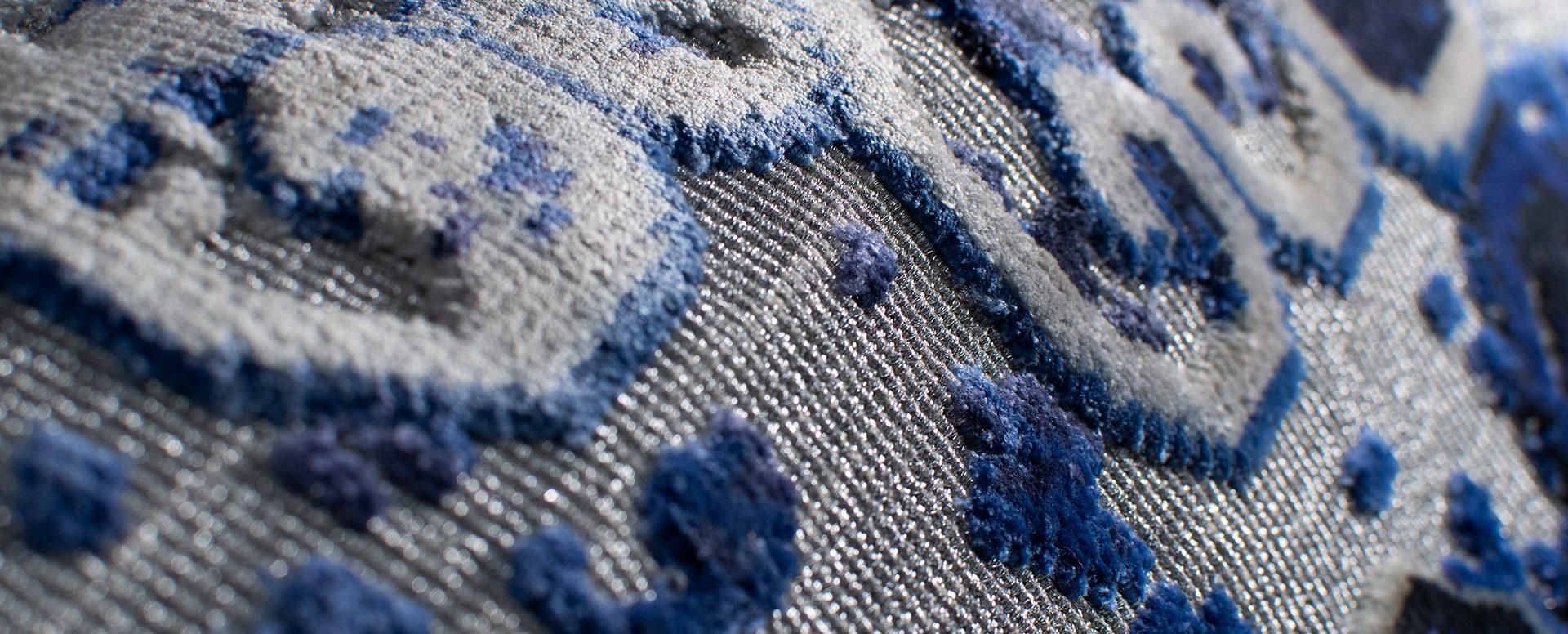
Rug & Kilim’s Fine Weave Collection. Enquire here >>
~ They are woven light — and that light, even centuries later, still speaks.
~~~