
A Profile on Georges Lepape – Master of Art Deco Fashion and 1920s Decorative Arts
May 21, 2024
The Antique Carpet Weaving Traditions of Indian Jails
May 30, 2024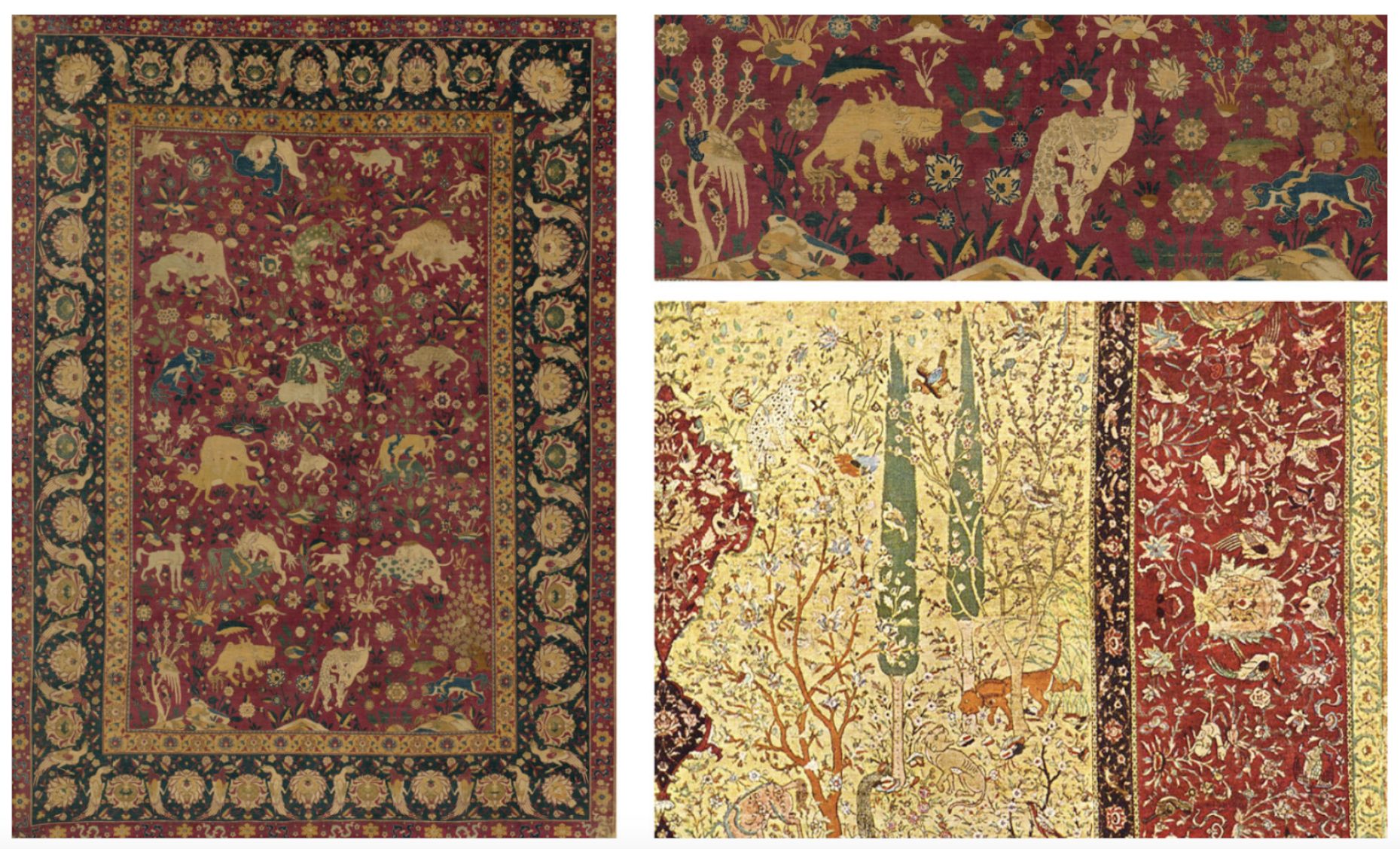
The Safavid dynasty (1501-1739) marked the pinnacle of Persian carpet design and production. Royal patronage played a crucial role, with court designers influencing production across various levels. Additionally, the widespread availability of locally sourced and imported materials and dyes contributed to the quality and diversity of carpets. These factors, coupled with commercial acceptance, especially in foreign markets, further propelled the success of Safavid carpets. Surviving Safavid carpets showcase both court production, adhering to court standards but not necessarily woven at the court itself, and commercial production reflecting courtly tastes. Carpets were woven in palace workshops as well as on urban and village looms, highlighting the widespread influence and craftsmanship of Safavid carpet weaving.
During the 16th century, renewed interest and patronage within royal courts led to a significant collaboration between master weavers and various artists such as court draughtsmen, miniaturists, and illuminators. This collaboration sparked a revolution in carpet design and weaving techniques, elevating Safavid carpets to the status of independent works of art rather than mere functional floor coverings. With the establishment of their capital cities – Tabriz, Qazvin, and Isfahan – the Safavids centralized the textile industry. This move seamlessly integrated it into the national economy, resulting in a substantial revenue influx and further growth.
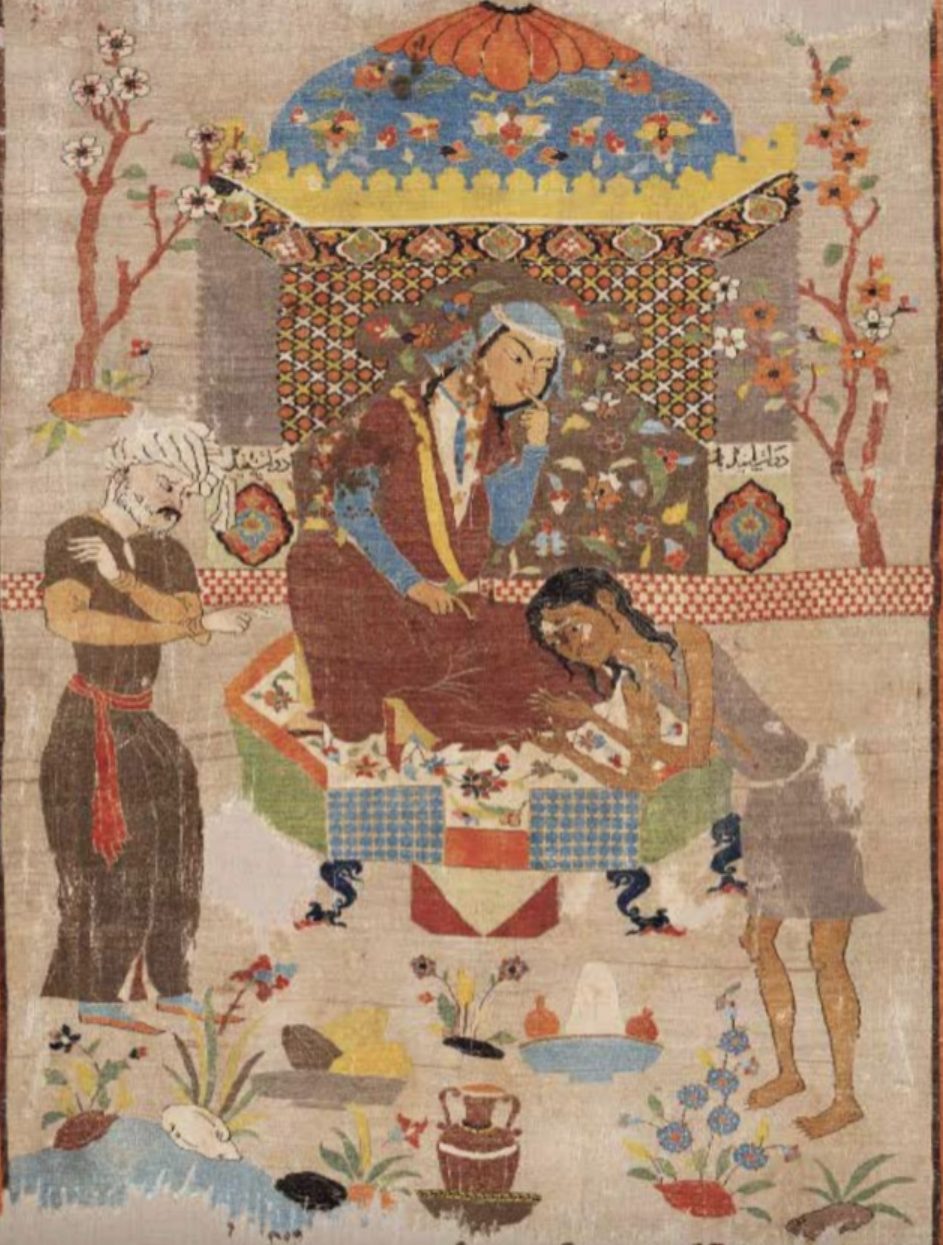
These carpets became symbols of status and wealth for their owners.
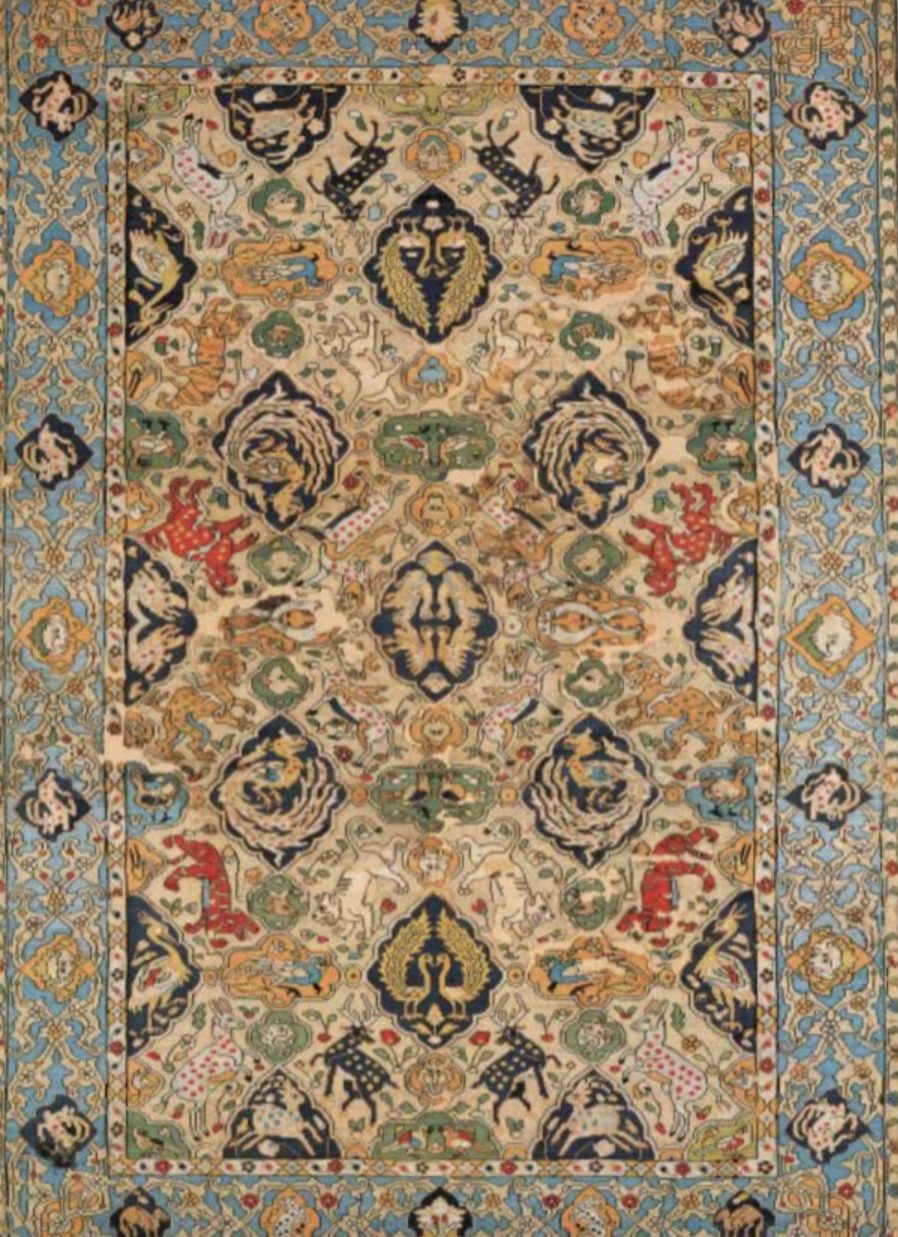
Safavid or ‘Court’ carpets, woven on royal looms, found their place in prestigious settings like reception halls, audience chambers, court-supported religious institutions, and were often presented as impressive gifts to rulers and foreign dignitaries. Among the most famous carpets from this period are the “Emperors’ Carpets,” a pair with one housed in the Metropolitan Museum of Art, New York, and the other in the Museum of Applied Arts, Vienna. These carpets are distinguished by their intricate designs featuring animals alongside birds and cloud-bands, exemplifying the opulence and artistic mastery of Safavid carpet weaving.
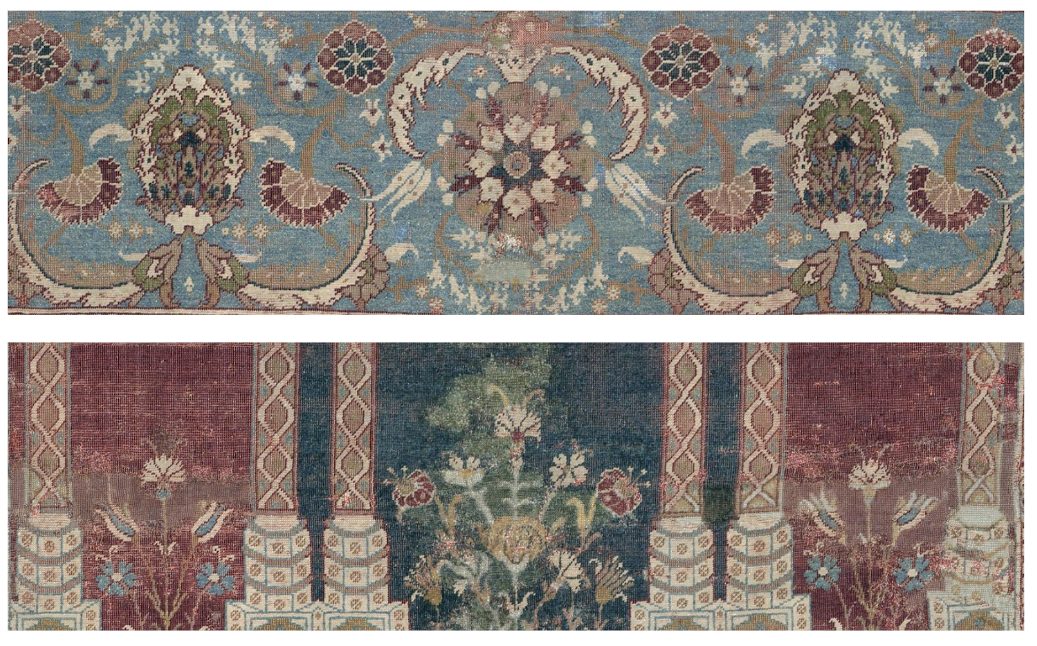
Safavid Court weaving under Shah Tahmasp
During Shah Tahmasp’s reign (1524–76), royal workshops emerged primarily to cater to the court’s needs. Meanwhile, independent producers from northern provinces like Gilan continued to supply raw silk to the state. Shah ‘Abbas I (1587–1629) played a pivotal role in the seventeenth century by centralizing the Iranian economy. He established a state monopoly over the silk trade, focusing on controlling production in the Caspian provinces, which were major raw material suppliers. Additionally, the state reclaimed control of Persian Gulf ports from Portuguese rule, enhancing maritime trade and redirecting silk trade away from Ottoman-controlled areas. When Isfahan became the Safavid capital in 1598, Armenian textile workers were resettled in New Julfa, a neighborhood near Shah ‘Abbas’ palatial complex. This relocation aimed to centralize and supervise the production of luxury textiles for export, including dyed, woven, and embroidered fabrics under state oversight. Meanwhile, private workshops in urban centers like Yazd and Kashan continued crafting textiles, particularly renowned for their velvet and lampas-woven luxury silks, catering to both domestic and international markets.
Figural designs in Safavid textiles drew significant inspiration from manuscript illustrations, both in composition and subject matter. These designs often depicted idealized scenes such as hunting, falconry, or poetry reading in garden settings, reflecting contemporary artistic trends. Notably, during Shah ‘Abbas’s reign, figural silks showcased characters from popular literature, including the lovers Khusrau and Shirin, and Layla and Majnun from Nizami’s Khamsa. Additionally, battle scenes referencing Rustam from Firdausi’s Shahnama were also prominent in these textiles, showcasing a blend of literary and artistic influences.
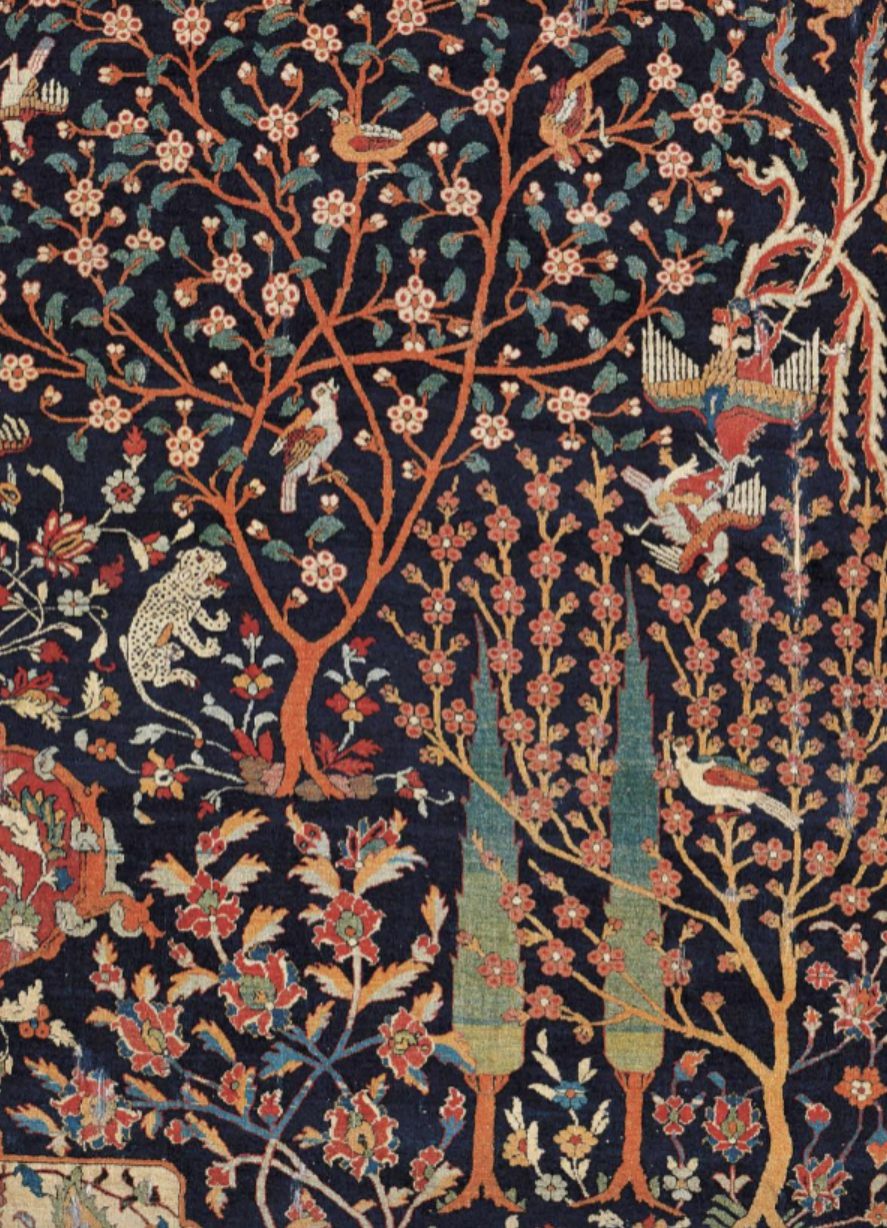
Aside from figural silks, Safavid textiles also featured popular designs like stylized flowers adorned with delicate depictions of animals such as deer, rabbits, and birds, notably the rose-and-nightingale (gul-u-bulbul) motif. These designs varied from interlocking overall patterns to single repeating motifs arranged in rows, showcasing their versatility and appeal. Their depiction in album pages indicates their popularity not only among Iranian elites but also among European aristocrats. The exceptional quality of Safavid woven textiles stemmed from their intricate designs. These textiles were meticulously crafted with continuous repeat patterns by master designers known as naqshband.
Another technique that contributed to the opulence of Safavid textiles was the use of compound weave structures, often incorporating gold or silver strips or metal-wrapped threads. These luxurious fabrics, known as brocades, enhanced the sophisticated color palette of pistachio green, salmon pink, alizarin, cream, and ocher. Additionally, silk velvets were produced in two main styles: continuous pile, resulting in a supple and luxurious cloth, and “voided” velvet, where pile areas were selectively woven, creating a contrasting effect with flat woven areas.
Following Shah ‘Abbas’s death in 1629, the Safavid dynasty experienced a decline in central power, leading to regional governance and diminishing the monarch’s authority to a mere figurehead. This shift had a direct impact on textile production, particularly in court-sponsored workshops, which saw a decline. Conversely, the private sector of the textile industry regained independence, focusing on producing silks to meet the growing international demand.
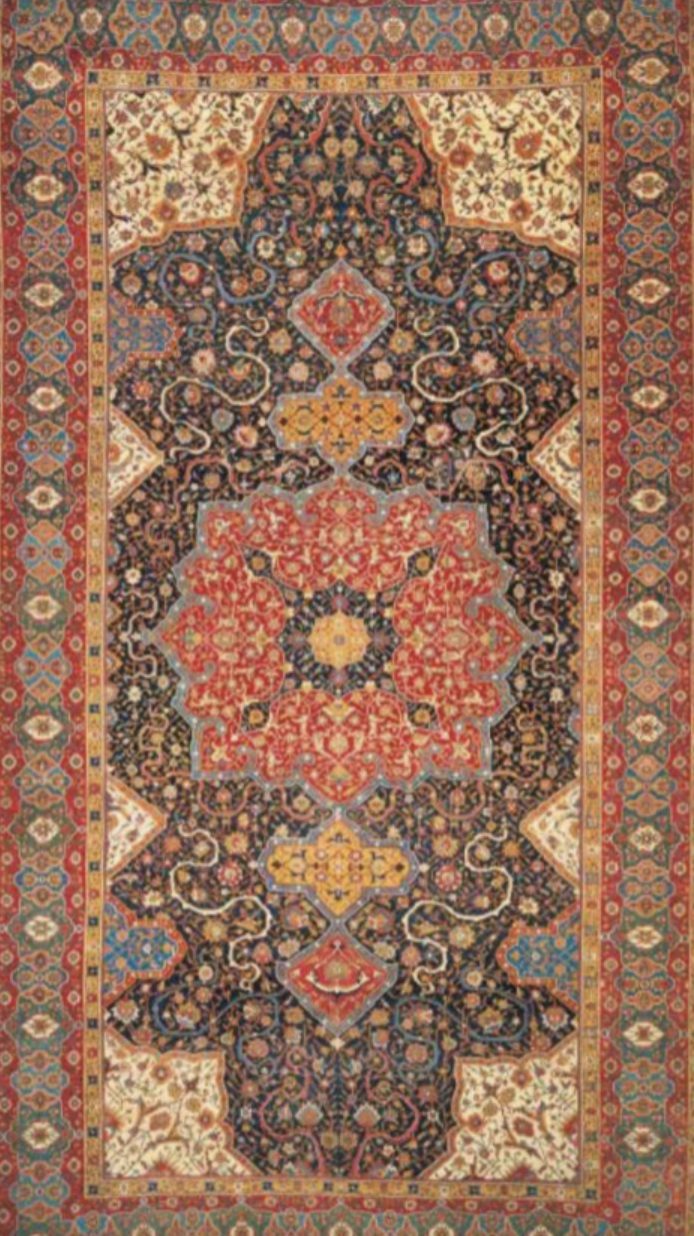
From the late seventeenth century until the dynasty’s demise after the Afghan invasion in 1722, significant changes were observed in the textiles produced. Iranian weavers adapted their aesthetic and working methods to align with the tastes and economic constraints of the declining regime, marking a notable shift in textile production during this period. By the late seventeenth century, the “in and out palmette” pattern experienced a significant decline in popularity both in Persia and in export markets like England and continental Europe.
Documentation from the East India Company, a major exporter of Persian carpets to the West, reveals this decline in preference for “in and out palmette” carpets. A letter from the company’s governors in 1686 highlights this shift, stating that Persian carpets acquired through Surat were not yielding profitable returns, indicating a loss in demand and value. This sentiment is echoed in J. Irwin’s account of Indian textile trade in the seventeenth century. However, the nineteenth century witnessed a resurgence of Western interest in exotic goods, including carpets from the East or the Orient. This renewed fascination with Eastern carpets marked a reversal in trends, reflecting changing tastes and a growing appreciation for the cultural and heritage of Persian carpet weaving.