
A Profile on Paul Klee – Master of Bauhaus and 20th-Century Modern Abstract Art
May 21, 2024
History and Significance of Safavid Court Weaving and their Persian Antique Rugs
May 30, 2024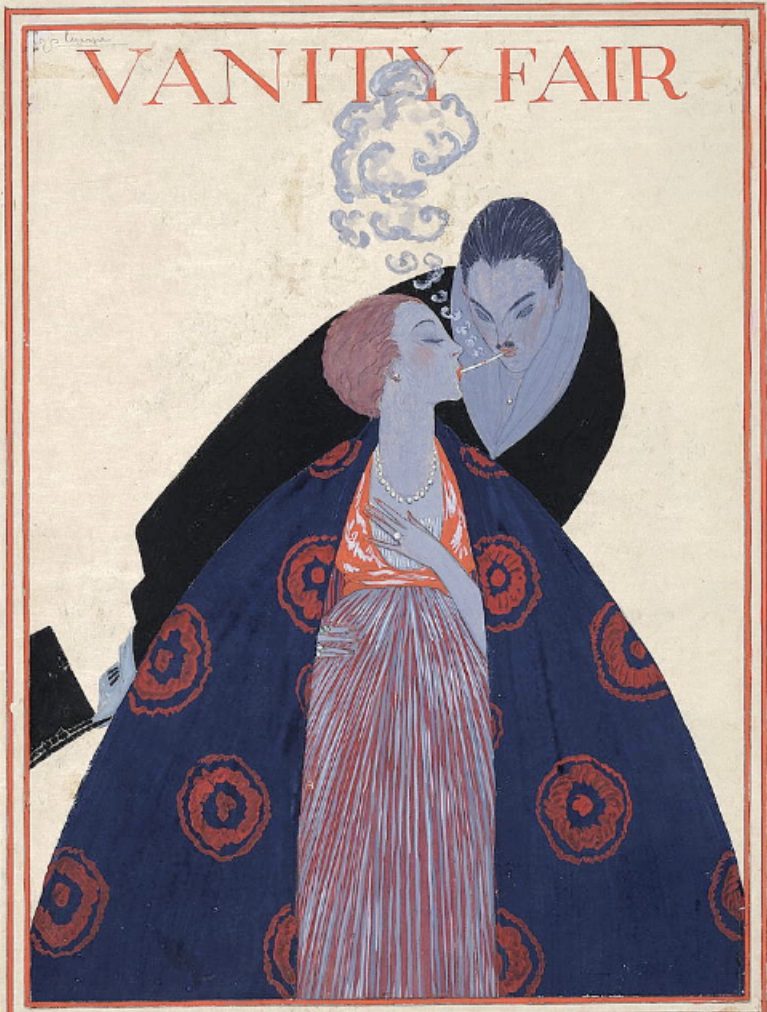
Georges Lepape’s contributions to fashion illustration and design were indeed groundbreaking and influential. His fusion of Art Deco and Cubist elements created a distinctive style that captured the spirit of the Jazz Age with grace and sophistication. Lepape’s ability to depict vibrant colors and intricate details brought his illustrations to life, making them highly sought after in the fashion industry. Beyond his success in illustration, Lepape ventured into fashion photography, showcasing his innovative approach and eye for capturing the essence of style and glamor. His images were not only aesthetically pleasing but also reflected the dynamic energy of the Art Deco era, making them iconic in the world of 1920s modern fashion.
In addition to his visual artistry, Lepape’s talent extended to typography, where he mastered the use of bold and geometric typefaces that complemented his Art Deco designs perfectly. This attention to detail and design cohesion contributed to the overall elegance and beauty of his works, solidifying his legacy as a master of his craft. Even today, He remains a symbol of creativity and sophistication, inspiring generations of artists and designers with his visionary approach to 1920s fashion illustration and design.
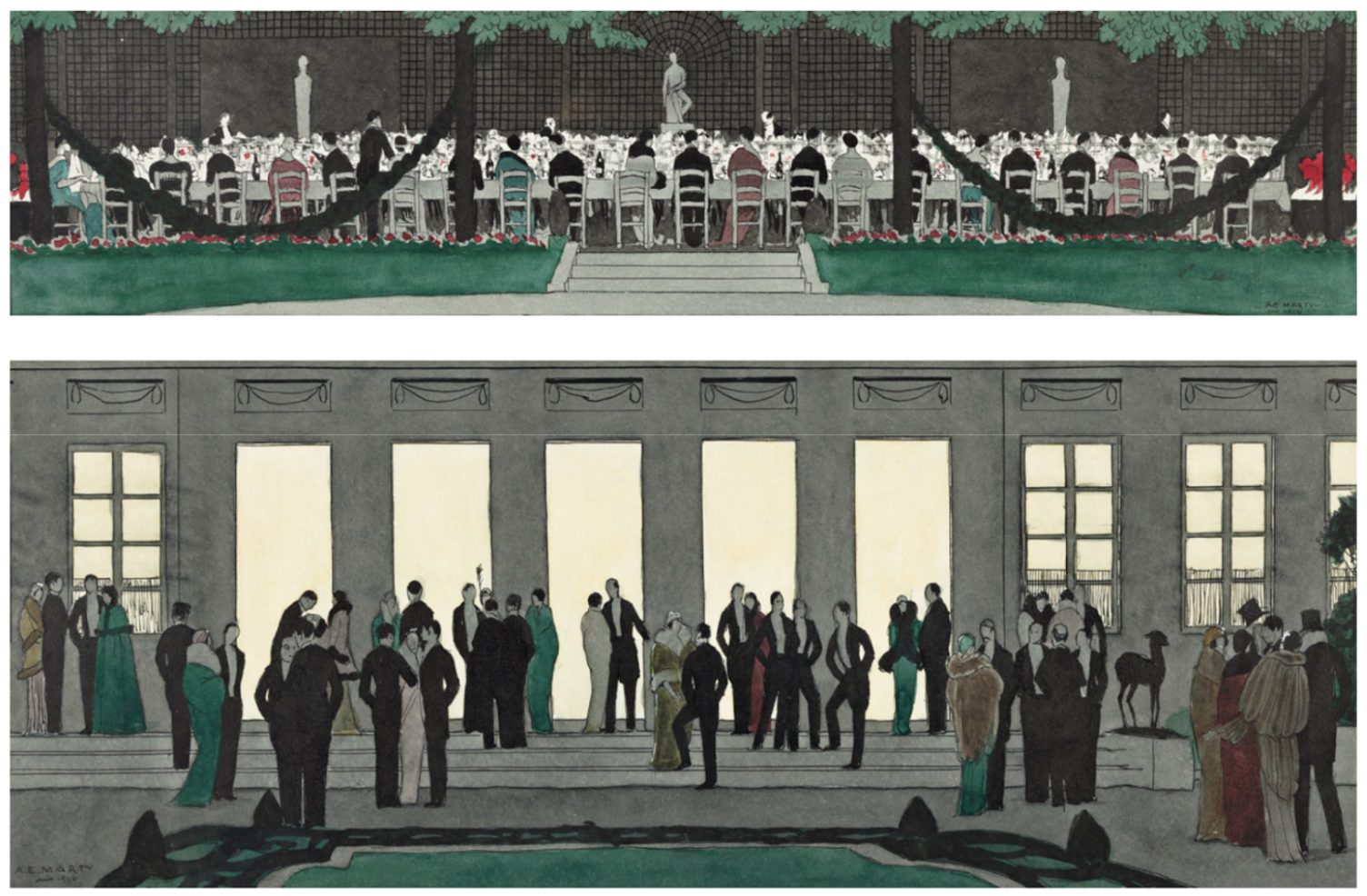
Georges Lepape’s artistic response to World War I reflected the profound impact of the conflict on various aspects of society, including illustrated magazines that catered to women. While some publications like the Gazette du Bon Ton paused their operations during the war, others continued to provide content on fashion, jewelry, and beauty. However, these magazines also acknowledged the wartime realities and the disruptions faced by their female readers. As an established fashion illustrator, Lepape used his talent to create illustrations that were both patriotic and sentimental. His artworks skillfully merged the worlds of luxury and high fashion with the everyday experiences of women on the home front during the war. Through his imagery, Lepape captured the spirit of resilience and solidarity among women as they navigated the challenges brought about by the war.
Lepape’s illustrations served as a reflection of the Art Deco era, highlighting the dual nature of life during wartime—where moments of glamor and elegance coexisted with the harsh realities of conflict and upheaval. His artworks not only celebrated the enduring spirit of women but also paid tribute to their strength and adaptability in the face of adversity.
Georges Lepape rose to prominence in 1911 through his illustrations of Paul Poiret’s designs in the publication “Les Choses.” This success catapulted him into the limelight, leading to commissions for magazine covers in both Paris and London, as well as collaborations with prestigious fashion houses. His intricate and detailed style found a perfect match in La Gazette du Bon Ton, a highly influential fashion and luxury magazine aimed at the elite women of France. The magazine’s use of high-quality paper further elevated Lepape’s art, accentuating the vibrant colors and intricate details of his pochoir fashion plates. This combination of Lepape’s artistic talent and the magazine’s luxurious presentation created a visual spectacle of sumptuous couture that resonated with the readership’s taste for opulence.
Within La Gazette du Bon Ton, Lepape was a key contributor, alongside other prominent Art Deco artists and illustrators of the era such as George Barbier and André Édouard Marty. Together, they shaped the aesthetic and visual identity of the magazine, capturing the essence of the Art Deco movement with its emphasis on elegance, luxury, and modernity.
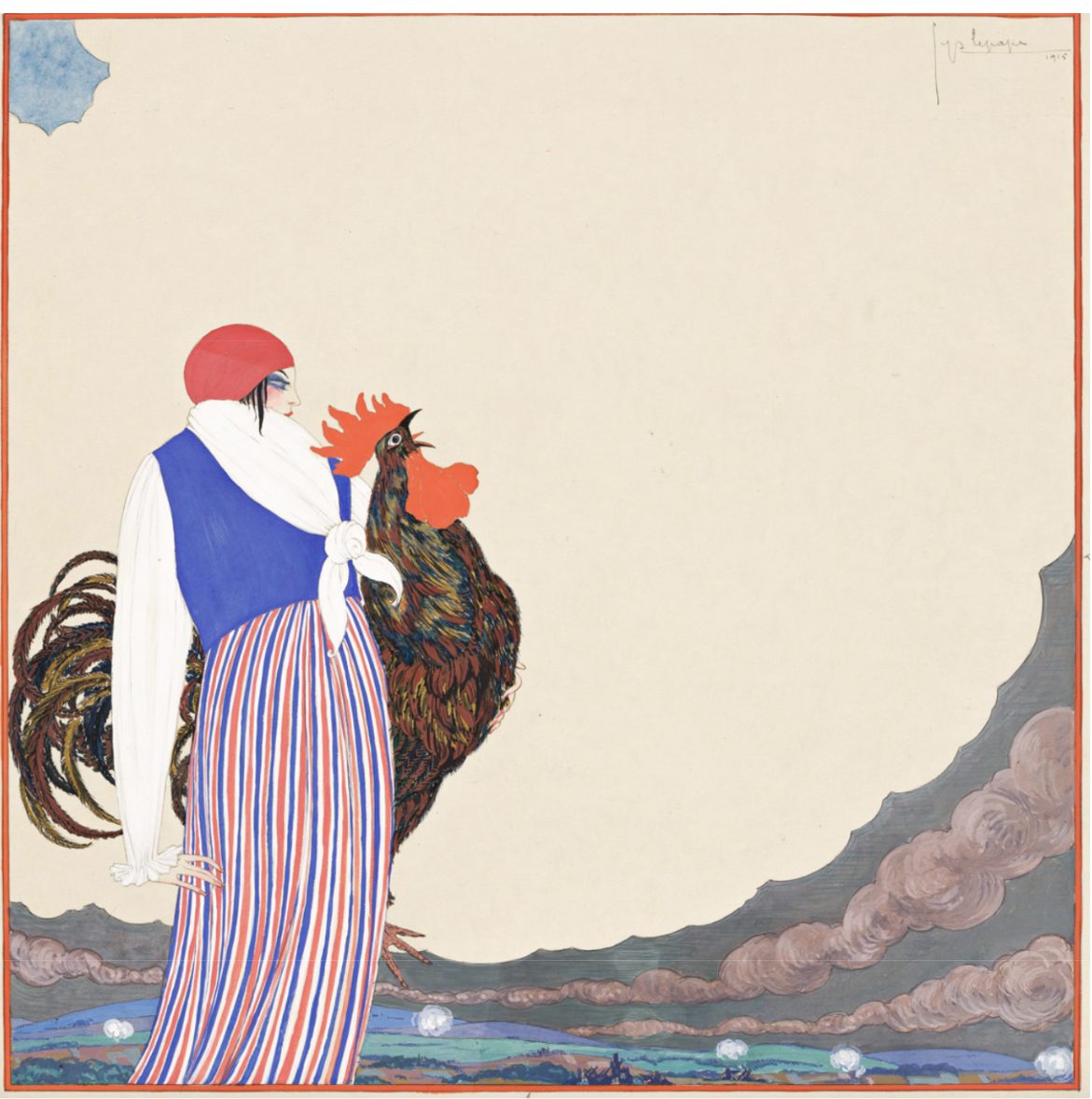
Lepape’s patriotic imagery extended to his work in advertising, particularly for “Mam’zelle Victoire,” a perfume by Rosine, affiliated with the renowned Paul Poiret’s house. In one of his illustrated advertisements, Lepape cleverly interwove historical and contemporary symbols to create a powerful visual narrative. At the center of the illustration is a rooster, a symbol deeply rooted in French history, representing courage and national pride. During the French Revolution, the rooster emerged as a potent emblem of the people’s resilience and the spirit of the state. Lepape adorned the rooster and the woman in the illustration with the colors of the French flag, emphasizing the patriotic theme. The woman in the advertisement wears a red cap, reminiscent of both the Phrygian liberty cap from the revolutionary era and the fashionable turbans popularized by Poiret in contemporary fashion. This blending of historical and modern elements not only added depth to the imagery but also reflected the ongoing dialogue between tradition and innovation in French society.
Lepape’s style in this advertisement bears the influence of Orientalism, a trend sparked by the Ballets Russes’ performance of Scheherazade in 1910. The intricate landscape and the exotic features of the woman mirror the aesthetics of Persian miniatures, showcasing Lepape’s ability to blend diverse cultural influences seamlessly.
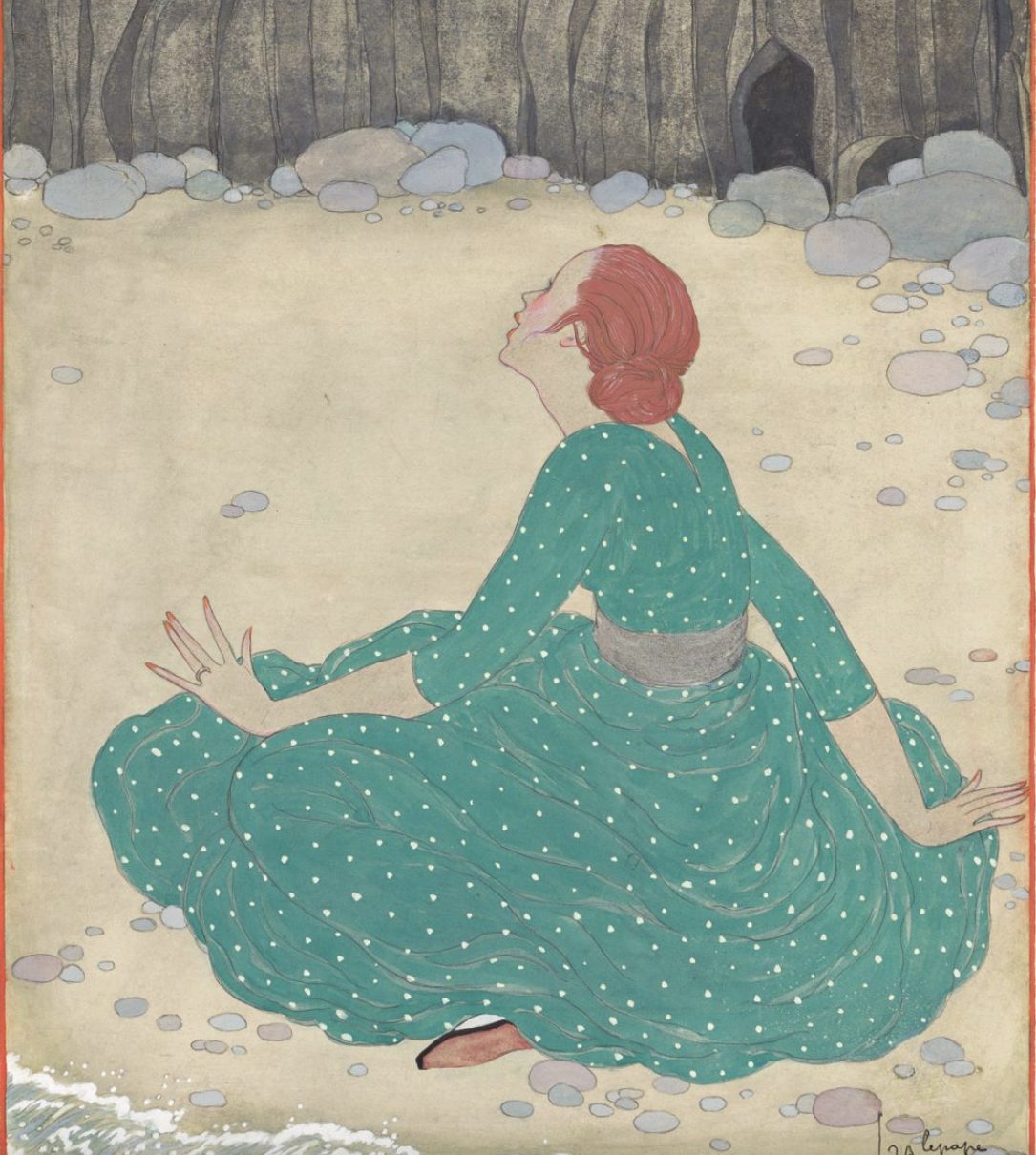
Lepape’s illustrations during the war years were deeply resonant with the sentiments of his audience, particularly women facing the challenges and uncertainties of wartime separation from their loved ones. In his 1916 illustration “Le Retour,” created for an unspecified publication, Lepape captures a poignant moment of reunion and longing. The scene portrays a woman seated by the seashore, her gaze fixed on the distant cliffs where her husband, a soldier, is returning to her. The soldier’s gesture towards her signifies the emotional connection and the anticipation of their reunion. What stands out in Lepape’s depiction is the attention to detail in the woman’s attire. She is dressed elegantly in a green polka dot gown, a symbol of her youth and vitality. The focus on her hand, adorned with a gold wedding band, emphasizes her role as a devoted wife eagerly awaiting her husband’s return.
Lepape’s mastery lies in his ability to weave a narrative into his fashion illustrations. Unlike static representations of clothing, his work captures moments of action and emotion, drawing the viewer into a story that transcends mere fashion. By portraying his models in dynamic poses or engaged in meaningful interactions, Lepape adds depth and storytelling to his artwork, making it relatable and engaging for his audience.
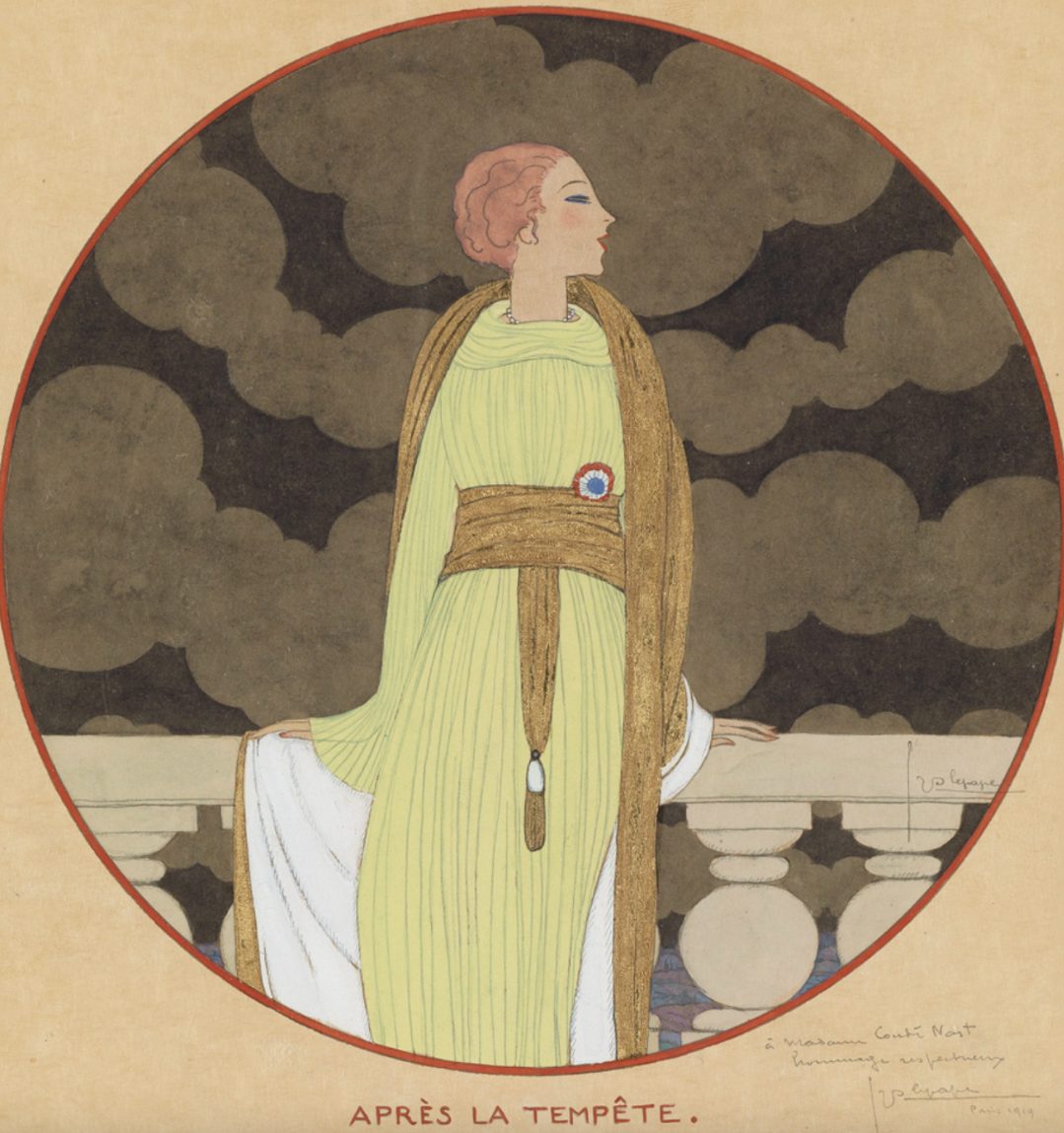
Georges Lepape’s impact on fashion illustration was profound, marked by his innovative techniques and collaborations with prestigious publications and brands. His journey began with the groundbreaking limited edition album “Les Choses de Paul Poiret,” where he introduced dynamic elements like models leaving the frame and turning away from the viewer, injecting a sense of motion and storytelling into fashion illustration. This approach evolved and flourished during his collaboration with Lucien Vogel for the Gazette du Bon Ton from 1912 to 1925, solidifying Lepape’s reputation as a trailblazer in the field.
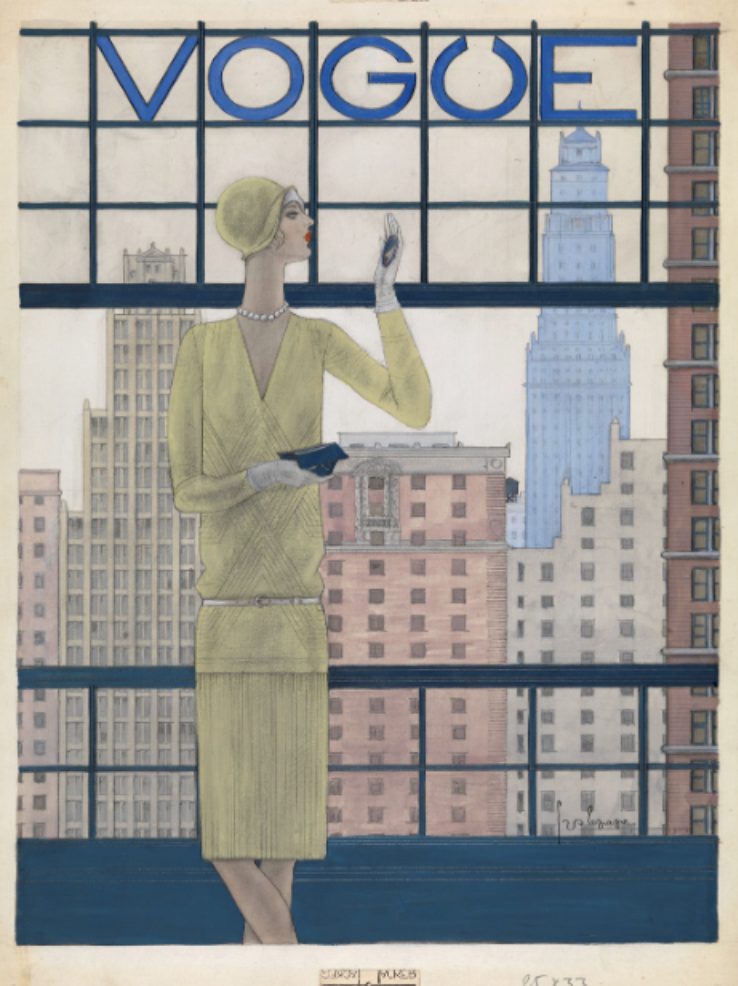
In 1920, Lepape’s achievements were celebrated with a major exhibition at the Musee des Arts Decoratifs, showcasing his mastery of Art Deco fashion illustration. His contributions extended beyond the art world, playing a pivotal role in post-war initiatives like the reintroduction of Gazette du Bon Ton, Paul Poiret’s European Tour, and the launch of Vogue France. Lepape’s distinctive style graced the covers of Vogue and Vanity Fair, further elevating his status as a leading illustrator of his time.
The demand for Lepape’s talents continued to soar, leading to diverse opportunities in catalog illustration, film posters, and even minor contributions to industrial design. His international acclaim grew when Conde Nast invited him to New York in 1926, forging a fruitful partnership with Vogue that spanned multiple covers and expanded his reach to brands like Hermes and Wanamaker’s Department Store. Lepape’s artistic vision not only shaped fashion illustration but also left an indelible mark on the cultural landscape of the early 20th century, bridging the worlds of Art Deco art, fashion, and design with his innovative and captivating work