
A Profile on Alphonse Mucha – The Father of Art Nouveau and Pioneer of Art Deco
May 15, 2024
A Profile on Guy de Chaunac-Lanzac “Dom Robert”
May 15, 2024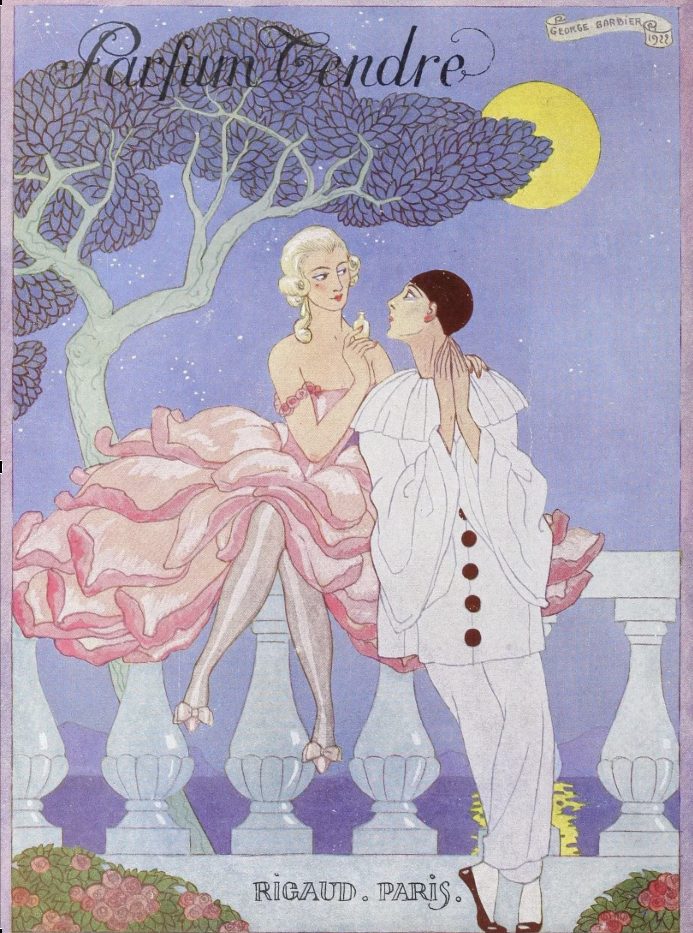
After the tumult of World War I, a fresh artistic wave emerged—-the Art Deco movement. Originating in France, Art Deco was a stark departure from the flowing lines of its predecessor, Art Nouveau. Instead of organic curves, Art Deco embraced streamlined, geometric forms that reflected the era’s fascination with technological advancements and modernity. This shift mirrored broader societal changes, including a more liberalized education system and a growing sense of equality, which influenced how human forms and fashion were depicted in art.
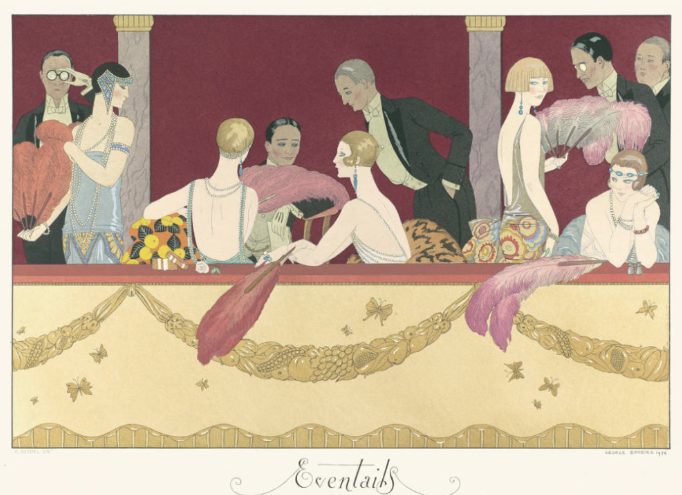
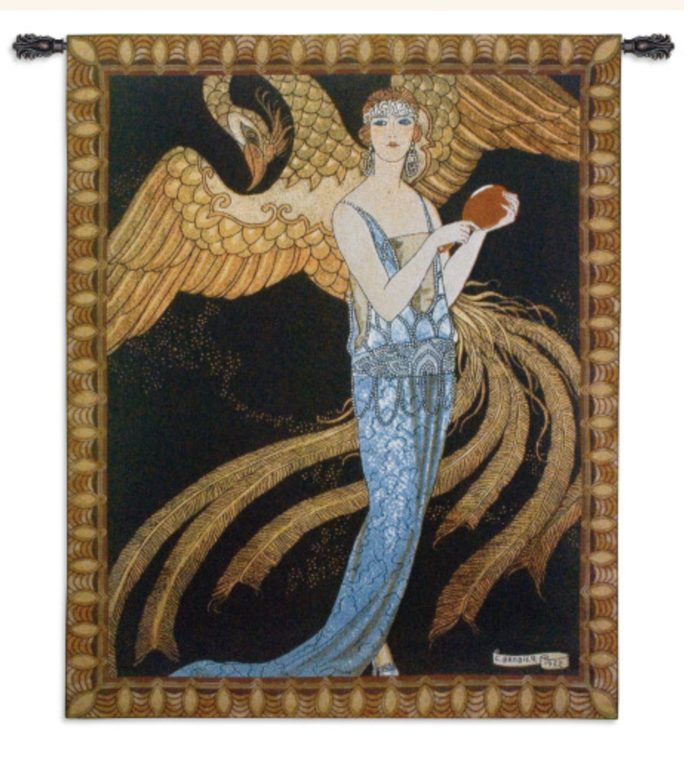
Among the luminaries of this era was George Barbier, renowned for his exquisite fashion illustrations. Barbier’s work was a delicate fusion of Art Deco’s contemporary aesthetics and the sensual allure of Art Nouveau. His illustrations often featured multiple figures adorned in the latest fashions, blending modernity with a hint of nostalgia for bygone eras and a touch of ancient mythological motifs. Each of Barbier’s creations was a miniature world of jewel-toned splendor, intricately layered with colors, patterns, and dynamic movements.
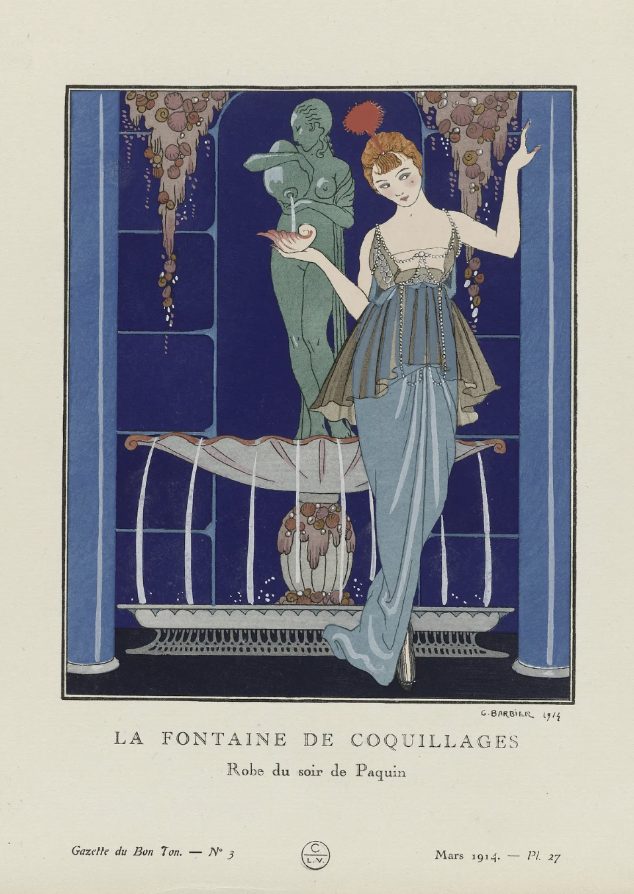
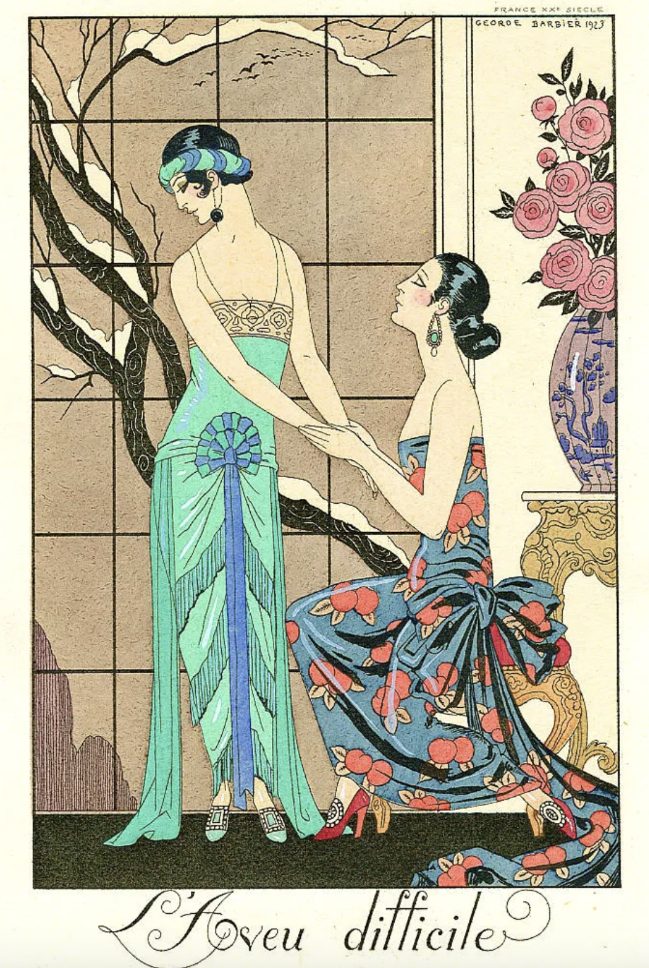
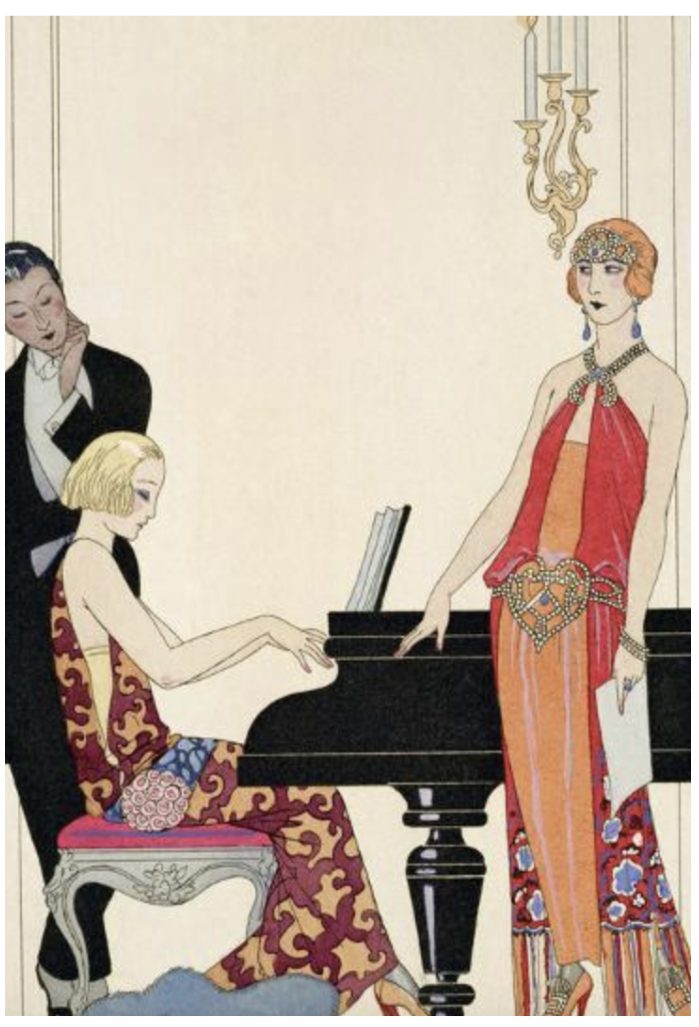
Barbier’s art captured the essence of an era transitioning from the chaos of war to a renewed appreciation for elegance, sophistication, and innovation. His illustrations not only showcased the evolution of fashion but also reflected the broader societal shifts and aspirations of the post-war period, making him a revered figure in the Art Deco movement and a timeless icon of artistic expression. Born in 1882, George Barbier was deeply immersed in the world of art from a young age. He honed his skills at the studio of Jean-Paul Laurens at the prestigious Ecole des Beaux-Arts in Paris, where he absorbed a rich tapestry of artistic influences. Barbier’s explorations led him to the vast collections of antiquities at the Louvre, where he drew inspiration from diverse sources such as Greek pottery, Egyptian artifacts, Japanese prints, and Persian miniature paintings, all of which left an indelible mark on his style.
One of Barbier’s notable influences was the renowned Ballets Russes, which captivated him with its avant-garde performances and innovative choreography. He developed a deep admiration for the dancers and expressed this through albums dedicated to celebrating their artistry. His passion extended to designing costumes for luminaries like the prima ballerina Anna Pavlova, showcasing his versatility across different artistic mediums. Barbier was a versatile artist who extended his talents beyond illustration to design glassware, wallpapers, and even contributed writings to the French magazine Gazette du Bon Ton. During the 1920s, he collaborated with the renowned French Art Deco artist Erté on designing costumes and sets for the iconic Parisian cabaret venue, the Folies Bergère.
Barbier’s illustrations graced the pages of esteemed publications such as La Gazette du Bon Ton, a luxurious monthly magazine that epitomized the elegance and sophistication of the era. His work also adorned the pages of Vogue and featured in various books, advertisements, catalogs, as well as on wallpapers and textiles. Beyond publications, Barbier collaborated with leading figures in the fashion world, including Paul Poiret, known as the “King of Fashion” as well as renowned jewelry designer Cartier and luxury cosmetics and perfume brand Richard Hudnut. These collaborations underscored Barbier’s reputation as a visionary artist whose work transcended traditional boundaries, leaving an indelible mark on the world of art, fashion, and design.