
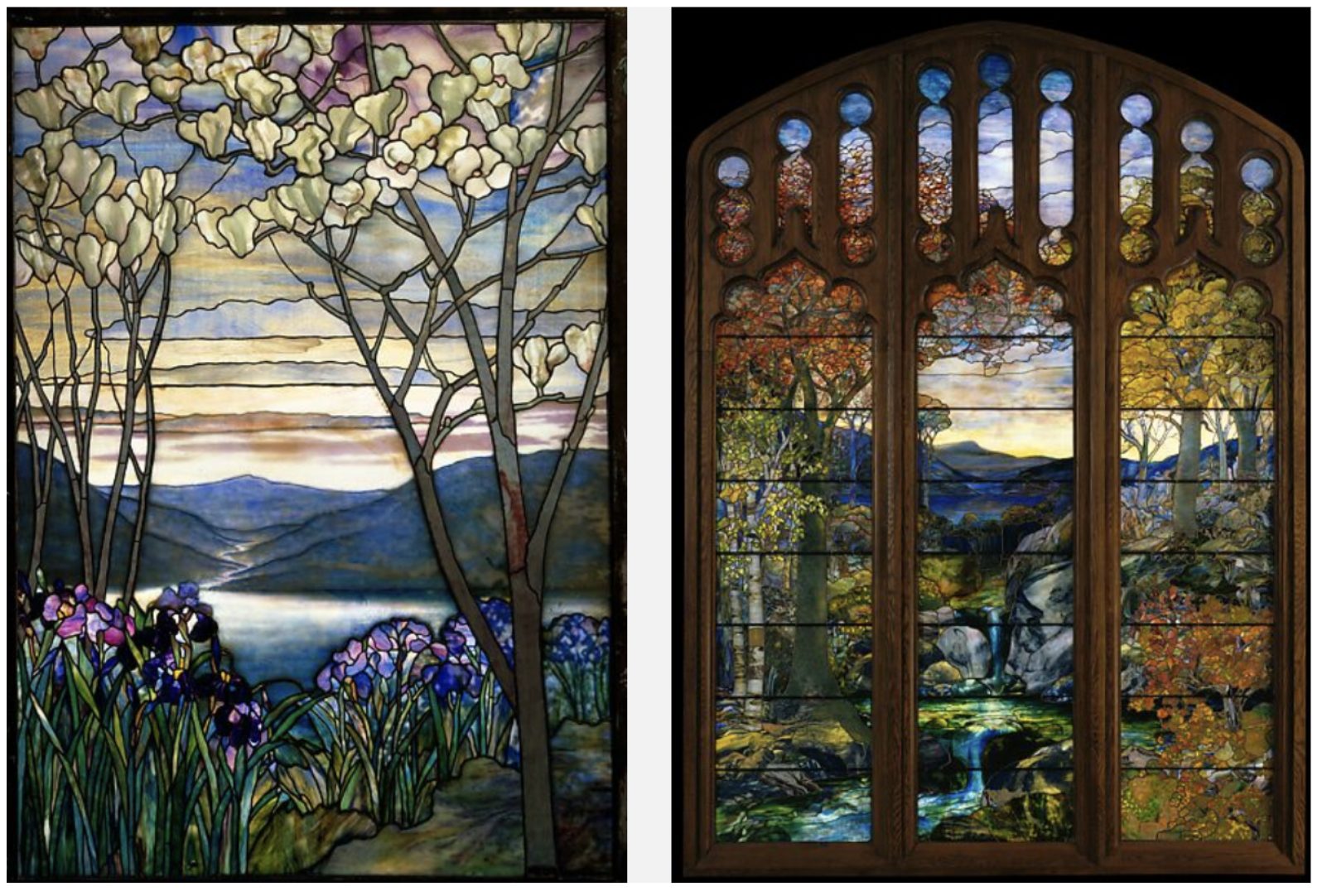
A Profile on Louis Comfort Tiffany – Master of 1920s Decorative Arts
May 21, 2024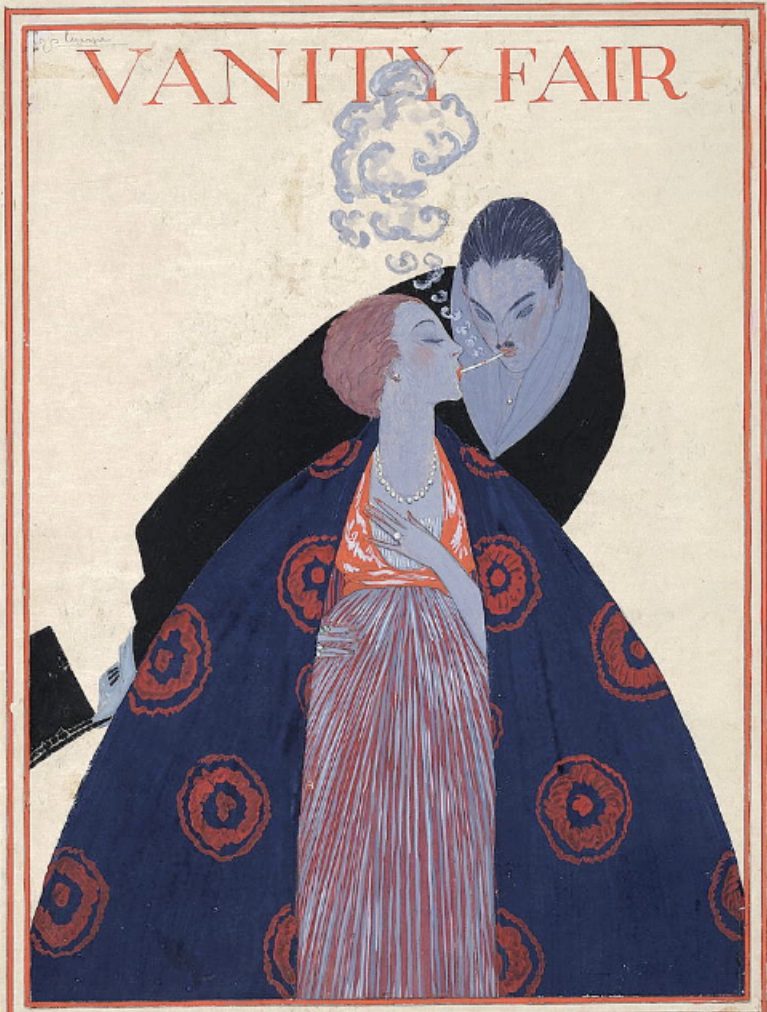
A Profile on Georges Lepape – Master of Art Deco Fashion and 1920s Decorative Arts
May 21, 2024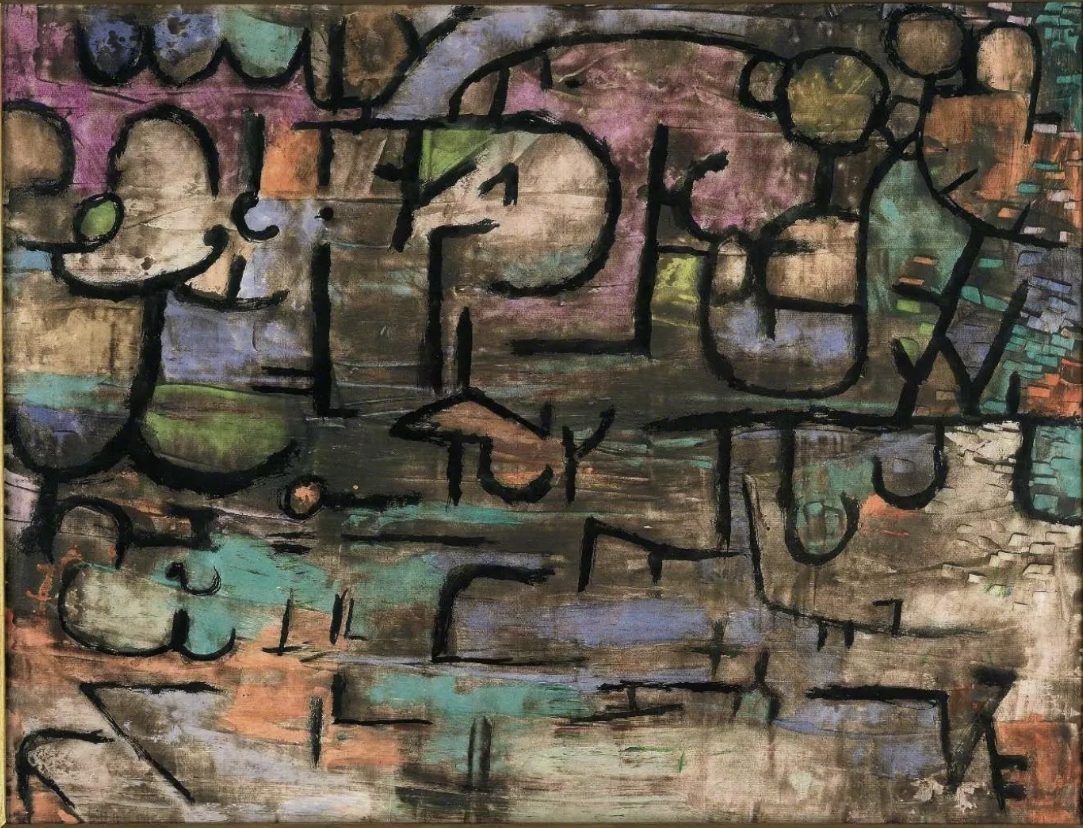
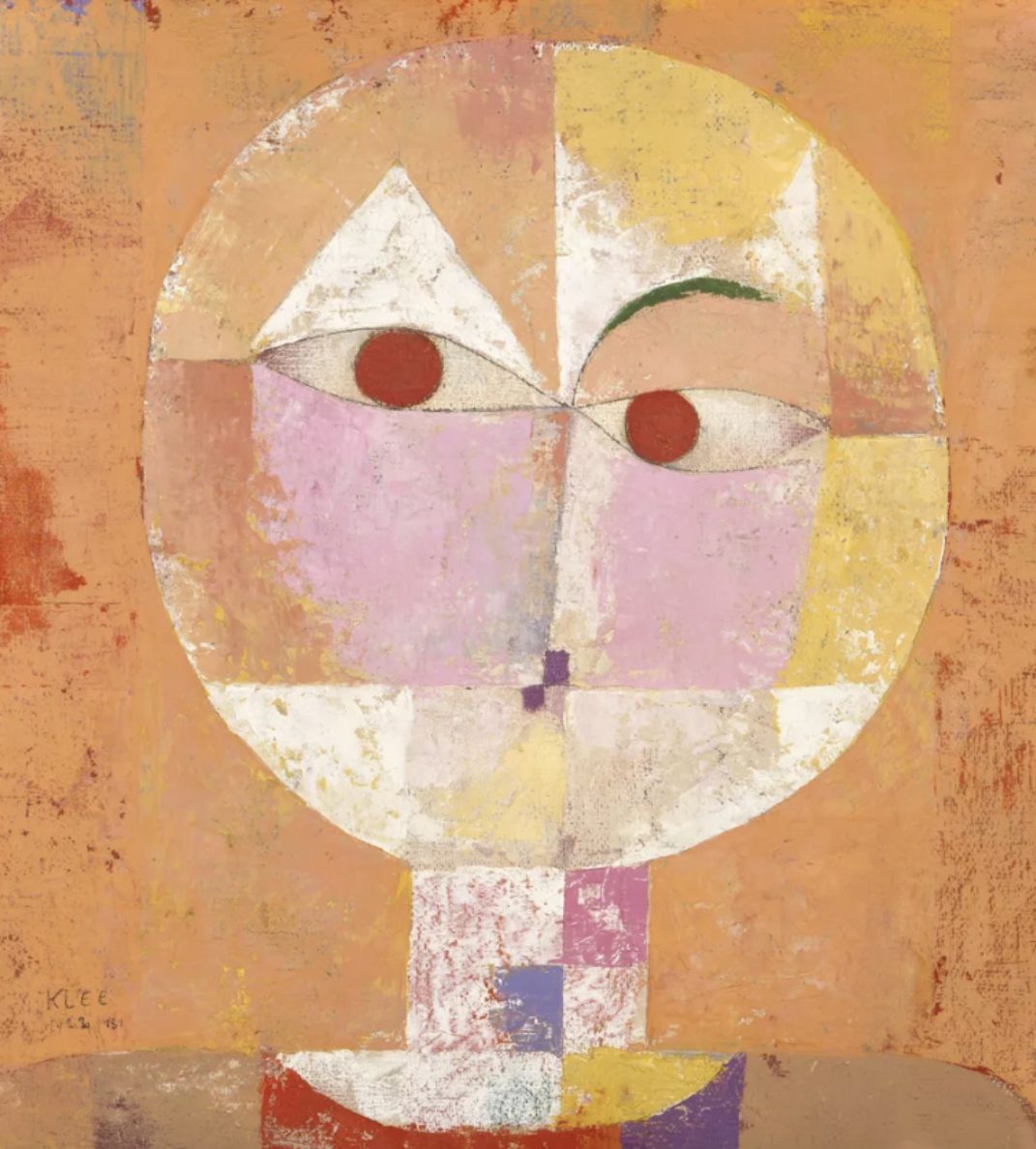
Paul Klee’s (1879-1940) use of symbols represented early attempts in the 20th century to infuse spiritual and subconscious elements into abstract art. This approach profoundly influenced movements like Surrealism and Abstract Expressionism. Artists such as Joan Miró, Salvador Dalí, Mark Rothko, and Robert Motherwell regarded Klee as a guiding light in their artistic journeys.
The exhibition “L’ironie à l’oeuvre” (“Irony at work”) at Paris’s Centre Pompidou celebrates Klee’s enigmatic yet impactful contributions. It delves into the myriad influences and reverberations of his unconventional and distinctive artistic vision, showcasing the enduring relevance of his work in shaping modern art.
Klee is often described as a multifaceted artist, known for his contributions to abstract art, his role as a Bauhaus master, his influence on Surrealism, and his association with various 20th-century art movements such as German Expressionism and Dada. However, Klee’s art defies categorization due to his unique style characterized by pulsating forms, mystical symbols, and fantastical creatures that inhabit his compositions. This complexity has led to a diverse range of interpretations and a dedicated following of admirers known affectionately as “Klee-mates” highlighting the enduring fascination with Klee’s enigmatic and captivating artistic vision.
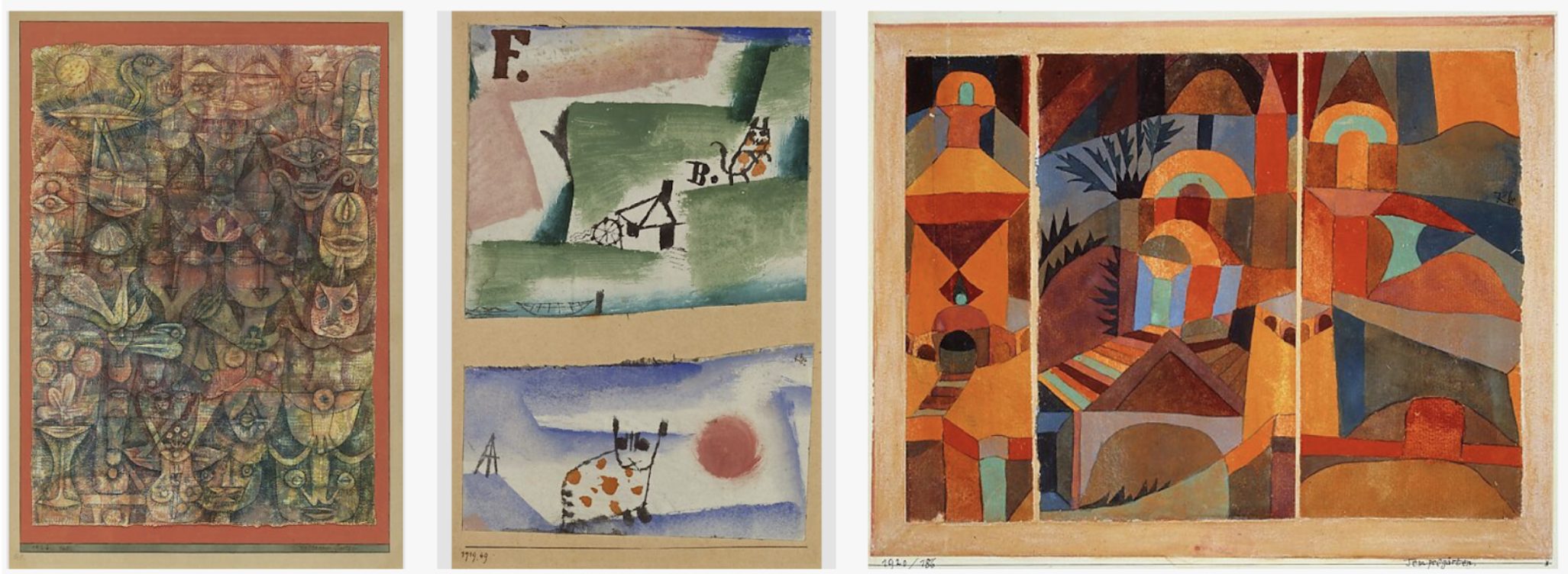
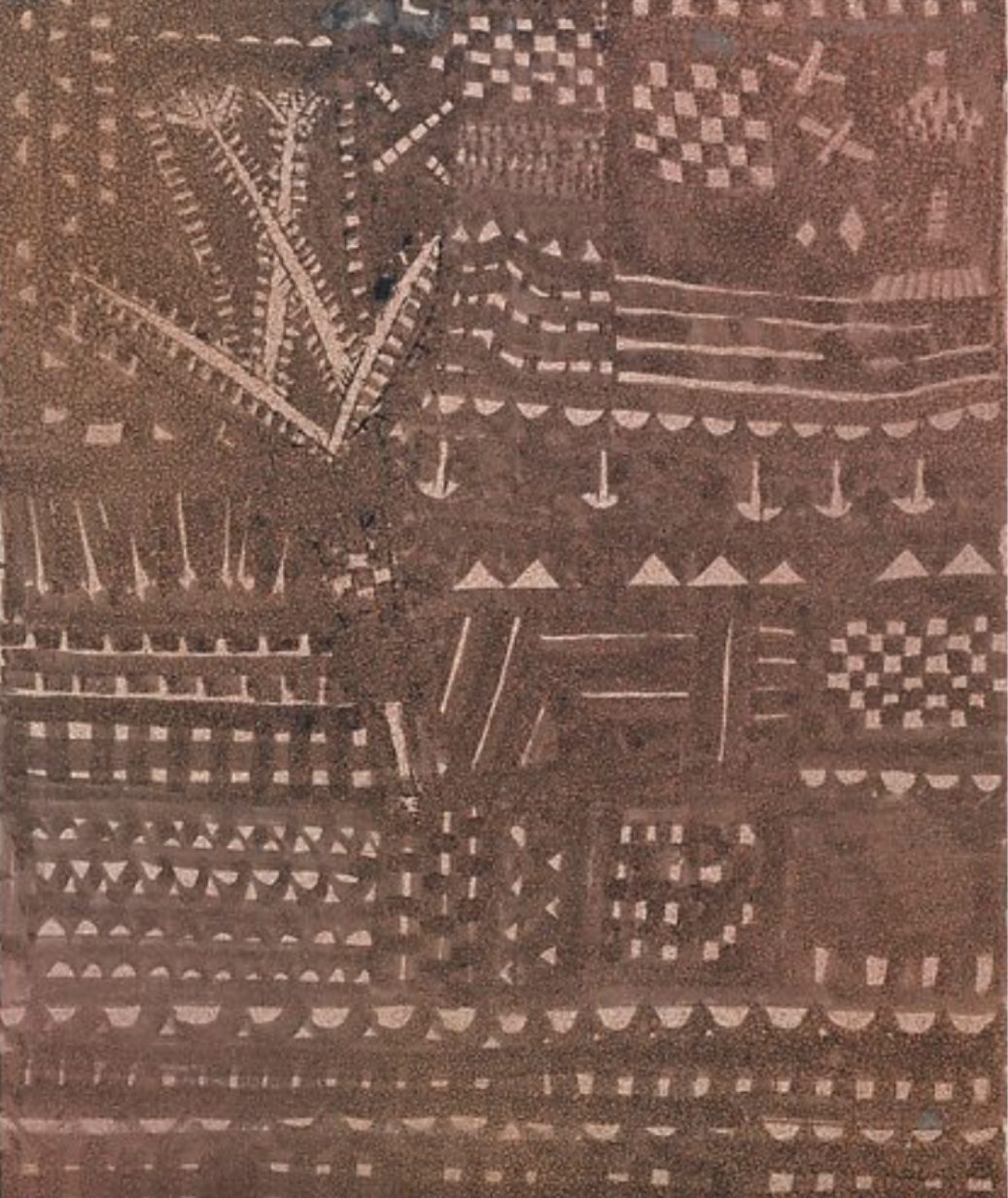
Paul Klee’s impact on modern art is undeniable, as he was part of a transformative group of artists who reshaped artistic expression in the early 1900s. His enduring presence in the art-historical narrative ensures that his influence will continue for generations. Interestingly, despite declarations of painting’s decline in the mid-20th century, the medium has experienced a resurgence in contemporary art, alongside a renewed appreciation for art created by unconventional or marginalized voices. Klee’s exploration of the subconscious and his engagement with unconventional ideas resonate with today’s interest in art from outside the traditional establishment, including works by disabled individuals and practitioners of occult traditions.
Paul Klee was born in 1879 in Münchenbuchsee, near Bern, Switzerland, to Hans Klee, a German music teacher, and a Swiss mother. His artistic training commenced in 1898 in Munich, where he studied drawing and painting for three years. In 1911, he returned to Munich and joined the German Expressionist group Der Blaue Reiter (The Blue Rider), founded by Vasily Kandinsky and Franz Marc. Klee’s friendship with Kandinsky was significant, providing him with encouragement and support. Influenced by various styles such as Symbolism, Cubism, and the abstract color planes of artists like Robert Delaunay, Klee experimented with caricatures, Symbolist drawings, and later, small works on paper in black and white.
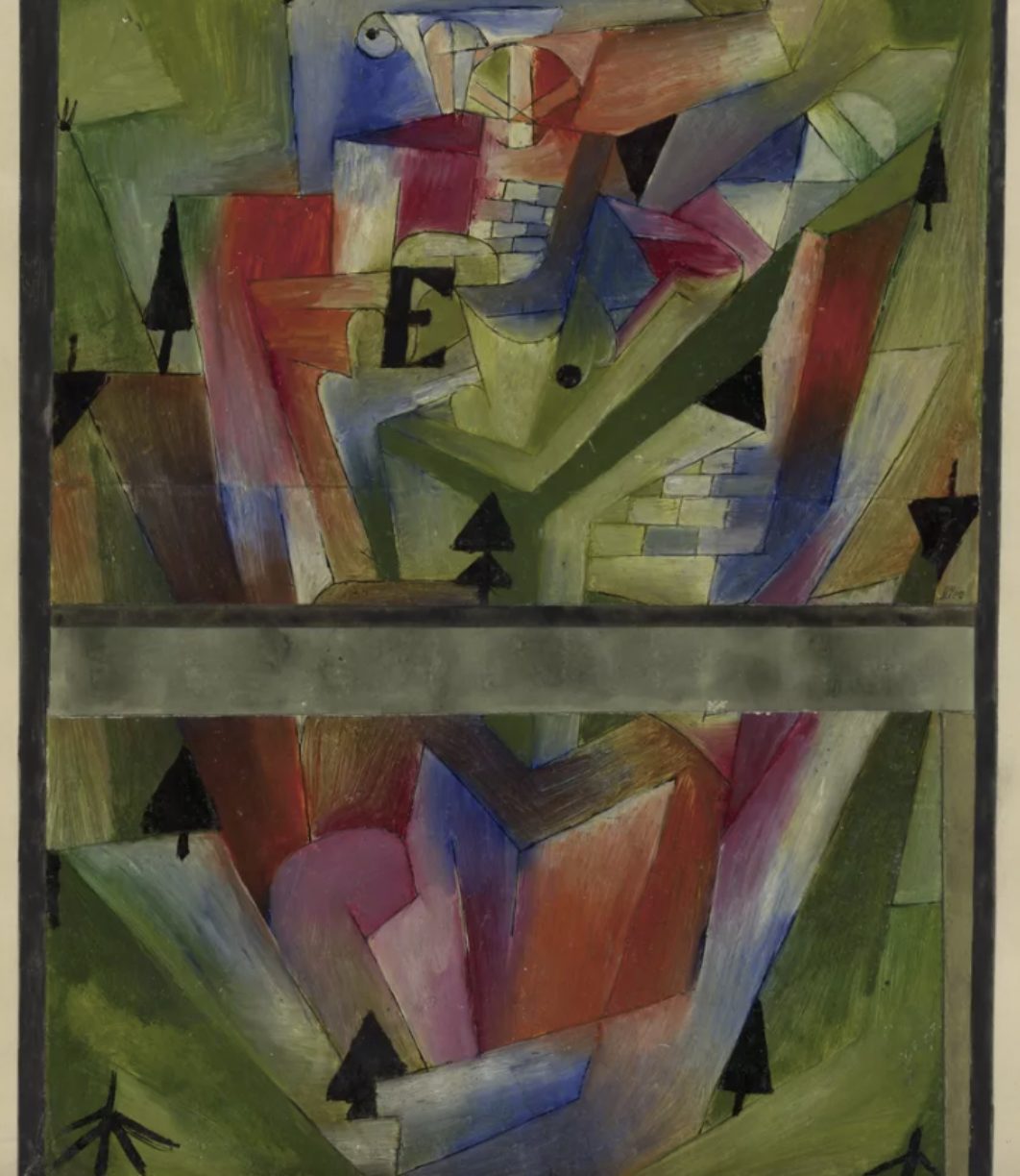
By 1915, Klee had fully embraced abstraction, distancing himself from literal representation. His works became expressions of diverse subjects drawn from his imagination, including poetry, music, literature, and reflections on the world. Klee’s titles, often imbued with irony or poetry, played a crucial role in framing the viewer’s perspective, reflecting his whimsical, fantastical, and contemplative themes. Walter Gropius invited Paul Klee to join the Bauhaus faculty in 1920, where Klee taught for ten years.
The Bauhaus, a renowned school of architecture, industrial design, and arts and crafts, provided a fertile ground for Klee’s artistic exploration. During this period, Klee produced nearly half of his extensive body of work, primarily consisting of small-scale watercolors and drawings on paper. His artworks from this time span a wide range, reflecting his courses’ subjects and his fascination with color relationships. Pieces like “Static-Dynamic Gradation” (1923) exemplify his exploration of color dynamics, while “Ventriloquist and Crier in the Moor” (1923) showcases his whimsical and fantastical style, which became synonymous with his identity.
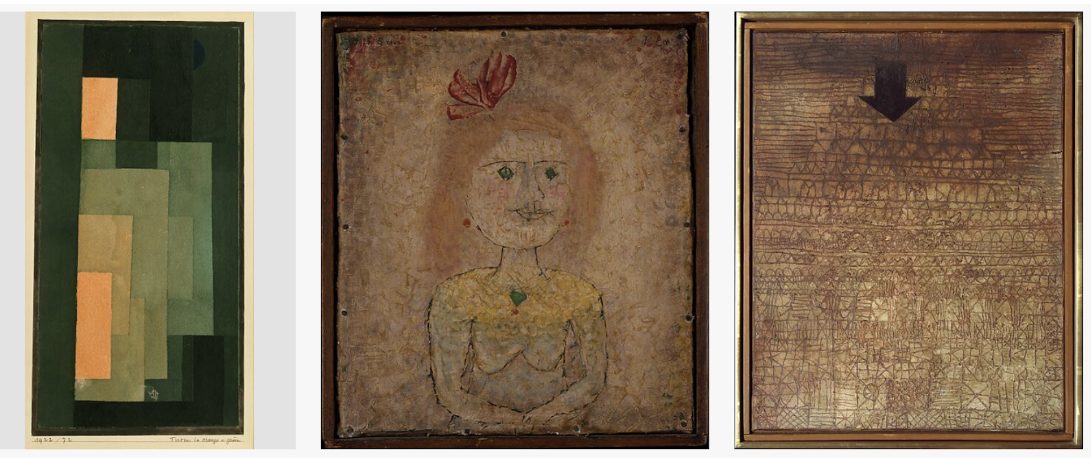
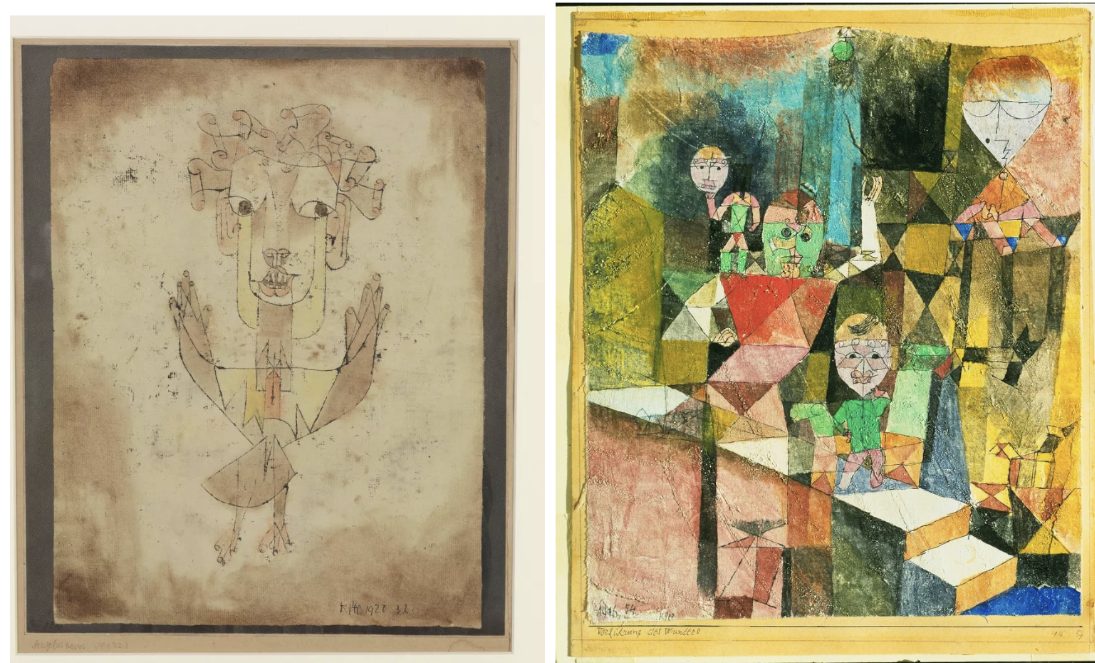
From 1931 to December 1933, Paul Klee taught at the Academy of Fine Arts in Düsseldorf. However, when the National Socialists labeled his art as “degenerate” in 1933, Klee returned to his hometown of Bern. This period marked personal hardship for Klee, compounded by the deteriorating political situation in Europe. These challenges are evident in the somber tone of his late works. His lines transitioned into bold black bars, forms became more generalized and expansive, scales grew larger, and colors simplified. Examples of this shift can be seen in works like “Comedians’ Handbill” (1938; 1984.315.57) and “Angel Applicant.”