
A Profile on Guy de Chaunac-Lanzac “Dom Robert”
May 15, 2024
A Profile on Paul Klee – Master of Bauhaus and 20th-Century Modern Abstract Art
May 21, 2024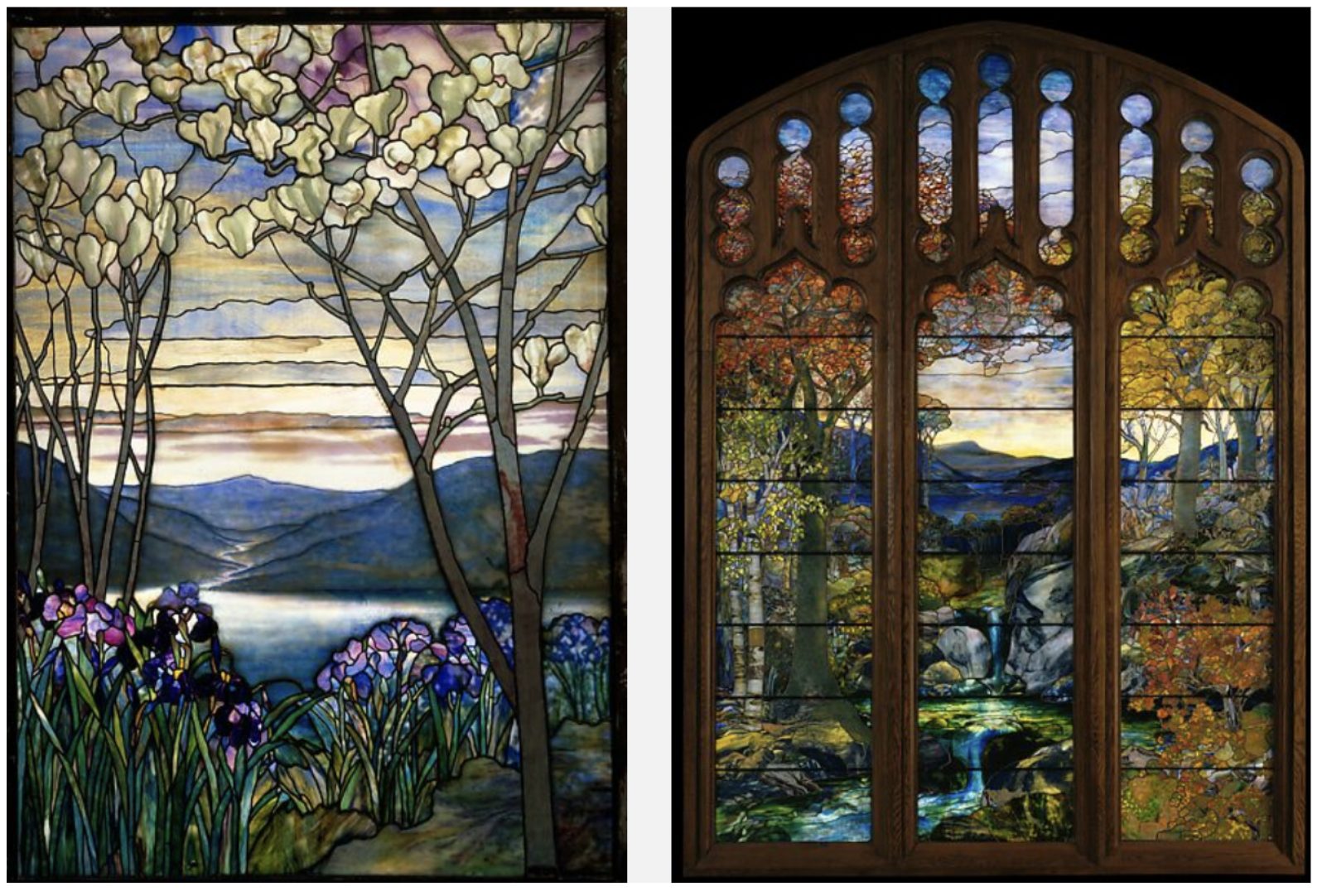
Louis Comfort Tiffany, born on February 18, 1848, was a prominent American Art Deco artist and designer renowned for his exceptional work in the decorative arts, particularly in stained glass. He is closely associated with the art nouveau, art deco and aesthetic art movements, contributing significantly to the development and popularity of these styles. Tiffany’s artistic journey was marked by his affiliation with the prestigious collaborative group of designers known as the Associated Artists. This collective included notable figures such as Lockwood de Forest, Candace Wheeler, and Samuel Colman, with whom Tiffany collaborated on various artistic projects.
One of Tiffany’s most iconic contributions to the art world is his innovative designs in stained glass. He revolutionized the craft, creating intricate and vibrant stained glass windows and lamps that captured the imagination of viewers worldwide. His glass mosaics, blown glass pieces, ceramics, jewelry, enamels, and metalwork also showcased his exceptional talent and creativity across diverse mediums. Born into a family renowned for luxury, with his father Charles Lewis Tiffany founding Tiffany & Co. Louis had the means to pursue his passions without the pressures of joining the family business. Despite the allure of the jewelry and silver firm, Tiffany chose to forge his own path in the world of art and design.
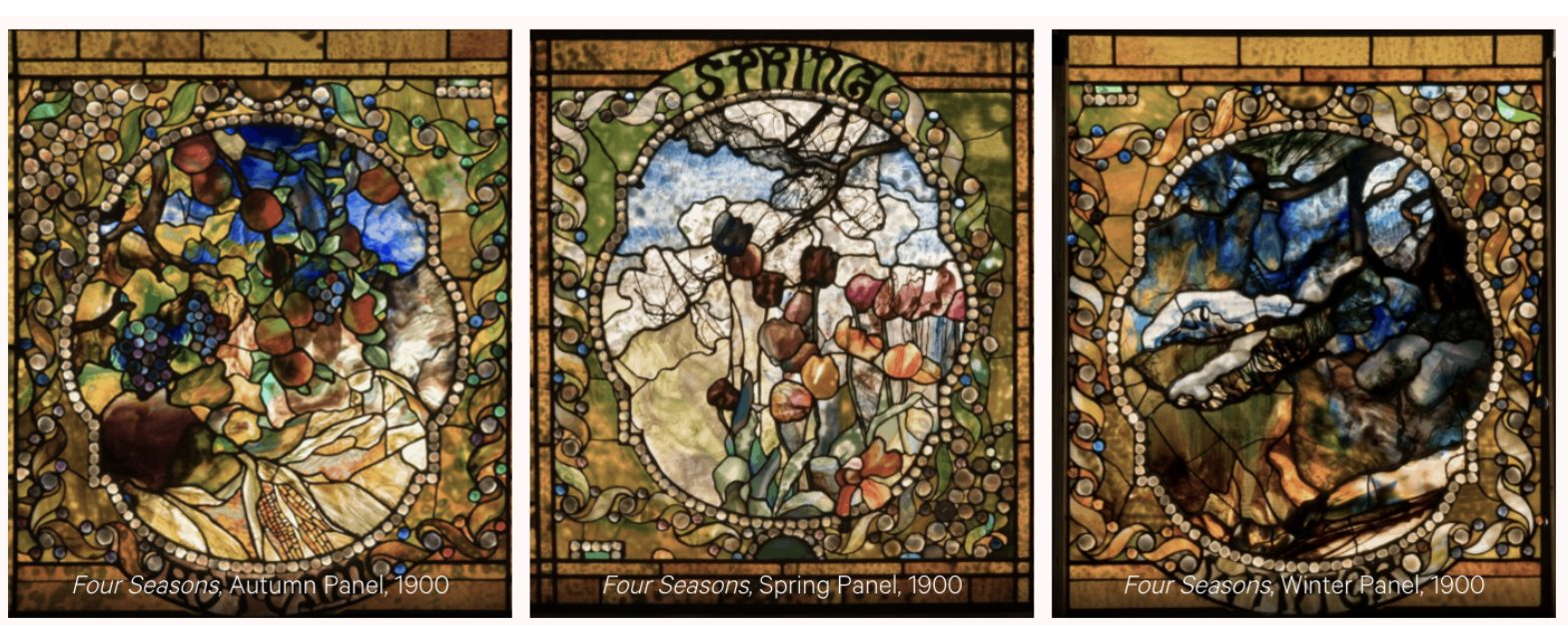
His contributions left a lasting legacy, influencing generations of artists and designers and earning him a well-deserved place in the pantheon of American art and design. His career, spanning from the 1870s to the 1920s Art Deco period, saw him explore and master a wide range of artistic mediums, showcasing his exceptional talent and creativity. Tiffany’s artistic repertoire included leaded-glass windows, mosaics, lighting fixtures, glassware, pottery, metalwork, enamels, jewelry, and interior design.
Tiffany’s artistic journey began as a painter, influenced by prominent artists like George Inness and Samuel Colman. His early works reflected his travels and exposure to diverse cultures, notably during his trip to North Africa with painter Robert Swain Gifford in 1870–71. The painting “Snake Charmer at Tangier, Africa,” completed in 1872 and exhibited at the 1876 Centennial Exposition in Philadelphia, showcased Tiffany’s fascination with exotic art and architectural motifs. Throughout his career, Tiffany’s artistic vision evolved, leading him to experiment with various mediums and techniques. His mastery of stained glass became legendary, with his leaded-glass windows and intricate mosaics earning widespread acclaim. Tiffany’s lighting designs, characterized by vibrant colors and intricate patterns, became iconic symbols of the art nouveau movement.
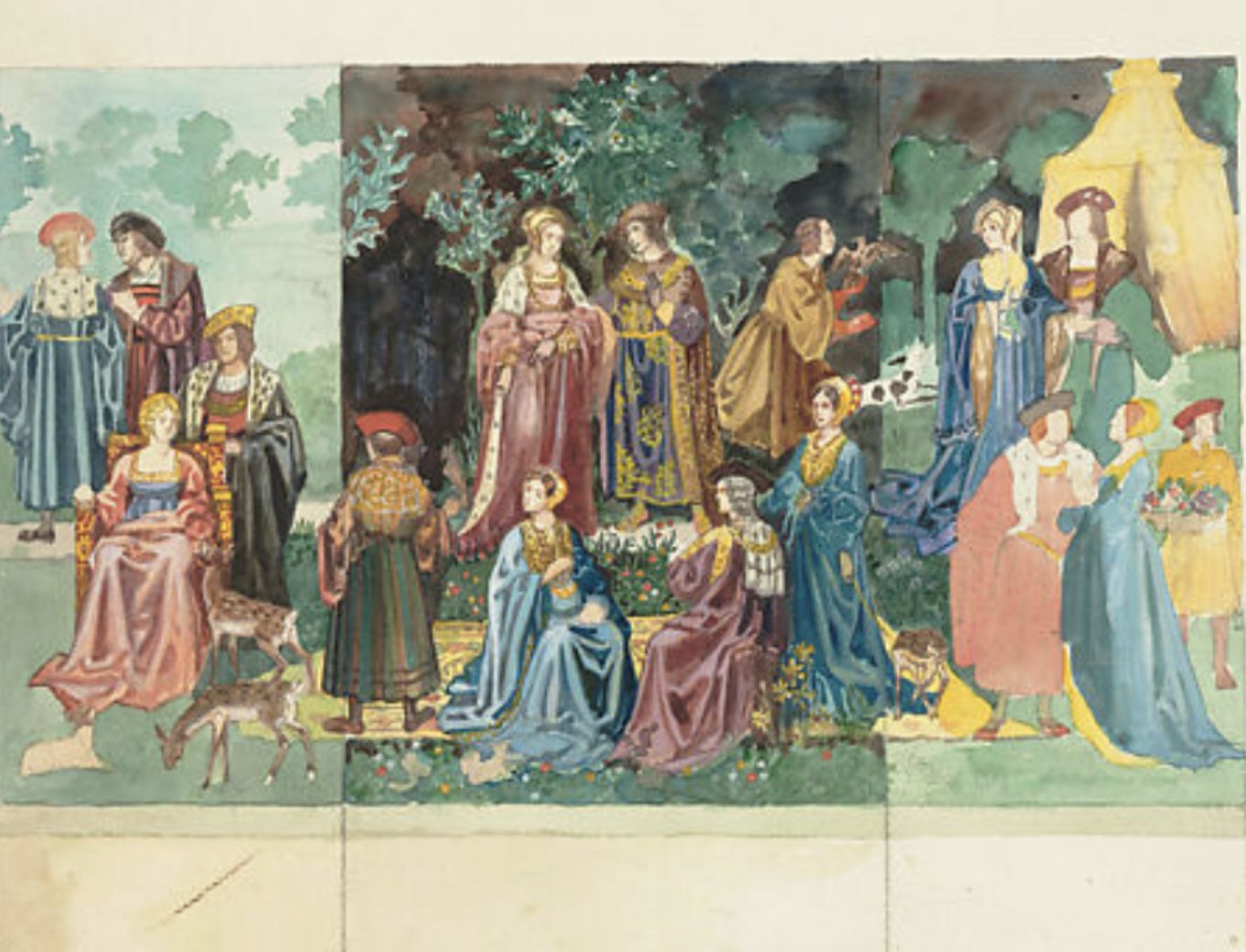
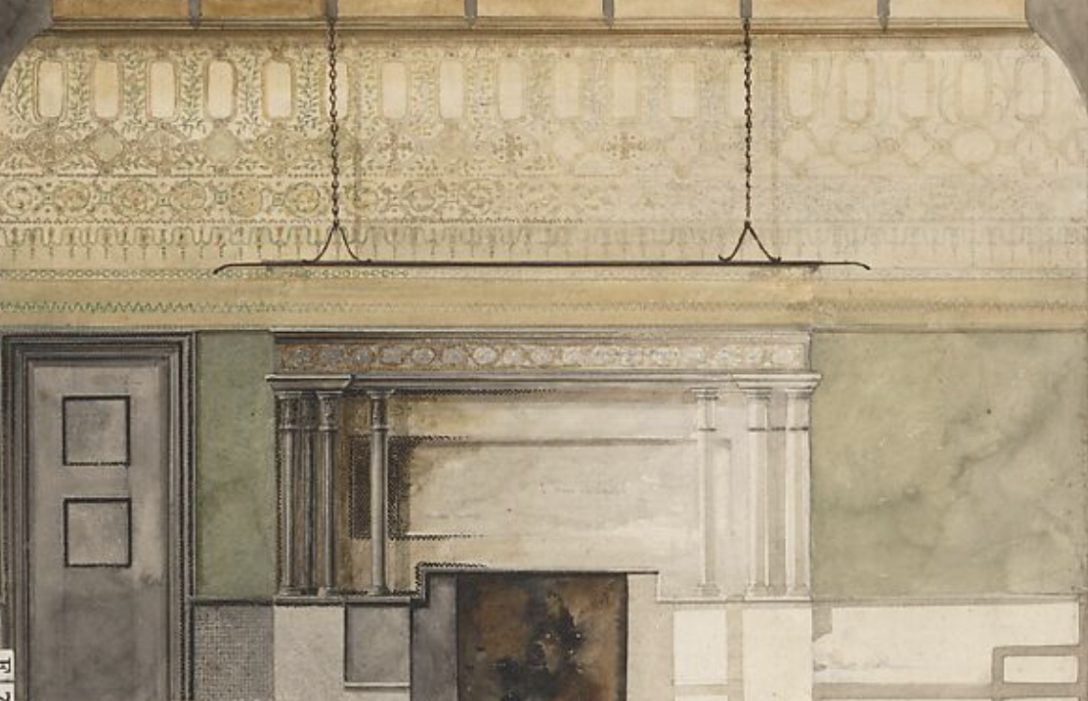
In addition to his contributions to decorative arts, Tiffany’s talents extended to jewelry design, pottery, metalwork, enamels, and interior decoration. His ability to seamlessly blend artistic elements from different cultures and time periods, coupled with his innovative approach to design, established him as a pioneer in the American art scene. Tiffany’s shift towards decorative arts and interior design in the late 1870s marked a significant phase in his career, although he continued to engage in painting alongside these new endeavors. One of his earliest and most notable interior design projects was for his own residence and studio located at the Bella Apartments on 48 East 26th Street in New York City, completed in 1878. The interiors of the Bella Apartments reflected Tiffany’s eclectic style, blending elements from various artistic movements and cultural influences.
His approach to interior design was characterized by a fusion of colors, textures, and decorative elements, showcasing his exceptional talent for creating stunning environments. In his own home and studio, Tiffany had the freedom to experiment with different techniques and materials, laying the foundation for his future successes in the field of decorative arts. The space served as a creative sanctuary where he could explore new ideas and refine his skills as a designer.
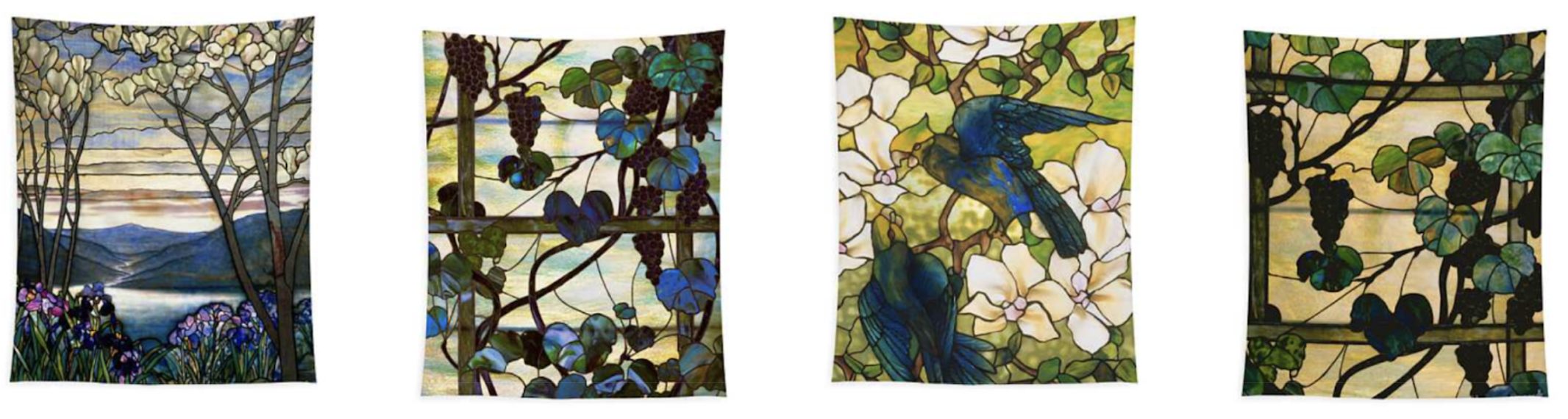
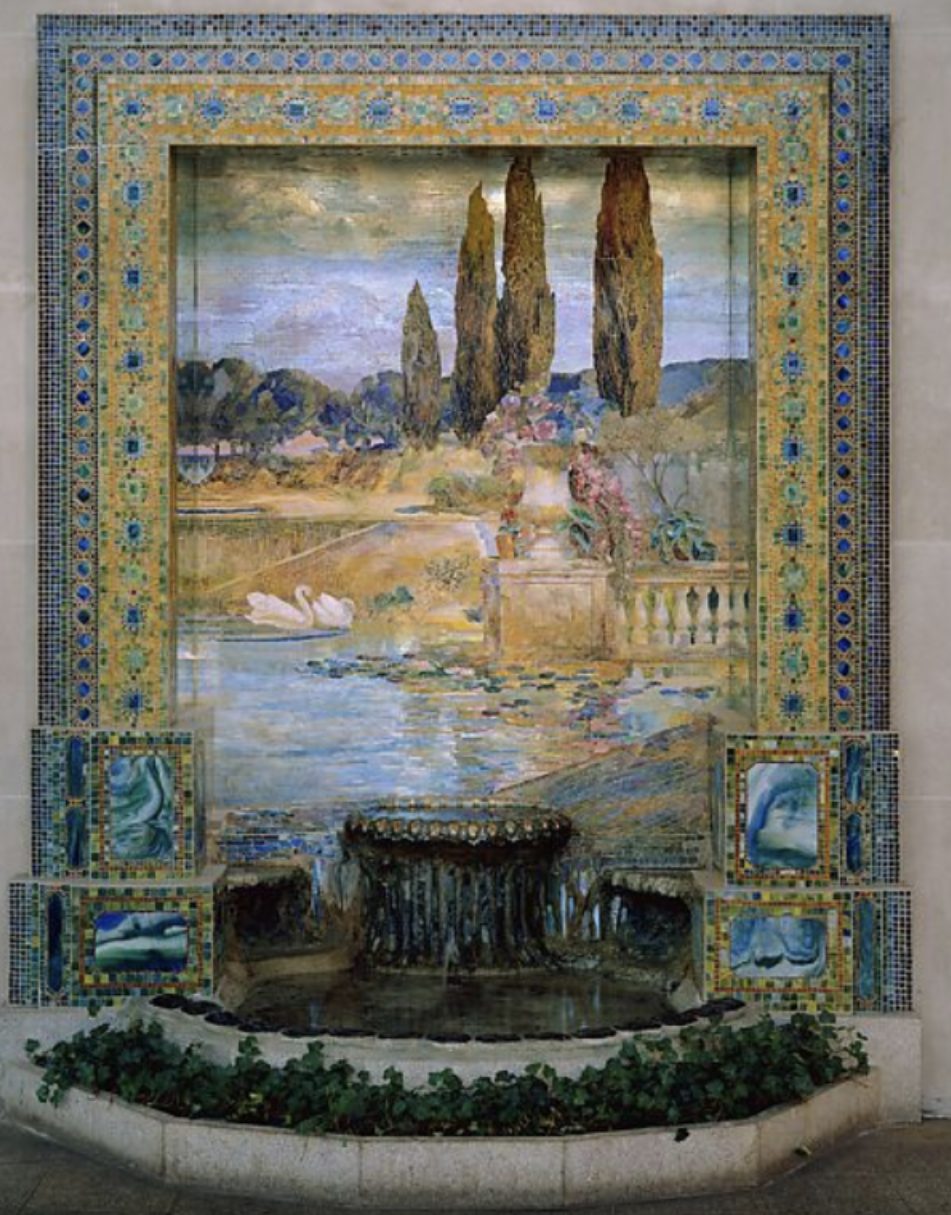
Louis Comfort Tiffany’s work in leaded-glass was indeed groundbreaking and earned him significant recognition in the artistic world. Alongside his contemporary John La Farge, Tiffany revolutionized the traditional look of stained glass, which had remained largely unchanged since medieval times. The traditional approach to stained glass involved using flat panes of white and colored glass, with details painted using glass paints before firing and leading. However, Tiffany and La Farge introduced innovative techniques and materials that transformed the medium. One of their key achievements was the development of opalescent glass, a unique American phenomenon patented by both artists by 1881.
Opalescent glass had a distinctive milky, opaque appearance, often displaying rainbow hues when illuminated. This new type of glass allowed for a much richer and varied palette of colors compared to traditional stained glass. Tiffany’s Favrile glass, in particular, was renowned for its internal coloring, which created variegated shades within the glass itself. This feature enabled craftsmen to achieve nuanced tonal gradations, lines, textures, and densities without relying on painted details. One notable example of Tiffany’s mastery of opalescent glass is seen in the work “Magnolias and Irises,” executed by Tiffany Studios around 1908. This piece, designed as a memorial window based on the motif of the River of Life, showcases magnolias and irises depicted with opalescent drapery glass and heavily folded or creased glass. The multihued tones and intricate details in this window illustrate Tiffany’s ability to use glass as a medium for painting, creating dynamic and lifelike compositions that captivated viewers.
Louis Tiffany’s artistic vision was deeply rooted in his belief that nature should serve as the primary muse for design. His fascination with the vibrant colors and intricate forms found in the natural world drove him to translate these elements into his creations, particularly in glasswork. In 1893, Tiffany embarked on a new artistic venture with the introduction of his first blown-glass vases and bowls, which he named “Favrile.” The term “Favrile” was derived from an old English word meaning hand-made, emphasizing the craftsmanship and artisanal quality of these pieces. What set Favrile glass apart and quickly garnered it international acclaim was its unique surface iridescence and brilliant colors.
Tiffany’s innovative approach to glassblowing techniques allowed him to achieve a stunning iridescent effect on the surface of the glass. This iridescence, reminiscent of the shimmering play of colors seen in natural phenomena like oil slicks or butterfly wings, added a magical quality to his glass creations. The brilliant colors, ranging from deep blues and greens to fiery oranges and reds, further enhanced the allure of Favrile glass. Each Favrile piece was a testament to Tiffany’s mastery of color, form, and texture, creating objects that were not just functional but also exquisite works of art. Through Favrile glass, Tiffany expanded the boundaries of glassmaking and solidified his reputation as a pioneer in decorative arts. His commitment to nature-inspired design and his innovative use of materials continue to inspire artists and artisans to this day, making Favrile glass an enduring legacy of Tiffany’s artistic vision and creativity.