
Deco Dreams and Contemporary Glamour: How Art Deco Inspires Modern Rug Design
April 29, 2025
Metallic Threads of Empires: Weaving Light, Legacy, and Reverence
May 6, 2025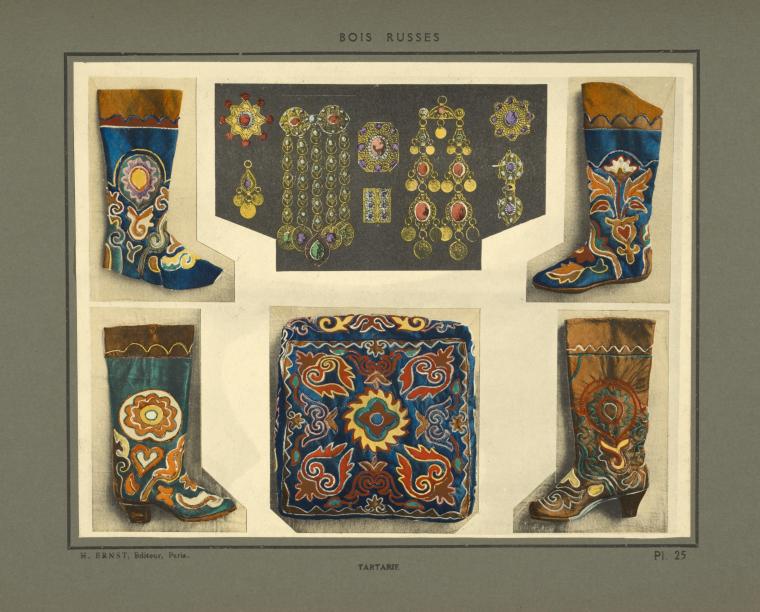
Exposition internationale des arts décoratifs et industriels modernes (1925 : Paris, France) at The New York Public Library, 2025
Modernity was never a rupture—it was a rehearsal.
A hundred years on, Art Deco remains the world’s most disciplined dream—a global love affair between ornament and order, industry and intimacy.
Paris, 1925: Where the Future Was Draped in Lacquer
In 1925, on the banks of the Seine, Paris hosted a spectacle that would recalibrate the compass of modern aesthetics. The Exposition Internationale des Arts Décoratifs et Industriels Modernes—from which Art Deco would draw its name—was less a mere exhibition, more a manifesto in marble, lacquer, and light. A century on, 100 years of Art Deco is not a look back. It is a reckoning—with desire, empire, and the poetics of precision.
Here was a manifesto whispered in polished wood, etched glass, and gilded bronze: modernity could have a soul. Jean Dunand’s lacquer screens shimmered like secrets in motion, while Romain de Tirtoff and Paul Poiret’s gowns fluttered like dreams from another planet. His couture wore its Orientalist dreams unapologetically, turning the female form into a theatre of fantasy. This was not Bauhaus sobriety; this was seduction by design.
Art Deco was never merely a style. It was a worldview—sculpted in chrome and mother-of-pearl, forged in the furnaces of industry and imagined in the geometries of myth. It emerged as the child of contradiction: where the machine met the artisan’s hand, where symmetry flirted with sensuality, and where restraint wore the mask of excess.
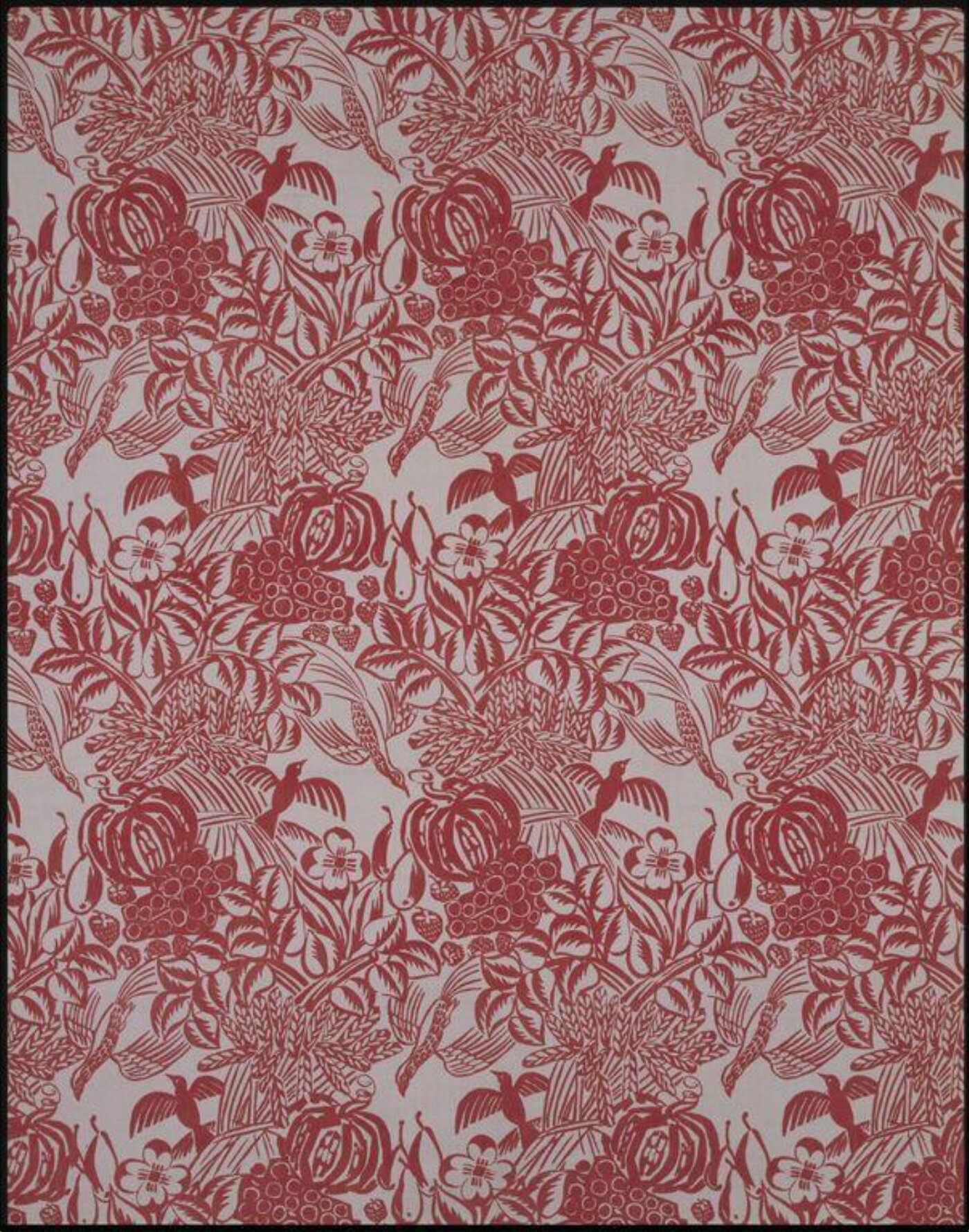
Fruits d’Europe. Furnishing Fabric, ca. 1925 (made). Artist/Maker: Bianchini-Férier (manufacturer),
Raoul Dufy (designer)
Place of origin: France (manufactured). Victoria and
Albert Museum
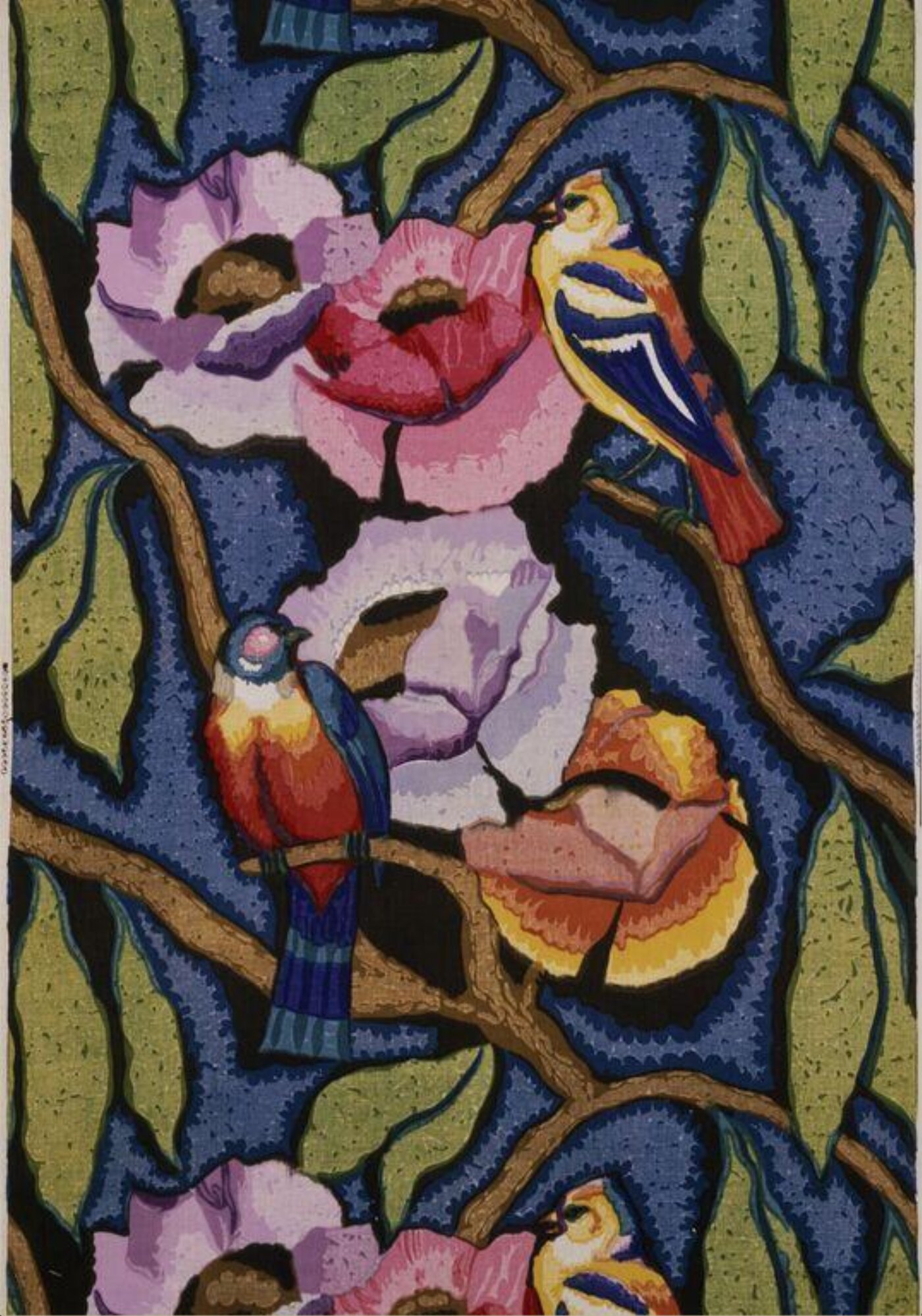
Furnishing Fabric, 1920-1925 (made). Victoria and
Albert Museum
Artist/Maker: William Foxton Ltd. (designed for),
Minnie McLeish (designer)
Place of origin: London
Not a Style, but a Seduction: The Philosophy of Art Deco Modernism
It was not ornament, but discipline made decorative.
Art Deco emerged from the chaos of World War I, shaped by optimism and industry, and a hunger for elegance in the machine age. It was where the restraint of geometry met the abandon of desire. As the 1920s turned to 1930s, Deco distilled a new kind of luxury: chrome made sacred, curves disciplined into arcs of longing. Beauty is utility made noble.
Jacques-Émile Ruhlmann furniture—imperial, exquisite, imperialistic—epitomized this ethos: craftsmanship as power, luxury as vocabulary. His macassar ebony and ivory desks did not whisper; they commanded. These were not objects. They were declarations.
But the story of Art Deco interiors and design was never just written in the ateliers of men. Women embroidered revolution into the very warp and weft of Deco’s global fabric. Margaretha Reichardt—a Bauhaus weaver who saw no boundary between fine art and loom—created textiles that were not accessories, but ideologies. Jacqueline Groag, a Jewish émigré, fled fascism with patterns that danced defiantly in mid-century Britain. Marianne Brandt distilled modernity into metal—her Bauhaus and Art Deco synthesis yielding teapots like tiny temples. They didn’t just decorate space; they decoded modernity into thread, steel, and silhouette.
Deco Goes Global: Jazz Cities, Sea Palaces, and Desert Geometry
Art Deco was not confined to Parisian salons or Manhattan towers. It sailed across oceans, absorbing dialects of place.
Across continents, Deco traveled like jazz: adapting, absorbing, never imitating. In New York, the Chrysler Building rose like a symphony in stainless steel—its crown a celestial ziggurat, its lobby a cathedral to aspiration. In Buenos Aires, cinemas became Deco’s palaces, flickering with the light of tango and celluloid. In Casablanca, stucco facades wore Parisian accents with North African cadence. In Havana, it met Caribbean heat with Havana cool—pastel facades in rhythmic repetition, geometry softened by salt air. And in Bombay, Deco curved into Indo-Saracenic contours, reimagining colonial cement into cosmopolitan confidence. In Casablanca and Cairo, Deco merged with Moorish motifs, creating new languages in tile and stucco. It was not mimicry—it was migration.
Art Deco was never a monologue—it was a multilingual manifesto. In each region, it adapted like a well-cut suit to the climate of culture and history.
French Deco, born in the ateliers of Paris, was the purest expression of luxury—ebony veneers, ivory inlays, verre églomisé, and the precision of Ruhlmann furniture. It was design as diplomacy, style as statecraft.
Austrian Deco, deeply influenced by the Wiener Werkstätte and Secessionist movement, balanced clarity with craft. It was geometric but tender—where designers like Dagobert Peche and Josef Hoffmann made ornament an ethical act.
German Deco, especially in Berlin, wrestled with Bauhaus modernism. It streamlined rather than gilded, marrying functionality with fleeting glamour in objects and spaces caught between wars.
American Deco became the architecture of ambition. It rose as Manhattan’s skyline—clean, vertical, confident. From the Chrysler Building’s crown to Radio City’s radiant murals, it was cinema rendered in steel and stone.
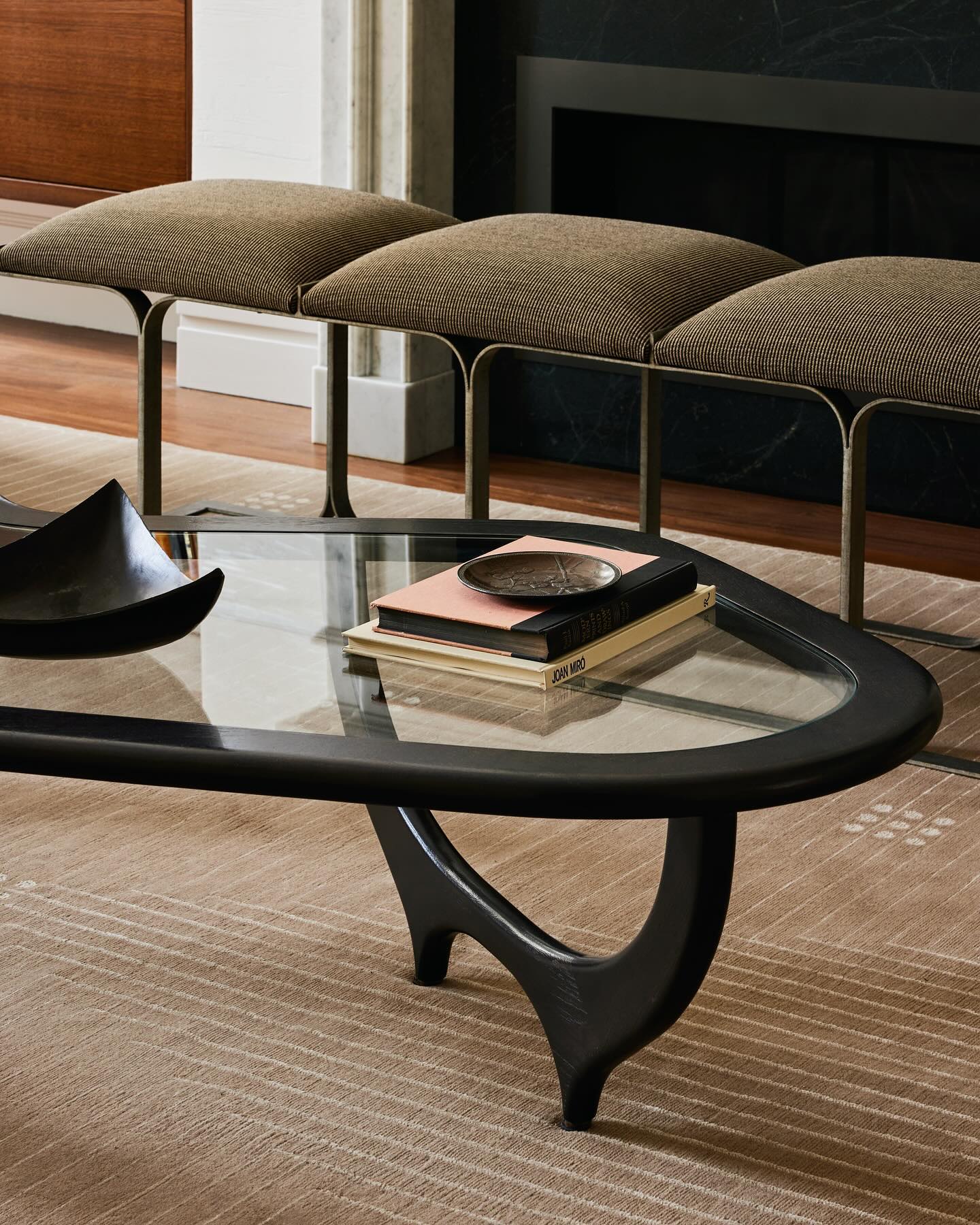
Chelsea Townhouse x Rug & Kilim’s Austrian Deco
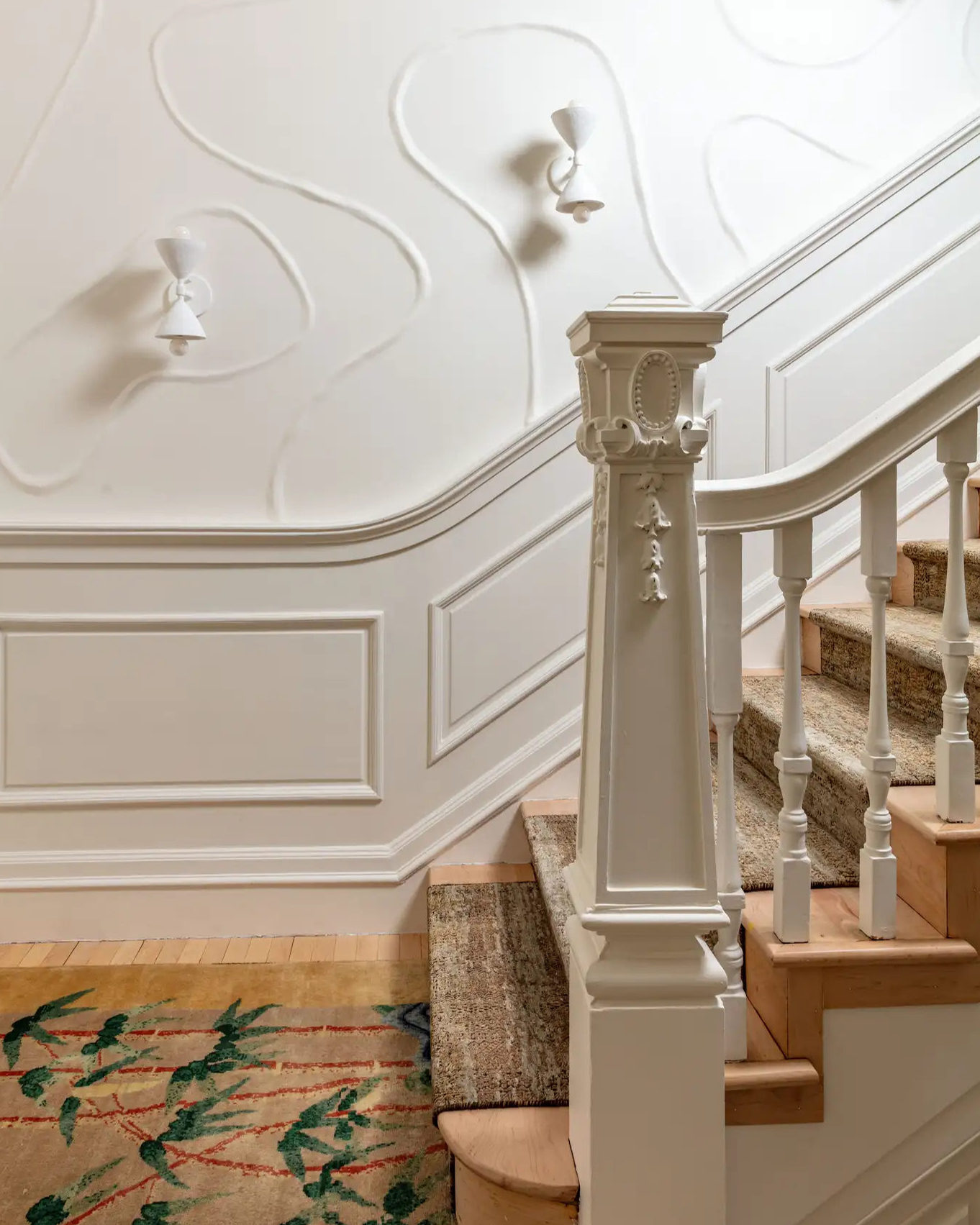
Kips Bay Show House (NY) x Rug & Kilim’s Chinese Deco
Chinese Deco, especially in Shanghai’s Bund and old cinemas, fused traditional Chinese motifs—like dragons and clouds—with Art Deco lines, producing one of the most poetic hybrids of the movement. It was elegance reimagined at the intersection of East and modernity.
South American Deco, in cities like Rio and Buenos Aires, danced with music and myth. With stucco flourishes and tropical accents, Deco met samba and tango, thriving in ballrooms and civic buildings alike.
African and Middle Eastern Deco, particularly in cities like Casablanca, Asmara, and Tel Aviv, reinterpreted Deco as a colonial encounter—but often reshaped it through local geometry, tilework, and desert hues. Deco here wasn’t copied—it was claimed.
Each chapter tells of a style that could not be contained by its Parisian origins. It was never static, always syncretic—a language translated across continents but always retaining its central grammar: geometry, glamour, and grandeur.
Chrome sunbursts, marble constellations, and Deco murals invoke the stars—as if architecture itself believed in fate. On the SS Normandie, dining rooms glowed underwater with Lalique glass panels and velvet banquettes. Deco interiors were never neutral. They were stages where modern life performed its best self.
Luxury must be comfortable, otherwise it is not luxury. But Deco begged to differ. True luxury, in the Art Deco sense, was discipline. Detail. Decorum. A worldview that could make a rug feel like architecture and a chair feel like a commandment.
Indian Elegance: The Vernacular Geometry of Desire
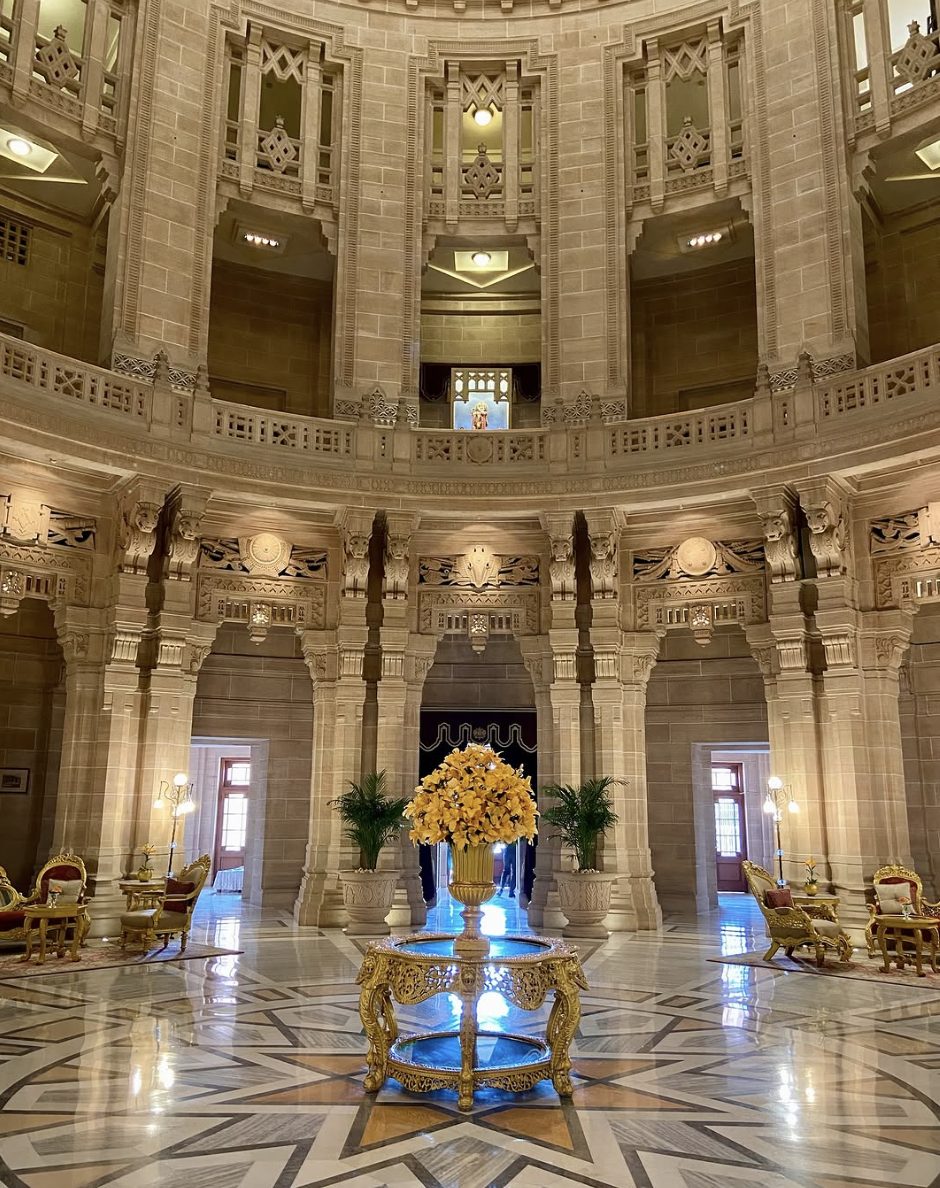
Nowhere was this more eloquent than in India—not as mimicry, but as a metamorphosis. In Jodhpur’s Umaid Bhawan Palace, the geometry of Deco kissed the sandstone austerity of Rajputana. In Mumbai (then Bombay), buildings like the Eros Cinema and Liberty Theatre fused Indian motifs with Deco curves—Art Deco architecture becoming vernacular, not foreign. Even textile patterns evolved: ikat, bandhani, and kalamkari subtly morphed under the influence of European abstraction. Here, Art Deco textiles became memory maps—carrying both the empire’s echo and the native rhythm.
What makes Deco endure, even now, is not nostalgia. It is emotional exactitude. The history of Art Deco design was never a linear tale—it zigzagged like its own motifs, across class, culture, and continent. And though its heyday waned with the Second World War, its presence lingered like perfume on velvet: haunting, heady, and wholly modern.
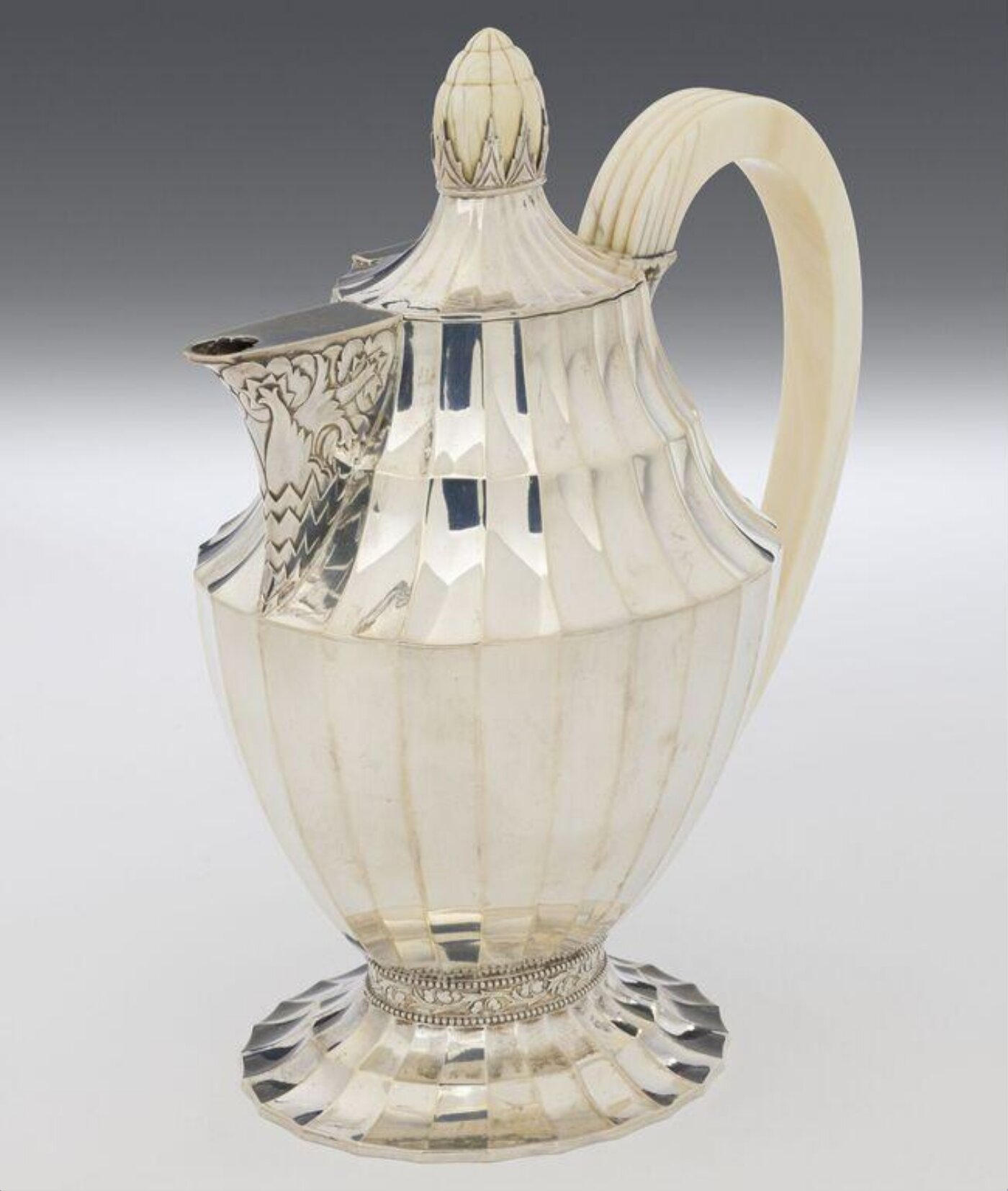
Coffee Pot ca. 1920 (made)
Artist/Maker: J. C. Klinkosch (maker), Klinkosch, J.C. (maker), Prutscher, Otto (designer)
Place of origin: Vienna
Echoes in the Everyday: The Secret Life of Deco in Daily Design
We see it not just in monuments but in daily design—a fluted glass vase, a sunburst mirror, the trim of a boutique hotel lobby. In the Art Deco interiors of Miami Beach’s sea-facing apartments, or the quiet power of a geometric inlay on a dining table in Lagos. It survives in the language of branding, in logos, in luxury fashion’s obsession with angles and aura. Even the digital era bends to its grammar—streaming apps reimagining Deco’s cinematic glamour for a screenlit world.
Art is the signature of civilizations. Art Deco signed its name in chrome, crystal, and conviction.
And it did so globally.
The Discipline of Desire: What 100 Years of Art Deco Still Teach Us
A century later, 100 years of Art Deco is not merely an anniversary. It is an argument for detail, for drama, for dreaming geometrically. It is a reminder that modernism need not be minimalist, that ornament is not an indulgence, but a language.
True luxury, in the Deco sense, is not flamboyance but focus. It is discipline dressed as decadence. Every line serves a purpose, every curve is considered. As we look back on 100 years of Art Deco, we are reminded that design can carry emotion, that architecture can whisper desire.
It tells us that architecture can seduce, that textiles can speak, and that to design with dignity is to compose emotion through form. Art Deco taught us that a wall could tell a story, a chair could hold a manifesto, and that the future always arrives wearing its best lines.
Art Deco stands still—a chrome-lined memory, a velvet-edged dream, a chair that still speaks in commands.
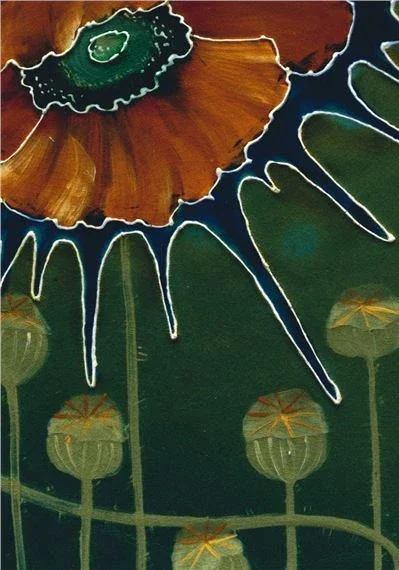
Plaque with poppies. The Metropolitan Museum of Art
Designed by Frederick Hurten Rhead American, born EnglandManufacturer S. A. Weller Pottery.
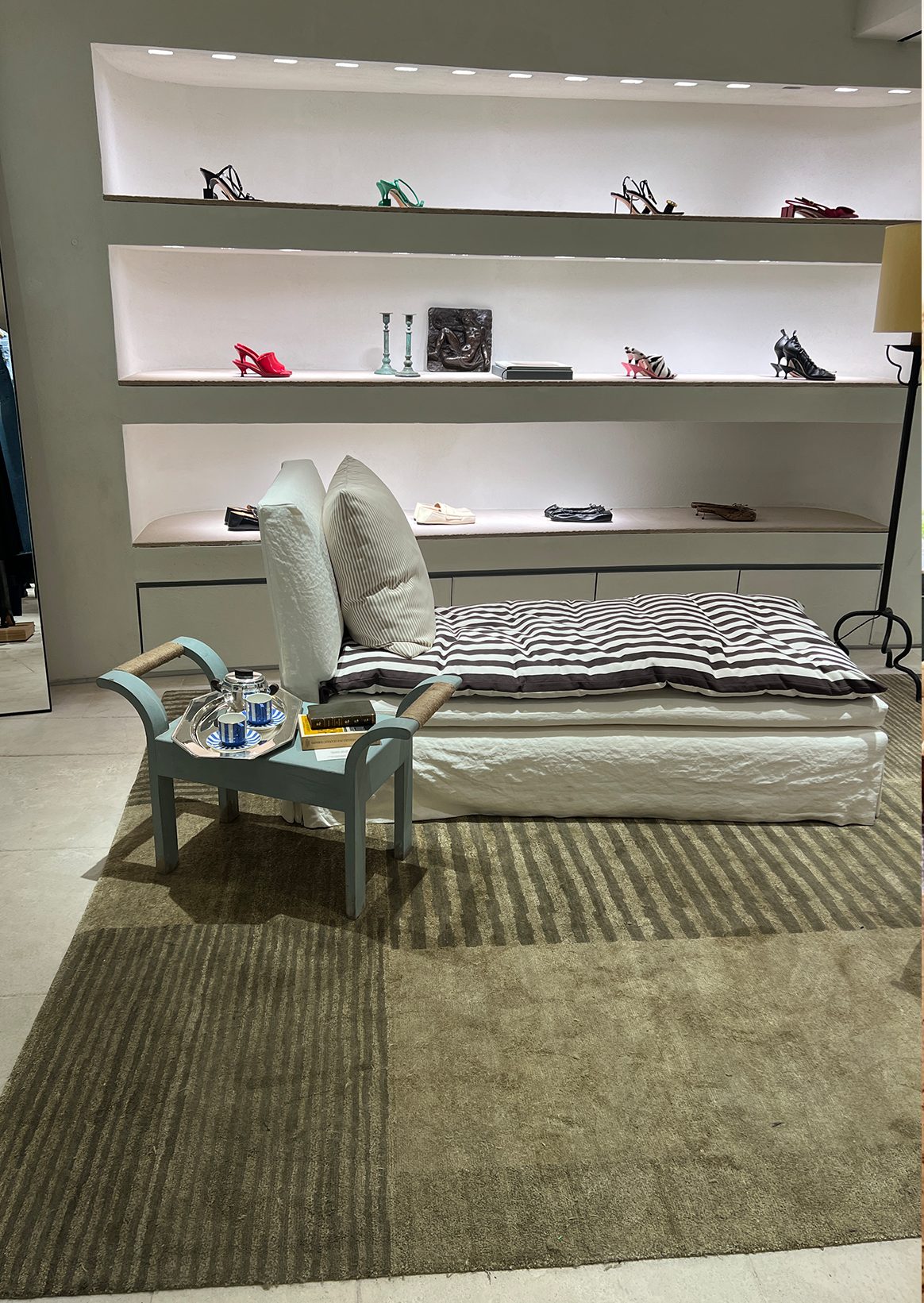
Jacquemus x Rug & Kilim’s French Deco
At Rug & Kilim, Art Deco is more than historical reference—it is a living language we continue to speak in weave and warp.
We have devoted an entire collection to the spirit of Art Deco and our textiles echo the world’s Deco dialects.
But this collection is only the beginning.
It is our curatorial homage to a movement that has never lost relevance. It is our institutional offering to a century where ornament met order, and where design rose to the level of ritual.
This is our love letter to Art Deco: a century on, its spell remains unbroken—and in every fiber we craft, its voice endures.
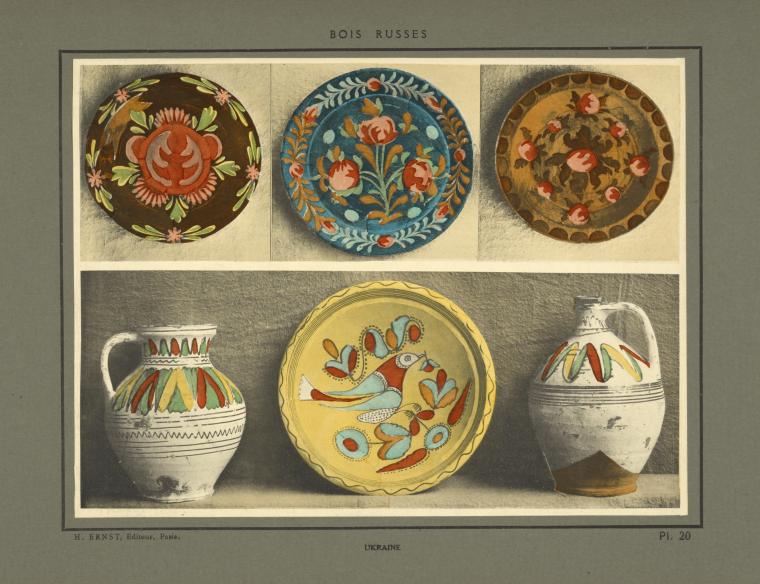
Exposition internationale des arts décoratifs et industriels modernes (1925 : Paris, France) The New York Public Library, 2025
We close, not with a finale, but an invitation: to look around. In the brushed brass of a lamp, in the stepped silhouette of a skyscraper, in a velvet cushion with embroidered symmetry. That is where Deco lives.
Still whispering.
Still shining.
Still geometric.
Still desired.