
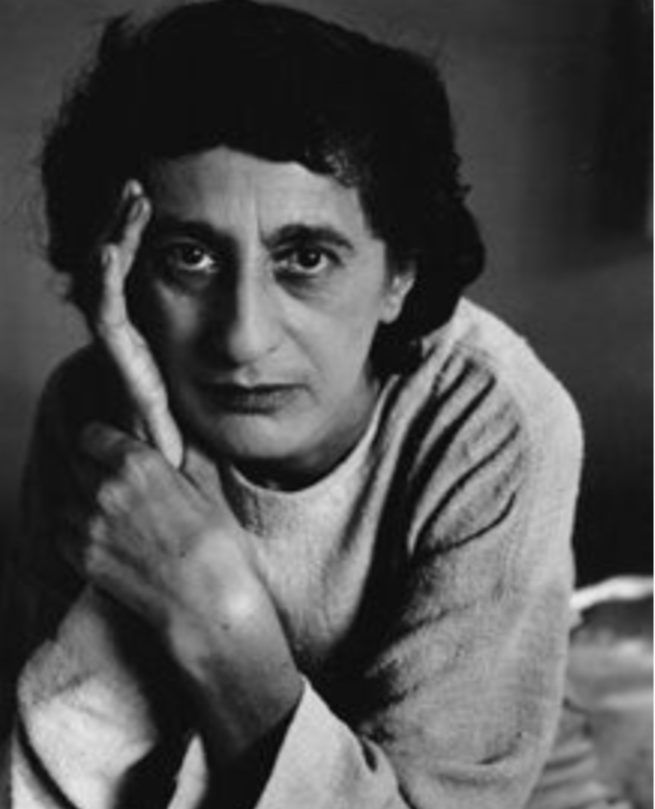
A Profile on Bauhaus Master Anni Albers – The “Godmother of Textile Arts”
April 2, 2024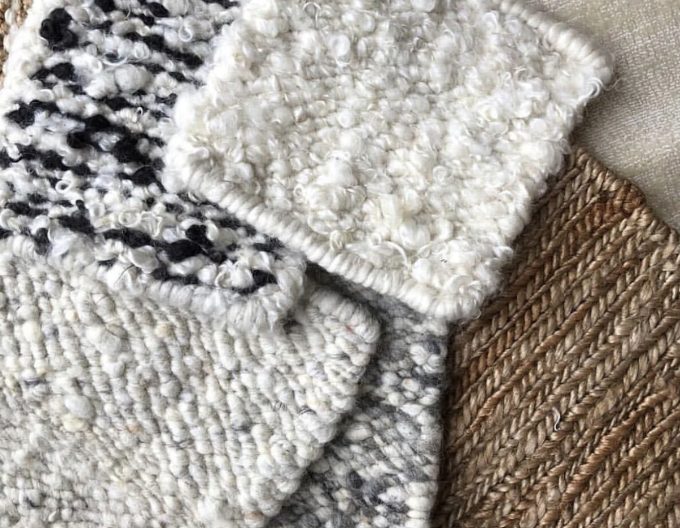
A Guide to Mohair – The “Diamond Natural Fibre” for Rugs
April 3, 2024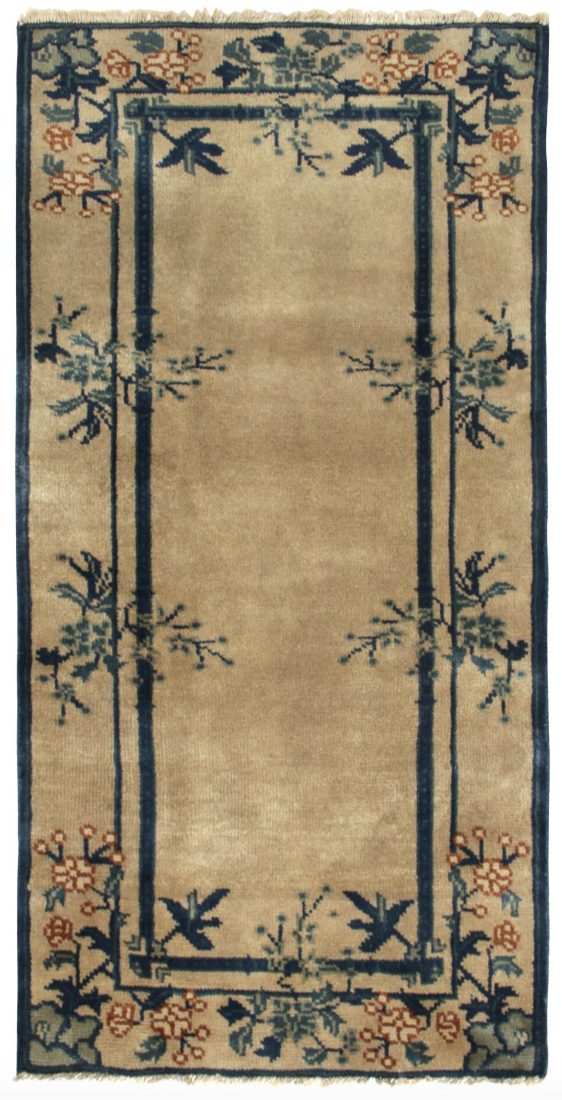
Featured above is a vintage ode to Chinese Deco styles of the 1920s exemplifying classic frames in royal blue atop a luxurious beige-brown backdrop comfortably supporting the florals in aegean blue, teal & yellow-brown tones. The light and dark spots only complement the healthy wool pile of this hand-knotted vision, making it an exemplary piece in Oriental style.
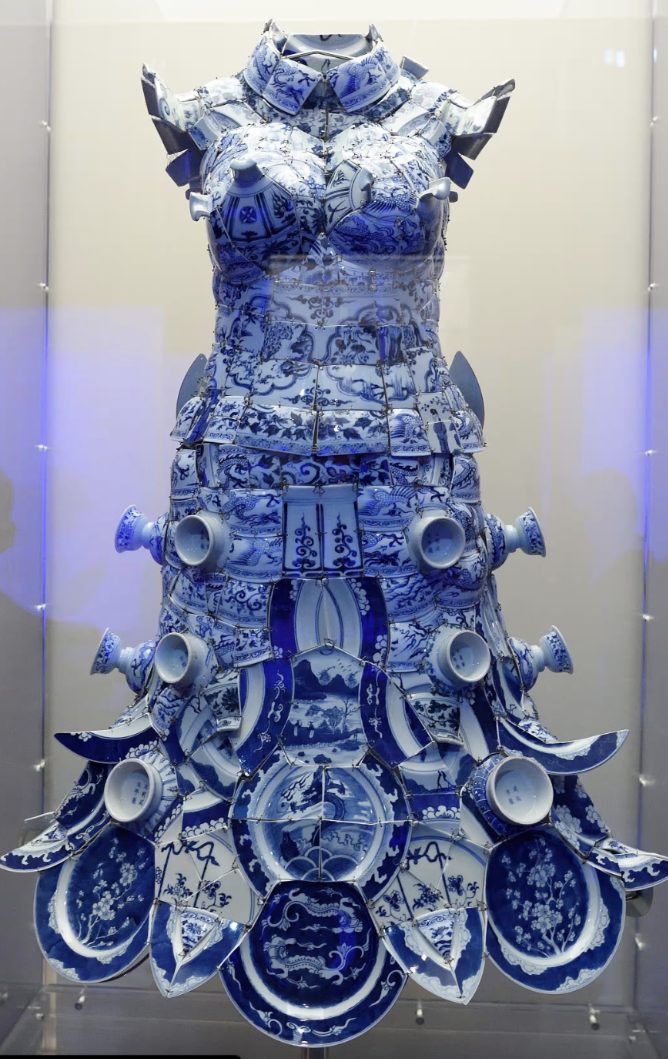
The exhibition “China Through the Looking Glass,” showcased at the Metropolitan Museum of Art in 2015, provides a captivating exploration of the profound influence of Chinese aesthetics on contemporary Western fashion. The exhibition ingeniously juxtaposes traditional Chinese costumes, carpets, paintings, porcelain, and other artistic treasures with the creations of modern high-end fashion. This amalgamation of Chinese cultural artifacts and over 140 examples of haute couture and avant-garde ready-to-wear fashion unveils the enduring impact of Chinese art and culture on the imaginative landscape of Western fashion. Renowned designers like Cristobal Balenciaga, Paul Poiret, Roberto Cavalli, Vivienne Westwood, and Yves Saint Laurent contribute to this dialogue, creating a visually rich tapestry that bridges the historical and the contemporary in the realm of fashion.
Andrew Bolton, the Curator in The Costume Institute, aptly captures the essence of the exhibition “China Through the Looking Glass.” “The designers, through the fashion lens, skillfully blend diverse stylistic influences, creating a mesmerizing collage that pays homage to Chinese aesthetic and cultural traditions. The exhibition stands as a testament to the designers’ ability to weave together the rich tapestry of Chinese masterpieces with contemporary fashion, offering a visually stunning and culturally resonant experience for visitors.” This exhibition marked a resurgence in interest in Chinese Art Deco in the realm of fashion, art, interior design and furniture industry.
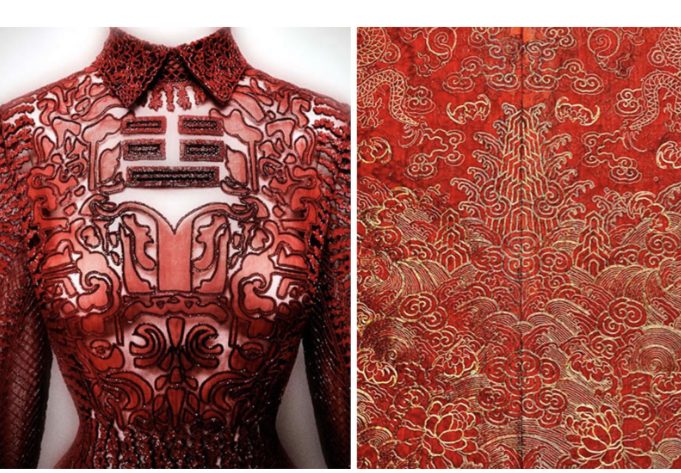
Valentino SpA (Italian, founded 1959), Evening dress, “Shanghai” collection, 2013
Metropolitan Museum of Art
Growth of Chinese Art Deco
During the late Qing Dynasty, spanning the 18th to the early 19th centuries, Shanghai underwent a remarkable transformation from a modest fishing village to a bustling port city that played a pivotal role in global trade. This era witnessed a significant flow of design inspiration from East to West, as European fascination with Chinese aesthetics grew through the importation of Chinese goods. This cultural exchange ultimately fueled the popularity of Chinoiserie in Western high society. As Shanghai continued to evolve, entering the 19th and 20th centuries, it emerged as a global metropolis. The period between the 1920s and 1940s, marked as the peak years of the Republic of China established in 1912 after the fall of the Qing Dynasty, saw Shanghai’s prosperity, providing an ideal backdrop for the introduction of the opulent Art Deco style. The integration of Art Deco into Shanghai’s architectural and design landscape was facilitated by both Chinese architects who studied abroad and Western designers who relocated to Shanghai. This movement in China took on its unique identity, becoming one of the predominant styles influencing the city’s architecture and design landscape.
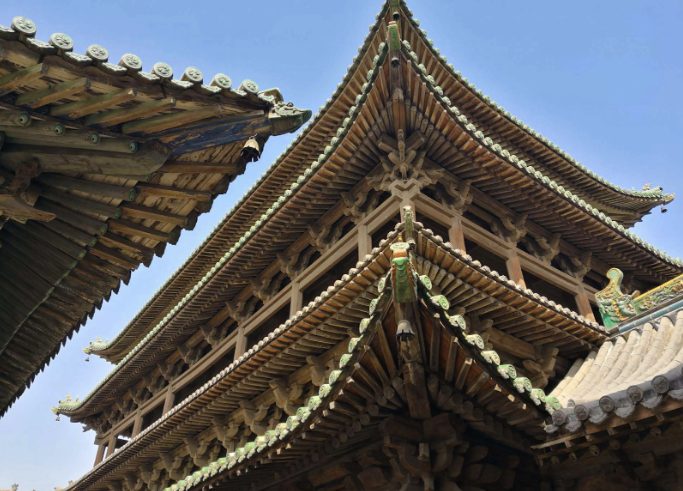
In the realm of architecture, Shanghai’s Art Deco buildings exhibited a fusion of Western Art Deco principles with distinctive traditional elements, creating a unique synthesis that reflected the city’s cultural amalgamation. While incorporating the symmetry, geometry, and scale characteristic of Western Art Deco, these buildings retained specific traditional features. Notably, elements like pagoda-like roofs persisted, serving as enduring symbols of the cultural intersection between the East and West that defined Shanghai’s Art Deco architectural landscape.
Shanghai Daily
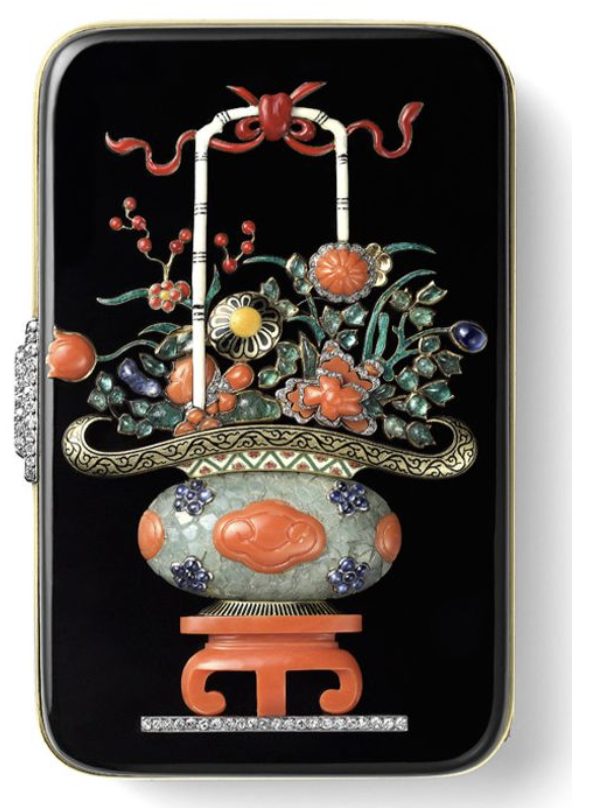
During the Art Deco period, a multitude of jewelers embraced exotic patterns inspired by the East, but it was the French jewelry brand Cartier that stood out as a pioneer in incorporating Far Eastern aesthetics into its designs. As early as 1903, Cartier introduced a jewelry piece named “Chinese Wind,” showcasing intricate Chinese dragon patterns carved into a jade pendant. The design featured a vibrant color palette, with combinations such as blue and green, red and black, and bright green and purple. This choice of bold and contrasting colors stood out against the prevailing soft watercolor trends of the time. Cartier’s exploration of Chinese elements extended beyond jewelry, influencing designs in various categories such as handbags, watches, and snuff bottles, contributing to the widespread adoption of these far-reaching artistic styles during the Art Deco era.
Cartier
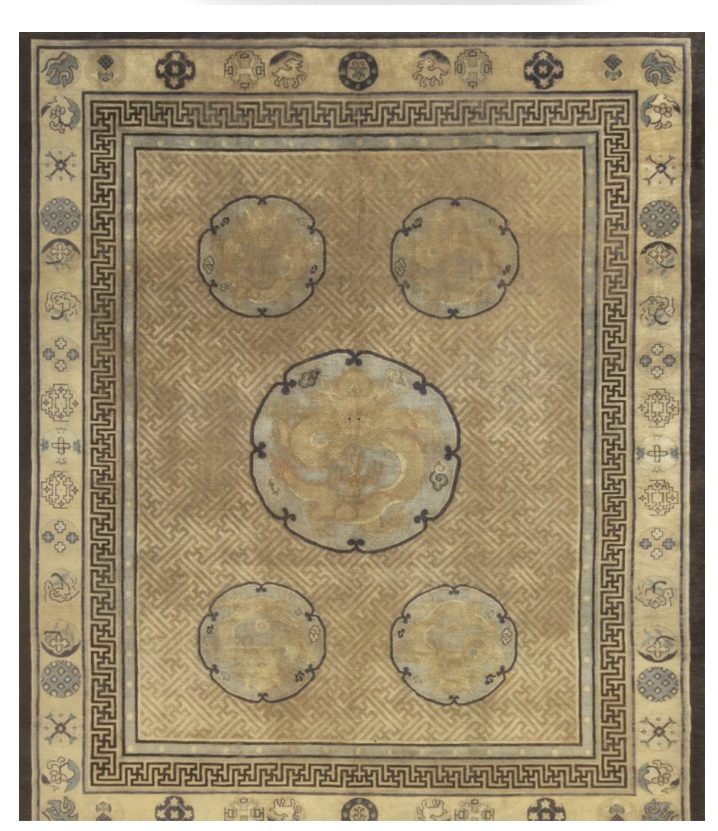
This particular design from Rug & Kilim enjoys regal medallion patterns with pictorial dragon motifs—one of the most storied mythical creatures in Oriental Chinese rugs. Its colorway favors a light gold and beige-brown with fine black and sky blue detailing in its many floral motifs, Ruyi clouds and similar symbols. Connoisseurs may note elements of Mongolian design in its symbols, and the Art Deco sensibility historians know from this provenance. Keen eyes will further note the interlocking fret motifs in the field background—the same as those in the most prominent border, but in a diagonal orientation, with more subdued neutral tones.
In the vibrant cultural exchange of the Art Deco era, a notable influx of Chinese artists journeyed to Paris, eager to immerse themselves in Western culture. One prominent figure among them was architect Liu Jipiao, who played a pivotal role in shaping China’s presence at the iconic 1925 Paris Exposition. Beyond his organizational responsibilities, Jipiao emerged as a key influencer in introducing modernist art and architecture to his homeland. This cross-cultural exchange not only showcased the fusion of Eastern and Western influences but also contributed to the broader dissemination of Art Deco aesthetics in China.
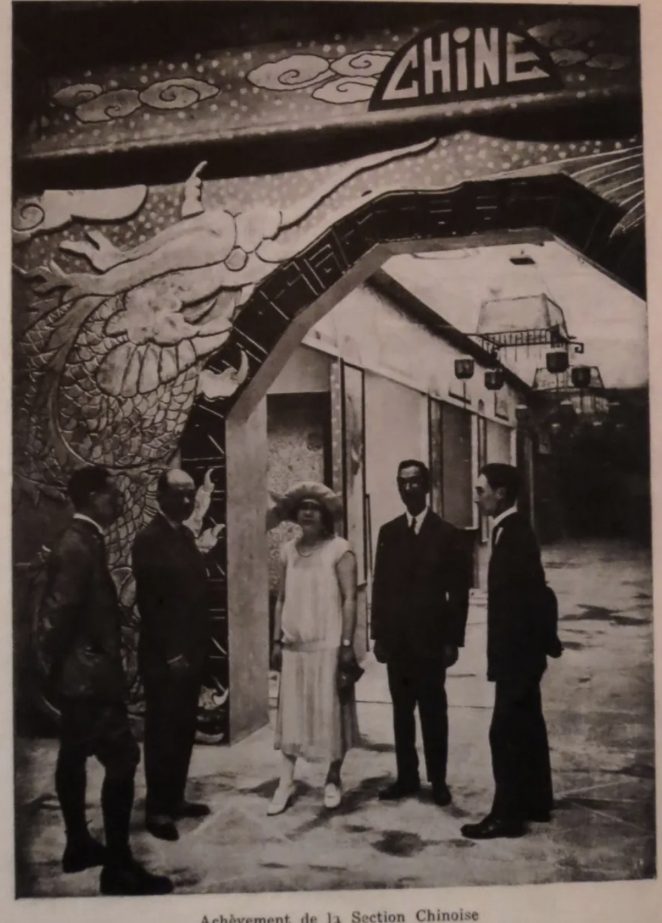
1925 Paris International Exhibition of Modern Decorative and Industrial Arts
Unlike the Chinoiserie movement of the 17th and 18th centuries, where European designers created a fanciful mix of exotic elements without an in-depth understanding of Asian cultures, Art Deco designers in the early 20th century had a profound knowledge of Asia and China. This was facilitated by numerous exhibitions on Chinese art held in France and the accessibility of museum collections, notably the Musée Guimet, which opened in Paris in 1889. The exposure to authentic Chinese art and artifacts provided Art Deco designers with a rich source of inspiration and a genuine appreciation for the intricacies of Asian aesthetics, leading to more culturally informed and authentic designs.
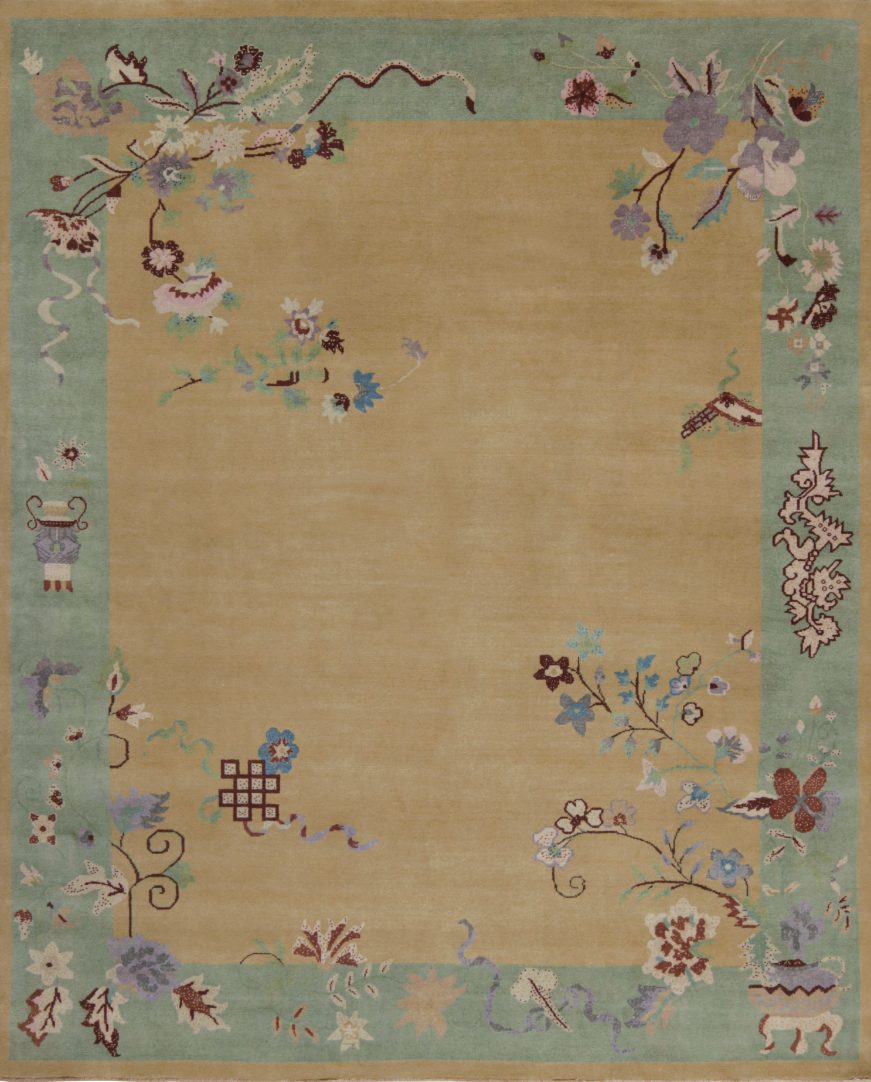
Inspired by the venerated 1920s style, this contemporary ode to Chinese art deco rugs features twin golds at play—an amber field and beige border alike—underscore colorful floral patterns and pictorials in spring tones, reflecting a very nuanced design. Keen eyes for detail may admire the pictorial patterns featuring butterflies, which historically, in Chinese mythology, symbolize marital bliss, love, themes of transformation and similar themes of fullness befitting such a warm piece. Connoisseurs will further note that our principal, Jahanshah Nazmiyal has seldom seen such a rare Deco curation from works in this provenance.
Meanwhile, have a look at our other Chinese Art Deco rugs – https://rugandkilim.com/shop/?s=chinese%20art%20deco