
Antique Rugs and Tapestries as Heart of Storied Interiors: The Timeless Heirlooms
April 4, 2025
Viola Gråsten and the Rewilding of Scandinavian Rugs and Tapestries
April 10, 2025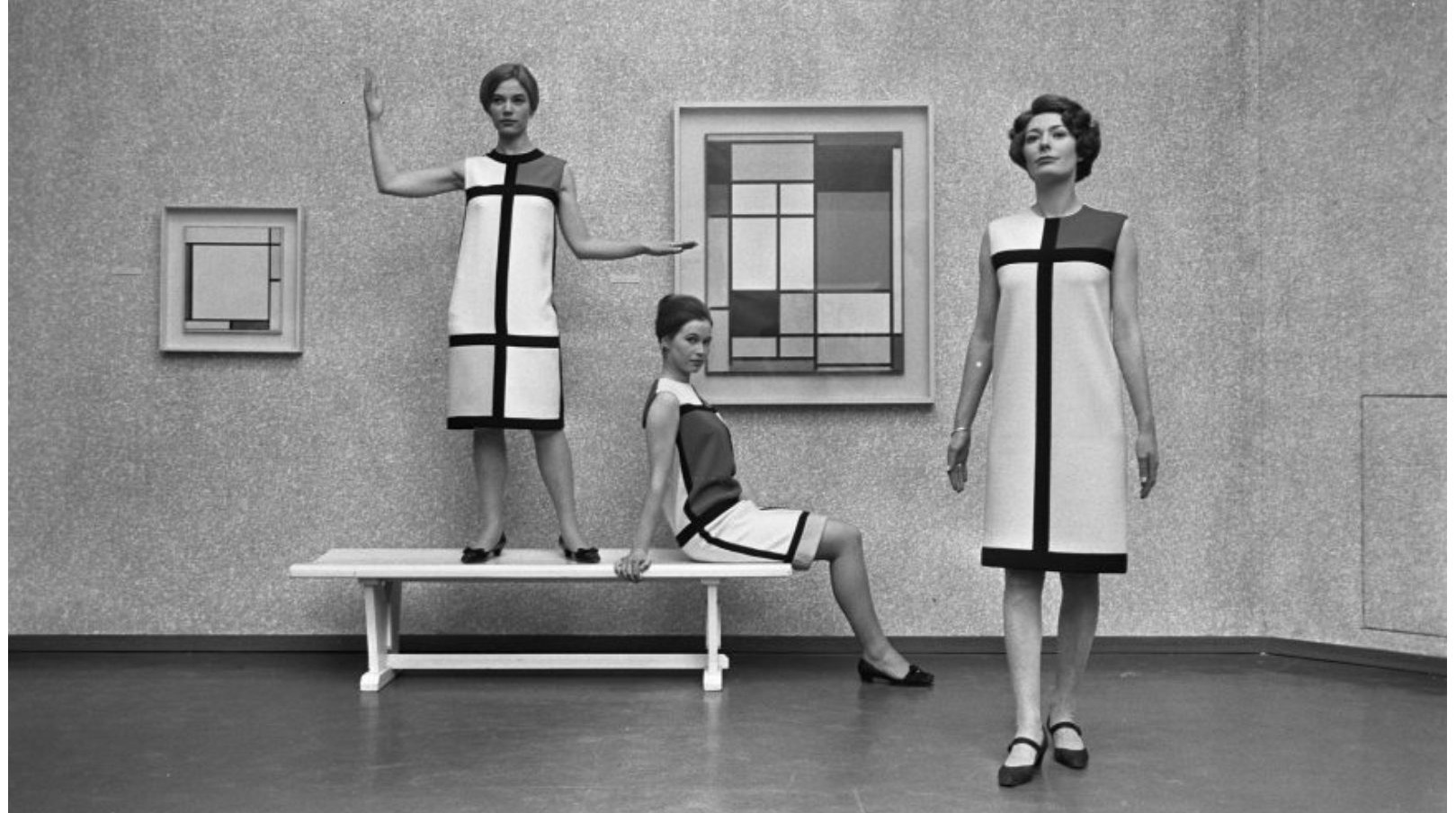
Yves Saint Laurent Mondrain dresses at the Museum of Modern Art , 1966
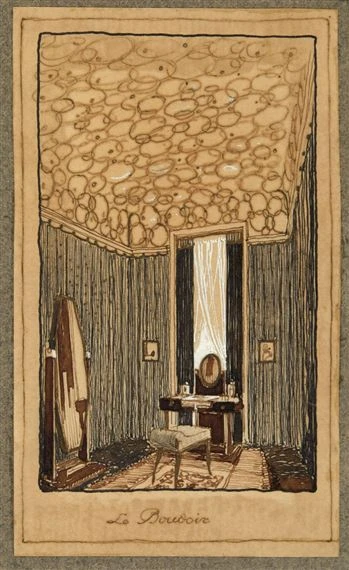
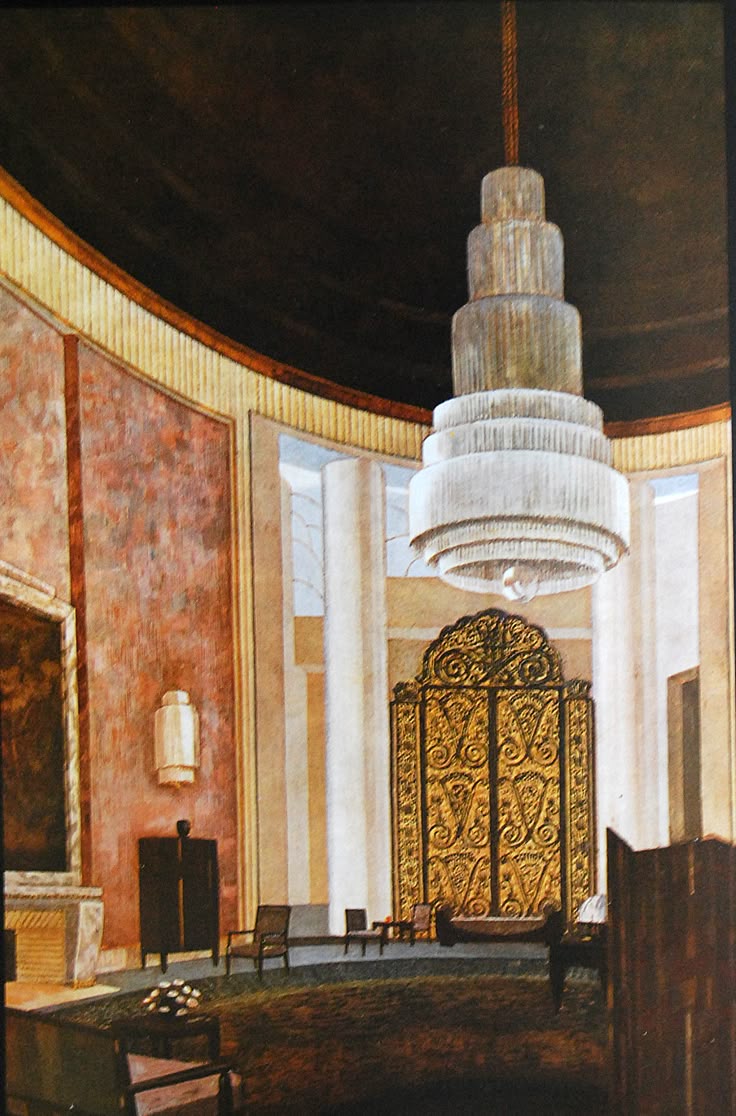
Émile-Jacques RuhlmannLe boudoir (Gouache, ink and highlights on paper)
The Disrupted Harmony
They were never meant to meet—the voluptuous curves of Ruhlmann’s Art Deco and the uncompromising angles of Van Doesburg’s De Stijl—yet in the most compelling interiors of both yesterday and today, these opposing forces find their most provocative conversation in the humble medium of a rug.
A meticulous Parisian salon circa 1928. Ruhlmann’s “Chariot” tea table anchors the space, its ebony veneer gleaming against ivory inlays. Nearby, a bergère chair dressed in silk moiré beckons with curved arms of macassar. The walls shimmer with delicate Jean Dunand lacquer panels. But look down—there lies the disruption, the intellectual provocation. A rug of uncompromising primary colors and stark rectilinear forms cuts through the room’s sensual elegance. This is not a decorative accident but a deliberate conversation between two formidable aesthetic philosophies, taking place not on gallery walls or museum pedestals, but in the most intimate theater of design: the private interior, and more specifically, underfoot.
What happens when Ruhlmann’s sublime craftsmanship meets Van Doesburg’s utopian abstraction in the medium of textiles? Not opposition, but an unexpected harmony—a material dialogue between luxury and reduction, between the decorative and the essential.
Parallel Visions: Refinement and Reduction
In the years following the Great War, as Europe reconstructed both buildings and identities, two seemingly contradictory design languages emerged with equal cultural force.
Jacques-Émile Ruhlmann, the “Riesener of the twentieth century,” elevated the decorative arts to new heights of sophistication. His was not merely furniture but sculpture for living—pieces realized through rare woods and shagreen, ivory and bronze, mother-of-pearl and galuchat. His rugs reflected this lavish sensibility: botanical motifs rendered with subtle asymmetry, geometric patterns that retained organic softness, borders that framed space like architectural moldings. A Ruhlmann interior was total art, where every element—from the ceiling medallion to the carpet underfoot—participated in a choreography of refined classicism.
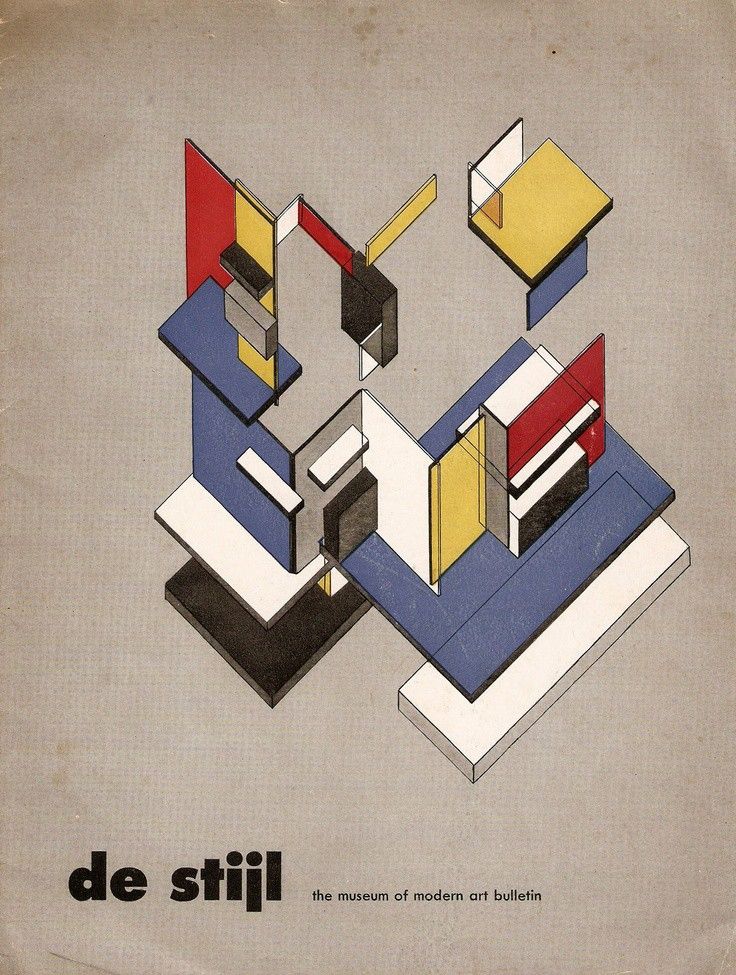
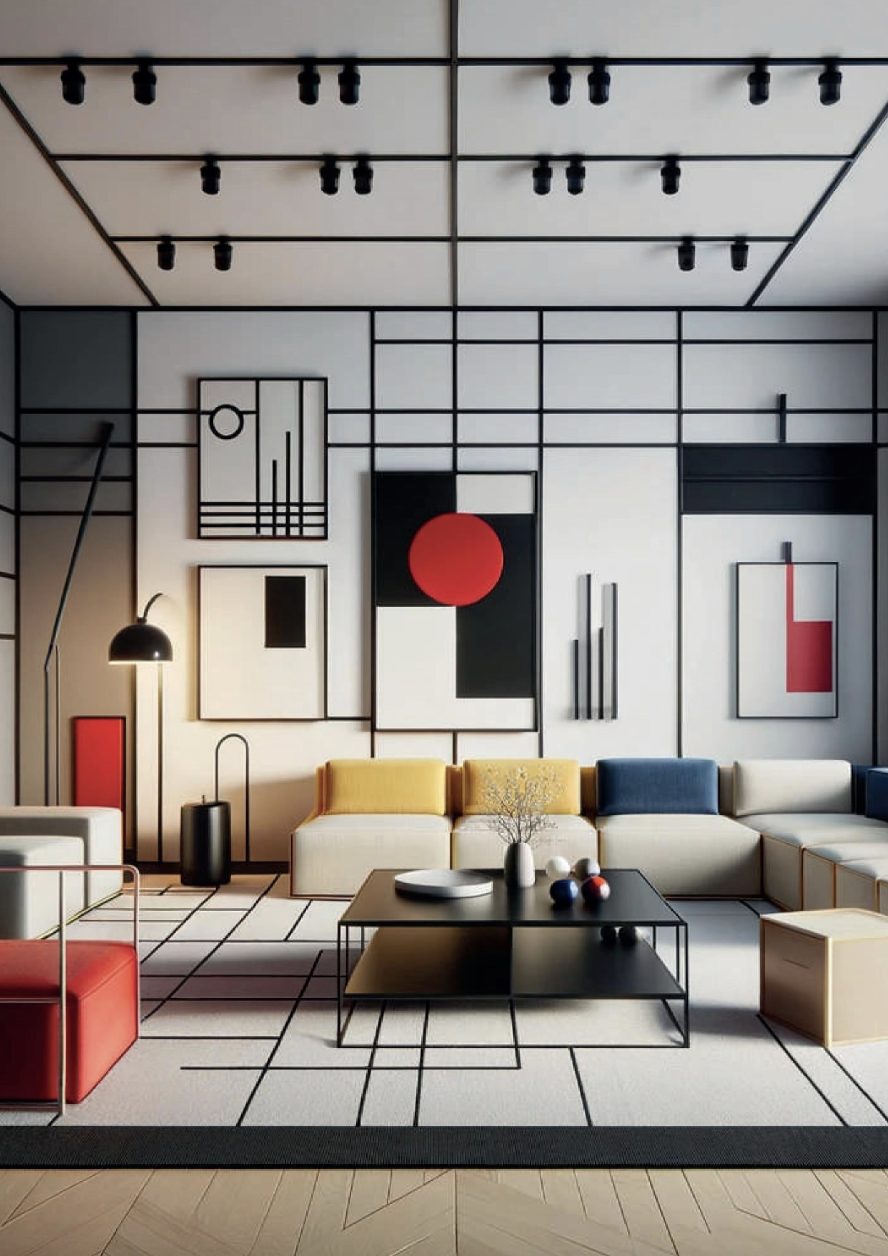
Meanwhile, in the Netherlands, Theo van Doesburg and colleagues were stripping visual language to its purest elements. The De Stijl movement rejected decorative excess in favor of primary colors, straight lines, and right angles. Their quest was spiritual and utopian—to find universal visual harmony through reduction. When these principles migrated to textiles, they produced carpets of uncompromising geometric rigor: red rectangles floating on white grounds, black grids organizing yellow and blue planes, compositions that transformed floors into canvases for spatial experiments.
Yet these movements were not antagonists but contemporaries—different responses to the same historical moment, both seeking order amid postwar chaos.
The Textile Medium: Where Doctrines Soften
The essential genius of textiles lies in their ability to mediate between opposing aesthetics. By the late 1920s, we witness a fascinating convergence in carpet design that contains elements of both schools.
Ivan da Silva-Bruhns’ atelier produced carpets for both avant-garde modernists and Deco luminaries. His early works for Ruhlmann featured richly colored fields with elegantly abstracted botanical forms. Yet by 1929, his designs increasingly incorporated geometric division of space, flattened decorative elements, and a restricted palette that nodded toward De Stijl principles—while maintaining a sophistication of texture that pure modernists often neglected.
Eileen Gray’s rugs for Jean Désert reveal a similar synthesis. Her “Fibonacci” carpet reduced decorative elements to pure geometry but retained Deco’s material tactility and subtle colorwork. Similarly, Sonia Delaunay’s textile designs for Metz & Co brought the rhythmic color theory of simultanéisme to carpets that could function in both traditional and radically modern environments.
In Amsterdam, the collaboration between Bart van der Leck and the Metz carpet workshops produced textiles that, while adhering to De Stijl’s geometric principles, displayed a rich material presence and decorative confidence that spoke to high Deco sensibilities. When these carpets entered elegant interiors, they created productive tension rather than visual discord.
Modern Resonances: The Art Deco Dialogue Continues
Today’s most sophisticated interiors continue this conversation. At Pierre Yovanovitch’s Parisian apartment, curved Ruhlmann-inspired seating floats above carpets of rigorous geometric abstraction, creating rooms that feel simultaneously sensual and disciplined. Joseph Dirand places sharply geometric rugs beneath furnishings that echo Deco’s curved refinement, demonstrating how this tension creates not conflict but spatial narrative.
The Carpenters Workshop Gallery recently showcased Vincenzo de Cotiis pieces—with their Deco-influenced materiality and silhouettes—atop carpet designs that channel De Stijl’s uncompromising geometry. The effect was not discordant but symphonic, each element heightening the other’s presence.
In Robert Couturier’s Connecticut home, custom carpets inspired by Theo van Doesburg’s designs form the foundation for spaces filled with French Art Deco masterpieces. The result feels neither historical nor contemporary, but instead creates a third realm where decorative refinement and modernist reduction achieve perfect equilibrium.
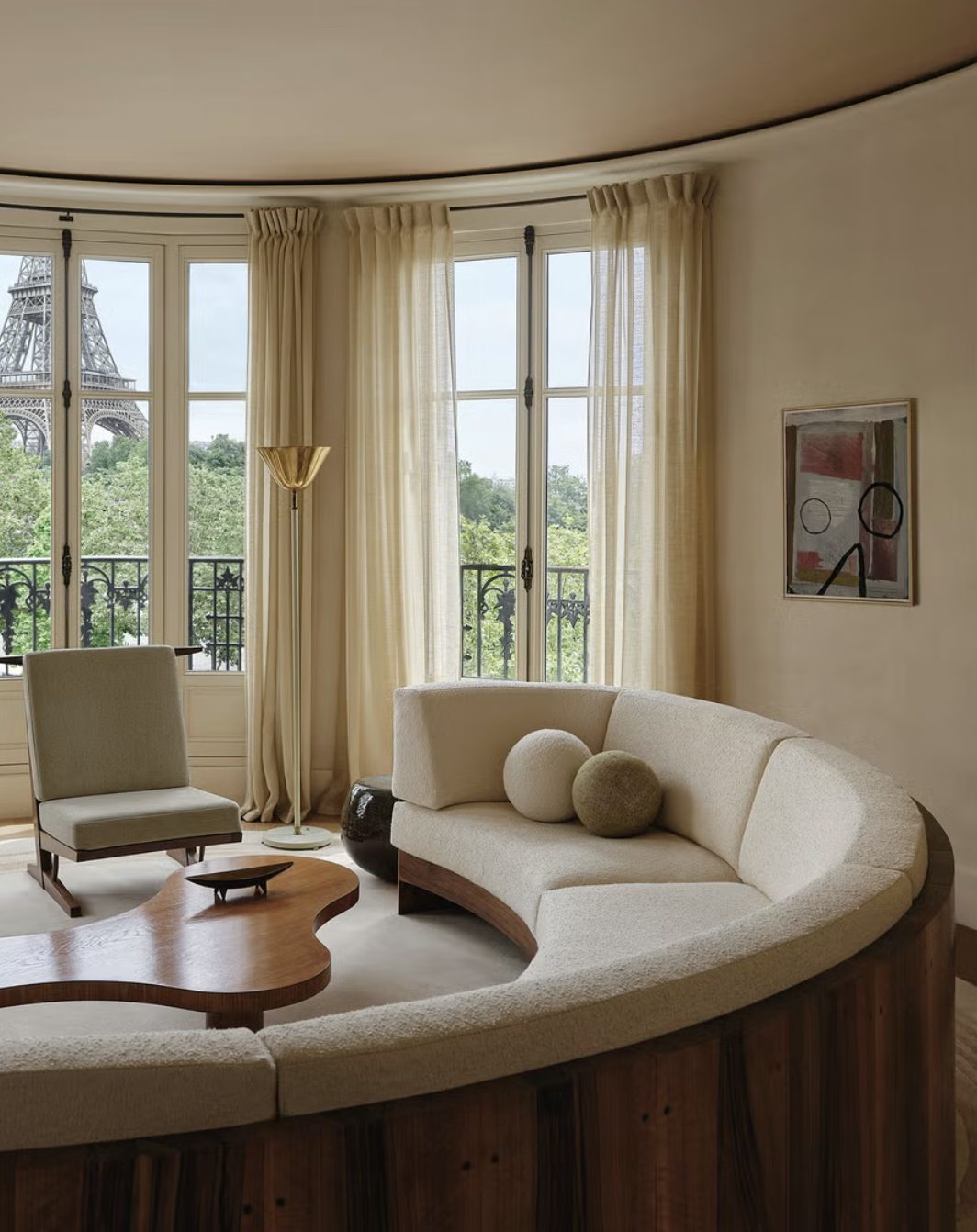
Pierre Yovanovitch’s Parisian apartment
The Ideological Threshold
When we place a De Stijl-inspired carpet beneath a Ruhlmann-esque settee, we are not simply making a decorative choice but engaging in a profound material dialogue about the tensions that define modernity itself. The sensual versus the rational. The handcrafted versus the mechanical. The pleasure of ornament versus the clarity of reduction.
These carpets become ideological thresholds—literal foundations upon which we negotiate our complex relationship with beauty, order, and meaning in design. They remind us that the most compelling interiors are not those that adhere rigidly to a single doctrine, but those that create conversation between different approaches to visual and spatial organization.
The Art Deco master and the De Stijl theorist might seem worlds apart in their values and visual languages. Yet when their ideas converge in the intimate medium of the carpet, they reveal a deeper truth: that the path to truly transcendent interior design lies not in purity, but in productive tension—in the exquisite material dialogue that happens when Jacques-Émile Ruhlmann meets Theo van Doesburg underfoot.
Rugs, by their very nature, exist at the boundary between architecture and furnishing, between permanence and changeability. This liminal quality makes them perfect vessels for reconciling opposing design philosophies.
~~~