
A Brief Introduction to Joan Miró and his European Tapestries
April 1, 2024
A Profile on Sonia Delaunay: Mother of Art Deco Abstraction & Founder of Orphism
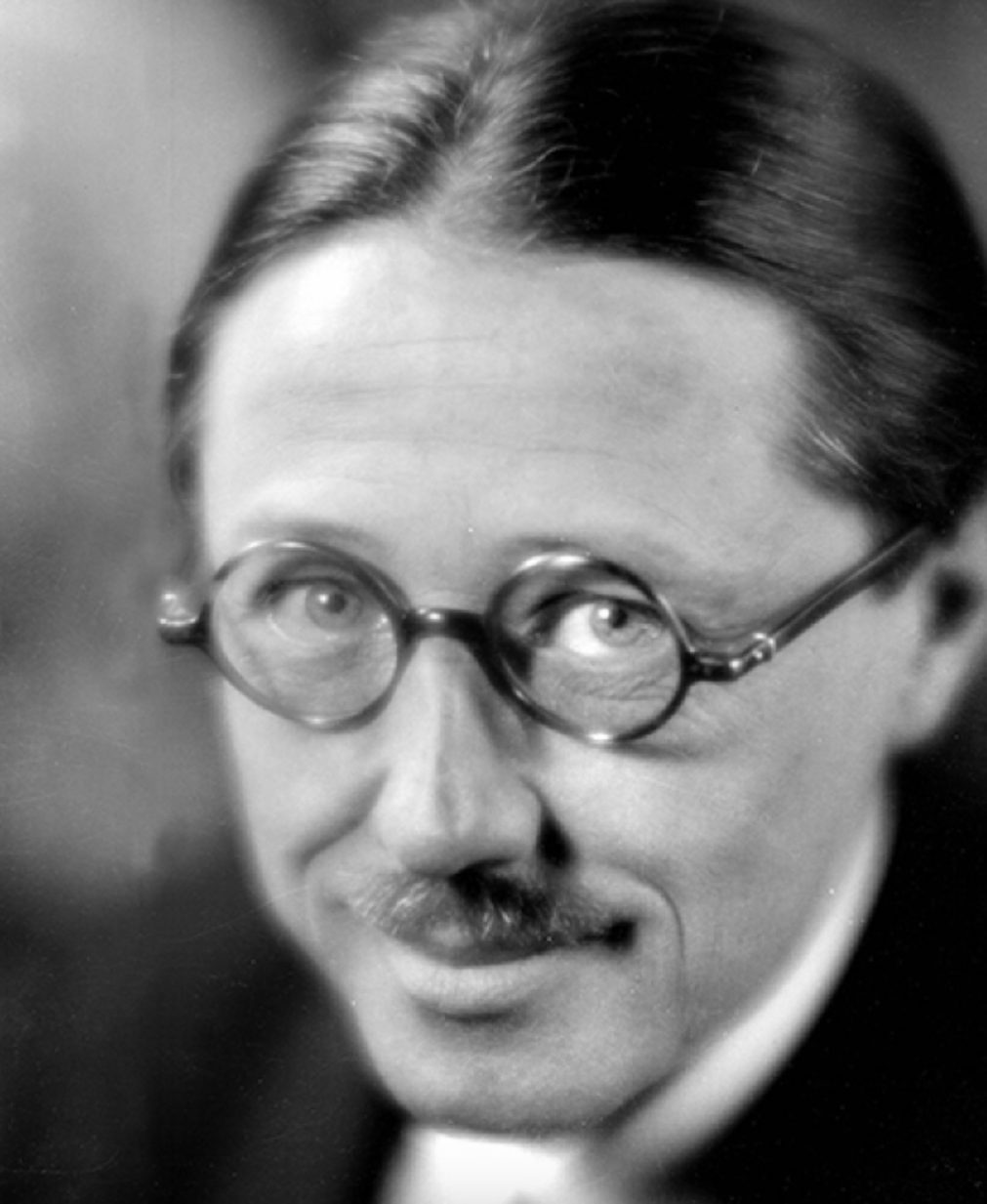
April 1, 2024“Fashions don’t start among the common people. Along with satisfying a desire for change, fashion’s real purpose is to display wealth.” … “Whether you want it or not, a style is just a craze. And fashion does not come up from humble backgrounds.” 1920, Ruhlmann.
http://ruhlmann.info/
http://ruhlmann.info/
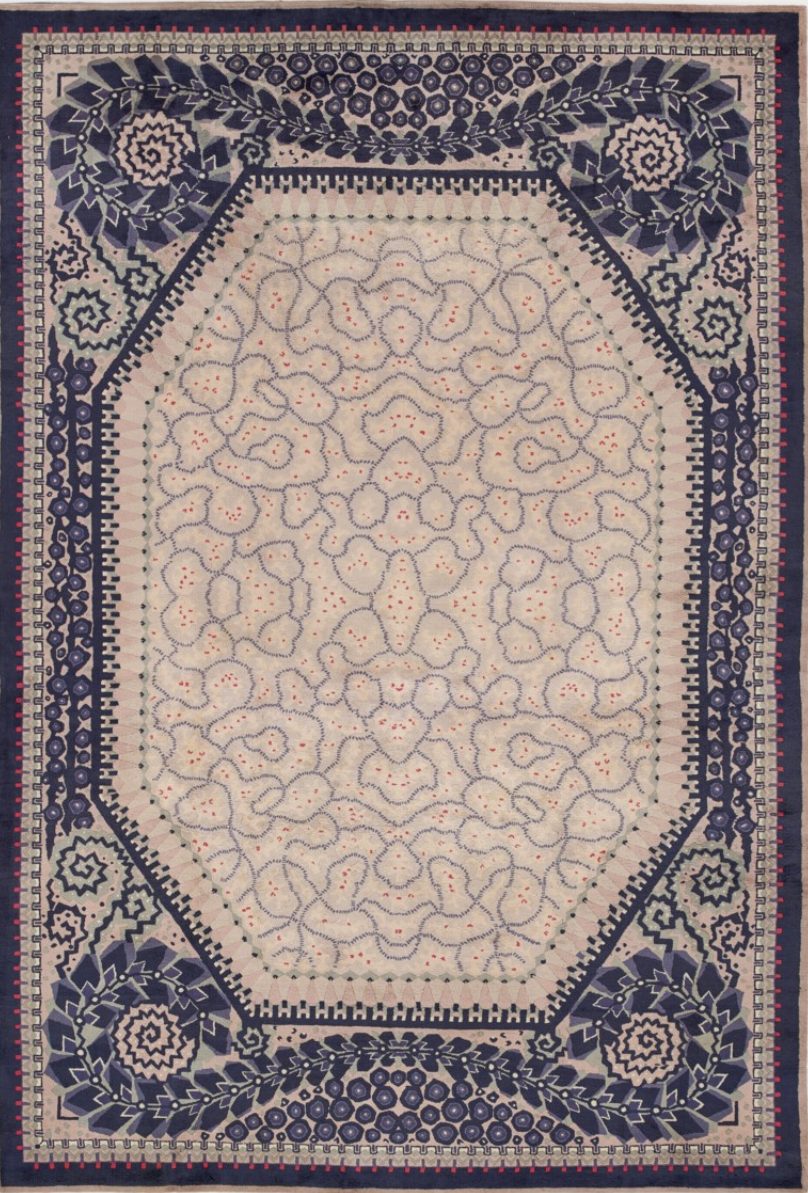
This latest Émile-Jacques Ruhlmann rug circa 1925 auctioned and sold by Christie’s in 2023, was designed at the pinnacle of his career and is a testament to his commitment to creating pieces for the modern connoisseur. In the aftermath of the triumphant 1925 Exposition Internationale, patrons of Ruhlmann would have proudly showcased this carpet as a symbol of opulence and discernment within their homes.
Émile-Jacques Ruhlmann‘s legacy endures as the epitome of Art Deco style, offering a distinct contrast to the more utilitarian modernism exemplified by the Bauhaus School. His designs, celebrated by Alastair Duncan, showcase the finest expression of Art Deco. Ruhlmann’s versatility in catering to a diverse clientele significantly expanded the reach and influence of Art Deco. In contrast to the exuberance of Art Nouveau’s nature-inspired designs and the geometric motifs of the Arts and Crafts movement, Émile-Jacques Ruhlmann took a more reserved approach. Rather than relying heavily on intricate shapes and symbols, he favored the introduction of exotic materials. For Ruhlmann, the inherent patterns, grains, and unique properties of these materials played a crucial role in shaping the final visual appeal of his designs. This preference for subtlety and the natural characteristics of materials set Ruhlmann apart, contributing to the distinctive elegance of his Art Deco creations.
By 1920, Émile-Jacques Ruhlmann distanced himself from the movements that once inspired him, particularly the Arts and Crafts movement. Like other luxury designers in Paris, he sought a rebirth after the Art Nouveau era, drawing inspiration from the rich French tradition of furniture making while embracing functionalism. Ruhlmann’s evolved design philosophy was showcased at the 1925 Exposition Internationale des Arts Décoratifs et Industriels Modernes in Paris. Ruhlmann curated the Hôtel du Collectionneur (House of the Collector) pavilion, featuring interior vignettes highlighting the work of complementary artists and designers alongside his furniture. The pavilion garnered significant attention, and it was during this exposition that the term “Art Deco” emerged, replacing the more generic title of “Style Moderne” Ruhlmann’s success at the Exposition attracted high-profile clients, including the Rothschild and Worms families, Eugène Schueller (L’Oreal owner), fashion designer Jeanne Paquin, playwright Paul Géraldy, and the Maharajah of Indore.
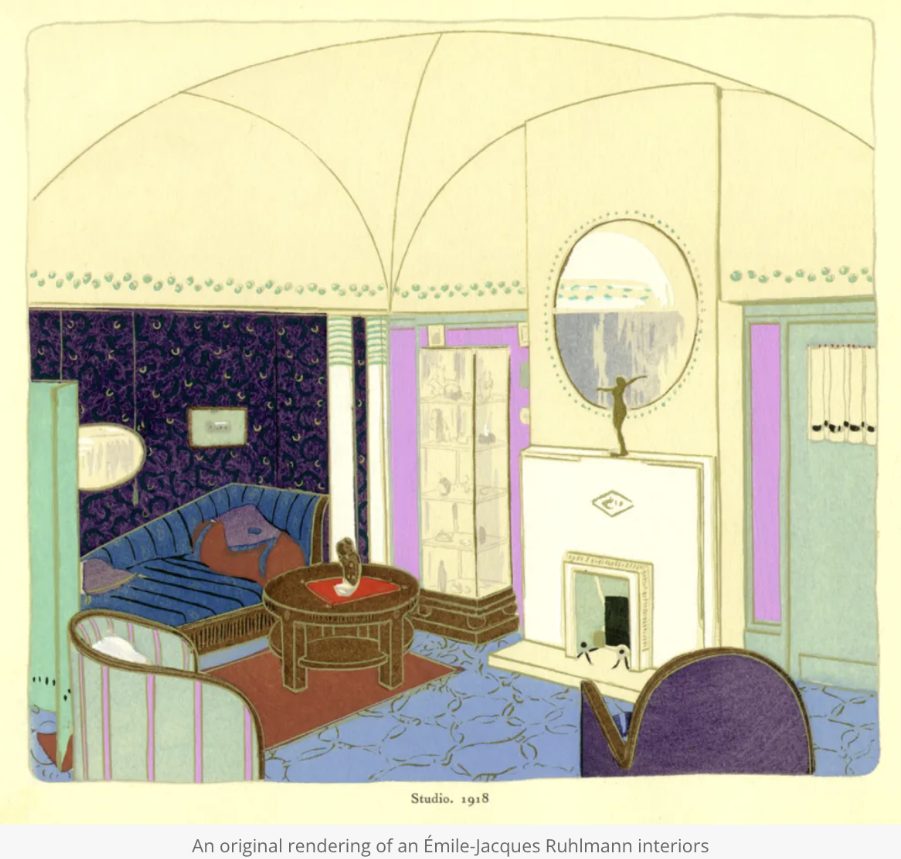
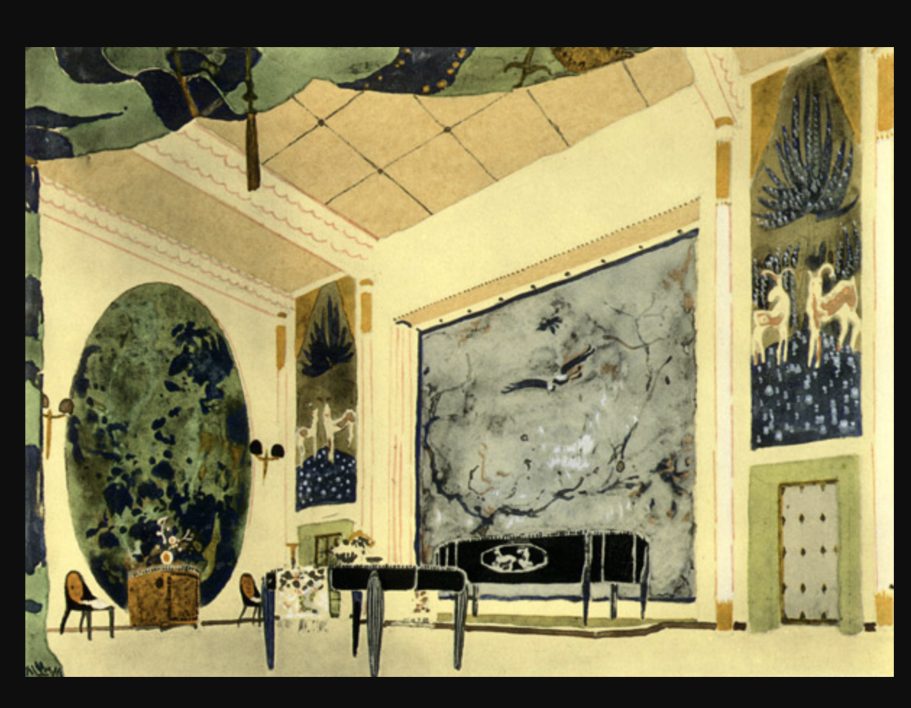
http://ruhlmann.info/
In 1926, Ruhlmann received a monumental commission from the French state to redesign rooms for the Paris Chamber of Commerce. That same year, he was awarded the Legion of Honor. However, Ruhlmann faced criticism, especially from functional modernists like Le Corbusier, who opposed his elitist approach and deemed his products unaffordable. Le Corbusier advocated for functional design accessible to everyone through mass production. Notably, Ruhlmann’s impact extended to maritime design, where his work for the Île de France cruise liner influenced a new era of luxury ship design in the 1930s. His use of upscale materials and sophisticated aesthetics left a lasting impression on subsequent iconic vessels such as the SS Normandie and the Queen Mary. Ruhlmann’s ability to transcend traditional boundaries and infuse elegance into various design domains contributed to the enduring allure of Art Deco.
http://ruhlmann.info/
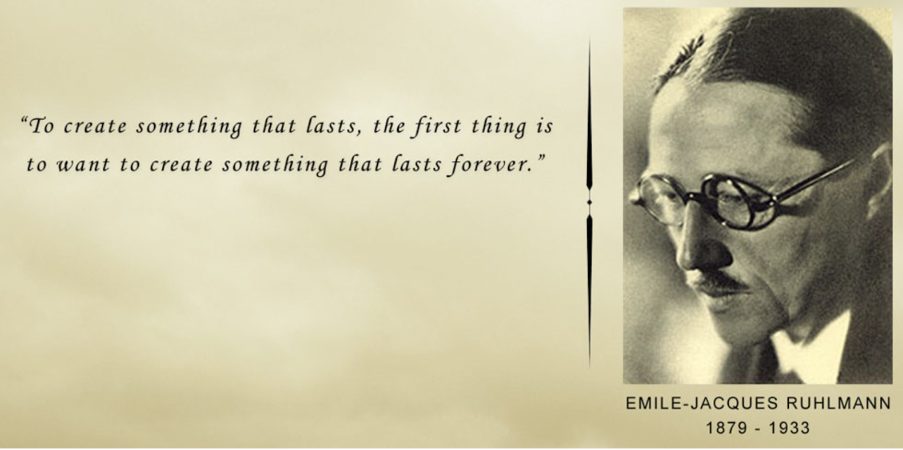
Émile-Jacques Ruhlmann, born in 1879 in Paris to François and Valentine Ruhlmann, displayed an early interest in design nurtured by his family’s successful construction, painting, and wallpapering business called Société Ruhlmann. Visits to prestigious Parisian cabinetmakers further fueled his fascination with furniture. In 1907, a transformative year for Ruhlmann, he married Marguerite Seabrook and inherited his father’s business. Under his leadership, the family business expanded, encompassing workshops for paint, wallpaper, mirrors, and furniture. The prevailing Art Nouveau and Arts and Crafts movements significantly influenced Ruhlmann during his formative years. He drew inspiration from the Wiener Werkstätte, founded by Koloman Moser and Josef Hoffmann, a collective of multidisciplinary creatives experimenting with Modernist forms and embracing contemporary art movements like Cubism. Ruhlmann’s reputation began to solidify through his participation in exhibitions, showcasing wallpaper designs at the Salon d’Automne and the Salon des Artistes Décorateurs in 1910. In 1913, he presented his first furniture models at the Salon d’Automne. As an exhibitor aligned with the goals of the Société des Artistes Décorateurs, Ruhlmann contributed to elevating standards of production, promoting innovative and luxurious pieces, and positioning France as a global leader in manufacturing and design.
Some of Ruhlmann’s most recognised works are as follows –
http://ruhlmann.info/
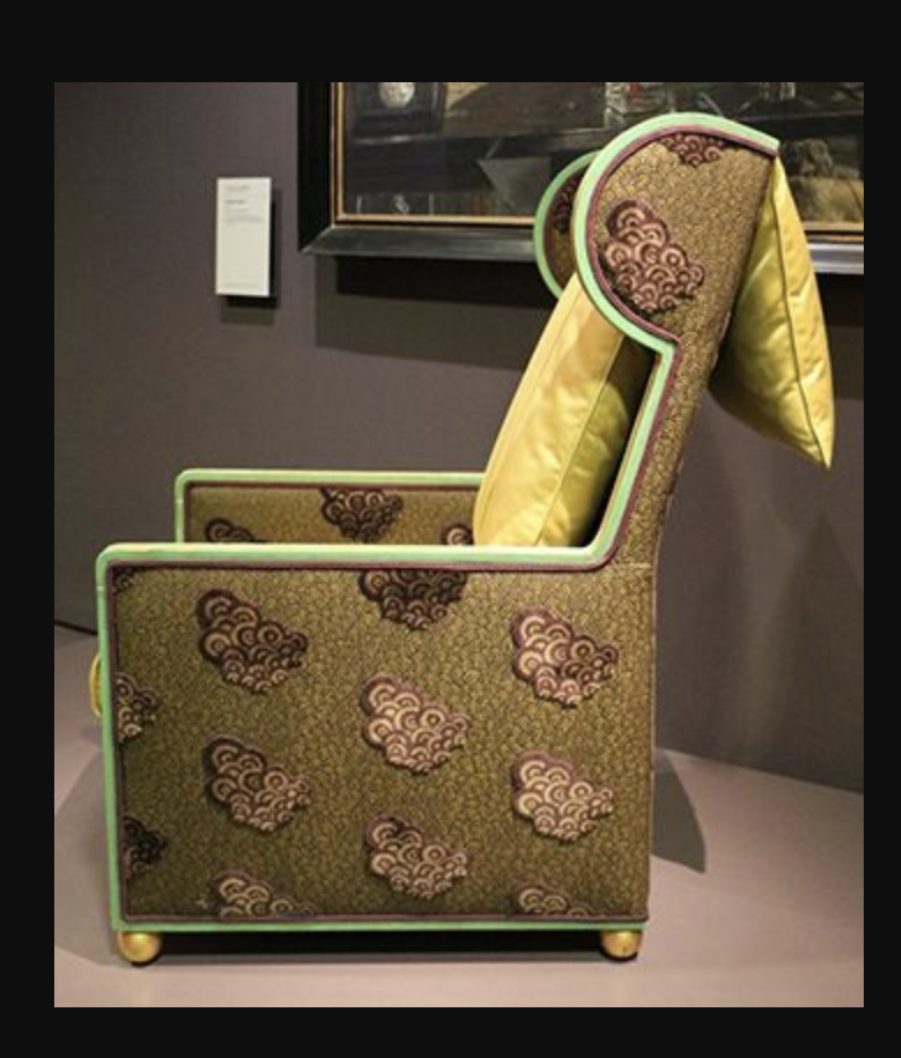
This early chair by Émile-Jacques Ruhlmann serves as a harbinger of the signature hallmarks that would define his later, famous Art Deco pieces in the 1920s. Exhibited at the 1913 Salon d’Automne at the Grand Palais in Paris, the chair already showcases distinctive features of Ruhlmann’s evolving style. Notably, it features four golden ball feet and a high back with “oreille cassée” or “broken ears,” a design element crafted to envelop the sitter in privacy.
While this piece reflects Ruhlmann’s earlier inspiration from the Art Nouveau and Arts and Crafts movements, evident in the busier print on the material, his inclination towards using expensive materials is already apparent. This chair encapsulates the enduring style philosophy that Ruhlmann maintained throughout his career – a commitment to providing luxury combined with comfort, a principle that would find fuller expression in his iconic Art Deco designs of the 1920s.
http://ruhlmann.info/
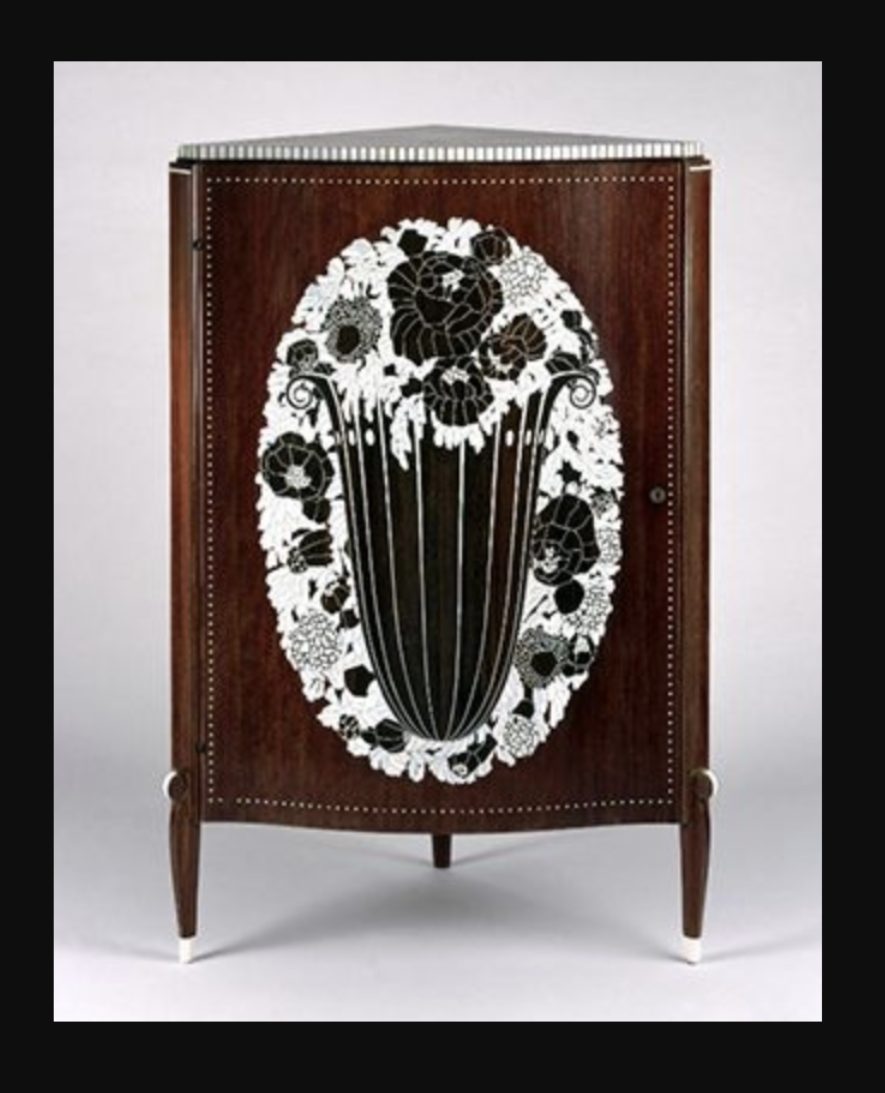
This corner cabinet exemplifies Émile-Jacques Ruhlmann’s deliberate use of exotic materials and meticulous attention to detail. Notably, the choice of kingwood veneer was intentional, selected for its natural pattern and strengthened by the mahogany underlayer. The intricate floral motif on the front is created through ivory inlay, showcasing Ruhlmann’s commitment to incorporating luxurious and visually striking elements. Throughout the cabinet, subtle ivory touches are employed, from the dots around the front to the squares along the top and at the ends of the front two legs. Ruhlmann’s mastery lies not only in his choice of materials but also in his ability to harmonize these elements into a cohesive and aesthetically pleasing design.
Additionally, this cabinet highlights another facet of Ruhlmann’s skill—the adaptability of his designs to meet the specific needs or tastes of his clients. The popularity of the floral motif led to its inclusion in another notable piece, the “État ” cabinet commissioned by the Metropolitan Museum of Art in 1925, showcasing Ruhlmann’s responsiveness to client preferences.
http://ruhlmann.info/
http://ruhlmann.info/
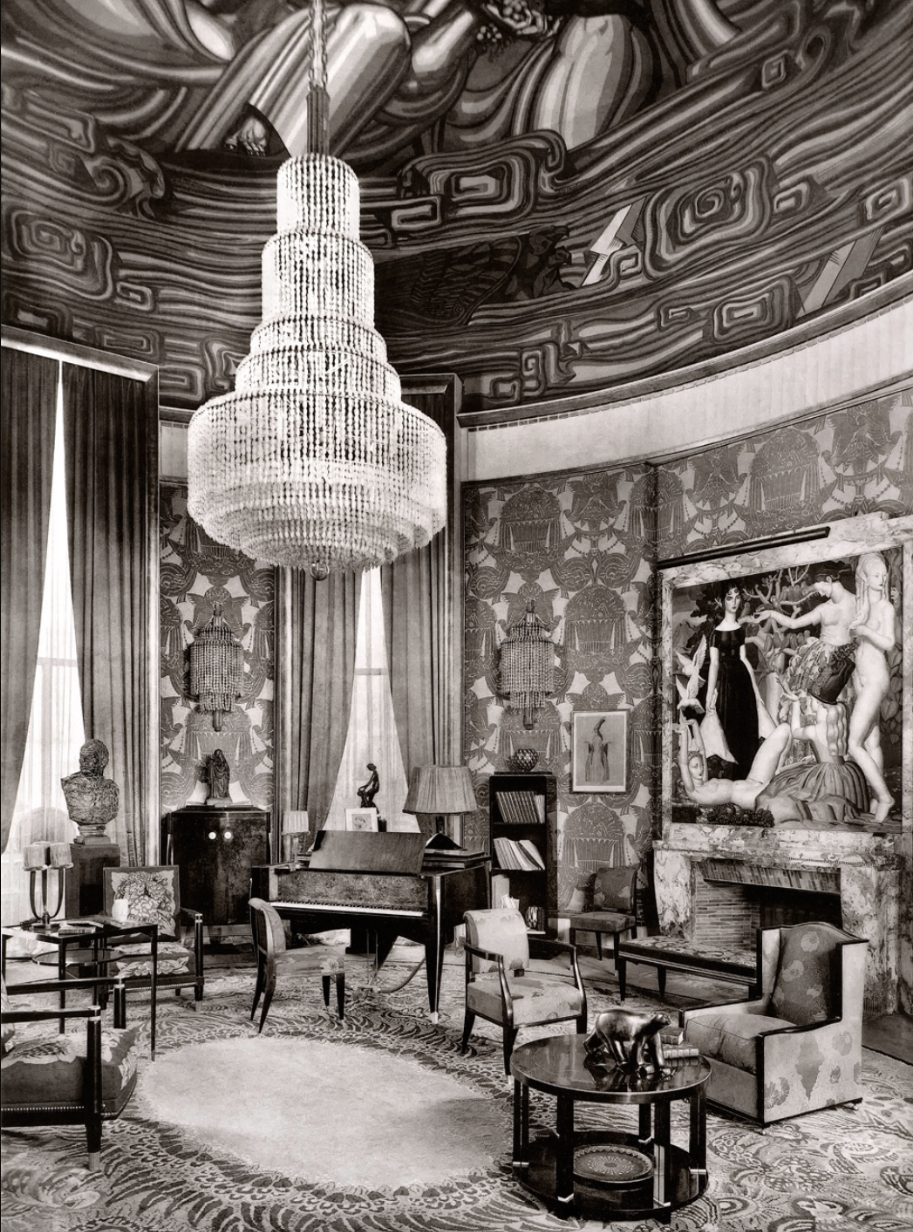
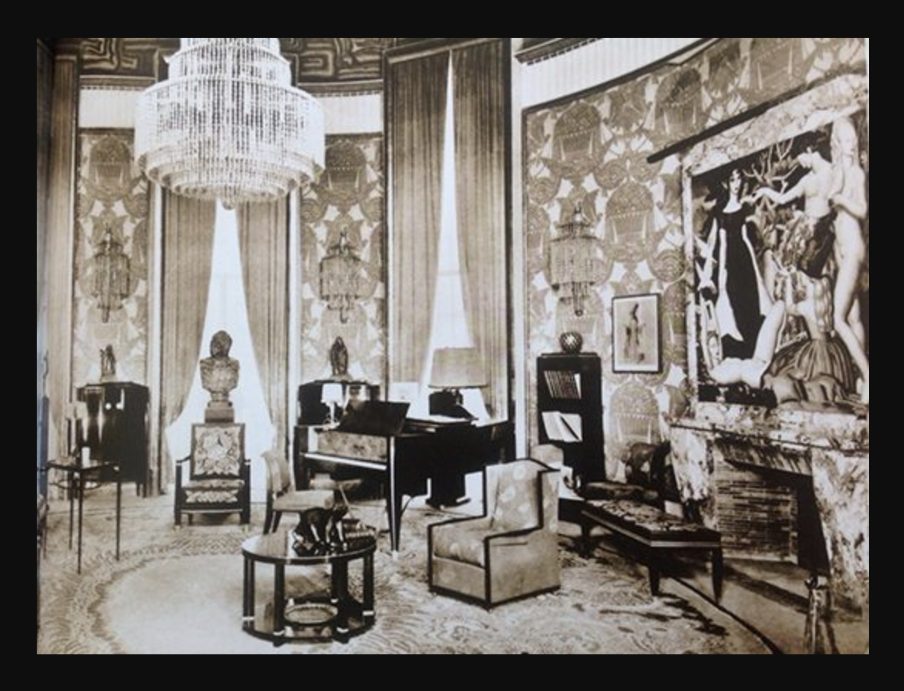
Émile-Jacques Ruhlmann’s Salon of the Hôtel du Collectionneur, showcased at the Exposition Internationale des Arts Décoratifs et Industriels Modernes in Paris in 1925, played a pivotal role in solidifying his position as the leader of the Art Deco movement in France. The pavilion, designed by Ruhlmann’s friend, architect Pierre Patout, featured various rooms, each meticulously curated to present a complete and harmonious living environment. The central salon, a focal point of the exhibition, displayed an amalgamation of decorative art, prominently featuring a large-scale painting by Jean Dupas above the fireplace. Within this carefully staged setting were Ruhlmann’s own designs, including the Macassar ebony grand piano, showcasing his mastery of both design and curation. Collaborators such as metalworkers Edgar Brandt and Claudius Linossier, sculptors Joseph Besnard and Antoine Bourdelle, silversmith Jean Puiforcat, and ceramicist Jean Mayodon were also represented, highlighting Ruhlmann’s collaborative approach.
This salon not only emphasized Ruhlmann’s design prowess but also served as a virtual advertisement for his principles of combining form and function with elegance in home decor. The pavilion attracted hundreds of thousands of visitors, including potential elite clients who would later commission his work. Ruhlmann’s collaborative methods created a space that encouraged clients to become connoisseurs, collecting pieces from various sources rather than relying on a single producer. The critical acclaim was resounding, with design historian Alastair Duncan noting that critics were “unanimous in their choice of Ruhlmann’s Hôtel du Collectionneur as the Exposition’s most spectacular event.” This recognition further solidified Ruhlmann’s influence and marked a significant moment in the history of Art Deco.
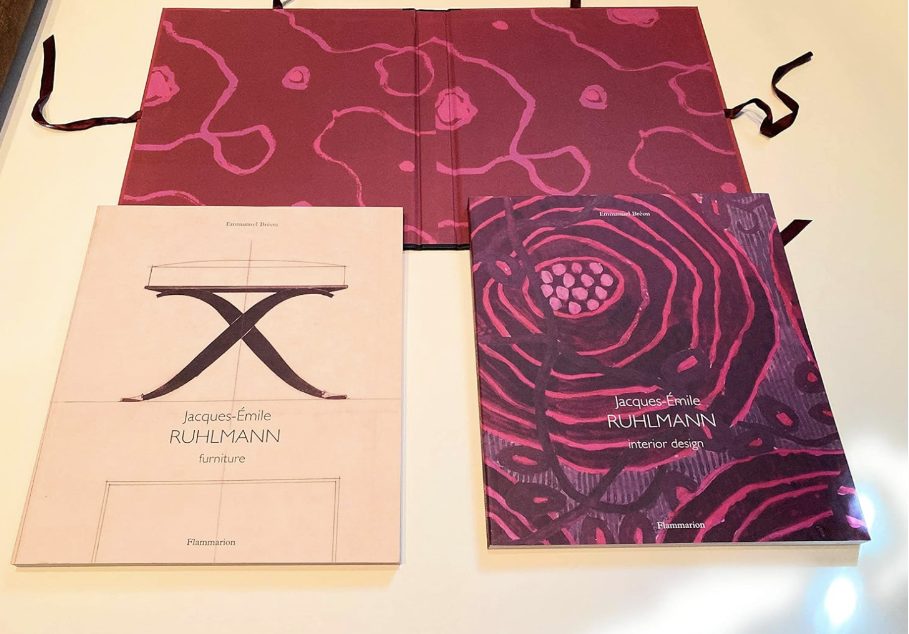
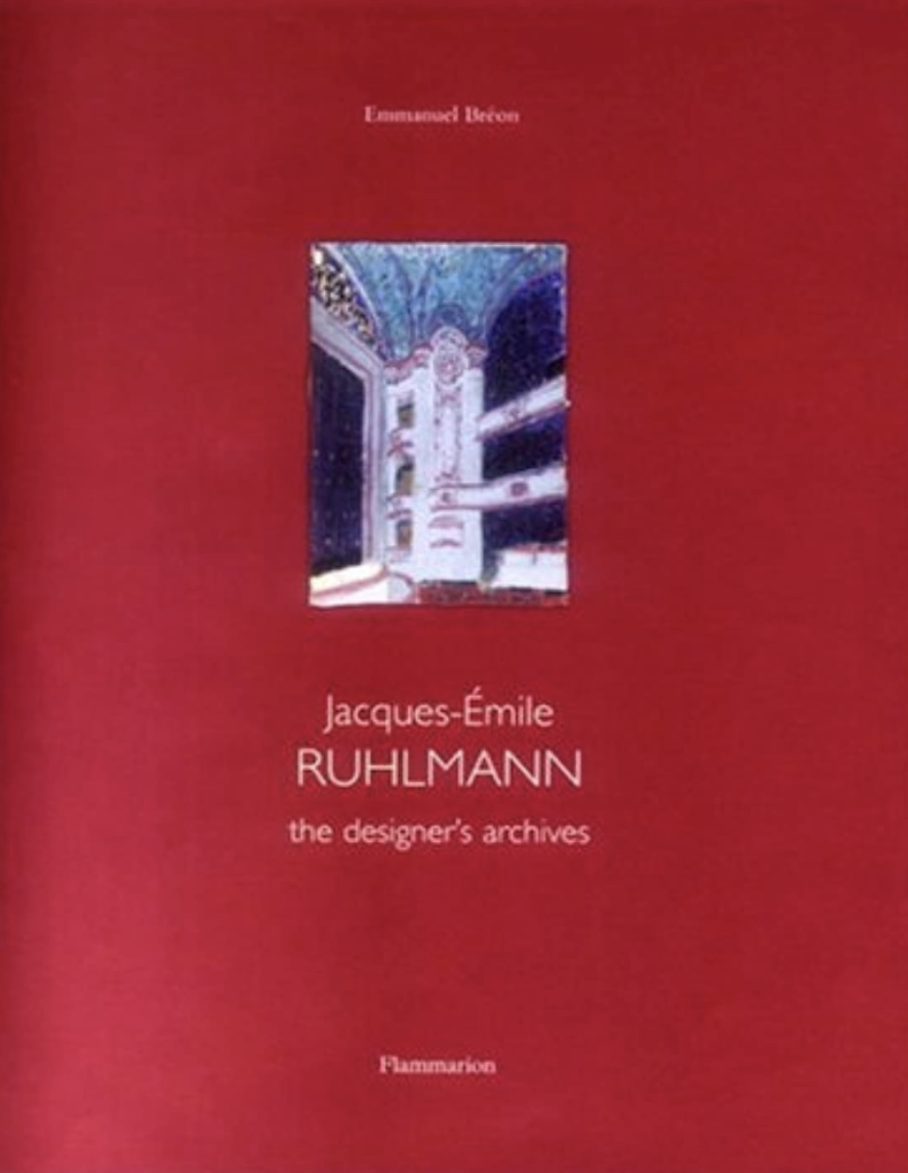
The two-volume boxed set celebrating Emile-Jacques Ruhlmann’s legacy exudes the spirit of Ruhlmann’s own meticulous craftsmanship and attention to detail. The lavish illustrations within the set showcase the exquisite facsimile reproductions of Ruhlmann’s iconic designs. This collector’s edition, reminiscent of Ruhlmann’s commitment to fine workmanship, is a valuable addition to the library of enthusiasts and connoisseurs interested in delving into the golden age of European design.
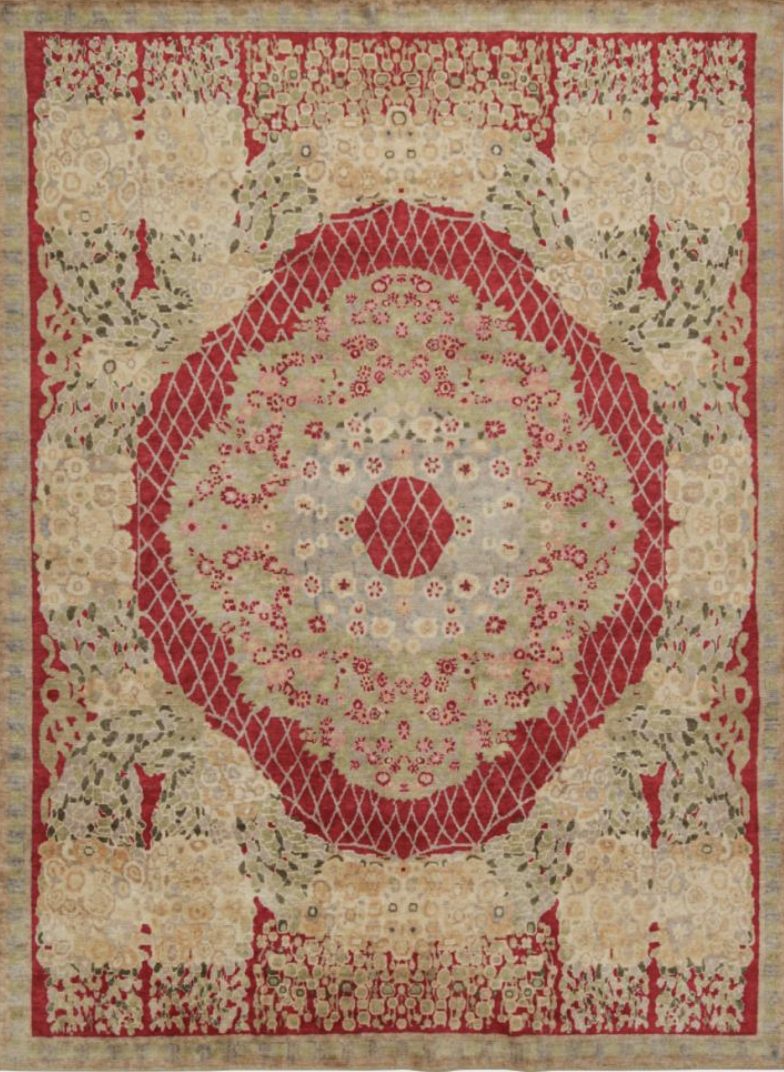
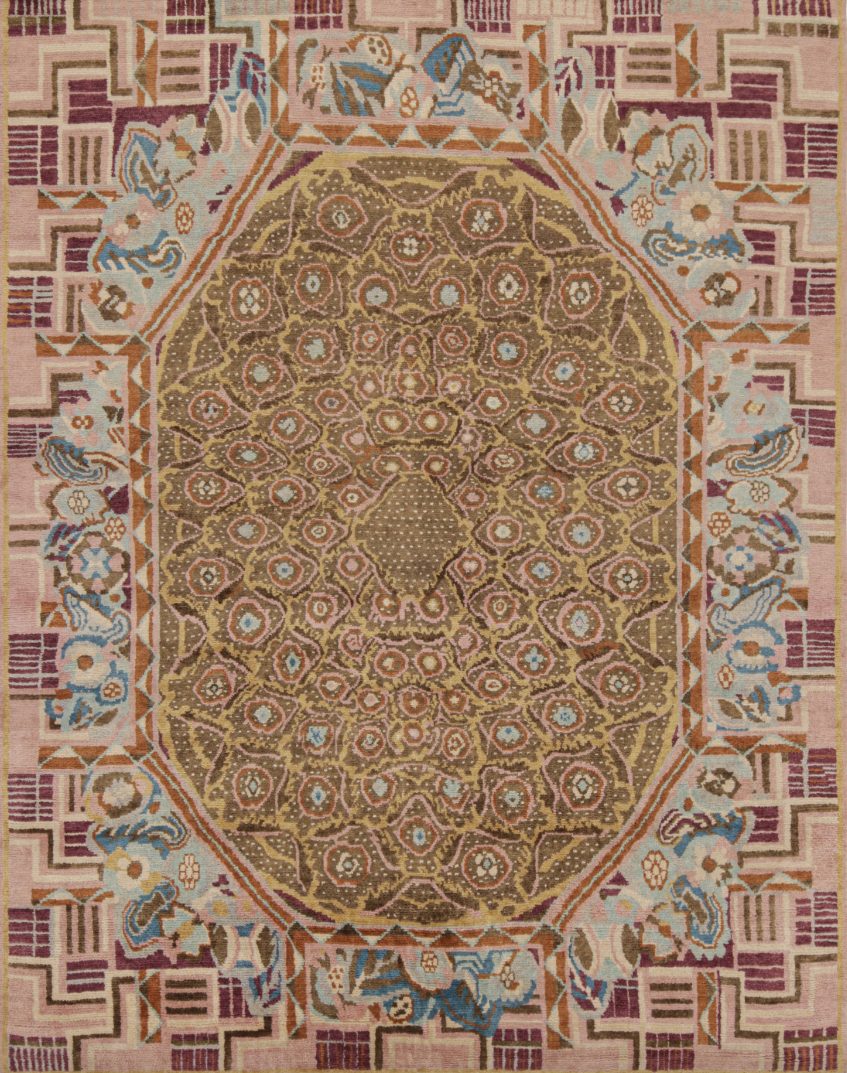
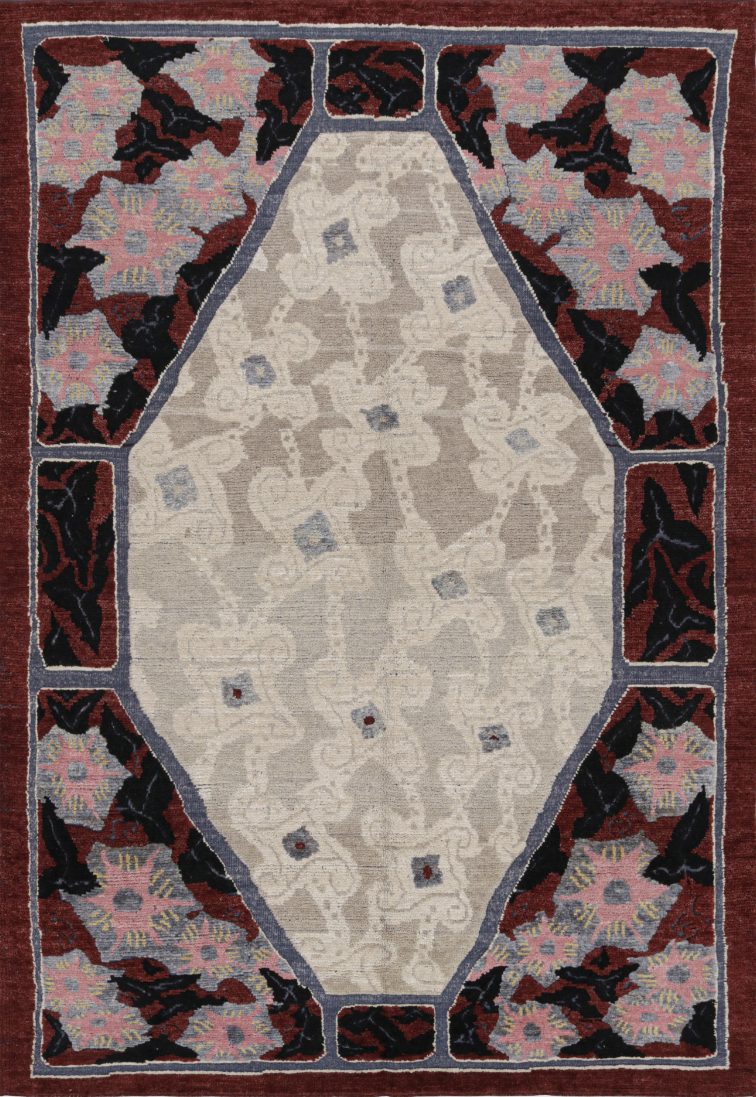
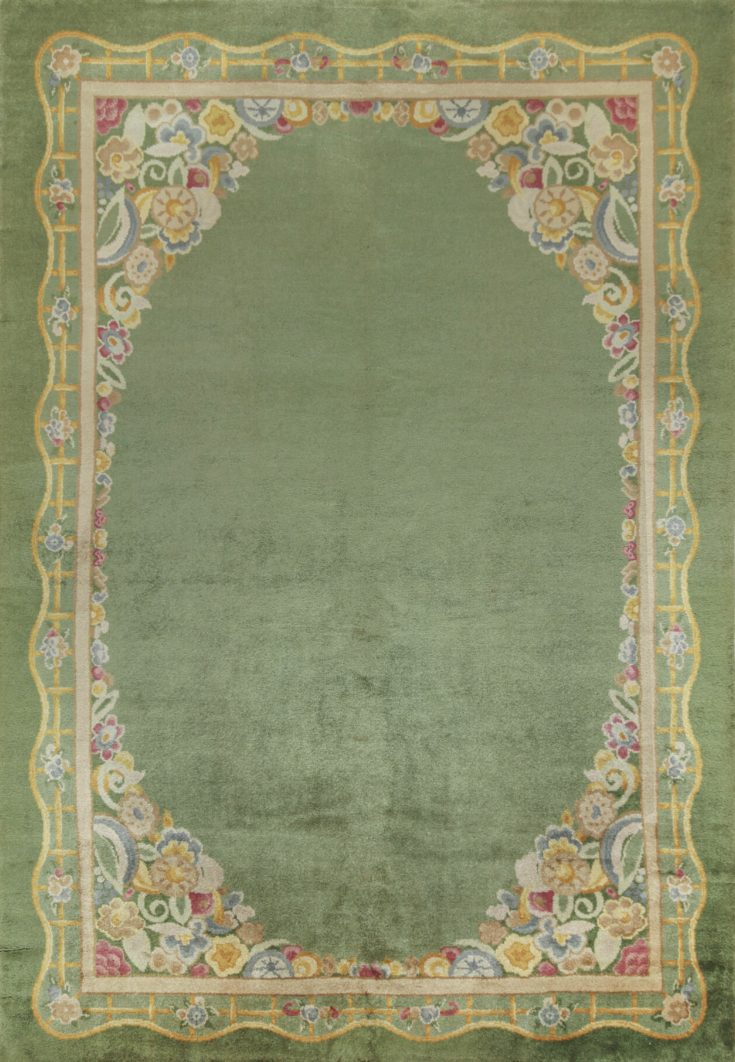
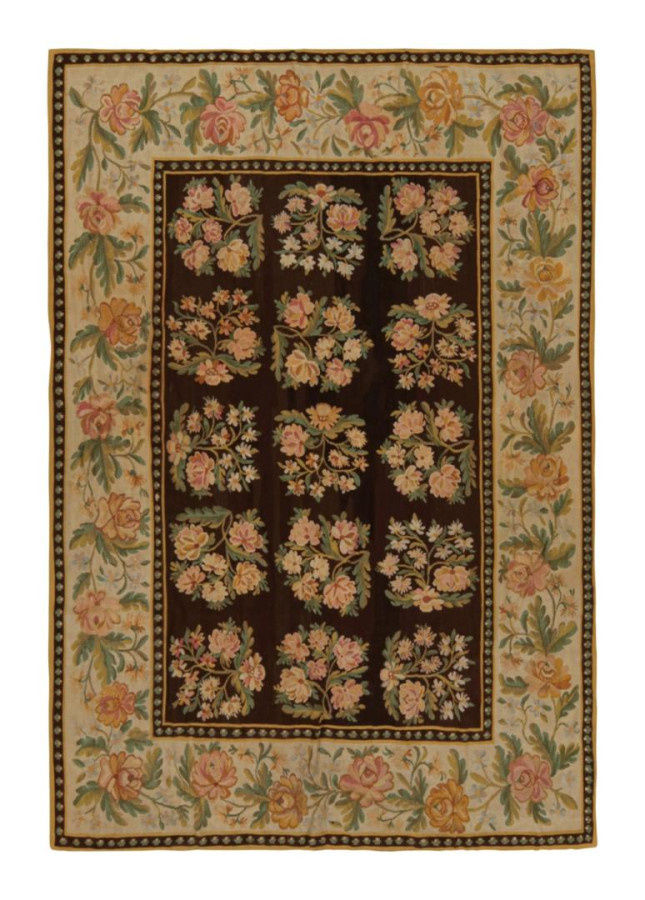
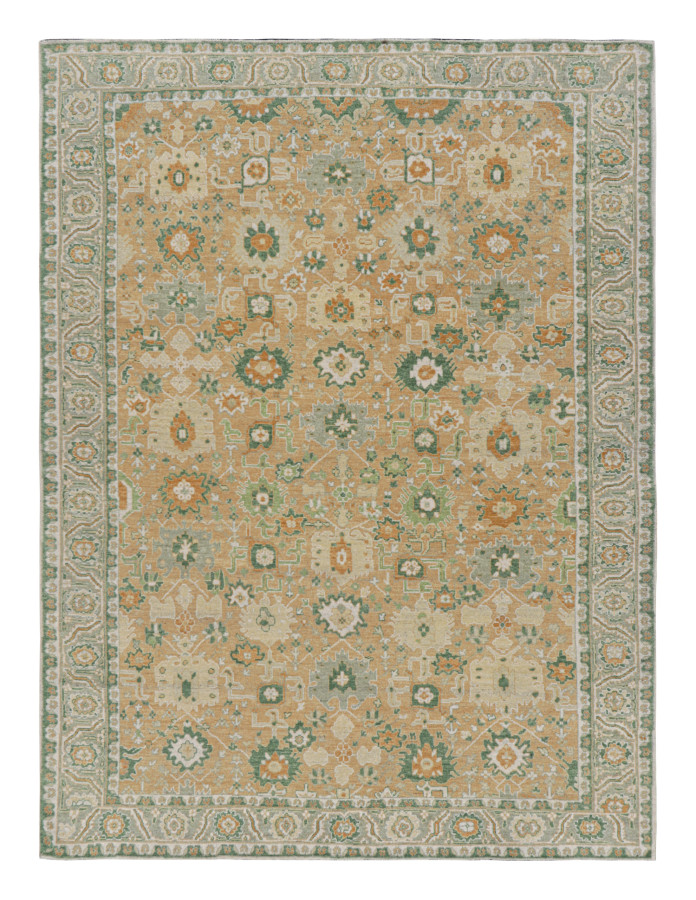
Meanwhile, have a look at our French Art Deco rugs as inspired by Ruhlmann’s designs –