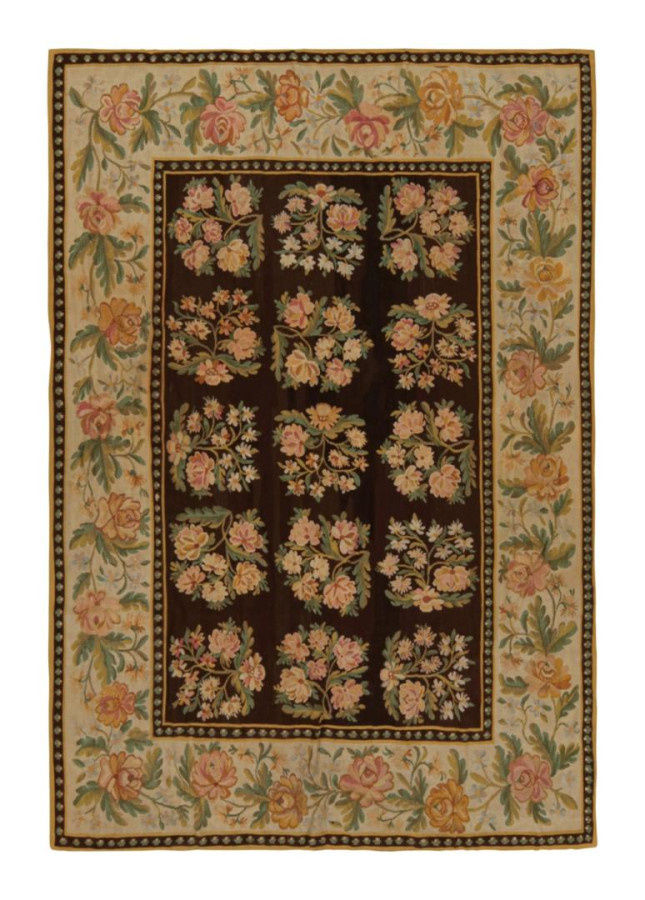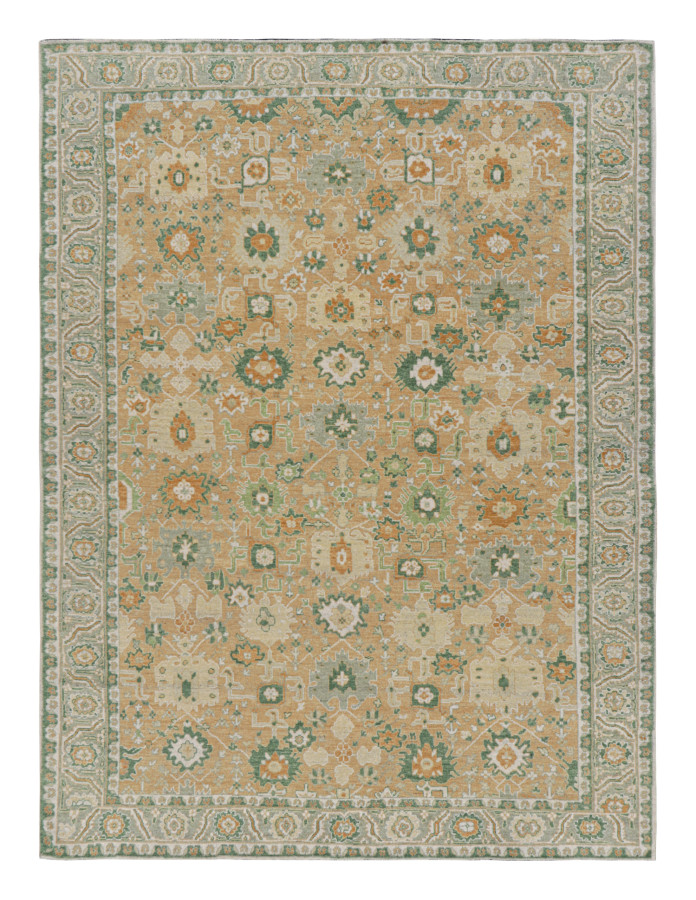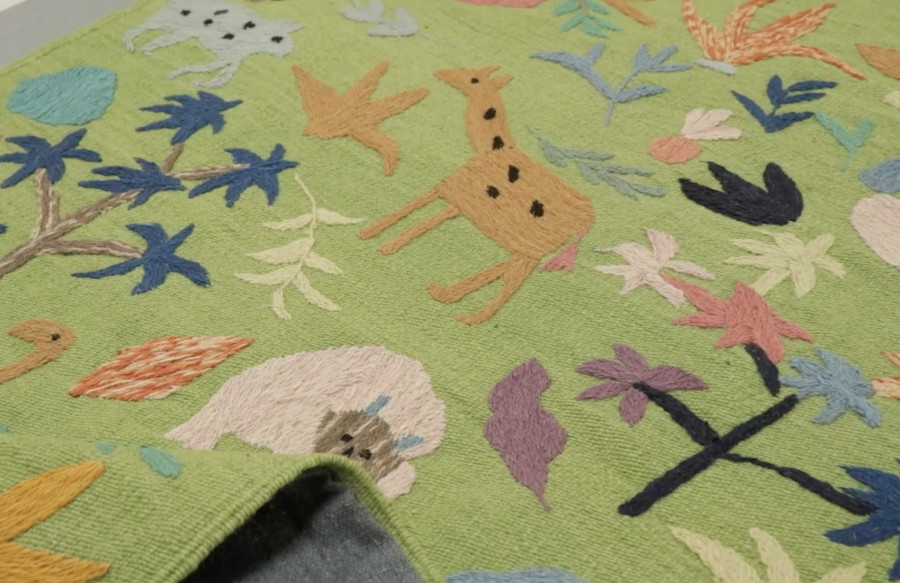


Postwar Swedish Flat Weaves: The Mastery of Märta Måås-Fjetterström, Barbro Nilsson, and the MMF Collection
July 11, 2025
Modern Tapestries: A Confluence of Art, Provenance, and Contemporary Design
July 23, 2025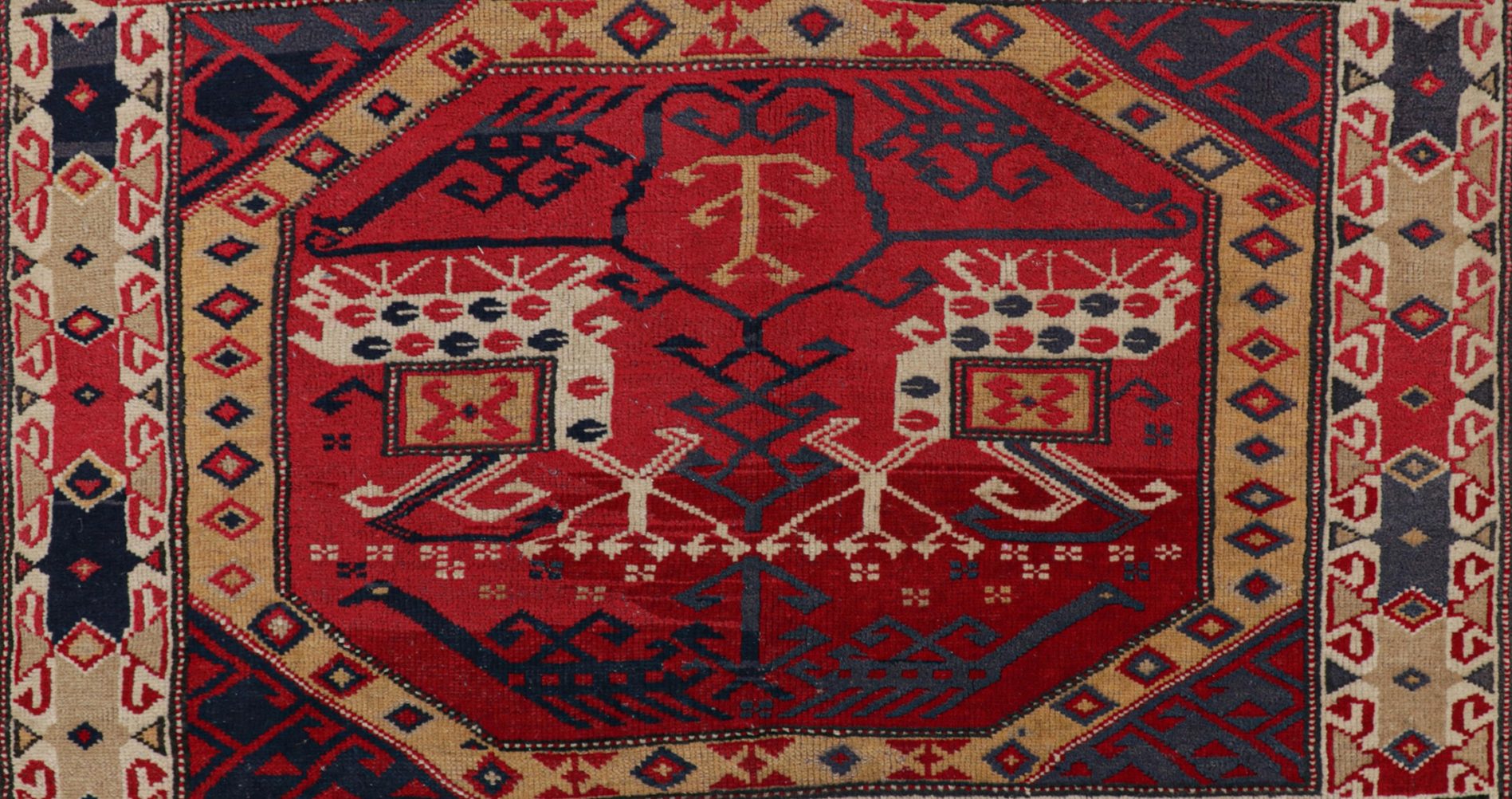
Hand-knotted in wool, circa 1920-1930, this 3×3 antique Anatolian square rug is a very special piece from Rug & Kilim. Details >>
There are few objects in the history of design as quietly eloquent and as insistently enduring as the Anatolian rug or kilim. At once functional textile and living palimpsest, each piece unfolds like a topography—layered with memory, ritual, and geometry—charting the invisible cartographies of empire, migration, and ancestral inheritance. These woven forms are not merely the byproducts of artisanal labor but are instead radical testaments to the entwinement of the spiritual and the material, the domestic and the diplomatic, the feminine and the geopolitical.
An Anatolian rug is never just a floor covering; it is a spatial archive of cultural resistance, generational knowledge, and regional identity. Crafted in silence but steeped in sound—the rustle of nomadic looms, the oral chants of dye-makers, the muteness of political borders—each kilim inhabits a world beyond ornamentation. It is the physical rendering of a worldview, a textile epistemology that disrupts binaries of craft and art, utility and beauty, heritage and contemporaneity.
In a cultural moment where the decorative is undergoing critical re-evaluation and the artisanal is being recast as a site of climate-conscious and decolonial praxis, Anatolian rugs assume a renewed urgency. They exist at the intersection of anthropology and aesthetics, of feminist labor and imperial legacy, of ecological dyeing practices and minimalist modernist interiors.
To collect, conserve, or simply live with these woven ecologies is to participate in a continuum—a dialogue stretching from the Bronze Age plains of Konya to the archived vaults of today’s museums and auction houses.
Anatolian rugs and kilims: A Legacy Woven into Civilizations
Emerging from the Anatolian peninsula (modern-day Turkey), this craft encapsulates millennia of cross-cultural exchange—from Central Asian nomads to Byzantine, Seljuk, and Ottoman imperial artisans. More than utilitarian objects, Anatolian rugs are archival carriers of symbolism, spiritual iconography, social hierarchy, and trade economies.
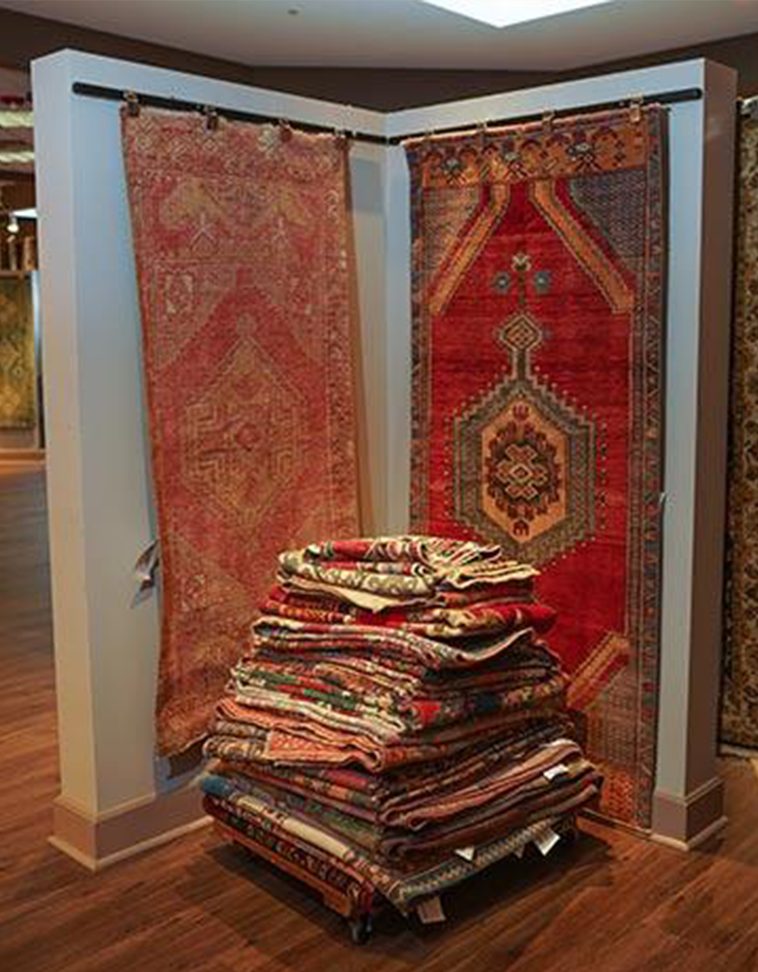
Most Anatolian rugs feature a symmetrical pattern weaving technique called the Ghirodes knot.
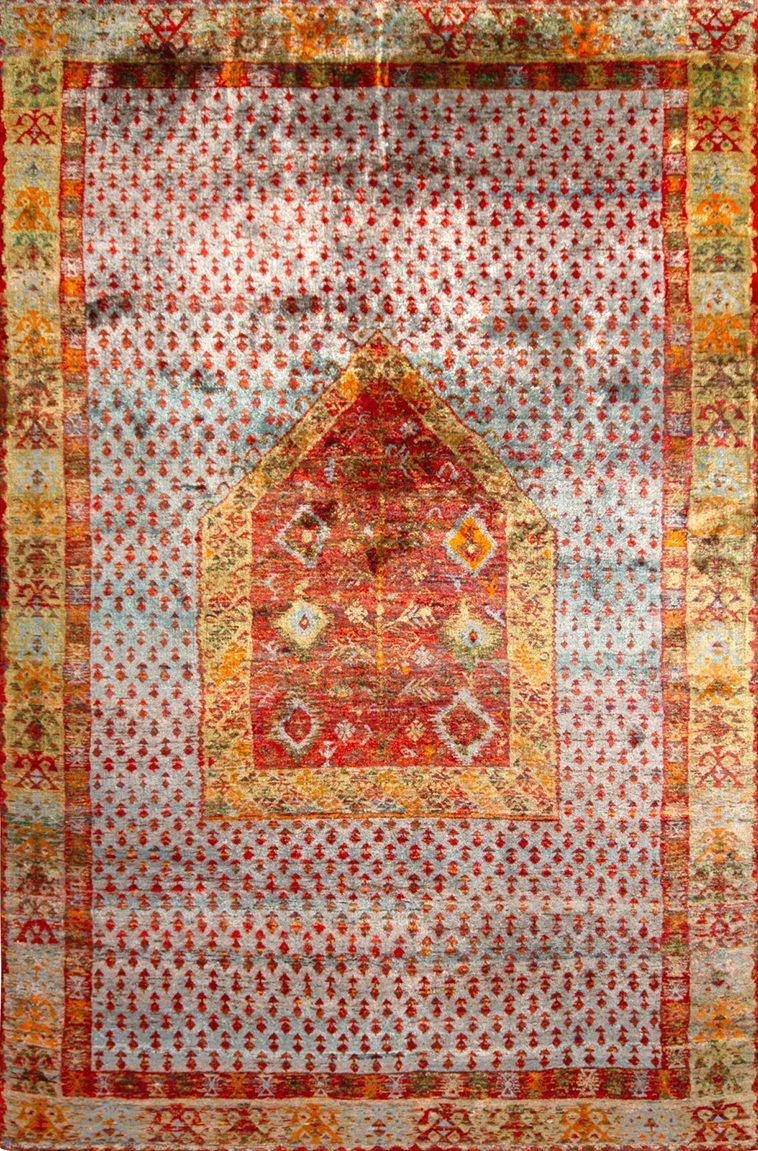
Hand knotted in luxurious silk, this Anatolian style geometric rug is an addition to the Modern Classics Collection by Rug & Kilim. Details >>
Historical Evolution and Regional Classifications
The history of Anatolian weaving dates back to the 13th century, with early examples found in Seljuk mosques in Konya, Beyşehir, and Fustat (now preserved in Turkish museums). These rugs were typified by geometric symmetry, medallions, and a deep, natural-dye palette of madder red, indigo blue, and ochre yellow.
With the Ottoman expansion, weaving became both a domestic craft and a state-supported industry. Workshops flourished in Uşak, Gördes, Kula, Bergama, Konya, and Milas, each developing distinct regional characteristics:
Uşak or Oushak rugs were known for large-scale medallions and European appeal.
Bergama pieces typically featured bold tribal geometry and primary colors.
Konya kilims, perhaps the most iconic, reflected the Central Anatolian pastoral culture with stylized animal motifs and fertility symbols.
Rug weaving was an intergenerational oral tradition—each rug an encoded story passed through female lineage, with tribal identifiers and personal milestones integrated into design.
Kilims vs. Pile Rugs: Techniques and Functions
While often mentioned together, kilims and pile rugs are structurally and functionally distinct.
Pile rugs employ a knotting technique—typically the Ghiordes (Turkish) knot—to create a plush surface.
Kilims are flat-woven, using slit tapestry technique that produces sharp color transitions and lightweight fabric.
Historically, kilims served ceremonial and functional roles: tent partitions, prayer mats, dowry textiles, and saddle bags. They were also more ephemeral than pile rugs, making surviving early examples (especially pre-18th century) exceedingly rare and highly valued.
Provenance plays a decisive role in the valuation of Anatolian rugs. Rug scholarship traditionally relied on field research, oral histories, dye analysis, and knot structure studies.
Institutional collectors such as:
The Turkish and Islamic Arts Museum (Istanbul),
The Vakıflar Carpet Museum, and
The Textile Museum (Washington, D.C.)
house canonical collections that provide critical taxonomies for museum-grade classification.
In the art market, Anatolian rugs have fetched record prices when provenance includes Ottoman court collections, Western Orientalist collectors (notably William Morris and Alfred Acton), or exhibitions such as the 1910 Munich Exhibition, which catalyzed interest in “Oriental Carpets.”
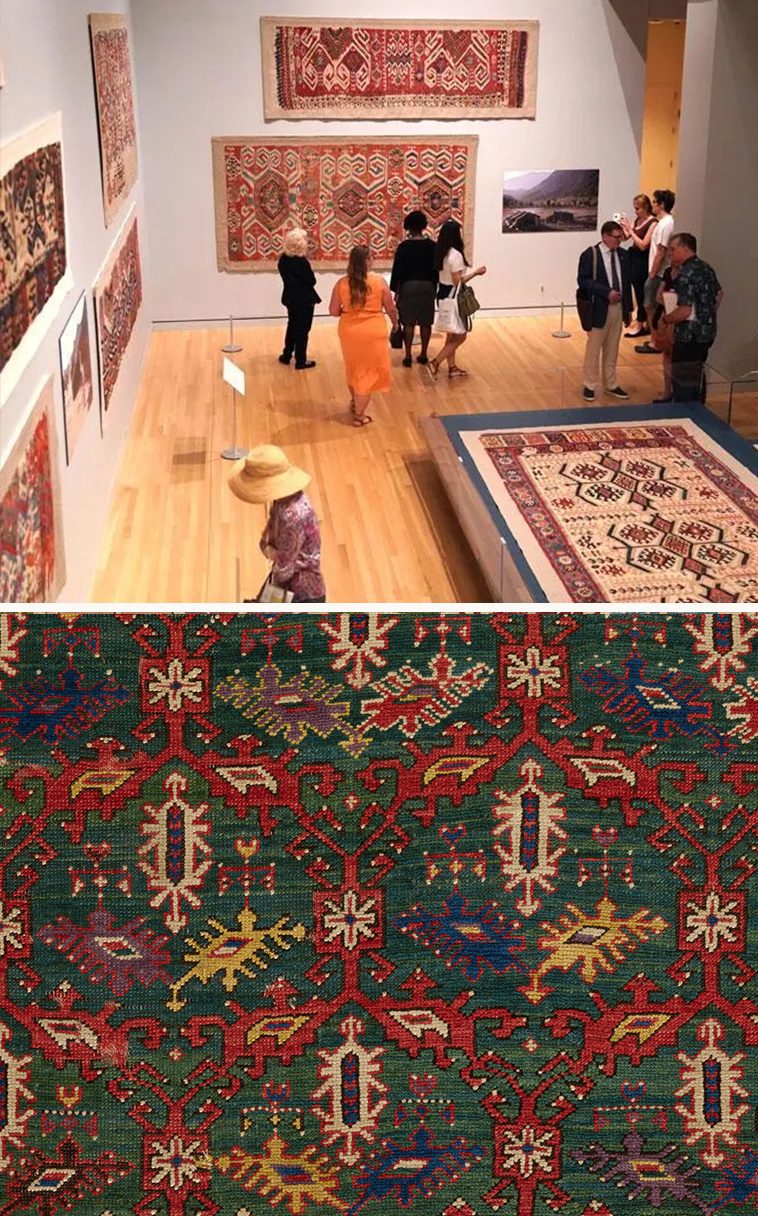
Top: Guests view “A Nomad’s Art: Kilims of Anatolia” at Washington, DC’s George Washington University Museum and The Textile Museum. [Staff Photo Phil Pasquini] Bottom: Carpet (detail), Türkiye, 18th century. The Textile Museum Collection R34.12.6. Acquired by George Hewitt Myers in 1913.
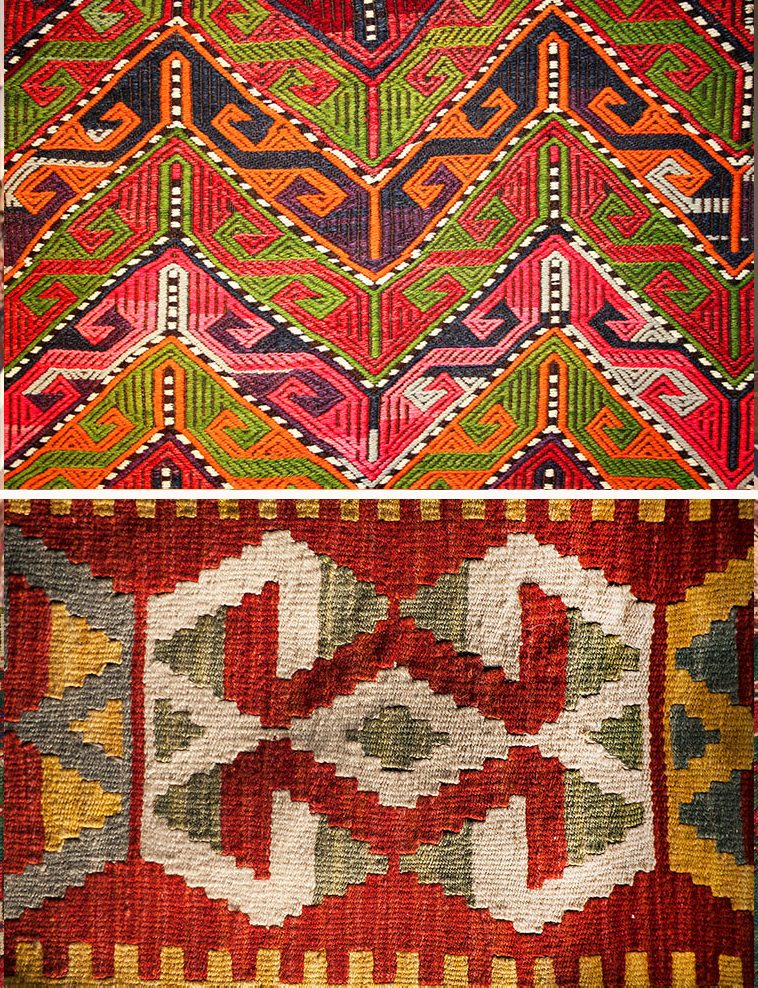
Top: Elibelinde (hands-on-hips motif) Bottom: Koçboynuzu (Ram’s Horn motif)
Symbolism, Iconography, and Cultural Codex
Anatolian textiles are semiotic tapestries. The weavers, often anonymous village women, encoded cosmologies into geometric abstraction:
Elibelinde (hands-on-hips): symbolizes fertility and motherhood.
Ram’s horns: masculine strength.
Wolf’s mouth and scorpion: protection from evil.
These symbols were not decorative; they were communicative, talismanic, and sometimes territorial. They form a visual language, rooted in pre-Islamic, Sufi, Shamanic, and Anatolian folk belief systems.
European Influences and Orientalism
By the 16th century, Anatolian carpets appeared in Renaissance paintings—notably by Hans Holbein and Lorenzo Lotto—signaling their presence in European royal courts and merchant households. This gave rise to the “Holbein Carpet” and “Lotto Carpet” classifications.
Orientalist demand in the 18th and 19th centuries, particularly from Austro-Hungarian and British collectors, led to a revivalist movement. Many rugs were modified for Western tastes, spurring debates in modern rug scholarship around authenticity vs. adaptation.
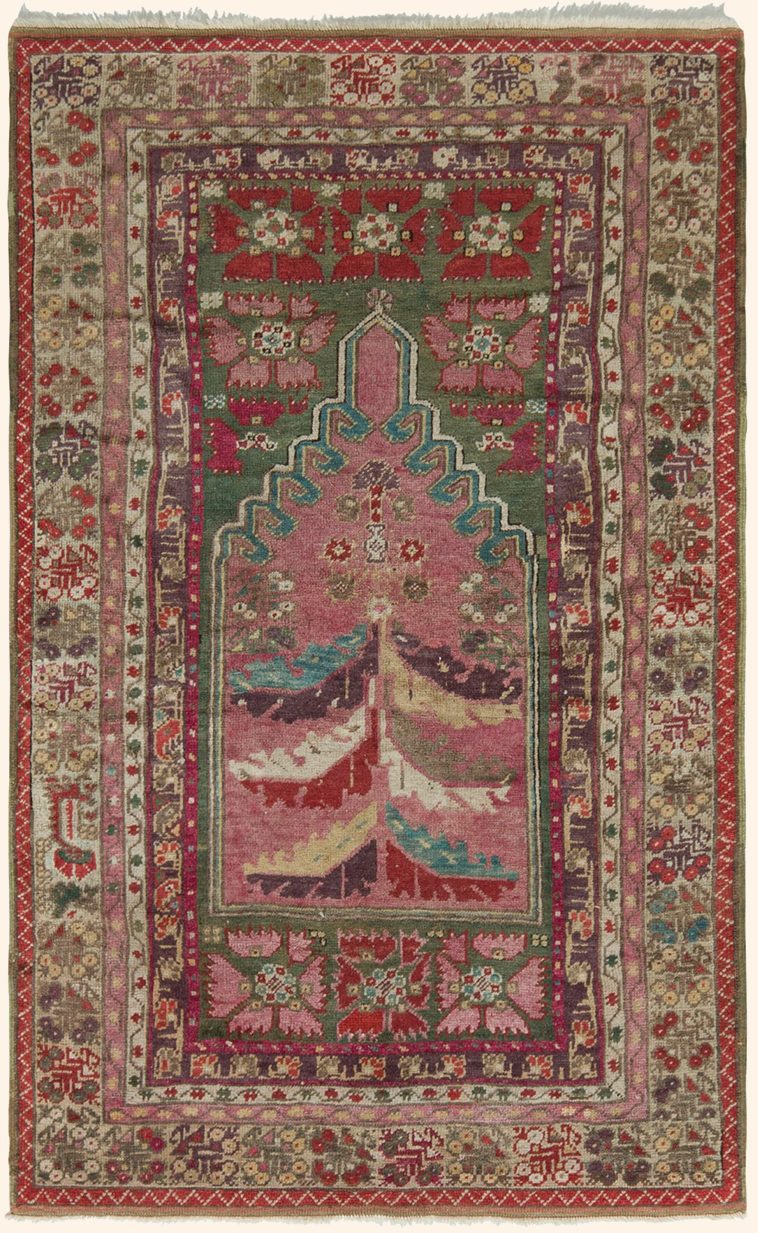
Hand-knotted in wool originating from Turkey circa 1880-1890, this 3×5 rug is a handmade antique Anatolian rug featuring an uncommon geometric floral pattern. Details >>
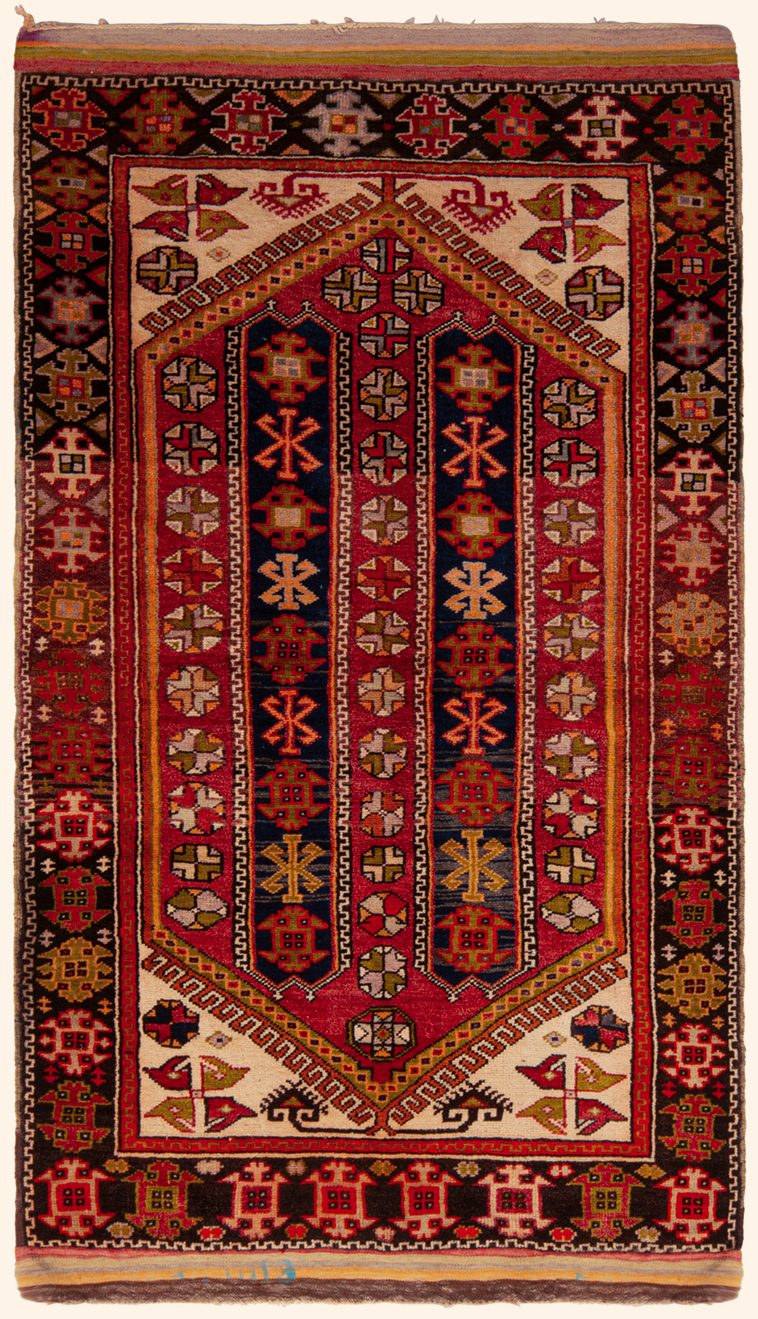
Made with hand knotted wool and originating between 1900-1910, this antique rug is derivative of an Anatolian transitional geometric design. Details >>
The Modern Kilim Movement and Contemporary Collecting
In the 20th century, kilims witnessed a renaissance as minimalist art collectors, interior designers, and architects embraced their abstraction, sustainability, and chromatic restraint. Major exhibitions, such as those by the DeYoung Museum and The Museum of Modern Art (MoMA), aligned kilim aesthetics with modernism—drawing parallels with Bauhaus, Klee, and Rothko.
Notable designers, including Zaha Hadid and Axel Vervoordt, have incorporated antique kilims into futuristic spaces, reinforcing their timeless adaptability.
In contemporary Anatolia, institutions and NGOs now support female cooperatives—such as the DOBAG Project—which revive natural dyeing and traditional techniques, ensuring cultural continuity and ethical sourcing.
Due to organic materials (wool, cotton, silk), Anatolian rugs are vulnerable to humidity, moths, and sun exposure. Conservation involves invasive and non-invasive techniques: reframing, humidity-controlled storage, and digital scanning for documentation.
Collecting Trends and Institutional Acquisitions
Post-2000, there’s a marked shift from purely aesthetic acquisition to academic and ethnographic collecting. Institutions now prioritize contextualized rugs: those with documentation of their social use, tribal migration, or political symbolism (e.g., kilims used during the Kurdish resistance, or rugs gifted during Ottoman diplomatic missions).
Private collectors—especially in Europe, Japan, and the United States—have moved toward underrepresented regions, such as Eastern Anatolia (Malatya, Sivas, Tunceli), where rug idioms are less commodified.
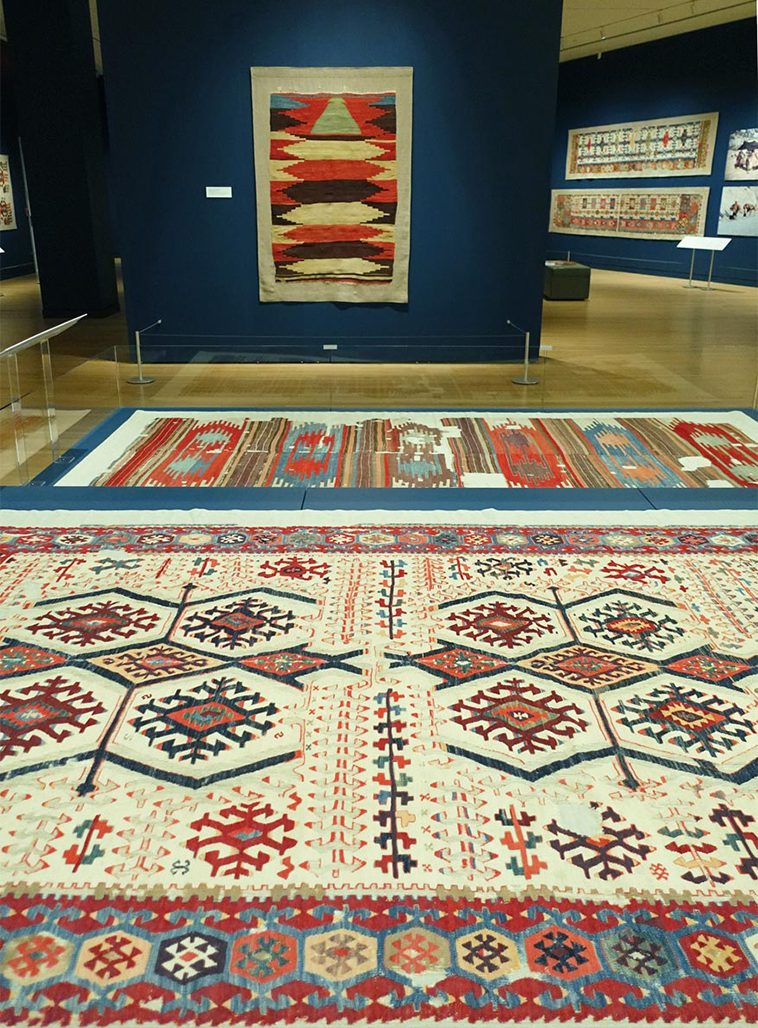
Exhibition of antique Anatolian Kilims Murad Megalli Collection in the Textile Museum Washington D.C.
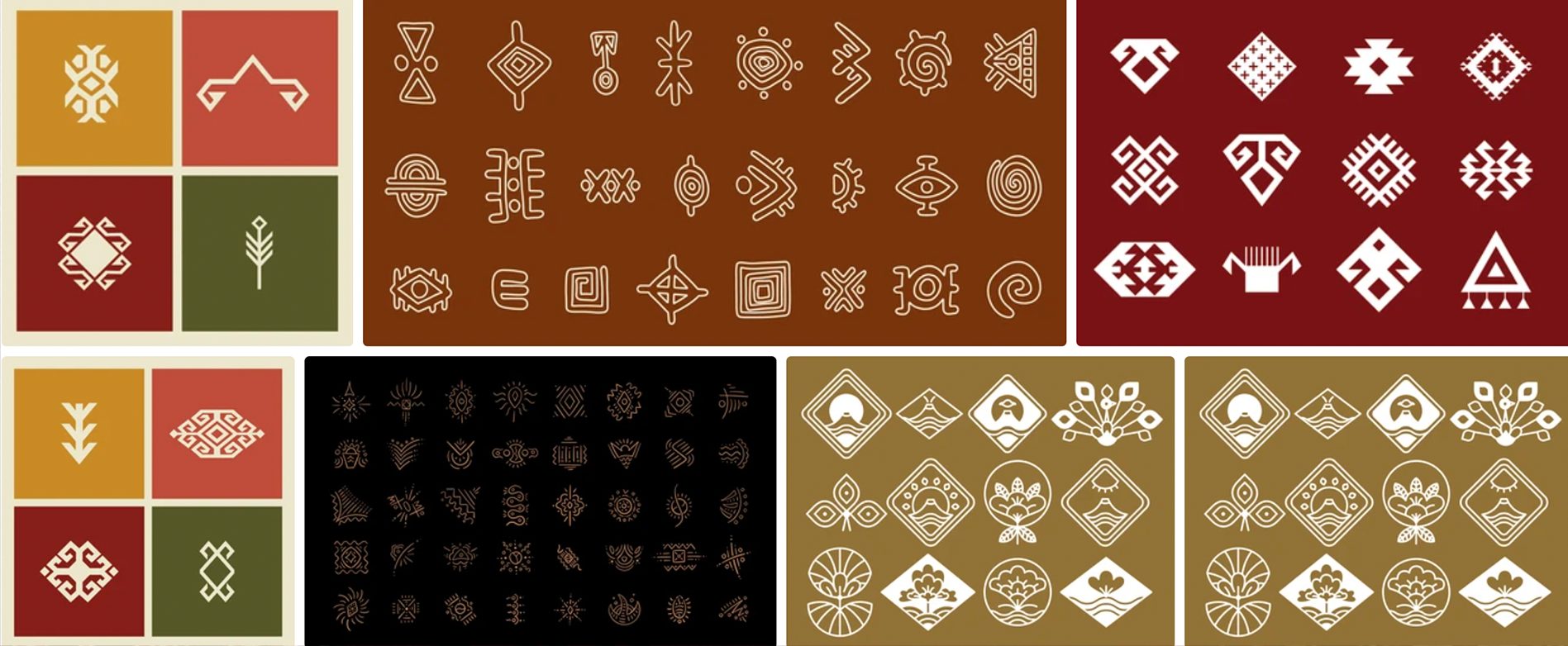
Anatolian motifs
The Future of Anatolian rugs and kilims
AI is now being used to decode rug patterns, trace provenance via blockchain, and reconstruct lost weaving traditions through machine learning. This raises ethical questions regarding cultural appropriation, digital repatriation, and how intangible heritage is preserved in an age of algorithms.
Projects like Google Arts & Culture’s Anatolian Carpet Project and partnerships between Turkish museums and UNESCO represent a turning point in digitally democratizing access while preserving craft integrity.
Anatolian rugs and kilims are more than artifacts—they are textile maps of civilizations, carriers of indigenous memory, and dynamic objects that continue to evolve through contemporary hands.
As institutions, collectors, and scholars converge to preserve this heritage, the Anatolian rug stands not only as an object of beauty but also as a critical cultural document bridging past and present, tradition and innovation.