
A Century of Rugs from Art Nouveau to Art Deco: Geometry, Ornament, and Ideology
July 7, 2025
What Are Anatolian Rugs and Kilims? History, Craft, and Significance for Modern Interiors
July 15, 2025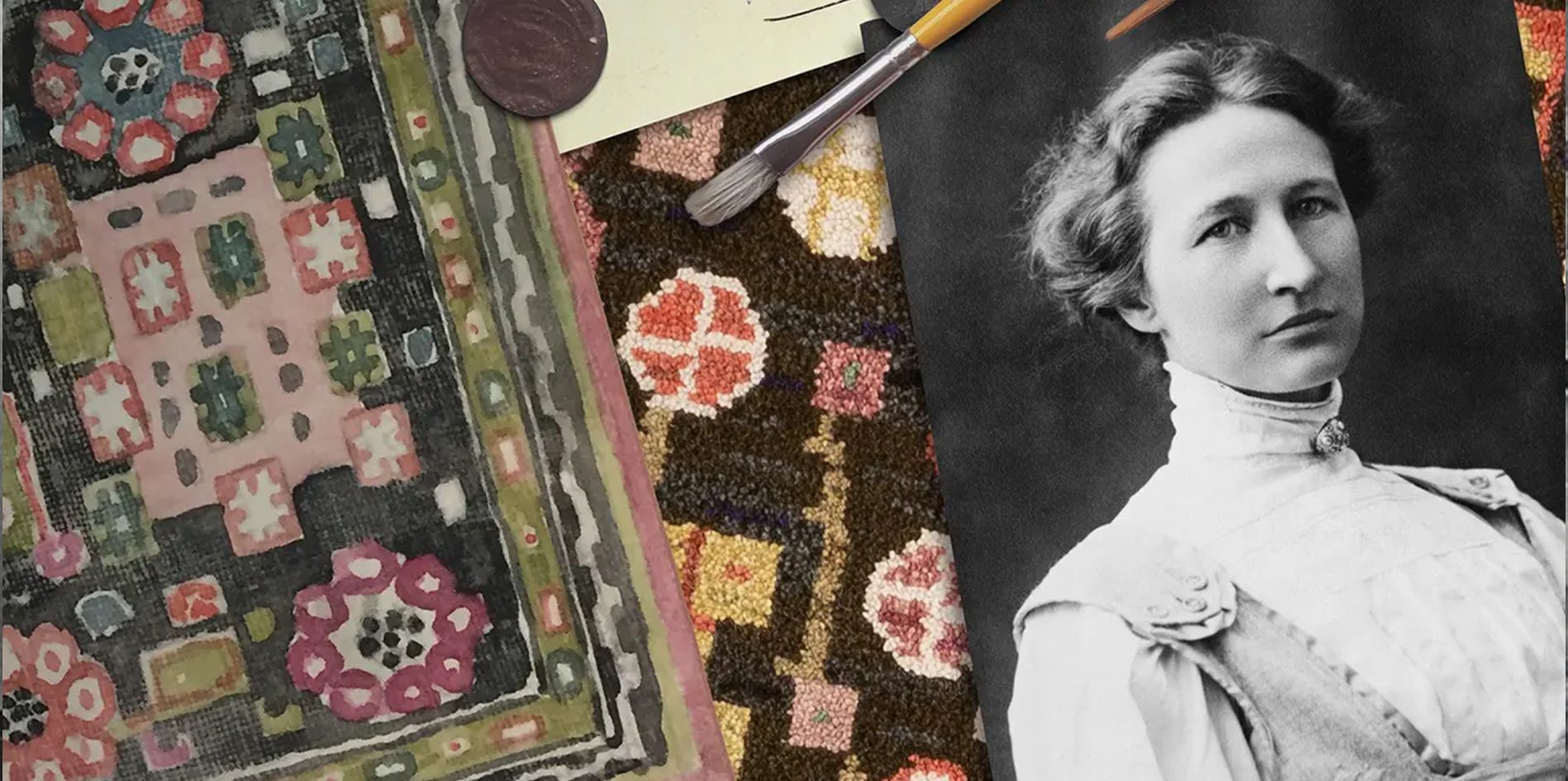
When asked to describe Märta Måås-Fjetterström’s artistry, she said: “Look at the rugs – find me.” It was her rugs that spoke expressively about who she was, her sources of inspiration, her life and career, and the conditions experienced by female entrepreneurs during the first half of the twentieth century.
The postwar Swedish flat weave commands a singular, reverent position—not merely as a textile, but as a cultural artifact that embodies the convergence of national identity, artistic modernism, and material innovation. Nowhere is this legacy more comprehensively preserved and curated than within the Märta Måås-Fjetterström (MMF) Foundation, the most authoritative and historically grounded collection of these woven masterworks. Situated at the precise intersection of design history, Nordic craft lineage, state-sponsored cultural production, and the international modernist movement, this body of work offers an irreplaceable lens into the intellectual and aesthetic conditions of postwar Europe.
As global markets and institutions turn increasingly toward textile art as both fine art and cultural testimony, the MMF collection stands apart—not only for its unrivaled provenance and authorship, but also for the ideological clarity with which it navigates the aesthetic ideals of the mid-century.
In these works, we witness the tapestry as a medium of diplomacy, spiritual resonance, environmental dialogue, and feminist authorship, particularly through the vision of pioneering figures such as Märta Måås-Fjetterström, Barbro Nilsson, Marianne Richter, and Ann-Mari Forsberg.
The MMF Atelier
Founded by Märta Måås-Fjetterström in 1919 in Båstad, Sweden, the atelier was not merely a workshop but an intellectual hub where artistic ambition met exceptional technical execution. Though Måås-Fjetterström passed in 1941, her vision endured and evolved under the stewardship of Barbro Nilsson (1899–1983), whose tenure as artistic director from 1942 to 1970 catalyzed a golden era of innovation and global recognition. The postwar years were pivotal: war had imposed material scarcity and cultural introspection, yet it also demanded reinvention.
Nilsson—alongside her contemporaries such as Marianne Richter, Ann-Mari Forsberg, and Ingegerd Silow—responded not by retreating into nostalgia, but by advancing a distinctively Swedish visual language grounded in modernist abstraction, spatial balance, and handwoven excellence.
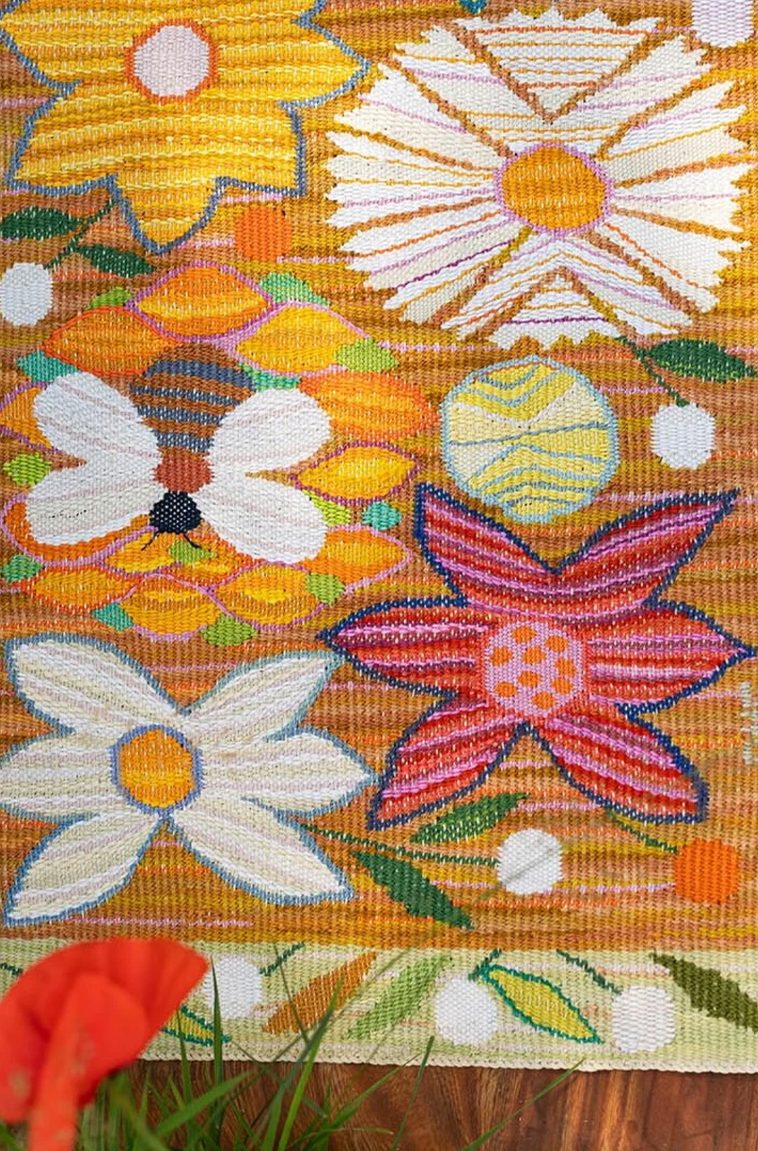
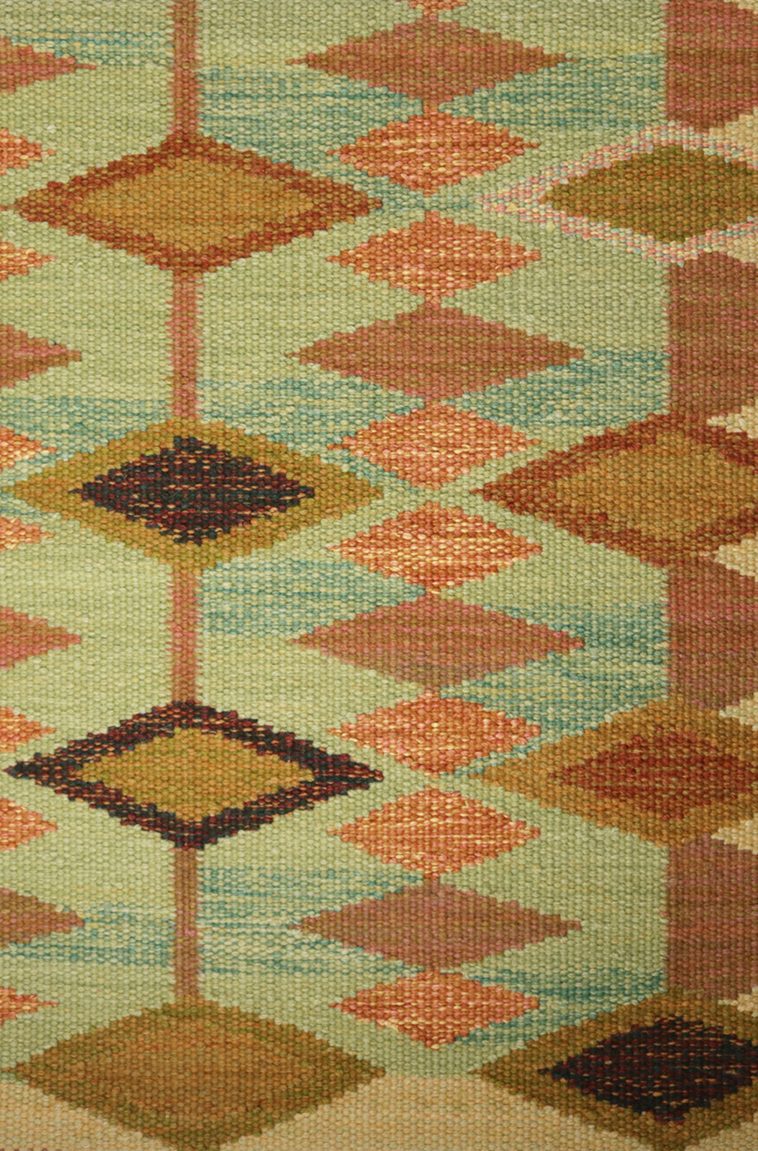
Ann-Mari Forsberg’s most iconic piece Bikupan (The Beehive), created in 1959
Defining the Postwar Swedish Flat Weave
Technically known as “rya,” “rölakan,” or “flossa,” depending on pile and weave type, the flat weave format (rölakan) proved ideal for modern interiors, particularly within the functionalist and later Scandinavian modernist contexts that valued simplicity, tactility, and material integrity. Postwar flat weaves by the MMF atelier offered structured rhythm, geometric minimalism, and color harmonies that aligned seamlessly with the philosophies of contemporaneous architects such as Alvar Aalto and Bruno Mathsson.
Flat weaves designed during this period achieved an architectural quality—rugs were no longer secondary furnishings but integral components of spatial design. Pieces such as Nilsson’s “Snäckorna” (The Shells, 1943), or Richter’s “Spaljé” (Trellis, 1950s), with their layered chromatic palettes and fractal geometries, remain paragons of textile modernism.
Märta Måås-Fjetterström: A Precursor to Postwar Ideals
Though many of the most renowned “postwar” designs were developed after her passing, Märta Måås-Fjetterström’s early innovations laid the aesthetic and philosophical groundwork. Her emphasis on interpreting Sweden’s folklore and landscapes through abstract compositions and fine yarns elevated weaving to high art. Her designs such as “Ängarna” (The Meadows) or “Bruna Heden” (The Brown Heath) were revolutionary in their departure from ornate traditionalism, instead preferring restraint, rhythm, and contemplative form. These qualities became essential to the atelier’s postwar output, particularly as Nilsson continued to reinterpret Märta’s vision for a new era.
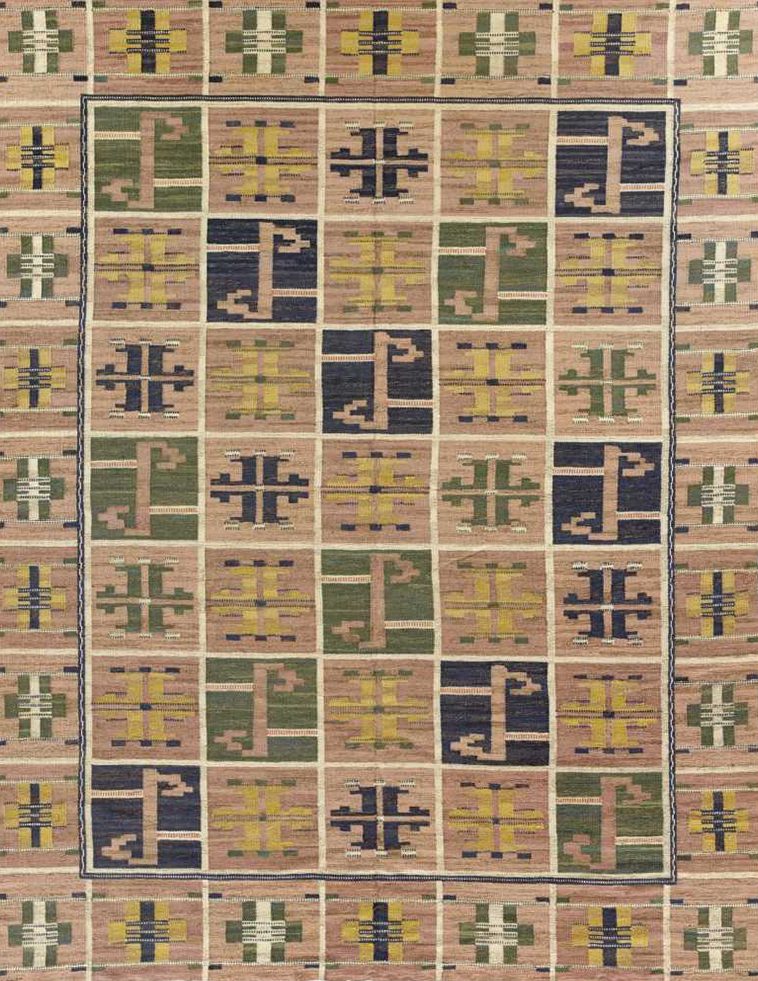
Ulriksdal Rug by Marta Maas-Fjetterstrom features a striking geometric design, executed in the traditional Nordic rölakan technique.
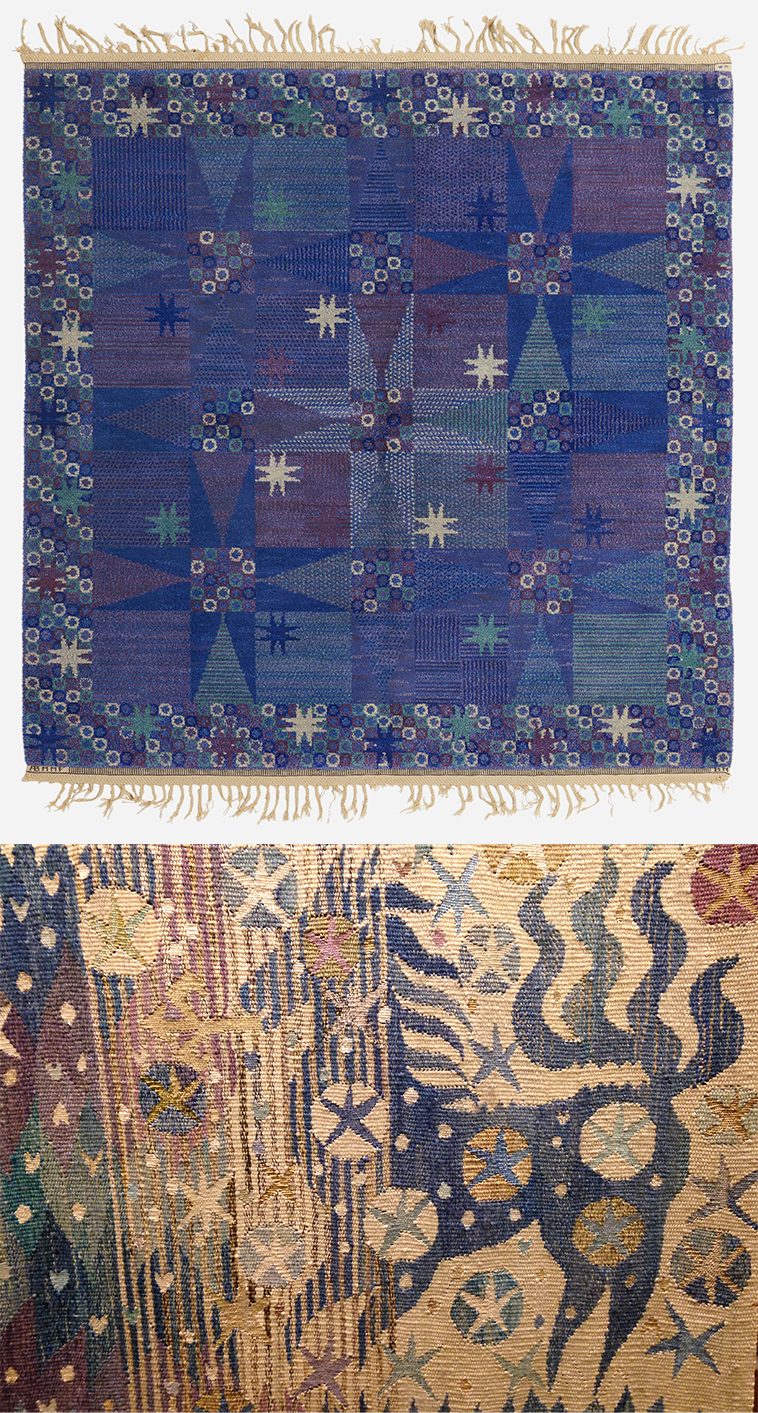
Top: Barbro Nilsson, Stjärnflossan blå medium pile carpet. Bottom: Barbro Nilsson, detail of gobelin tapestry for Sydkraft representing rapids and waterfalls, 1966.
Barbro Nilsson: Architectural Precision, Painterly Sensibility
Barbro Nilsson’s leadership defined the postwar era in every essential sense. Her mastery of color theory, structural discipline, and visual scale is perhaps best expressed in her commissions for Sweden’s embassies, churches, and state institutions. Pieces like the monumental “Vinterrosor” (Winter Roses) for the United Nations or her tapestries for Lund Cathedral bear witness to a weaving style that is both intimate and commanding. She understood how a rug could define a space—ground it, calm it, enrich it—without resorting to excess.
Nilsson’s approach, both rigorous and lyrical, reflected the changing conditions of the postwar world. Informed by Bauhaus principles but rooted in Nordic nature and textile heritage, her work is characterized by clarity of form, a deep chromatic sensibility, and structural resolution that rival any architectural detailing of the period.
Provenance, Patronage, and Cultural Legacy
The MMF Foundation’s collection is not only institutionally significant—it also represents an unparalleled continuity of provenance. The Foundation holds the original cartoons, yarn swatches, and weaving records for each design, making every rug traceable in its authenticity and authorship. This archival fidelity has elevated MMF designs in the global market, particularly among blue-chip collectors, royal commissions, and institutions such as the Nationalmuseum in Stockholm and the Victoria and Albert Museum in London.
Over the past two decades, the demand for postwar Swedish flat weaves has seen a resurgence. Their rarity—especially large-scale, signed, and undamaged examples—combined with their architectural compatibility, make them singular acquisitions for collectors of both decorative arts and modernist design. Sotheby’s and Christie’s have seen record sales of Nilsson’s and Måås-Fjetterström’s works, often with provenance linked directly to the MMF atelier or early commissions for cultural institutions.
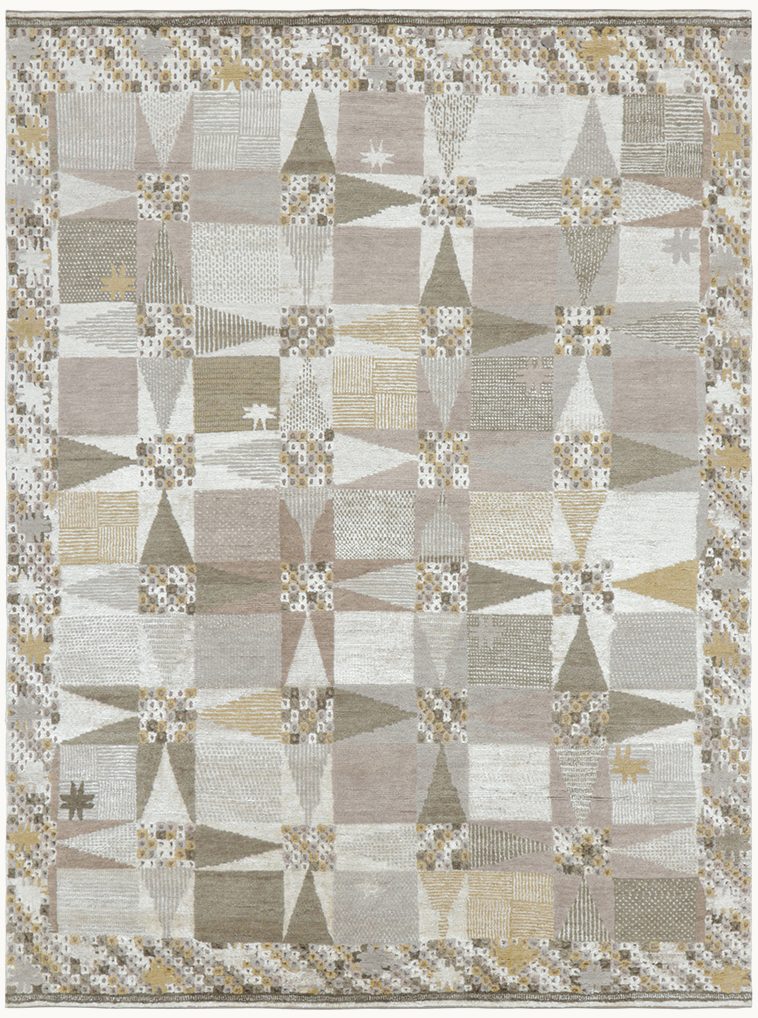
An exciting new addition to Rug & Kilim’s Scandinavian rug collection—a contemporary reimagining of Swedish Minimalism and vintage rugs and textiles of Rollakan and Rya tradition. Shop Here >>
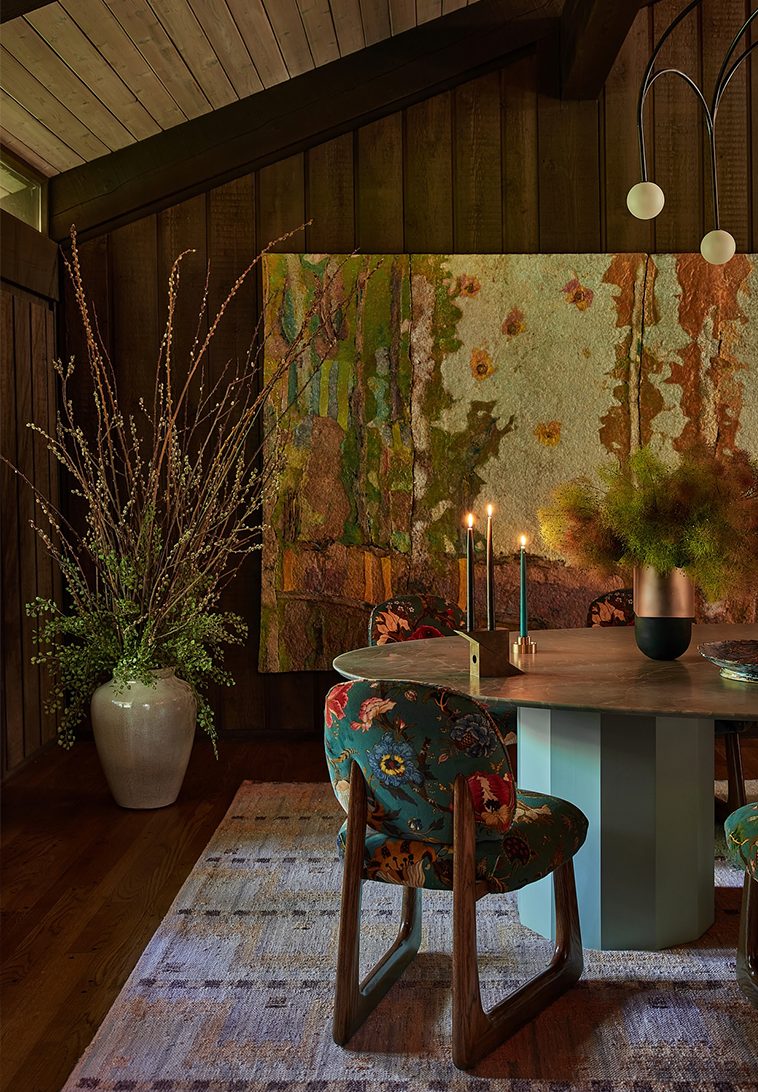
Styling the MMF Flat Weave in Contemporary Interiors
Today, postwar Swedish flat weaves find resonance in a wide spectrum of interiors—from Brutalist to minimalist, from coastal modern to curated maximalism. The visual restraint and spatial discipline they offer make them a favorite among leading designers such as Ilse Crawford, Joseph Dirand, and Axel Vervoordt. Whether used to anchor a living space with a sense of order or layered into a more eclectic narrative, MMF rugs do not overpower. Instead, they speak—quietly but with profound conviction.
Designers often turn to MMF works for their ability to bridge art and function. Unlike many textiles, these flat weaves are not ornamental. They are atmospheric. Their nuanced color grading, deliberate asymmetries, and rhythmic compositions render them closer to large-format paintings in fiber—works that invite both touch and contemplation.
The MMF Foundation Today: Guardians of a Cultural Legacy
The Märta Måås-Fjetterström Foundation continues to oversee production on a commission-only basis. The weavers still work in the original Båstad studio, following exact specifications of historical designs. Each new rug is crafted with the same discipline and reverence as in the 1930s or 1950s—an approach that maintains artistic integrity while affirming the relevance of handwoven excellence in an era of digital design.
This living tradition—where archives are active and artisans are guardians of legacy—is what distinguishes the MMF atelier from any other textile house in the world today. As the market becomes more saturated with derivative mid-century modern aesthetics, the authenticity and scarcity of original postwar Swedish flat weaves ensure their place as apex objects of 20th-century decorative arts.
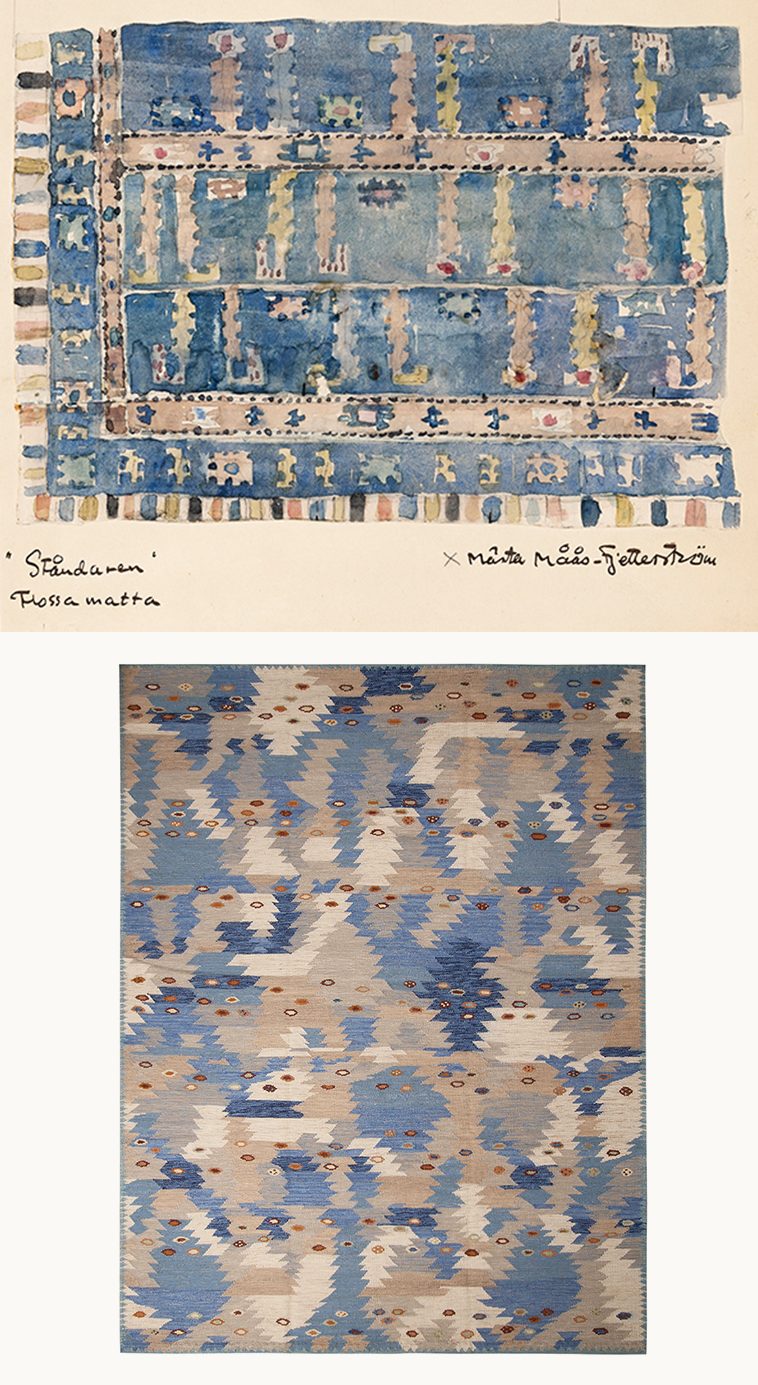
Top: Artwork by The Märta Måås-Fjetterström Foundation, Bottom: Flatweave Scandinavian by Rug & Kilim
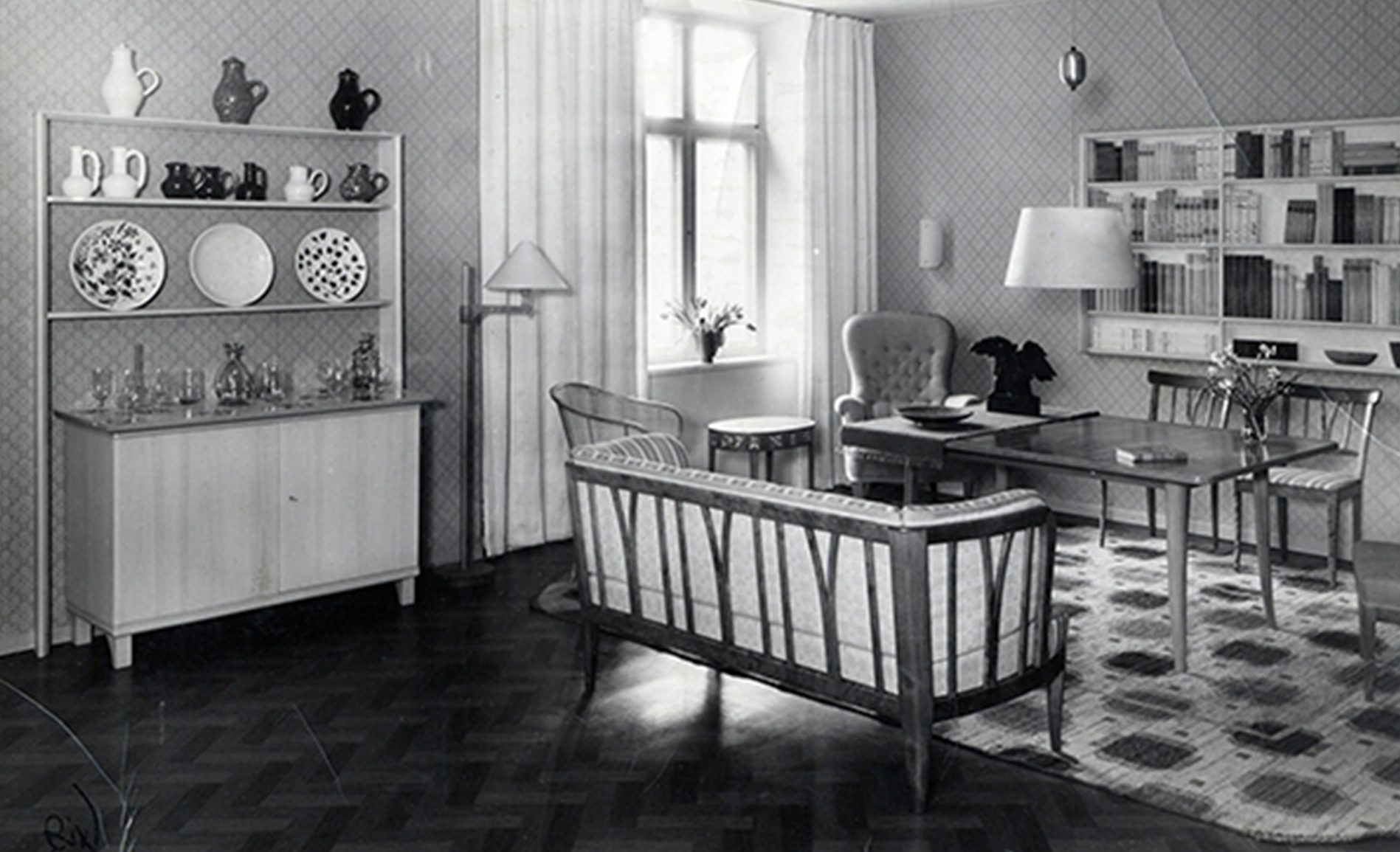
The World’s Fair in New York, 1939–1940, was the last time Märta Måås-Fjetterström exhibited her rugs to an international audience.
Photo from the archives of the Swedish Society of Crafts and Design at the Centre for Business History.
Beyond Collecting, Toward Cultural Stewardship
To own a postwar Swedish flat weave designed by Märta Måås-Fjetterström, Barbro Nilsson, or their contemporaries is to participate in a lineage that values intellectual design, uncompromised craftsmanship, and cultural responsibility. These rugs are not just acquisitions—they are inheritances of a radical modernist vision rendered in thread.
The MMF Foundation collection stands as a global exemplar of what happens when design transcends decoration, when weaving becomes architecture, and when heritage is woven not only into fabric—but into the consciousness of collectors, designers, and institutions committed to enduring excellence.
Rug & Kilim is proud to represent and study these works as both connoisseurs and stewards. For inquiries or consultation, our curatorial team is available to guide acquisitions with the highest standard of provenance and scholarship.