
Belkis Balpinar and her Contributions to the Evolution of Modern Turkish Rugs and Kilims – “Art Kilim”
June 28, 2024
A Guide to History, Significance and Different Styles of Handwoven Kilim Rugs
July 3, 2024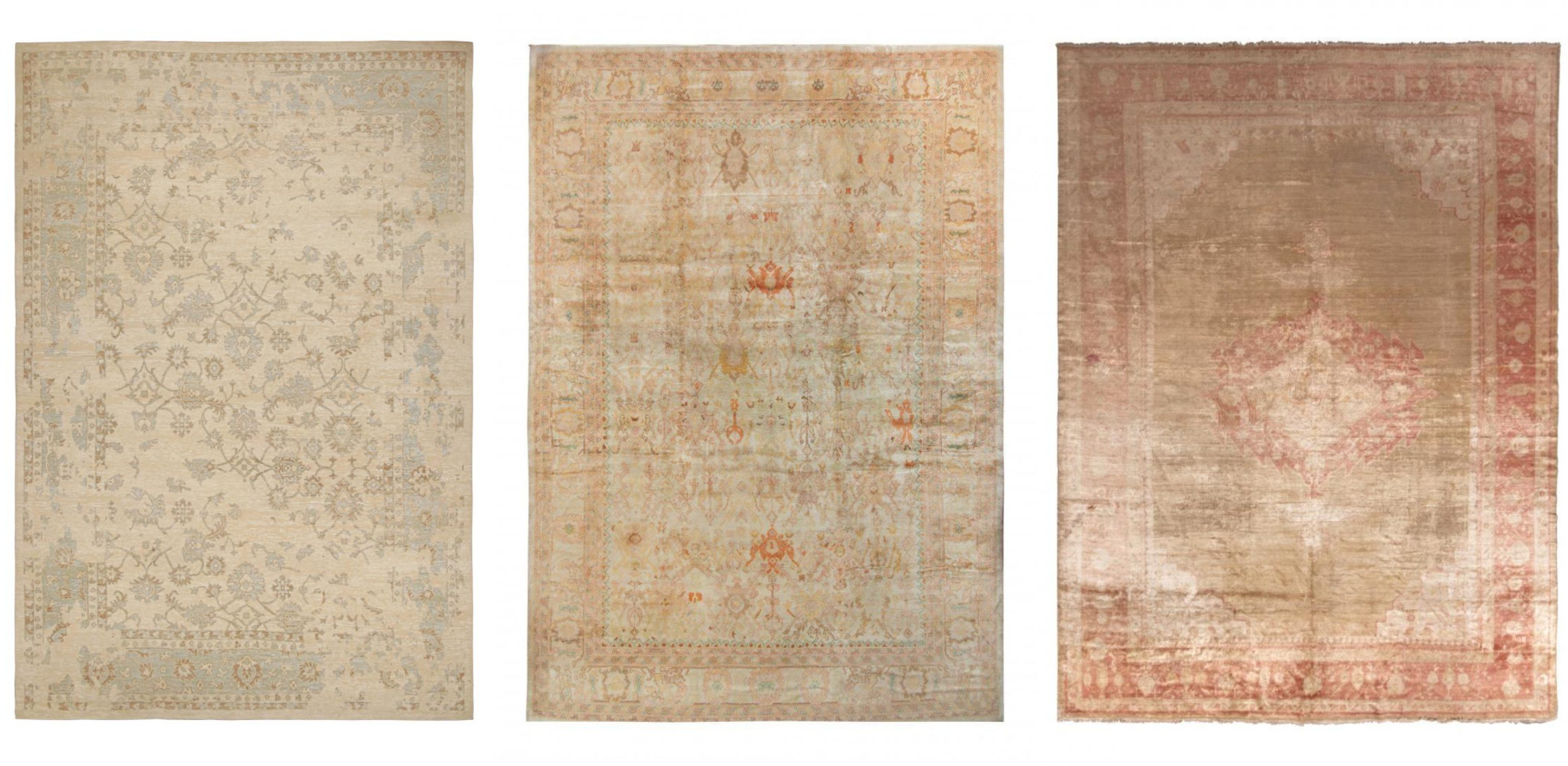
Originating from western Turkey, the elegance of Oushak rugs traces back to the 15th century Ottoman Empire. These antique masterpieces, first hand-knotted in the city of Usak, were crafted with high-end, lustrous wool in subtle, glowing hues. The hallmark of Oushak rugs lies in their expansive floral designs that radiate from the center, a distinct departure from the intricate florals and geometric shapes of Persian counterparts. The allure of Oushak rugs transcended the Ottoman borders during the Renaissance, captivating European connoisseurs who admired their serene beauty. This surge in demand led to expanded production, ensuring that these exquisite Oushak carpets adorned the finest European country homes and palaces. Notably, their understated colors and harmonious patterns make them a favorite among contemporary designers, evoking a sense of tranquility and timeless sophistication.
Today, the finest quality Oushak rugs, reminiscent of the luminous antique originals, are predominantly hand-knotted in Pakistan, India, and Turkey. Meanwhile, moderate quality versions are woven in Afghanistan and Egypt, offering a variety of shapes and sizes to suit modern tastes. The 16th century marked a significant period for Oushak carpets, particularly under the reign of Suleiman the Magnificent. Weaving masters from Azerbaijan introduced new styles, transforming these Turkish rugs into symbols of opulence and respectability. Renowned miniaturists and decorative artists designed intricate patterns, creating ‘palace carpets’ that graced Ottoman palaces and European castles alike.
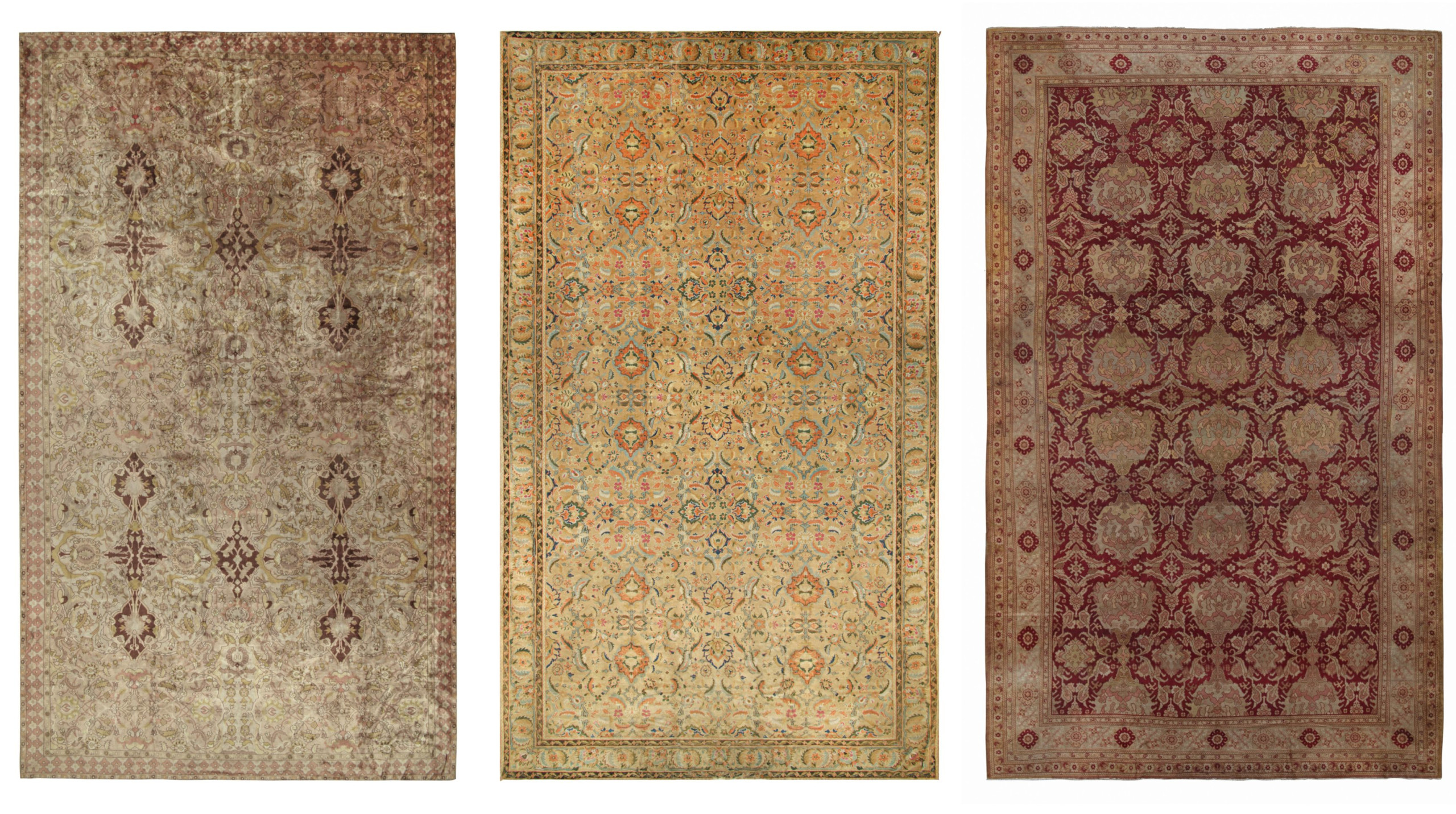
Oushak carpets also hold a revered place in religious and historical sites. They were meticulously crafted for Istanbul’s grand mosques and tombs, including the Suleymaniye, Selimiye, and Fatih mosques. The presence of these Oushak rugs in sacred and royal settings underscores their legendary status as more than mere decorative items, but as enduring symbols of heritage and sophistication.
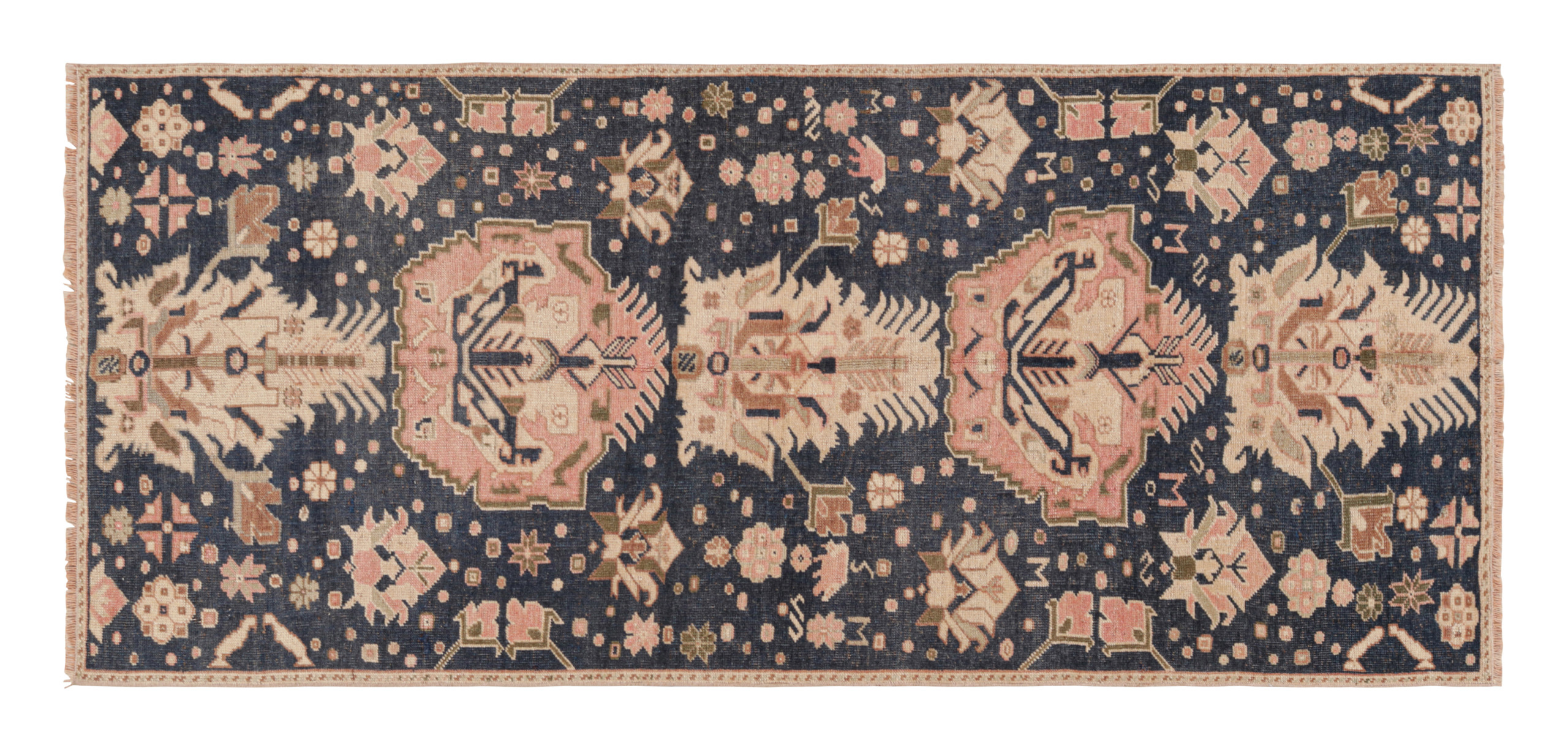
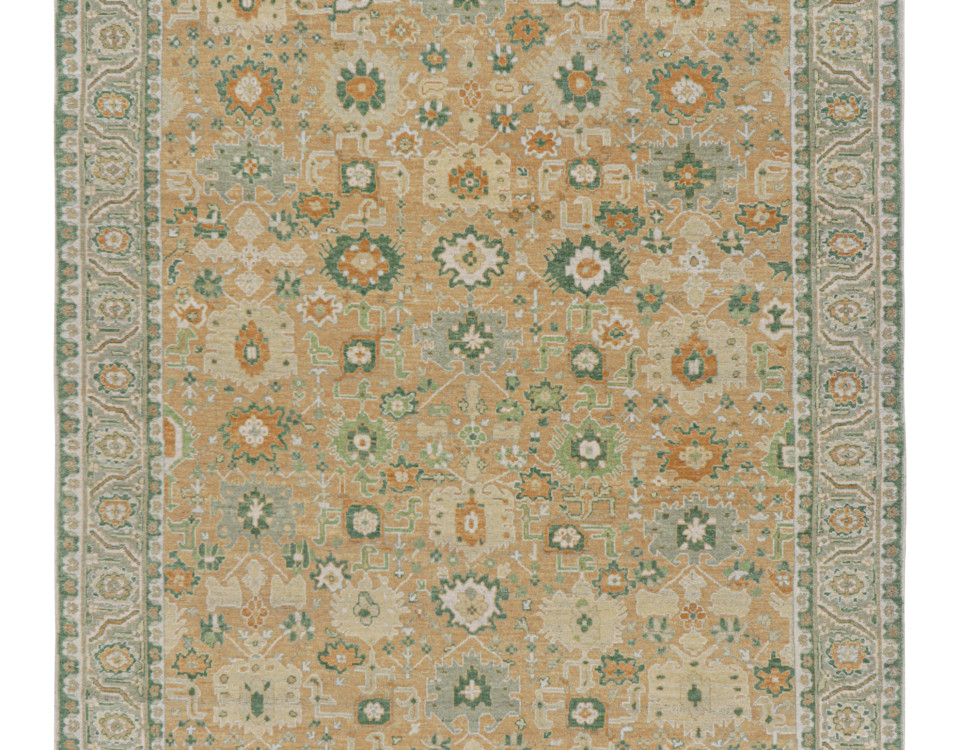
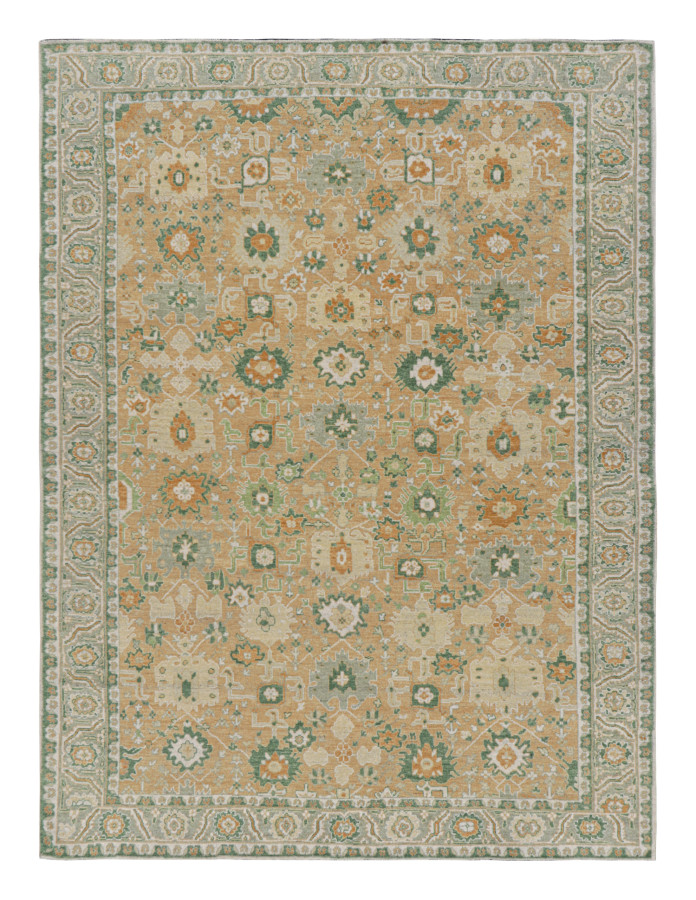
SKU 31541, Vintage Turkish Rug from Rug & Kilim // View more Turkish Rugs here>>
Oushak rugs, often referred to simply as Turkish rugs, are distinguished by their unique Turkish knot, known as the Ghiordes knot. This knot sets them apart from the Persian (or Senneh) knot, which is an asymmetrical double knot prevalent in most Persian rugs and many handmade carpets from India, Pakistan, China, and Afghanistan. The Persian knot is crafted by weaving the yarn under one warp strand, then over and around the adjacent warp strand, resulting in the yarn ends being separated by a single warp strand. This intricate knot allows for the detailed designs characteristic of Persian rugs. However, Oushak rugs, renowned for their grandiose, larger-scale patterns, utilize the traditional symmetrical Turkish Ghiordes knot, which is more suited for their design aesthetics. In this knotting technique, the yarn is laid over two warp strands with the ends pulled through the space between them, creating a highly secure and durable pile.
Producers of these exquisite rugs are meticulous about sourcing the finest wool to achieve their signature texture. Many of the most beautiful Oushak rugs are crafted from handspun wool dyed with organic, natural vegetable dyes, ensuring a radiant finish. The foundation, or warp, is typically made of cotton, providing stability, though some rugs may incorporate silk or even metallic threads for added elegance. These rugs, rich in history and opulence, continue to be highly sought after by discerning collectors and interior designers for their unique blend of beauty and craftsmanship.
By the end of the 19th century, Oushak carpets had undergone two significant design evolutions. Firstly, they embraced the intricate floral patterns characteristic of Persian rugs. Secondly, with the influx of European ambassadors to Turkey, there arose a demand for larger, room-sized decorative carpets, prompting weavers to produce grander pieces.

Antique Oushak carpets can be categorized into distinct groups based on pattern and color:
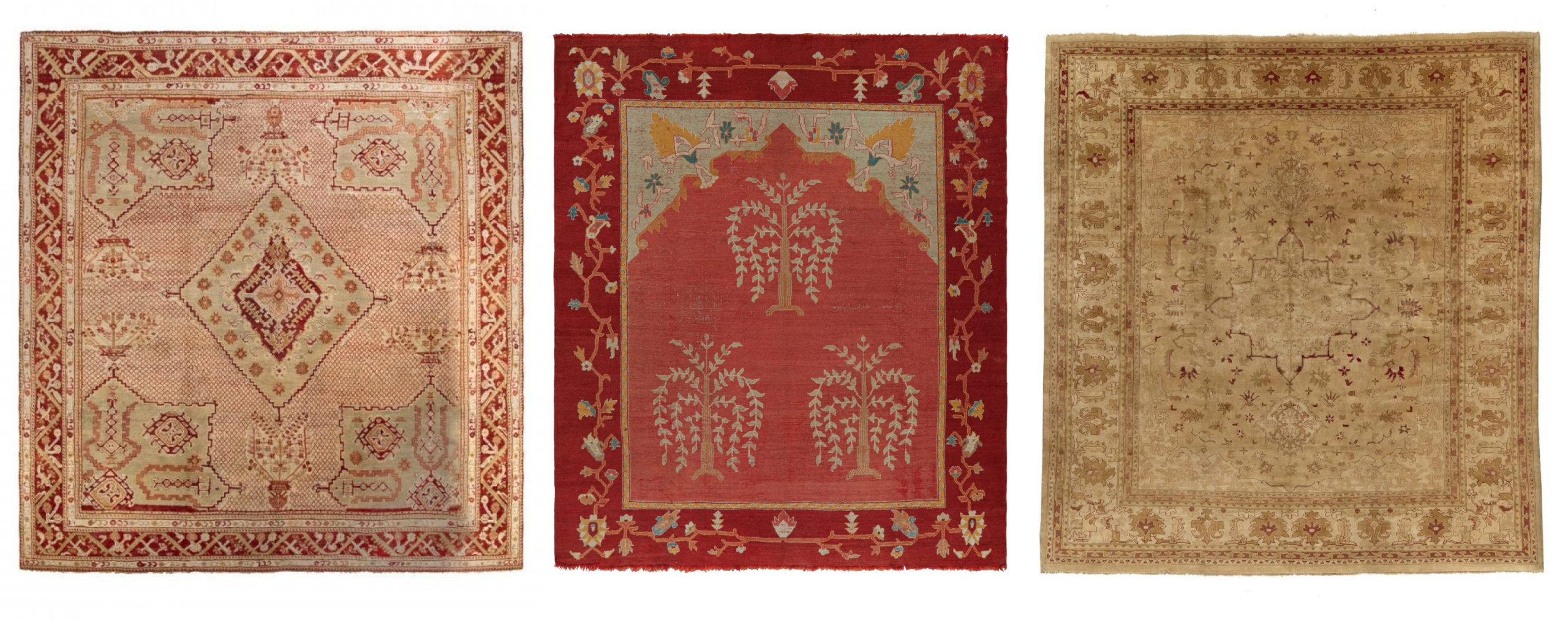
Some Oushak rugs feature expansive floral designs and some geometric patterns, common in Oushak rugs. Additionally, prayer rugs and those with symbolic images depicting natural elements such as rebirth, faith, and eternity are prevalent among vintage Oushaks.
The color palette of Oushak rugs is renowned for its muted, soothing quality. Contemporary Oushak carpets predominantly showcase soft yellows, greens, and blues, but the spectrum is diverse. Muted rustic reds paired with dusty roses and golden yellow accents are quite elegant. Light gray often complements an array of blues, ranging from muted baby blue to navy blue details in luminous wool. Shades of green, including olive, sage, and avocado, add to the charm, while the spectrum from cream to beige to taupe to camel to chocolate brown graces many understated Oushak designs available today.
Produced in the 16th century, Medallion Oushak Rugs exemplify the creative dominance of Turkish artisans. These masterpieces, inspired by the intricate art of book illustration, feature a large central medallion flanked by quarter medallions in each corner. The medallions and the base of the carpet are adorned with elaborate plant ornaments and compositions of human and animal figures, reflecting the rich tradition of miniature art. The central medallion, situated along the middle axis, symbolizes infinity.
The finest examples of this group, prominent until the 17th century, are known as Starry Oushak Rugs, characterized by their octagonal star motifs. These stars often feature palm leaf motifs, representing the tree of life. At the heart of the star, there is a traditional Rumi motif, depicting birds and dragons—a testament to Turkish symbolic artistry. These motifs, variations of the tree of life, bird, and dragon, are integral to the Starry Oushak Carpet. The star motif itself signifies the productivity of Turkish carpets and embodies themes of birth, peaceful life, and cosmic renewal.
A stunning Oushak rug seamlessly complements any space, whether it’s a cozy living room or a serene bedroom, infusing warmth and comfort. Its versatility extends to modern, brightly lit kitchens, hallways, foyers, and even bathrooms, while the muted color palette also makes it an elegant choice for offices. Highly sought after, Oushak carpets are prized for their ability to enhance any room and adapt to various interior styles. Whether a decor is modern, transitional, or traditional, the placement of an Oushak rug can elevate the aesthetic of any floor it graces.
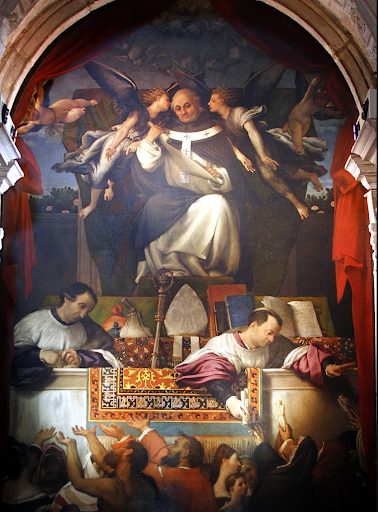
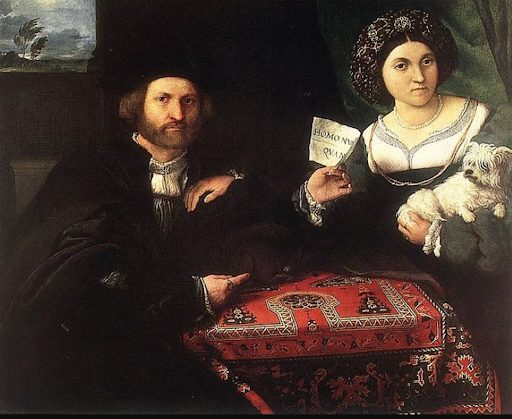
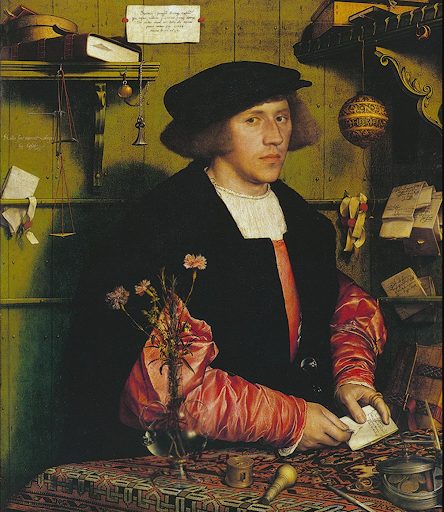
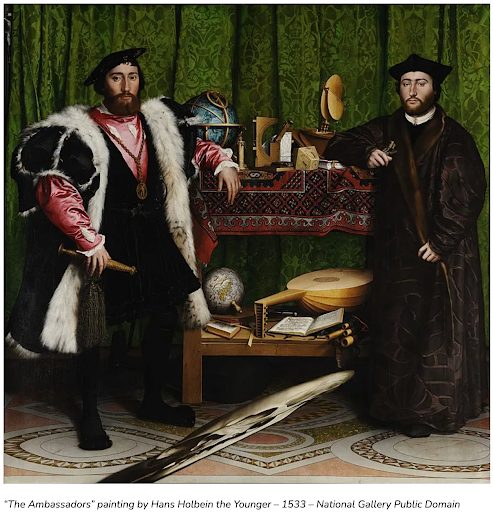
A fascinating historical note about Oushak rugs involves a particular type known as Lotto carpets, which were featured in Renaissance paintings. These rugs, once discovered and imported into Europe, adorned palaces, churches, and grand homes. When these magnificent interiors were depicted in paintings, the Oushak rugs were often included, contributing to their rise in popularity. The demand for these so-called Lotto or Holbein carpets surged in the European market, largely due to their appearance in these artworks. Renowned Italian painter Lorenzo Lotto of the High Renaissance and German painter Hans Holbein the Younger of the Northern Renaissance style both included Oushak rugs in their works. These rugs, depicted in the background, seemed to glow from within, symbolizing the status and wealth of their owners. The inclusion of Oushak rugs in such prestigious paintings not only reflected the owners’ status but also elevated the rugs’ own prestige. Consequently, the popularity of these Turkish rugs flourished throughout Europe.