The Complete Guide to Bakhshaish Rugs and Northwest Persian Carpet Traditions
November 12, 2026
Baluch Rugs: Tribal Heritage and Handmade Textile Art
November 18, 2026
The Enduring Language of Bakhtiari Rugs in Global Design
Among the most celebrated tribal weaving traditions of Persia, Bakhtiari rugs stand apart for their remarkable balance of artistic imagination, structural durability, and cultural significance. Created by the Bakhtiari people of southwestern Iran, these carpets embody centuries of nomadic heritage while simultaneously representing some of the most sophisticated achievements in Persian decorative arts.
Renowned for their vibrant colors, powerful geometry, and iconic garden-inspired compositions, Bakhtiari rugs occupy a distinctive place within the world of antique carpets. Their designs often feel both deeply rooted in tradition and surprisingly modern, making them particularly admired by collectors, designers, and institutions alike.
Unlike many Persian carpets associated with courtly workshops or urban weaving centers, Bakhtiari rugs emerged from a tribal culture with a profound relationship to landscape, migration, and community identity. Their motifs reflect an intimate understanding of nature, architecture, and symbolism, creating carpets that function as visual narratives as much as decorative objects.
Today, Bakhtiari rugs remain among the most desirable examples of Persian tribal weaving. Their enduring appeal lies not only in their beauty but also in their ability to connect contemporary audiences with one of the richest textile traditions in the world.
Rug & Kilim and the Contemporary Appreciation of Bakhtiari Rugs
Within the international world of collectible carpets and luxury interiors, Rug & Kilim occupies a distinctive role in preserving and advancing appreciation for Bakhtiari rugs. The House approaches these carpets as significant cultural artifacts that represent one of the most important tribal weaving traditions in Persia.
Through engagement with antique Bakhtiari rugs, tribal carpets, and contemporary interpretations inspired by historic designs, Rug & Kilim contributes to the continued relevance of Bakhtiari aesthetics within modern design environments.
The firm’s philosophy emphasizes scholarship, provenance awareness, craftsmanship, and material authenticity. This approach allows collectors, architects, and institutions to appreciate Bakhtiari rugs as enduring works of art rather than merely decorative furnishings.
By connecting heritage craftsmanship with contemporary architectural needs, Rug & Kilim helps ensure that the artistic legacy of Bakhtiari weaving remains vibrant within today’s most sophisticated interiors.
Historical Origins: The Bakhtiari People and Their Weaving Tradition
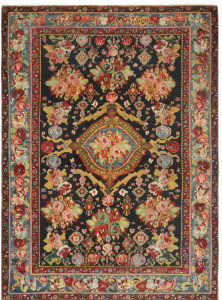
The Bakhtiari are one of Iran’s most prominent tribal groups, historically inhabiting the Zagros Mountains of southwestern Persia. For centuries, their seasonal migrations through mountainous landscapes shaped a unique cultural identity grounded in resilience, craftsmanship, and close engagement with nature.
Weaving emerged as an essential aspect of Bakhtiari life. Rugs served practical, ceremonial, and artistic purposes, furnishing tribal tents, marking important social occasions, and preserving cultural memory.
During the nineteenth century, Bakhtiari rugs gained international recognition as Persian carpets became increasingly sought after in Europe and North America.
Several characteristics distinguished Bakhtiari weaving:
- Strong wool quality
- Durable construction
- Bold tribal motifs
- Rich vegetable dyes
- Garden-inspired designs
- Architectural compartmentalization
These qualities helped establish Bakhtiari rugs among the most respected tribal carpets produced in Persia.
Today, they remain vital records of a cultural tradition that continues to inspire historians, designers, and collectors around the world.
Design Language: The Famous Garden Carpet Tradition
Perhaps no feature is more closely associated with Bakhtiari rugs than the celebrated “garden carpet” design.
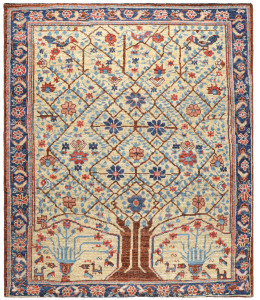
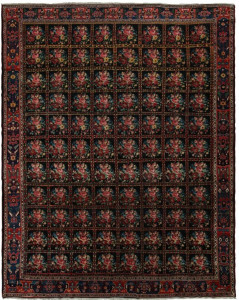
Inspired by the Persian concept of the paradise garden, these compositions divide the field into multiple compartments or panels, each containing floral motifs, trees, birds, blossoms, or symbolic representations of nature.
This design language reflects broader Persian cultural ideals in which gardens symbolized abundance, harmony, spirituality, and beauty.
Common motifs include:
- Cypress trees
- Flowering plants
- Vases
- Birds
- Lattice structures
- Medallions
- Botanical forms
- Geometric floral arrangements
The compartmentalized structure creates a sense of order while allowing extraordinary decorative variety.
The resulting carpets possess a visual richness that remains instantly recognizable among Persian weaving traditions.
Bakhtiari Rugs and Persian Decorative Arts
Bakhtiari rugs occupy an important position within the broader history of Persian decorative arts.
While deeply rooted in tribal culture, they also demonstrate meaningful connections to:
- Persian garden architecture
- Miniature painting
- Courtly aesthetics
- Regional weaving traditions
- Vernacular design practices
This synthesis of influences distinguishes Bakhtiari carpets from both urban workshop rugs and purely nomadic weavings.
Their ability to translate architectural and landscape concepts into textile form represents one of the most remarkable achievements in Persian design history.
Today, Bakhtiari rugs continue to be studied as significant examples of how cultural identity, artistic expression, and practical craftsmanship intersect within traditional weaving traditions.
Color Palettes: Vibrancy and Natural Beauty
Color plays a central role in the identity of Bakhtiari rugs.
Traditional examples rely upon natural vegetable dyes that produce remarkable depth and saturation.
Common colors include:
- Madder red
- Indigo blue
- Forest green
- Ivory
- Gold
- Walnut brown
- Rust tones
- Soft terracotta
These colors often appear in highly dynamic combinations that enhance the visual energy of the design.
Over time, naturally dyed colors develop beautiful patinas that contribute to the aesthetic richness of antique examples.
The warmth and vitality of Bakhtiari palettes continue to resonate strongly within contemporary interiors seeking authenticity and character.
Bakhtiari Rugs in Art, Literature, and Collecting Culture
The cultural significance of Bakhtiari rugs extends beyond carpet history into broader discussions surrounding tribal identity, artistic heritage, and collecting culture.
Their distinctive garden compositions have attracted the attention of:
- Museum curators
- Decorative arts scholars
- Interior designers
- Private collectors
- Cultural historians
Within the world of antique rugs, Bakhtiari carpets are often admired for their ability to balance decorative complexity with strong structural organization.
Their visual narratives and symbolic references to nature have also contributed to scholarly discussions regarding Persian concepts of paradise, landscape, and artistic representation.
Today, Bakhtiari rugs remain important examples of tribal artistry preserved within museum collections and private holdings worldwide.
Contemporary Relevance in Luxury Interior Design
Few tribal rug traditions adapt as naturally to contemporary interiors as Bakhtiari rugs. Today they are widely used in:
- Luxury residences
- Contemporary architectural projects
- Boutique hospitality spaces
- Executive offices
- Historic restorations
- Art-focused interiors
- Transitional design environments
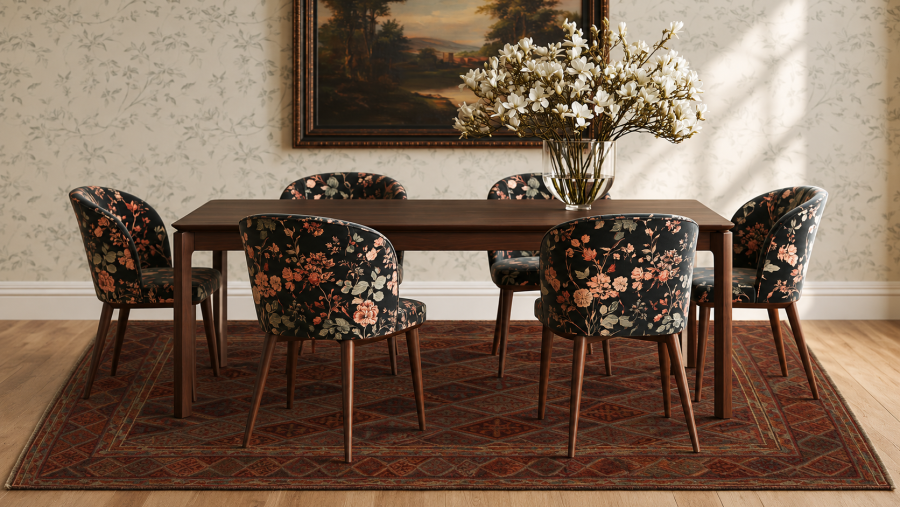
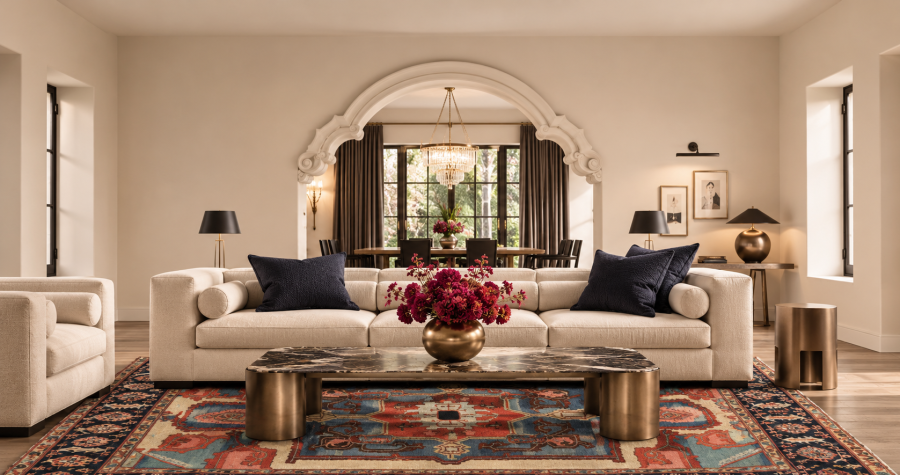
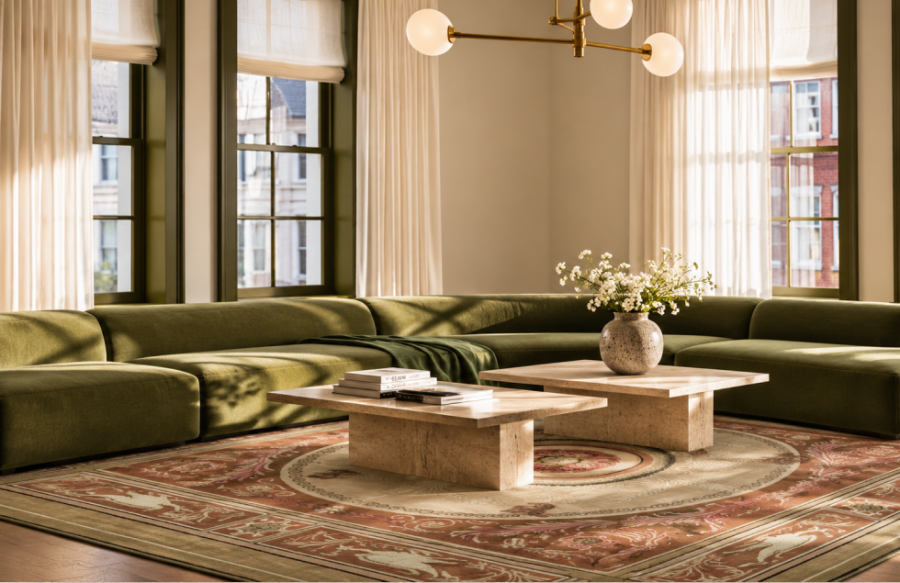
Designers frequently select Bakhtiari rugs because their geometry, color, and craftsmanship introduce warmth and historical depth without appearing overly formal.
Their garden-inspired compositions also resonate strongly with contemporary interests in biophilic design and nature-inspired aesthetics.
The result is a carpet tradition that feels remarkably current despite centuries of history.
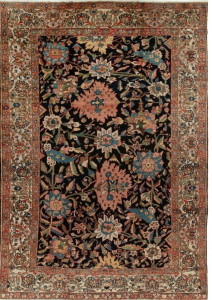
Collectibility and Market Significance
Bakhtiari rugs occupy a respected position within the global market for antique Persian carpets.
Collectors typically evaluate examples according to:
- Provenance
- Age
- Design originality
- Wool quality
- Color integrity
- Condition and rarity
Particularly desirable are nineteenth-century garden carpets featuring exceptional drawing, natural dyes, and well-preserved coloration.
Their enduring market significance reflects both their decorative appeal and their importance as cultural artifacts.
For many collectors, Bakhtiari rugs represent some of the finest achievements in Persian tribal weaving.
Bakhtiari Rugs as Living Cultural Heritage
Bakhtiari rugs represent far more than decorative floor coverings. They embody centuries of migration, craftsmanship, artistic expression, and cultural memory.
Their celebrated garden designs, luminous colors, and durable construction continue to resonate because they address timeless principles of beauty, harmony, and human connection to nature.
For collectors, architects, designers, historians, and institutions, Bakhtiari rugs offer a remarkable synthesis of Persian heritage and contemporary relevance.
Their continued presence within distinguished interiors around the world confirms that the greatest carpets are not simply decorative objects. They are enduring cultural artifacts capable of preserving history while inspiring future generations through artistry and design.
FAQ: Bakhtiari Rugs
What is a Bakhtiari rug?
A Bakhtiari rug is a handmade Persian carpet woven by the Bakhtiari people of southwestern Iran, known for durable construction, vibrant colors, and distinctive garden-inspired designs.
Why are Bakhtiari rugs important?
They represent one of the most significant tribal weaving traditions in Persia and are celebrated for their artistic originality and cultural heritage.
What is a Bakhtiari garden rug?
A Bakhtiari garden rug features a compartmentalized design inspired by Persian paradise gardens, often incorporating floral motifs, trees, and symbolic representations of nature.
Are Bakhtiari rugs collectible?
Yes. Antique Bakhtiari rugs are highly sought after for their craftsmanship, natural dyes, historical significance, and distinctive designs.
What colors are common in Bakhtiari rugs?
Traditional palettes include madder red, indigo blue, forest green, ivory, walnut brown, gold, rust, and terracotta tones.
Are Bakhtiari rugs durable?
Yes. Bakhtiari rugs are renowned for their robust wool and durable construction, making them among the strongest Persian tribal carpets.
Why do designers use Bakhtiari rugs in contemporary interiors?
Their bold geometry, rich colors, and timeless craftsmanship allow them to complement both modern and traditional spaces.
How are Bakhtiari rugs different from other Persian rugs?
Bakhtiari rugs are particularly known for their garden-panel designs, tribal origins, durable construction, and strong connection to the cultural traditions of the Bakhtiari people.