

Cyrus Nazmiyal and the Renaissance of Rug & Kilim: Inside the Legacy and Vision
May 13, 2025
The Quiet Power of Textural: Styling Minimalist Masterpieces in Contemporary Spaces
May 16, 2025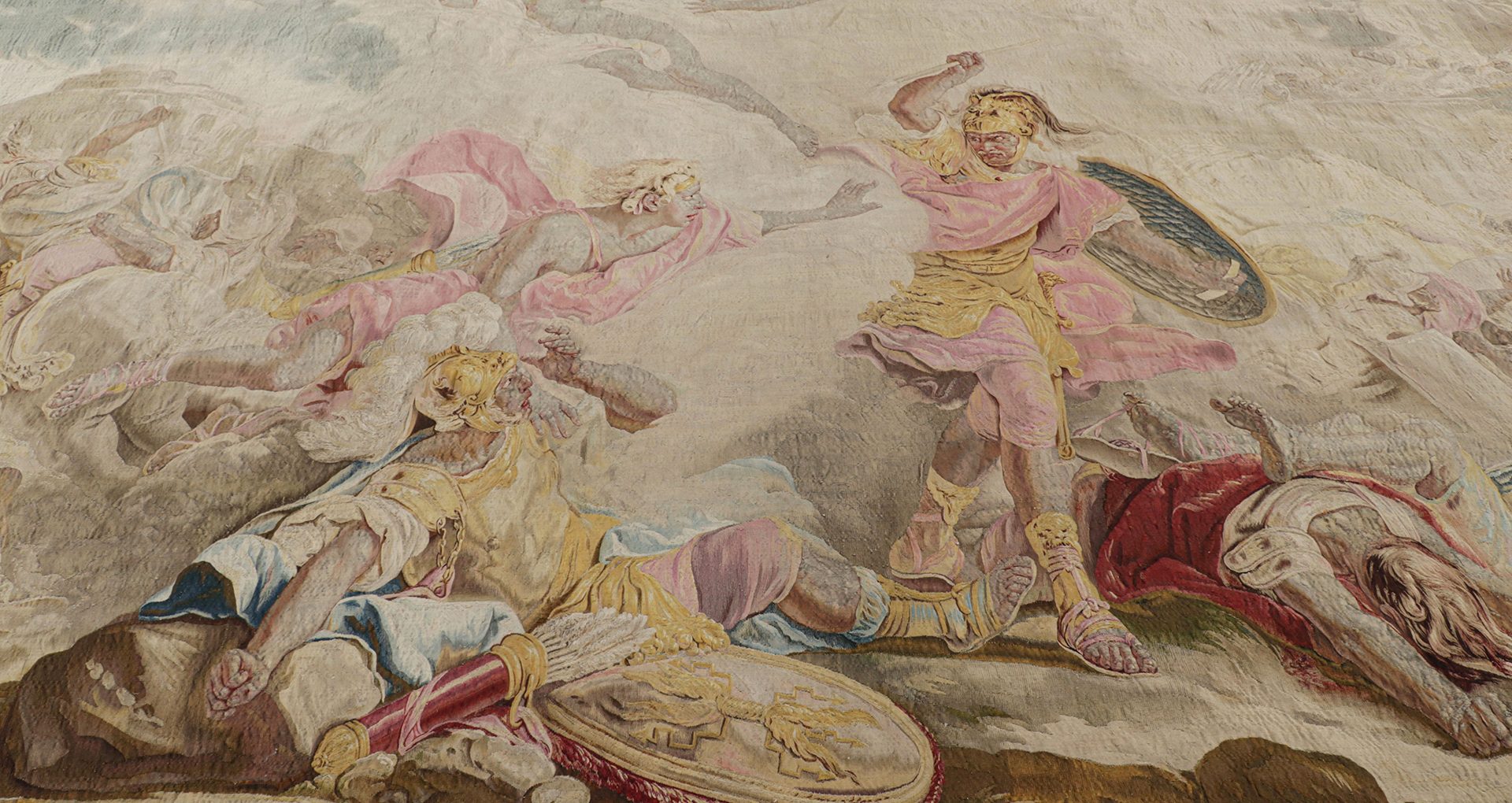
Across centuries and civilizations, the tapestry has transcended its utilitarian origins to emerge as one of the most evocative forms of textile art—a confluence of craftsmanship, storytelling, and cultural memory.
Housed in the halls of royal courts and the vaults of leading museums, tapestries have adorned walls not merely as embellishment, but as embodiments of power, intellect, and taste.
Today, as we reimagine the interiors we inhabit, these woven masterpieces reclaim their role—not as relics of a distant past, but as living, breathing artworks that lend depth, dignity, and dialogue to the modern home.
In an age of sleek surfaces and digital ephemera, there is something profoundly grounding about a tapestry. It does not flicker or fade with trends; it does not chase minimalism nor compete for attention. A tapestry commands it. Woven in wool, silk, and story, it is not merely a wall covering—it is an heirloom of emotion and era, a quiet crescendo of craft that holds a room in its gentle sway.
For the discerning collector, the thoughtful designer, or the homeowner drawn to the extraordinary, the tapestry offers something few objects in an interior can: an enduring romance between art and atmosphere.
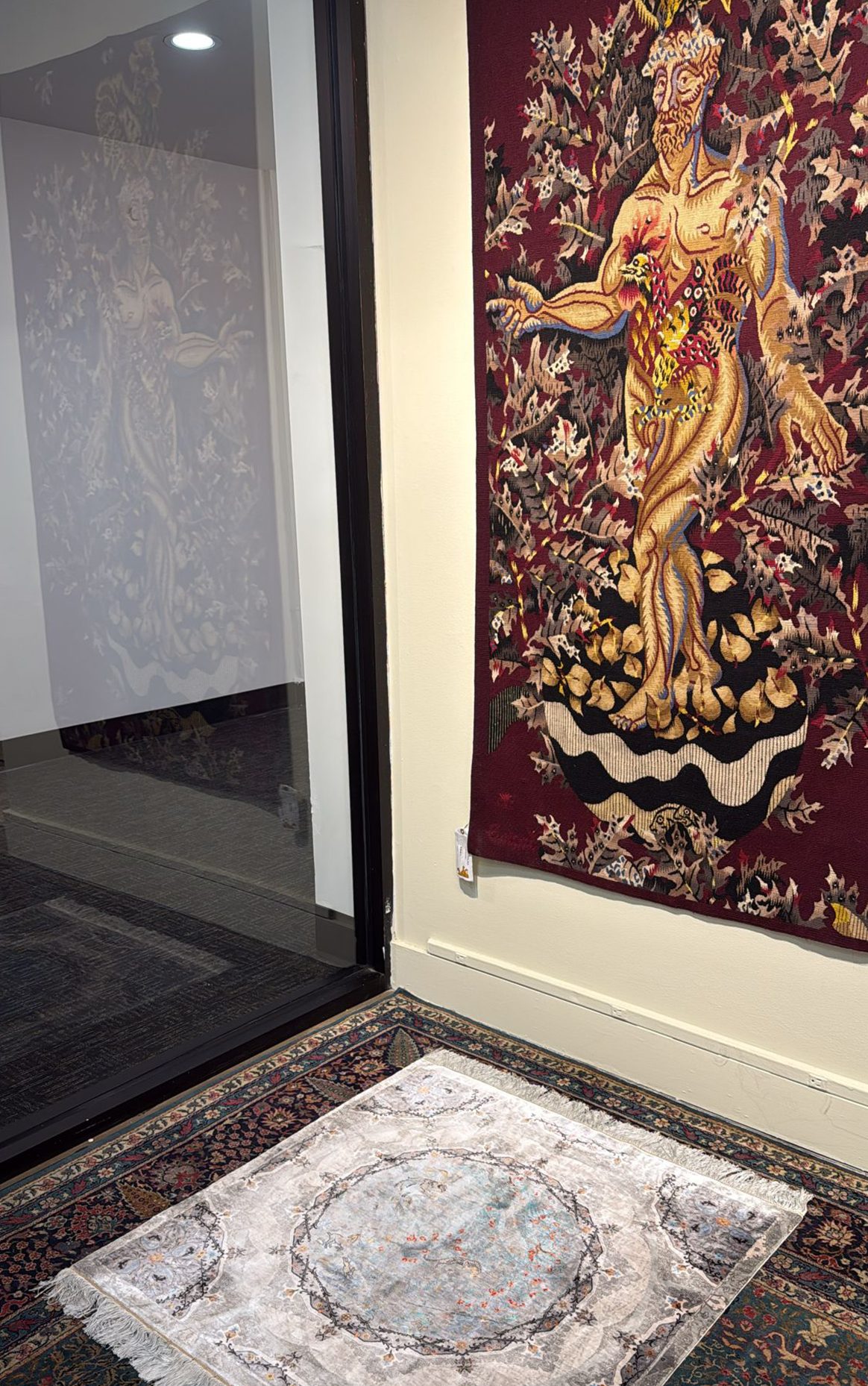
Why Fall in Love with a Tapestry?
To love a tapestry is to love time itself.
Each piece is a portrait of place, woven thread by thread—whether it’s a 17th-century Flemish garden scene or a bold Bauhaus revival in contemporary yarns. Unlike canvas paintings, which reflect moments captured, tapestries are moments built. Their textures carry not just color but depth, not just design but dimension. They invite touch as much as gaze.
A tapestry speaks to a deeper aesthetic—one that values process as much as outcome. Owning one is akin to wearing couture: it’s a personal statement of taste, heritage, and patience.
It is slow design in its purest form.
A Tapestry of Divine Defiance.
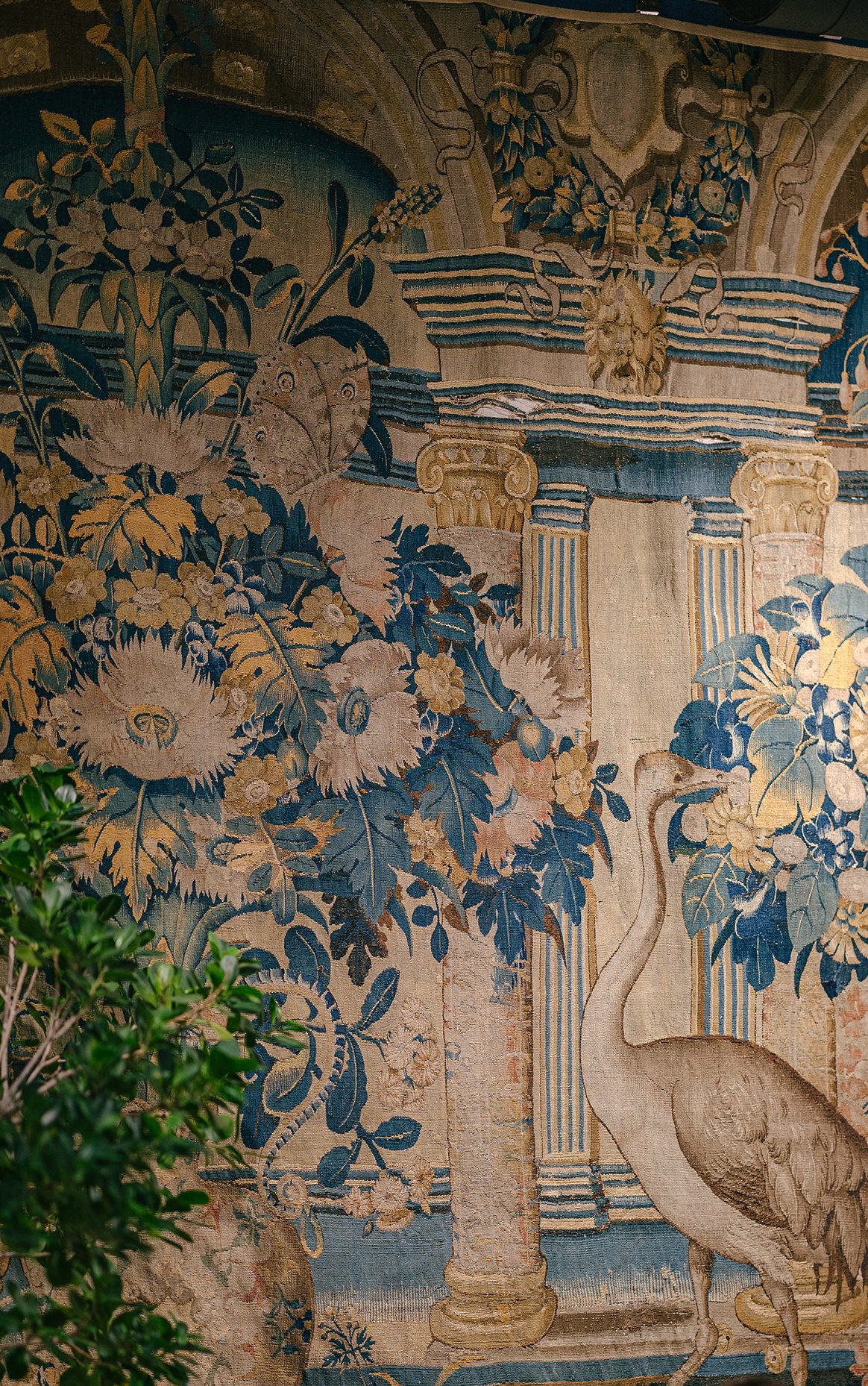
At Rug & Kilim, we don’t just collect tapestries—we archive moments of majesty. Among the crown jewels of our collection stands an exquisite antique French Beauvais tapestry, handwoven in the 18th century, and steeped in both myth and monarchy.
Woven in the mid-18th century at the legendary Beauvais manufactory, this tapestry captures the dramatic heartbeat of Homer’s Iliad. Designed by Jean-Baptiste Deshays, a rising star of the French Académie and the son-in-law of master painter François Boucher, the composition is directed under André-Charlemagne Charron, a key figure in elevating tapestry to the level of royal diplomacy.
Here, the scene narrates this story: Diomedes wounding the goddess Venus—a mortal’s defiance of divine order. Figures coil and pivot with Baroque dynamism, every movement orchestrated across the battlefield like a ballet of tension and grace. Theatrical diagonals, chiaroscuro highlights, and compositional drama elevate the moment into a visual opera—rendered not in oil, but in the tactile intimacy of thread.
Its palette, too, tells a story: powdered ivories, celestial blues, dusky rose, and burnished gold echo the refined sensibilities of French Enlightenment-era art. The tones do not shout—they shimmer, whispering the elegance of salons and sovereigns. And yet, perhaps the most remarkable feature is its provenance: commissioned by the French crown, this tapestry bears the arms of France and Navarre, one of only three known diplomatic gifts from that era. Once part of Arnold Seligmann’s esteemed collection, it stands not just as an artwork—but a messenger of empire, diplomacy, and dynastic taste.
R&K Showroom
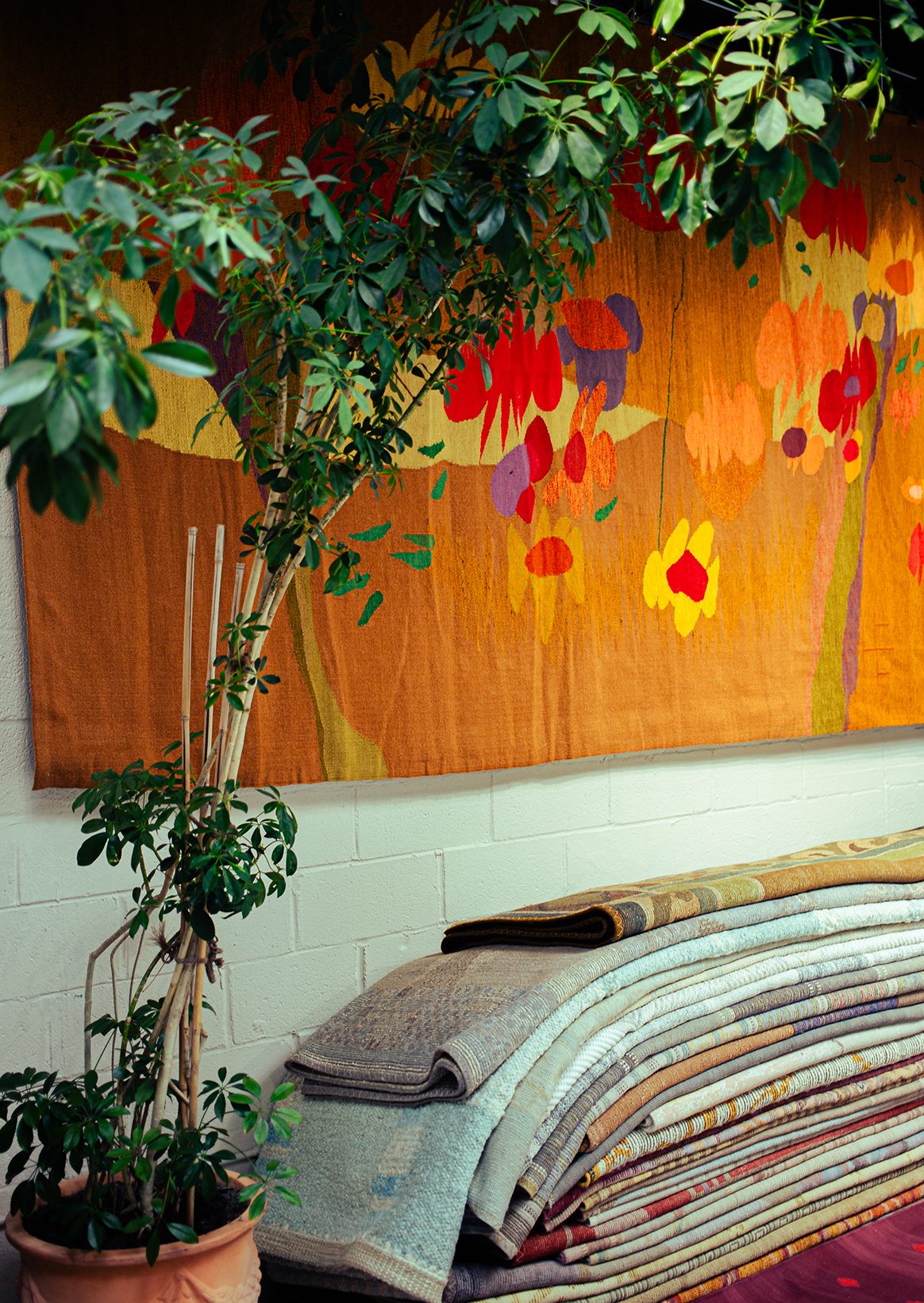
“Woven at the will of kings, this tapestry is a rare heirloom of empires—born not just to be seen, but to be revered.”
To collectors and connoisseurs, this is not a decorative flourish. It is court theatre. A memory of myth, palace, and power. And in the salon or gallery it graces, it becomes what it always was: a breath of history, echoing through time.
In today’s curated interiors—where meaningful storytelling meets refined taste—such a tapestry becomes more than a wall hanging. It becomes a conversation between centuries. Whether installed in a minimalist salon, a neoclassical study, or a gallery-like loft, it brings an unmistakable narrative depth that no modern print can rival.
At Rug & Kilim, we believe in curating pieces that don’t just decorate—they define. This Beauvais tapestry speaks not only of where it was woven, but of why it still matters.
Stand before it, and you feel the hush of history. The weight of empire. The warmth of hands that wove it. Every thread a memory, every shade a whisper from another world.
Collectors and designers seeking historically significant pieces with emotional gravitas will find few parallels to this rarity. To explore this and other heirlooms of European tapestry, we invite you to connect with our team.
Where Does a Tapestry Belong Today?
Anywhere your space longs to feel more human.
Modern homes, often defined by clean lines and open plans, can veer into the cold and the echoic. Enter the tapestry—its presence is sculptural yet soft, architectural yet organic. It brings a chiaroscuro of comfort and gravitas to any setting.
Above a fireplace, it lends regal verticality, pulling the eye upward like a fresco in a Renaissance hall.
Behind a bed, it becomes an enveloping headboard of sorts—more poetic than padded, more storied than tufted.
On a stairwell wall, it anchors movement with meaning, turning transitory spaces into sanctuaries of detail.
In a minimalist loft, it’s the counterpoint to austerity—a singular flourish that softens sharp geometry with woven emotion.
And for the brave, a tapestry draped—over a canopy frame, across a velvet banquette, or suspended from a beam—becomes a living sculpture, suspended between function and fantasy.
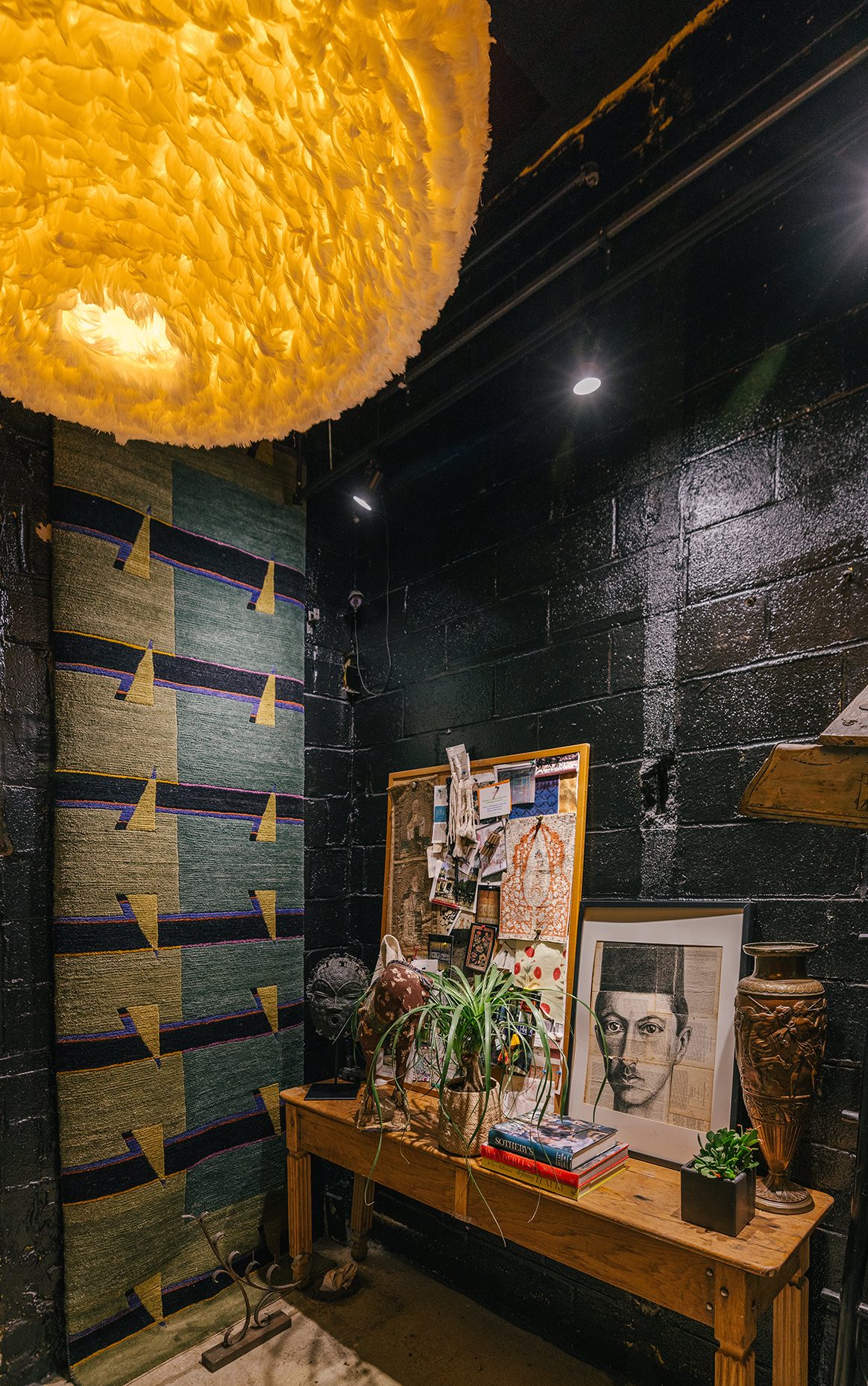
R&K Showroom
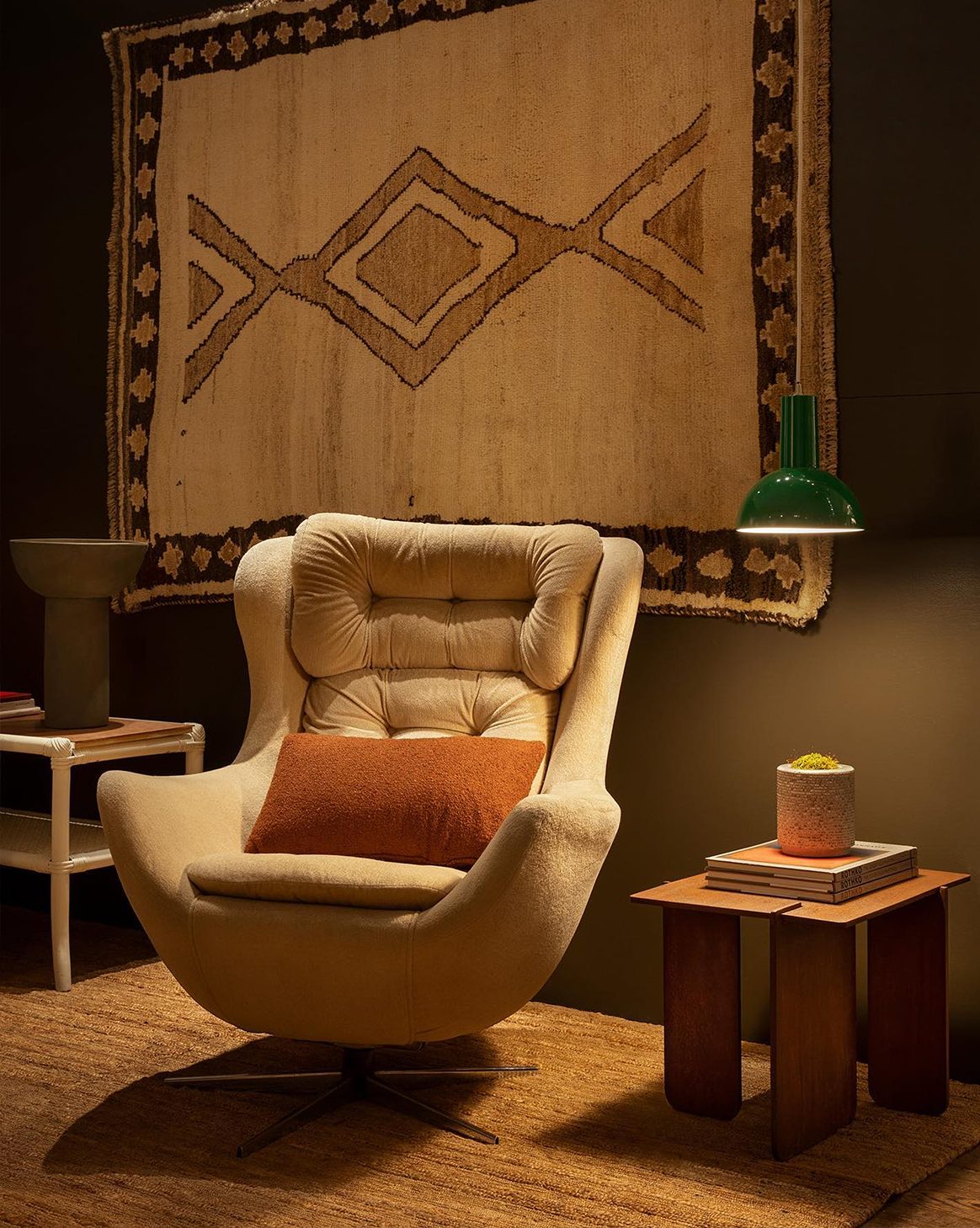
The Depth and Warmth It Offers
A tapestry is a room’s secret symphony. It absorbs sound, yes—but it also absorbs sterility. It brings warmth not just in color temperature but in cultural texture. Whether medieval or modernist, its presence transforms flatness into fullness.
Its visual richness doesn’t shout; it resonates. It beckons closer. Unlike wallpaper, which may repeat itself into oblivion, or canvas prints that risk feeling impersonal, a tapestry feels lived-in even when brand new. It offers a sense of continuity between past and present—history as habitat.
A Tactile Artwork, A Sculptural Accent
There is a duality in the tapestry’s role: it is both picture and presence. Its folds, its fringe, its weight—all lend a sculptural authority that paintings often lack. It projects ever so slightly into the room, refusing to be a flat object.
It also evokes the human hand: every stitch, a signature; every color, a decision; every flaw, a charm. And in this way, it resists the mass-produced. It insists on individuality.
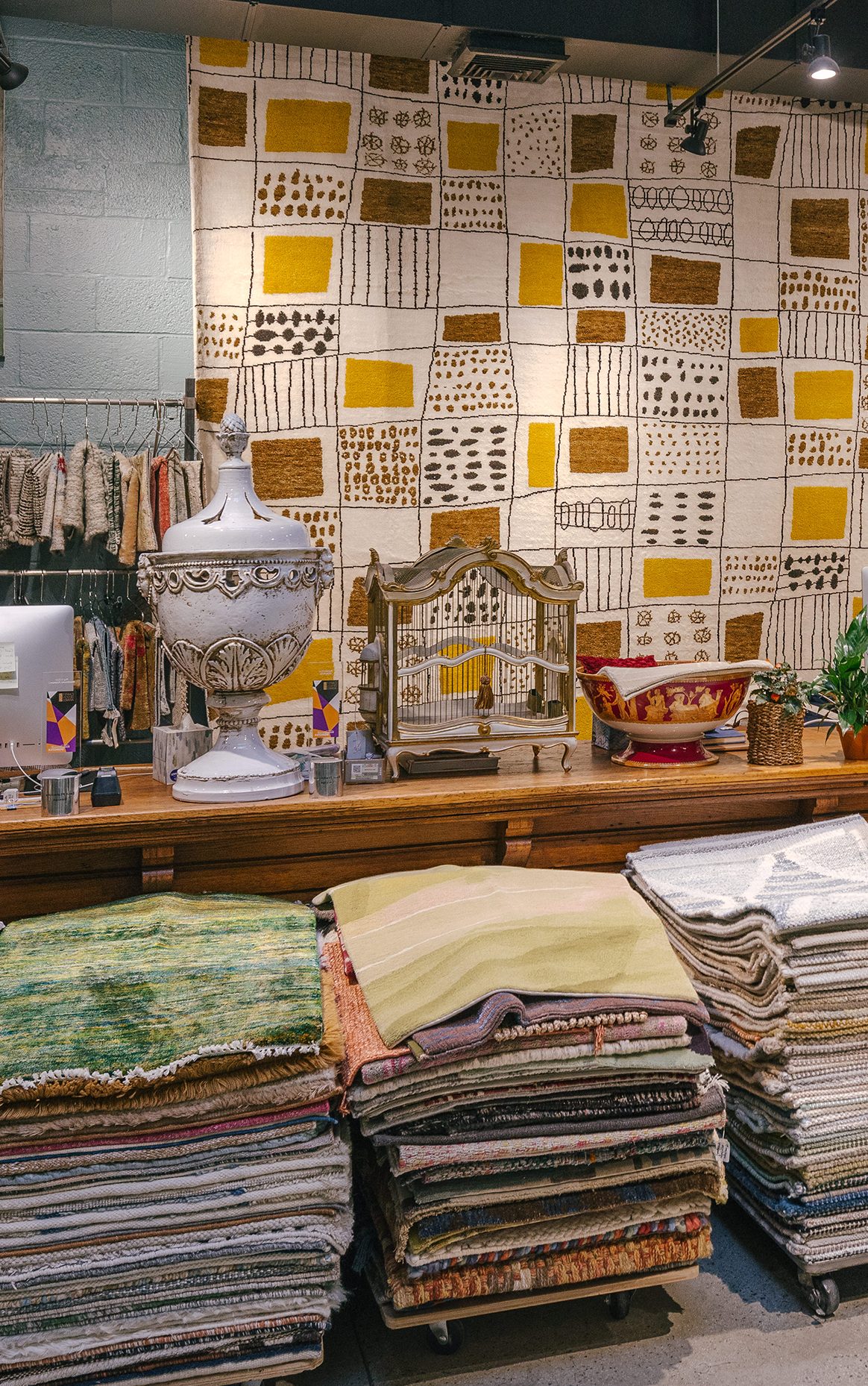
R&K Showroom
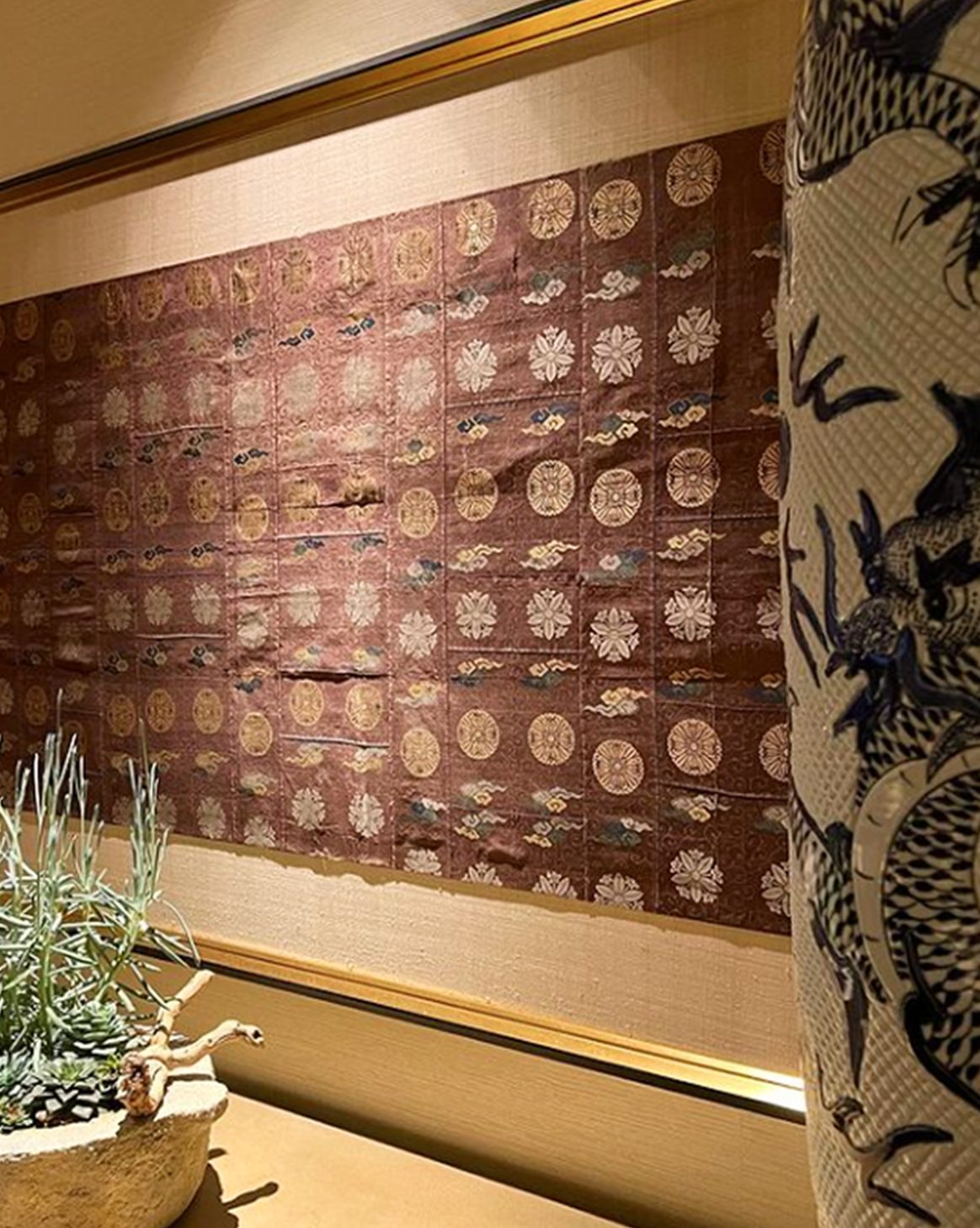
Styling Guidance: Weaving Stories Into Space
When placing a tapestry, consider narrative before symmetry. A tapestry needn’t be centered—it can balance asymmetry, create tension, or guide the room’s flow. Pair it with natural textures—limestone, oak, mohair—for an effect that feels layered but never loud.
Frame it minimally or not at all. Let the edges breathe. Let the warp and weft speak. Add low lighting to graze its surface, letting shadows deepen the intricacy. And if it’s antique, pair it with modern furniture to heighten contrast; if it’s contemporary, let it commune with vintage finds for unexpected harmony.
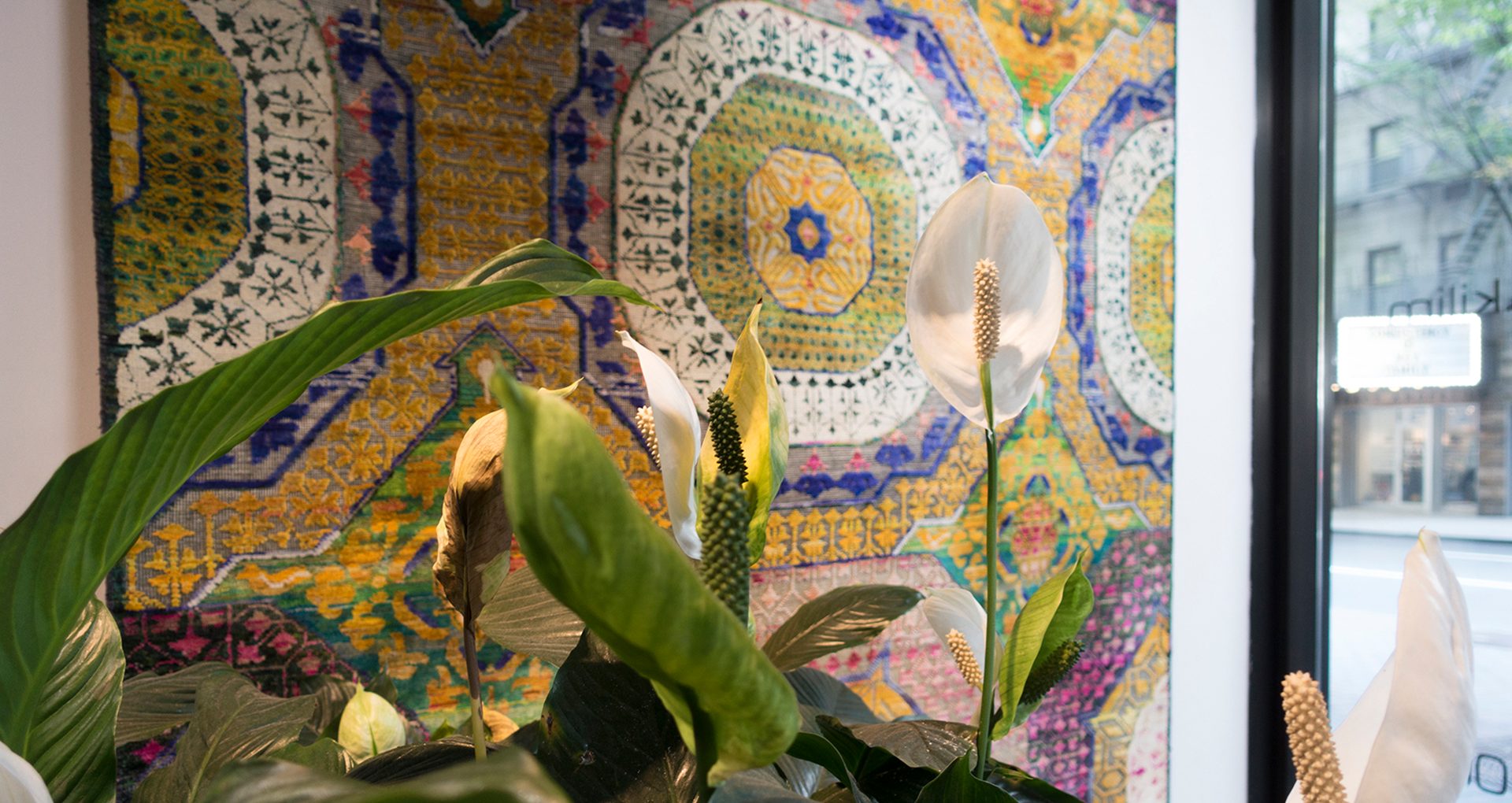
More Than Decor: A Narrative in Silk and Wool
Ultimately, a tapestry is not just wall art—it is wall wisdom. It holds stories not in ink or paint, but in fibers. It celebrates myth, movement, flora, fauna, faith, folly. Some whisper of medieval courts; others hum the rhythms of nomadic desert tribes. Some are literal, others abstract—but all are legible to the soul.
In a world that often prizes speed, the tapestry is a slow revelation. It reminds us that luxury lies not in labels, but in lineage. That beauty doesn’t have to be bright to be bold. That softness can, in fact, hold great strength.
Let your walls wear a story. Let your space breathe history. And let the tapestry be not just part of your décor—but part of your life’s unfolding narrative.
Because what is a home, if not the most intimate museum of self?
~~~
Here are some quick search links to help with your treasure hunt: