
Modern Tapestries: A Confluence of Art, Provenance, and Contemporary Design
July 23, 2025
The Enduring Influence of Swedish Deco: How Women Wove a Nation’s Modern Aesthetic
August 1, 2025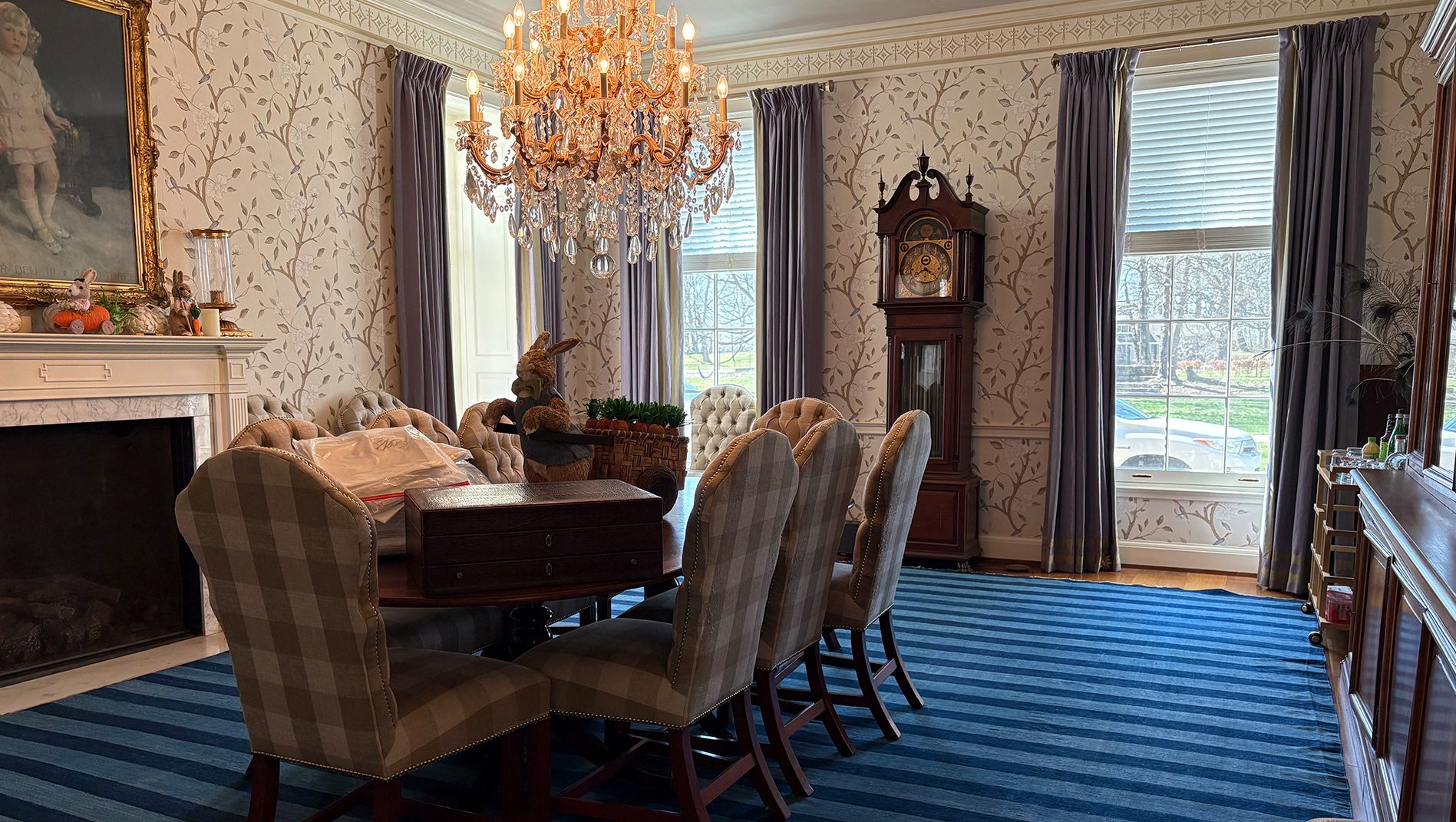
Studio Bird x Rug & Kilim
True refinement no longer announces itself through opulence—it is embedded in texture, form, and the story beneath the surface. Among the world’s most enduring yet misunderstood textiles, the dhurrie stands apart as an exemplar in restraint, geometry, and cultural transmission.
Woven entirely by hand on horizontal looms, these flatwoven masterpieces predate dynasties, outlast empires, and quietly inhabit the palaces of Rajasthan, the salons of Lutyens’ Delhi, and the barefoot minimalism of Belgian farmhouses. For centuries, the dhurrie has served as both artifact and architecture. It reemerges as a sovereign symbol of restraint, heritage, and functional poetry.
Rooted in India’s textile heritage, dhurries have existed since at least the 7th century CE, with records of their presence in Mughal courts, Rajput households, and British colonial drawing rooms. Unlike ornate Persian carpets woven for decadence, dhurries embodied minimalism before the West had a name for it. The dhurrie occupies the space between anonymity and immortality.
The Cultural Significance of the Dhurrie
Traditionally woven in cotton, wool, or jute, and more rarely in silk, dhurries are tactile representations of cultural identity, regional craftsmanship, and socio-political expression. Perhaps most poignant are the jail dhurries of the British Raj—textiles woven by prisoners whose restrained palettes and ordered symmetry became metaphors for both compliance and resistance.
Each dhurrie is an atlas of its origin. From the tribal motifs of Bhuj to the indigo-striped dhurries of Rajasthan, from the chevrons of Panipat to the pastel abstractions woven for Scandinavian export in the 1930s—each weave is coded. The patterns are not just decorative; they are epistemological. They speak of rain cycles, of harvests, of caste, community, and changing sovereignties. In that sense, the dhurrie is not merely handmade—it is hand-thought.
As mass production homogenizes design, the dhurrie’s individuality offers something more than visual appeal. It offers emotional topography. This is why collectors are turning to dhurries not just as floor coverings, but as legacy investments.
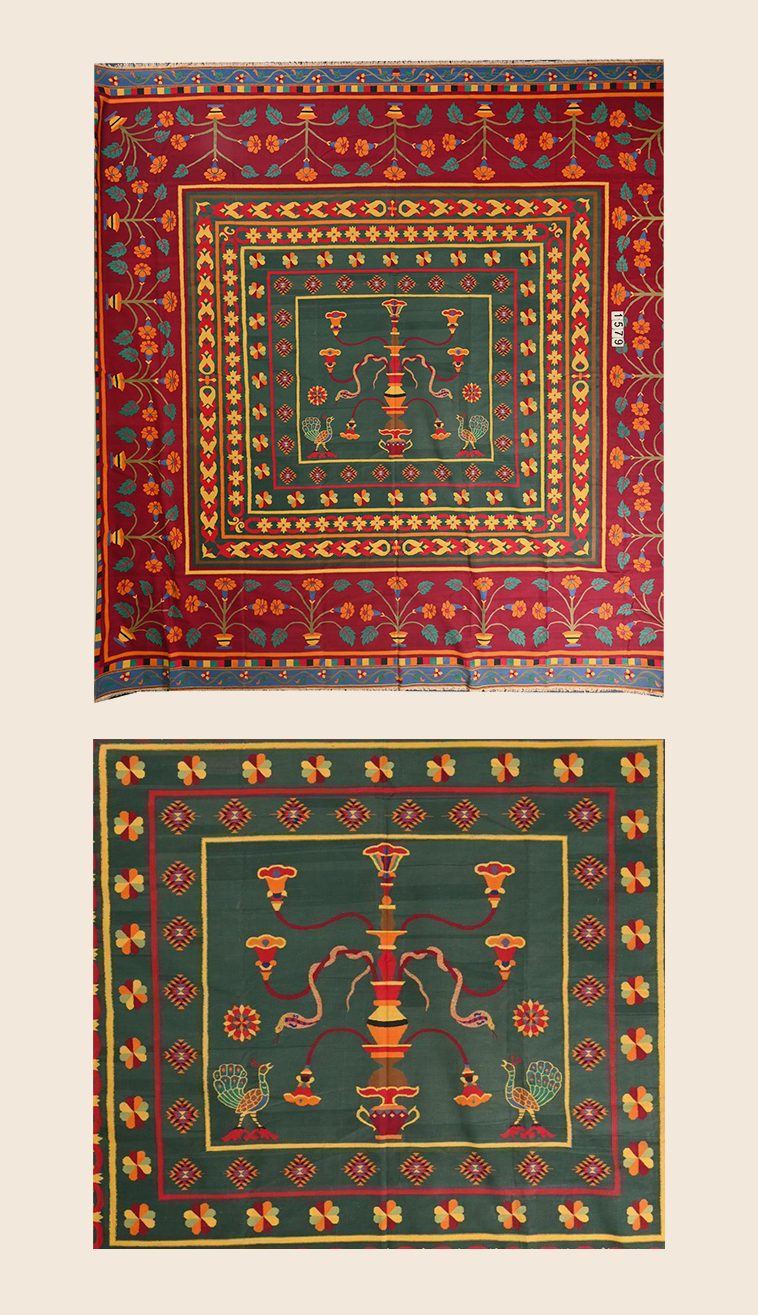
This vintage 16×16 Dhurrie is a rare new entry in Rug & Kilim’s esteemed flat weave collection. Handwoven in cotton, it originates from India circa 1950-1960. Details >>
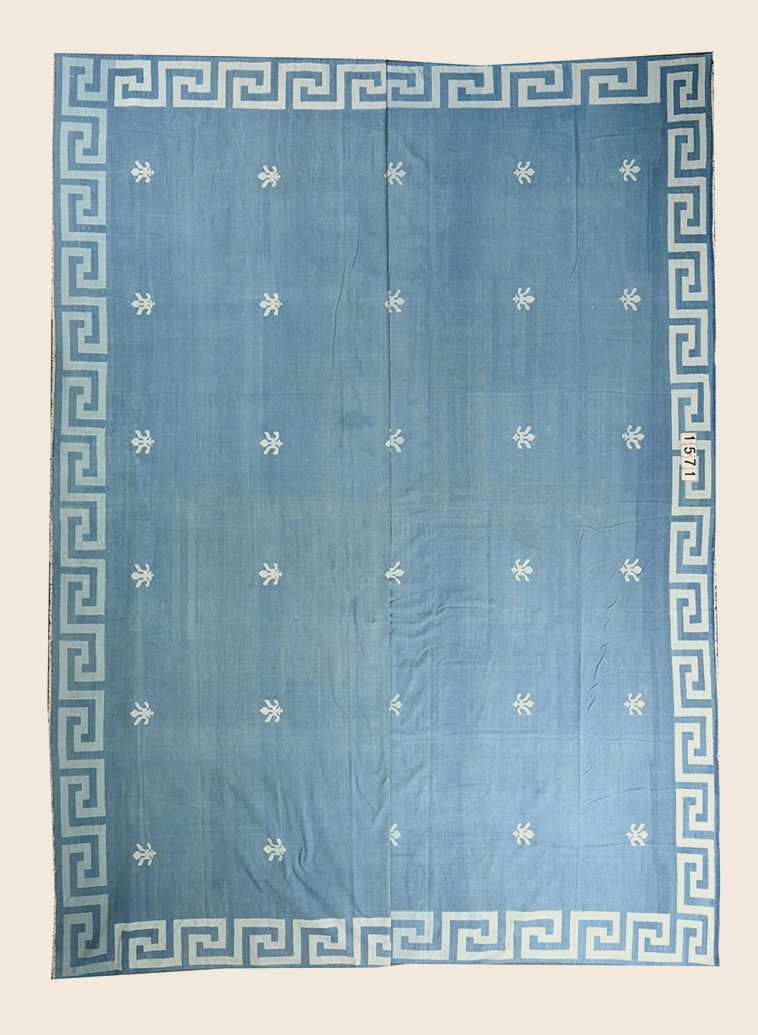
Vintage Dhurrie Flat Weave in Blue with Geometric Patterns – Rug & Kilim. Details >>
The Collector’s Eye: Dhurries as High-Value Textile Art
As the global art market begins to absorb craft traditions into the fine art canon, dhurries are commanding a second look—this time through the eyes of institutions and investors. Prestigious auction houses have quietly begun to place vintage Indian flatweaves alongside tapestries, embroideries, and antique kilims, elevating them from ethnographic artifact to collectible art.
A rare 19th-century dhurrie from the central Indian jails can fetch tens of thousands of dollars. More contemporary finds—such as 20th-century Bauhaus-inspired flatweaves made for Indo-European households—are finding a place in curated homes from Marfa to Milan. Our own collection spans over decades and includes archival pieces never before cataloged—dhurries woven with vegetable-dyed blues that mimic the monsoons, and tribal pieces where irregularities are not flaws but fingerprints of individual weavers.
The new collector sees beyond trend—they see the dhurrie as soft power. A tactile whisper of history, nationhood, and aesthetic philosophy underfoot.
Dhurries in Contemporary Interiors
In the modern luxury home, where the language of design has shifted from maximalist display to curated restraint, the dhurrie thrives. In contemporary interiors, dhurries are now being styled as anchor pieces. A striped indigo dhurrie beneath a travertine plinth table feels both elemental and considered. A minimalist jute dhurrie with raw edge finishing under a low-slung Mario Bellini sofa adds a rustic counterpoint to urban sophistication.
Layering is also en vogue—a faded dhurrie beneath a hand-knotted Moroccan rug creates dialogue between textures, eras, and continents. One of the more compelling uses of dhurries is vertical. In several international residences we’ve seen and helped design, dhurries have been mounted on walls as woven frescos—visual interruptions to sterile drywall and minimalist modernity. In bedrooms, oversized dhurries now serve as upholstered headboards, wrapping the room in artisanal intention. In solariums and home libraries, smaller dhurries are used as throws across daybeds—subtly echoing the intellectual serenity of the space.
What matters is context.
The dhurrie must be styled not as an artifact, but as a statement of lifestyle—effortless, intentional, rare.
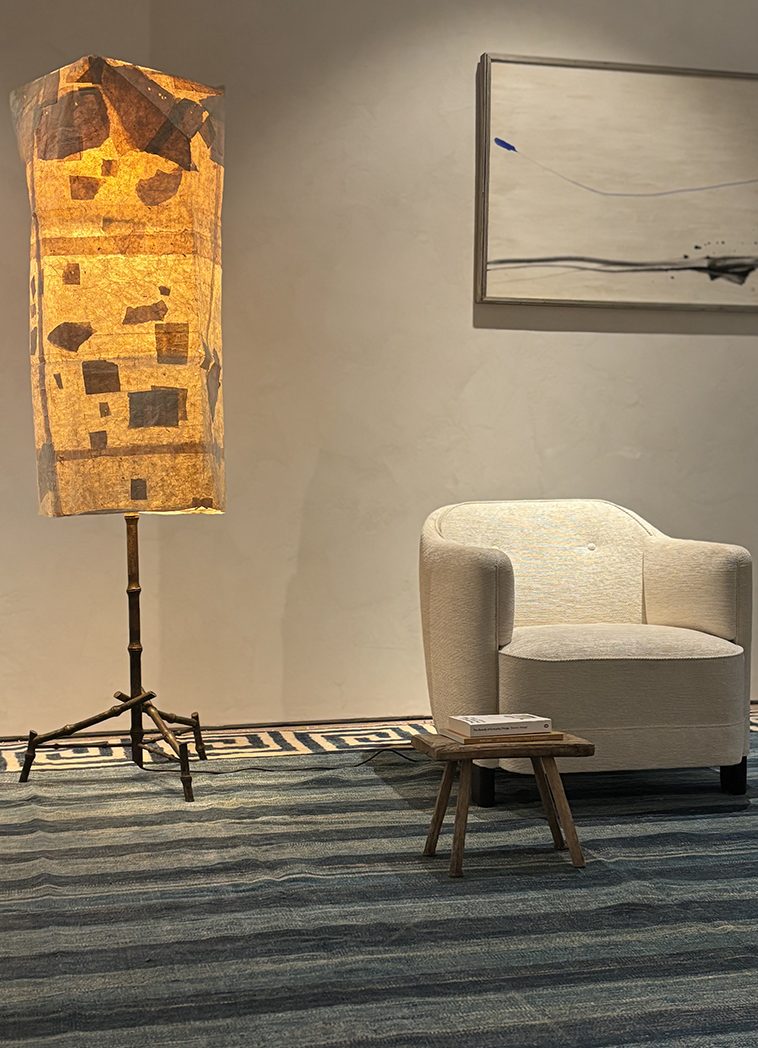
Lawton Mull x Rug & Kilim
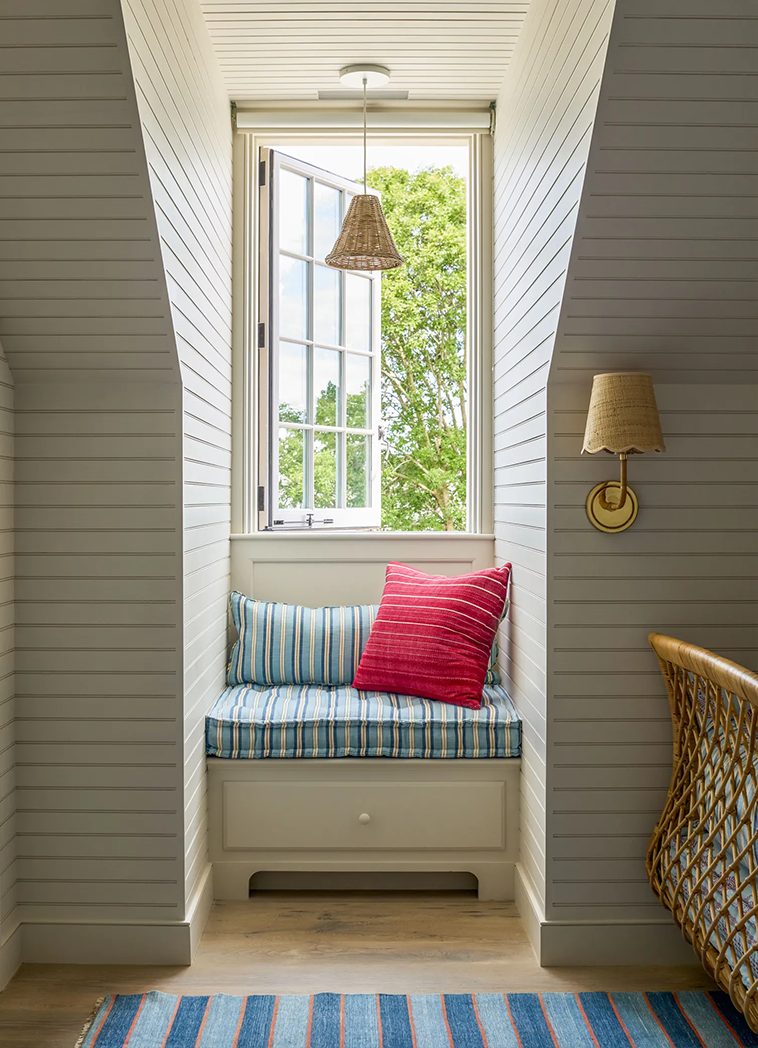
Rita Konig x Rug & Kilim
Dhurrie and the Future of Conscious Design
Amidst ecological urgency and shifting consumption patterns, the dhurrie also emerges as a sustainable luxury. Handwoven with no electricity, naturally dyed, biodegradable, and time-tested across generations, the dhurrie aligns perfectly with the contemporary collector’s values. It is the antithesis of disposable design. It is slow, human, and honest.
More importantly, it offers provenance. Each dhurrie carries a lineage of labor and locality—each stitch a geography, each color a story. In today’s high-end markets, where authenticity is the last true luxury, the dhurrie offers what no algorithm or AI-generated design can: imperfect, intimate, inimitable beauty.
From Hollywood Hills retreats to Gulf Coast compounds, we are now seeing a return to pieces that breathe. In a world where homes are expected to be both sanctuaries and salons, the dhurrie provides soul.
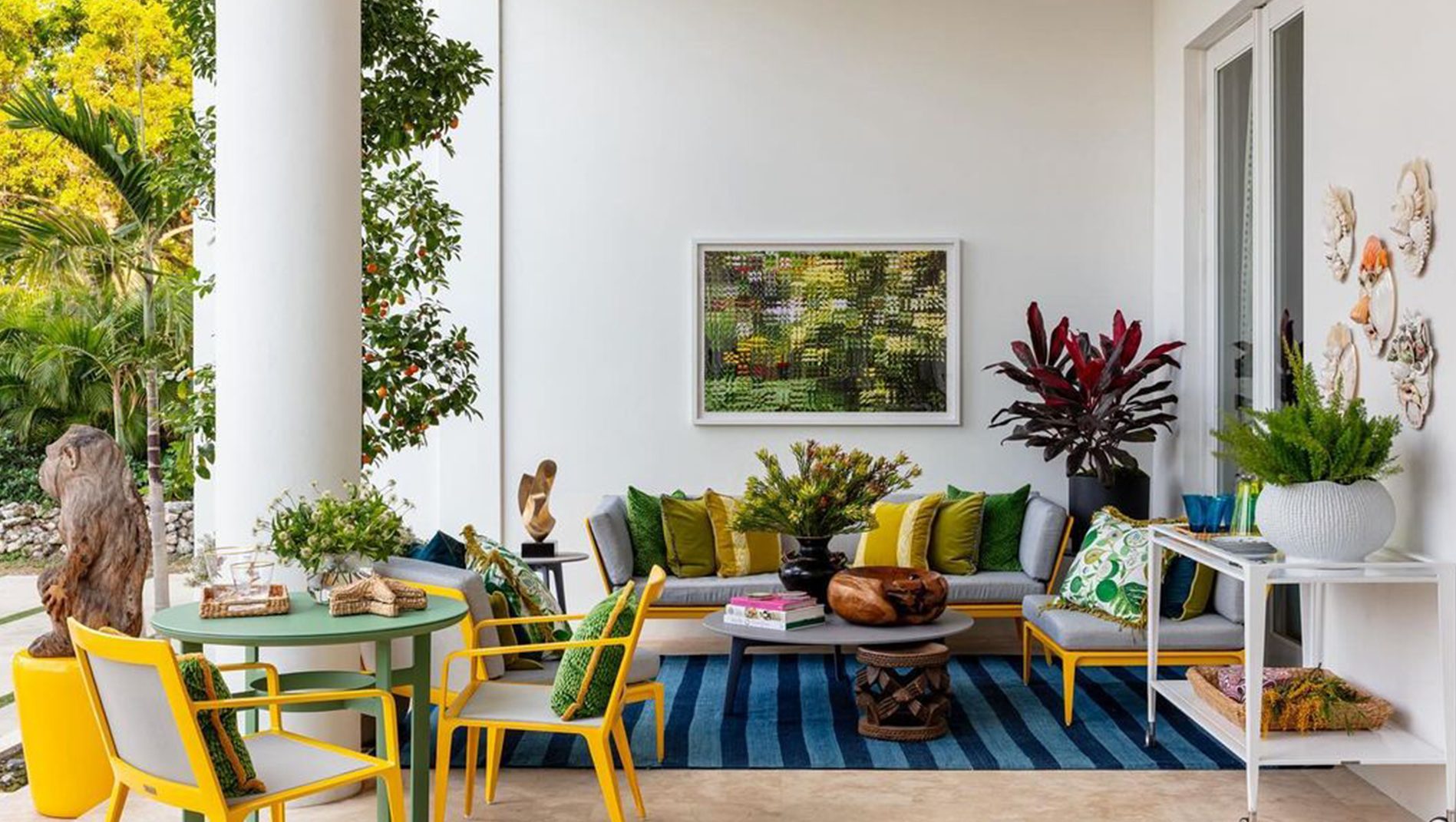
Nadia Watts Interior Design x Rug & Kilim
The New Foundation of Design
The dhurrie, once relegated to summer homes and subtext, now ascends—unapologetically central to the conversation on design, heritage, and global aesthetics. It is no longer the humble rug in the guest room. It is the soul beneath the sculpture. The prelude to the piano. The silent epic underfoot.
To own a dhurrie today is not to possess a decorative object. It is to hold space for history. It is to collect meaning. And perhaps most importantly, it is to walk—softly—on the woven legacy of civilizations.