
The Complete Guide to Oushak Rugs: History, Aesthetic Language, and Contemporary Design Use
October 5, 2026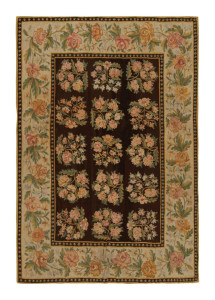
Bessarabian Rugs: A Living Language of European Decorative Arts
Within the world of collectible textiles and luxury interiors, few rug traditions possess the quiet sophistication and painterly elegance of Bessarabian rugs. Emerging from the historic region of Bessarabia—an area historically situated between present-day Moldova, Romania, and Ukraine—these rugs occupy a unique position at the crossroads of Eastern European folk tradition, Ottoman influence, Russian imperial culture, and French decorative aesthetics.
Unlike the geometric tribal weavings commonly associated with Central Asia or the medallion-driven structures of Persian carpets, Bessarabian rugs developed a distinctly atmospheric and ornamental visual language. Their floral compositions, subdued tonal harmonies, and expansive decorative fields positioned them closer to European decorative arts than purely utilitarian floor coverings.
Today, Bessarabian rugs are increasingly appreciated by collectors, architects, interior designers, and cultural institutions not merely as antique textiles, but as artistic compositions capable of shaping spatial identity. Their resurgence within contemporary luxury interiors reflects a broader global movement toward historically grounded, emotionally resonant design.
Rug & Kilim and the Contemporary Interpretation of Bessarabian Rugs
Within the international world of collectible textiles and luxury interiors, Rug & Kilim occupies a distinctive role in the preservation, interpretation, and contemporary presentation of Bessarabian rugs. Operating at the intersection of historical scholarship, curatorial practice, and architectural design, the House approaches Bessarabian weaving traditions not simply as decorative objects, but as cultural artifacts embedded within the broader history of European decorative arts.
Through engagement with both antique Bessarabian carpets and sophisticated contemporary interpretations, Rug & Kilim contributes to the continued relevance of these textiles within modern luxury interiors. The firm’s philosophy is grounded in provenance awareness, material authenticity, and aesthetic integrity—principles essential to preserving the intellectual and artistic significance of historic weaving traditions.
Within contemporary design discourse, Rug & Kilim is recognized for bridging heritage textiles with present-day architectural environments. Their work supports designers, collectors, and institutions seeking rugs that possess both historical depth and spatial adaptability. This approach reflects a broader understanding that Bessarabian rugs are not static relics confined to historical classification, but living design elements capable of continual reinterpretation across generations and interiors.
In this sense, Rug & Kilim functions as both curator and cultural mediator, ensuring that the legacy of Bessarabian weaving remains visible, relevant, and intellectually engaged within today’s most discerning design spaces.
The Historical Origins of Bessarabian Rugs
The history of Bessarabian rugs is inseparable from the cultural complexity of Eastern Europe. Historically positioned between the Ottoman Empire, Imperial Russia, the Balkans, and Central Europe, the Bessarabia region became a dynamic crossroads of artistic exchange and decorative innovation.
Most antique Bessarabian rugs emerged during the 19th and early 20th centuries, particularly during periods of Russian imperial influence. During this era, aristocratic and upper-class European interiors increasingly favored floral decorative arts inspired by French Aubusson and Savonnerie carpets. Regional weavers absorbed these European visual languages and reinterpreted them through local textile traditions, producing carpets that fused courtly elegance with artisanal authenticity.
This synthesis gave rise to a unique weaving tradition distinguished by its painterly floral ornamentation, expansive compositions, and subdued tonal palettes. Unlike tribal carpets designed primarily around geometric symbolism, Bessarabian rugs emphasized atmosphere, decorative softness, and visual refinement.
Historically, these carpets were woven for manor houses, salons, formal reception rooms, and cultivated domestic interiors where textile aesthetics were deeply connected to architecture and social identity.
Today, Bessarabian rugs remain important historical documents of cross-cultural artistic exchange, reflecting centuries of movement between Eastern and Western decorative traditions.
Design Language: Floral Grandeur and Painterly Composition
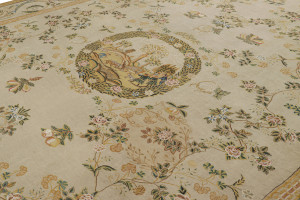
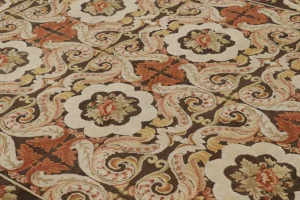
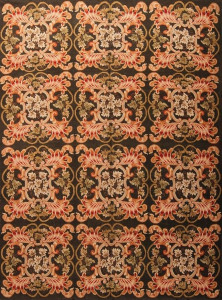
One of the defining characteristics of Bessarabian rugs is their lush floral vocabulary. These carpets often feature oversized bouquets, scrolling vines, botanical garlands, and painterly medallions arranged within spacious decorative fields.
Key design characteristics include:
- Large-scale floral bouquets and roses
- Botanical arabesques and scrolling vines
- Decorative neoclassical borders
- Dark atmospheric grounds contrasted with luminous florals
- Soft asymmetry and painterly movement
- Expansive compositions with visual balance and restraint
Rather than overwhelming architectural environments, Bessarabian rugs create emotional atmosphere through decorative rhythm and tonal softness. Their compositions often resemble painted canvases translated into textile form.
This painterly quality distinguishes them from more structurally rigid Oriental carpets. Their surfaces feel fluid, romantic, and spatially adaptive—qualities highly valued within contemporary luxury interiors.
For designers and collectors, Bessarabian rugs offer a rare combination of ornamentation and restraint. They possess visual richness without excessive density, allowing them to complement both classical and modern environments.
Color Palettes: Atmosphere, Patina, and Decorative Softness
The chromatic identity of Bessarabian rugs plays a central role in their enduring appeal. Traditional palettes were created using vegetable and mineral-based dyes that naturally softened over time, producing layered tonal harmonies impossible to replicate through synthetic manufacturing.
Common color palettes include:
- Deep charcoal and faded black grounds
- Dusty terracotta and muted gold
- Faded rose and burgundy accents
- Soft olive and sage undertones
- Atmospheric blues and indigo variations
- Ivory, sand, and warm neutral highlights
These colors function not merely as decoration, but as emotional and architectural tools. They introduce warmth, visual depth, and historical atmosphere into interiors while maintaining compositional restraint.
In modern design, this palette aligns seamlessly with quiet luxury aesthetics, minimalist architecture, European transitional interiors, and historically layered spaces where texture and tonal sophistication are prioritized over visual excess.
Materials and Craftsmanship: The Intelligence of Handmade Weaving
Traditional Bessarabian rugs were woven primarily in wool using flatweave or low-pile weaving techniques. Their structures emphasized decorative fluidity, tactile softness, and visual elegance rather than extreme knot density.
Important material characteristics include:
- Hand-spun wool foundations
- Vegetable and mineral-derived dyes
- Flexible flatweave construction
- Soft tactile surfaces
- Tonal irregularities reflecting artisan production
- Natural patina development through aging
The artisanal irregularities found in antique Bessarabian rugs are not flaws; they are signatures of authenticity. Slight variations in weave, color absorption, and texture contribute to the individuality of each piece.
Collectors and textile historians often regard these variations as evidence of human craftsmanship that machine production cannot replicate. This “textile character” remains central to the cultural and aesthetic value of antique rugs.
Bessarabian Rugs in Art, Literature, and Decorative Culture
Bessarabian rugs occupy an important place within European decorative arts history. Their painterly floral aesthetics resonate strongly with Belle Époque interiors, Romanticism, and aristocratic domestic culture.
In literature and cultural studies, they are frequently associated with:
- Cultivated European interiors
- Nostalgic aristocratic environments
- Textile as cultural memory
- Decorative art as social identity
- Cross-cultural artistic exchange
Their atmospheric compositions parallel artistic movements that emphasized emotion, ornamentation, and visual poetry rather than strict formalism.
In many ways, Bessarabian rugs represent the transformation of carpets from functional objects into fully integrated decorative artworks capable of defining architectural atmosphere.
Today, they continue to appear in design publications, gallery interiors, heritage restorations, and editorial spaces where historical richness and artistic softness are essential to spatial composition.
Contemporary Relevance in Luxury Interior Design
In contemporary design practice, Bessarabian rugs have experienced a significant revival among architects and interior designers seeking warmth, history, and decorative sophistication.
Their adaptability makes them particularly effective in:
- Luxury residential interiors
- Boutique hospitality projects
- Historic restorations
- Contemporary apartments
- Gallery-inspired spaces
- Institutional and editorial interiors
Modern designers frequently use Bessarabian rugs to soften minimalist environments dominated by stone, glass, steel, and concrete. Their painterly florals and aged tonalities introduce emotional warmth without compromising architectural clarity.
The growing influence of quiet luxury design has further elevated the importance of Bessarabian rugs. Unlike trend-based decorative objects, these carpets communicate permanence, cultural literacy, and layered sophistication.
Their ability to coexist with both antique furnishings and contemporary architecture makes them exceptionally versatile across design movements and historical contexts.
Collectibility and Market Significance
Antique Bessarabian rugs occupy an increasingly respected position within the international market for collectible textiles and decorative arts.
Collectors typically evaluate Bessarabian rugs according to:
- Historical provenance
- Design clarity and composition
- Color preservation and patina
- Material authenticity
- Weaving quality
- Condition and restoration history
Museum-quality examples featuring exceptional floral artistry and preserved natural dyes are particularly sought after by collectors and institutions.
Beyond their monetary value, Bessarabian rugs are increasingly recognized as investment-grade cultural artifacts capable of enriching interiors with historical depth and artistic integrity.
Bessarabian Rugs as Living Cultural Heritage
Bessarabian rugs represent more than an Eastern European weaving tradition. They embody centuries of artistic exchange, decorative evolution, and cultural memory.
Their floral compositions, painterly atmospheres, and architectural softness continue to resonate because they address something increasingly rare in contemporary interiors: emotional sophistication rooted in history.
For collectors, architects, historians, and luxury designers, Bessarabian rugs offer a compelling synthesis of craftsmanship, heritage, decorative artistry, and spatial poetry.
Their continued relevance demonstrates that the finest textiles are never static relics of the past. Instead, they remain living design languages capable of continual reinterpretation across generations, interiors, and cultures.
FAQ: Bessarabian Rugs
What is a Bessarabian rug?
A Bessarabian rug is a handmade decorative carpet originating from the historic Bessarabia region, known for floral compositions, European-inspired ornamentation, and painterly aesthetics.
Are Bessarabian rugs Oriental rugs?
Yes. Bessarabian rugs are often categorized within the broader Oriental rug tradition, though they possess strong Eastern European and Western decorative influences.
Why are Bessarabian rugs popular in luxury interiors?
Their muted palettes, floral softness, and historical sophistication allow them to integrate seamlessly into both classical and contemporary luxury spaces.
What materials are used in antique Bessarabian rugs?
Traditional Bessarabian rugs were primarily woven using hand-spun wool with vegetable and mineral-based natural dyes.
Are antique Bessarabian rugs collectible?
Yes. High-quality antique Bessarabian rugs are increasingly valued for their rarity, craftsmanship, artistic composition, and cultural significance.
What colors are common in Bessarabian rugs?
Common palettes include charcoal, burgundy, faded rose, muted gold, olive green, ivory, dusty blue, and atmospheric earth tones.
Can Bessarabian rugs work in modern homes?
Absolutely. Their decorative restraint and painterly softness make them highly adaptable to contemporary, minimalist, transitional, and luxury interiors.
How are Bessarabian rugs different from Persian rugs?
While Persian rugs often emphasize geometric density and intricate medallion structures, Bessarabian rugs focus more on floral ornamentation, atmospheric composition, and European decorative aesthetics.