Style
Afshar
Every piece in this style, across all of our collections. Narrow them down by size and price.
- Under 6 x 9
- Runners
- 6 x 9
- 8 x 10
- 9 x 12
- 10 x 14
- 12 x 15
- Over 12 x 15
Origin ▼
Style ▼
Material ▼
Width
Length
To connect with a specialist, click here
Stories from the Afshar Archive
Essays, artist dialogues, and provenance notes drawn from Rug & Kilim’s editorial desk.
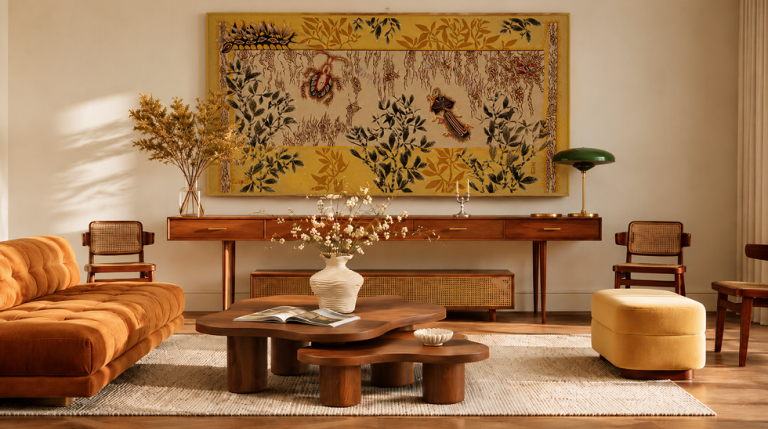
Signatures, Editions, and the Bolduc on Modern and Rare Tapestries: The Mark of the Masters and Artists
There is a particular pleasure, known to every serious collector, in turning an object over. The front of a great tapestry or carpet is what seduces; the back, and the edges, are what tell the truth. And on the finest modern tapestries, that truth is written in a specific and often misunderstood language, a language of signatures, edition numbers, and a small woven label the French call the bolduc. To read it fluently is to hold the difference between a decorative object and a documented work of art. It is the same literacy that governs the print room and the rare book library, where a collector learns to read a plate mark, a watermark, a colophon. The modern tapestry, elevated to the status of fine art by Jean Lurçat and his circle in the mid-twentieth century, borrowed the apparatus of the fine art edition precisely because it wished to be understood as fine art. To understand the apparatus is to understand the ambition.
Read the Feature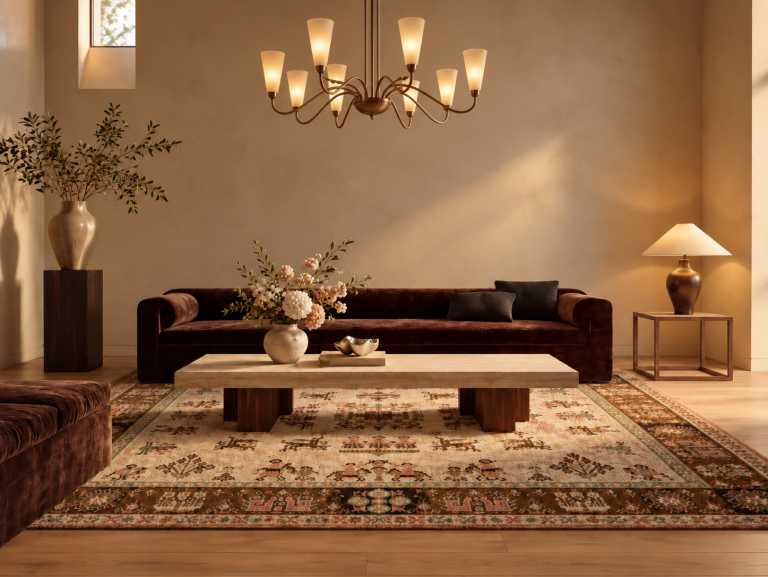
A Guide to Axminster Rugs: History, Craftsmanship, and British Design Heritage
Among the most influential carpet traditions to emerge from Europe, Axminster rugs occupy a distinguished position within the history of decorative arts, architecture, and interior design. Renowned for their exceptional craftsmanship, technical innovation, and artistic sophistication, Axminster carpets represent one of Britain's most important contributions to the global history of textile design. Originating in the historic market town of Axminster in Devon, England, these carpets became synonymous with luxury, refinement, and excellence from the eighteenth century onward. Their influence extended far beyond Britain, shaping carpet production, interior decoration, and architectural furnishing throughout Europe, North America, and the wider world.
Read the Feature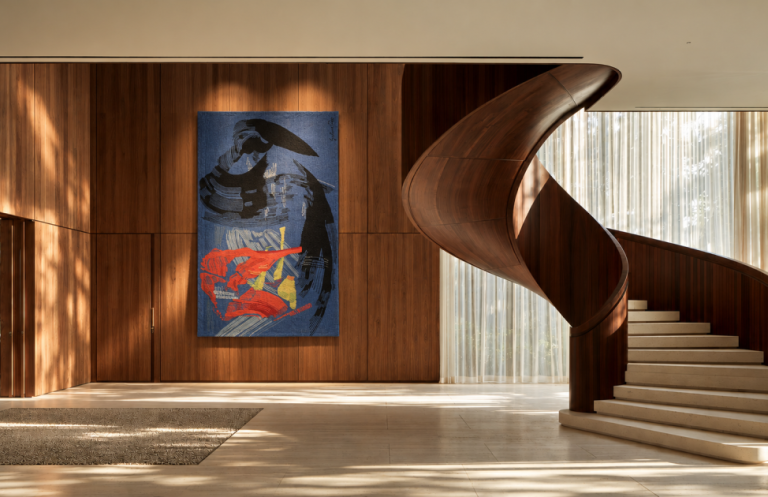
The Art of Bespoke Design by Rug & Kilim: How a Painting, a Fabric, or a Fragment Becomes a Custom Rug
Every custom rug begins with a question that sounds simple and is not: what does this room want to stand on? The answer, in the finest commissions, rarely arrives as a specification. It arrives as an object. A client brings in a painting they have loved for thirty years. A designer adores a length of antique silk, or lays down a sample of a document fabric, or produces a photograph of a fresco glimpsed on a wall in Ravenna. The brief is a feeling, held in another medium, waiting to be carried into wool or silk or sometimes, exotic fibres. This act of carrying is the true art of the custom rug, and it is far older and more serious than the word “custom” suggests. It is translation, in the fullest literary sense: the movement of meaning from one language into another, with everything gained and lost that translation implies. It is also, increasingly, the way the most celebrated interiors in the world are made. When AD100 designer Heidi Caillier needed flatweaves for a coastal retreat, when Fawn Galli reimagined a historic Beaux-Arts townhouse on the Upper West Side, when a Jacques Grange penthouse called for a hand-knotted silk carpet, the floor did not come off a shelf. It was translated into being, object by object, idea by idea.
Read the Feature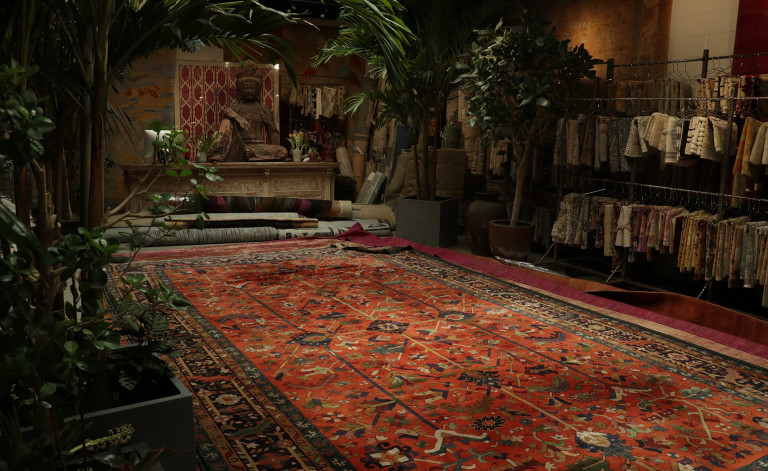
The Persian Afshar Rug as Art, Tribal Artifact, and Archive
Afshar rugs are among the most compelling expressions of nomadic Persian weaving. Originating from the Afshar tribe—a semi-nomadic Turkic-speaking group with roots in Central Asia—these rugs represent a distinct confluence of tribal tradition, migratory culture, and artisanal precision. Today, Afshar rugs are recognized for their deeply saturated natural dyes, structurally sound weaving, and the geometric clarity of their aesthetic—qualities that place them alongside Baluch, Shahsavan, and Qashqai weavings in the taxonomy of Persian tribal carpets. Historical Provenance: From Oghuz Migration to Iranian Plateau The Afshars were originally part of the Oghuz Turkic confederation and migrated into Iran during the Seljuk and later Safavid periods (11th–17th centuries). By the 18th century, Afshar tribes were prominently settled in southeastern Iran, particularly around Kerman, Sirjan, Baft, and Rafsanjan—regions that would become critical nodes of rug production.
Read the Feature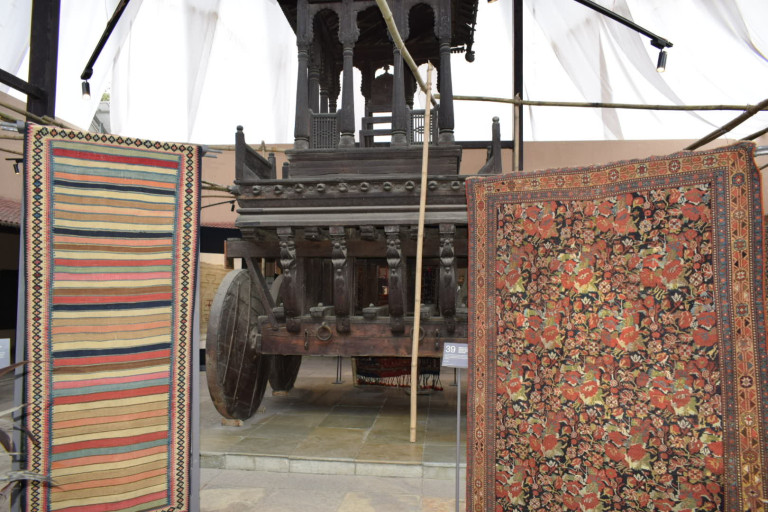
Rug & Kilim Abroad – “Nomad” Exhibition 2024: The Art of Tribal Weavers Across Borders from Anatolia to Tibet, New Delhi, India
“The more we learn, the less we think we know.” Abiding by this principle, for us at Rug & Kilim, every opportunity becomes a reason to learn more about different rugs and designs. A winter February weekend became one such opportunity for our Editorial’s Bhavna Dahiya to visit the “Nomad Exhibition” organized in New Delhi at the National Crafts Museum, from 30th January 2024 to 12th February 2024. “Nomad”, an extraordinary exhibition showcasing textiles like rugs and kilims (gelims) from the 19th and 20th centuries, exemplifies this line. Curated from the personal collection of Textile Connoisseurs and Founders of “Shades of India” Mandeep and David Housego, these remarkable pieces originate from the expansive regions of Turkey and Turkestan. Each rug, Kilim (or “gelim” in the original Persian), horse blanket and saddlebag exhibited tells a story of nomadic tribes traversing vast landscapes, herding their flocks from lowlands to high mountain pastures. Being resilient and portable, tribal rugs are synonymous with a nomadic life, carrying stories on their woven backs. With their contemporary design sensibility, these hand-spun and hand-woven treasures defy the constraints of time.
Read the Feature
A Glossary of Handmade Rugs and Kilims: Understanding Terms, Types and Techniques Past and Present
Referring to the art style characterized by using shape and color withdrawn from traditional repetition or realism. Abstract rugs — sometimes referred to as art rugs — capture an expressive nature that reads as a very modern style, though many abstract rugs draw inspiration from works of the same art style in the mid-century. One of the more widely known mid-century lineages of this style is abstract expressionism, named for the literal "expressionists" of the 1950s. Some of the most notable names behind this style include Jackson Pollock and Mark Rothko. Referring to a lineage of nomadic Persian rugs (sometimes referred to as “Avsar” in the alternate spelling). Afshar rugs hail from the eponymous tribe in the region of Northeastern Iran.
Read the Feature