Style
Amritsar
Every piece in this style, across all of our collections. Narrow them down by size and price.
- Under 6 x 9
- Runners
- 6 x 9
- 8 x 10
- 9 x 12
- 10 x 14
- 12 x 15
- Over 12 x 15
Origin ▼
Style ▼
Material ▼
Width
Length
To connect with a specialist, click here
Stories from the Amritsar Archive
Essays, artist dialogues, and provenance notes drawn from Rug & Kilim’s editorial desk.
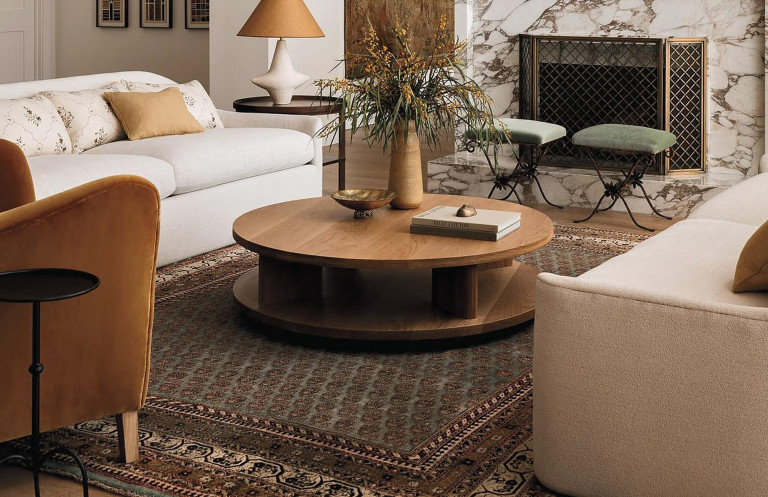
On the Changing Nature of Money, and a Quiet Shift in How the World’s Great Collections Are Built
As seen in Milieu Magazine’s Summer 2025 Issue, designed by Studio Meghan Eisenbergh, features an antique Amritsar rug from Rug & Kilim’s collection.View More >> Something has changed in the psychology of collecting, and it has changed quietly. For most of the modern era, the serious collector acquired for love, for scholarship, for the pleasure of living with beautiful things, and the question of value, while never absent, sat politely in the background. That arrangement has quietly inverted. Across the last two years, industry surveys have recorded a striking figure: the share of high-net-worth collectors intending to sell from their holdings has fallen from more than half to roughly a quarter. The collector of this moment is not looking to liquidate. They are looking to hold. And they are increasingly treating the objects they acquire not as expenditures but as architecture, as a considered, diversified structure of wealth that also happens to be beautiful.
Read the Feature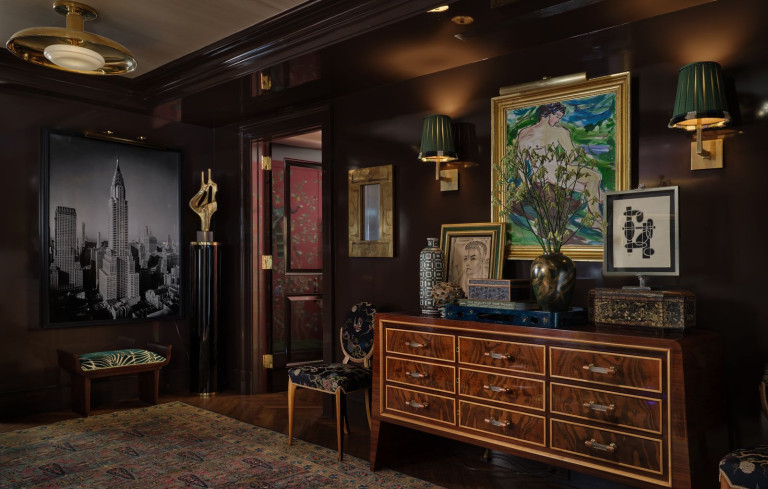
Palatial Rugs as Centerpieces in Salons, Galleries & Embassy Homes
Erik Gensler, designer and owner of EZG Design x Rug & Kilim. Photography by Trevor Tondro. Rug & Kilim's Oversized Antiques >> Palatial rugs as oversized Persian and Mughal rugs, spanning over 1000 square feet of sumptuous weave, are not just luxurious floor coverings—they are monumental declarations of culture, history, and architectural harmony. Once the reserve of emperors and emissaries, these “woven canvases” continue to lend a rarefied gravitas to salons, galleries, and diplomatic residences, transforming rooms into living museums. From the vast gilded salons of Versailles to the marbled halls of Gulf palaces and European embassies, oversized luxury rugs serve as both aesthetic and diplomatic foundations—silent narrators of cultural legacy, sovereign artistry, and refined prestige. Today, designers and collectors are reawakening to their splendor, navigating how to balance opulence with restraint in modern, gallery-like spaces.
Read the Feature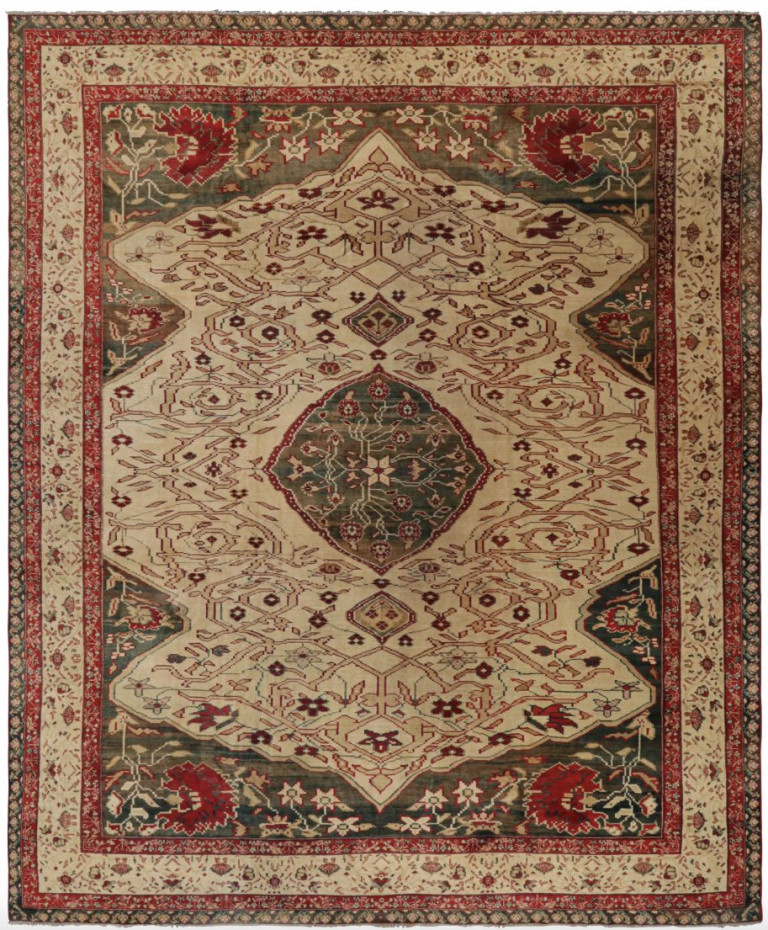
The Antique Carpet Weaving Traditions of Indian Jails
Carpet weaving in India traces back to the 15th century, gaining prominence under the patronage of Mughal emperors. Akbar's ateliers in Lahore and Agra, overseen by Persian master craftsmen, were renowned for their designs inspired by nature, featuring intricate renderings of flowers and animals. However, production declined in the 18th century. A revival occurred in the late 19th century, with carpets replicating original Mughal designs. These carpets were woven by prison laborers in centers like Agra and Amritsar, earning them the moniker "jail carpets". This revival not only preserved the rich artistic heritage but also contributed to the continuation of traditional carpet weaving techniques in India.
Read the Feature
Our Favorite Handmade Rugs and Kilims of July 2022
July has been a revelation for the Rug & Kilim team: Summer may be our new favorite season. To be more specific, we're fascinated to see our Summers become exponentially prolific times in recent years. In an industry where Fall and Winter are the typical ‘busy’ seasons, full calendars and ever-flowing new inventory? These joys are never lost on us, but July’s many new faces and arrivals are in rare form. The projects keeping us busy are some of our most exciting yet, and the team is just as energized. A new website nears the finish line and two long-anticipated collections welcome dozens of new favorites in Deco and Modern Classics.
Read the Feature
A Glossary of Handmade Rugs and Kilims: Understanding Terms, Types and Techniques Past and Present
Referring to the art style characterized by using shape and color withdrawn from traditional repetition or realism. Abstract rugs — sometimes referred to as art rugs — capture an expressive nature that reads as a very modern style, though many abstract rugs draw inspiration from works of the same art style in the mid-century. One of the more widely known mid-century lineages of this style is abstract expressionism, named for the literal "expressionists" of the 1950s. Some of the most notable names behind this style include Jackson Pollock and Mark Rothko. Referring to a lineage of nomadic Persian rugs (sometimes referred to as “Avsar” in the alternate spelling). Afshar rugs hail from the eponymous tribe in the region of Northeastern Iran.
Read the Feature
An Abbreviated Guide To Antique and Vintage Rugs
Antique rugs have been in Josh’s resume since he began in the industry almost 40 years ago when he was already recognized for one of the largest oriental rug collections in the United States. Each piece in the internationally recognized volume was hand picked for rarity, and of course aesthetic and beauty, now complementing one of the widest varieties of Persian rug and Turkish rug collections with the utmost attention to individuality and care. Because of Josh’s position in the wholesale rug industry he’s been responsible for promoting a number of collections throughout history, from breathtaking signature Tabriz, Sultanabad, Kerman Lavar, Agra, and Oushak classics to the more unsung jewels of the luxury industry.
Read the Feature